Berlin Kraftwerk, the former power plant in Berlin Mitte associated with Tresor and Atonal Festival, was the venue last week for Helsing’s launch of new agentic technology, Clarity. This platform uses the same controversial AI-driven approach implicated in accelerating the use of flawed intelligence and killing civilians in Palestine, Lebanon, and Iran. Kraftwerk’s Head of Sales has taken sole responsibility and apologized. But the fiasco seems emblematic of Berlin’s pivot from cultural capital to military-industrial capital, with the money that follows.
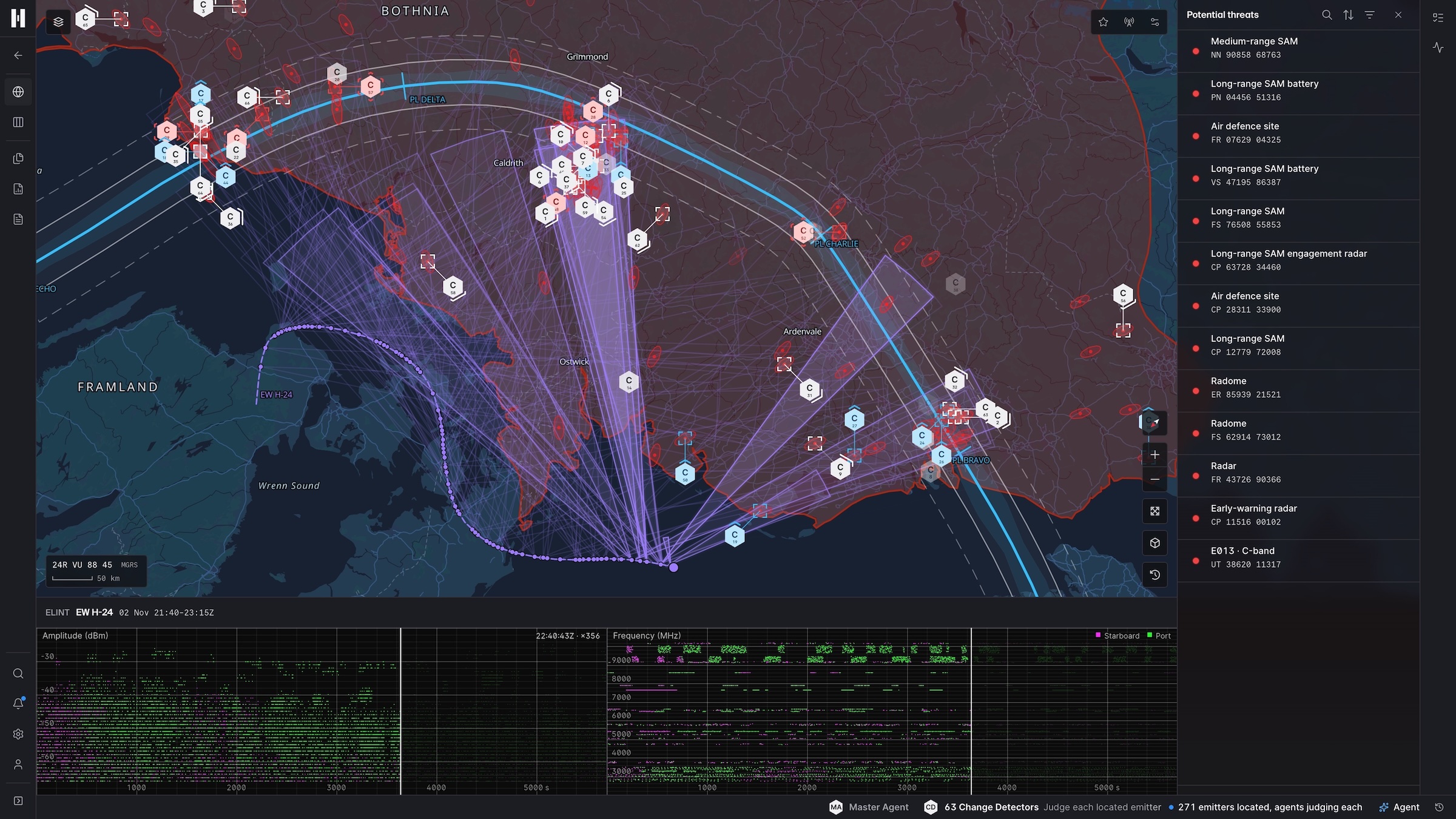
Clarity, from the same Helsing backed by Spotify’s Daniel Ek, is an agentic AI targeting system. The German-native platform follows notorious AI-assisted platforms used by Israel and the USA, with Clarity pitched as a European-made alternative to the US-based vendor Palantir. Images look at high-density targeting operations, fed by multiple sources of AI-processed data. Die Zeit described a chatbot-style interface for components of the presentation. These kinds of systems in the US and Israeli cases have been associated with mass-killing of civilians in both Palestine (as investigated by +972 Magazine), Lebanon (see the LA Times), and Iran (in a still-unreleased Pentagon investigation, reported by Bloomberg).
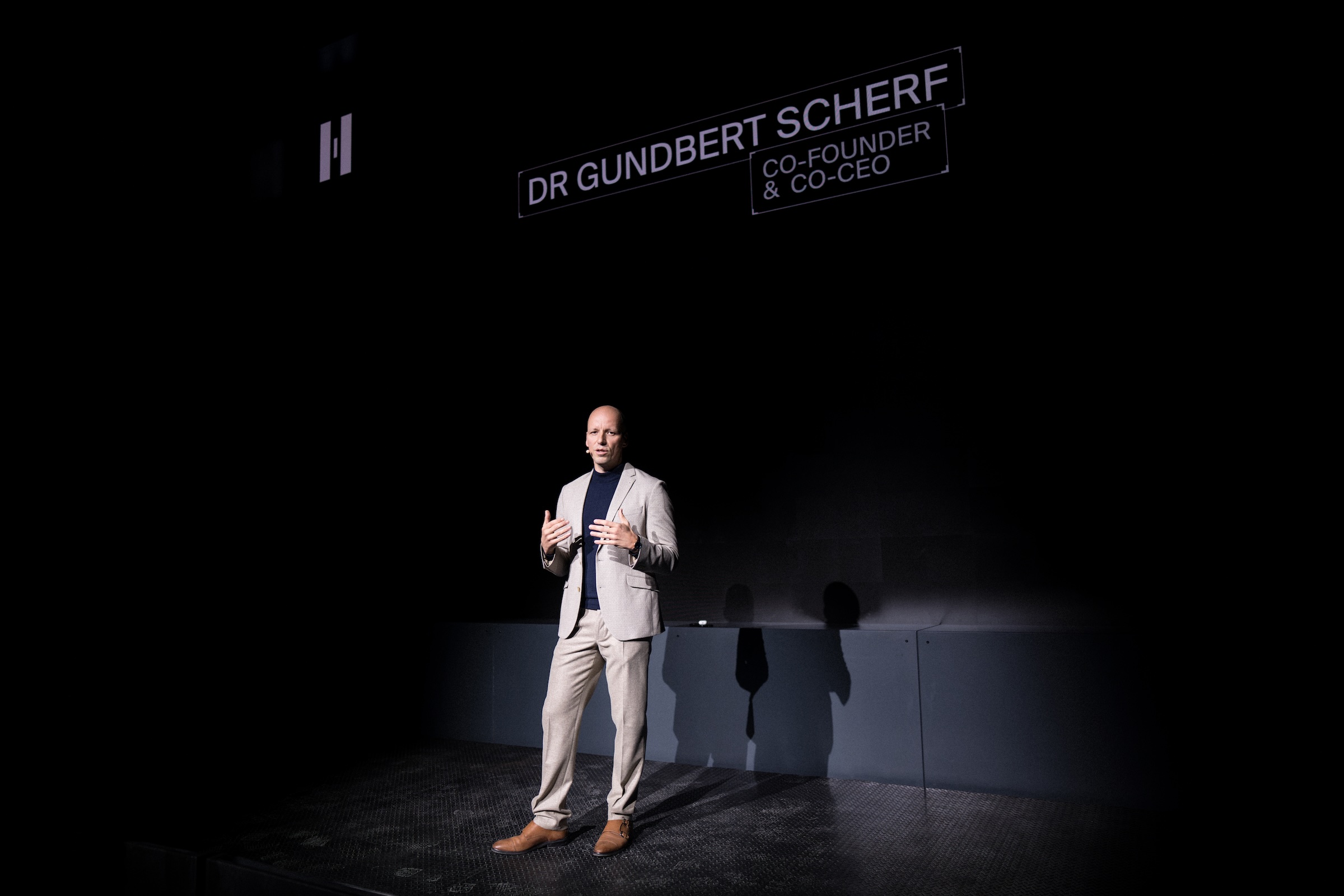
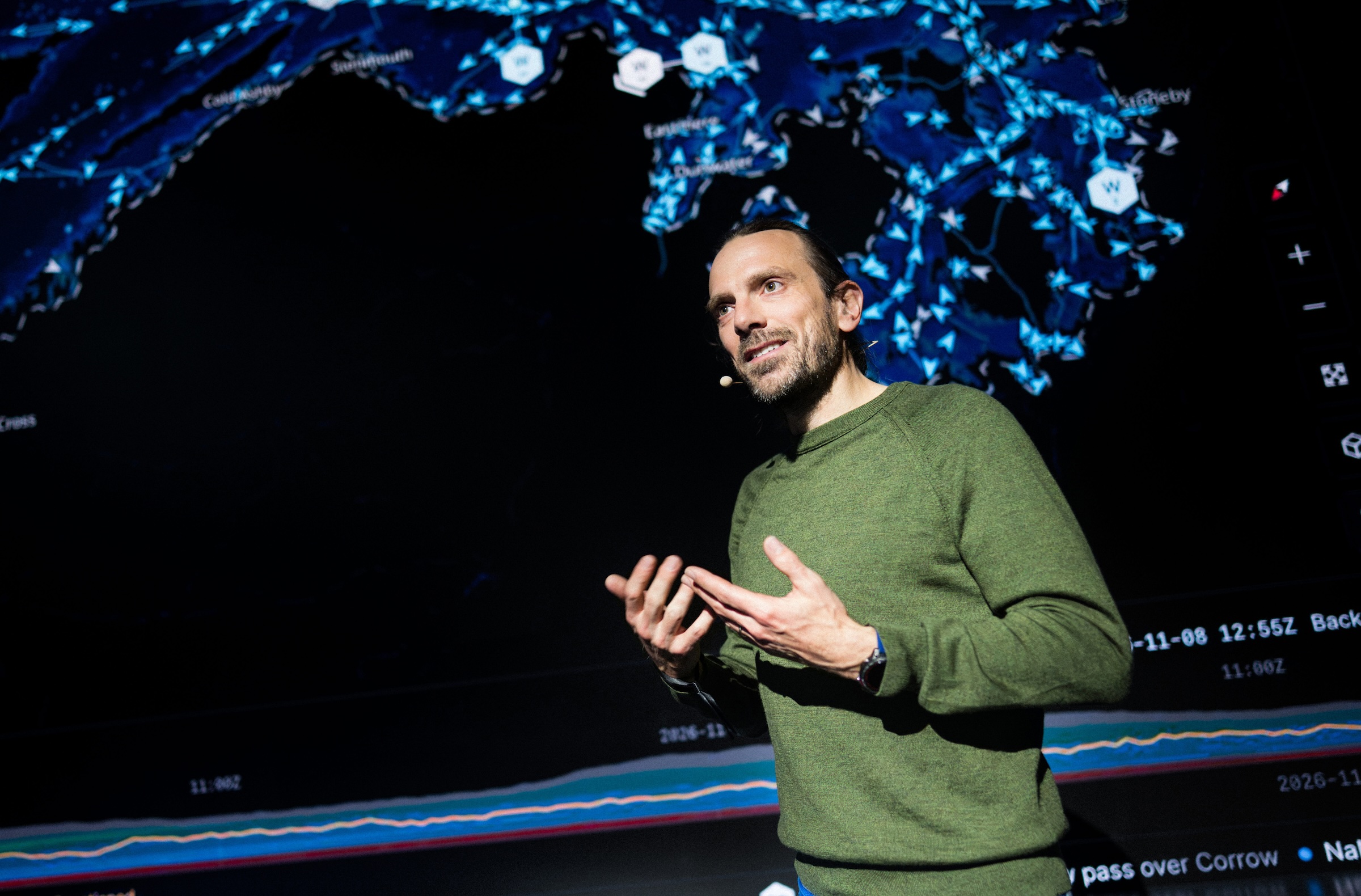
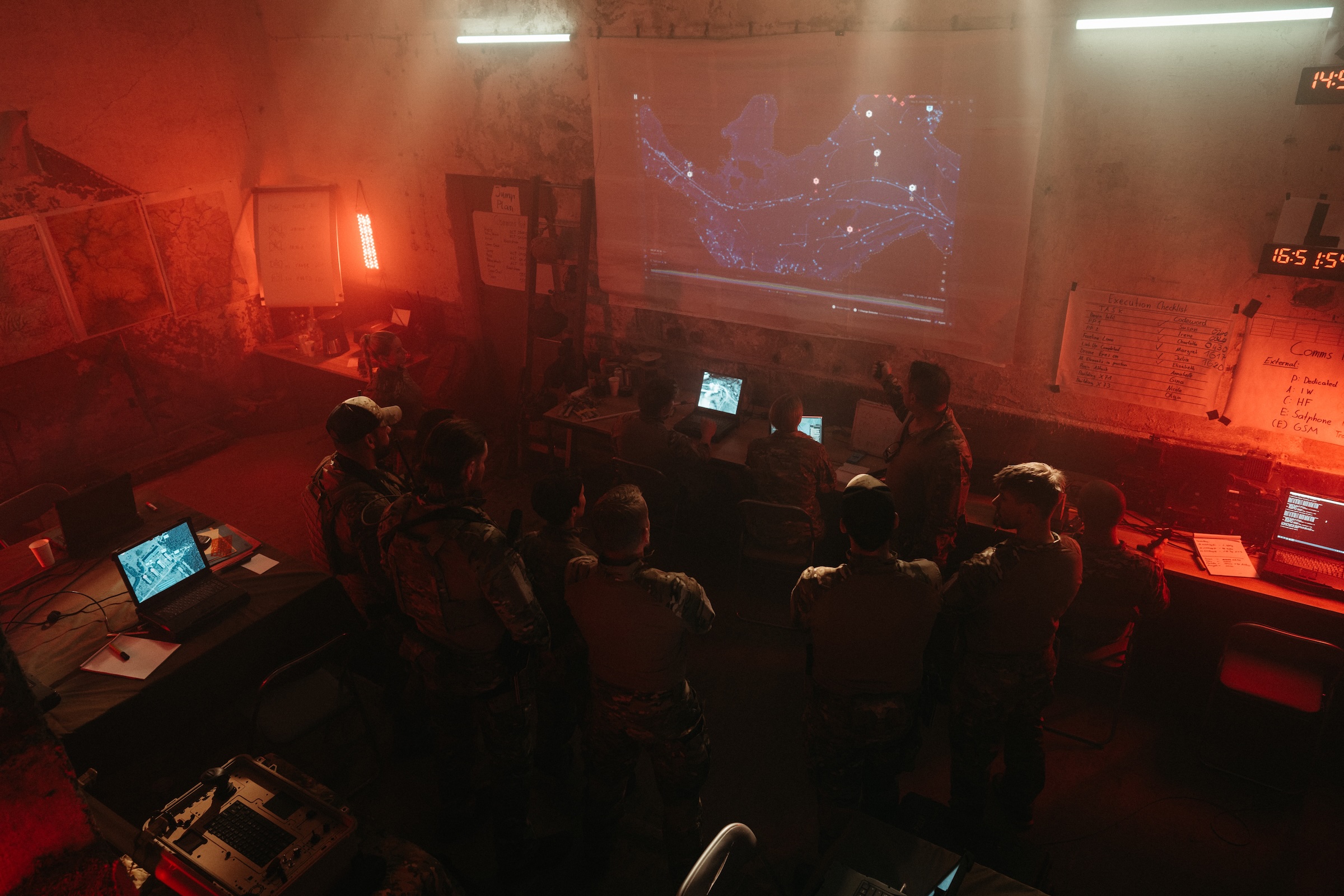
The Kraftwerk event, as recounted in press reports and images released to the media, seemed to be a surreal brew of equal parts corporate event, war multimedia, immersive theater, and Steve Jobs-style keynote. It’s all set against recognizable locations in the venue that has housed Tresor birthdays, Atonal Festival, and art installations in the past. The launch featured, among other things, a staged reenactment of an imagined targeting center, and speeches by Gundbert Scherf, Co-CEO and Co-Founder, and Rob Fink, Chief Technology Office. The projection with the words “MILITARY AI” is literally something that happened. (Die Zeit ran an image of a fighter plane with “Ai powered” emblazoned on the vertical stabilizer.)
Reached for comment, Kraftwerk Berlin responded to me with a statement by Head of Sales Tjabo Reuter taking full responsibility.
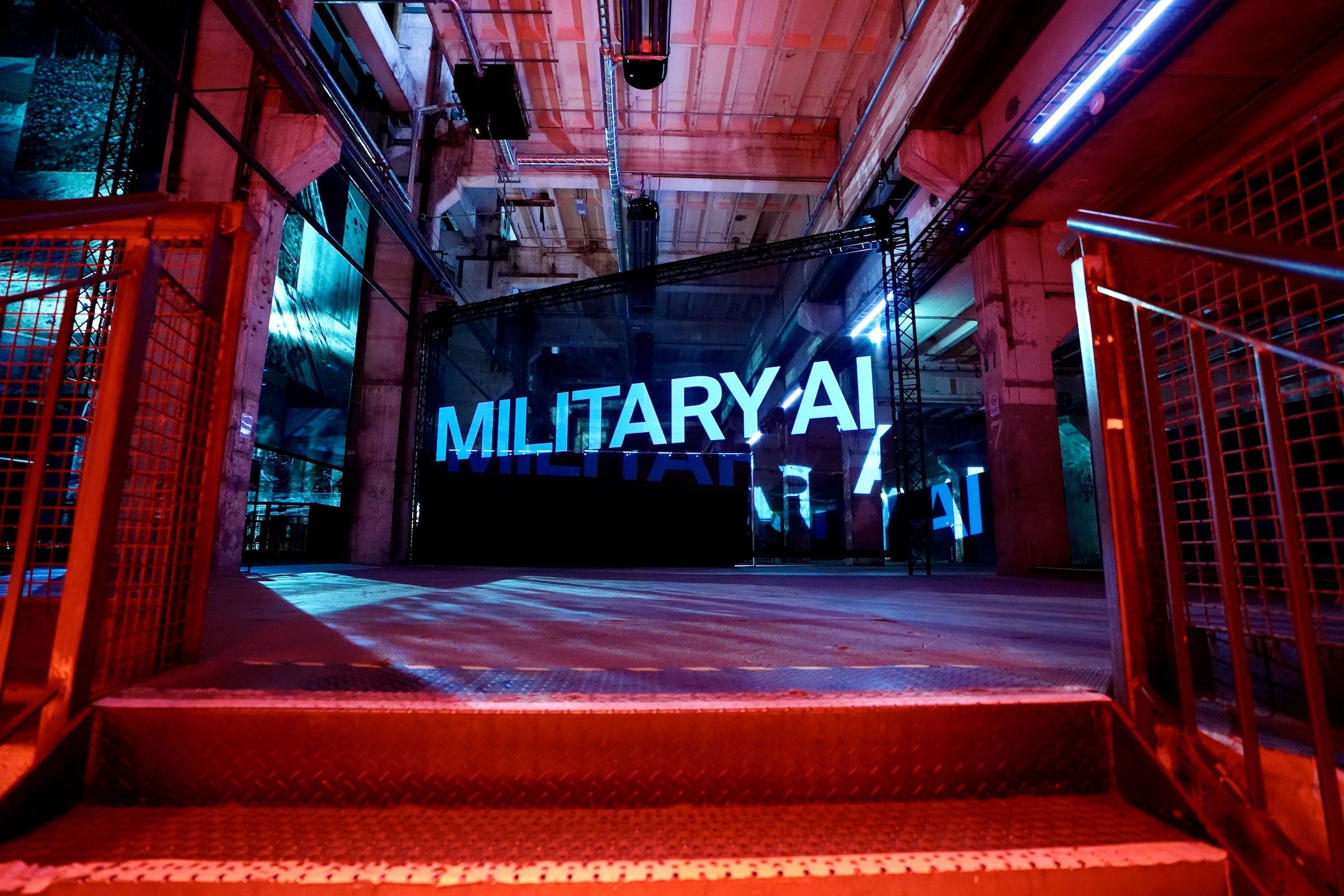
On 11 November, Kraftwerk Berlin hosted the launch of Helsing’s military AI system, Clarity. Kraftwerk’s commercial rental department accepted the booking. As head of that department, I take responsibility for that decision.
Five distinct operations work within the building: Tresor Club, Tresor Records, OHM, Berlin Atonal / Outer GmbH, and Kraftwerk Berlin.
As Head of Sales at Kraftwerk, I should have declined the booking. At the very least, I should have consulted the other teams before making a decision. I did neither. My decision turned Kraftwerk into a platform for the promotion of weapons and military AI for one morning and did serious damage to the venue’s reputation. This was a serious error of judgement. Commercial considerations do not excuse it.
The commercial rental department operates alongside the independent cultural organisations in the building. It does not speak for those organisations, their programmes, or the artists and audiences they bring together. They were neither involved in nor consulted on the booking and bear no responsibility for it.
My decision nevertheless had consequences for them. Kraftwerk’s reputation is inseparable from the cultural work that takes place here. By accepting the booking, I put relationships and trust built by others at risk. I failed to respect the independence of the cultural organisations and to meet the responsibility that this places on the commercial rental department.
I apologise to everyone affected by this decision, including the staff, artists, visitors and partners connected to the building. I am particularly sorry to the cultural organisations, including Tresor, Tresor Records, OHM and Berlin Atonal, which now have to answer for a booking they had no part in making and fundamentally oppose.
I will begin reviewing the commercial rental department’s booking policy and decision-making process immediately. I will establish clear criteria for future bookings and work closely with the cultural organisations on decisions of this importance.
This explanation raises some more questions, as it’s hard to imagine that such a booking could happen without coordination. But there’s also a larger perspective to consider — one that implicates more than just Kraftwerk or its connected venues.
Long before Berghain, Tresor was a principle flag bearer of the Berlin techno scene. Now at its new home on Köpenicker Straße in Mitte, it’s part of a cultural cluster that includes the Tresor club, Ohm, the Rough Trade record shop, Atonal Festival, and — in an expansive power hall that’s one of the largest enclosed event spaces in Europe — Kraftwerk. The club, Atonal, and Kraftwerk are all under the same umbrella organization, and all work in close proximity; you’ll see different listed GmbH corporations, but all with Dimitri (Dietmar) Hegemann as the Geschäftsführer (CEO). And Dimitri has himself become the face of Berlin techno venues and event promotion, particularly in regards to their connection to Detroit, where the genre was born.
Kraftwerk is an impossibly large space, with utility bills to match. But in a city where large event venues have trouble keeping pace with Berlin’s growing demand, the venue has become a showy option for corporate clients and the government. It’s not uncommon to see one logo or another projected on the entrance, or enhanced security for government events.
That venue clearly benefits from the cool factor of cultural events and art installations — and the cache of techno, the genre created by Black artists in Detroit, worth mentioning mere days after the man widely known as the originator, Juan Atkins, has died.
So given all that value, it’s not surprising that Helsing, Germany’s up-and-coming AI defense maker, would set its eyes on Kraftwerk, as it hypes its technology and looks for funding and customers.
In fact, in a separate FAQ, Kraftwerk confirms that it had entertained a request from Palantir in the past — and turned it down. While Kraftwerk says the Helsing booking was not subject to “ethical review,” and that “cultural teams were not consulted,” there was a discussion around a different event:
In 2022, Kraftwerk declined a proposed Palantir-sponsored event after consulting Berlin Atonal and other cultural teams. The Kraftwerk staff member should have consulted those teams before deciding on the Helsing booking.

Clarity, the new “agentic intelligence platform” is at least in part the payoff of a funding round led by Daniel Ek, the Spotify founder — the “€600m to invest in European technological sovereignty” announced as a series D round last year. Now, Helsing is courting lucrative German government contracts.
But unmistakably, the choice of location was intended to make a splash with the press and dignitaries. National press didn’t miss the message, either; Die Zeit comments in the opening line of their coverage that the setting was a nightclub, complete with “dim lighting and thumping speakers.” Outside: military vehicles and bomb-sniffing dogs, reports Die Zeit. Inside: uniformed military officers from the Bundeswehr, suppliers, and dramatic videos and installations, plus sound effects of military equipment. Oh, and hors d’oeuvres, served among crates used to ship drones to Ukraine.
We live in a moment when a lot of our colleagues and friends face the realities of war — and mechanized warfare in particular in Ukraine, Iran, Palestine, and Lebanon. Drones to high-yield bombs to missiles (even hypersonic missiles, in Ukraine) are all daily realities.
But to anyone suggesting the Helsing event is justified by those realities, you have to wonder where those realities were in last week’s event? In Kyiv, just surviving cold and power outages is a major challenge. On the Estonian border with the Russian Federation, the division between countries is often a frail piece of barbed wire and a sign, or a narrow stretch of river.
John Object, the artist you would have hoped would play someday at Berlin’s Atonal festival, had to fundraiser for a van for his unit on the Ukrainian front. Ukrainian regiments are tasked with their own equipment, while the likes of Daniel Ek get rich a second time over on military toys, having first enriched himself with, you know, your music.
That’s a far cry from the slick, high-tech, video game-style confrontations touted by Helsing. Hey, war is a fancy plane. War is a chatbot. War is a trendy, dimly lit nightclub in a aesthetically pleasing former industrial space. War is an opportunity — if you’re an investor, looking to profit.
To say there are questions about whether the profit-driven military model will provide actual defense is a major understatement. Talking of timing, as Berlin citywide celebrated its growing defense industry last week, French officials warned that German policy was at risk of triggering nuclear war. That seems an uncommon rebuke from Berlin’s close ally.
I can’t comment on Helsing’s technology. I can only observe how remote the description of their tech is from what people I know going through war are facing.
And this vision of AI-powered targeting, once the stuff of science fiction, was already the subject of an Israeli-authored book before either Russia’s full-scale invasion of Ukraine or the October 7 attacks in Israel. You don’t even have to read past the opening paragraph of Yuval Abraham’s article for +972, over two years ago:
In 2021, a book titled “The Human-Machine Team: How to Create Synergy Between Human and Artificial Intelligence That Will Revolutionize Our World” was released in English under the pen name “Brigadier General Y.S.” In it, the author — a man who we confirmed to be the current commander of the elite Israeli intelligence unit 8200 — makes the case for designing a special machine that could rapidly process massive amounts of data to generate thousands of potential “targets” for military strikes in the heat of a war. Such technology, he writes, would resolve what he described as a “human bottleneck for both locating the new targets and decision-making to approve the targets.”
2021 is, coincidentally, the year Helsing was founded as an AI defense company.
US citizens can and should demand that the full details of the Pentagon’s investigation be released in full. It examines how it was that the United States killed 123 children in Minab. What Bloomberg was able to uncover is damning. Like +972’s reporting, it doesn’t only blame AI. But arguably the very myth the Helsing presentation was promoting — that you can find perfect intelligence and spare civilian deaths — is the problem, and AI and techno-solutionism are just the latest enabler. From Bloomberg’s report, a topic now all of our problems both because of where our tax money goes and what events our favorite techno clubs are hosting:
Inside Centcom, which conducted the US attack, some personnel relied too much on the artificial intelligence embedded in Maven Smart System, the officials said. Maven, which is made by Palantir Technologies Inc., allows users to view and coordinate complex military operations — from targeting to command and control — using AI-enabled software that fuses more than 150 different data inputs into a coherent set of information to inform commanders’ decisions.
In the past year, the Defense Department has rapidly made Maven a cornerstone of the US military apparatus. Several former senior US military officials now work for Palantir, including some with high-level security clearances in Centcom’s Tampa headquarters. Their role is to keep the software functioning inside secure military environments.
Some Centcom personnel expected Maven to flag stale information or inconsistencies in the underlying intelligence assembled for potential targets, the officials said. It’s not clear why they had such expectations.
Flash forward to 2026, and Helsing is touting “European sovereignty” and a domestic alternative to Palantir, free of US involvement — hot on the heels of the revelation that US-based Starlink cut off service to Ukraine, at the behest of (former German darling) Elon Musk.
What does this have to do with techno? On one hand, what, indeed? On the other, the event at Kraftwerk is far from isolated. Berlin has doubled down on expanded investments in military capitalism, particularly in partnership with Israel — at the same time that it instrumentalized cultural venues, institutions, and funding in support of its Israel policy, all in the middle of what scholars have widely recognized as a genocide of Palestinian people and ethnic cleansing an occupation of Lebanon. See:
Berlin and Israeli defence giant IAI to create innovation hub [Rapporteur]
In their follow-up, +972 noted that blaming AI alone was insufficient in Israel, that “entire swaths of the global civilian technology sector may be implicated in the slaughter.” Now we face this approach and technology spreading, as many, many voices had predicted, particularly Palestinian voices, worldwide.
From that story:
Why human agency is still central to Israel’s AI-powered warfare [+972 Magazine]
A phrase keeps sticking out in my mind from the statement I was sent: “bear no responsibility.”
Do any of us bear no responsibility? It seems like responsibility is what this is all about. This bizarre ritual in Kraftwerk may, in the end, be what people remember of 2026 Berlin. It’s hard not to see all of Berlin, all over again, as a Zone of Interest.
But ultimately, you get the sense that everything that has happened in Berlin — all the discussions of Israel, all the political repression, all the newfound enthusiasm for fancy weapons systems — are really about money, not defense, let alone ethics.
This event needed the cathedral-like club background and immersive audiovisual experience not to bring home the realities of war, but like the techno party itself, to get away from it. I was trying to think how to put that, but — no need. None other than Dwight D. Eisenhower (flower child peacenik that he was) already said it.
Yet, in holding scientific research and discovery in respect, as we should, we must also be alert to the equal and opposite danger that public policy could itself become the captive of a scientific-technological elite …
In the councils of government, we must guard against the acquisition of unwarranted influence, whether sought or unsought, by the military-industrial complex. The potential for the disastrous rise of misplaced power exists and will persist.
You can read the whole speech — not to quote a US American to Germany (cough), but the whole point is that this is an issue that knows no national borders, and as we see this week, spans generations.
So what we need is democratic society. And that needs space — space free of either government imposition or commercial interests. Unfortunately, in the Berlin of 2026, that space seems to be disappearing forever.
And behind it, techno in its modern state — demands we all reevaluate its humanity. I’m reminded of the Ukrainian and Arab friends, alike, who talked about not wanting to hear sounds that sounded like bombs. I’m reminded of what Abadir has said about futurism and the West. I’m reminded that Juan Atkins’ family is fundraising for his funeral, via Metroplex Records. The uniformity, the coldness, the militarism — this is all about more than what one booking person did in Mitte.
Despite what the Kraftwerk statement says, this demands a hard look at what all of us are doing.
Because what it demands, what is so obviously missing, ironically enough — is clarity.
More:
Diese Kriegs-KI aus Deutschland macht Palantir Konkurrenz [ZEIT; paywalled]
Inside the US ‘Kill Chain’ That Destroyed an Iranian School [Bloomberg; paywalled]