Steinberg’s Dorico is slowly realizing a dream of notation that has spanned decades of scoring software. How could you combine engraving precision (think Leland Smith’s SCORE) with graphical ease-of-use? That might sound easy, but it’s been one of the toughest challenges in music software. Dorico 6.2 is a free update that shows how much progress they’re making — before we look to the horizon and Dorico 7.
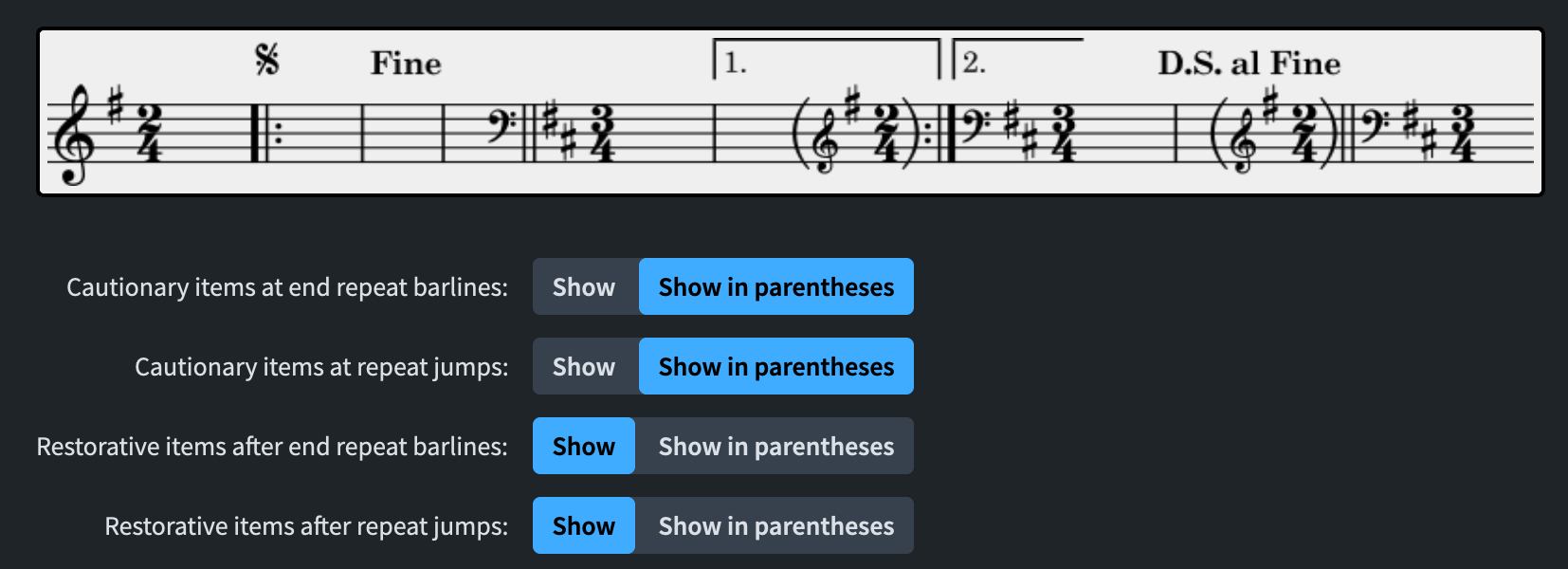
And yes, now we get a bunch of improvements to repeats, guitar tablature and techniques, harmonics, and beaming — all widely-used essentials.
This progress is largely thanks to Steinberg’s team working through user wish lists. You can just feel that, looking at the 6.2 features. I don’t want to slight other competing score systems; in particular, I love that there are open-source alternatives and that (like aforementioned SCORE) not all of them use this kind of GUI. But I do think Dorico is doing an unparalleled job of providing the level of precision engraving requires while keeping things easy and fast.
And I don’t intend that as some sort of hype; anyone with experience on the engraving side should understand the toughness embedded in that statement. The problem is that the layout of a score does not exclusively follow strict rules; engraving has evolved from complex, entirely human and subjective decisions that manage many complex variables. No scoring will ever be automatic, so part of the challenge of graphical scorewriting software is to minimize manual labor, but also apply complex rules to make things look right, and still make it easy to adjust elements manually as needed.
And a lot of it is not glamorous: just make it easy to add harmonics. Also, I’m writing for guitar, not keyboard, so I need guitar tab stuff. And hey, that repeat sign doesn’t look quite right in that context. And I don’t want the rehearsal marks to have that shape, I want them with this shape. And I want the beam thickness to be just so. And it’s 2026, so I also want amazing-sounding playback, not because I won’t hire musicians (I am pouring hours into this score), but because I have to first sell someone on the piece so I can afford to hire musicians. And so on.
So, as you watch this 6.2 Dorico video, keep that in mind. It’s not ever going to be perfect — developing notation software is like turning your life into Zeno’s paradox. But they’re getting into some nice refinement of the tool now:
This success is possible in part because this is a second attempt. The core team on Dorico was previously working on Sibelius. This is, no exaggeration, the culmination of 40 years of work, and that in turn was indebted to Leland Smith’s earlier notation work that dates back to more or less the dawn of modern computing. (“SCORE” began as a way of representing musical events for Max Mathews’ “MUSIC.”)
October’s Dorico 6.1 release was also sigificant, and reminded us that Yamaha owns Steinberg and including a gorgeous Yamaha grand piano, a bunch of proofreading stuff, and a huge number of nuanced engraving improvements, among other additions:
Expanding practices
Steinberg is quick to note that there is “at least one more small update to Dorico 6” but that they’re largely focused on Dorico 7. So I wonder what’s next.
I hope for that that we see more notation possibilities outside of so-called “common practice” — the tonal music era in Western music, basically.
Simplifying a lot, we have sort of three areas of music scoring:
Conventions inside common-practice Western music. That’s the easy stuff, really, because it’s what this particular notation system was devised to represent. Scores aren’t music, even in the most over-notated scores — maybe especially in the most over-notated scores. (I’m looking at you/me, first-year graduate composition students!) They are a reflection of a living musical practice and the relationship you have with players. But there is a lot of music played today — indeed, partly because of colonialism — that can use this system. Now, outside of that, you have:
Conventions to which Western scoring can be adapted — with or without extensions. Here we get into hacking the scoring software. You’ll notice those mentions in the video of hiding things that shouldn’t be hidden. Yup, that stuff. This is not a terrible compromise; it allows you to communicate with musicians trained on Western scores but get them to do things that those scores didn’t provide. That can include a lot of non-Western music, and “experimental” or “extended” techniques. That’s why I suddenly started a tangent into Lutosławski last year looking at Dorico.
This should not be taken to mean exclusively Western composers, either. I know Arabic and Iranian and Turkish composers (among others) who have deep training in both “concert music” and their own, rich traditions and find novel ways of combining the two.
And what we have in common is that we pretty much salivate any time notation software mentions “hiding” or “drawing” on the scores.
That said, there’s also:
Independent conventions. Here we get into musical practice — the majority of musical traditions on the planet, in fact — that can’t be wholly represented using only the kinds of stock tools in Dorico, even with hacks. Because musical notation typefaces grew out of font and typesetting technology and not notation per se, I think you could still put music type in this section, partially. But we do have other tools. A tool like Dorico will always be somewhat limited in this territory, because part of what makes it easy to work with is its focus on particular musical practices. We need other tools. Those tools might look at the history of western notation software, though, not as a direct model, but as a case study in how software evolves to fit musical practices, or alternatively, how it sometimes doesn’t.
Now that Dorico has covered a lot of the basics, I’d be really excited to see them expand to other practices and the associated communities and markets that use them.
I’ll keep an eye out for what they imagine for Dorico 7, and what else is happening in the scoring space. With all this talk about returning to human musicians, you might want to assume you won’t only be doing free improv. Getting back to scores is one avenue for playing together again.
Dorico 6.2 update now available