There are few places on Earth where you can see the state of the live light and sound industry quite like Las Vegas’ LDI show. It comes with all the usual trade show trappings, from industrial espionage and theft to insanely expensive booths (and wastebaskets). But it also provides a glimpse into opportunities for individual and DIY artists to earn money, at a time when wide swaths of the creative industries feel like they’re coming unglued. That VJ/live visual or live sound career might be worth a second look. We got an exclusive report on the ground from Colin Keurheen for CDM.
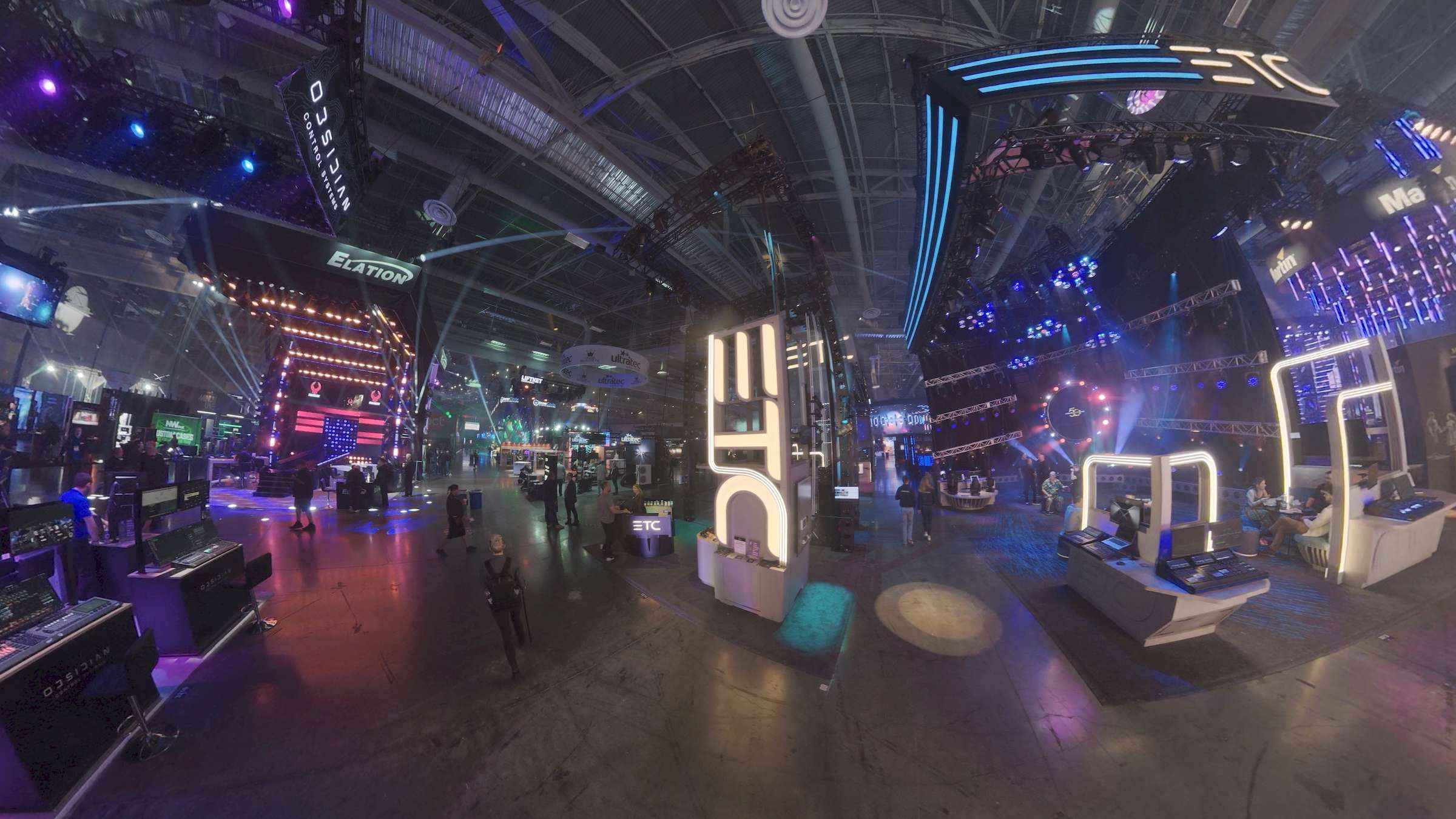
Lights, Sound, and Espionage
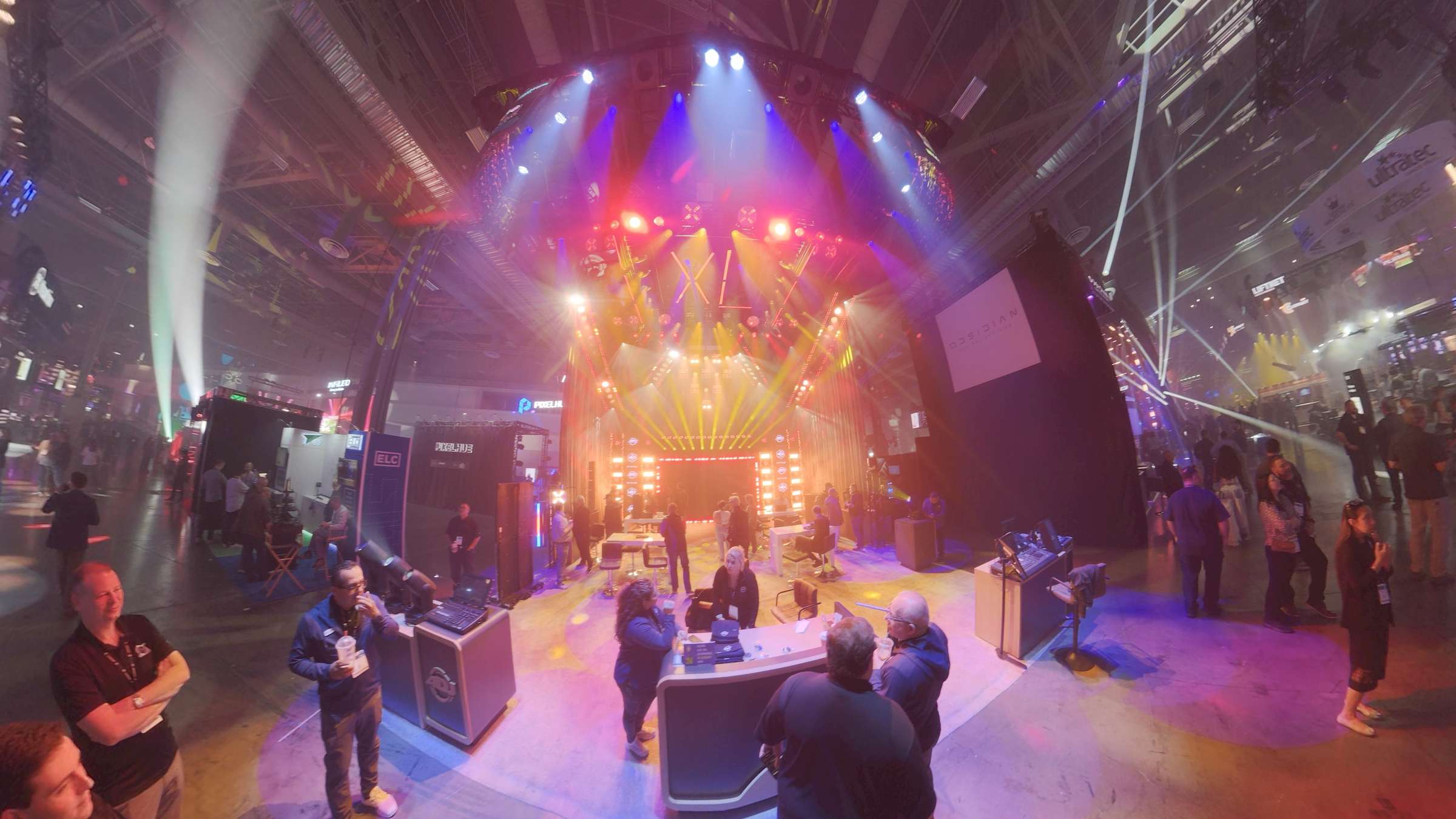
Every year, thousands of lumen lovers embark on their quest to Las Vegas for LDI. Brands spend millions to blow their clients’ minds and deliver their latest and greatest. While some booths draw a crowd, others remain desolate for most of the exhibition. It’s a shark tank, and with this sink-or-swim approach, not everyone has a “great show.”
But on the flip side of the big business behind mega-conferences is the secret, yet commonly experienced, craft of stealing trade secrets.
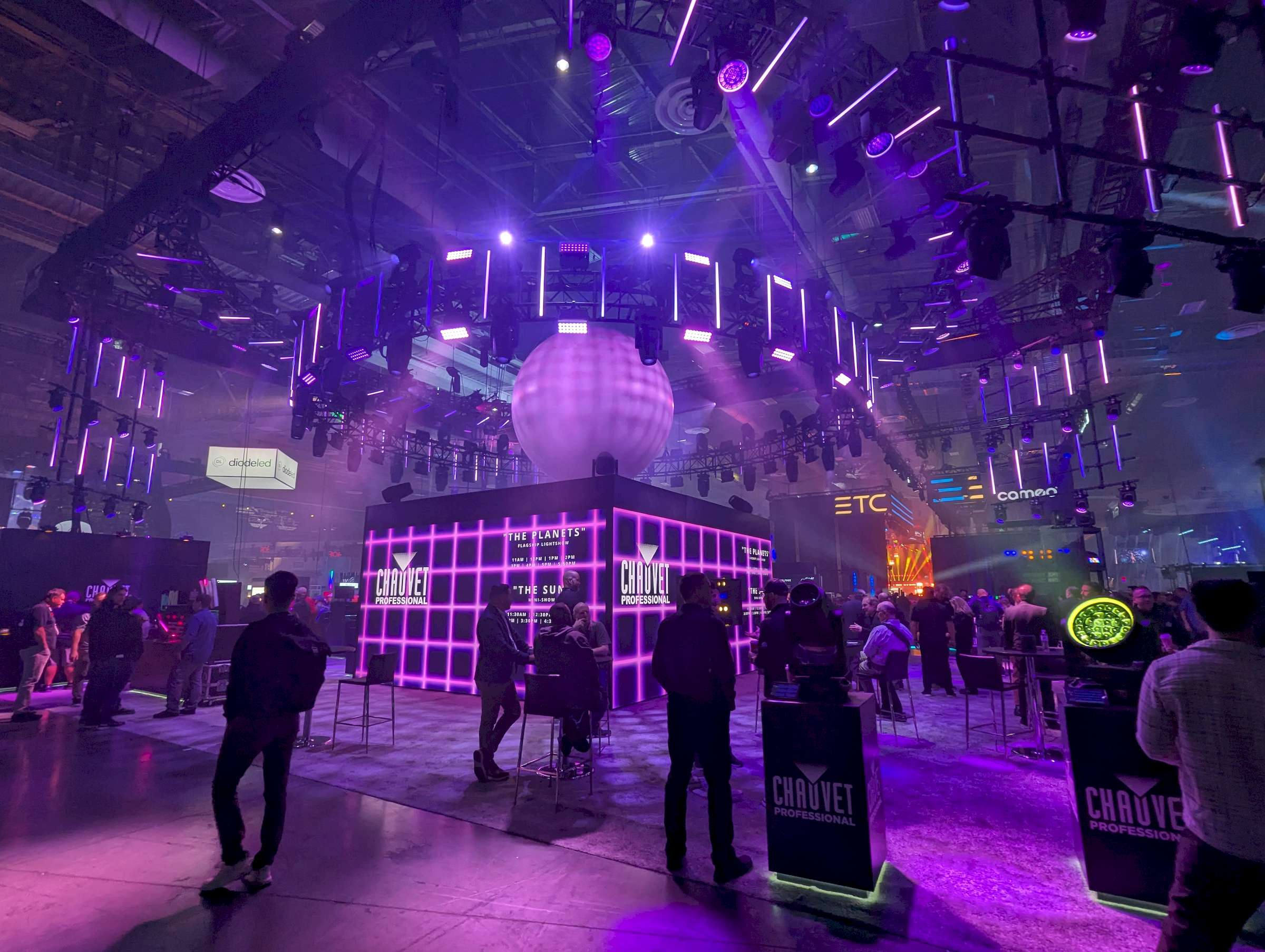
Every night, the showroom floor shuts down, and security is tasked with keeping hundreds of booths safe in this labyrinth of concrete floors and premium carpets. Just to get carpet beneath your booth will cost you thousands of dollars. Want a table? Power? A wastebasket will cost you $50. A 10′ x 10′ (about 9 m2) section of the showroom floor starts at $5,000 USD. But unlike the world-class and often spooky AI surveillance of Vegas casinos — profiling you and tracking your every move — the Vegas Convention Center’s security “seems to be” lacking.
The day before the exhibit floor opened, a tech at ROE Visual noticed a panel was poorly screwed in on one of their flagship LED panels—their latest and greatest tech introduced this year. After opening it up, they noticed moved wires and tampered circuit boards: a clear indicator that someone pried in overnight to either mess with it or, more likely, “take pictures” of their tech to reverse engineer it.
A wastebasket will cost you $50. A 10′ x 10′ (about 9 m2) section of the showroom floor starts at $5,000 USD.
In fact, there are stories like this every year, and LDI is not alone. From connectors being taken to knockoffs being 3D printed right on the showroom floor, the big business of making your products “hands-on” for customers comes with some tradecraft caveats.
The Emerging Market Dilemma
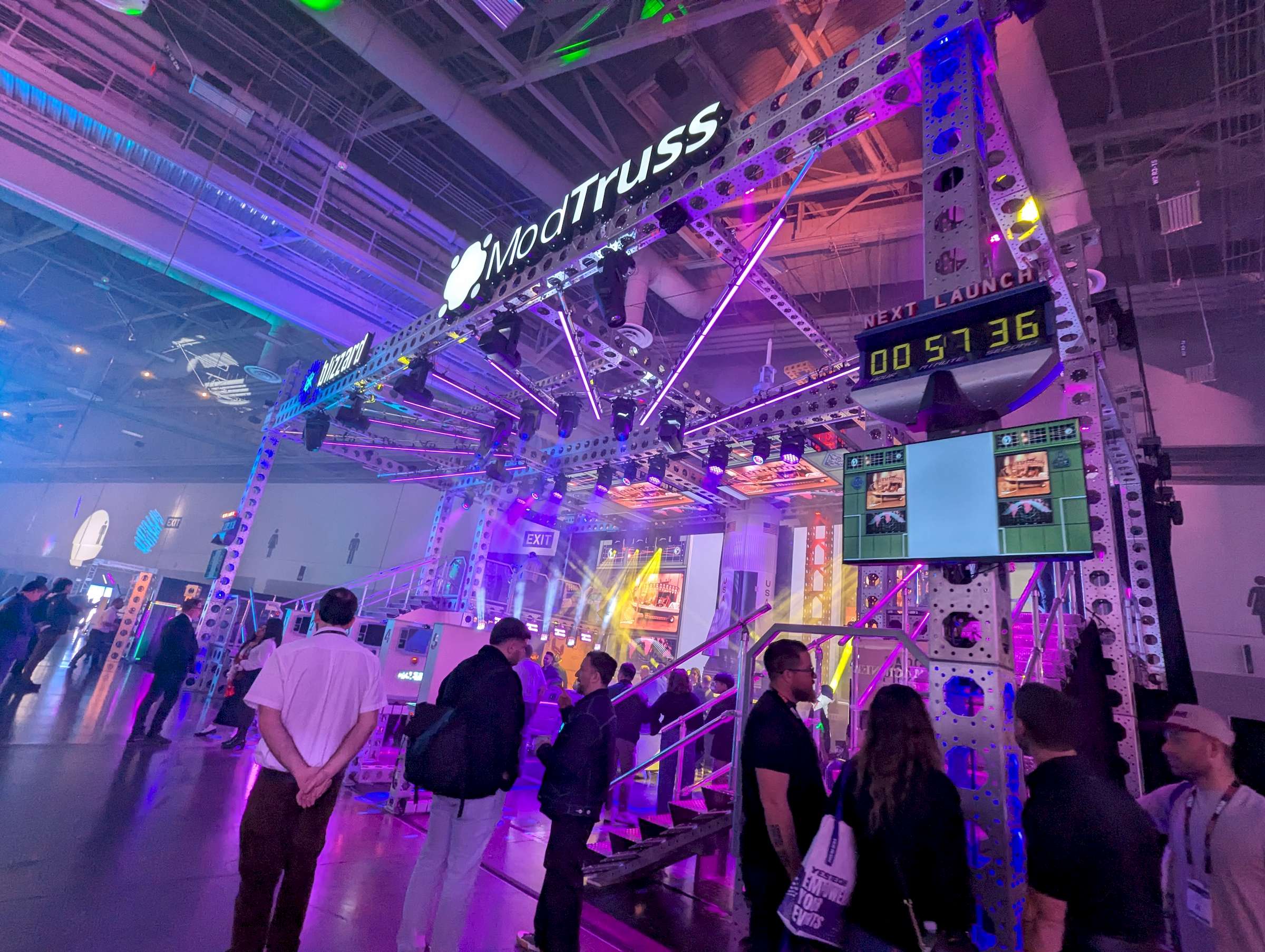
Traveling further down the floor, you’ll notice a number of companies from all over the world, with a decent number of new and emerging companies based out of China. Not unlike the reverse engineering of ROE LED panels (also a Chinese-based company), there are dozens of vendors selling their own versions of identical tech. Everything from LED panels and moving heads to fog machines, hazers, and motorized winches. The global marketplace here is not only competitive, but it seems to completely ignore copyrights and patents from other vendors. It is a real dog-eat-dog world.
A few years ago, ROE introduced a curved and adjustable LED panel. Less than six months later, all their top competitors had the same (eerily identical) curved LED panels.
This is where personal relationships come into play. Schmooze a client enough, make them love you and your brand, and there’s a good chance they won’t buy from a competitor a few months later for half the price. It really does require an “upsell” to keep the lights on.
But the business is less than desirable for a number of smaller sellers and specialty companies. While LDI boasts an international claim of being #1 for hitting the American market, the marketing side of LDI is not always a reality for some. It really does take innovation to stand out on the floor, and this was even more noticeable in 2024 when the “Emerging Market” section of the showroom floor was carved out. Last year, almost all of the smaller Chinese manufacturers were grouped together in their own section, and it was difficult not to notice. Big brand-allied clients avoided that section like the plague, and a number of the smaller Asian brand representatives sat in their (very expensive) booths flipping through their cell phones.
The hard truth here is not that no one wants their products; it’s that many of their clients will most likely broker deals with them online, or simply do not want to upset their “private room” relationships with the big brands by moseying on over and buying hundreds of identical light fixtures at a fraction of the cost. The visibility is good, but the results can often feel less than impressive.
Ed. Yeah, given how cheap flights are typically even from European capitals over to China, I wouldn’t be surprised if we see the emerging markets just run their own show and compete with Vegas’ exorbitant costs — plus, China has an opportunity to woo international audiences who don’t want to deal with the USA’s comically draconian border.
Unlike last year, the good news is that this time the Questex / LDI team made sure to disperse the “Emerging Market” vendors across the showroom floor. If you want to go from Robe to ACT (MA Lighting), you’ll have to walk past a number of these booths, giving these manufacturers an opportunity to be seen.
The DIY Innovation Gap
Outside of the parties and behind-the-scenes tours, it’s worth arguing that the espionage and copycatting of these products is, in a weird way, necessary for continued innovation.
There are still so many lighting console manufacturers out there that limit their licensing models based on the number of Universes their device can output. Meanwhile, in the single-computer software world, applications such as Resolume, VDMX, MadMapper, QLab, Millumin, TouchDesigner, and QLC+ can output any number of universes over ArtNet or sACN. But if you want to get a gig for a tour? Good luck telling them you drive your entire show with a single computer solution.
This is the world of $90,000 lighting consoles and $100,000 media servers. Yet, when you ask around, you’ll find a lot of laughing creative technologists working on their own DIY solutions to do incredible things that are outside the solution set of these big brands.
The rapid development (and theft) of these technologies forces an ethos to innovate to stay on top—something many of these brands might not follow if not for the competition. Knock-off lights and technology also lower the barriers to entry for many users around the world. While this is not an open invitation to steal, it does come down to a basic understanding of how the world operates and how creatives are constantly looking for ways to push boundaries without breaking the bank.
Applications such as Resolume, VDMX, MadMapper, QLab, Millumin, TouchDesigner, and QLC+ can output any number of universes over ArtNet or sACN. When you ask around, you’ll find a lot of laughing creative technologists working on their own DIY solutions to do incredible things that are outside the solution set of these big brands.
In Malaysia, for example, the currency is 1/4 that of the USD on the global market. So if a big lighting manufacturer releases a $1,000 light in the USA, that same light would be roughly $4,000 MYR in Malaysia. But if another manufacturer releases a light with “similar” capabilities for $250 USD, then that light is a more reasonable $1,000 MYR locally.
When companies focus on proprietary technologies at the core of their business model, they are constantly going to face the threat of open-source competition and counterfeit competitors—all the while building their technologies off of open standards like DMX, SMPTE, ArtNet, and so on.
The Future is Integration (and surprisingly AI-free?)
In the past, a single computer could not drive 8+ 1080p displays. But as NVIDIA GPUs and Apple Silicon processors get better, they are making a direct play toward the media server marketplace, forcing yet again… innovation.
I spoke with a director of innovation at a big brand, and he illustrated a beautiful take on how the future of their company is all about integration. The VJ is also the lighting designer; the media server is running cameras, automation, pyrotechnics, and generative code. His hot take is that the big companies need to almost be a “one-stop shop” that can input anything and output anything. Their competitive edge becomes less about chasing hardware advancements and more about educating future generations on the limitless possibilities they can achieve.
It was a beautiful take on expanding the creative horizon, but as he notes, it is usually met with challenges from the “old guard” locked into trying to make money off their proprietary hardware—a game that has proven expensive and prone to theft.
This is still very much an industry that is unlikely to be hugely disrupted by AI technologies in the immediate future.
That being said, what was a huge thing that I didn’t hear much of at LDI? AI.
Despite a few companies offering “AI Lighting desks” and AI tools for their software/hardware, this is still very much an industry that is unlikely to be hugely disrupted by AI technologies in the immediate future. It may see a reduction in the workforce due to the simplifying and merging of technologies. But when a show is in motion, (for now), it is going to take a creative professional to create, configure, push buttons, and assume the liability when “live entertainment” is taking place. [Ed.: Have to assume that, at the moment, the larger displays for live shows are even less forgiving of the generated content everyone seems to hate.]
Generative visuals may be disrupted, and lights may be faster to configure and program, but for now, this career path seems to be one of the few “safe” trades for someone to embark on.
Ed.: here you go, their official promo video. He seems to really not know a lot of things existed, including LEDs, but not sure what’s going on with the footage of the dude, anyway. The real footage actually works pretty well.)
Having been to Light & Sound at Frankfurt Messe, the scale in Vegas is really something else; Germany can’t compete on this one.