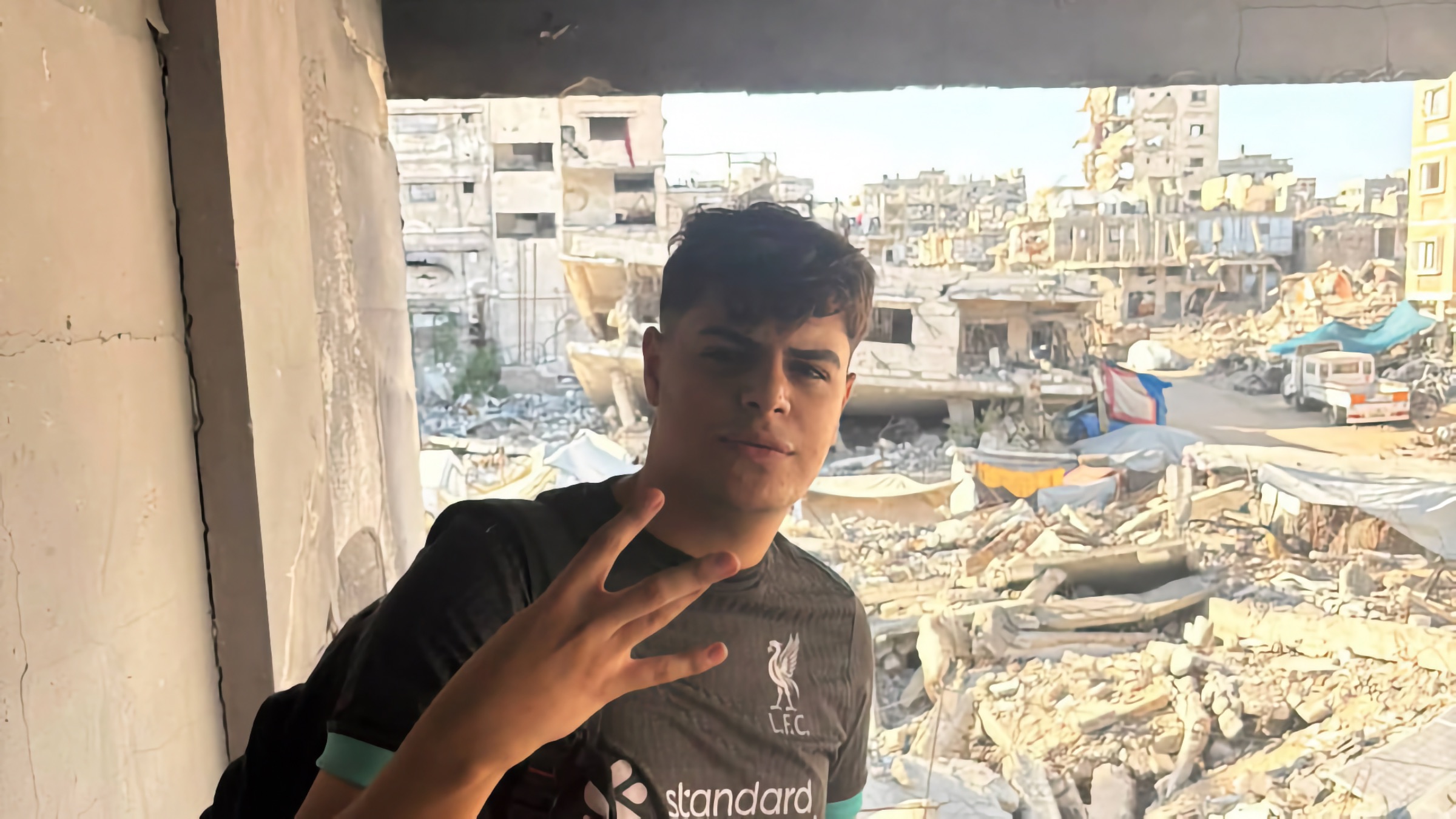
20-year-old Palestinian producer Abed Eyad is making beats from the rubble, surviving amidst genocide. He talks to us about what that’s like, what drives his productions, and how to support his music.
It’s great sometimes to pick up artists early in their development; Abed’s beats are unique, hard-hitting, bass-heavy trap loops. He’s part of a scene that’s struggling against all odds to shape a unique voice and have it heard, despite being cut off from the world by occupation and violence. Israeli airstrikes with US and Western backing destroyed Abed’s home and for a time, he was making beats from a tent. So yeah, Abed, I hope we get to support your work and check back in the comig years.
jinandtonic travels (Malaysian correspondent Jin, who “quit hit job to travel and tell stories”), wase moved and did this feature/short interview in July:
I got to catch Abed via Instagram, and we corresponded via DM; I appreciate that he took some time to consider his answers. (I see a couple of other Palestinian producer friends here found Abed, too, so we are overcoming some of these imposed barriers!) I think it’s also really important that we continue to put our Palestinian colleagues first and let them tell their own story and get a chance to be part of the music-making world we love. So thanks, Abed, for doing this. Don’t miss the support link and the call for collabs.
hit reload once or twice if the Instagram embeds don’t work right away…
CDM: The situation is intense, I know. What’s that challenge like for you; how do you find some space and time where you’re able to focus on music and be creative?
Abed: Actually, for me, making music is the only path to continue in those hard moments. Most of my time in the last three years was spent on evacuating, thinking about what’s going to happen for us. So finding a small time to make music was the only thing that could help.
You did actually manage to go and do some producing in the midst of this rubble? Where is that?
That’s our family house that was destroyed a few days before the ceasefire began in October 2025, so being there is really emotional.
It was a nice piece jinandtonic did. Wondered if all those details remained the same — so you were able to move back from the tent into a house fairly recently, yeah?
Yes, after evacuating in September 2025, we lived in a tent for three months. After that the attacks stopped and our house has been destroyed, so we are living in my uncle’s house temporarily until things get better.
And still working on studying software engineering?
Yes, the second year is about to start; I’ll try to organize my schedule so I can continue making music while studying.
These are some gorgeous beats, been taking some time to listen. I know you’ve been working for five years. What’s inspiring you in your listening and producing?
I think a lot of people would agree: watching someone making music will definitely encourage you to go to make your own music. Listening to Arab hip hop was really inspiring too.
Are you listening to other Palestinian producers at all? I imagine it’s one thing that still lets Ramallah and Gaza connect, even when the occupation separates you.
Sure, I listen to Palestinian music producers. We have Al Nather; he’s an icon. He has his own sound, and it’s so unique.
Julmud is really inspiring too.
In Gaza, there’s my friend Adam Ghanim [founder of Manjam Records]; he’s a talented artist, and I think he has the vision to make our Gazan sound.
I hope we can see features between Ramallah and Gaza, and I’m open to any of that soon.
Can you talk a little about your process? I see FL Studio, of course — how are you usually starting; how has that evolved?
I started making music using my mobile and I finally got the chance to have a laptop 9 months ago, listening to different genres of music was really helpful, watching YouTube videos is great , btw I like to start with melodies before adding the drums!
Any collaborations yet?
I still don’t have a collaboration until now, but I’m working on some, and I’d like to collab with others.
It’s a kind of resistance, right, making music?
What can people do to support you, and the people around you? What’s something you hope they’d know? What action would you hope they take?
Yes, it is — art is power, and it’s a peaceful message to all the world that we want to connect and be part of this huge community.
Actually, I have a donation link because the electricity here is so expensive, so that will really help.
Most of Gazan’s people like art, and they want to be a part of this world, but these circumstances are not the best for them to do that. So I’d like to see them working with more Gazan artists.
Art is power, and it’s a peaceful message to all the world that we want to connect and be part of this huge community.
Oh yeah, and while we were working on this, one collab dropped:
Support Abed: Australia-based nonprofit Create or Die has a fundraiser up now on chuffed. As he says, this is to help his family and even provide the basic electricity to make this possible.
Help Gazan Music Producer survive and follow his dreams
Find more beats on Abed’s Instagram account, @abdulwav:
https://www.instagram.com/abdulwav
There’s a beat up on beatstars, too, if you want to check it out.
And Instagram is the easiest way to reach him if you’re interested in a collaboration.
Previously: