With an unprecedented minimum of 450,000 people displaced in Lebanon, community-led efforts are again working to provide basic aid. These often overlap with the very music and creative communities I’ve written about here, in the country and internationally. And they can benefit from your support.
It’s a simple axiom: if we support the scene, we should do it not only when their world is on fire. When the world is on fire, we should support the scene, not just consume its music. In this case, because of the specifics of the situation, you don’t need a big donation to make an impact.
Some background. Israeli evacuation orders, airstrikes, and now ground combat are forcibly displacing an unprecedented number of people in Lebanon; that’s estimated in the 300,000 range and continuing to rise. This is an accelerating, generated humanitarian catastrophe. Enormous areas of land are under forced Israeli evacuation orders, including the entire southern region of the country below the Litani River (including Sour/Tyre), the Bekaa Valley area, and now even a massive swath of Beirut itself. (For one snapshot with some disturbing statistics, you can see the recent Norwegian Refugee Council report, but suffice to say, I’ve talked to family and friends just watching the traffic jams and chaos from their balconies. There are people camped out along the Beirut waterfront because there’s nowhere else to go.)
Lebanon has a set of crises particular to its situation that have only compounded year after year — including through a so-called ceasefire during which Israeli attacks continued. Community-led efforts and mutual aid are very often the only available support, up against a non-functioning government, a failed currency, sectarian divisions, problematic international NGOs (many of them), and discrimination against groups like migrant workers.
But people in Lebanon have also risen to the occasion. Just as the Beirut Synthesizer Center and other projects have been an inspiration to us musically and in community organizing, grassroots organizing in Lebanon offers lessons and experiences that the rest of us can share. (For one place supporting this conversation, go listen to the Mutual Aid Podcast.)
The challenge is that those efforts now face a far greater crisis than ever before, and we’re only in the opening days. There’s reason to be deeply alarmed; I’ll point you to From the Periphery for one place to start to understand where we are; see their panel discussion and monologue.
How to give
But that also suggests action is even more urgent. There’s currently a Google Sheet that covers many of the trusted efforts on the ground:
Instagram users, here’s a good shareable round-up with some similar resources:
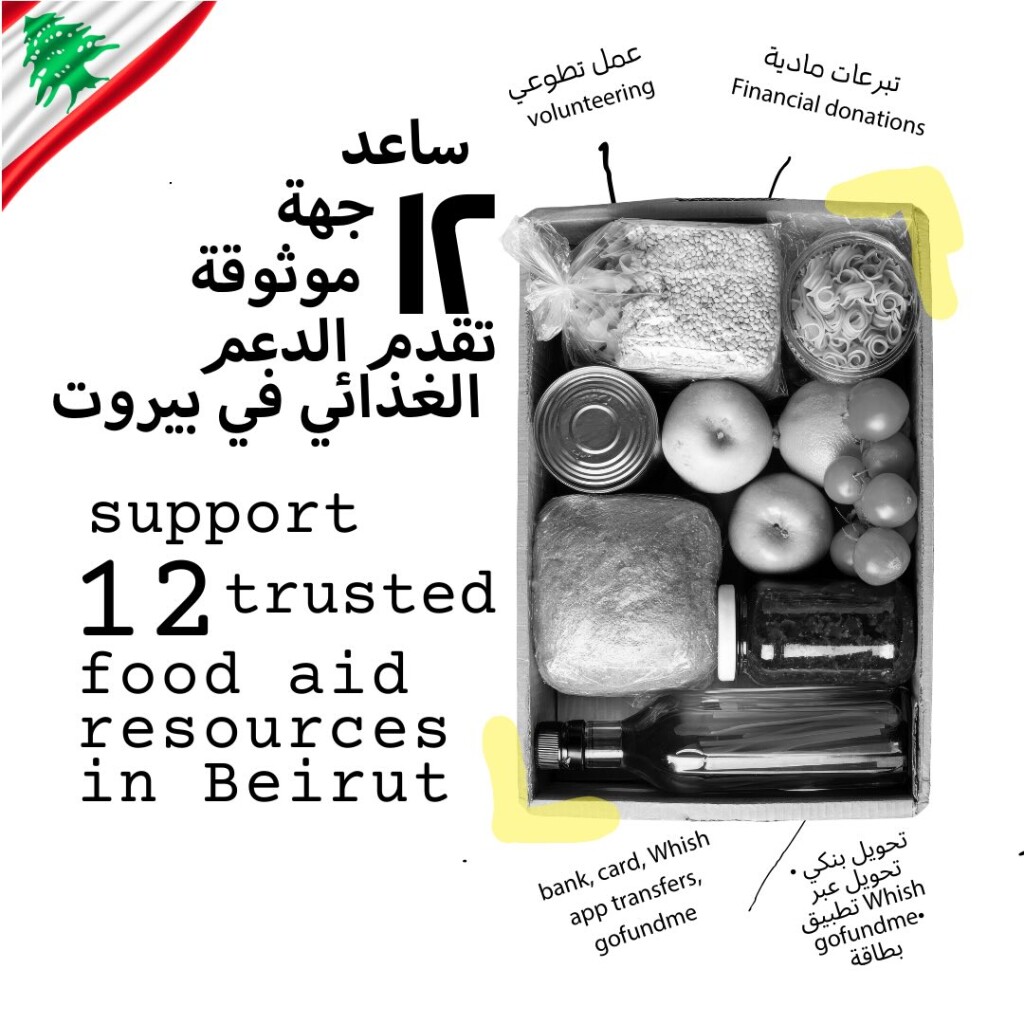
To give directly, there’s now a network of organizers — found via multiple sources, but particularly Ayman and Politically Depressed. They’re a great place to start as international donations are easy, and this represents a bunch of connected initiatives — plus, as I write this, they’re about to tick over 50,000 EUR.
Lebanon Emergency Relief Chuffed link
Here are some specific examples:
Migrant Workers’ Action focuses on the needs of migrant domestic workers in the country, involving those groups. (The topic has moved culture, too — as with Ali Chahrour’s work When I Saw the Sea with musicians Lynn Adib and Abed Kobeissy.) MWA is teaming up with Reclaim Our Rights (ROR) collective, “a group of migrant women activists from Kenya, Sierra Leone, Ethiopia, Eritrea, Sri Lanka, Nigeria, Cameroon, and the Philippines, dedicated to defending the rights and dignity of migrant workers in Lebanon.”
There’s also Egna Legna Besidet:
Egna Legna Besidet (Amharic translates to “us migrants for us migrants”) is a Lebanon based women migrant domestic worker run humanitarian and advocacy organization. We have been providing humanitarian assistance for domestic workers in Lebanon since 2017, while speaking up about the dangers and discrimination they face.
Egna Legna Besidet Donorbox link
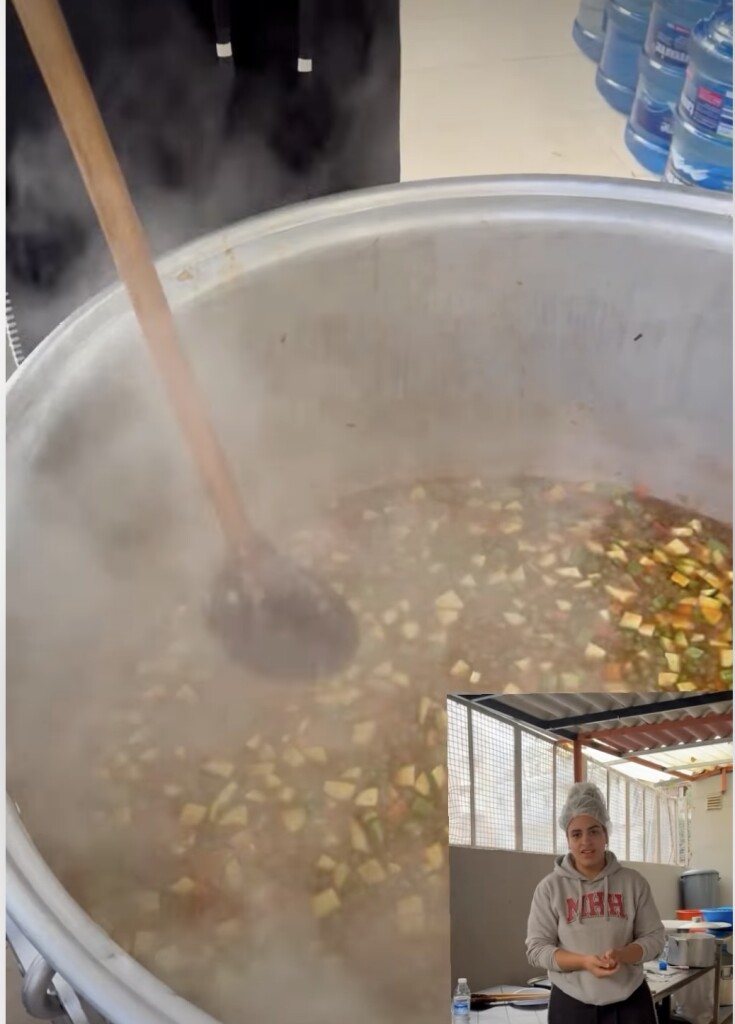
And there’s the ongoing work by Nation Station, the community kitchen forged in the aftermath of the Beirut blast — another day, another 1000+ meals prepared.
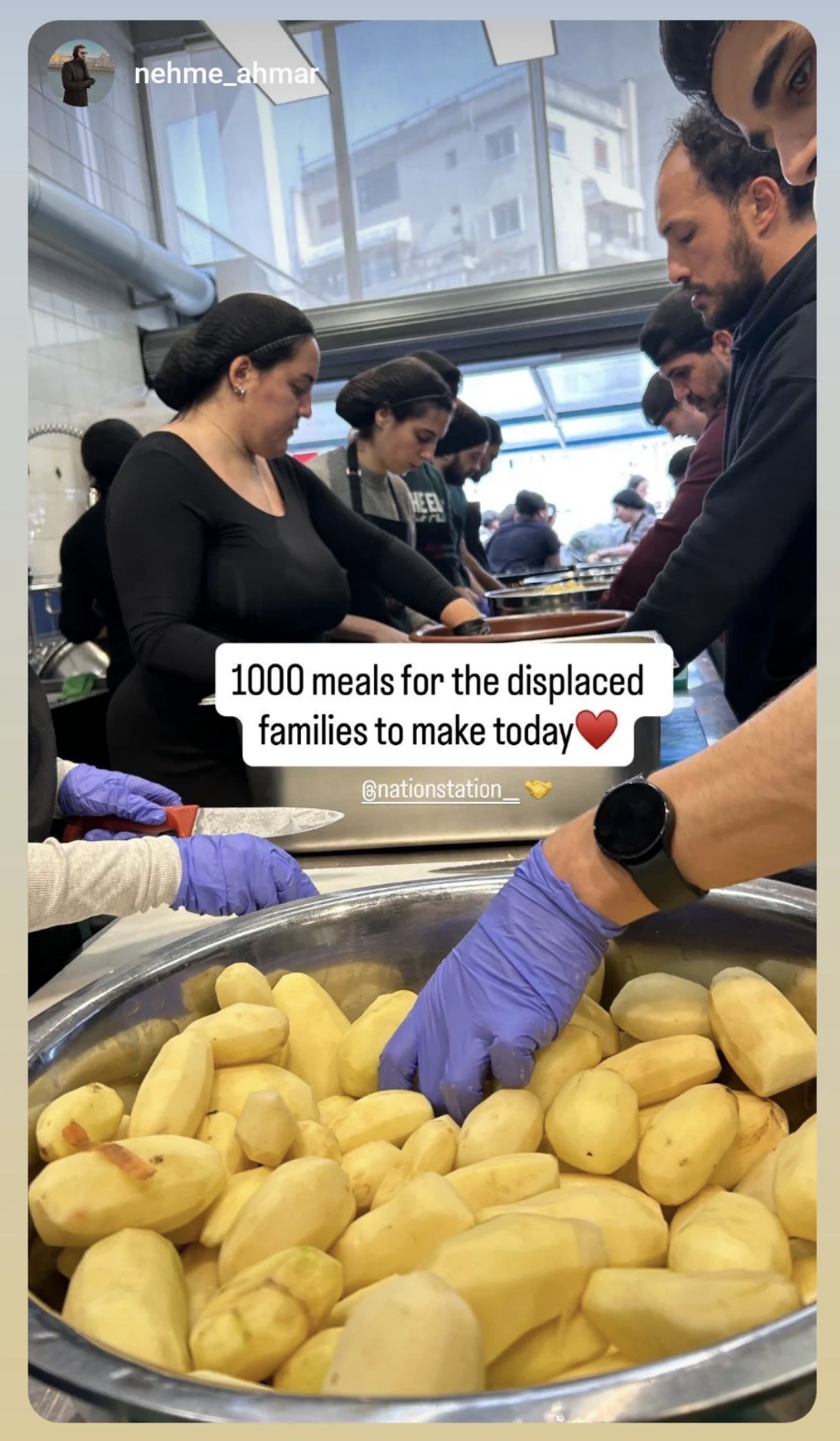
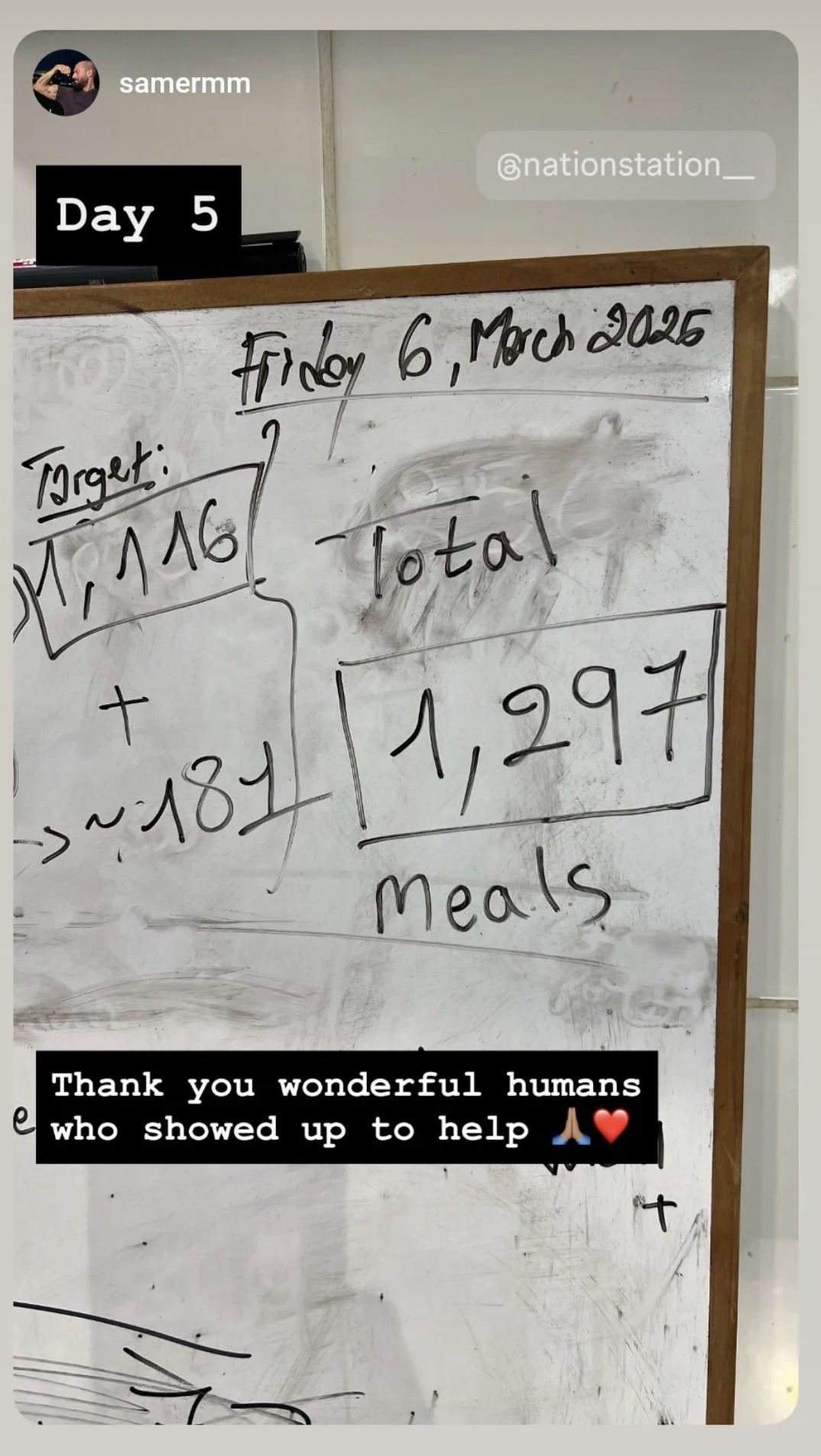
They’ve also got an easy international-friendly GoFundMe link:
Help a Food Bank-Soup Kitchen in Beirut, Lebanon
I spoke to Hussein, co-founder, in 2024:
Beit Aam, community and cultural center, has become a hub for mobilizing volunteers for aid, and is gathering items like mattresses, canned goods, blankets, and more. They make it particularly easy to give internationally, with both PayPal and Revolut links — and come highly recommended from artists I’ve covered here like Julia Sabra:
PS, for those of you who follow Lebanese accounts and wonder about calls to donate via “Whish,” that’s a payment app used in Lebanon. Internationally, you can now use an app called Tap Tap Send, which works from the UK, EU, US, UAE, Canada, and Australia, sending to Africa, Asia, the Caribbean, and Latin America. It can send directly to Lebanese Whish accounts, and you just use your Apple or Google Pay or credit card or bank transfer. (I even made a little Insta post explaining it.)
I am deeply worried about the situation, and angry that “my” governments (Germany and the USA) continue to support this with weapons used against civilians. These efforts will be quickly overwhelmed if there isn’t an immediate cessation of violence that allows people to return home. But in moments of worry, action always beats despair.
If it feels like there are too many crises at once — or if someone hits you with “whataboutism” about why you’re working on crisis “a” and not crisis “b” — let me offer a counterpoint. Every action we take, we learn something. When we try to organize and fail, we learn something. If we share experience across these crises, if we spend some time just listening to what other people are dealing with, we can actually begin to get stronger collectively. Music and music technology are really just a means to connect with other people. Otherwise, we’re just making silly noises alone in a room. Or to put it another way, it’s kind of amazing the worlds that silly noises alone in a room can open up.
I’ll finish with some music. Berlin-based DIY collective DWAM put out this release by Jealous Orgasm supporting mutual aid in Lebanon.
Photo at top: displaced families stuck in traffic, March 2026 — photo Ahmad Badr/NRC (openly licensed by NRC).
Berlin and local giving
PS, if you’re local to Berlin, Refuge Worldwide has been compiling local events.
Specifically I want to call attention to our friend who is supporting his family, Farran, and friends — Hussein was part of the first project I ever worked on in Lebanon, and he’s a great neighbor and friend here in Berlin. You can drop by Riwaq today Sunday 15:00-21:00 if you’re near Schlesisches Tor or give online via GoFundMe.
What about Iran?
I’m sticking to Lebanon because I am confident in my sources on the ground; with Iran, communication and giving are impractical for most of us at the moment. But there are mutual aid networks in Iran, which Alex Shams has written about for The Public Source. See:
Quiet Solidarity: The Underground Networks that Defied Israel’s War on Iran