Trump’s unprecedented tariffs are starting to hit reality following a Supreme Court defeat over the weekend. Music gear consumers shouldn’t expect any immediate cost relief. But while the picture is complicated and the major problems remains the chaos Trump is causing, there are some hopeful indications for makers and musicians both inside and outside the USA in the longer term.
Now, I really don’t want to claim any expertise as a financial or trade policy reporter — I’m just not. But there are some things to know here. Honestly, I want to share some of this so that we can talk about it, and I may need to stick my neck out a little in order to break some of that silence.
Here’s what just happened, if you’re catching up. The US Supreme Court struck down Trump’s tariff regime, because in short, it never had Congressional approval, and the 6-3 majority argued that the reasoning he cited fell short of what was needed to circumvent Congress. Trump then immediately chose a different law to institute a blanket tariff on the entire world, but that authority will expire in 150 days. (See Politico for a decent explanation.) That tariff is currently set at 10%, though the White House says it will raise the rate to 15% and no one knows when. (Chaos, as I said.)
Synthtopia has a terrific article that has the most complete survey I’ve seen of impacts on music gear, and — the headline sums up how everyone should manage expectations:
Supreme Court Rules Trump Tariffs Illegal, But Don’t Hold Your Breath On Getting Your Money Back
Synthtopia’s frustration is well placed. But there is a win here which we also shouldn’t miss.
Why would this be good news? Well, 10% or even 15% is lower for significant parts of the world than the previous rates. (They’re still insanely high! Even here in “fortress” Europe, tariffs are far lower than the effective rate in the US. This truly is unprecedented for a western power. But it could lower the effective average.)
Most importantly to our own story, the higher rates are in places that are significant to synths and music tech — think Canada, Mexico, China, the EU, Japan, and South Korea.
That means even though the next 150 days don’t reset us back to where we were pre-Trump, they are a major improvement — both simpler and at a level rate. And then between now and the time those 150 days expire in July, Trump would have to get Congressional approval. For those of you who don’t follow US politics, this is also an election year — 33 Senate seats (out of 100) and every single House seat is up for reelection.
So Trump has a problem, according to current conventional wisdom:
At least one would hope. We’ll see how this unfolds.
And that’s one of many places where there is a disconnect between the rhetoric and the policy. For now, at least, Trump appears to be running up against the limits of US constitutional government — and that’s what the US electorate urgently needs to defend. (Yep, that includes those of us writing music tech websites in Berlin. Hi. And, erm, sorry that there is also this 150-day “emergency” law, too; I can’t make US law make any sense. But… well, July.)
It’s not that tariffs or levies are necessarily bad. Believe me; I even spent a period of time in working on trade policy as a volunteer with the US’ largest grassroots environmental organization, the Sierra Club, and we were worried about the impacts of unrestricted free trade and a “race to the bottom.” (Maquiladores built on the Mexican side of the border to avoid environmental restrictions could be particularly nasty for communities in both countries. Labor wasn’t happy, either.) But effective trade policy requires negotiation, predictability, and democratic input from everyone involved. And this policy in particular did not benefit US manufacturers of music instruments and gear in any way — entirely the opposite.
At the same time, while Trump spontaneously began railing against Taiwan (really), a deal to benefit both Taiwanese and US production seems to remain in place if you read Taiwanese media. And a new 25% tariff on semiconductors is limited in scope, and so won’t impact US gear makers or importers, for instance. Our real problem is actually the AI-induced RAM shortage, which The Verge has covered in detail. It may well eclipse tariff worries as the number one headache for music tech this year.
Meanwhile, no one is expecting immediate relief in prices. The ING Think blog is worth reading because it explains what effective impacts on tariff rates have been after the jarring experiences early last year. But remember, in synths especially, those prices could have otherwise continued to go up rapidly.
What we’re looking for is hopefully some additional predictability in the first half of 2026, the elimination of some of the most extreme tariffs in that timeframe, and the return of Congressional oversight of trade policy later in the year, with a strong chance of rolling back at least some tariffs.
This is not in any way to comment on how trustworthy the USA is in the aftermath of this, but it at least offers some promise of being able to continue businesses like the synth business.
We do need relief
I am not going to sit here and argue for runaway consumption or say trade policy should be the most important thing in our lives. But especially for everyone whose position is precarious — artists, independent businesses, creative freelancers, and the list goes on — predictability is our most important asset. It’s the ability to pay for rent and healthcare — to maintain our independence. Wherever you live, big players like the USA (or Europe, or China, or India) have an outsized impact.
Trump trade policy can impact pretty much anyone reading this site, from economic impacts on wide-ranging creative industries to the cost of the tools you use to the ability of, say, a Eurorack manufacturer to do business. Despite promising to help US industries, the interconnected supply chains of almost any modern business has meant the impact was very often the reverse — even for companies that say “made in the USA.” You don’t need to be a trade policy expert to understand this. Adding tariffs across the board hits everyone in the USA as a tax — US businesses trying to import what they need to operate, and eventually, consumers, both in the products they import directly and US goods whose supply chain costs increase. And while that kneecaps US consumers, it hurts sales for exporters, which hurts them.
Manufacturers are understandably loathe to talk to me on the record about how they planned to respond to these conditions. Bigger makers have expanded in other markets — the USA is not the only market in the world. But anecdotally, it’s been the degree of uncertainty and plunging consumer confidence that has hurt the most — especially talking about the US market. And small music gear manufacturers like those tiny synth or Eurorack operations were hit especially hard, because a lot of the time they were shipping direct. It can hurt a company in Germany trying to ship to the USA, and it can hurt a US manufacturer because it makes it difficult to get supplies. It’s COVID-19 disruptions all over again, but artificially produced and on a greater scale.
I didn’t mention immigration. Immigration policy hits music tech and music (touring or otherwise) even harder. But there, too, any indications of a return to limits on this administration are a sign of hope.
I’ll just close with this. It was amusing to see a small manufacturer like Sweden’s Northern Lights Modular offer a 10% discount to US buyers, as announced on Facebook. (And Canadians, too, truly innocent in this debacle!) That deal is apparently still good this week.
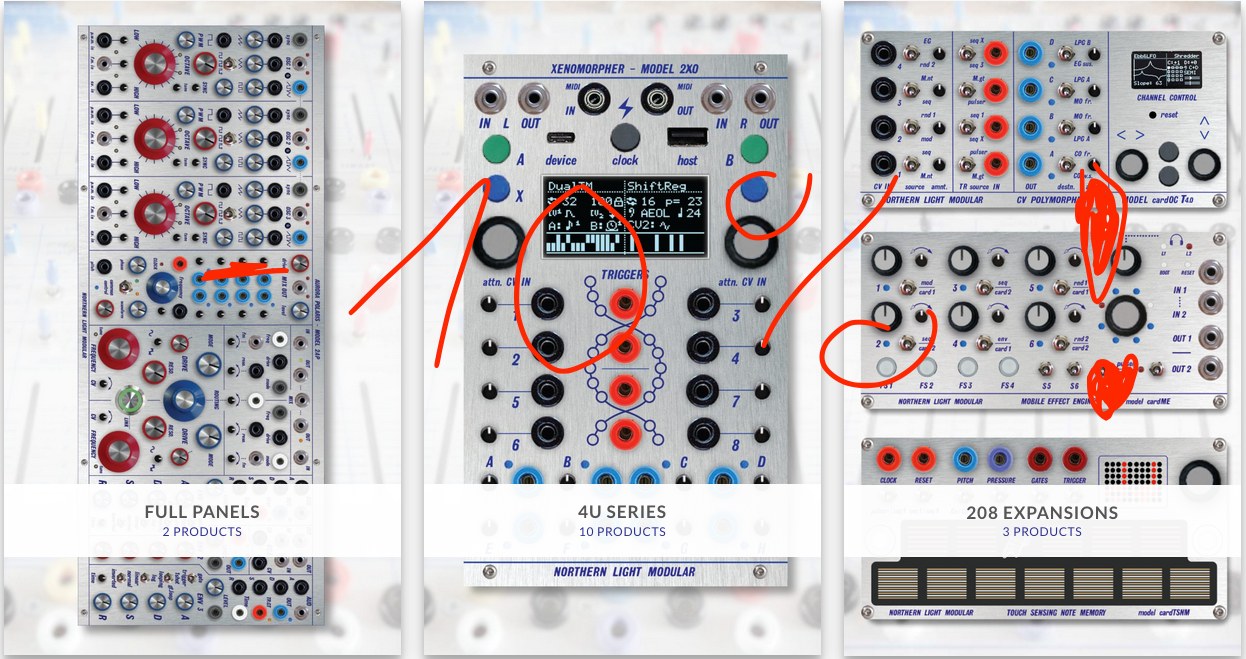
https://northernlightmodular.com/shop
(Not a paid link, just I want to look at some modules as a break.)
That sums up where we are, even as a tiny microcosm. I’ve seen the same sentiment from countless other people across the international synth community. We’re all trying to keep our labors of love going in the midst of a global trading system none of us can control. US manufacturers and customers who have been out in the streets protesting this policy are hit. International communities are yet again impacted by a US government in which they have no say, but which can impact the whole world. The best we can do is try to keep talking and find a way to keep our livelihoods alive.
Now I kind of want an actual taco; I’m hungry.
Taco image (CC-BY) Karl-Martin Skontorp