There’s the old saw about great avant-garde jazz being “the notes you don’t play.” But crafty subversion of the usual bassy wall-of-sound is core to Wrecked Lightship’s appeal. A buzzy synth with no top line, minimal percussion, an unidentifiable bit of atmosphere – it’s apt to remind you of staring at someone snoring in the pitch dark.
Berlin-based duo Wrecked Lightship – Adam Winchester (aka Wedge) and Laurie Osborne (Appleblim) have been refining a living, breathing sound for years, drawing from Bristol’s deep sound system culture, Berlin’s techno eclecticism, and a shared love of psychedelic and experimental music. They make music that evolves like a living organism, pulling from improvisation, technical craft, and instinct.
Their latest album, Drained Strands (Peak Oil), is both a continuation and an expansion of the world they’ve built: dense basslines interlaced with shimmering drones; unexpected textures emerging from modular feedback loops; rhythms that can sway a dance floor or vanish into pure atmosphere. It’s the sound of two friends in a studio letting the machines talk back — a process as much about conversation (with the carbon- and silicon-based collaborators) as about composition.
Both captains of the Lightship wear a few hats – Adam also teaches music production at BIMM in Berlin (alongside CDM’s own Peter Kirn), while Laurie’s myriad solo and collaborative projects are joined by his groundbreaking Apple Pips label. Together they’ve ended up in Berlin and built a rapport that’s equal parts studio therapy and sonic adventure.
We sat down on a hot day in both NYC and Berlin to talk about Drained Strands, their approach to improvisation, the alchemy of analog and digital, and why their music resists easy genre classification.
Listen to Wrecked Lightship’s latest album – Drained Strands
Laurie, I realized when prepping for this that I interviewed you over a decade ago when I was at Ableton. You were working with Komon, and I had fewer forehead wrinkles.
Laurie Osborne: Times have changed!
Adam Winchester: The music tech world is small – I’ve been at BIMM in Berlin, running the music production degree. Peter from CDM ended up teaching there, too. He was introduced to me by one of our lecturers who was leaving, Noah Pred, who you probably know. (David – do we ever!)
David: How long have you both been in Berlin?
Adam: I’ve been here coming up on nine years. I’m a bit behind Laurie, but it sort of feels like we landed at the same time, because in 2016 Chris Jarman and I booked to play the Atonal Festival as Dot Product. We spent the performance fee on renting an apartment here for two months and wrote our second album whilst we were here at the time, which is also when Laurie moved over. I went back to Bristol and then decided to move permanently a year later.
I just kind of fell in love with Berlin in the summertime – I hadn’t spent a lot of time here in the winter before moving!
Laurie: Berlin winter’s always a bit longer than you remember every year, isn’t it? Even in April, it can still really be quite annoying. Then the switch gets thrown, and you suddenly remember why you’re here.
Wrecked Lightship’s first album, Drowned Aquarium
Digging further into your background – I spoke to Emptyset recently who also mentioned Bristol fondly as paramount to their artistic development. How does that inform your music as Wrecked Lightship, and how would you classify it?
Adam: I think it’s the hardest thing to pin down, really – and probably the thing that makes it most interesting. It has elements of all of our influences combined. Obviously, we come from the sound system background. We lived in Bristol for many years, which has something in the water when it comes to bass – if you think about Wild Bunch, or Massive Attack, Smith and Mighty. It’s a bass music city.
Laurie: Psychedelic music always comes to mind when I think of anything that I, or some of my pals, do. There’s a foundation of something that’s going to move you physically with the bass, but it’s psychedelic in terms of the sounds that do something to your brain to complement the physicality. We bonded over bass music, but we also bonded over kosmische and electronic rock from the 70s. To put one tag on it, it’s hard – like how a lot of foundational dubstep artists didn’t like the term “dubstep”.
If you go back and listen to our first album, it’s more experimental in a sense.
Wrecked Lightship’s second album, Oceans and Seas
Adam: Yeah, it pulls on our influences from electro-acoustic music and musique concrete, that idea of “something out of nothing.” We would take a piece of equipment and just abuse it, see what we could get out of it, trying to find that sound or rhythm that you hadn’t heard before.
When we made our second record, we brought in more of our backgrounds in dance music to make things more rhythmic and mixable.
Laurie: I don’t think I ever DJ with that first album, whereas the second one, I started testing those out in clubs.
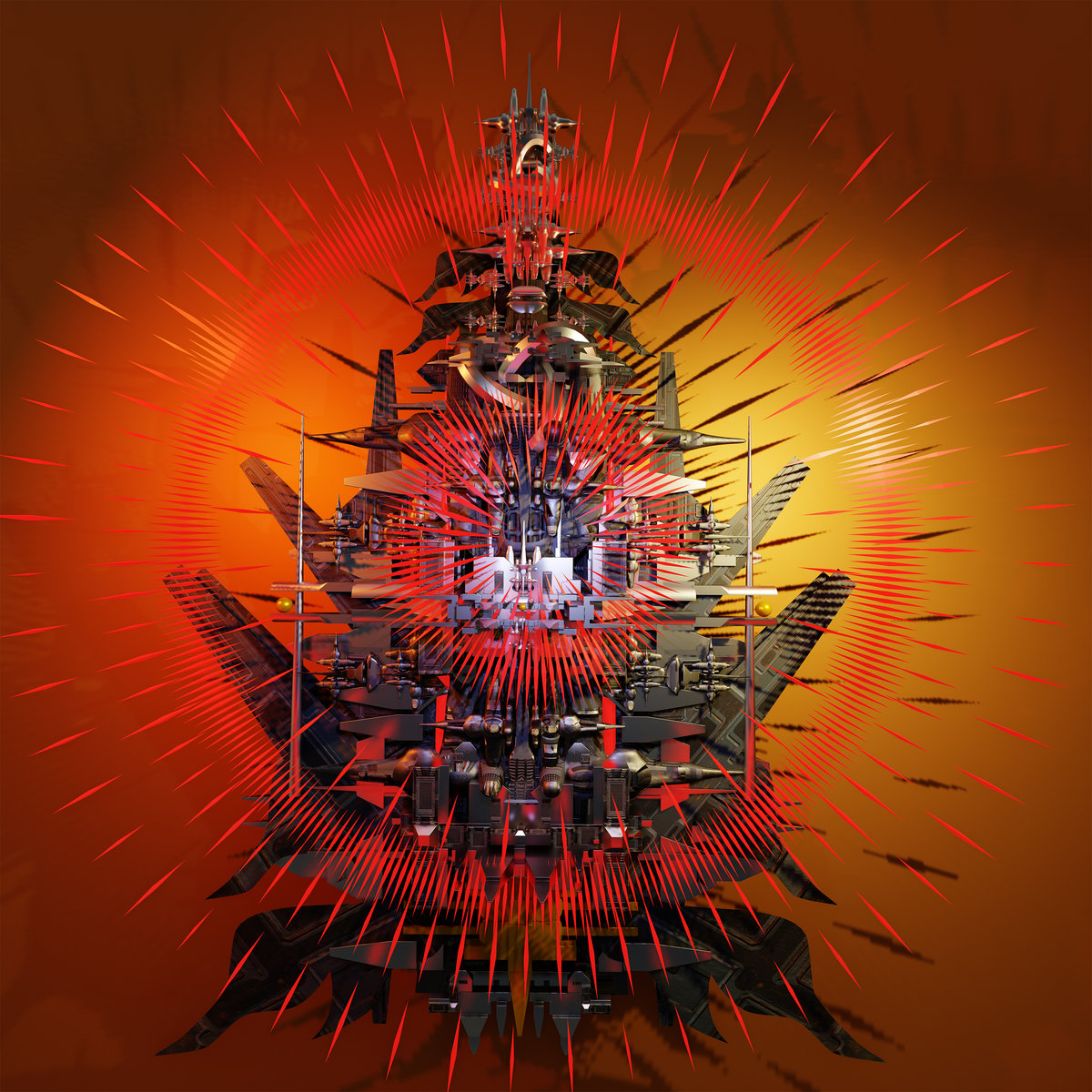
The artwork for Drained Strands is great, same with the last album. It reminds me a bit of the Gundam artwork on Amon Tobin’s Out From Out Where, the space machine aspect.
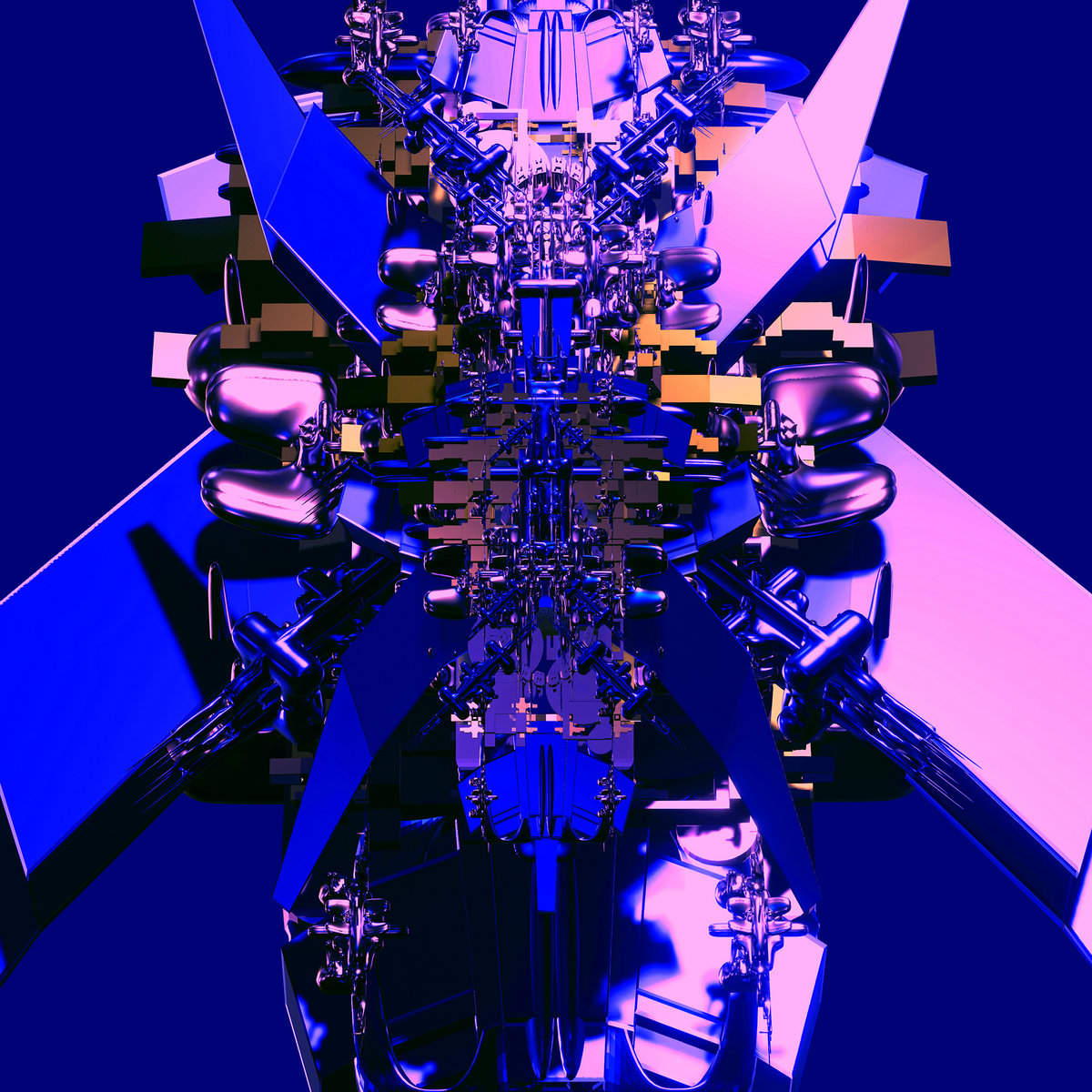
Adam: That’s all Brian Close. He listened to the music and came back with this quite stunning imagery. The only influence we had was on the colors. On the first record, we had colors that reflected this kind of aquatic, submerged, deep-sea idea. This time, we thought, let’s do the inverse – so he went with the burnt orange colors.
Laurie: It was Brian Close and another Brian – Peak Oil founder Brian Foote – who had the idea for the lenticular cover. It appealed to me that it feels futuristic, but it’s also this old school printing process, like the rulers we had as kids with dinosaurs “moving” on them. If you catch it in the right light, it can look quite crazy and different.
It’s interesting that you bring up the colors – I’d always thought of a cyberpunk feel with the blue cover on the last album, while the red and orange this time around feels like a desert planet, like something out of Dune.
Laurie: I see Drained Strands as a sort of ship made of light – it tells our story. One of my favorite sleeves is Autechre’s Amber. It’s one of my top five albums, but the sleeve just influences how I think about it in my mind’s eye. It’s really nice to think that other people are listening to our music and getting the association, where it takes you to a specific space.
What are your processes for creation and performance – are you working together in person in the studio, or do you trade pieces back and forth? Do each of you gravitate more to certain instruments or roles? Is that different when you’re performing?
Adam: We’ve never really had much of a plan, in the studio or live.
Laurie: We want to make every live set very, very different – a new experience both for the crowd and for us.
Adam: Tracks start from all different sounds and ideas – could be drums, or randomly patching a modular synth. We have a rule to always record everything, after too many sessions that ended with “did you hit record? No!” [laughs].
The sounds we start with go through a desk, with some pedal send effects – mostly delays and reverbs – then into Ableton on the computer. Laurie often sits at the computer and then starts taking bits of what I’m doing and building new instruments on the fly. That feeds back into what I’m doing, and it becomes this loop between the two of us.
So are tracks pared down from these sessions?
Laurie: Yeah, there are a lot of long improvisations that we’ll dig through for moments to work up into a track. It’s tough, but the sounds will lead you.
I’m much less of a hardware person, so I feel more comfortable at the computer, quickly putting things together. Sometimes it might take a couple of hours, but when that moment hits, there it is!
Adam: We do a lot of resampling, which also makes it hard to remember how we did certain specific things!
Wrecked Lightship – “Reeling Mist”
There’s a lot of layering on the album. And you’re seeing where things aren’t there where you might have expected, leaving space instead. “Reeling Mist” has these bits of noise – maybe crackle, maybe a synth, maybe the amplified noise floor of some gear? Leaving space for that with this gorgeous melody, it really feels three-dimensional and moving.
Laurie: Dub is a big influence, and that’s in part a music of reduction, of taking things away. We also both like drone music as something very meditative, very healing. In my own work, I find that sometimes the drones and reverbs and ambience fill up and take over. It’s a an interplay between minimalism and maximalism – trying to do a bit of both, where a sound can be huge and kind of smeared, but there’s hollow spaces amongst things.
Adam: I think with “Reeling Mist”, we started with the [Vermona] Mono Lancet, a kind of Reese bass sound. But then we’ll have run it through the desk several times, with different pedals and send effects each generation, layered digitally with some EQs. It’s quite wonky and woozy, that track – we wanted that feeling of an old record warping.
Laurie: We’re both huge fans of Jan Jelinek, especially the Gramm album. It’s often what I want with electronic music: I don’t want to know if it’s analog, or digital, or acoustic, or this, or that. I want it to be slightly impenetrable – is that a synth or a sample or a tape or a microphone, or a real room? It might sound corny, but it feels futuristic and ancient at the same time – kind of like how the BBC Radiophonic Workshop still sounds futuristic.
Adam: That’s exactly the sweet spot, “retro futurism” for lack of a better title. Among our pedals, we have the Strymon El Capistan. I love it – it’s the closest thing to an analog tape machine in pedal form that I’ve found, and we always just crank up the wooziness in it.
Hang on, what’s it sound like if you put this phone next to a guitar pickup?
Are you “playing” these effects in real time, or working with automation?
Adam: Everything’s usually played; we don’t do a lot of automation, nothing drawn on the timeline.
Laurie: It’s a Soundcraft mixer, but pushing the channel strips and the EQs is so satisfying. If anything ever sounds flat or uninteresting, “well, just send it through the channel strip!” As soon as you start either cutting the bass or pushing the tops or pushing the gain to distortion, that’s when the life comes in, doesn’t it? Making it “human”.
Adam: “Human” because it’s unpredictable.
Do you have any preferred reverbs? What about digital plugins?
Adam: I really love the Strymon reverb pedal, the Big Sky. The shimmer and spring options are great. We’ve also got the MakeNoise reverb, the one from Tom Erbe.
The creator of SoundHack!
Adam: Yeah! He did the algorithm design for it.
Laurie: I do a lot of stuff on my laptop with Ableton, with stock stuff. I’ve got my little techniques I’ve built up, like overusing or even stacking the same effects – especially reverbs to get huge tails. Like we mentioned earlier, we resample a lot. I like to print what we’ve worked on and put that into Sampler.
Wrecked Lightship – “Somnium Sands”
Speaking of long tails and smears – I love the hums and atmospheric sounds on “Somnium Sands”. I was listening to it, trying to even figure out what it was – “is that a field recording? An artificial reverb?” How did that come together?
Laurie: Some of that is us on the microphone, chanting and vocalizing, then pitched down. We’ll often experiment with treating sounds – “hang on, what’s it sound like if you put this phone next to a guitar pickup?” – and by the time it’s finished, the treated sound is so far away from where it started. To me, that’s the psychedelic element, where I’m lost in it and I love it.
Adam: That difference between electronic and acoustic sounds – when we listened to the album at a listening party recently, I was thinking “some of this sounds like insects or birds, but it’s synths”, sort of sonic worlds.
Laurie: A bit like Jon Hassell’s Fourth World pieces, or this Ballardian was of juxtaposing images and feelings so that you feel what’s going on even if you don’t “know” what’s going on.
Adam: Yeah, you don’t have the backstory, but this is the world that you’re in. Laurie mentioned sci-fi books, but I also think of movies. Say I watch Robocop because I want to feel like I’m in Delta City, I just want to go and be in that space. My wife asks, “why are you watching this again? You’ve seen this,” but I just want to go and “visit” the city for a bit. Or go and live in Blade Runner.
It’s funny – my unapologetic favorite film is Hackers, in large part because it’d be such a fun world to live in. Everyone listens to Underworld and goes to clubs to play Wipeout and rollerblades everywhere. It also reminds me of something in an interview with Drexciya, about how they would do a kind of meditation before working in the studio, thinking: “okay, we’re in the submersible, we’re on the aquabahn, we’re entering Drexciya.”
Laurie: The best feeling ever is kind of being unaware – your ego goes. You can get that from listening to powerful music, or making music, going to that meditative space.
Adam: When we get together in the studio, we have a bit of a therapy session in the sound or in the machines, allowing us to escape the real world. We’re very aware of this theme we’ve created with Wrecked Lightship, this idea of futurism, of deep sea, sunken civilizations in ruins, or vast landscapes, orbiting planet. All of this imagery that’s associated with what we’ve built so far, this mythology that surrounds it – we kind of travel in it, if that makes sense.
Laurie: When you step away from sounds you’ve just created, they can quite quickly start kind of talking back at you.
There’s still ripples of anxiety from the past few years, from COVID. Musically and attention-wise, ever since the lockdown, I find it 10 times harder to do my solo stuff. Thankfully, collaboration are going great, and that’s been a release.
You don’t have the backstory, but this is the world that you’re in.
What’s next for Wrecked Lightship and for both of you?
Laurie: We’ve got other things in the pipeline. We’re sat on so much stuff which is maybe 80% done, and then we want to get more live shows going, but that’s perhaps slightly harder to get.
Adam: We’ve had great attention through the Peak Oil releases – positive press and reviews. Brian’s done a great job getting our music to the right people, and it feels like there’s something building. Next we want to translate that into more regular shows, but we’re also happy writing and releasing music, and excited about finishing the next batch.
Laurie: We’re lucky to have people like the Peak Oil folks who are driven the way they are. I’ve run labels in the past, and it requires passion and hard work, but they also have this willingness to take risks on the artists’ visions.