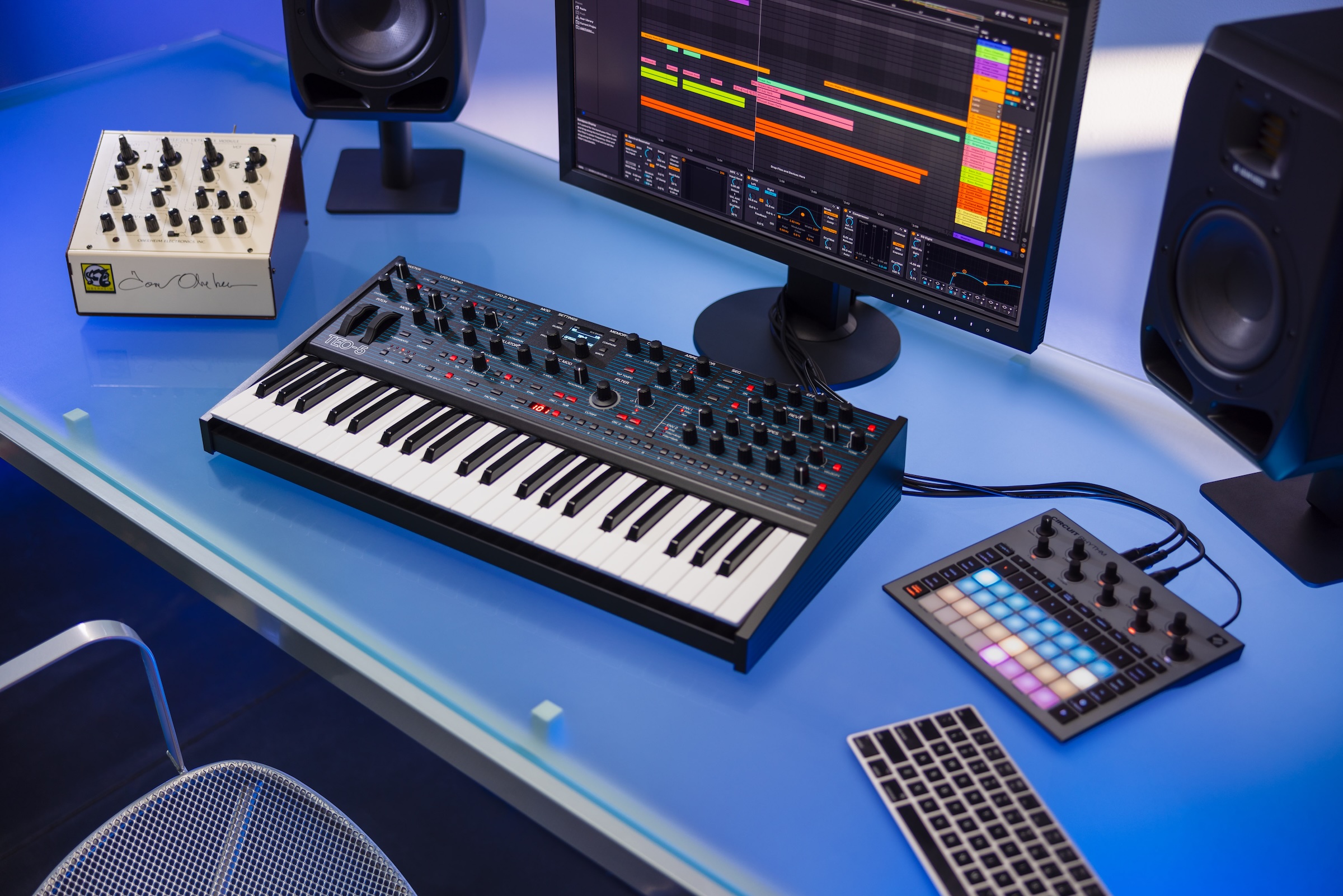
The 5-voice Sequential and Oberheim hybrid analog/digital synths each got an OS update last week, and their playful new arpeggiator features are a reminder of why we love both brands. Think ten new arp modes and a dizzying new feature called “whiplash,” plus other new firmware features.
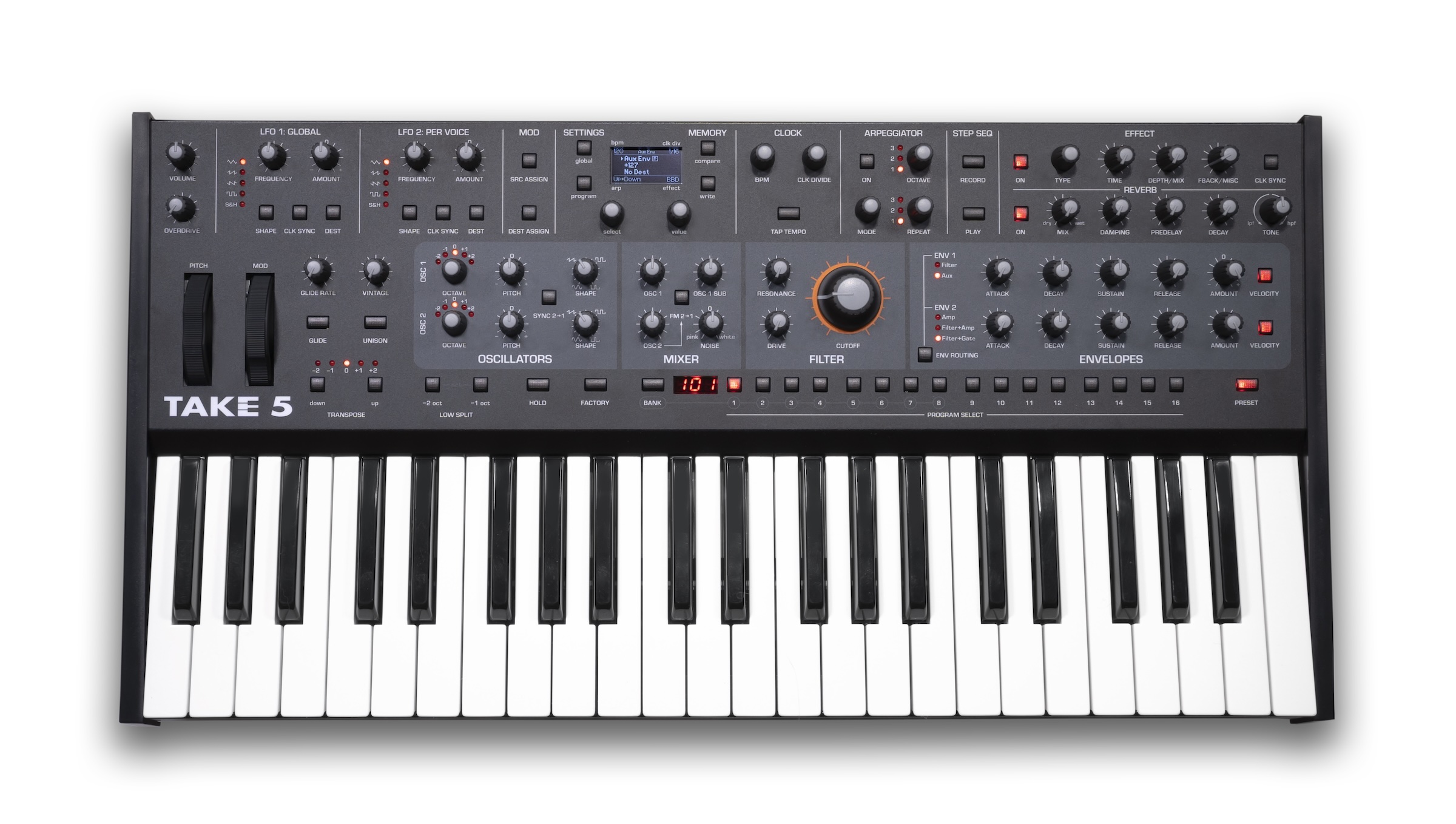
The Sequential Take 5 and Oberheim TEO-5 are not the same synth — their unique filters and distinctive voicings keep each rooted in the history behind its nameplate. That’s not to say I’m not still fantasizing about a combined synth with both filters and so on — Sequentialheim? (Fortunately, I don’t work for them, so they can’t fire me over such blasphemy.)
That said, because they are built on the same platform, Sequential can roll out firmware updates for both at once. And so even though lately the all-analog 4-voice Sequential Fourm might have the spotlight this season, you should absolutely look at these terrific 5-voice hybrid instruments.
The 2.2 OS, currently marked beta, adds several improvements: poly chain, 10 new arpeggiator modes, a new arpeggiator timing mode called Whiplash, and a violet noise source. (Violet does sound dark and lovely.)
Poly chain is probably going to be the most niche of these: it allows you to combine two TEO-5 synths or two Take 5s for a combined 10-voice polyphony. (Take 10?) Sequential is even calling this the “Poly Chain Update,” I guess in the hopes that all of us want to buy two of these? I mean, okay.
No, to most of us normal people, it’s the arp modes that are the story here. Take a moment, pick your brand of choice — Oberheim, Sequential — and just listen to that Whiplash demo. That makes the appeal clear right away. (It also makes clear how the TEO-5 sounds versus the Take 5.)
Go ahead, click the Whiplash tab and listen:
It’s a simple idea: instead of keeping the note division constant as you press more keys, it keeps the cycle length constant, so the more keys you hold down, the faster the arp divisions go. You’ll find it in Arp Timing inside the Program menu.
On top of that, there are a full ten new arp modes, several of which also have sound demos above:
Five dual-playhead arps:
- PinkyUp
- PinkyDown
- ThumbsUp
- ThumbsDown
- Spiral
Four single-playhead arps:
- Leapfrog – this is a fun one; it starts at the lowest note, then up two, then down one, until it runs out of octaves
- Shuffle – (random, per octave)
- ShuffleOnce (repeats the randomization until reshuffled)
- RandWalk (actually randomizes octave and otherwise plays in order)
Plus, there’s one chord mode which plays all notes at once on each step of the arp, changing octave. Intense. The readme files inside the zip download for the beta includes the manual addendum with more detail.
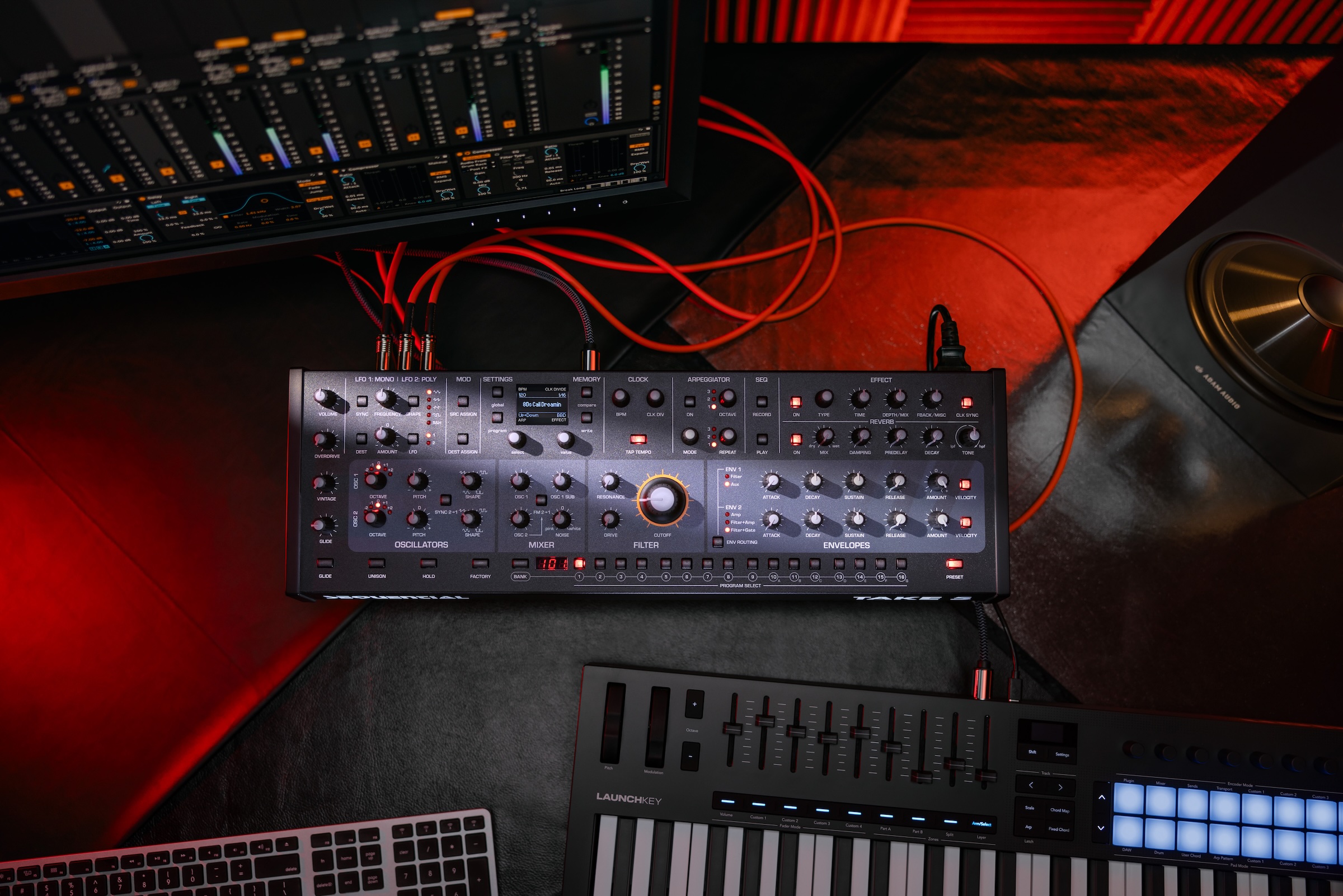
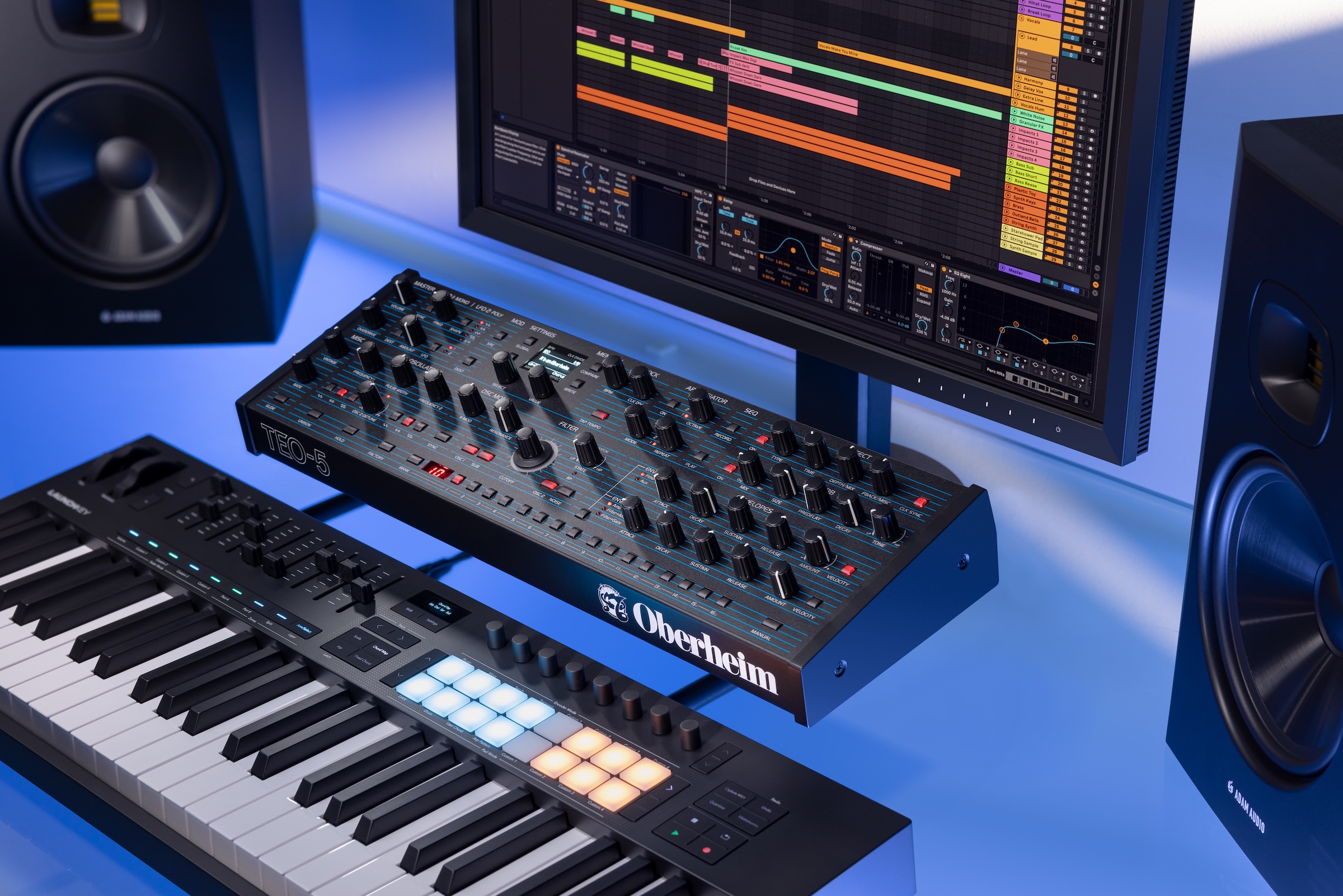
All of the new arpeggiator features work on the desktop editions, as well as the keyboards (obviously with you bringing your own keyboard). So in my mind, it’s worth giving these a look alongside the Fourm, even if they’re marginally spendier.
To be clear on the noise modes, you can now use the Noise pot to continuously shift between pink and violet noise. That adds to the existing Pink/White default on previous OSes. (Refresher: pink noise is 1/f noise, with spectral density decreasing at higher frequencies; violet noise slopes upward, at +6.02 dB/octave. Or just read this.)
Need to bring one of these instruments into your life? There are dedicated shops at our partners.
If you buy something from a CDM link, we may earn a commission.
Previously: