It’s 1986. Laurie Spiegel creates something unlike any software available at the time — an “intelligent,” algorithmic composer you can play as an instrument, for Mac, Amiga, and Atari ST. You’re at NAMM, and it’s 2026. Surprising everyone, Eventide announces they’re working with Spiegel to bring the original software to modern computers, preserving a breakthrough moment in digital music making. The mouse is back.
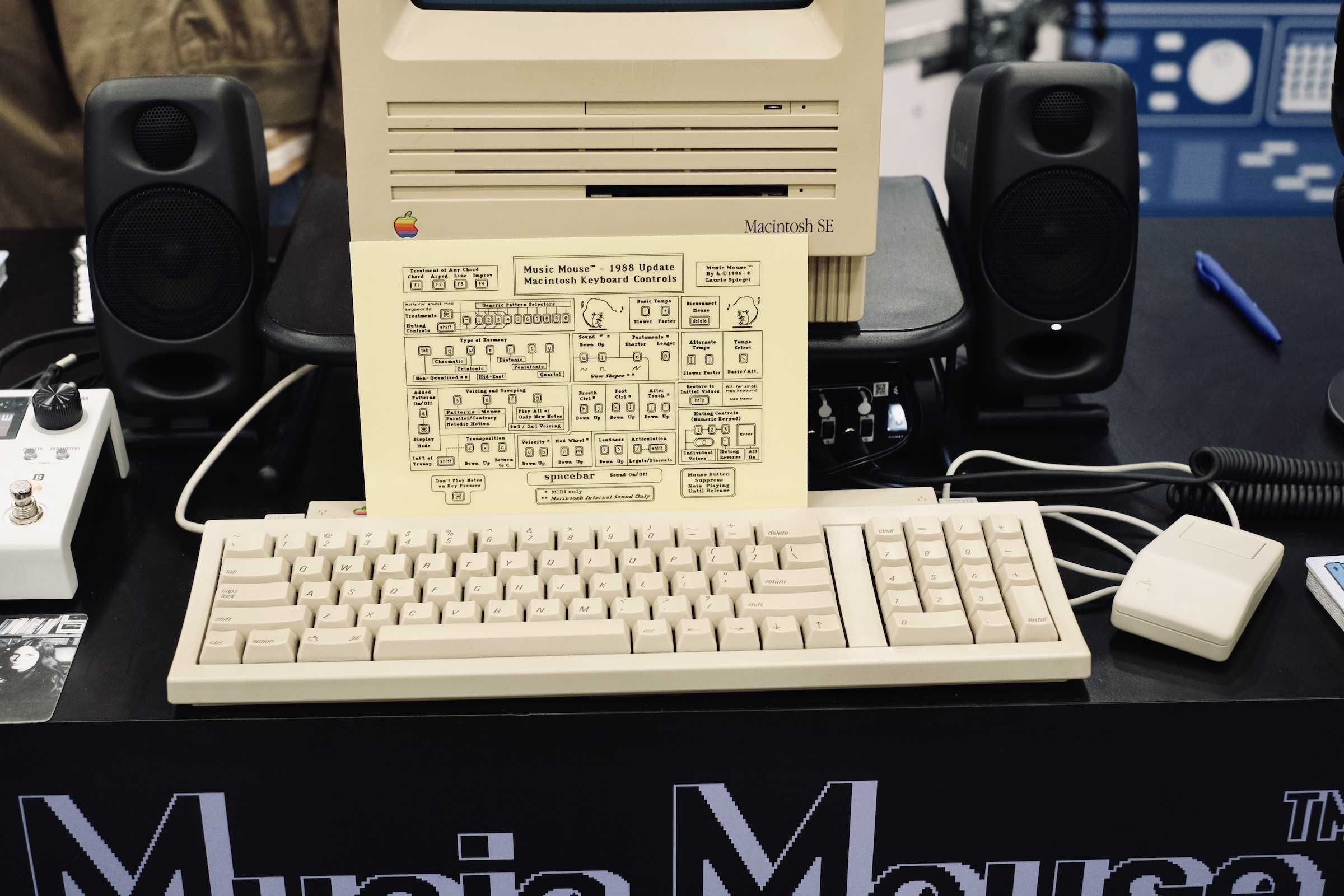
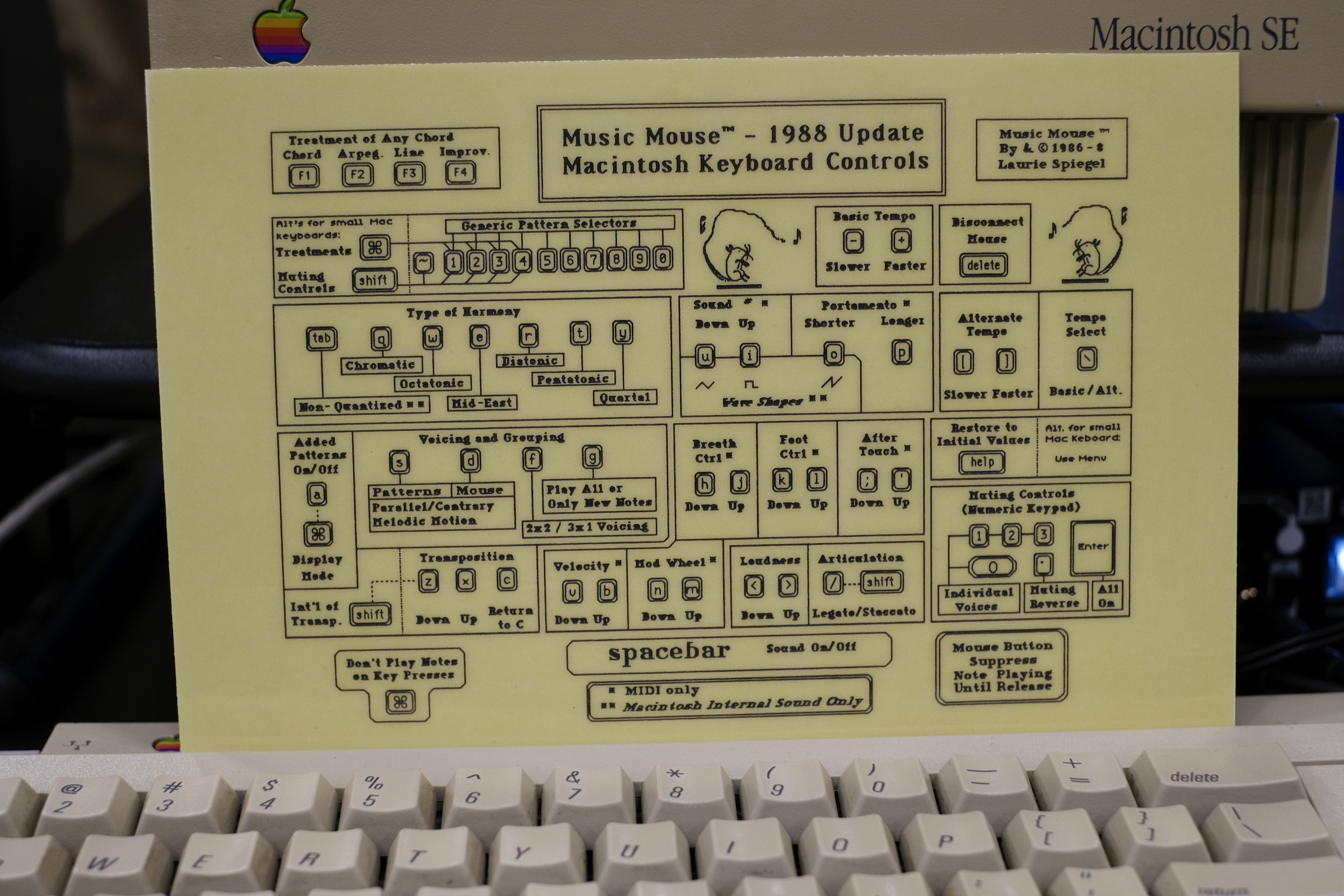
Photos of Eventide’s demo at NAMM, in the form of the 1988 update running on a Macintosh SE, by Gösta Wellmer for CDM.
Imagine flying through chords, scales, and style effortlessly with the mouse — constrained (with parameters you can control), but with the ability to play intuitively. The software embodies the theory, and you get to toy around and compose with the freedom of your brightest child brain. Laurie Spiegel herself composed works for the software, even if the tool itself is a kind of compositional invention, in the manner of a Musikalisches Würfelspiel — you could say Music Mouse merges those musical games with the instrument.
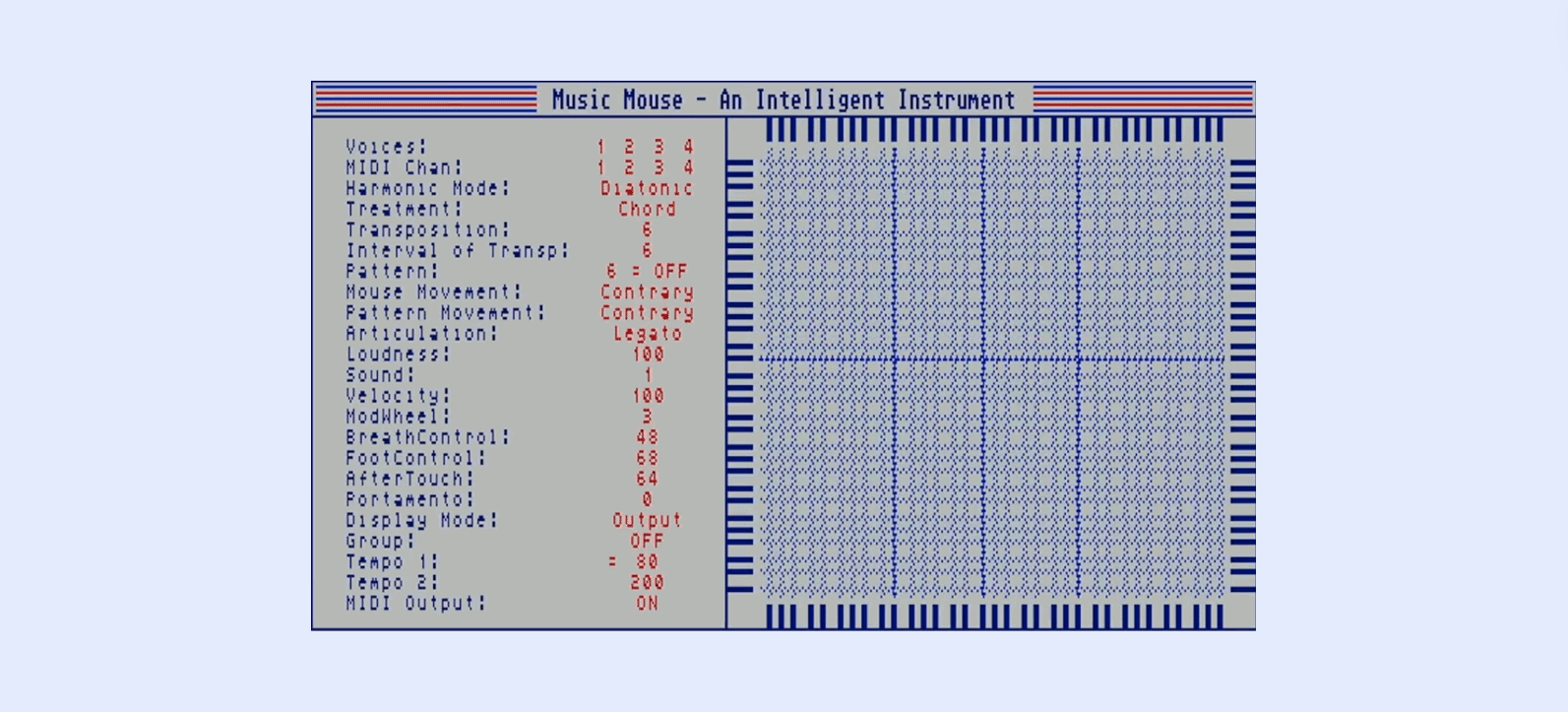
It’s hard even to classify which “first” Music Mouse deserves. It’s been called the first “soft synth,” but that doesn’t sound right — you can use internal sound generation, but that’s not the point of the tool. (PS, Spiegel used the earlier alphaSyntauri for Apple II platform in her compositions, as well!) It’s algorithmic and “intelligent” in that you explore harmonies across a grid, defining movement through pitch space across it’s playful X/Y grid. Indeed, Spiegel was one of the people who most eloquently defined some of the ways we imagine the potential of generative composition, long before any tech bros arrived on the scene. But that’s not quite right, either, because you navigate that more like an instrument than a generative tool. (See M by David Zicarelli, released in 1987 by Joel Chadabe’s Intelligent Music, for contrast.)
Music Mouse is … well, Music Mouse. It’s better to just play it. (I can’t fit this in a headline. It was the first piece of software that showed the Mac itself could be an instrument, and without disrespecting the Atari and Commodore competitors that I dearly love, Apple’s platform endured.)
There’s a great online emulation by Tero Parviainen of Counterpoint (and it includes Web MIDI support), so you can understand what I’m talking about. (It’s labeled “partial emulation.”) But it’ll be great to get an official, native version running on modern machines at last, without emulation. Spiegel brought the software to Mac OS 9 (the “classic” Mac operating system) and no further. Until now.
Eventide promises they’ll officially release their collaboration with Laurie Spiegel this year. It’s Music Mouse, “carefully preserved and prepared for modern systems, without changing what made it special.” And there’s a signup, plus some moving quotes from Wendy Carlos, Pete Seeger, and Kyle Gann. (New Yorkers and composition fans know that last one — think The Village Voice and the NYC concert music scene.)
I can’t wait. Continuity with history is what allows us to imagine our best possible present and future.
Here’s a delightful demonstration from our friends at ALM/Busy Circuits — all the joy of the computer and all the joy of patch cables. It’s timeless.
And a wonderful explanation with MIDISID (ooh, there is a combo — the C64’s chip architecture with Amiga as control)! Also, some really beautiful sounds, and a reminder that this doesn’t always sound the same.
Oh, also — you don’t have to play it fast all the time. (Kyle Gann mentions slowing down.) Also on Amiga:
And for contrast, a rather active rendition, here on an emulated Atari ST via Windows: