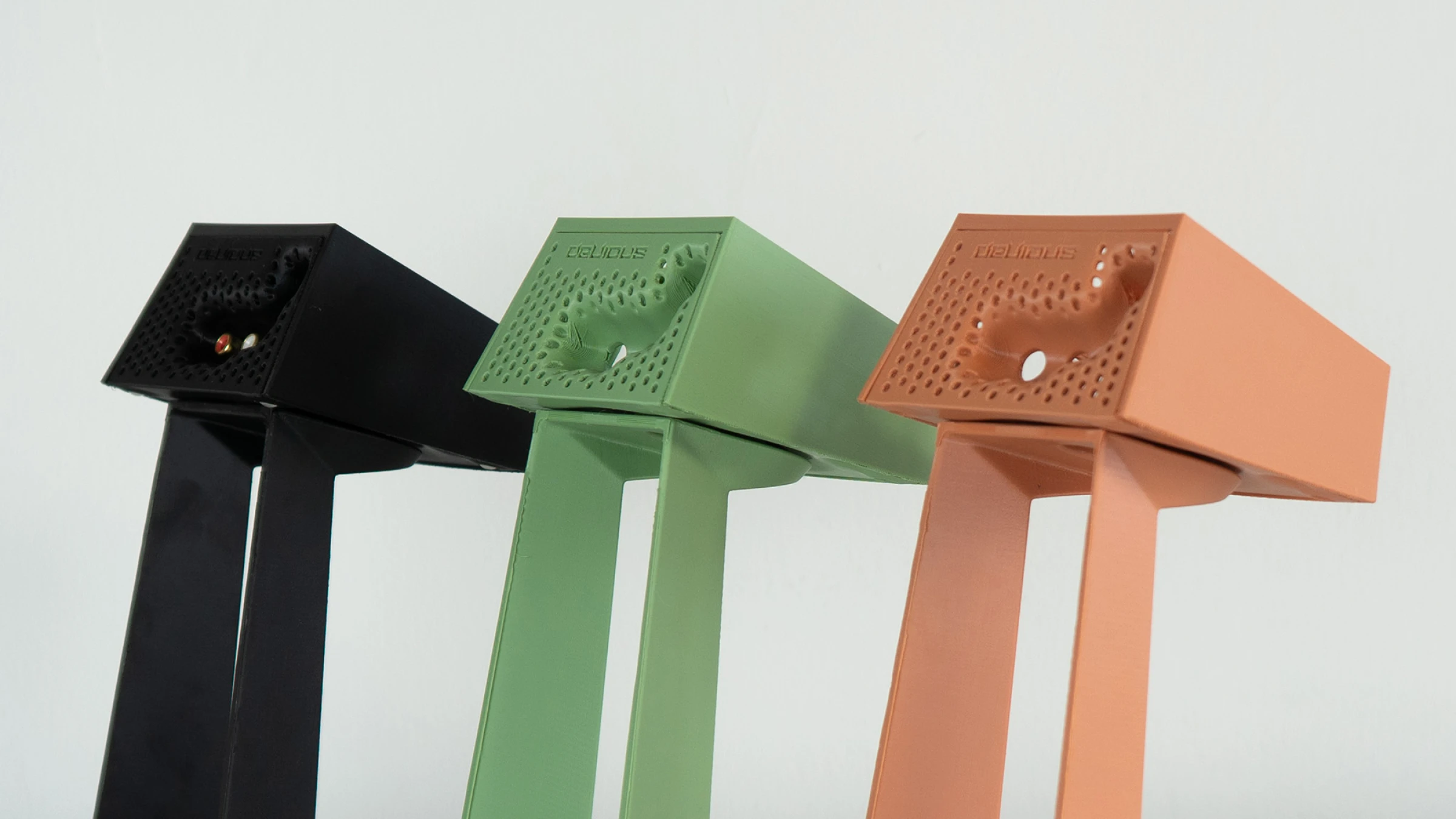
Skip the laptops and loads of proprietary hardware with an ultra-simple, portable, affordable add-on that turns any turntable into a digital vinyl turntable. That’s the pitch from NAP Works for compact hardware built on open-source tech, now on preorder. It might do more than just impress digital vinyl DJs: this has the potential to win over even the CDJ crowd.
Think of a cute little box that you can add to any turntable. Plug in a USB, put on two digital vinyl records, and go. Open-source tech had already made this possible, but generally, folks still had to contend with a laptop and an audio interface. And the solutions were far from plug-and-play.
This is different: the vision is really a compact box that’s stable enough to make any pair of turntables into a digital DJ setup. And with solid software and a display, that means this isn’t just coming for the digital turntablist niche. This approach could be an alternative to expensive, proprietary all-in-one and CDJ-based setups, just when the scene could use a shakeup.
The DJ still shows up with a USB stick — and that means they can play producers who can’t afford pressing and shipping vinyl. But the turntable goes back to being the center, and you don’t need a bunch of giant, expensive MP3 players.
You can almost hear the moment when that lightbulb went off at NAP, too. As they write:
“What started as a personal prototype has now become a direct challenge to the DJ industry’s closed, monopolistic systems – built by a small independent team with no VC funding or manufacturing support, and proudly made in the EU.”
This also gives a glimpse into what our friends at NAP have been up to. This powerful, free audiovisual framework birthed a nonprofit organzation back in 2024, and as they refocused the framework on Linux, targeting embedded tools was a specific aim.
Well, guess what you can do with a lightweight AV framework that runs on inexpensive embedded systems? You can build a standalone digital DJ tool. And instead of the plastic-y simulated feel of standalone digital decks, you can get your platter from an actual turntable. Ahem.
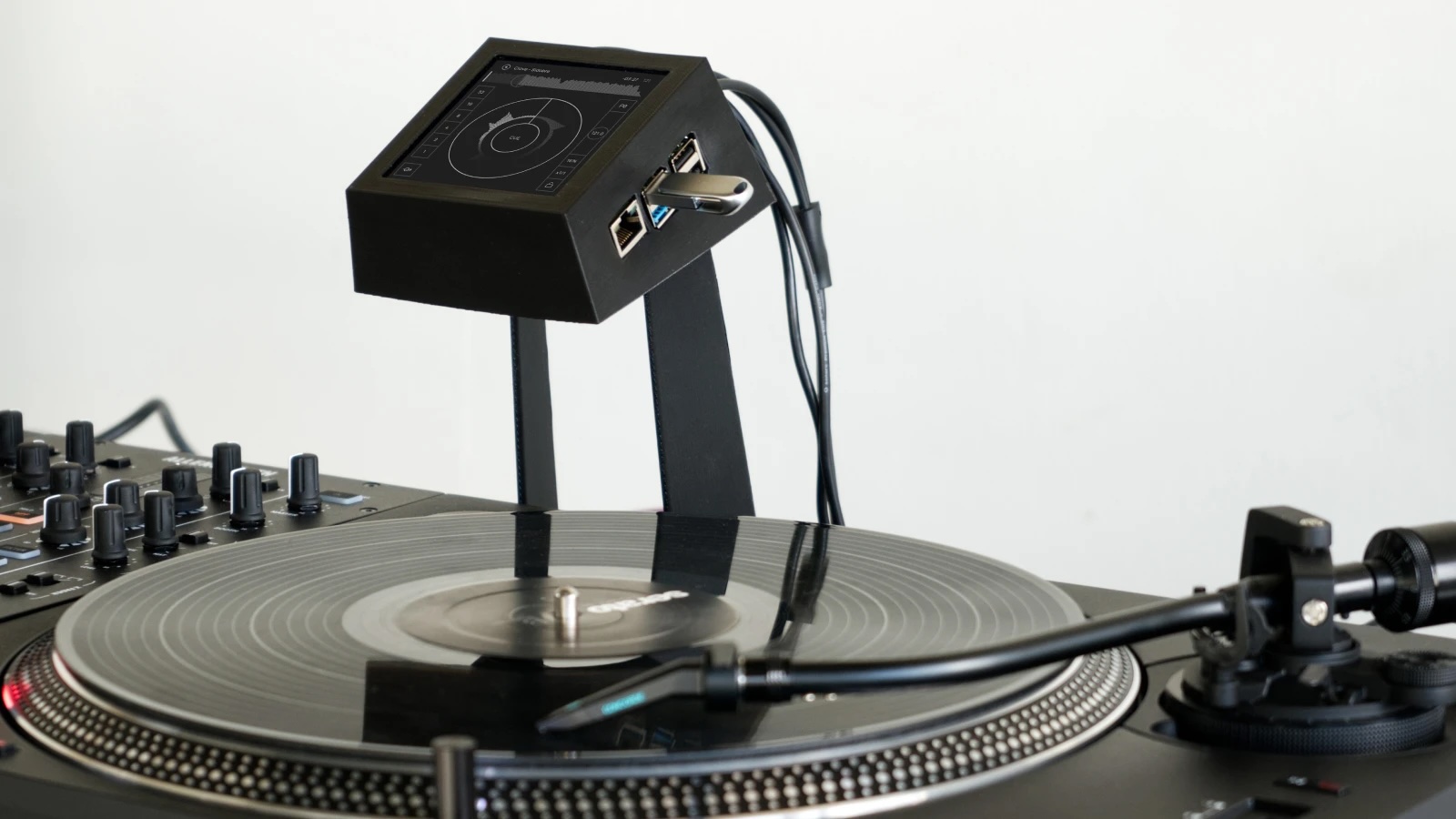
Check out what this does:
- You still get some nice visuals, with their own clever circular visualization and waveform display
- 1-32 bar looping for live remixing
- Digital cueing and custom cue point setting
- BPM lock that auto-pitches every new track to your set’s tempo, intelligently handling fractional BPM relationships (½×, ⅔×, 2×)
- Use any USB — “optimized for playlists organized in folders, sortable by title, artist, album, BPM, key, or genre using ID3 tags.”
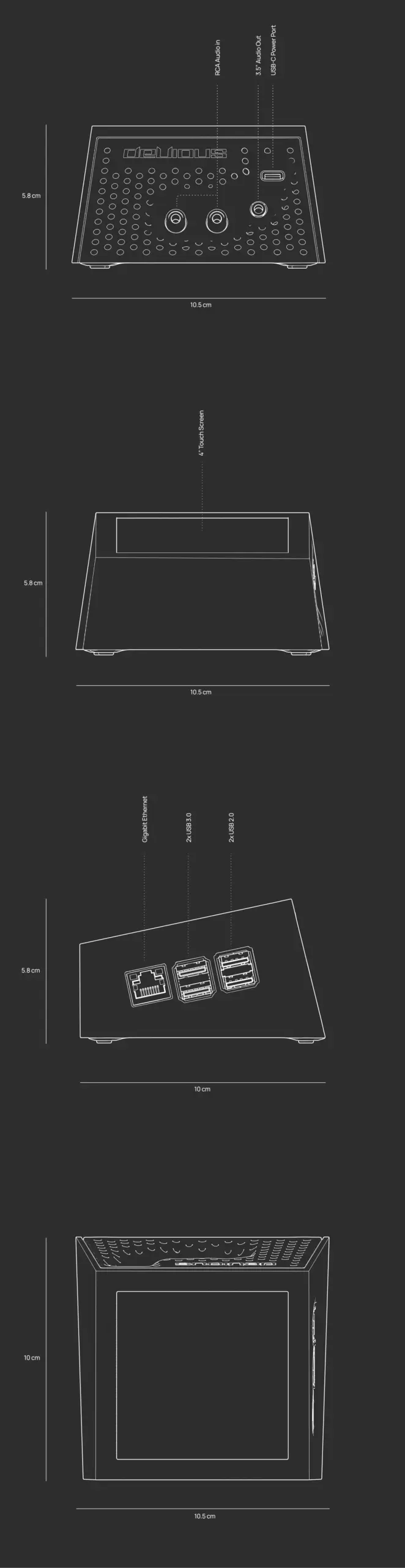
- Passively cooled microprocessor
- 4″ high-resolution touchscreen
- Studio-grade DAC by HifiBerry
- 3D-printed enclosure
€249.00 each, or €499.00 for a discounted early-bird bundle with stands.
Now on preorder via IndieGogo:
https://www.indiegogo.com/en/projects/nap/devious-pocket
The only proprietary element here, really, is their custom firmware, which they promise gives you “rock-solid gig stability.” But if you’re thinking, “aren’t those otherwise off-the-shelf components?” Yes! That’s the point. That means easy availability and low cost, and you can repair the thing yourself.
And while the firmware is closed, the framework it’s built on — that’s NAP — is fully free and open source.
“But couldn’t I make something like this myself?” Again, yeah! But that also shows some new potential. Instead of a closed ecosystem where every club has the same deck with the same features and no innovation, you can reinvent how the decks work if you really want. I’d been reflecting about that a lot lately. Part of why DJing as an art form has stalled out is that it was always related to DJs hacking the behavior of the machine and the techniques used to play them. You’d never utter the phrase “industry standard” in the same breath as DJ Kool Herc or Grandmaster Flash.
So I find myself with the same series of lightbulbs going off. “Oh, yeah, that looks better than just a simple DVS.” “Wait, actually, that means you might use DVS where you didn’t before.” “Wait… maybe I don’t actually need the CDJ.”
And maybe we want a world that’s future-proof and repairable, that gets back to the turntables that started the DJ trend in the first place.
Once your brain hops on this train, it’s hard not to ride it right through the night to the destination. Having followed NAP from the beginning, I’m curious where this will go — and eager to try this myself. Or I can just be the technologist joining the b-boys and b-girls while someone who’s better at turntablism tries them out; that’s okay, too. My moves are also free and open source, not proprietary.
https://www.indiegogo.com/en/projects/nap/devious-pocket
Previously:
And more DIY DJing:
And for historical curiosity, I was writing about this in 2016:
And 2008. Actually, the exact tooling here didn’t really survive, but the ideas all did, so you can think of this as the evolution of an idea that was a long time coming.
Now we can also enjoy the Drunk History version of the birth of DJing and Hip-Hop, complete with DJ Kool Herc, Grandmaster Flash, Grand Wizzard Theodore, Sylvia Robinson, Grandmaster Caz and the Sugarhill Gang: