Reason’s RV-9 is a major addition to Reason 14, with algorithmic reverb, spectral and granular effects, and plate, spring, and reverb, plus a ton of extras from shimmer to patchability. Let’s take a deep dive and learn how to get the most out of it.
Thanks to Reason Studios for sponsoring this guide.
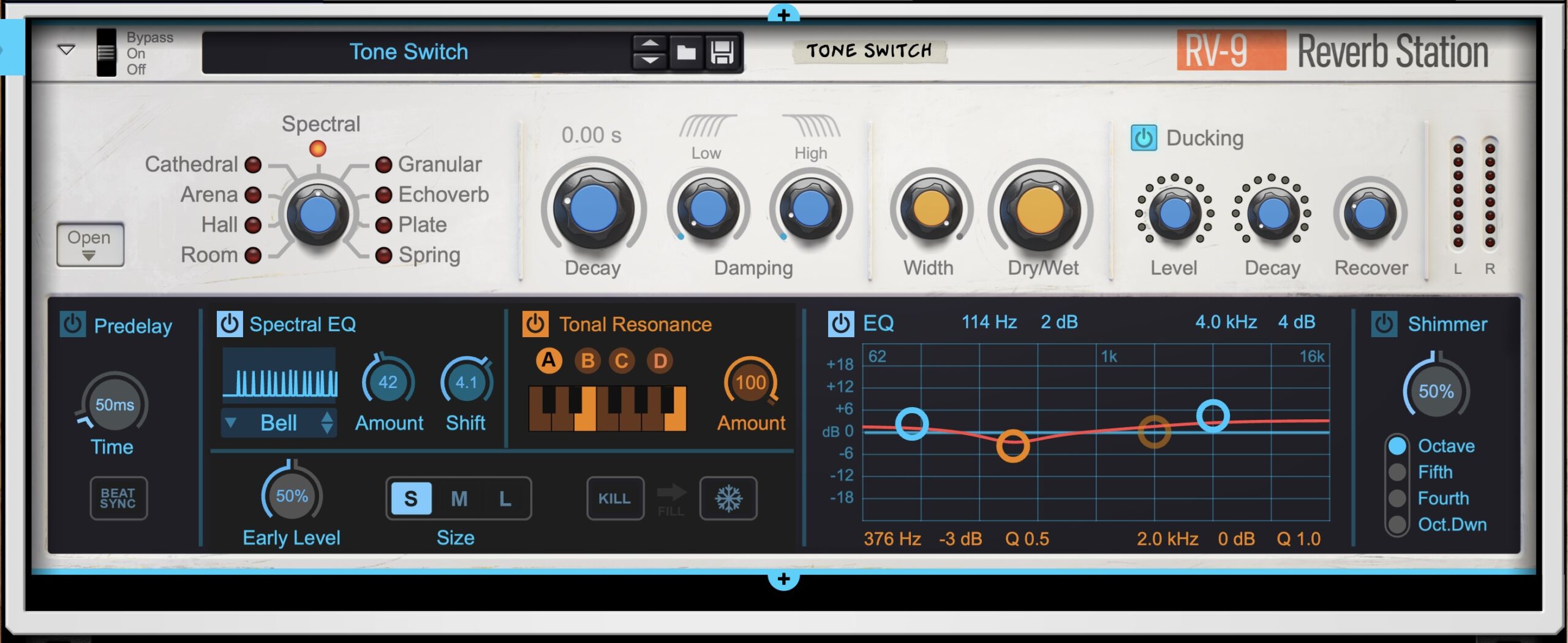
Over a decade in the making
Reason could have made RV-9 just an updated RV7000 MkII with some modernized algorithms. What you get instead is a multi-effect packed into a compact unit, along with lots of new options for shaping sound.
Let’s review. The RV7000 MkII debuted back in 2015, adding full convolution reverb features, including the ability to load your own custom impulse response files (even sampling audio into them). That means you can use any waveform as a model of a reverberant chamber, either a real or imagined space. (The original version, with convolution-based reverb presets and multi-tape delays, is from all the way back in 2005 — read a “vintage” sound design guide from Sound on Sound! Classic.) Look at those oldschool vibes:
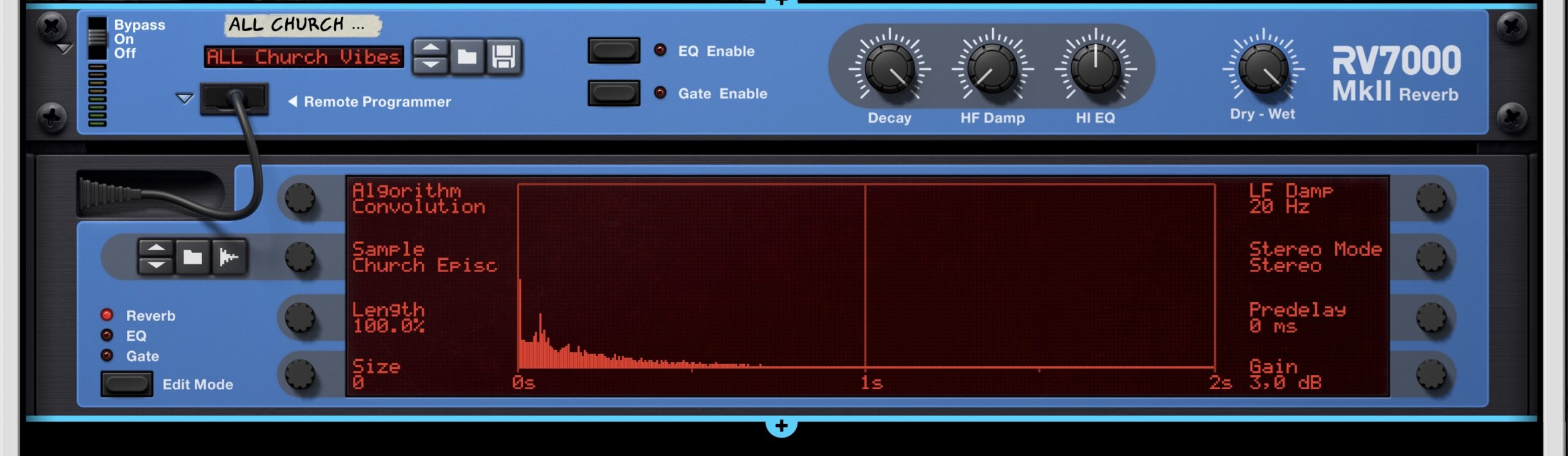
RV-9 doesn’t replace that functionality; you’re still going to pull up the RV7000 if you want to use IRs or prefer one of its convolution reverbs.
Almost everything else changes with RV-9, though. After eleven years, it’s time. The UI is fully reworked and has a lot more visual feedback. The gate mode on the RV-7000 has been fleshed out into a full ducking feature. There’s beat sync on the predelay. There’s a new lowpass damping control—and that’s all before you get into the different modes.
Effects tour
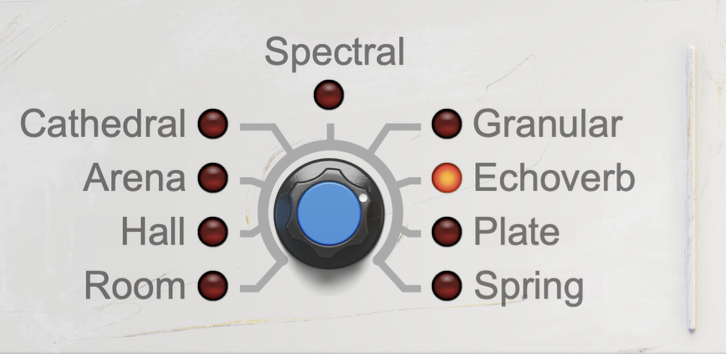
Via a dial on the main panel, you can now access various effect types:
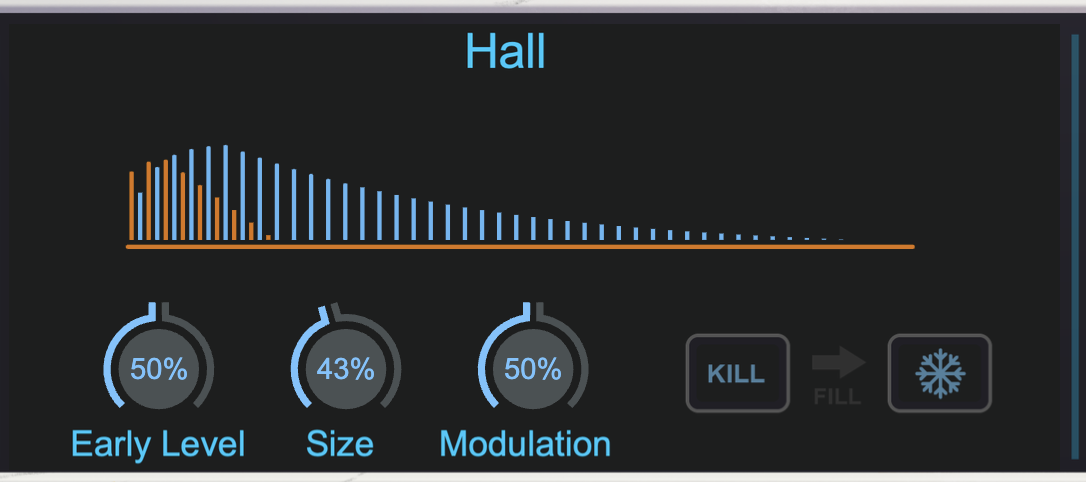
Algorithmic/convolution reverbs. Room, Hall, Arena, Cathedral. Each of these comes with early level, size, and modulation options, plus a freeze (with a buffer reset/”kill”). These have their own character because Reason Studios used a combination of algorithmic and IR-based reverbs — that is, either math or recordings of real spaces. So you get sounds that work well in the sorts of places you might use something like a vintage digital reverb (like a Lexicon), but also have a uniquely realistic, modern sound.
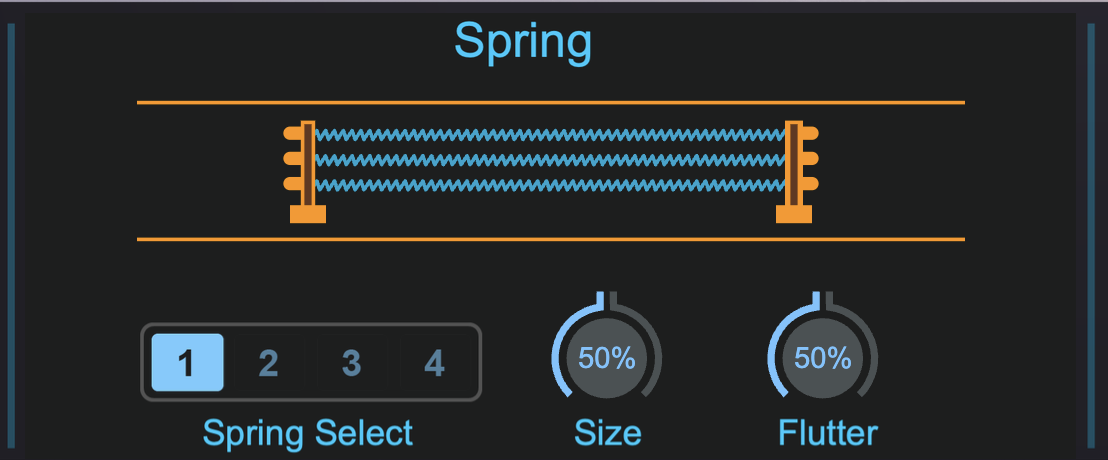
Plate and Spring modeling. In place of the static waveforms (IRs) from RV-7000, now you get fully modeled plate and spring reverbs. Each has multiple models for a variety of results, plus a size control (and flutter on the spring).
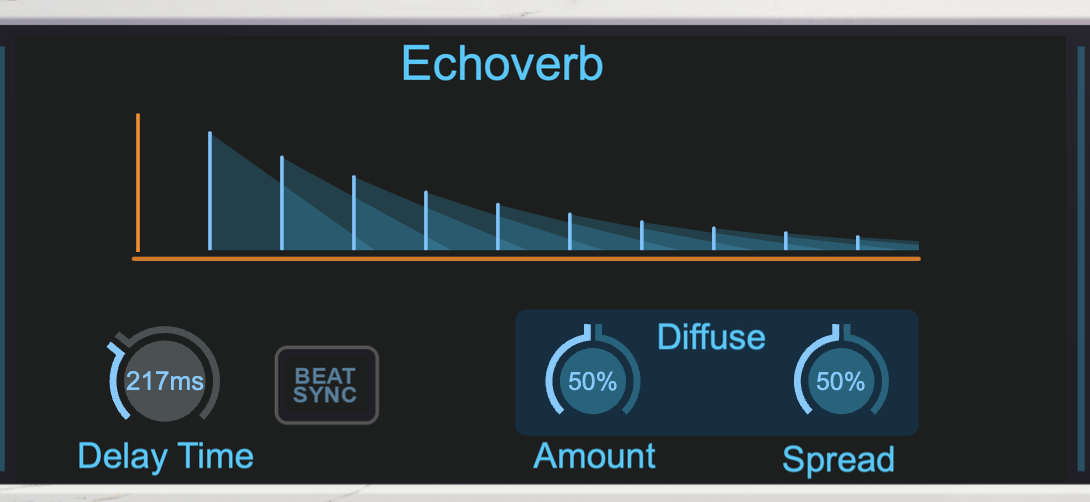
Echoverb. This is a combination of a delay and reverb — add diffusion, and gradually the individual echoes melt into a reverb. The echo taps can free-run or beat-sync, and you get nice diffuse amount and spread options. That’s a lush-sounding effect, and it does sound distinctive from the other echo/reverbs I’ve obsessively collected.
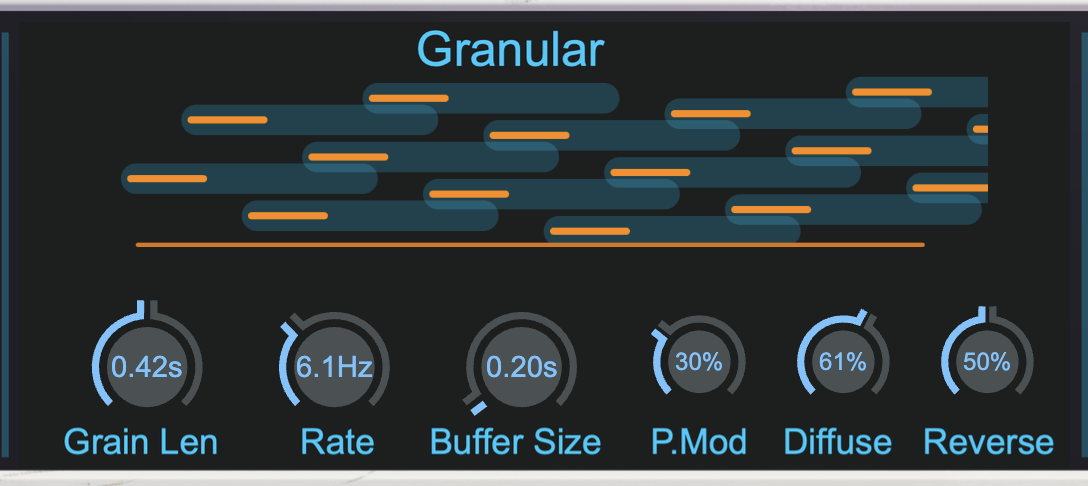
Granular delay/reverb. I’m going to go into this in detail, but it’s almost worth using RV-9 for this alone; it’s a full-blown granular delay that morphs into textures and granular reverb, depending on how you set the rate, size, and diffusion controls.
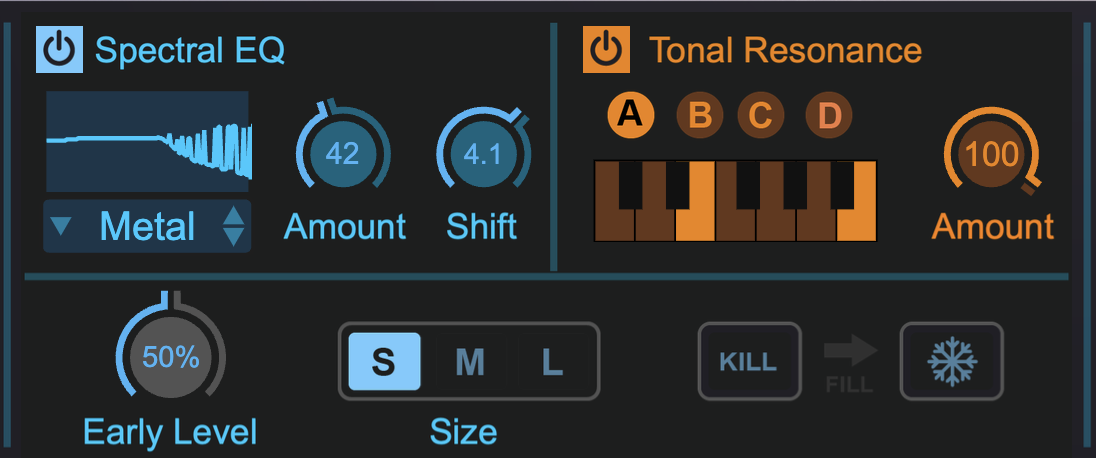
Spectral. And there’s a spectral effect, too, here with both Spectral EQ and Tonal Resonance options — more on those below. Under the hood, this is based on a phase vocoder, which gives you Plus the Spectral mode gets some additional CV inputs round the back of the rack to play with.
Also, across all modes, you have access to EQ and shimmer modules:
- Parametric EQ: Low frequency band, two mid-range bands, and high frequency bands. The two mid-range EQs have Q controls just below the grid. The high-shelving and low-shelving bands have frequency and gain.
- Shimmer with amount, octave up, fifth up, fourth up, and octave down, because everybody loves shimmer!
Most of this you’ll get from my explanation, but let’s dive a little deeper into the more exotic possibilities of the Spectral and Granular modes.
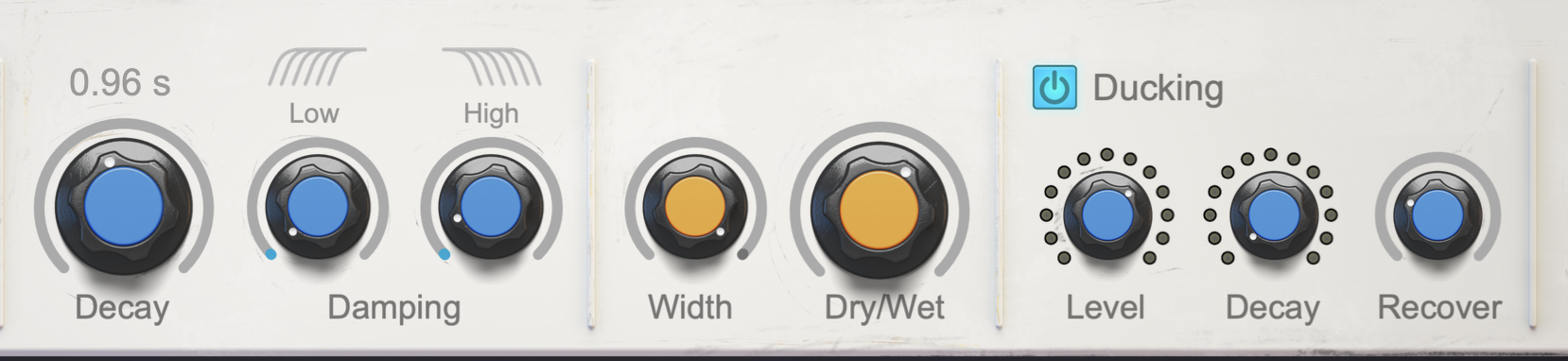
Global controls at a glance
Predelay does what all predelays do — it creates an initial, “clean” delay time before the full reverberation begins, which can help stop the reverb from muddying up the sound. (Yes, ducking is another way to avoid that!) The trick here is that this one can be beat-synced for rhythmic effects.
Low Damping is a high pass filter; turn it up to raise its frequency.
High Damping is a low pass filter; turn it up to lower its frequency (don’t worry, even some developers/makers get this backwards and label them in reverse!)
Dry/wet — I’m going to differ from the manual and say sometimes I set wet to 100% even as an insert effect for some modes!
Ducking: Level is the amount of the ducking effect, with Decay (in %) and Recover (in ms) setting time
Width is stereo width.
Granular
Granular synthesis is a family of techniques that involve slicing up a sound into pieces, then playing those pieces as overlapping bits (hence, the grains), eventually forming continuous textures. It’s the basis of most pitch-independent time-stretching (and tempo-independent pitch-stretching). In a live effect, the idea is that you make those bits with an input buffer.
RV-9’s granular mode really makes it a live granular processor and granular delay, not just a granular reverb. (That’s true of the Echoverb, too, with its diffusion controls down.) It’s why I really consider the RV-9 a multi-effect and not just a simple reverb. And it’s the usual case with granular synthesis and processing: on paper, they all fit into a couple of categories, but in practice, every little detail of the DSP can make them sound unique.
On the RV-9, the trick is to get the hang of the relationship of the input buffer and the grain. The buffer size determines the duration of the recording prior to granular processing; grain length is the length of each grain as it’s played back. So what happens is, as you increase the buffer size, you get more of your recording in the grains.
Let’s listen to that. Here’s an extended granular session with some plucks from Reason’s Friktion physically-modeled string instrument. I try to work gradually through the parameters so you can hear the relationship.
Spectral
Okay. There’s a phase vocoder in my reverb. That is unexpected. Here’s the importnat part of that:
Spectral Size is the size of the transform (FFT) used to calculate the reverb. You’ll use it just as you would a normal reverb, but the result will sound, well, phase vocoder-y!
Spectral EQ includes a bunch of unique shapes and morphing.
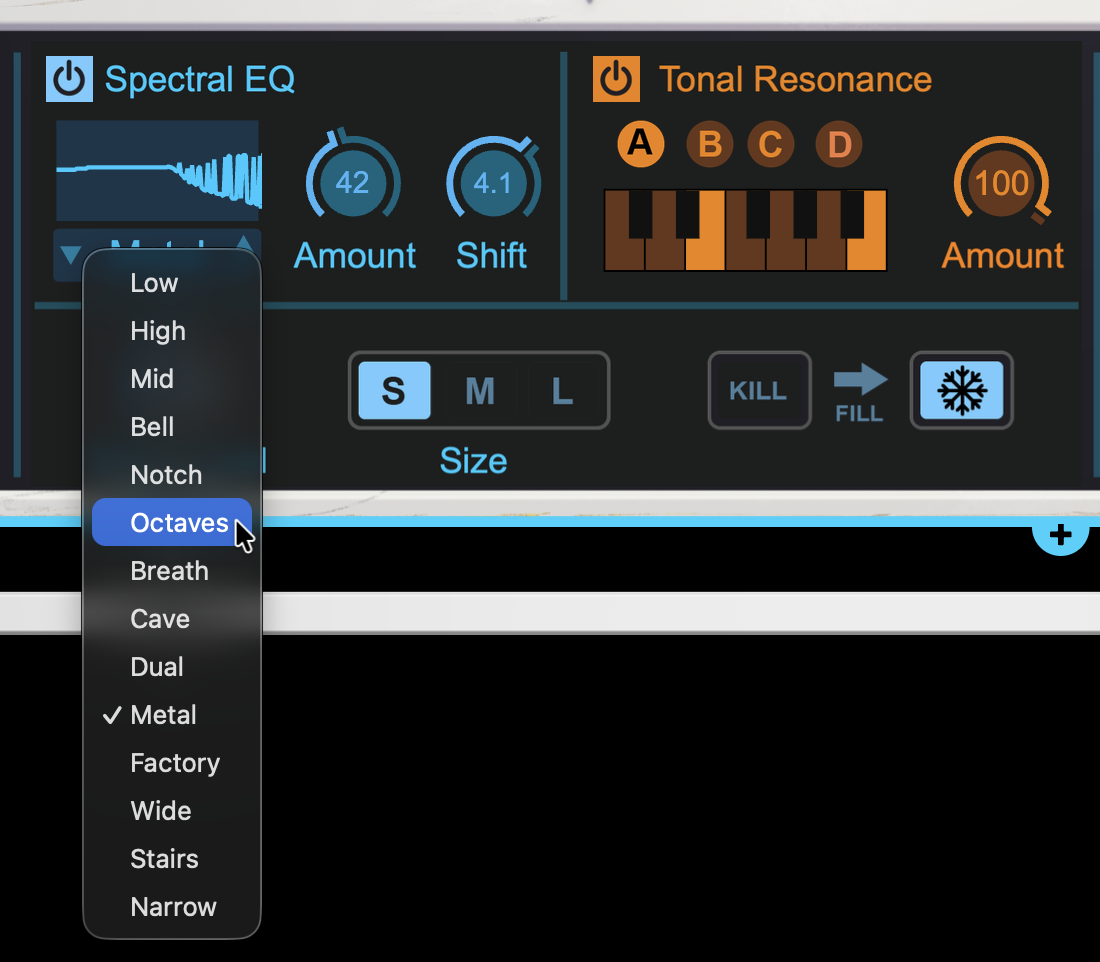
Tonal Resonance will let you choose individual notes to ring out — muting all other parts of the spectrum except for the keys you have selected. And you can make little harmonic progressions with the four presets, A-D.
Combine all of that with the freeze function (and kill), and this is its own unique animal. Here’s an example with a patch I made with Europa (which continues to impress):
Listen to the Spectral mode on drums — a nice Kong preset, and yeah, those Players never get old:
Patching
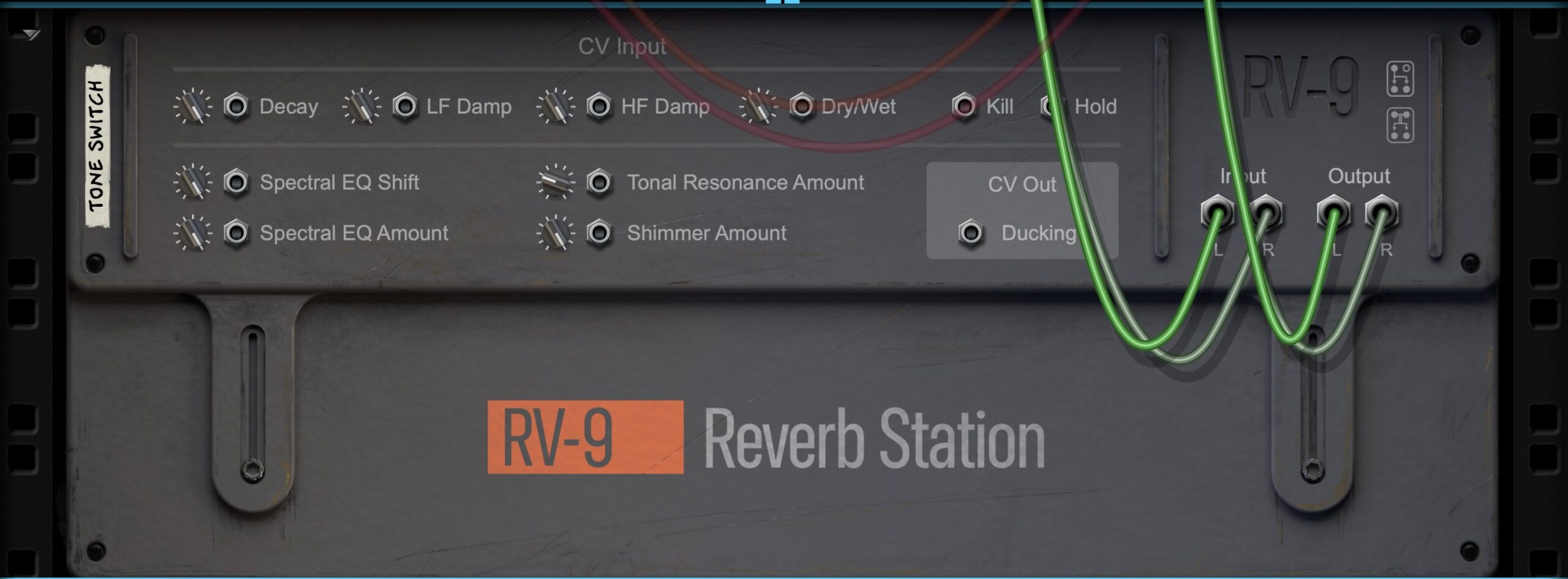
The other reason it’s worth playing with RV-9, in Reason or in Reason Rack as a plug-in in other hosts, is its deep CV connectivity. At a glance:
- All reverbs feature CV ins for Decay, low-frequency damping, high-frequency damping, dry/wet (giving you an alternative to ducking, actually), and shimmer amount
- Kill and Hold work across associated reverbs. (Hold is Freeze.) Just send a trigger — below I use a square wave LFO — and you can trigger these buttons. Unfortunately, there’s no visual feedback.
- Spectral EQ Shift, Spectral EQ Amount, and Tonal Resonance are available as CV ins in Spectral mode.
- Ducking CV lets you route the ducking to other modules as an envelope follower — neat!
Let’s try an example. Here’s a gradually-modulating piano patch. I’m using LFOs — a big stack of Pulsars — to trigger both kill and freeze, plus gradually shift the spectrum and add shimmer. You get an undulating, organic texture. (Who needs those expensive sound libraries?) And then I add a little granular effect to add still more texture on top of it, because two RV-9s is even better than one.
Well, that got longer than I expected — like an endless freeze, if you will! But if you have more you want to see of Reason 14 (or anything else), do let us know!
For more:
https://www.reasonstudios.com/new-in-14