Timed with the release of Clairvoyant Dimensions, his new album with saxophonist Jeff Hollie, the JuJu & Jordash and Magic Mountain High mainstay talked at length about pressing record and jamming, the lesser-known synths behind the album’s shimmer, and the hilarious origin of the group’s name.
David Abravanel
Jordan Czamanski has spent years being hard to pin down. As one half of Juju & Jordash (his group with old jazz-jamming friend Gal Aner), he helped define a particularly loose, live, hardware-driven strain of dance music. That sound became synonymous with Dekmantel, the party, and later label — it even launched with an EP and album from the duo. Expand the circle to Magic Mountain High (Jordan, Gal, and David Moufang aka Move D) and his solo work as Jordan GCZ, and a throughline emerges: an allergy to the pre-planned, and a deep love of and connection to imperfect machines.
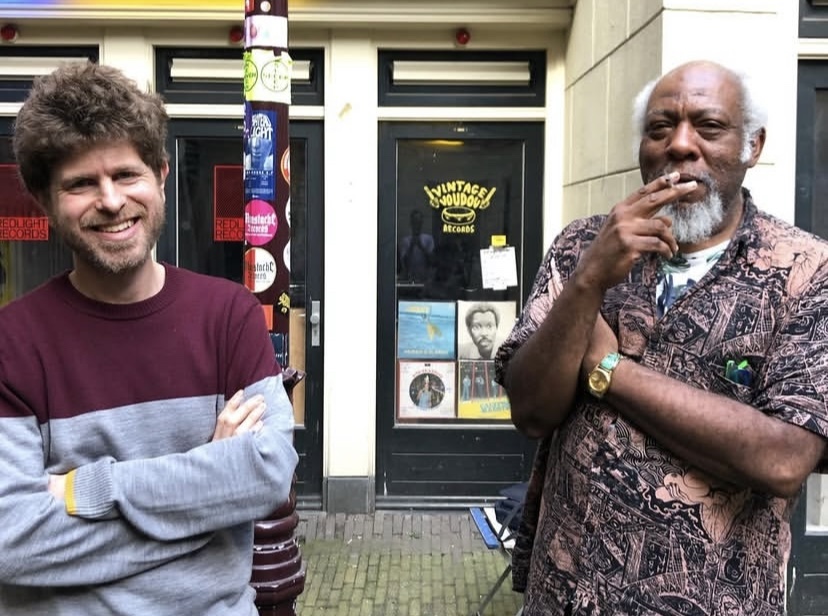
Clairvoyant Dimensions is the new album from Jordan and saxophonist Jeff Hollie, the latter active since the late 70s and best known for avant-garde rock bands Burning Sensation and Andy and the Rattlesnakes, plus regular work with Frank Zappa.
Recorded in Amsterdam before Jordan decamped for Toronto, the album is the product of a method Jordan’s established for most of his recorded work: hook up the synths, press record, and jam. What survives the edit is what was alive in the room. The result is gorgeous and strange — Hollie’s saxophone winding through processed haze, and, on a standout like “Duct Tape Blues,” a delicate pulsing shimmer that turns out to have an unlikely source buried deep in a rack unit.
I caught Jordan at home in Toronto, a day after the record came out, with his dog Herschel making a cameo. We covered a lot of ground: the all-hardware live rig and the airlines that kept destroying it, the vintage-gear market gone insane, why he trusts the converters in a real synth over any plugin, the sober record that pulled him back to MIDI and composition, and the saxophone “heresy” that used to get him mocked backstage.
Listen while you read:
David: You were in Amsterdam for a long time before Toronto. What prompted the move and the change of pace?
Jordan: I was based in Amsterdam for like 20 years, then the pandemic happened, and I realized I was done with touring and done with that whole scene, for now. Touring for 15 years was kind of a nightmare for me!
You’re a keyboard player originally, and a lot of your live work meant hauling some fairly serious keyboards around. What were you traveling with?
It changed over the years, but basically my rig evolved into a well-protected rack that had an Oberheim Matrix 1000, [Yamaha] DX11, a [Korg] Wavestation rack unit, a couple [Arturia] Keysteps, and a [Roland] TR-8S and TR-606.
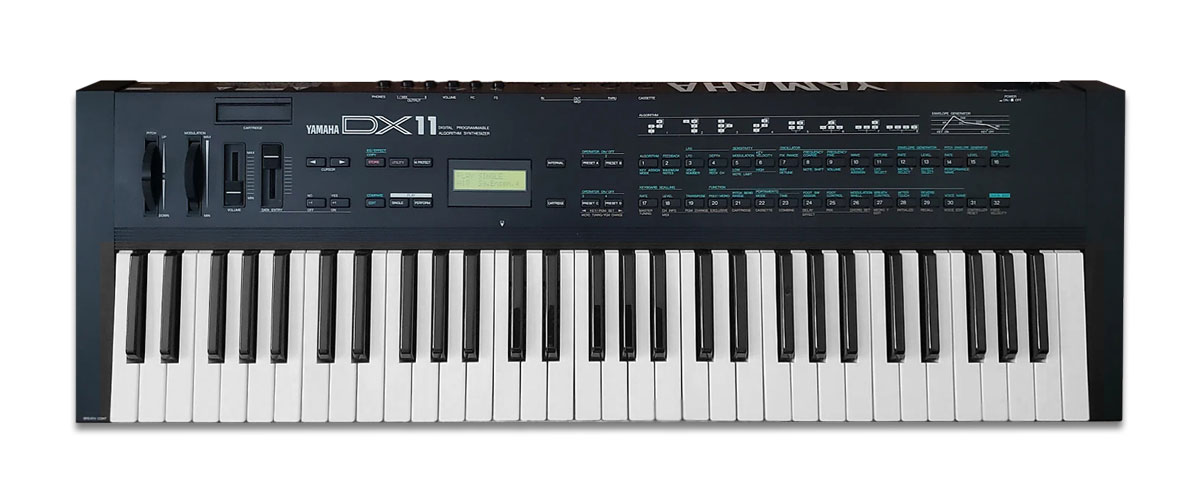
The DX11 isn’t the usual Yamaha FM synth you see most often.
It’s like the best of both worlds. I prefer the DX7, but it’s very heavy. The DX11 has four operators, and they were very cheap, so I had three. Each time an airline destroyed one, I could just bring a different one on the next tour – that happened twice [laughs].
And you mainly played with hardware?
Yeah. After a certain point, I guess from 2007, I went all hardware, because just the way we worked, our live shows were all improvised. It made every show interesting, but every gig was a real challenge and a bit of a headache. It would take us around two hours to set up!
The clubs usually supplied us with something as well, a [Roland] SH-101 or a [Roland TR-]909, whatever they could get.
The clubs would actually source that vintage gear for you? Seems like another era.
We had a lot of gear, and we had a lot of nice promoters who went through a lot of effort to find that gear. This was before Behringer started with the clones, so if I needed something like a monophonic synth with a trigger input and an internal sequencer that I could sync to my 606, we needed to use an SH-101. We didn’t have a laptop, and the Keystep didn’t exist back then.
The SH-101 has a great internal sequencer. Still to this day, it’s the most fun kind of synth to jam with, because of that sequencer.
That gear was cheap and uncool then; now it’s collector money. A friend of mine is thinking of selling his 909 because it’ll fetch seven or eight grand, enough to get a TR-1000 and much more. The CS-80 is over 50 grand at this point!
That is…that is so fucking crazy. I don’t think I have any big-ticket synths like that, though I don’t know – I don’t check anymore. The Juno 60 never got to crazy prices, right?
Depends on what you’d call crazy [opens up Reverb and sees that the floor price for a Juno 60 appears to be $2,500]
I bought mine for 600 bucks, so I was lucky. I love that synth.
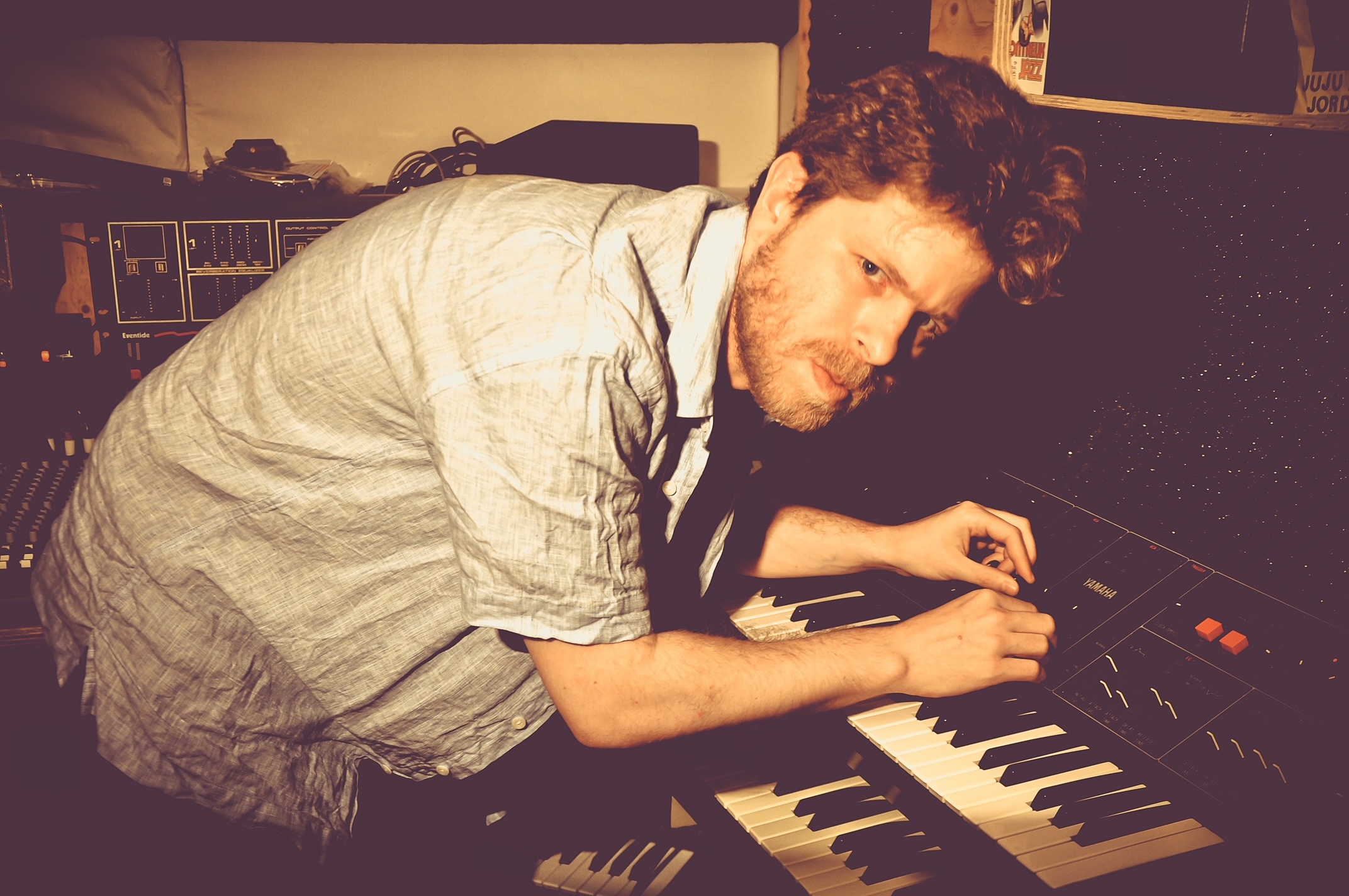
You’ve also got a CS-30, which is a much weirder, more overlooked Yamaha.
Oh, I adore it, but it’s not at the level of the CS-60 or CS-80. It’s monophonic. It has an internal eight-step sequencer, with knobs. I love that synth, and somehow it’s not as popular now.
You mentioned the SH-101 as one of your favorites earlier. Do you still have one now?
I borrowed an SH-101 for about 10 years, and had it in my Amsterdam studio. When I moved to Toronto, I had to give it back, so I got the Behringer clone [MS-101], and I never use it.
If you compare, even pressing one note on the Behringer vs. one note on the 101, it sound similar. But when you record it and work with it, it just…does not have that magic. Technically I don’t know what it is – they’re both analog, but something just doesn’t click.
You’re a big proponent of old digital synths, too.
I’m a huge fan of digital synths from the 80s and early 90s. As much as people praise software emulations of the DX series of the Casio CZ synths, there’s no real software comparison.
I don’t think it’s the chips – it really is the convertors, the digital-to-analog conversion. The outputs just sound so much better than just working in the box. Technically it should be possible to emulate a digital synth perfectly.
Do you use software synths when you’re working out ideas?
I compose a lot now, and when I want to sketch ideas, I don’t necessarily want to start printing everything to audio early on, I want to keep it in the MIDI realm, so I use a really good DX7 emulator plugin to write sketches.
Yes! I’ll program a sound on Dexed, and then when I compare the audio output there to what I get from loading the SYSEX patch on the hardware DX7, I can hear it. I’m sure if you’re not a synth nerd you wouldn’t notice it [laughs], but to me it so painfully noticeable.
When we toured, Gal brought along a [Korg] Volca FM, another cool little synth. I like it, it really cuts through.
Terrence Dixon & Jordan GCZ – “Space Chime”
You’d mentioned improvisation, and I wanted to come back to it. The album you did with Terrence Dixon was basically recorded live in the studio, right?
Every album I’ve ever recorded in my life, all jams.
So how does that process work from jams to finished tracks?
I set up the computer like a multi-track tape, basically hook up all the synths and drum machines I want to have on a separate channel, press record, jam for like half an hour — or with David Moufang, it’s usually like an hour — then just listen back to where the good bits are, chop them, and there’s an album. I also spend a lot of time mixing, but rarely are there any overdubs. If it’s not there in the moment, it doesn’t really end up on the record.
Is that true of your solo material too?
Most of it. I did an album of non-dance music about a year ago on Quiet Details, Hope isn’t a Four Letter Word. I MIDI’d up my studio before I did that. Since the 90s, I’d shunned MIDI – “I’m recording audio, fuck it, I hate MIDI, it annoys me.” But for this album I thought, “I have all these digital synths. Why don’t I just sync things for once, and then I can spend more time on each part?”
Jordan GCZ – Hope isn’t a Four Letter Word. Dig those digital synths!
That’s also the only sober album I’d done. I took a year off of weed; I’ve been a huge stoner my whole life [laughs]. I’d had this weird sore on the roof of my mouth, and I thought I’d killed myself from smoking. I went cold turkey – no tobacco, no weed. It turned out to be absolutely nothing, but that forced me to quit smoking completely. I think it jolted my creativity, so I recorded the album differently, spent more time on each track.
I started thinking, before I went to bed at night, “what does that track need?” It’s something I hadn’t done since childhood, when I was recording with a four-track tape machine. I’m doing composing for film most of the time now, which forces me to be more thoughtful. I can’t rely on improvisation alone.
How did you come to meet Jeff Hollie? He’s also based in Amsterdam, yeah?
20 years ago, I think it was when Gal was working as a live sound guy, he just met him through that live squat show circuit or something. Jeff played actually on Juju & Jordash’s first album.
We stayed in touch, and over the years he played some live shows with us in Amsterdam, at early manifestations of the Dekmantel gigs. We loved playing with him. He’s not necessarily a jazz guy, more of a funk guy, very open-minded. He played in a lot of interesting bands, like he was in a metal band in LA in the 80s.
He was in Burning Sensations — they did that Jonathan Richman cover on the Repo Man soundtrack.
Yeah! I remember that blew me away when I found out who he played with.
I guess he just came over to the studio, probably back in 2018 or 2019, and we recorded some jams, and then had a couple gigs. I always enjoyed playing non-dance music gigs, so I don’t really remember the timeline exactly. Right before the pandemic we kind of had an actual group and played a string of four or so gigs. The night the pandemic restrictions started was the last time we played live together.
And the record’s release got derailed along the way?
Clairvoyant Dimensions was supposed to be released on a different label, but that label went down. I waited through the pandemic, but then I realized that the label wasn’t coming back. I sent it to the Meakusma guys, who I’ve known for many years, and they liked it.
Where does the name Mei Honeycomb come from? I couldn’t work it out.
I had a different project with my friend Ilya Ziblat, Mei Tahat. Now that was released on… I don’t know how to pronounce it. [note: the label in question is Berceuse Heroique, and I can’t pronounce it either. French readers, help?]
Back in the early 90s, I was in a free jazz slash North African music, kind of a freak out group. Back then we dabbled with some GHB, and we called it “mei tahat”, which means “ass water” in Hebrew, because it just tastes bad. I haven’t consumed GHB since the early 90s, so I don’t know how people consume it now, but back then it was a liquid we got from a chemist we knew.
Ilya was originally supposed to be in the band full-time, but he ended up busy doing other things so we changed the name. Jeff liked the name “honeycomb”, so we mixed it together and got Mei Honeycomb.
Mei Honeycomb with Ilya Ziblat – “Painted Desert Pastel”
Did you record Clairvoyant Dimensions in person, or pass tracks back and forth?
It was jamming in person, just before I moved to Canada.
Were you processing Jeff’s saxophone while you jammed, or was that all his own effects?
No. I mixed the album and produced it, and during the recording I also put effects on his saxophone when we were recording and captured that. He has a few pedals for live shows.
The shimmering tones on the album really struck me. On “Duct Tape Blues” — which became my favorite track — there’s this consistent pulsing shimmer. Is it a delay, a tremolo, a drone? It sounded like a gorgeous digital synth. One of the DXs?
I didn’t hook up the DX for that session, so… ah, I know what it is! It’s the Matrix 1000 So the Matrix 1000 is basically a preset synth in a rack unit, but I have this amazing box of knobs that a German guy used to make that turns the Matrix 1000 into a fully programmable synth.
Mei Honeycomb – “Duct Tape Blues”
That sound that you’re referring to [on “Duct Tape Blues”] is like the resonant frequencies on the filter of the Matrix 1000 going, I think, through old Lexicon from the 80s. It’s a long reverb, but on the on these very delicate resonant frequencies.
I love the Matrix 1000, that box. If anything happens to it, I’m going to be very upset. Knock on wood – I feel like an idiot for traveling with it for more than 10 years. I’m just grateful it still works. It’s a synth that I use on almost every track I record; the range of moods is very wide.
When you’re mixing, are you still mostly using hardware for effects, or some plugins too?
Usually, the only processing I do in the box would be some EQ cleanup. I’ll never boost with a software EQ, but I will cut frequencies. Besides that, I only have two hardware compressors, so I’m lacking in that department and sometimes use software compressors. It’s not going to sound like a [Empirical Labs] Distressor, but I have some Waves plugins, models of hardware. If I need something simple, I’ll just use the stock Logic compressor. I don’t want software to color the mix too much.
Which hardware compressors do you have?
A JBL Urei Model 7110. It’s like a poor man’s Distressor, from the late 80s I believe. It’s a great little hard compressor.
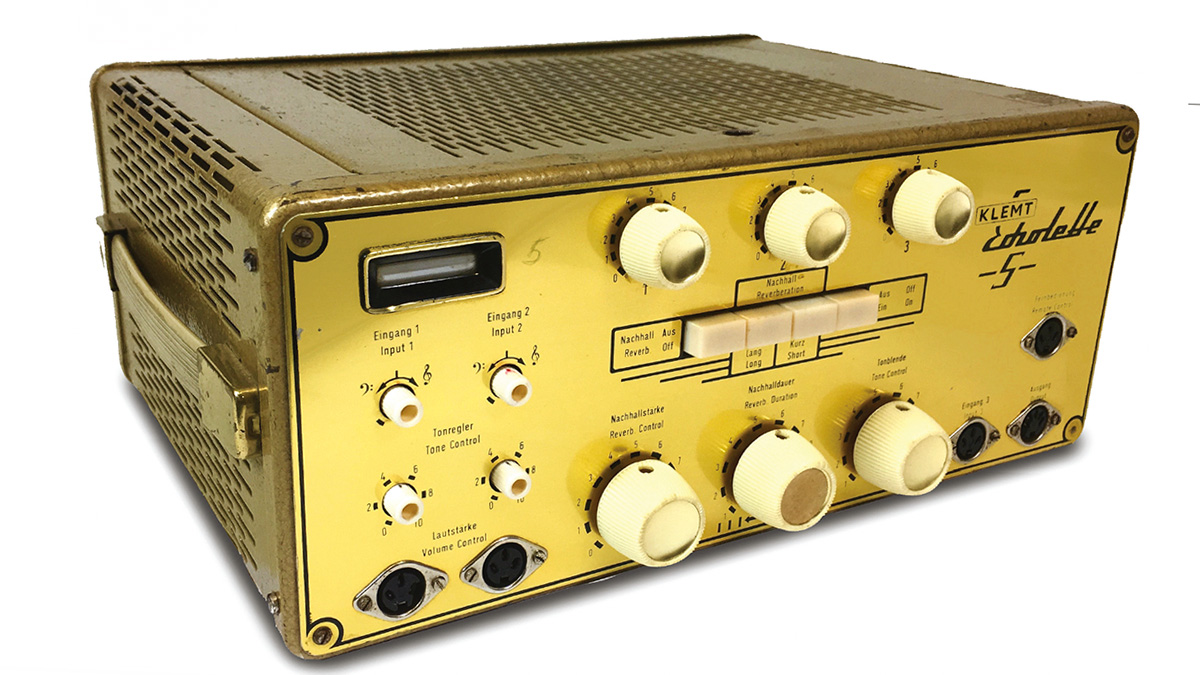
What I also do is, I have a German Klemt Echolette, a tape delay from the 50s. The tape delay part hasn’t worked since the 90s, but the preamp is magic. I use that on everything. So much time is wasted for me, bouncing half an hour of a kick drum or something through the preamp of the Klemt Echolette. It’s not a compressor but I overload it and it kind of compresses.
I also have a spring reverb that has a limiter on the output, so I also squash things that way.
It’s funny how many beloved compressors were never meant to be musical — the Distressor being the obvious exception. That one’s a desert-island unit.
Every self-respecting studio has a couple.
Another thing I’m very lucky to have is the Eventide H3000, which is also probably on every track I’ve ever released. I love the micropitch, I love the reverbs, I love the fancy stuff, and it’s again something that was purchased for 600 bucks.
You came out of jazz and the avant-garde. Did you train as a jazz pianist?
No, I didn’t train, I just smoked a lot of weed and played a lot, but I was not trained.
Did you start on piano or on a synth?
Growing up, my sister had a piano, then for my Bar Mitzvah I got a synth. It was a Yamaha workstation/FM combo. I would try to do Pet Shop Boys-like renditions on it, until I discovered Ministry and Skinny Puppy.
I didn’t train, I just smoked a lot of weed and played a lot.
I was going to point you to the relatively recent Bill Laswell and John Zorn albums. There’s a somewhat similar setup to your work with Jeff. But I take it you don’t listen to much new music?
I have such a blind spot. It’s the nostalgia thing. I wish I wasn’t like that, but that’s just the way I am.
That’s fascinating, because JuJu & Jordash really hit a zeitgeist, especially when Dekmantel took off — yet you weren’t necessarily listening to your peers?
No – what we tried to do was sound like Larry Heard, and mesh in our kind of love of improvisation.
I always felt like there was this annoying divide between my two loves, which is like deep house and techno, and jazz and the avant-garde. Most of the techno nerds I encountered fucking hated saxophones. That’s still a prominent thing, unless it’s a synth saxophone, like UR-style.
I remember the first time Jeff played live with us at a Dekmantel event. We were in the backstage area, and all the techno nerds were kind of making fun of us for having a sax player go on stage with us.
At least for my generation, also, when I was gigging back in Israel, all the jazz nerds I hung around fucking hated electronic music. They thought it was primitive music, that dance music was stupid. I think it’s kind of like what happened for people a generation before me in the 70s when punk came along and all the prog rock nerds were like, “what do you see in that noisy bullshit?”
“If it’s not there in the moment, it doesn’t really end up on the record”
It’s funny you mention Larry Heard, since he came out of prog and jazz-funk drumming himself, and it shows on records like Alien.
That’s right, he was a prog rock drummer! My first demo, he’s the first person I sent it to. I wanted to release it on Alleviated.
I couldn’t believe that he wrote me back, and he was the sweetest, such a nice guy. He’s my one of my definitely one of my musical idols.
Mei Honeycomb – Clairvoyant Dimensions on Bandcamp