On Friendship Survival Guide, constructed from an archive of loops and sound exchanges, it’s as if Jóhann Jóhannsson is alive again. Adam Wiltzie, co-founder of Stars of the Lid and part of A Winged Victory for the Sullen, talks to us about the process, and about the perfect and fleeting personal and creative connection the two artist shared.
There’s a moment in the grieving process where you go through mementos, and through the pain, when you start to feel someone’s presence all over again. That’s the sense of Friendship Survival Guide.
This is a new album built on fragments — studio collaborations around 2013-2017, particularly for The Theory of Everything, a biopic on Stephen Hawking, and Dennis Villeneuve’s Arrival. While those contexts melt away, some of their sense remains. Friendship Survival Guide is Jóhann’s story retold, even in the first voice, somewhere between cosmic expanses and closer moments.
Jóhann’s own machines remain: these tapes were run through his Revox machines by engineer Francesco Donadello, who contributes, “recorded, blasted, and amped” by Steve Albini in Chicago, just before his sudden passing.
And there’s a close circle of friends and collaborators here: Tim Hecker, composer Bryan Senti, and Hildur Guðnadóttir join the posthumous contributions of Jóhann Jóhannsson. When we talk, Adam describes the Kreuzberg neighborhood (where I also live and work) as “haunted” now. This work, at least, lives up to that description.
It’s poignant, but this doesn’t feel a reflection on loss so much as fragility. It’s a microcosmos, then — a moment of breath that’s carried away in an updraft of wind.
I spoke to Adam, me at a hospital where I was visiting a friend, and him from his home in Belgium.
PK: This is really an album about friendship. I was struck by how you two came together.
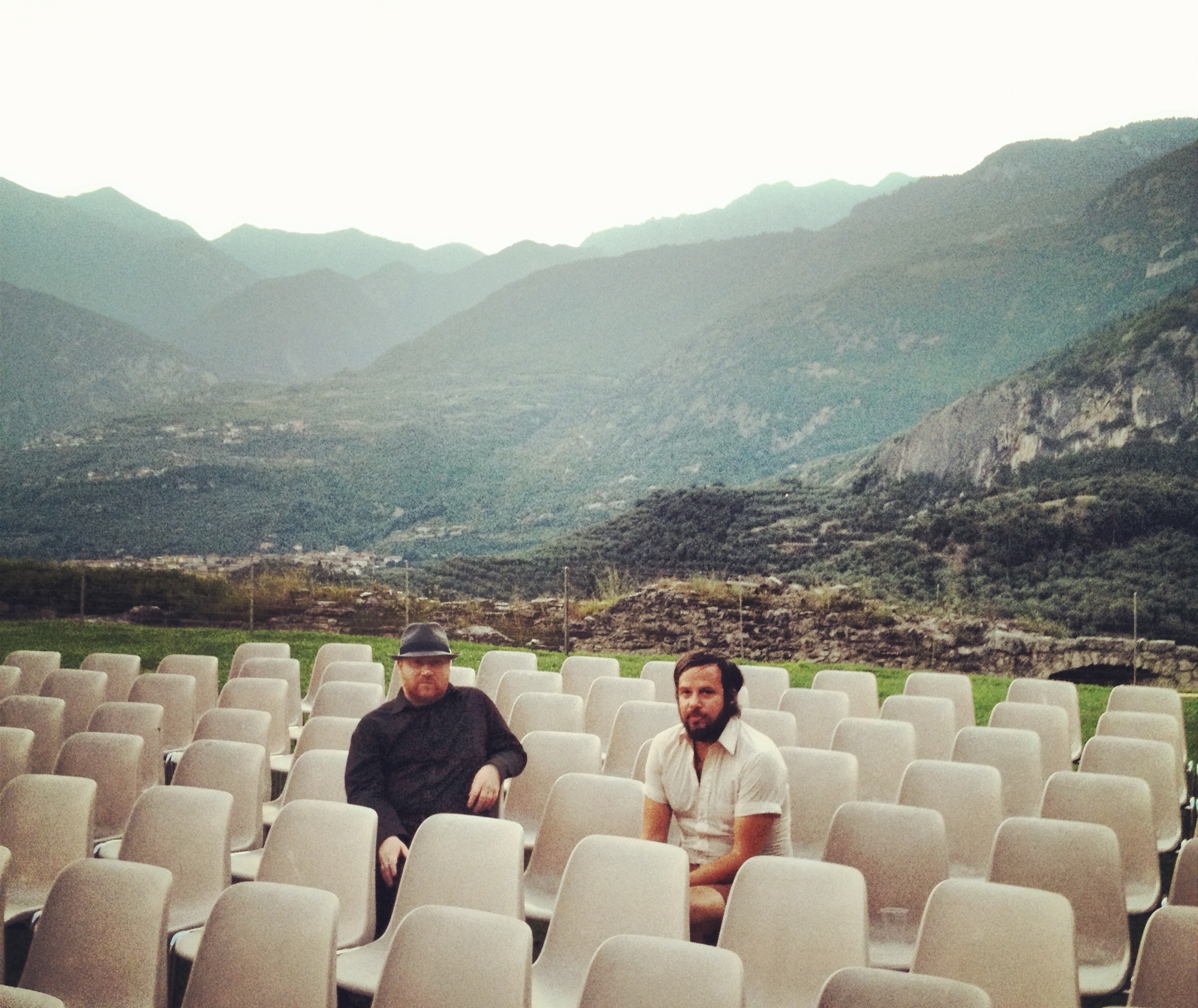
AW: Our friendship was kind of immediate. We met at a merch table at a Stars of the Lid show. And that night that we met, we were two guys born so close to the same time — I was two days older than him, same year.
And we realized we had lived this collective experience. Even though I was a Yank and he was an Icelander, we had so much of the same life story — things we grew up listening to, watching — it was almost like we’d known each other our whole lives.
It took some years before we actually started. I was running sound for him, playing some music together, but we were playing his music. I was hired as a sort of ghostwriter for The Theory of Everything. That was the first time that we were creating new sounds together. He was a huge Stars of the Lid fan. He loved the sort of atmospheric beds I had developed, so I was creating these beds of sound that the orchestrations could sit atop.
A couple of things that are on the record are actually from that time, that actually ended up being rejected by the producers. Not so much the whole cue, but some of this underneath stuff. I remember the first time we got rejected for this one score, he was so happy, because he loved what I had done underneath. And he’s like, this is great news — now we can make our own record.
It was so instant. It was never like, oh, can you try this, or could it be a little more like — it was just instantly perfect. It was first takes; anytime we were doing any kind of back and forth. Our work together fit like this glove.
Then his life changed dramatically. He won a Golden Globe and suddenly became this incredibly sought-after composer. But we were still finding time to just do some work together. Even though I was in Belgium and he was in Berlin, our friend circle became the same. Our lives became intertwined. But we were never thinking our record together needed to be a priority. It was something we wanted to do.
We didn’t really put a deadline on ourselves. We were just enjoying collaborating and making music. So by the time he died, from those four or five years, we had a lot of stuff.
Even after finishing the record, it wasn’t like this is the end. You know, there’s still a bunch more stuff. I don’t know if I’ll ever do anything with it. We just had buckets of ideas.
Were you ever in the same place?
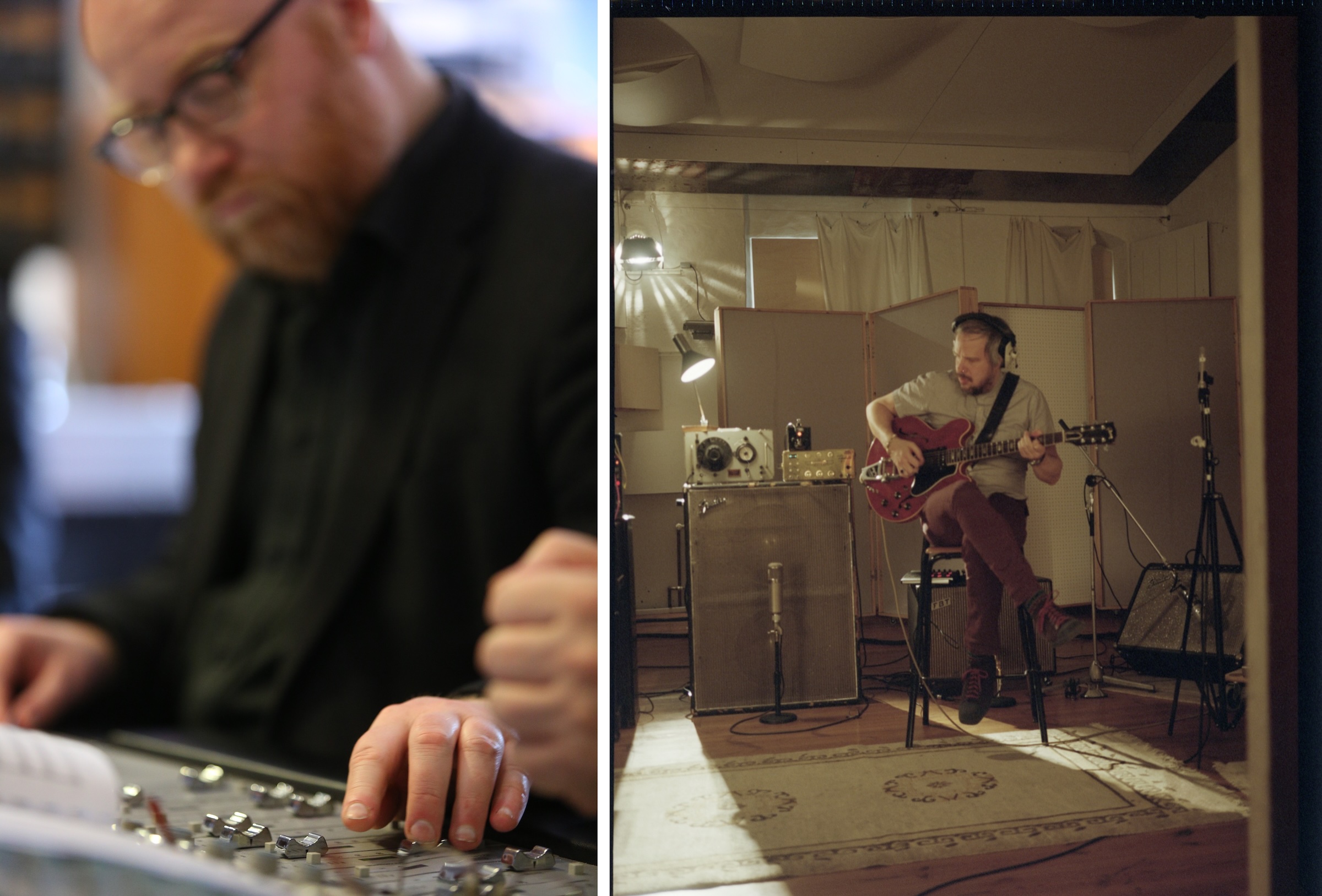
Yeah, for making loops. We probably are happiest making stuff alone in our studio. Some people just need to be with other people and collaborate. It can be a lonely world, composing music. You spend a lot of time by yourself. But I’m very comfortable with that, and so is he. The solitude.
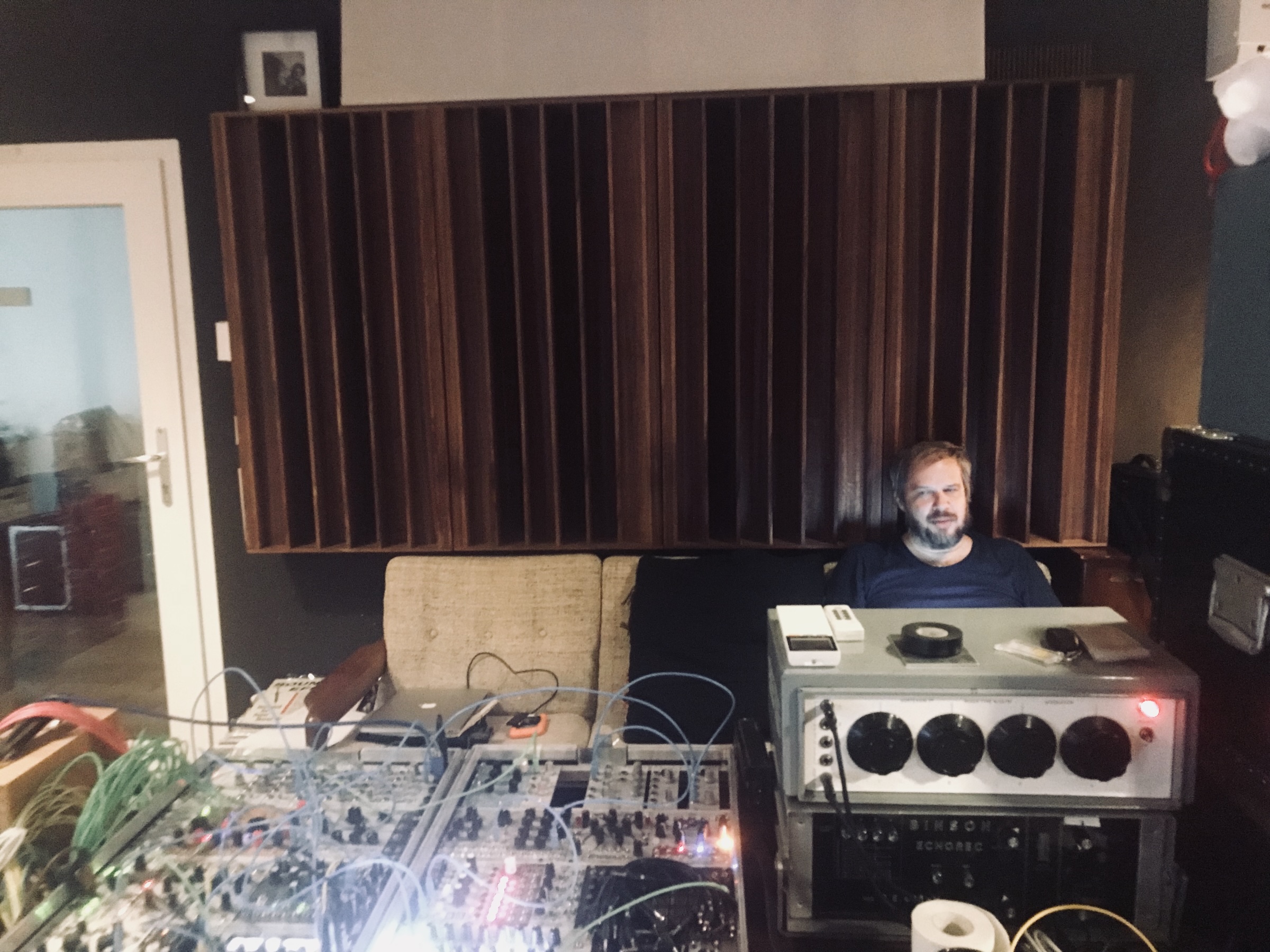
The thing about creating a tape loop, it’s such a physical thing. You’re dealing with this piece of mass. It’s like you’re going back in time. When I started making music, it was on a four-track cassette recorder. So I’ve always been using tape.
Looking back, when I bought my first one, like 1990, that was $350, which was a fortune for me. I mean I lived in squalor, you know; it took everything just to afford to buy that thing. But it was so inspiring when I got to make music on this format.
How are you setting up that loop rig? This is all with hand-constructed loops out of reel-to-reel tape, right?
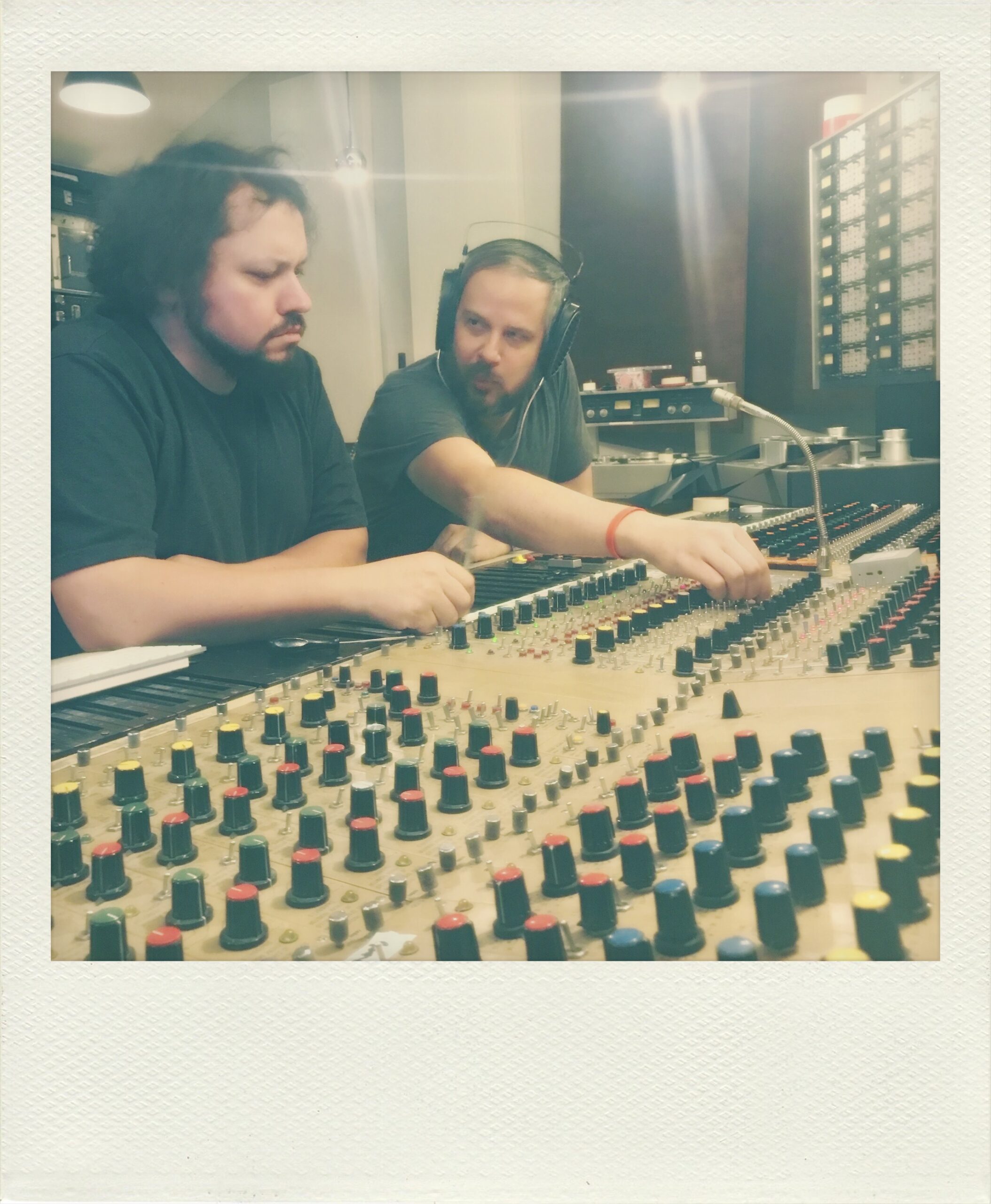
Yeah. With all the sounds we recorded, we started making loops within the sounds. Francesco [Donadello] had a multi-track, 16-track, 2-inch. We’re taking and mixing sounds and then chopping them up and making these weird loops, which you can hear in most of the songs.
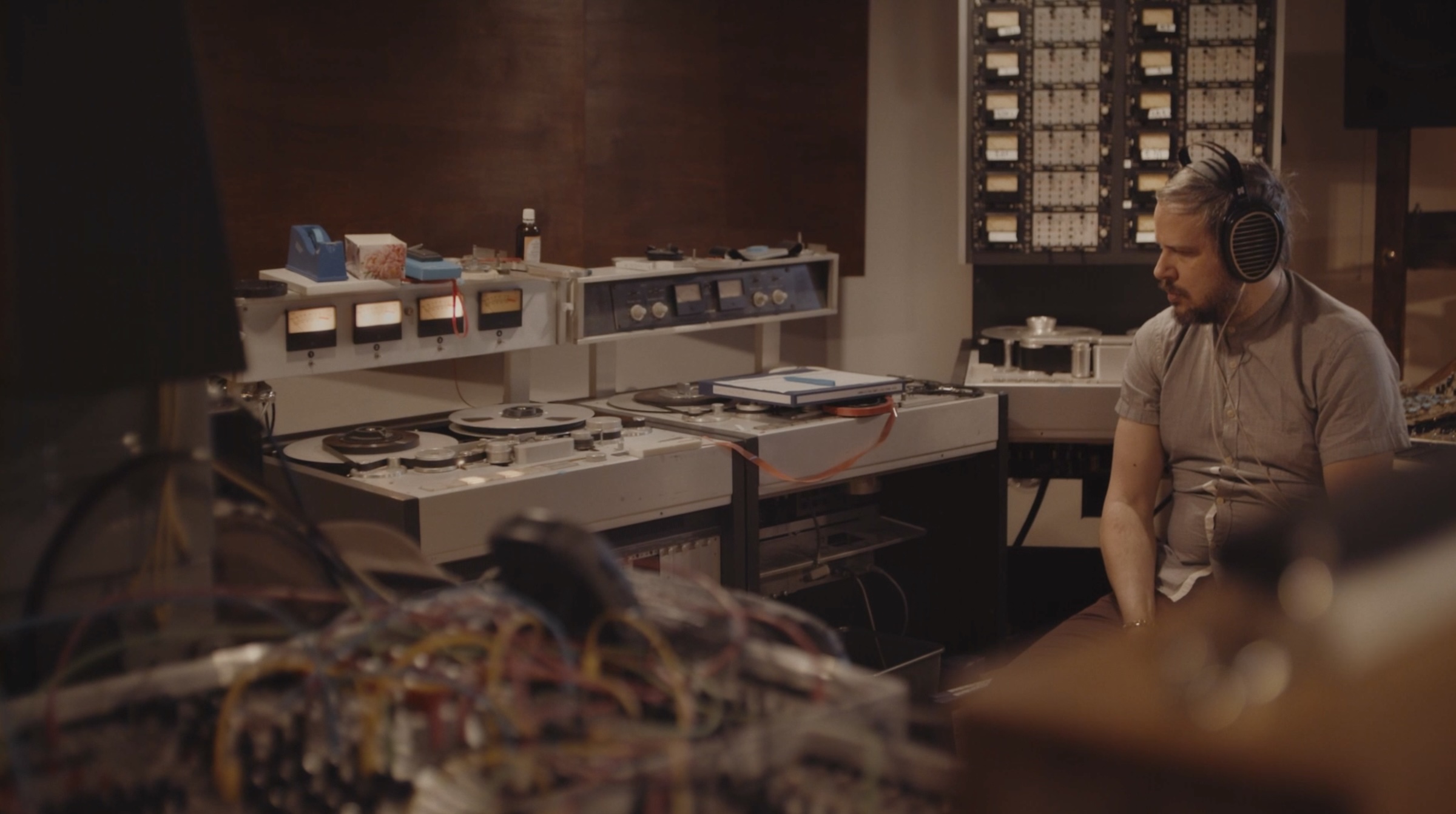
Especially on the first song — also on “In Ever Decreasing Circles,” that loop is really an early experiment that we did. That’s the epitome of what I strive for in a tape loop.
We had those, and we had a lot of them already digitized. Unfortunately, Jóhann wasn’t the most organized person, so some of the tape loops were destroyed. But luckily we digitized everything. Some stuff Francesco still had. Analog tape has to be temperature-controlled and archived because tape can really degrade over time. But if you take care of it, it can kind of last forever.
“The thing about creating a tape loop, it’s such a physical thing. You’re dealing with this piece of mass.”
One of the tracks that hit me right away was “Mourners Will Be Outcast” — this one really hooked me emotionally. There’s a narrative sense to all of this as you listen to it. And there were original programs to some of the materials. I wonder if that influenced the process at all, or if these were more like new sound objects?
I didn’t really think about it like that. It’s just that there was always this big blob of stuff, you know. That’s an old piece; that’s from that era, too, 2013. The main string melody and the organ loop. Recording it back then, we knew that was definitely going to be on the record. It developed as it turns into the second part, “Exceptional Proportions,” which is where I brought Tim Hecker to help create an ending. We had the beginning part, which was just gorgeous. But it’s a classic example of, sometimes you have this beautiful section, but okay, where is this going to go? We have to create a song out of it.
At least this is how I look at it. It has to go somewhere.
For me, that felt like a beginning. I found a way to bring Tim in so I could run my guitar, those sounds, the organ sounds, through his weird process. The way he creates music is really special. And he has a history with Jóhann, too. So I thought he’d be perfect for it.
There’s this beautiful drone at the beginning — almost like a stretched-out string; I don’t know if it’s a loop.
That’s actually a guitar — the guitar, then the orchestra fades in. It’s not a loop, it’s just me playing the guitar. You’re making me happy right now, because my goal when I’m creating music is not to make anything obvious. Let it be a mystery. You can’t tell what’s happening; it’s good.
Who was contributing to what? Where are the other collaborations?
Tim does a little bit on “Exceptional Proportions.” I brought in a good friend of mine, Bryan Senti, he plays the viola line on White Gloves and Turtlenecks. There’s a hodgepodge of found sound. Hildur Guðnadóttir’s voice is used, slowed down, that we used throughout the record. Hildur’s stuff goes way back; her studio is right next to Jóhann’s. Back in the day, the studio on Oranienstraße — he had a room, Hildur had a room, Dustin O’Halloran, my collaborator on A Winged Victory for the Sullen, various other people had a room. It was really thriving, an incredibly thriving place in a really disturbing part of Berlin, if you know Kreuzberg.
I used to spend a lot of time there, especially when Dustin was living there, because we were recording A Winged Victory for the Sullen.
There was a lot of apprehension, maybe because of everything that happened. Once the family came on board, the manager got Deutsche Grammophon on board, we had a budget, and I was going to do this — it was a bit daunting. But then once I got back into the sounds again, I just could feel listening to how alive he still was. It really made me feel great; it was a real pleasure to get back in there. It didn’t feel sad at all. I had met my friend again, it’s this weird space, and we’re creating again.
I was surprised. I didn’t know what it was going to be like. It could have been completely arduous and difficult, but once I crossed over the threshold, it all happened really fast.
I guess if you had one of those collaborations that involved a lot of fighting, that would be very difficult, right? Like you would miss that even more that they weren’t there. But in this case, you were able to reconstruct the relationship you had.
I mean, all the years we knew each other, all the van rides, hundreds of hours driving around in Havana, all around the world, we never once had a fight. He was really the easiest guy in the world to hang out with. Just getting back into it was great, and I’m just glad I did. I feel — pride is not an emotion I feel comfortable with, because I feel that pride obscures things. But I feel content and satisfied that I created a good time capsule for our time and friendship and our time on Earth together, which was pretty fleeting.
Our birthdays are coming up next week. Whenever I celebrate my birthday now, I celebrate his, too, because it’s the same. I miss him, but I listen to this record, and I can hear how alive he sounds to me. And it’s a relief.
It’s so rare to find this kind of collaboration at all in music.
Yeah. Even if your collaborator’s alive. Sorry for my humor.
It’s beautiful in a way that you’re making this something that isn’t just an archival project — it feels like a living collaboration.
Absolutely. It could have gone longer — the forty minutes, the two sides, it just makes sense to me. In the end, when you’re an artist — any artist, writer, painter — when is a piece of work finished? No one really knows. So someone has to get the scissors out, make the loop, finish the loop, and send it out to the world. This is the special thing: you create something, let it into the world, let it resonate off people, and see what the reaction is.
It was cathartic and felt good. When finally we heard the orchestra playing over the parts and everything — right after that we went from Budapest and straight to Berlin, and mixed it with Francesco in his studio. And here we are, and it’s out. It’s a pleasure.
What’s next for you?
I’m going to London for more promotional activities, and then straight to North America because we’re playing some dates over there. Then back here to hibernate for the winter in my studio and finish the recordings [for A Winged Victory for the Sullen].
Does this project change the way you approach any of that?
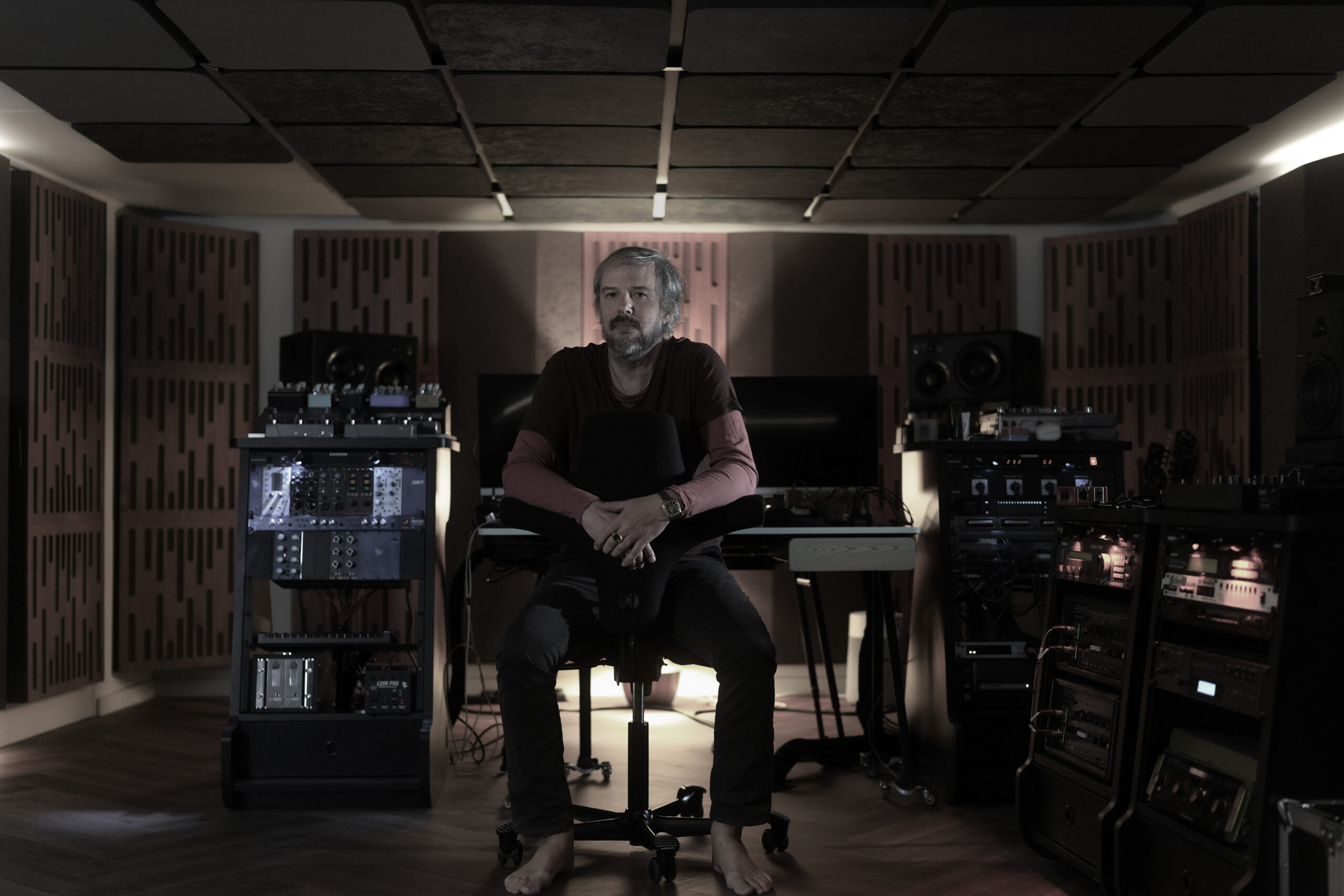
I’m always creating the same style of music, so it feels okay. I think my technical skills have improved a little bit. I’m not, you know, living in squalor and working out of my bedroom; I have the studio now where everything’s hooked up. If I have an idea, I can record it immediately, whereas before I felt like I was spending 45 minutes looking for the adapter from my pedal. To maximize the time when I’m feeling inspired has become the most essential thing.
I live in the countryside outside of rural Flanders. It’s quite lovely out here. I live in a forest, so I can just walk out of the door in the middle of nowhere.
I’ve lived most of my life in the city; I would say traditionally I was more of a city boy. But I moved out here during the lockdown, and I should have done it long before then. You can get stuck in a city out of habit; I was born and raised in New York, I love the city. The city is always going to be part of me.
When you make the step of a big move, there’s always a lot of hesitation — what I said earlier about getting back into the recording. It’s a lot to take in. And then you finally jump over the cliff, and okay, we’re going. Yeah, I love living out here.
“Once I got back into the sounds again, I just could feel listening to how alive he still was. I had met my friend again.”
I get a sense of a narrative as I listen, also from the titles — do you have that feeling listening to it?
Well, the narrative is in the title. It’s us. Titles are very, very personal and typically they only mean something to me and one other person. Some are a little more obvious.
It would be too hard for me — I could put it into a haiku, maybe. I don’t know how to do a complete narrative of how that happened.
I do love haiku. It really describes Jóhann. He was a man of few words. I should make some haikus to describe him.
Friendship Survival Guide is out today on Deutsche Grammophon.
Alongside the record release, there’s a three-part short film by Belgian Director Jonas Govaerts, starring Adam with actor Jeroen Percevall. Here’s the film: