Hold on for a wormhole between different nerd universes. Steve Horelick, the prolific composer behind the music for Reading Rainbow, meets the classic Buchla 200, meets a new prototype of an official recreation of the Multiple Arbitrary Function Generator (MARF). Also, Star Trek. Let’s explain what those things are for those who don’t know — and talk about how you can join a special event live online.
The Buchla and Reading Rainbow
CDM reaches a multi-generational, international audience. So while some of you will hear this music playing in your head automatically if I so much as say the phrase “Reading Rainbow,” like you’re some kind of 80s sleeper agent, here’s what we’re on about.
The 1980s were a golden era for publicly funded, viewer-supported educational television. Reading Rainbow exemplified that model, packed with radical ideas. Children read their own book reviews. Madeline Kahn and James Earl Jones read titles as if they were in your living room; Run DMC showed up. LeVar Burton hosted, then known for his part in Roots, and later as the Chief Engineer of Star Trek: The Next Generation‘s Enterprise-D.
And — weirdly, I have a distinct memory of being six and watching the pilot episode — this was the song that came on at the beginning. (Illustrating how much the program creators wanted to reach kids in all of the USA, the first station to air the show was in Nebraska.)
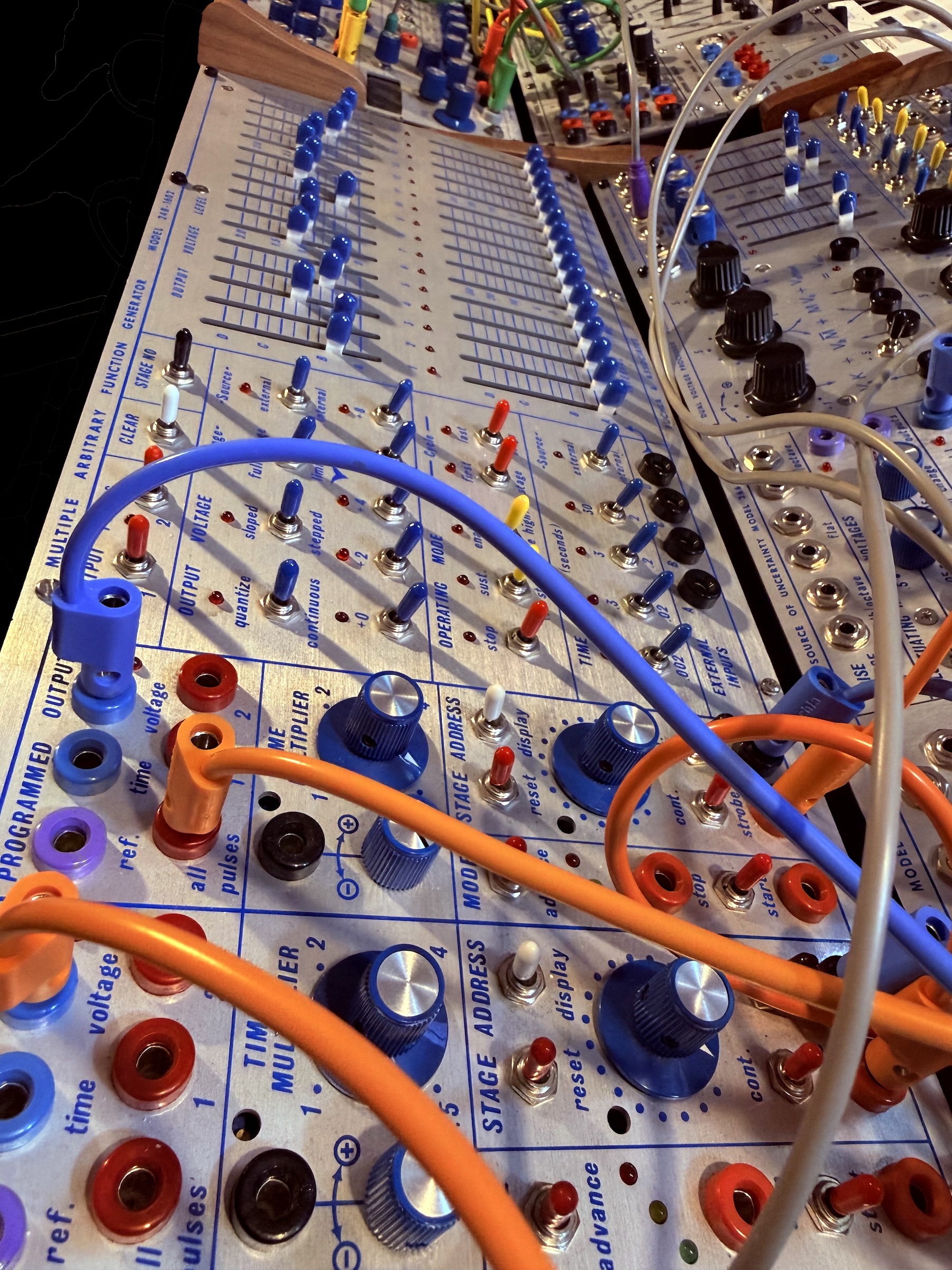
How beautiful that a show about reading and learning starts with the fascinating sound of an invention: Don Buchla’s Multiple Arbitrary Function Generator (MARF), from the Buchla 200 Electric Music Box.
Here’s MARF
The MARF is more than a module; it’s a way of thinking about musical ideas. So on Saturday, Steve Horelick will demonstrate the MARF using a prototype of an official recreation coming from Buchla in the start of 2027 — and talk about the history of the instrument. As the event is described:
The original MARF was a remarkably flexible control-voltage instrument capable of generating complex patterns, sequences, and evolving musical structures. Horelick used its ability to access stages in nonsequential order to create the distinctive, fluttering ostinato that became the opening musical signature of Reading Rainbow.
He’ll explore the creative process behind the composition: how the original animation storyboard inspired the music, how the opening Buchla sequence evolved, and how the melody, lyrics, arrangement, and electronic production came together while working with his writing partner and spouse, Janet Weir.
Here’s Suzanne Ciani explaining how she works on the MARF, so you get a picture of what this device is:
Here’s a look at the MARF prototype Steve is borrowing:
Full event details, live
The full event is at the Museum of Music Technology, which is in the suburbs of Philadelphia, Pennsylvania. But you can also livestream this, for those of us not in Philly:
In-person tickets:
https://tickets.themmt.org/events/mmt/2269817
Livestream reservations:
https://tickets.themmt.org/events/mmt/2300024
This isn’t just about history: there will also be the debut of a new composition.
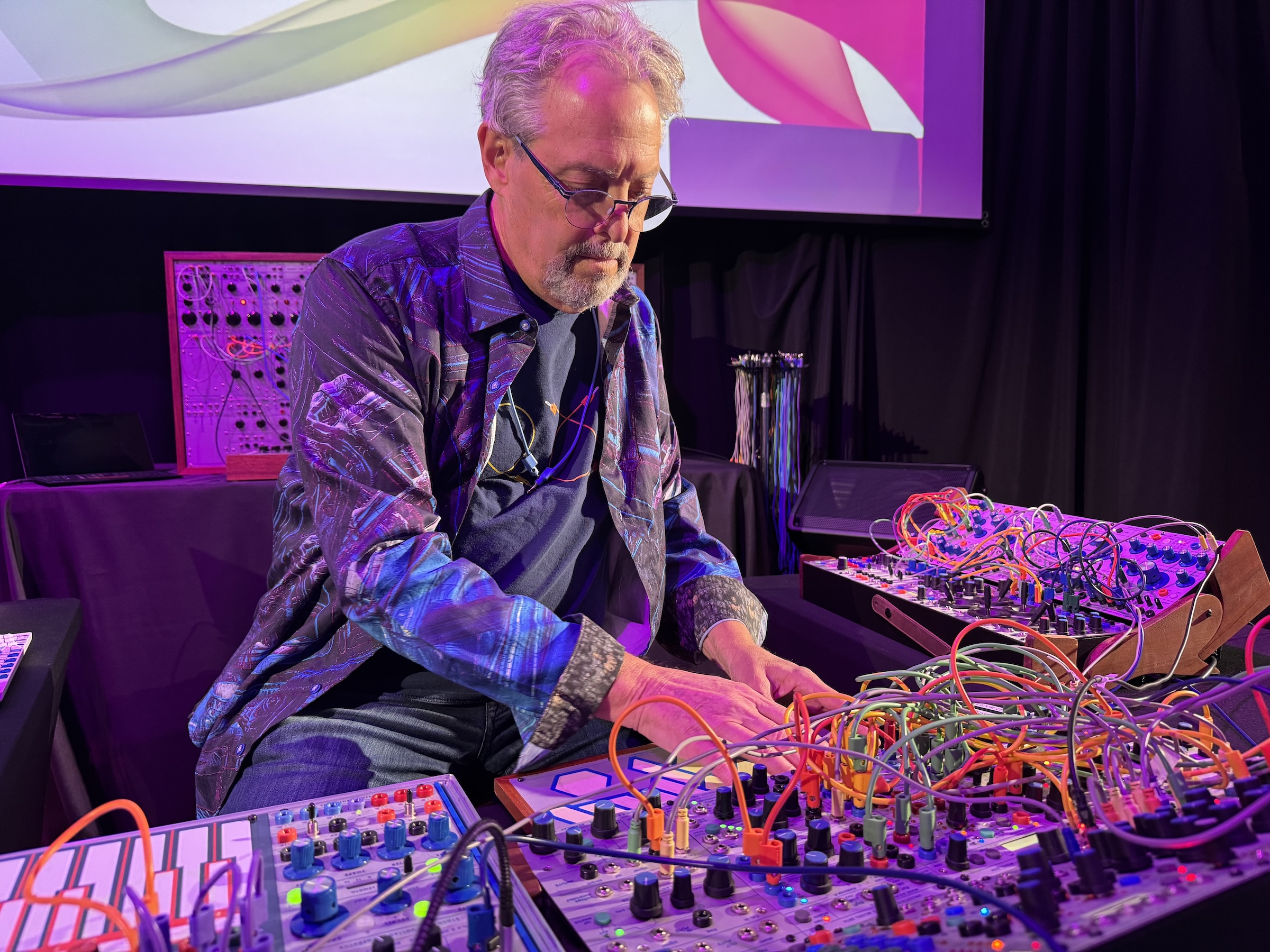
The evening culminates in a live performance featuring Horelick’s Buchla Easel and 200e Skylab systems all being processed with Logic Pro 13, joined by two accomplished experimental musicians:
Clive Smith — processed electric guitar
Kevin Farrell — electric cello
Together, the trio will explore Butterfly in the Cosmos, a structured improvisation that transforms fragments of the familiar Reading Rainbow theme into an evolving quadraphonic soundscape. Moving from a single note through dense contrapuntal textures, cosmic noise, fragmented melodies, and abstract sonic conversations, the performance explores how familiar musical
material can be transformed through improvisation, electronic processing, and spatial sound. The result is part electronic music archaeology, part synthesizer demonstration, and part adventurous live performance.
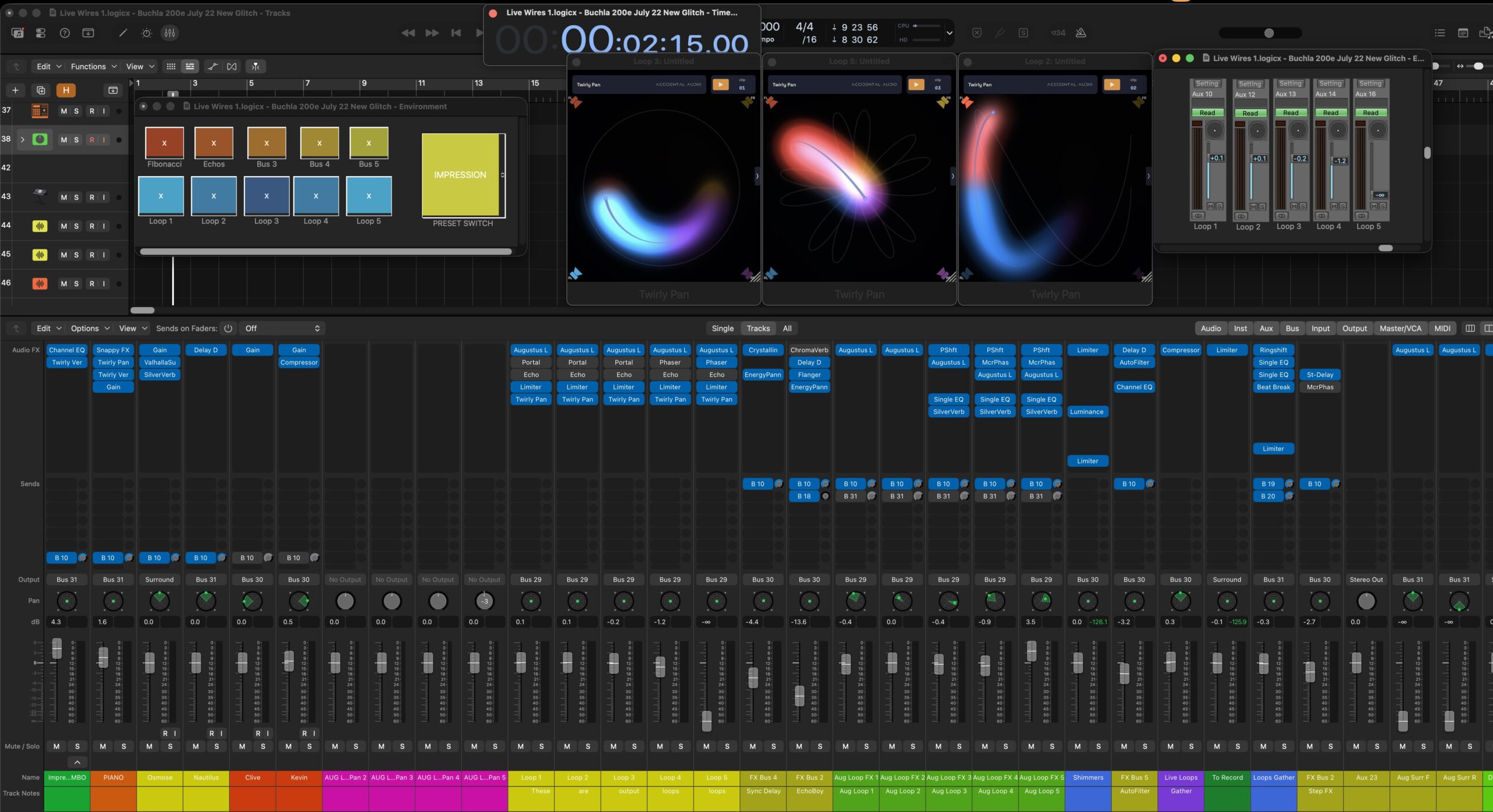
Steve shares a glimpse at his (wild!) setup in Apple’s Logic Pro 13 — note the use of the patchable Environment, the advanced underpinnings in Logic. Steve is my idea of a truly intelligent agent in Logic, not least because of his incredible educational materials.
MMT also notes that they have the equivalent of Steve’s original 1983 studio — so, the Buchla 200 Electric Music Box, plus:
- Fairlight CMI
- Oberheim Four-Voice SEM
- LinnDrum
- Yamaha DX7
- Lexicon digital delays
- Ampex MM-1000 multitrack tape recorder
Bonus round: 80s Fairlight action!
Steve also demonstrated the Fairlight CMI, on the digital side of things. This segment alone is probably to blame for CDM and frankly a lot of other synthesists in your life! But that’s not to get nostalgic: imagine, if this is possible, how many other people we can share reading and invention and the joy of curiosity, and how vital that is for the world. It matters who you reach. Children will listen.
Bonus bonus round: who sang the theme?
Younger viewers know the theme as sung by the legendary Chaka Kahn. But the voice you hear in the video at top is Harlem, NYC native Tina Fabrique. How incredible is she as a singer? Incredible enough to be cast as Ella Fitzgerald and be up to the task.
Also, LeVar did sing the theme — once! (Now the rest of us can practice vocalizing the sound of the MURF!)
Bonus bonus bonus round: Star Trek TNG on Reading Rainbow
RIP, Captain.
I’ll be tuning in for this event; hope to see you there!