It’s real, it’s adorable, it’s an MPC you can hold in your hand, and it costs just $399. Tiny desks now accommodate whole studios. But now that Akai has shared the full specs for MPC Sample — why not compare it to the original 1988 MPC60, spec-for-spec?
It’s a great time for tiny gear that’s under $500, samples, and fits in a backpack without breaking your back in the process. I’d say it’s the best time, really, since the era of the Casio SK-1. There’s Ableton Move (now with an expanding set of official and unofficial add-on capabilities, making it the most flexible option here). Roland has the tiny P-6 (not to mention the low prices you can get on the more luggable SP-404MKII). Elektron has the model:samples. KORG has the ($149!) volca sample 2. Yamaha has the SEQTRAK. Casio is finally back in the game with their own cute calculator-style device I’m excited about (more on that later). Teenage Engineering has the EP-133 PO K.O. II (and won’t stop making new variations of it). And that’s not even including entries from Polyend, 1010music, and others.
These cute little beasties also go well with each other — an ecosystem of little gadgets that start to get into impulse-buy range. They’re not necessarily about “compromise,” either — smaller can also be more fun.
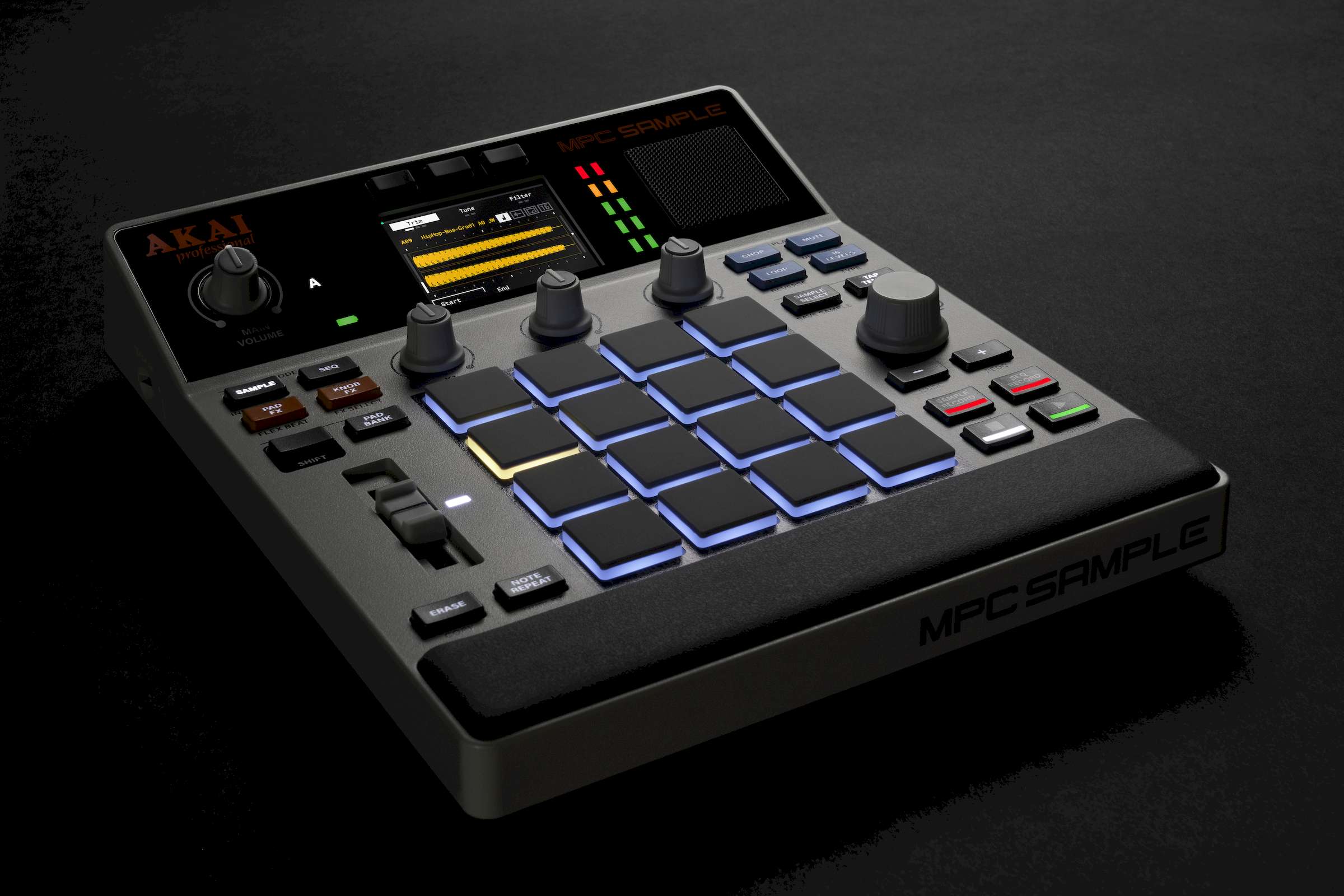
So here’s my prediction. I think the MPC Sample could well be the most popular of Akai’s range. It’s adorable, recession-proof, go-bag-for-beats gear. And finally Akai had the sense to make something that looks immediately like an MPC60.
Available now from Sweetwater at $399 (with the option of a cute bag to go with it):
Akai Professional MPC Sample Portable Groovebox
And from Perfect Circuit:
MPC Sample Portable Sampler + Sequencer
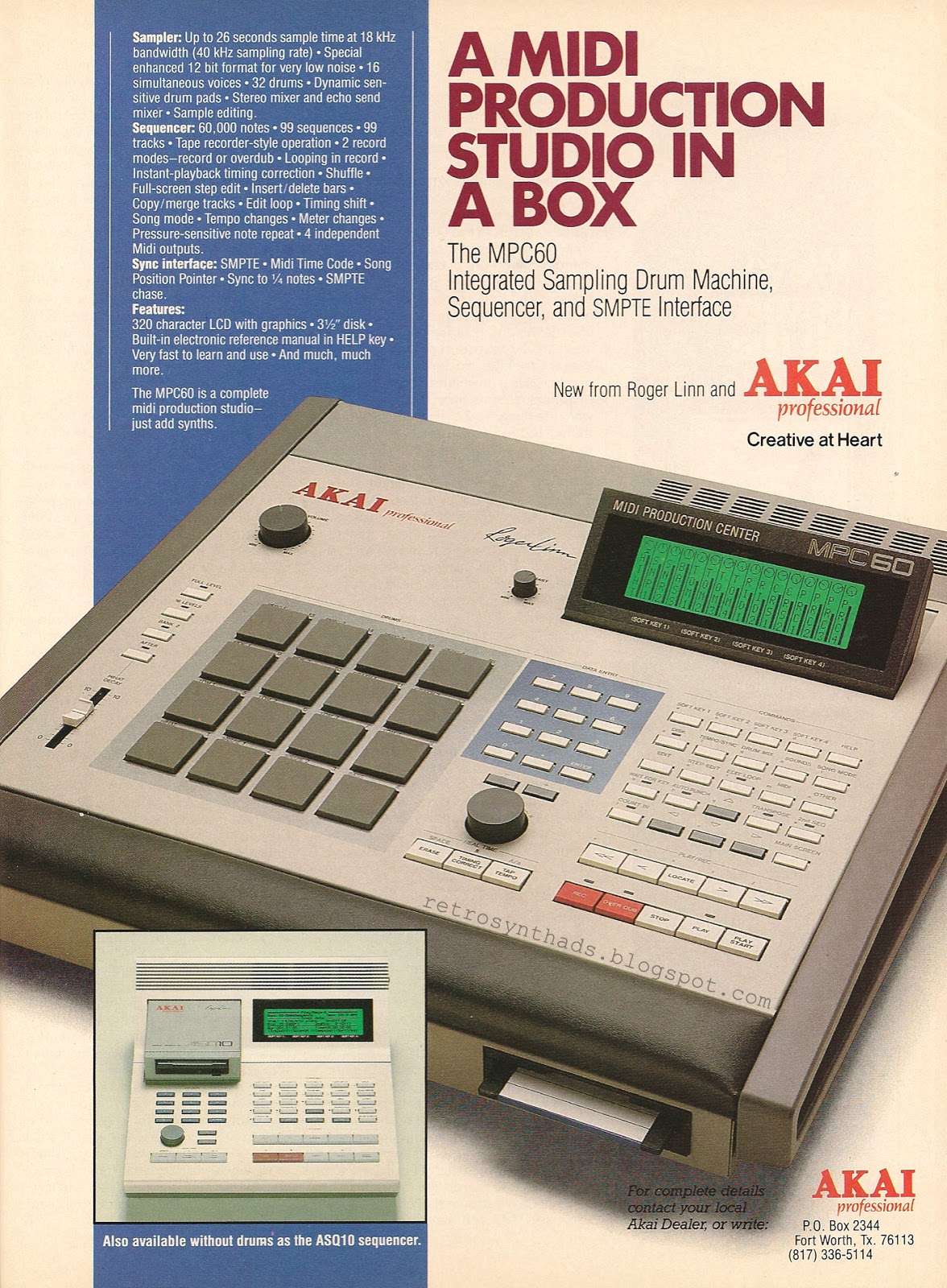
This is really a full-blown, battery-powered MPC you can use to sample and produce music. But since everyone and their dog will be covering it today, I decided to pull the Keyboard Magazine review of the original, Roger Linn-designed Akai MPC60 from November 1988 (credited to Freff). Roger had to rush a firmware update to the Keyboard staff on a mailed floppy disc — this was the late 80s. Let’s do a totally unfair comparison of the two, especially since both sport that iconic layout, tasteful color scheme, and padded wrist rest.
From retrosynthads: (also from that same Keyboard issue!)
Hardware
Pads
MPC60: 16 pads, velocity sensitive
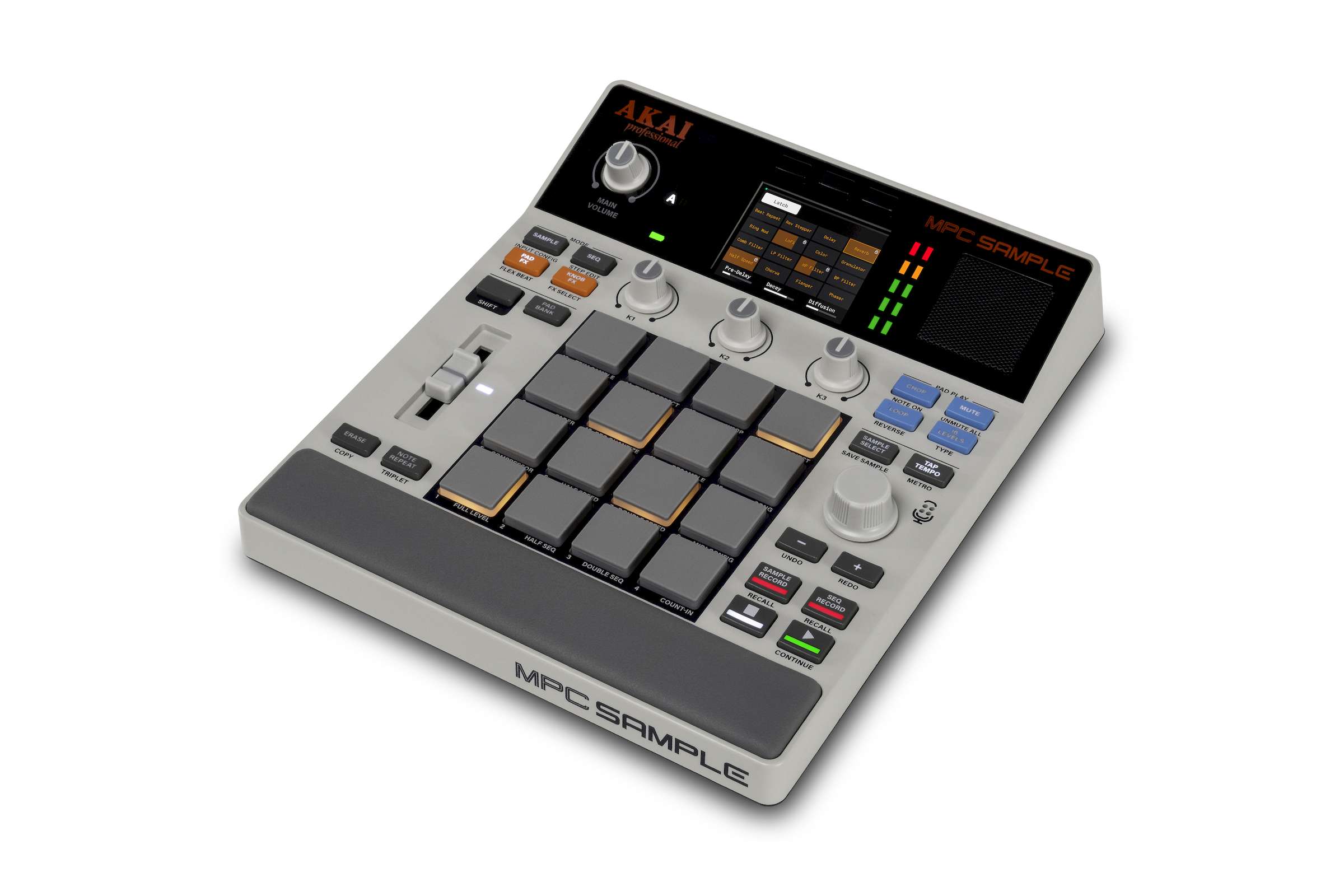
MPC Sample: 16 pads, velocity sensitive, RGB color, poly aftertouch
Display
MPC60: 8-line x 320 character backlit LCD display
MPC Sample: 2.4-inch full-color display
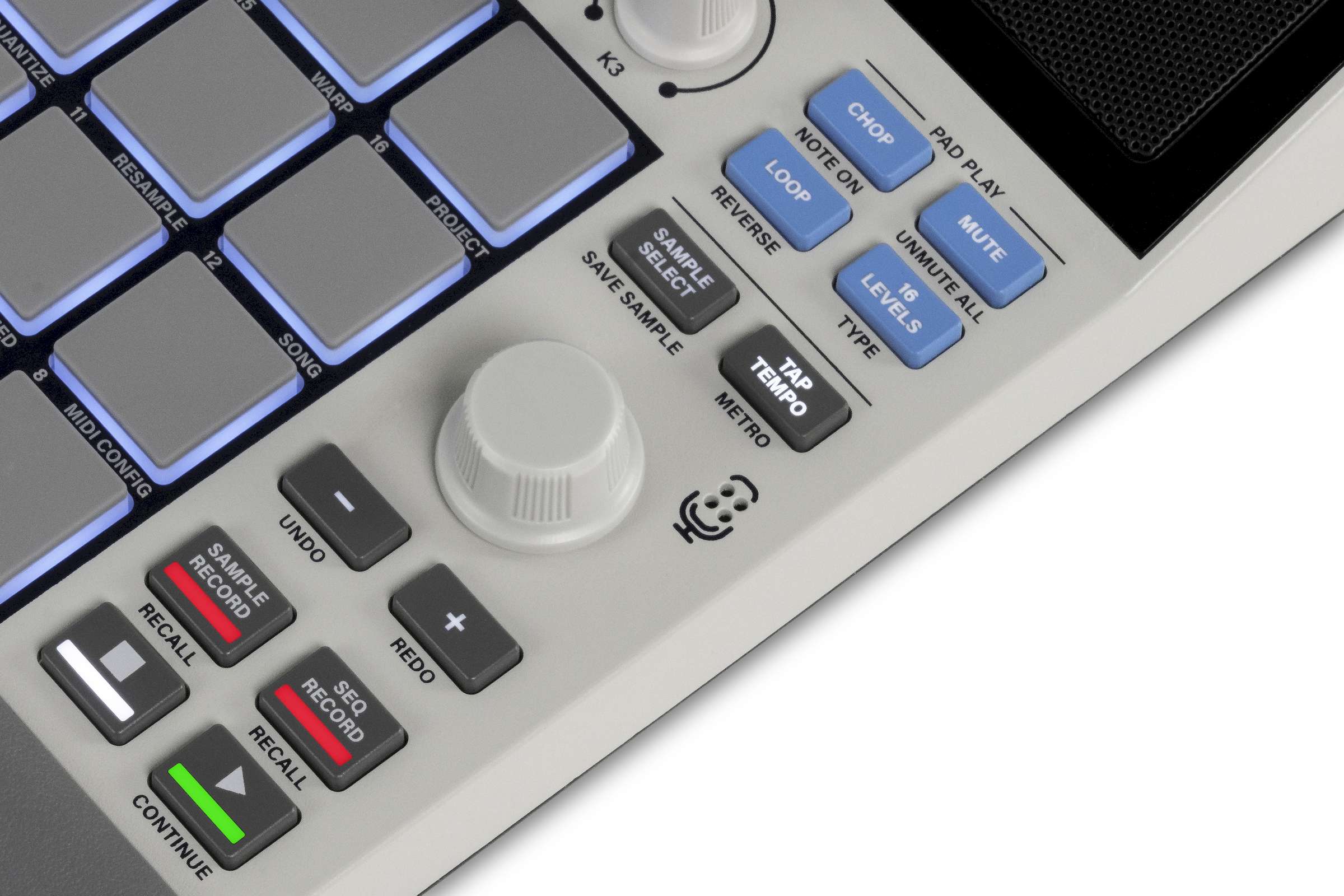
Form factor
MPC60: 48.5 x 45 x 12.7 cm; 10.4 kg
MPC Sample: 23.6 x 19.4 x 5 cm; 0.9 kg
Let’s just say this: Roger Linn’s invention of this pad mechanism remains one of the single biggest breakthroughs in electronic music technology.
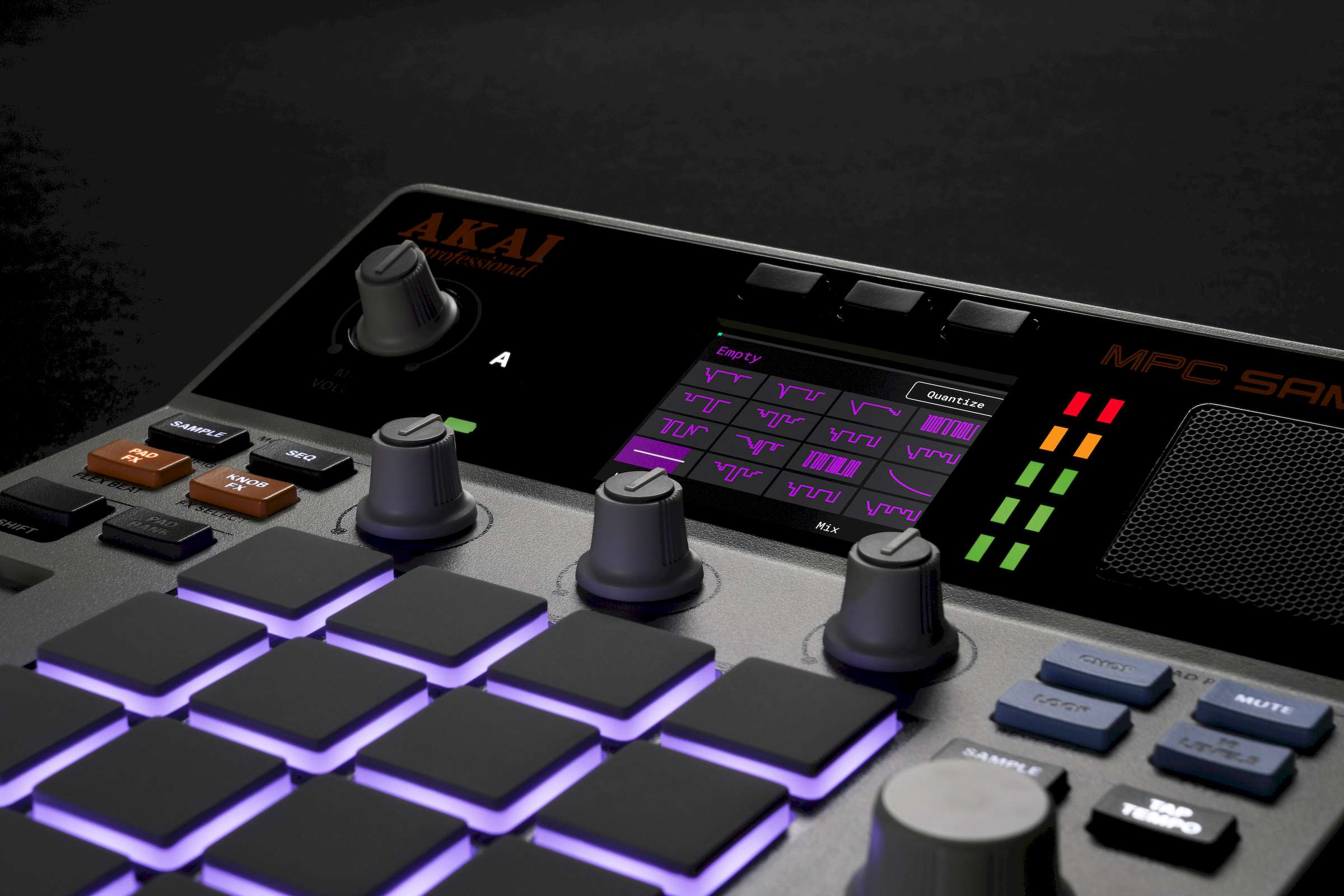
I/O
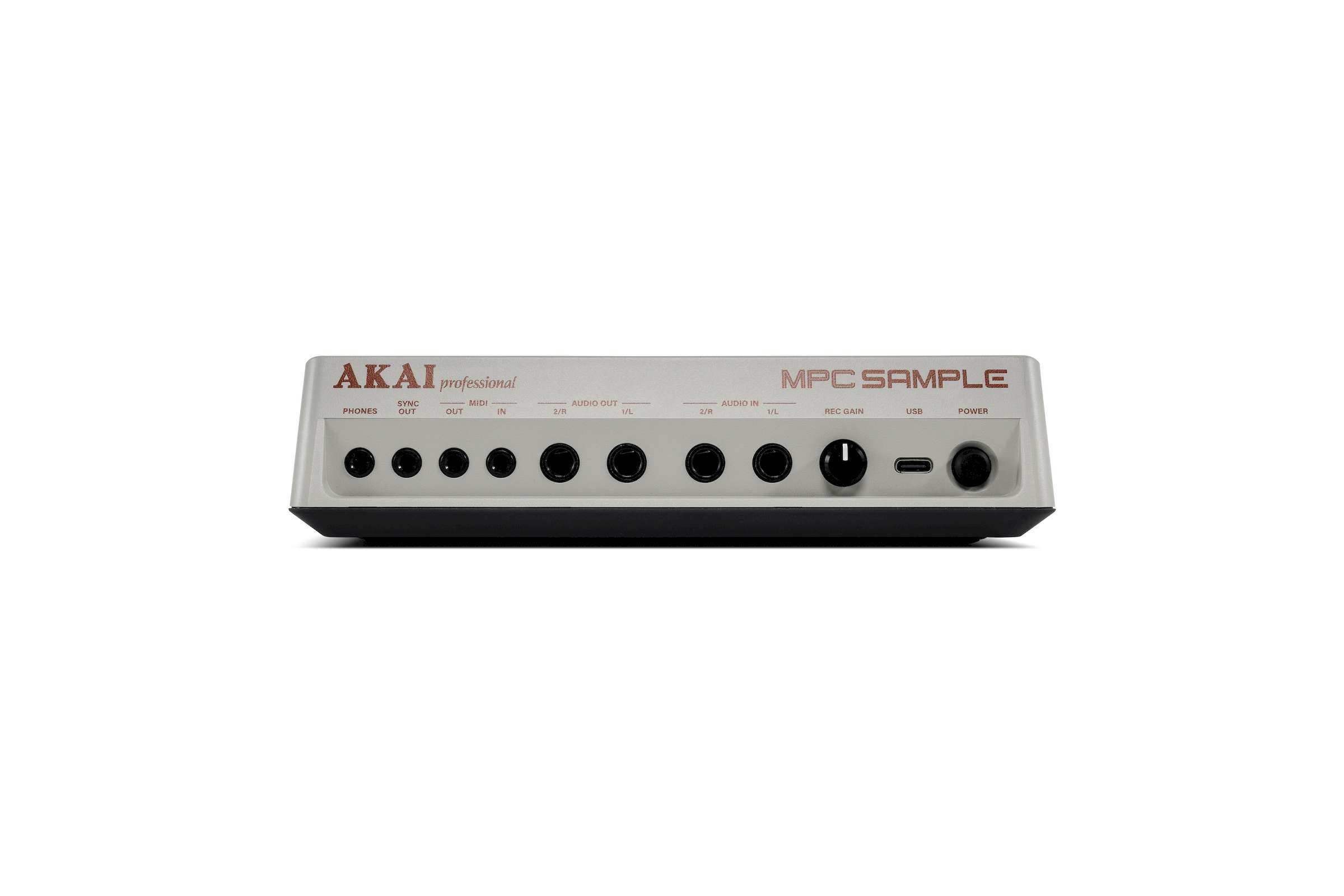
MPC60: 2x MIDI in (with merge), 4x MIDI out, RS-232 connector, metronome out, TRS stereo input, main stereo out, eight assignable individual or mix outs, echo send with stereo returns*
MPC Sample: USB-C power + MIDI + audio + file transfer, MIDI in and out (1x each), 2x 1/4″ TRS in, 2x 1/4″ TRS out, 1/8″ headphone out, sync out.
So, the MPC60 clearly has a lot more I/O, but internal effects on the MPC Sample I’d argue make that less of an issue. What is impressive is how many sync formats the MPC60 had to support: you could sync to SMPTE, MTC, MIDI clock, MIDI SPP, FSK, pulse wave, or quarter-note metronome clicks. It also had MIDI Sample Dump, which truly no one will miss.
Meanwhile, that USB-C connection does a lot!
Sound engine and capacity
Sound engine
MPC60:
40kHz sampling rate
18kHz frequency response
16-bit A/D and D/A convertors
16-bit sequencer memory
12-bit sample memory (recorded at 14-bit resolution)
16-voice polyphony
MPC Sample:
Akai actually didn’t put the sample rate in there, but I’m assuming it’s stereo 44.1 kHz, 16-bit (though it’d be clever if they emulate the 40k/14-bit thing…)
32 stereo voices of polyphony with disk streaming
Sequencer
MPC60: Step and live recording; 96 ppq timing; Quantize from 1/8 – 1/32 note triplet (including while recording); Punch in and out
MPC Sample MPC Sequencer with Real-Time Swing (960 PPQN)
There’s one major, major limitation of the original MPC60: sampling — any sampling — wipes the sequencer memory. So you had to choose one or the other.
Storage and sample memory
Hang on to your seats, kids!
MPC60: 13.1 seconds sample memory (individual sample limited to 5.3 seconds)
768K sampling RAM (expandable to 1.5 MB and 26.2 seconds)
2 x 16 banks of sounds
512K sequencer RAM; 60,000 note capacity
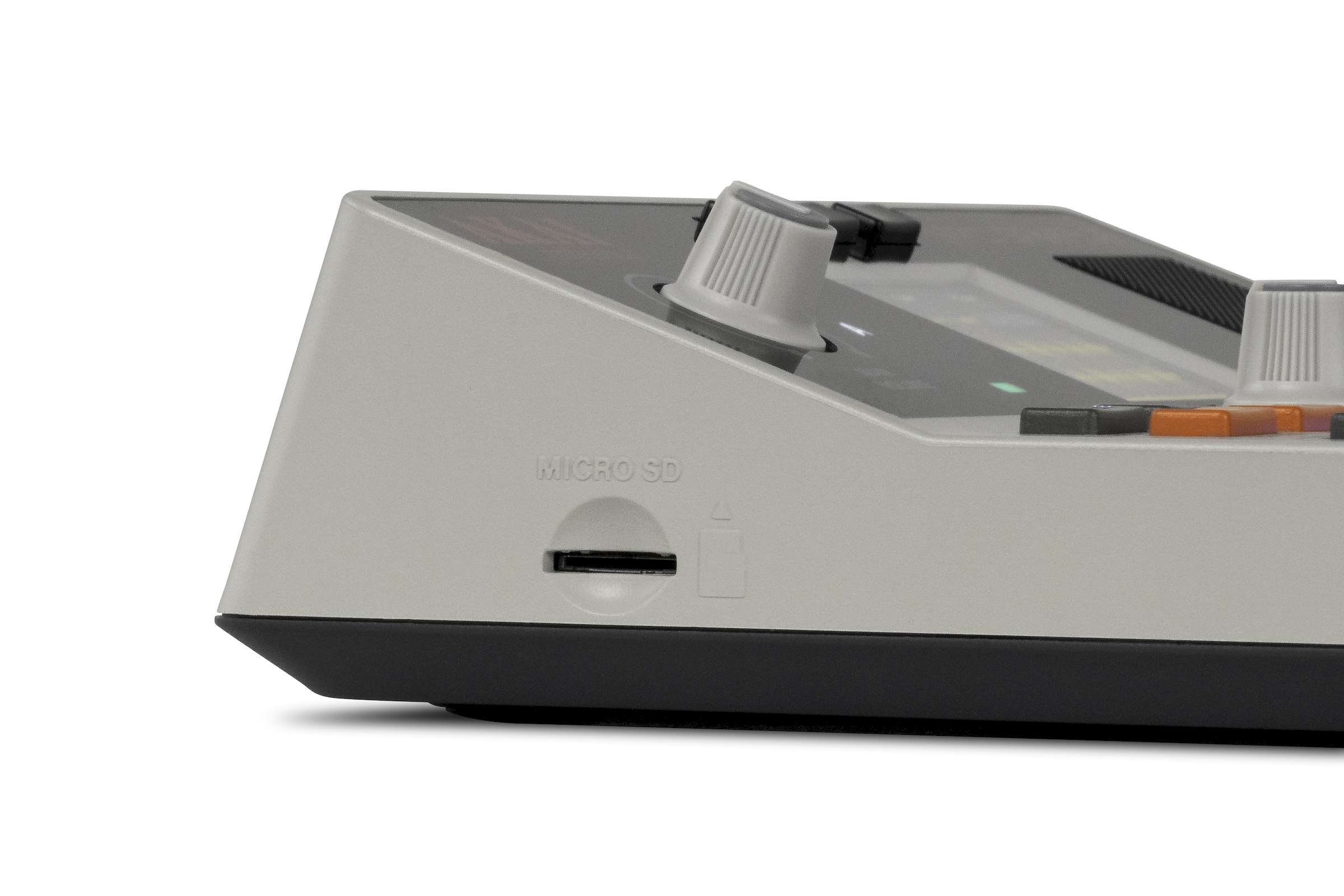
MPC Sample: 2 GB RAM, 8 GB internal storage
microSD card expansion
Common features
Both devices feature:
- Note Repeat
- Sequence and sample recall
- MPC parameter fader
Extra features (MPC Sample only)
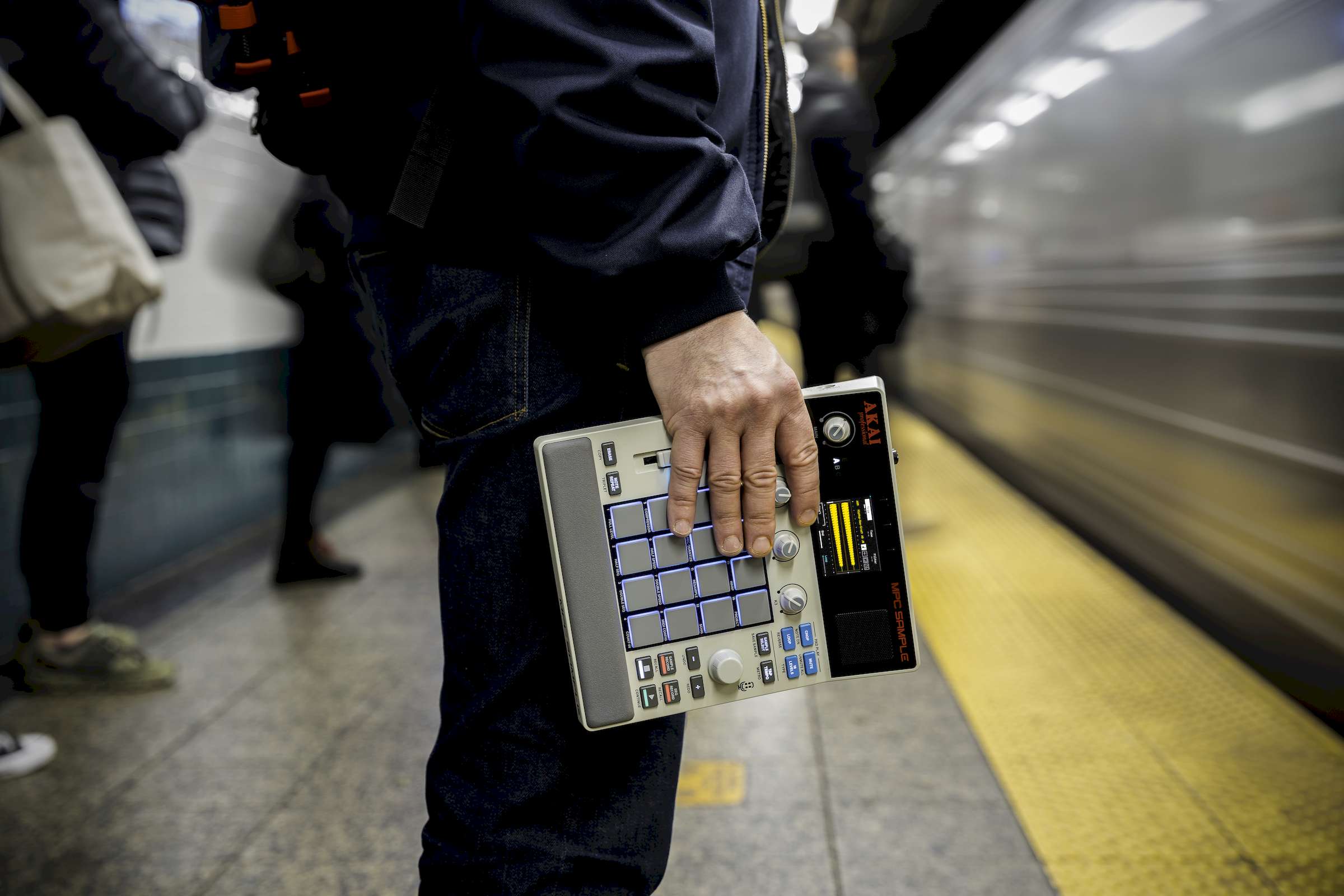
There are a bunch of features unique to MPC Sample where the MPC60 would be unable to compete — the original would have required additional outboard gear.
- 4 effect engines with 60 effect types
- Pad FX, Knob FX, FlexBeat, Color-Compressor
- Internal mic
- Internal 3-watt speaker
- 3 real-time control knobs
- Instant Sample Chop mode
- Real-time timestretch and repitch (beyond MPC60’s capabilities)
- Internal resampling with effects
- Rechargeable lithium-ion battery (up to 5 hours — okay, you are now obligated to take this with you on the plane, not check it in the hold!)
Price
MPC60: $4999.95; sampling expansion $599.95 in 1988 USD.
Inflation-adjusted cost: about $13,800 for the base model.
MPC Sample: £349, €399, and $399
(And sure, at this point you could compare MPC Sample to the $699 MPC One, which does a lot more. But… MPC One isn’t as portable or as cute.)
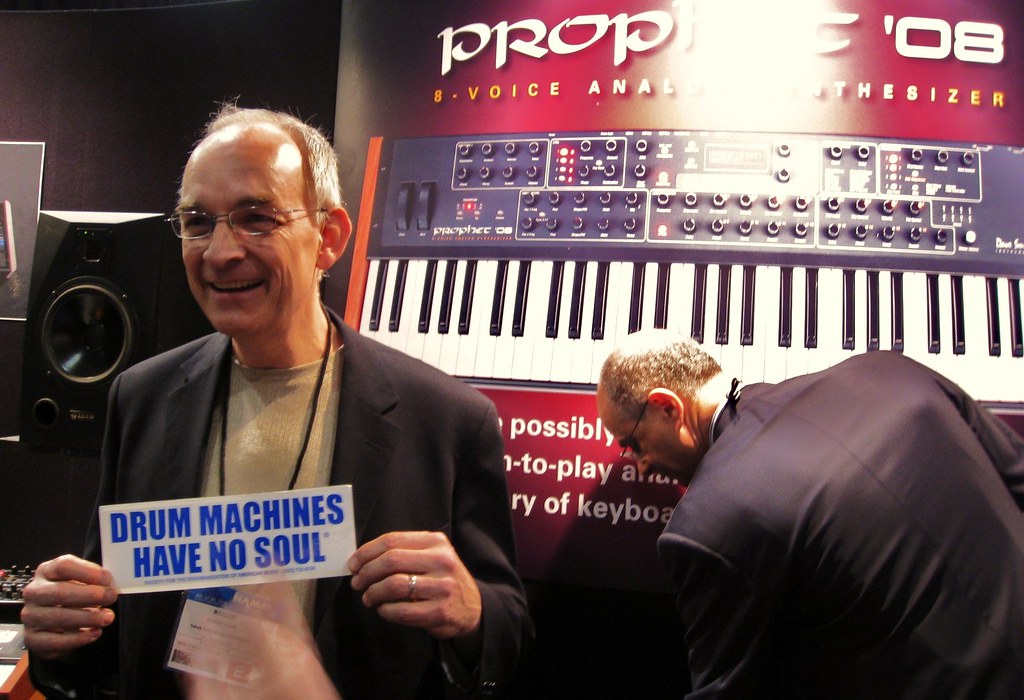
Roger on the MPC60
Here’s what Roger had to say about the MPC60. (Photo above by me, from the NAMM Dave Smith Instruments booth.) I ran the Keyboard interview in the book I edited for Hal Leonard, The evolution of electronic dance music, in 2011. Roger responded that year:
“The biggest surprise for me after creating the first MPC was that its sampling was used for entire sampled loops instead of just drums, particularly considering that is contained 13 seconds of sampling, expandable to only 26. It didn’t surprise me that new forms of dance music emerged, because dance music seems to be a constant over time. I find it funny that ‘disco sucks’ was a popular phrase in the ’70s but current ‘dance music’ is cool, even though much of the same musical style and production is used. Interestingly, my original LM-1 Drum Computer was released in 1979, shortly following ’70s disco, and one of its first customers was Giorgio Moroder, the producer of then dance music artists Donna Summer and Irene Cara. Giorgio once told me that before LM-1, he would ask the drummer to record 20 minutes of 1/4-note bass drums, then he’d overdub 20 minutes of snares on 2 and 4, then 20 minutes of hi-hats, etcetera, all so he could have the equivalent of a sampled drum machine before they existed. He said it used to drive the drummer crazy.
“It was nice to see many of the ideas I pioneered in the LM-1, like loop recording, quantize, and swing, continue their lives in the DAWs that followed. They were born out of my desire to record musical ideas very quickly without technology getting in the way, and I think musicians appreciated that more and more over time. Of course, even if I hadn’t done them first, I’m sure someone else would have, because they were the natural evolution of a trend. For example, loop recording is just like tape overdubbing except without the inconvenience of stopping and rewinding after each pass. And regarding quantize, who wouldn’t want to have their timing errors corrected? Regarding swing, that was largely born out of my work at ages 19-21 with Leon Russell, who taught me a lot about why certain recordings feel right and others don’t, and how to get them right, including nailing subtle degrees of swing. I didn’t anticipate that variable swing would become so important in hip-hop.”
So, did I miss any key points in my comparison? Let me know.
By the numbers, based on the base model — 1988 to 2026:
MPC Sample is less than 9% of the original weight and under 3% of the (inflation-adjusted cost) — with over 10,000 times the original sample storage.