On the heels of Steep Stims, Clark’s latest full-length, we spoke at length about piano delusions, seriousness and play, film scoring, repetition, hardware, live performance, and the strange necessity of cultivating “friendly parasites” in the creative process.
Chris Clark has never been especially interested in straight lines. Even when his records seem to announce a new phase – new timbres, new structures, new voices, new unexpected labels – he’s quick to undermine the idea that anything has been left behind. Clark’s albums aren’t so much milestones as they are temporary containers: snapshots of a particular obsession, captured while it burns hottest, before mutating into something else.
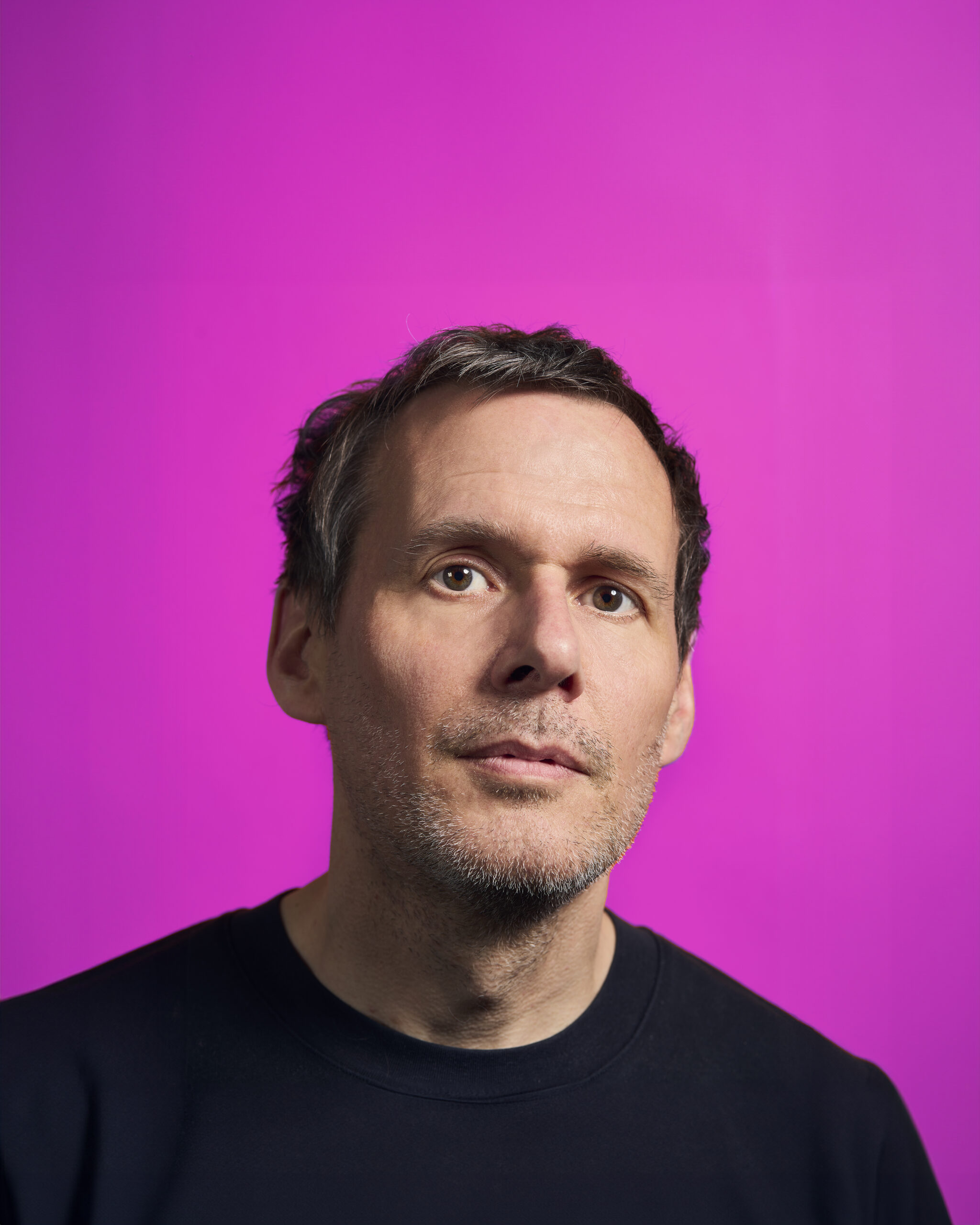
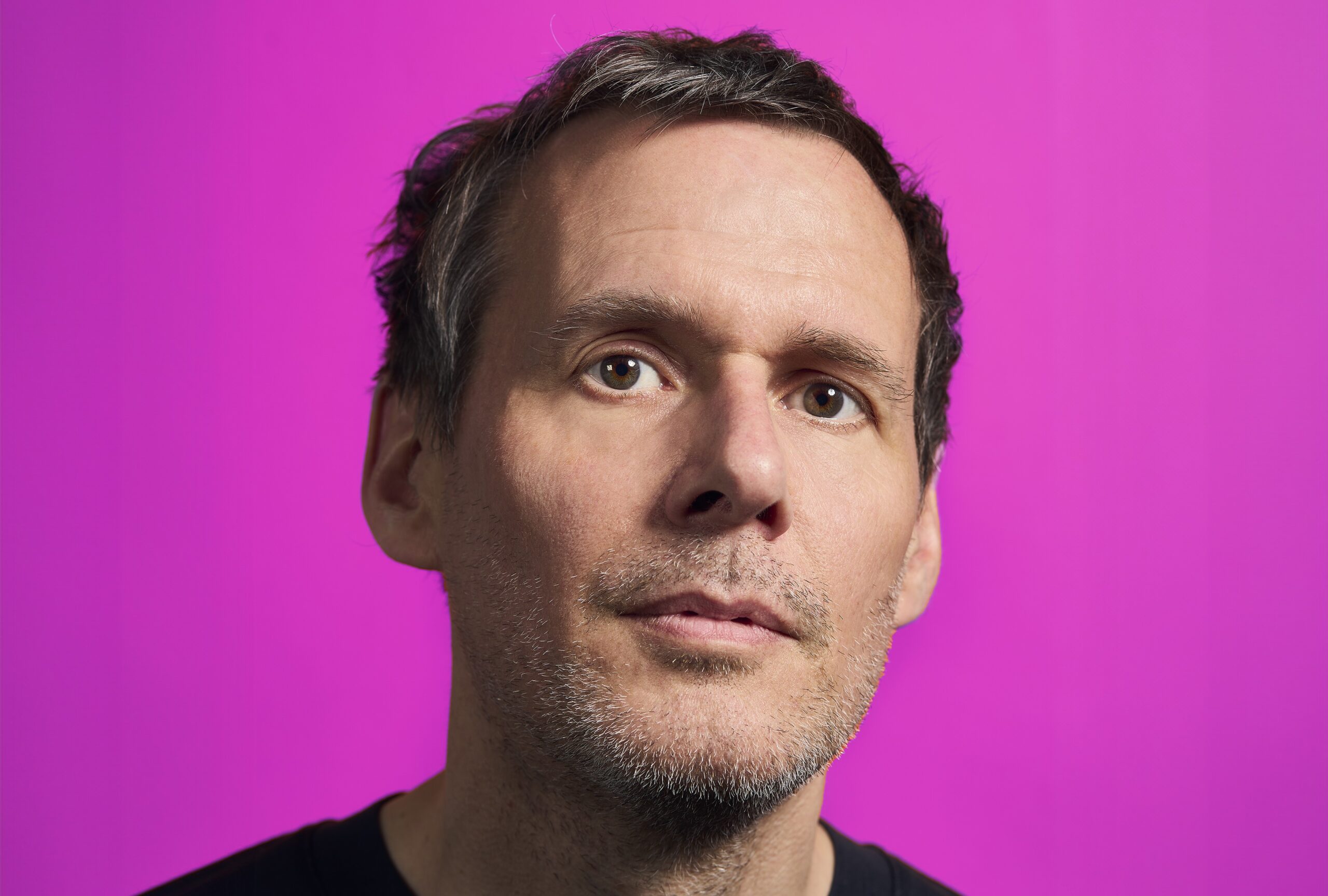
Photo, above and at top: Alma Haser.
Steep Stims, Clark’s latest album, feels like one of those moments of intense fixation. The record collides microtonal piano with drum and bass pressure. It lets a battered digital synth run wild, leaning into repetition, urgency, and texture with a confidence that feels both playful and exacting. It’s a record that sounds simultaneously rigorous and slightly unhinged – deeply worked, but never over-polished.
Underlying it all is Clark’s ongoing commitment to adding friction to creativity. Whether he’s committing tracks quickly to stereo, routing sounds through hardware, or recording through walls with an iPhone, Clark orbits a core question: how do you preserve unpredictability, risk, and pleasure in a world that increasingly wants music to be optimized and disposable?
Listen to Steep Stims below while you read:
You’ve covered a lot of ground over the last few albums – modern classical on Playground in a Lake which came out on Deutsche Grammophon, putting singing to the forefront and working with Thom Yorke on Sus Dog. From the outside, it can look like a linear progression, but is that how you work?
It’s really weird, because there’s like a linear narrative that the records present. But it’s so much like I’m always kind of writing music from that pool of ranges constantly, really. And then, like, when you decide to do an album, there’s sure there’s like a kind of six-month, nine-month process of really going in on that particular sound.
But with Steep Stims, I’m still playing loads of piano and orchestrating, and all of that stuff is still going on. I feel like the album’s this perfect vessel to crystallize a certain aspect of what you do. But it’s all a mirage, because it’s always— I mean, the reality of making music is just far more chaotic and non-linear for me anyway.
I’m quite linear when I’m making a track, but there’s many, many aspects of my taste that are all going on at the same time. And the album just kind of codifies it somehow.
So the album doesn’t really represent a clean break from what you were doing before?
No, not really. I think albums give the impression of that, but it’s not how it feels from the inside. It feels like everything is happening at once, and then the album just freezes one angle of it for a moment.
Clark – “18EDO Bailiff”
One of the most striking moments on the record is the progression of “18EDO Bailiff” into “Globecore Flats”. That piano sounds unusual—what’s happening there?
It’s an 18EDO piano. [EDO = equal divisions of the octave.] So it’s 18 notes per octave, and it’s a real piano. I had it retuned, and I love it. It’s now in 17EDO, which is actually a bit more pleasant to the hit on the ears. I mean, I find them both pleasant, but 17EDO gives you a few more chord shapes. It gives you about four chords rather than three.
18EDO is really good for modal stuff. Anything modal is great. But you realize how much you’ve been conditioned by 12-tone as well. And I actually really love 12-tone. There’s a reason it became popular, and it’s because functional harmony is this perfect balance between exploration and a formal set of rules.
Clark – “Globecore Flats”
The challenge was getting real piano and drum and bass together, because you don’t really hear real piano and drum and bass bangers together. So that was the first challenge—to mix it. And then I thought, well, why not up the challenge and make the piano 18 notes per octave?
That was probably the track that took the longest. I spent the most time on it. It was subtle tonal things, like, “how is this going to work?” And I was convinced it would work. There’s this point where your delusion that something can work eventually becomes reality. And that’s the most satisfying thing, because it shouldn’t really work as a concept.
Did working with microtonality change how you heard your usual harmonic instincts?
Yeah, definitely. You realize how deep the conditioning is. But also, I don’t think it’s about rejecting 12-tone at all. I love it. It’s familiar. It’s powerful. It’s just about temporarily stepping outside of it and seeing what happens.
There’s also a strong sense of humor running through your work, even though people often associate your music with something very serious.
It’s completely essential. I’ve actually been having these really long text conversations with fellow musicians, and one of the recurring themes has been this serious / non-serious thing.
I’m absolutely serious about music. But that already sounds really pompous. And it’s like this trick: in order to be really, really serious about music, you need to not be serious about it. I know that sounds like some oxymoronic wank, but it’s true!
An attitude of play is essential. If it’s not fun – maybe enjoyable is a better word – I don’t know how you sustain it. It has to capture something. It can be frustrating at times, but you can get too wrapped up in how serious music actually is.
Even the most solemn music on Earth – Arvo Pärt or whatever – you have to have a playful mindset. It seems essential.
Do you think people sometimes misread that playfulness?
Probably. But I think that’s fine. I don’t think everything needs to be explained. The play is part of what keeps it alive for me.

That playfulness goes right back to Clarence Park. The artwork alone feels uncanny and oddly humorous.
Yeah, uncanny. And also, I think we’ve become immune to how magical electronic music actually is.
I’ve been using hardware again recently, and just using my ears and not looking at a screen. I’m not one of these people who fetishize that process, because at the end of the day it’s like, what does it sound like?
But when you’re just using your ears, and you manage to make a kick and a hi-hat out of the same material, but you just treat it differently – it’s magic. And I think sometimes when you’re just on your computer and you’re looking at it in a very logical, linear way, you lose some of that excitement. Playing the piano gives me that as well. Just that instant sort of enforced naivety.
Does that sense of magic still surprise you?
Yeah. And that’s the thing—you don’t want to lose that. As soon as it feels fully explained, it’s kind of dead.
What was the core setup for Steep Stims?
Ableton and the Access Virus synth, basically. It features on all of it. It’s a dodgy old synth – it can sound horrendous – but there are a few tweaks that bring it to life. It’s got a very digital sound, but because it’s coming out of the line outs, there’s this slight saturation thing. And it’s just lovely to play.
The first patch that I made on the Virus synth, the tracks “Blow Torch” and “Thimble” came out of that. There was this initial burst of two weeks, just fully rinsing that synth – I kind of had no control over it, like it was a psychological defect.
There’s a great Michel Houellebecq quote – “It’s like cultivating friendly parasites.”
I’ve also been using the Analog Rytm. It just does come down to this thing of not looking at a screen, and suddenly the sound feels more alive and you’re shifting it around. You have to make more of an effort to learn the interface; I’ve been trying to use it as an external effects processor, which is a bit of a head-fuck. But it really comes down to not looking at a screen.
I’ve been trying to get stuff down to a stereo track really quickly. Endless iterations of hundreds of stems can be a nightmare. With Clarence Park, you just had to record the track then and there, in like an hour, and it would be done. There’s something really refreshing about that.
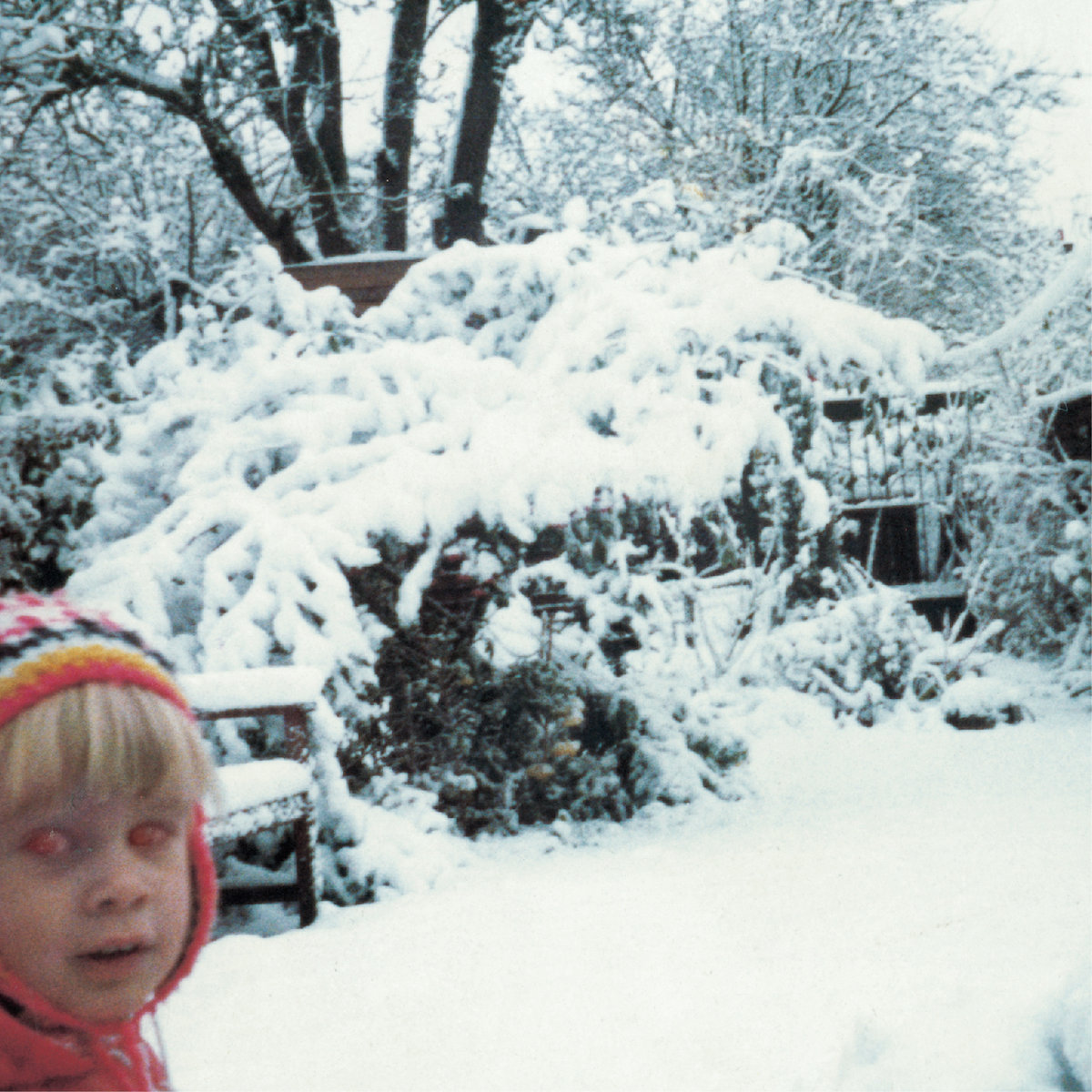
What were you using for Clarence Park? Were you on a computer yet, or was it mainly hardware?
An Atari, an E-Mu Sampler with 60 or so seconds of memory, and a Yamaha CS1X. I would make tracks and then re-sample them, putting the bit-depth and sample rate down so they could be slightly longer, and then record to tape. It’s all very hands on.
Was there much sampling on that album?
A bit – mainly re-sampled. I had about 10 drum sounds, and I would just stretch and them try to re-sample. Re-sampling is still a massive part of what I do, I think just seeing the computer as a tape machine. I tend to make my most interesting sounds with quite simple musique concrete techniques of re-sampling, re-pitching, then cataloging it all relentlessly.
That’s interesting – I think some of the sounds that you’ve made over the years have been influential. Thinking about some of the percussion sounds that emerged around the Empty the Bones of You era, especially these very compressed clap-like sounds. A couple years later, you heard it in Jackson and His Computer Band, and then the Ed Banger sound took off from that.
Yeah – I mean, who knows? I certainly love the feeling of something coming out of the speakers like that. Compression is, in a literal sense, containing sound, but also drawing attention to the dynamics and making it feel physical. I tend to spend ages on that, but I think you can go too far with it and lose something as well.
Again, there’s this push for me to use hardware for me at the moment, and to just record to stereo straight away, just finish it in 20 minutes.
Clark – “Slow Spines”. Chew on that percussion!
Do you think part of that is also that the more your work and learn about the “correct” way to do things, you can end up obsessing over it?
That’s a bug as well as a feature. A lot of people pay lip service to the idea of “professional” sounding music, but at the same time everyone knows that the demos that you write when you’re 18 still have a certain magic. That’s what we’re split on.
I always think of My Bloody Valentine’s Loveless as a quintessential “breaking all the rules” record. You could say, “maybe if they went a bit more hi-fi, and you could hear the lyrics more, and they had big, chunky drums…” But you definitely lose something in making everything frictionless.
I heard from Richard Devine once – while talking about your tour together where you heard him say “ceramics is the bomb”* – he said at one point he looked at one of your Logic sets and you had something like five compressors in a row stacked on top of one channel. He thought technically it was bonkers, but urged you to keep it as you’d made this incredible sound.
I can’t quite remember that! I would never do that now, but there was quite a lot of glee in those early records, “remastering the master” and doing all the “wrong” things, seeing if I could make something potent out of it. Knowing that you weren’t meant to do that was part of the fun of it.
I know how to do all those tricks now, the ones that will give you a punchy EDM-style mix. But there’s something in it that I find slightly obscene, and I can’t connect to it. It almost makes it more powerful to you that you could do that, and then decide to do the opposite.
On Steep Stims, the track “Civilians” is slicker than the rest of the album. I was trying to make something that could work in a club but not be…
The kind of EDM mix where everything is super loud and unsubtle?
Yeah, that’s the problem with it. It’s like ketchup or sweets. There are exceptions to it – like G Jones is amazing. I find his approach really fresh and exciting.
Video for Clark’s “Civilians” with lots of jelly
The cover art for Steep Stims is really something. When I first saw it, it was blown up on a screen, and I just saw the title. Zooming out, I saw your face with this liquid kind of terrain mapping.
My face in jelly?** That was Alma Haser, who I work with very closely – she’s amazing. She’s obsessed with jelly, and she’s principally a photographer.
So it’s not a computer then?
No, it’s all jelly. [Haser’s] so meticulous at it, she will just carry on until she gets it right, which is something I can completely connect to.

How much of Steep Stims was played live rather than built from edited patterns?
Loads of it is real time. “Who Booed the Goose” is all real time. It’s just a really long chord sequence.
I have this theory that modulating the key on a synth just sounds really cringey. It sounds like you’re doing music theory. Diatonic simple shapes suit electronic music so well.
Synths came out of musique concrète, hip-hop, disco – they’re not functional harmony machines. Whereas a piano can go through nine keys in three bars and it just works. “Who Booed the Goose” stretches that. It’s harmonically busy, but to me it sounds natural. Long chord sequences in electronic music can be eye-rolly, but for that track it worked.
Clark – “Who Booed The Goose”
On the other hand, do you think repetition is underrated in electronic music?
I wouldn’t say underrated, but it’s kind of hard to overrate it. Repetition with subtle change, we’re programmed to love it.
Film scoring has become a major part of your practice. How has that affected your albums?
It’s more the psychology than the technique. Speaking to directors, understanding character, arc, emotion, not overdoing it, not being too literal.
Studio albums are indulgent and glorious. Film music is collaborative. Having that counterpoint makes you realize what albums really are – a playground where you can do whatever you want. There’s always cross-bleed. Quite often I’ll write something for a film and think, “oh no, they’re not having that, it’s too good.” [laughs] Or they reject something and you think, “well okay, I’m having this for myself!”
I think scoring sharpens your blade a bit, it’s very useful. The ability to churn out 20 ideas in three days hones your skill. All of the directors I’ve worked with have been super fun to work with – it’s been enjoyable. You feel like you’re part of a team.
There’s a lot of discussion now about AI in music. How do you see it?
It eliminates all the steps. It makes it a binary process. I’m sure you can cultivate a very iterative AI music where you treat it more like you’re curating something. But that wouldn’t have appeal for me; I’m open to that being cool but I just really enjoy all the bits.
I really enjoy the frustration of making music. I enjoy banging my head against the wall. I’m wired to enjoy that. AI skips the bit you need patience for, friction is being removed. I don’t know what to make of it – it’s baffling. That friction is where all the interesting stuff happens.
You actively seem to re-introduce friction into your process.
If something isn’t working, I’ll put my phone outside the door and record it through the window with an iPhone mic.
It always sounds weird. Foley heaven. I imagine it playing in bus stops or car parks—uncanny ambient music in strange locations. It’s about putting steps back into discovery. Exactly the inverse of just saying what you want and getting it instantly.
You’ve talked about albums as “containers”. Do you still believe in that form?
Yeah, it’s a container of a certain amount of time. Not too long, but enough to say something.
Usually after I release an album, I only rarely want to listen to it after it’s been finished. But I’ve listened to Steep Stims hundreds of times. A lot of writing music is just about listening. You future-proof it by spending time with it—headphones, speakers, phone, car. It’s an artifact, but it feels naturalistic.
How do you decide on a live setup?
It’s mainly a laptop, drum machine and synth – a Prophet 6 – then just effects. It’s definitely a tightrope as I’ve got a set I’m really happy with now, and it works for a Steep Stims live show, but another part of me wants to improvise more, literally make a track on the fly. Going between those is a challenge.
I don’t know what’s next. I just know I’m making a lot. Intentions don’t mean shit, really. It just happens.
What’s next for you?
I’m writing loads of stuff. Working on a live show does something. When you’ve got pressure to make a live show – I mean, I’ve put the pressure on myself, but – material starts writing itself. I’ve learned to let things sit for a few weeks. You don’t really know what a track is until time passes.
I’ve got a few one-off shows that I’m playing – not crazy amounts of touring. Touring is fun, but being in the studio is more fun for me. I love the actual gigs, but all the other stuff – the in-between bits, I’ve like fewer steps on. “AI, please get me to the venue – instantly teleport me there!” [laughs] That would be a true revolution in technology, not ChatGPT summarizing an email that you’ve just sent.
* – David’s note: Ceramics is the Bomb is a 2003 EP from Clark. As I learned from a conversation with Richard Devine, the phrase was Devine’s reaction to someone who mentioned working with ceramics while on tour with Clark. Apparently, Devine had studied ceramics for an elective class in college and still considers it the bomb.
** – David’s note: I was resisting a bad pun but…what the hell, you could call that cover art “Clark’s Tongue In Aspic” [har har har, uncle laugh]