
Hard at work at Music Hack Day Montréal. Ed.: Hacking Web databases to search sounds, remixing tools to automatically create dub tunes, cameras to sequence and analyze images in new ways, Montréal hackers have been busy. Trevor Knight writes from the event with full coverage from Canada, latest outpost of this global music coding phenomenon: […]
Read more →Search results for ""
Thomas Kurzhals (KARAT) Bleeds on a Moog; Music Before the Berlin Wall’s Fall
You’ve seen a musician or two, no doubt, jamming away on a Moog synthesizer. But German band KARAT’s keyboardist Thomas Kurzhals really tears into it. Chris Stack, formerly of Moog and now producing the Experimental Synth series we cover with some regularity, shot this video interview / performance set, and tells us: I don’t think […]
Read more →
Turntable Meets Cello, Sax, Laptop: How Archie Pelago Uses The Bridge and Ableton Live
With laidback, exotic grooves and richly-coordinated interlaced cello, saxophone, turntable, and electronics, Archie Pelago’s music relies on some serious technological savvy. To be sure, all you really need to play instruments and computers and turntables together is to get into a room and start jamming. But to realize their specific musical vision, the trio of […]
Read more →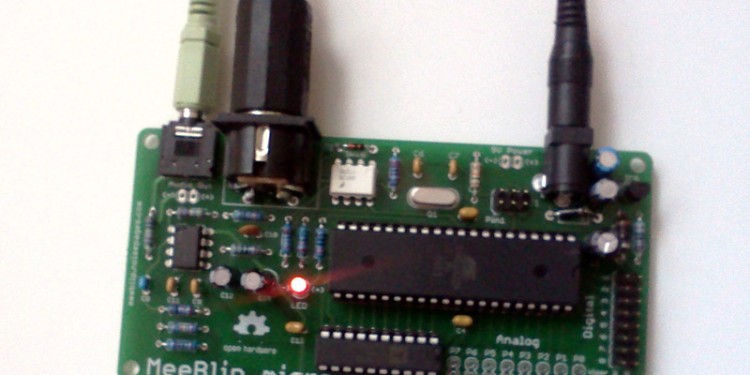
Debut of MeeBlip micro Synth, Workshop, Handmade Music: Toronto on Friday
In Toronto this Friday, we’ll be connecting with InterAccess Gallery in a celebration of DIY, adventurous music making, and blipping synthesizers. It’ll also be the first public debut of the new MeeBlip micro, a pocket-sized version of our MeeBlip open source hardware synth. Part of why I’m excited to be hacking away with the fine […]
Read more →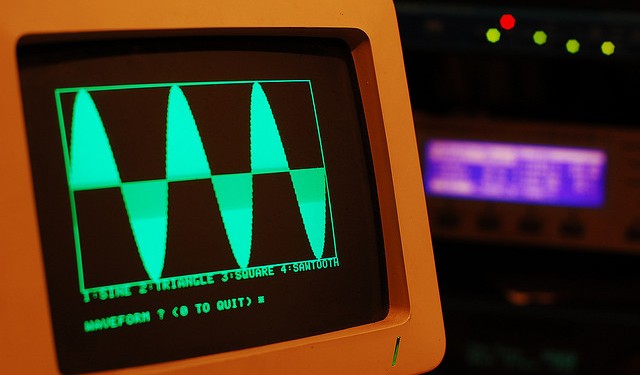
Good Listening: Chris Randall’s ‘Particulate’ Pulses with Obsessively-Constructed Sound, Apple II Nostalgia
Chris Randall’s Apple IIc display shows off the elementary beauty of alphaSyntauri. Photo (CC-BY-NC) Chris Randall, via Flickr. Global availability of music may not have silenced the usual gripes about musical quality and diversity, even if they should. But the Web is providing a place for people to share music with other music-making enthusiasts, sharing […]
Read more →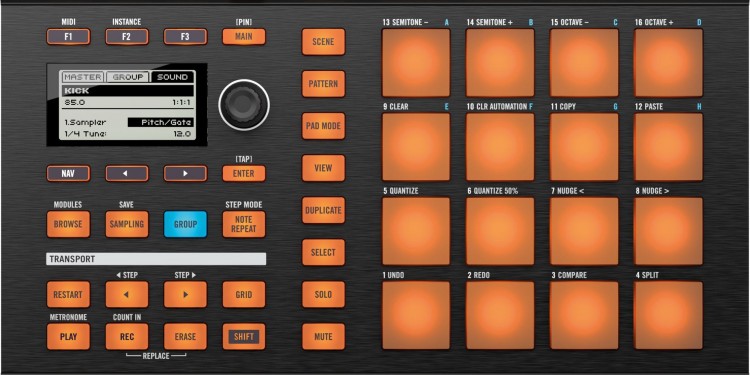
Maschine News: Portable Mikro; Finger Drumming with Jeremy Ellis; Maschine for iOS
Native Instruments reveals some big news for Maschine that’s … well, smaller. A new package has smaller hardware and lower price, with the same full-sized software. And an iOS version lets you use Maschine on iPad or iPhone. As their drum machine / drum sampler / groove workstation with plug-in hosting and doubling as plug-in […]
Read more →Rauschenberg-Like Collage in a New iPad App: Composite
The iPad as artistic tool is not without its flaws. Finger painting, effectively, on its screen is nowhere near as precise as using a dedicated digital stylus like a Wacom, and lacks tangible feedback (as actual finger painting would give you, delightfully). And as a digital tablet, conventional painting metaphors can feel stretched. That hasn’t […]
Read more →
In Wake of London Fire, Organizers Answers Questions About Supporting Indie Labels
London’s Rough Trade Records shop is an anchor for the independent music scene in the UK. And they have an online presence, too — a good way to support your favorite label in the wake up what for many smaller outlets could be a devastating loss. Photo (CC-BY) Radio Saigón. The first rule of giving […]
Read more →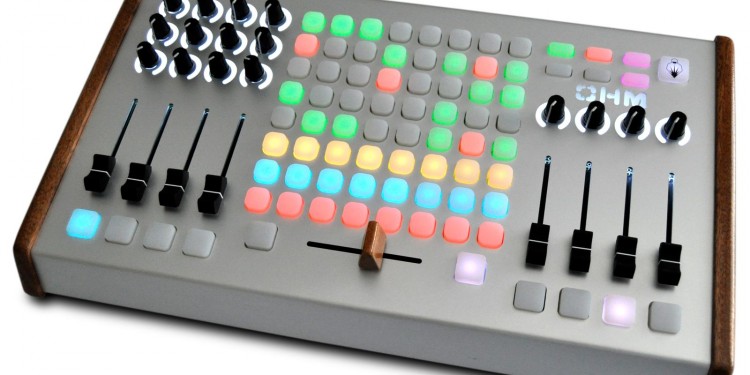
It Comes in Colors: An RGB Grid Controller from Livid, RGB Grid Roundup
Lovers of the grid for music control now get to reenact the scene in MGM’s The Wizard of Oz, stepping out of the world of black and white into one of color. The OhmRGB, the latest controller from Austin, Texas-based controller and custom hardware shop Livid Instruments, adds multicolor LEDs behind its array of controls. […]
Read more →Playing 3D Geometries Like Instruments: V-Module for Ableton + Max for Live
Improvising with 3D geometries as though they’re an instrument, Amsterdam-based artist Fabrizio Poce has harnessed Max for Live to play with generative visuals in real-time in a music environment. You can see the work he’s doing, or try assembling your own chains of visuals with his free Max for Live device V-Module. He explains to […]
Read more →