Valhalla isn’t done with reverb/echo blockbusters to reverberate through the end of 2025. The free plug-in — so good we really would pay for it — is back, and now it’s gotten Sirius. Welcome Super Massive 5.0.0.
Future Reverb, which I just reviewed, is all about going clear and clean, so it’s little wonder that Super Massive — home to Valhalla’s b-sides and rarities — would have something similar for its entry this season. Here’s how they describe Sirius:
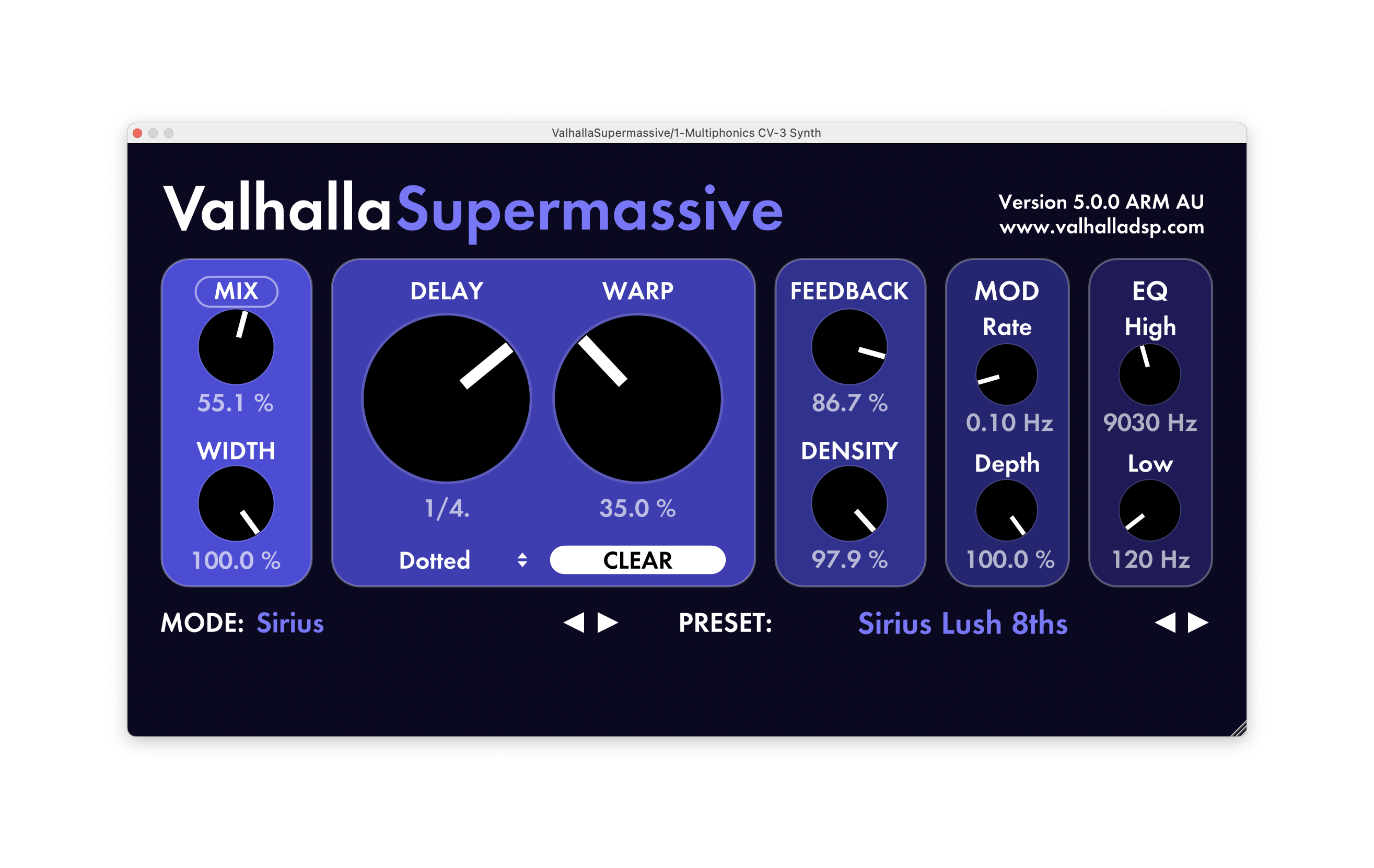
Sirius (new in 5.0.0): Fast attack, smooth decay, low to very high echo density, filtered feedback, great for clear and clean reverbs.
And finally, you get previous and next arrows for the modes, too.
This release is also Tahoe-ready across Mac Intel and Apple Silicon, plus Windows. Yeah, we do wish for Linux-native editions, Valhalla, since someone brought that up! (C’mon, Sinevibes is doing it!)
But what does that new Sirius algorithm sound like? No demo was available, so I made one, using AAS Multiphonics CV-3 as a source (Stacked VCO, Tube Oscillator, and OBJEQ Oscillator).
The visuals come from NASA Goddard; here’s the full details of what you’re looking at:
The colored visualization is an aid to understanding gas composition:
Gas glows brightly in this computer simulation of supermassive black holes only 40 orbits from merging. Models like this may eventually help scientists pinpoint real examples of these powerful binary systems.
Credit: NASA’s Goddard Space Flight Center/Scott Noble; simulation data, d’Ascoli et al. 2018
I pan through the 360-video video (the one that has realistic night sky colors) –
This 360-degree video places the viewer between two circling supermassive black holes around 18.6 million miles (30 million kilometers) apart with an orbital period of 46 minutes. The simulation shows how the black holes distort the starry background and capture light, producing black hole silhouettes. A distinctive feature called a photon ring outlines the black holes. The entire system would have around 1 million times the Sun’s mass. The background is a view of the entire sky as observed by the NASA’s Wide-field Infrared Survey Explorer (WISE).
Credit: NASA’s Goddard Space Flight Center/Scott Noble; background, NASA/JPL-Caltech/UCLA
Full results of the research at NASA’s Scientific Visualization Studio, 2018:
New Simulation Sheds Light on Spiraling Supermassive Black Holes
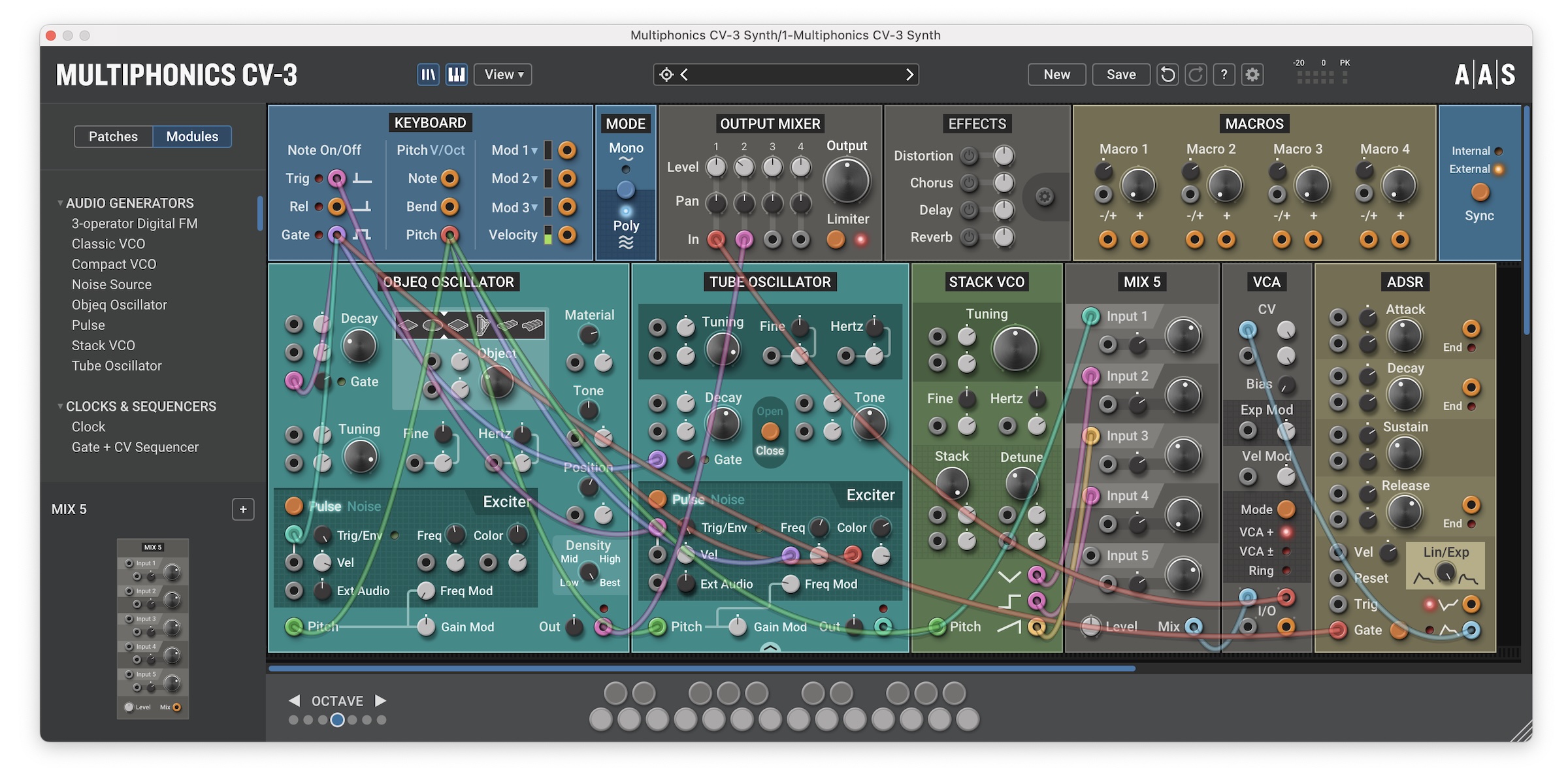
Super Massive is available from Valhalla DSP as a free download:
https://valhalladsp.com/shop/reverb/valhalla-supermassive/
It’s the perfect Black Friday deal if you’re celebrating Buy Nothing Day. (Multiphonics CV-3 is available as a Black Friday upgrade deal, though, through December 3 at Plugin Boutique).
If you buy something from a CDM link, we may earn a commission. Not if it’s free, of course, though maybe that’s a 100% commission, if you think about it…
I mean, I’m not going to let a launch with Sirius arrive without a reference to the complete banger by The Alan Parsons Project. And while we’re doing that, let’s go back to Chicago 1997 to hear it. This sums up how we all feel as Super Massive arrives, really.