tbd 16 does everything the other standalone grooveboxes do, but in a handheld form factor, built as an open platform that you’re free to customize, mod, and hack. Choose the engines and apps you want to use. And get them all on a compact, standalone device that rivals big-name competitors in a fraction of the size, weight, and cost. It’s a new model for grooveboxes, at 499 € incl. VAT (now in preorders).
If I sound excited, it’s because this represents what a lot of us have been waiting for — an open, portable device with enough embedded horsepower to do what we need. (I’ve had an early prototype as the team was developing the firmware.)
The tbd is a return to form for dadamachines and founder Johannes Lohbihler. (In the interim, he also did a stint at KORG Berlin during their ramp-up and early development of what’s now the phase8.) Johannes is known for the automat toolkit, the mechanical, robotic MIDI controller — a set of solenoid-powered devices you can use to turn nearby objects into percussion; see this example I covered recently. And maybe that’s a good comparison: the automat is brilliant for DIYers, but you can also take it right out of the box and make it work. That’s really the sense that you get with the tbd. The openness doesn’t come at the cost of ease of use; it’s customizable and hackable, but it’s also ready to play.
Part of the reason this project is so complete is that it’s the culmination of years of evolution and previous iterations. It is built on the CTAG TBD open-source platform, created by Robert Manzke. And tbd 16 has contributions from Per-Olov Jernberg, Benjamin Weiss, and Servando Barreiro. There is also funding to support the work in the public interest, thanks to a grant from the NLnet Foundation, a European NGO with a long history of work on the open internet (back to a UNIX initiative in 1982)! They are also supporting a number of projects at Superbooth — I’ll be checking out all of those.
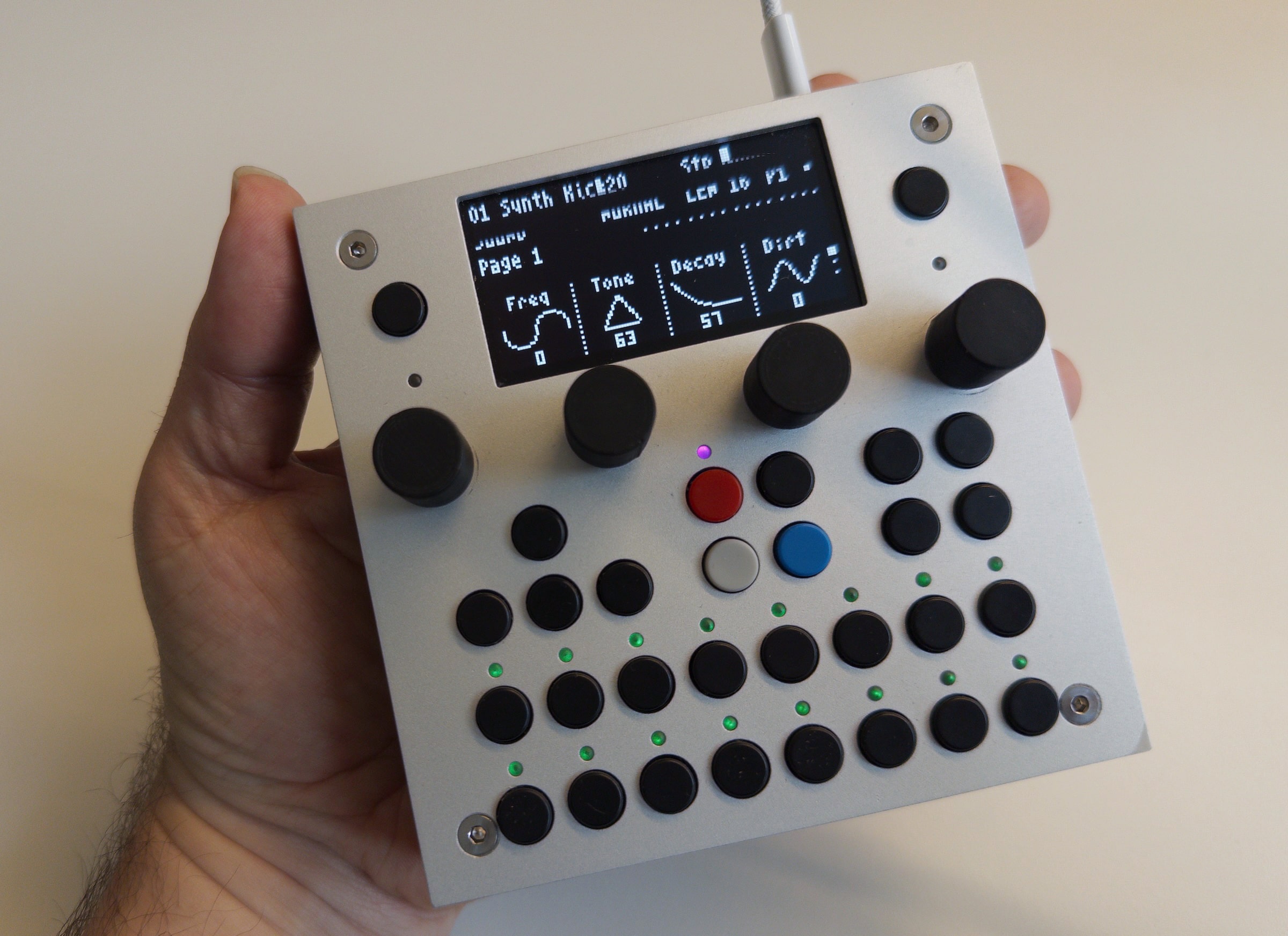
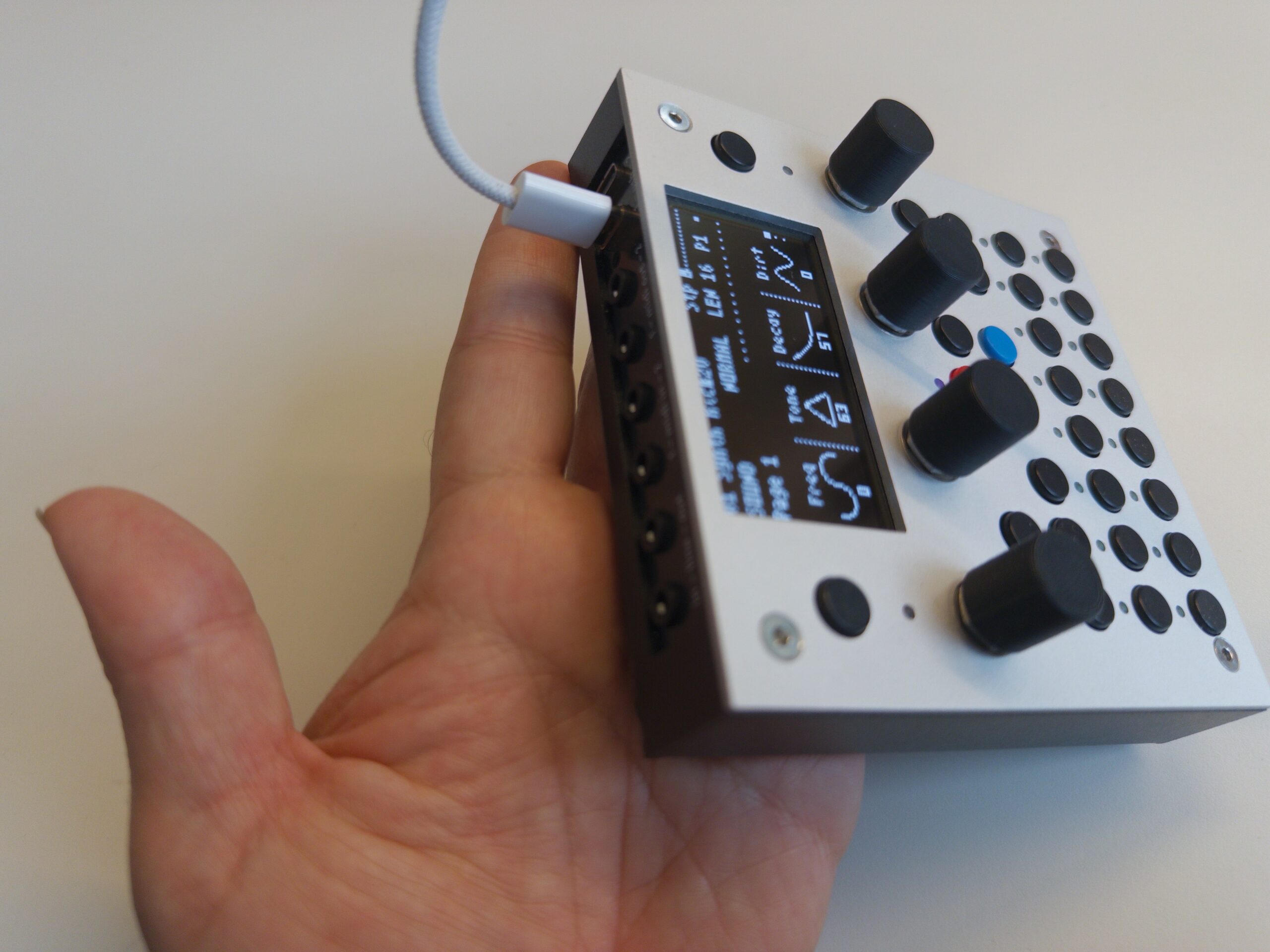
Physical form factor
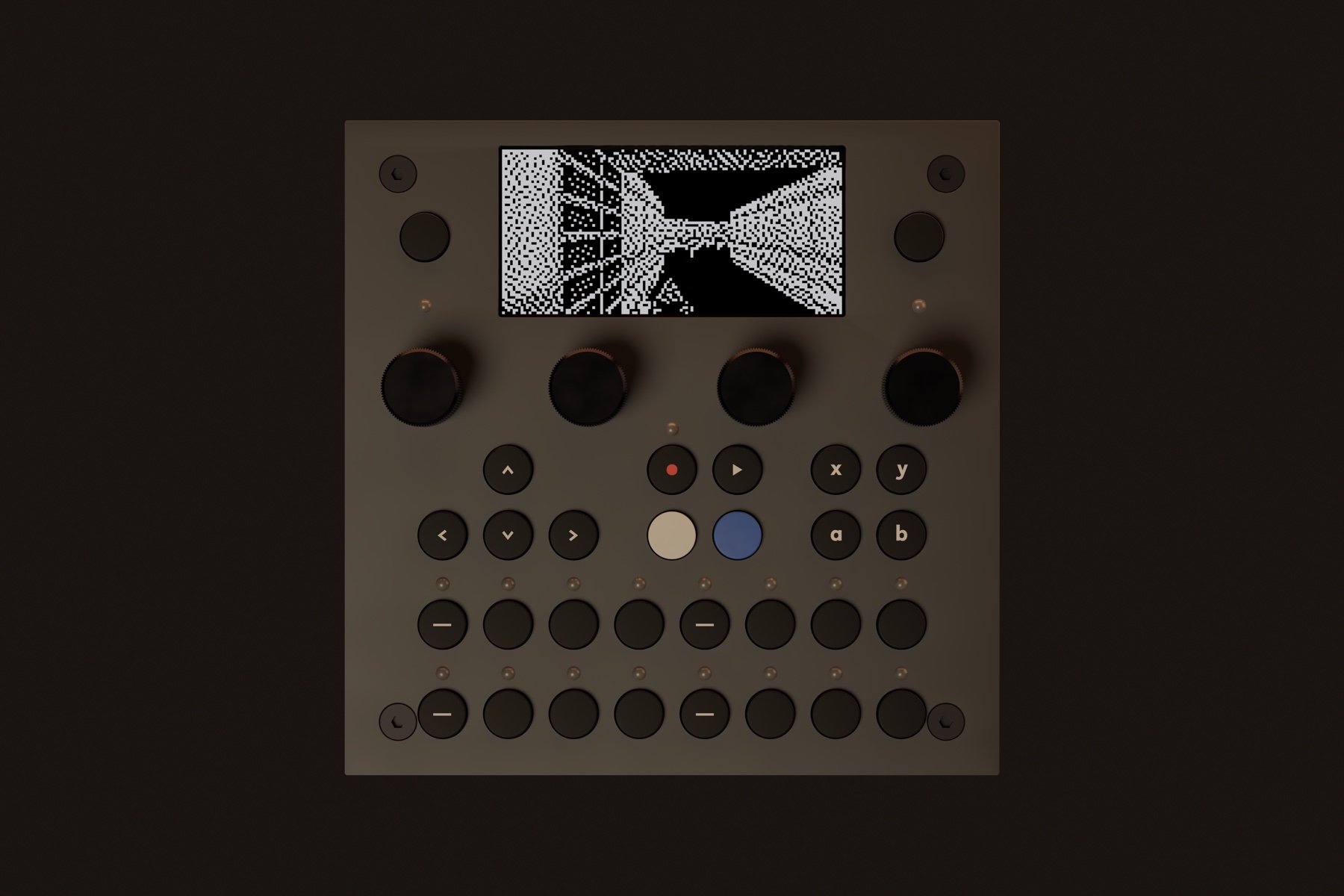
The tbd 16 has the power of big grooveboxes, but it’s in an adorable, square-format box that fits in the palm of your hand. It’s got an adonized aluminum top and a powder-coated steel base.
110. x 110 x 25 mm
2.4″ OLED display
30 tactile buttons (these feel great!) with RGB feedback
4 high-quality endless encoders
USB-C powered (5V)
Power bank mount
2x TRS MIDI in, 2x TRS MIDI out (minijack Type-A)
Stereo line input, stereo line output, headphone output
Dedicated volume wheel
2x microSD slots
WiFi 6
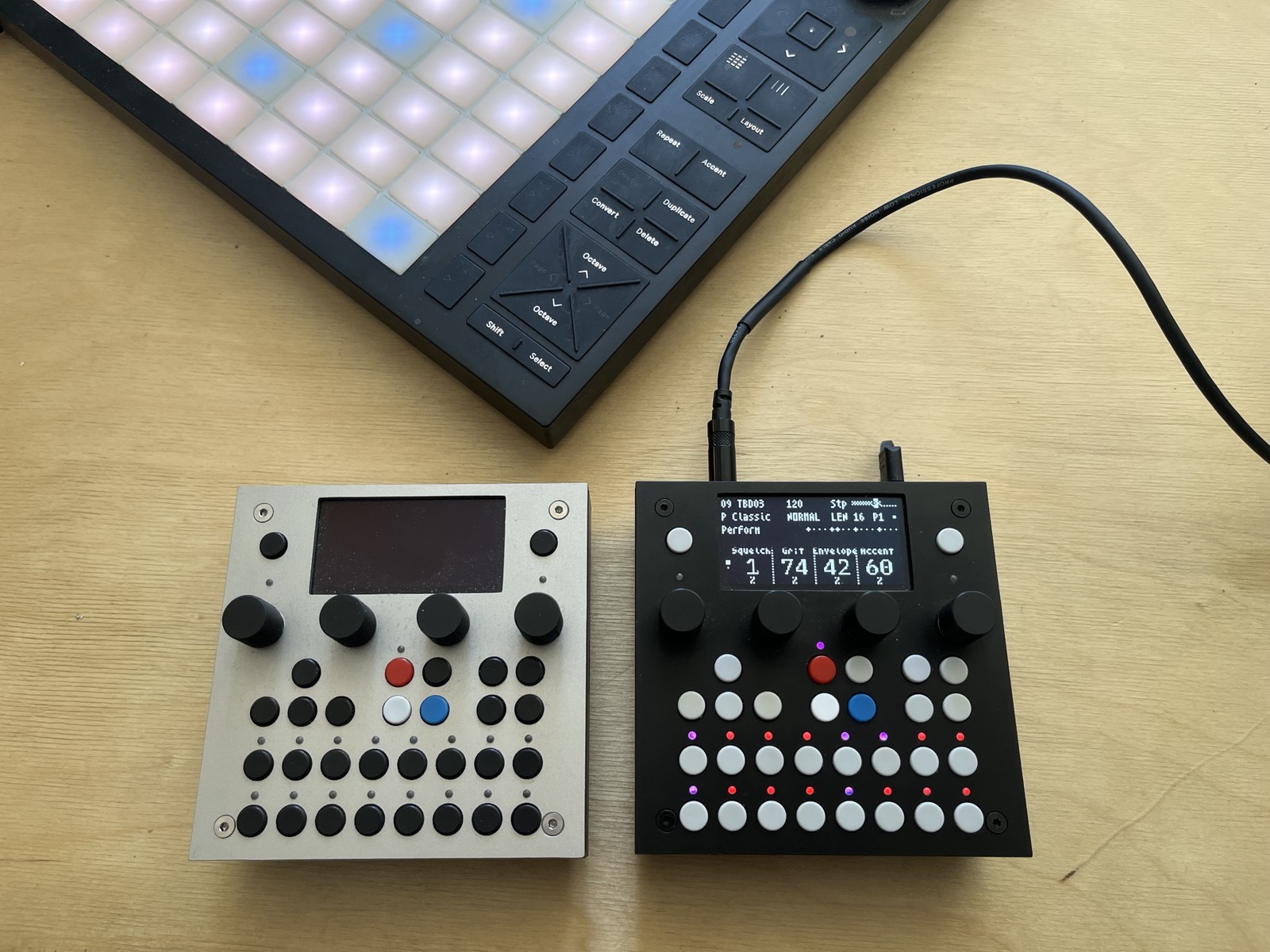
And inside is a beefy architecture, with three (!) dedicated processors, so you’re always assured of rock-solid sound performance. An ESP32-P4 runs the DSP, an RP2350B handles the UI and MIDI, and an ESP32-C6 handles WiFi duties.
The power bank mounting design is clever; that way, you can use whatever battery capacity you choose — or skip the battery so you can check it in hold luggage on an airplane.
You can also connect additional controllers via the USB host connection.
Groovebox app and engines
Out of the box, the tbd 16 defaults to a preinstalled groovebox with sequencer and multiple sound engines.
- Step and live sequencing with per-step parameter locks
- Multiple tracks with polyrhythmic patterns (independent length)
- Per-track controls like pitch, length, arpeggiator, and Euclidean generator
- Mixing with effects sends
- Onboard delay, reverb, and master compressor
- Connect any MIDI controller via MIDI TRS minijack or USB-C host
- Pre-loaded two-way integrated support for Novation Launchpad Mini MK3, Launchkey Mini MK4 (expect more controller support could be coming!)
- Ableton Link support over WiFi (no Link Audio support yet, but that also seems a natural)
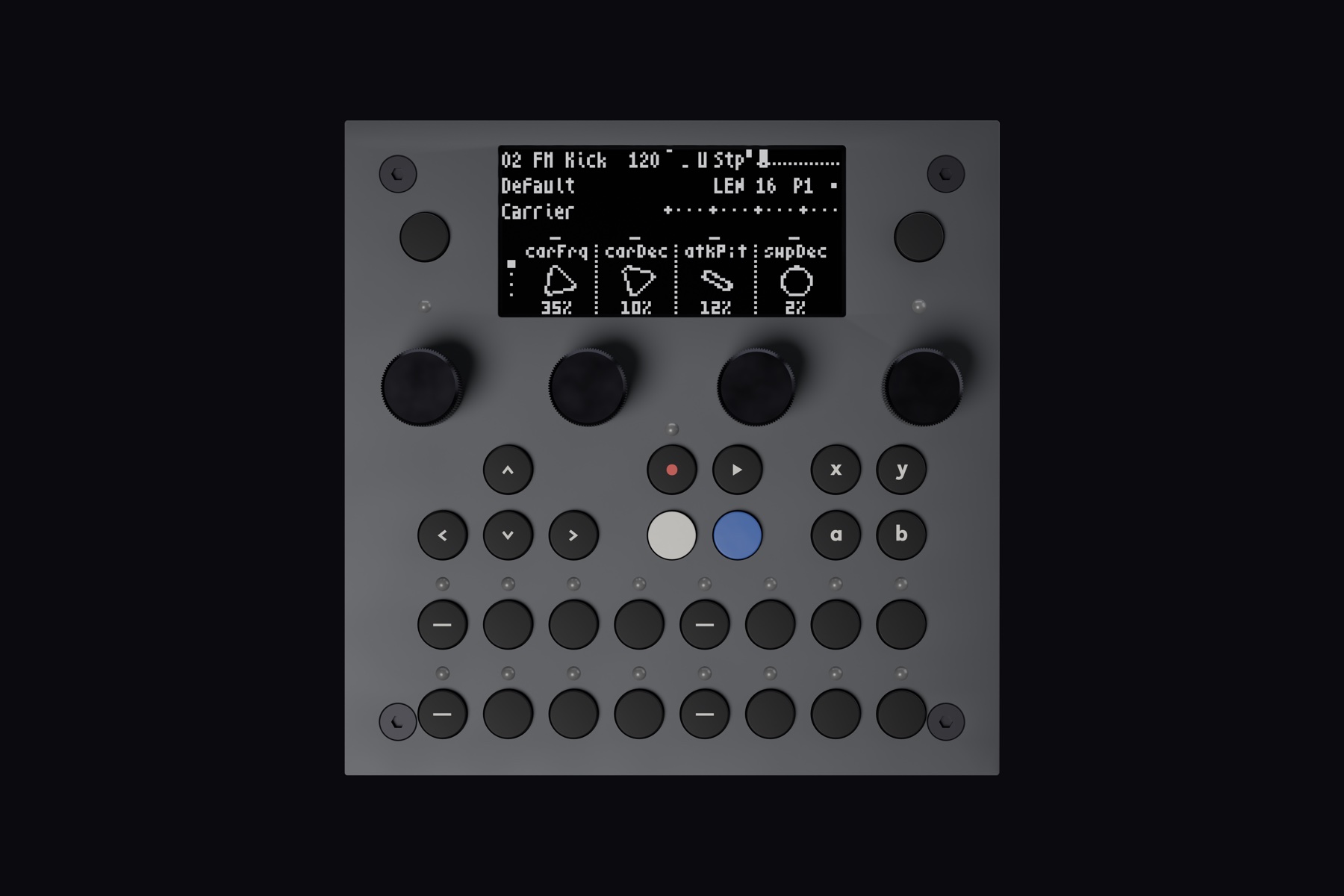
And then there are the Machines — some from the excellent (and now ubiquitous) Mutable Instruments Plaits and Braids as created by Émilie Gillet, but also some new creations (like a custom FM kick and new rimshot and clap and a new chord pad).
- Synth kick
- Analog bass drum
- FM kick/bass
- Digital and analog snare
- Hi-hats
- 303-style acid line
- Mono synth
- Wavetable lead/pad
- 24-engine macro voice (a la Plaits, but with a new AHR envelope)
- Rompler
- External audio passthrough (on track 16)
The second narrative here is that new engines can go here. So you really want a new kick, or a different synth? That’s very possible. (There’s even the possibility of Vult support, if you know the Vult DSP language — including in its appearance in Vult modules for VCV Rack.) Check the CTAG TBD repository if you’re a coder or hobbyist coder, and figure someone will do just that.
Ad that’s just the sound engine. You can also run your own apps.
Run your own apps
Ready to run a completely different app? You can switch via SD card. There’s no “hacked” mode here; this is a default feature. And there’s a full Web UI you can run over USB or WiFi — no install required, always accessible, too.
So, ready for something other than that default Groovebox? How about MCL (MegaCommand Live), making the tbd 16 an external controller and sequencer for devices like the Elektron Machinedrum? That work by Justin Mammarella (jmamma) has been ported here. Just want to run those synths and effects or use this as a multi-effect processor? You can do that, too. Or you can turn your tbd 16 into a MIDI controller and audio interface for an iPhone or iPad. Or play a nice game of Doom. (Seriously.) The list goes on.
If you’re thinking, “but hey, didn’t things like the Daisy do this”? Yes, indeed, but now the beefier processing here opens up a more flexible platform.
So you can pick up the tbd 16 and hack your own little additions, making apps for the RP2350 (that’s a Raspberry Pi chip), DSP plugins for the ESP32-P4 (a powerful dual-core chip), or both. And for the love of all things nerdy, of course, you don’t have to pay for tokens or pay for access to the SDK. Sheesh!
Developers
The firmware for tbd 16 is fully open source, under a GPLv3 license, including DSP and Web editing tools. The specific hardware is proprietary, but there’s also an open-source hardware developer platform developing in parallel.
The easiest starting point is dadamachines’ Git repository, which has everything:
https://github.com/dadamachines
CTAG TBD is the Eurorack module, fully open-source — so you can build this as a Eurorack module if you want! dadamachines has its own open-source fork incorporating what was needed for the tbd 16. And as manufacturing ramps up of the DSP chip involved, the ESP32-P4, we should see more hardware.
Here’s an earlier version of the CTAG TBD showing the developer platform.
And speaking of hardware and availability…
Pricing and availability
You can check out the tbd 16 at Superbooth (Z385) if you’re here in Berlin this week. For now, dadamachines is taking preorders — and you don’t have to put any money down to reserve a spot.
More:
That was a lot of information. But really, the main thing here is: it’s a great little drum machine/synth/effects box. And you can customize it as much as you want. Watch this space for some demos and more.