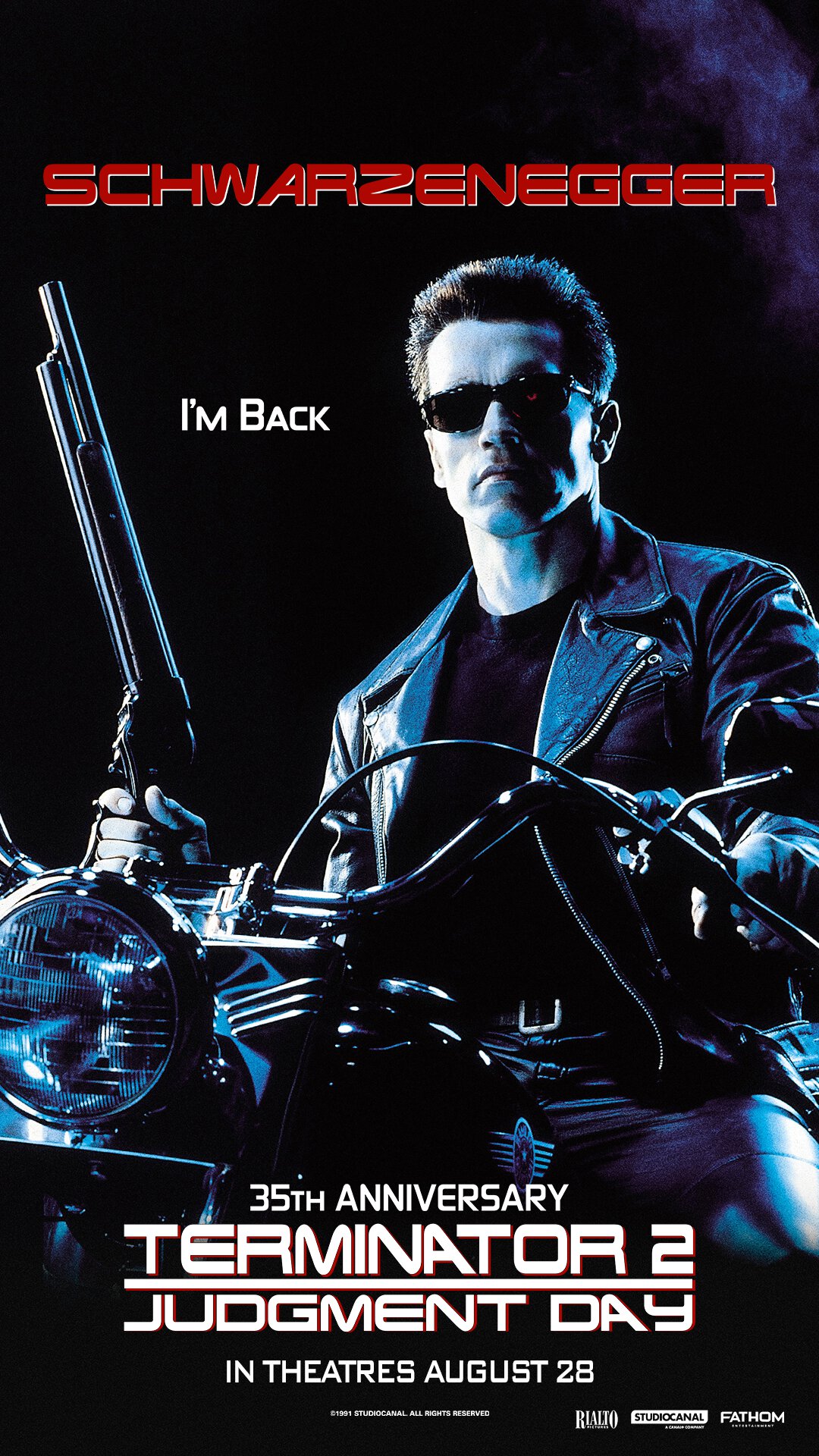
35 years later, the T-1000 is more relevant than ever. Terminator 2 debuted in the first weekend of July 1991. The groundbreaking mix of computer animation and practical effects has come full circle. And I can’t mention the T-1000 without mentioning Alan Oldham (DJ T-1000.)
T-1000
Killer AI turns out to be chatbots causing psychosis, corporate dashboards running drones, and breakdancing toys with guns. So let’s return to evil AI when it was cool, in 1991’s Terminator 2: Judgment Day.
I’m not going to be anti-AI here — or anti-VFX. The entire message of Terminator 2 is the superiority of computers and AI over humans. (What, sorry? Someone is telling me I was supposed to be rooting for the humans in the movie. Cough cough Roko’s baselisk shhhhhh!)
No, what I am going to argue is that the abundance of practical effects in Terminator 2 — and the use of computer animation to look artificial intentionally — has come full circle in 2026. What was necessary technically and to stay under budget is now desirable with hindsight. And that has resonance in music production, too.
Speaking of music, Brad Fiedel talks about producing the score in this great interview. It’s all played live, which gives the music, ironically, that human feel. And he does the obvious thing the soundtrack needs: make the music sound like killer robots. It has — and this to me the highest compliment — the energy of an excited kid singing along with the movie. Actually, let’s let him explain how he did it, framed by a beautiful Sony display and a Power Max sticker and vintage Pro Tools display. (Those clues date the interview later in the decade.)
A mark of good composition is that you can also sing the percussion part. (I recall a teacher demonstrated this with Beethoven — you can recognize any sonata by rapping the first bar on the side of a piano. To be non-Western-centric, you frequently also sing out the percussion patterns learning Javanese music, too.)
Let’s talk about the landmark VFX in T2, which is the liquid effect. There again, it’s not just the effect itself, but the combination with Robert Patrick’s acting — and more of this effect involves practical effects than I expect a lot of folks recognize.
There’s this longer BTS which talks more about the practical effects. The film is best known for ILM’s liquid effect, but part of what makes that particular effect land is that it stands out in a film that’s otherwise so practical VFX-heavy.
And this talks more about the practical effects aspect:
The timing of this discussion now is relevant; this week we had George Lucas claiming that AI is like replacing horses with cars. And Lucas, for all his accomplishments (respect, sir), has become somewhat notorious in some films for overusing technology and underusing human actors. (Well, contrast James Cameron being so committed to shooting real-for-real that he risks drowning people.) So maybe Lucas is not the best person to consult. That model — that new tech is inevitable, that you replace new tech with old tech, that it renders the old tech irrelevant — contradicts the experience of artists. Lucas’ own franchise is right now popular for its use of practical effects and real-for-real alongside new digital compositing and so on. I mean, the most popular character is a puppet. (And again, I don’t think there’s a fundamental difference between conversations in art, film, and music right now regarding this relationship.)
Back to ILM, though: you don’t have to guess what that team would say now. They got together this month to discuss:
DJ T-1000
I can’t think of T-1000 without thinking of DJ T-1000, aka techno pioneer Alan Oldham. We use the copy-paste history of techno a little too often, when we could expand that view. For his part, Alan was the original Minister of Information, designer for a lot of the Transmat look (which continues in his comics now), chief of Generator, and Underground Resistance member.
Talking about techno as Black music should be more than a way to score some social media points. It respects the soul of the sound — jackin’, banging, groovy, like words aside, things you’d actually shake your ass to. Otherwise, you rip the music out of context and out of Detroit like an artifact at the British Museum, or it becomes trendy background wallpaper. I couldn’t be there — next year — but that was the report from TEC-TROIT recently: music in the community with people actually dancing. I’m especially glad to hear FBK made it, aka Kevin M. Kennedy — speaking of techno legends everyone should know. That’s the only futurism I’m interested in.
And to link that to T-1000, this is machine music with groove, not just grids. Less Skynet, more this drum machines kills fascists.
It also easily skirts the line between techno and house. You need Alan’s EP from May, Prisma, in your bag:
Alan is also giving us a tour of the lost years of techno, reissuing oldschool releases from Generator like Woody McBride, DJ ESP. And because things can be cyclical, sometimes the past sounds more futuristic than the present does. Or maybe it’s perspective or maturity working.
Alan also has an answer to Britney’s Work B**** with this cut if you need some motivation. But in case you slept on it during the pandemic, enjoy Detroitism:
I for one welcome our new techno machine overlords. Here’s the official re-release poster. I kinda feel old. But yeah, ILM releasing the discussion above is also part of this coming back to theaters. (Image courtesy STUDIOCANAL/Fathom Entertainment/Rialto Pictures.)