Far from the cold, hard edges and cookie-cutter music, Anastasia Kristensen is exploring anthropomorphic sound — and digging up “weird, small nests” of music. It’s just the kind of hopeful conversation we need right now. Enter this year’s Bestarium Sombre — and, if you’re lucky, catch Anastasia live. She talks to CDM about the work and that vision.
Photo (top, below): katya_k.
“Breath of fresh air” is a cliché among clichés, but you do get the feeling of clear oxygen again — like that moment when you first arrive outside the smog-choked city after a long while. Colors seem more vibrant. You feel lighter. That’s the sense of Bestarium Sombre, a defiantly bright record, humming with life and personality from the moment of that first magpie cry.
It’s not ambient — the label that suddenly applies to everything now, apparently. But the forward motion of each rhythm, jaunting like a hummingbird, always feels organic, not mechanical. In contrast to the relentless, brain numbing directness of mainstage music, this is one for that sidestage that comes entirely alive, where people dance. Or you can stretch out with your home stereo and go on some daydream voyage in your fantasy.
Listen to “Black-Footed Ferret,” for instance: that’s a ferret in a fresh pair of trainers, tightly-tuned percussion and eardrum-tickling sound designs. Or there’s the effortless quirky cool of “Secretary Bird,” which might cue up an animated character in your brain. “Silver Cuttlefish” is hyper-sliced lyricism. We live in a time of monsters; it’s about time for some friendly breeds.
Anastasia is coming to the USA in October. Catch her at Public Records in NYC on October 23 and Flash in Washington DC on October 24.
The Copenhagen-based artist spoke to CDM over the summer; vinyl is available now, via the (excellent) Dutch label Intercept Records, founded by Coloray.
Peter: It was a nice surprise to get this. Like — it seems really playful at moments, right? I’ve been thinking about mood and expression. How do you think about mood in your music?
Anastasia: It’s music that encompasses all sorts of moods. For me, it was a personal challenge to use a lot of textures — different kinds of inspirations that I gathered along the way — you know, from twelve years of making music and being active in music.
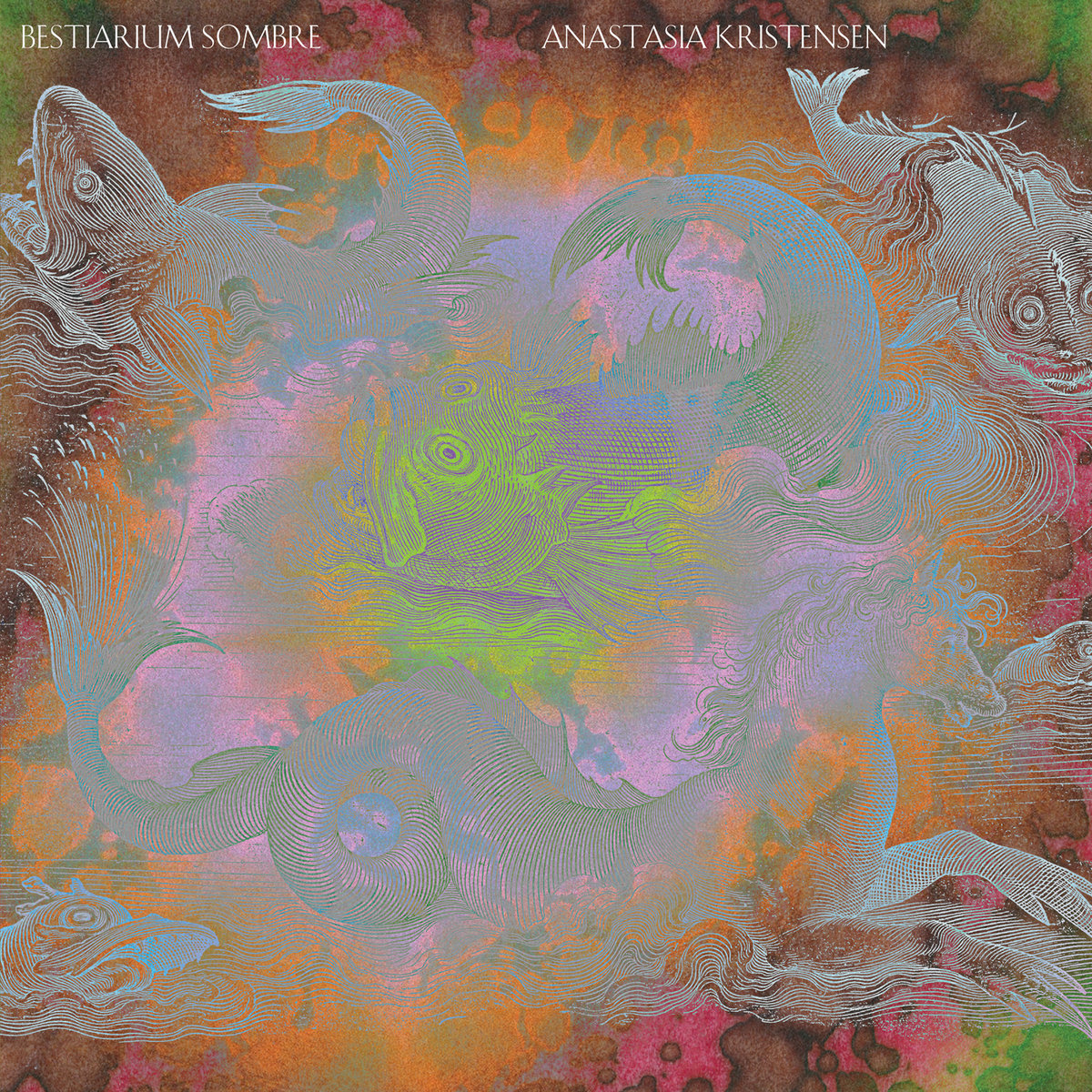
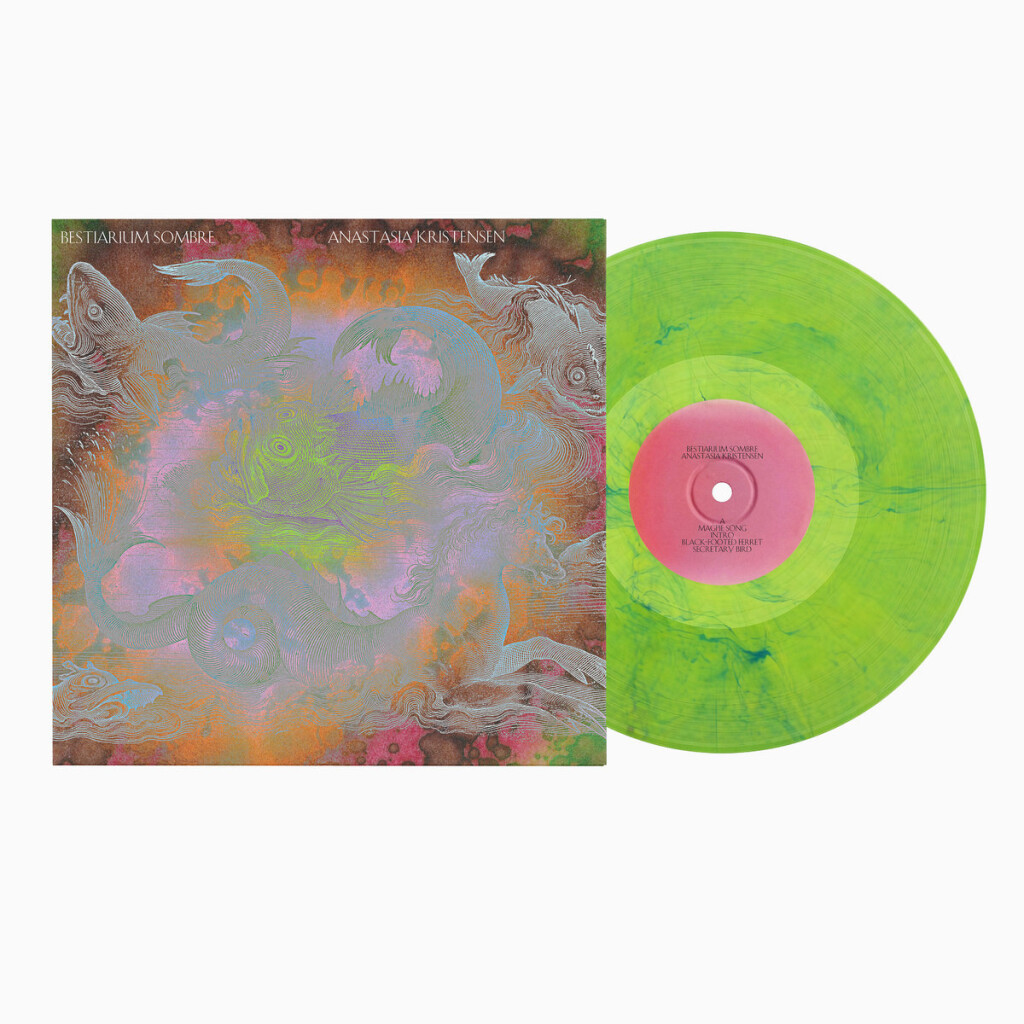
It all came together while I was making it. I wanted to make a conceptual piece of music, and then this idea with names and the hierarchy of things became clearer to me. Together with the designer, we found a really nice visual aspect for it.
For me, it was really about pushing the conventional rhythm, seeing if I can make it a bit more interesting but still tailored for the dance floor. This is definitely not a techno tool, and that’s never been the idea. At the same time, I didn’t want to make it so deconstructed that people can’t relate to it at all. I personally like deconstructed music, don’t get me wrong, but since I come from the dance floor, classically, it made sense for me to keep it rhythmical and somewhat mixable as well.
I think it has several moods. It’s definitely full of hope, full of mystery — light mystery. The main character here is textures and layers — how do they come in; how do they play with each other? There’s a lot of call-and-response techniques in the way I arrange tracks. There are a lot of elements that come in and talk, that have storytelling going on.
The important thing for me was to showcase all the libraries and recordings I gathered along the way. I used hydraulic mechanism sounds, recorded magpie songs, lots of real-life elements — broken glass. I really like the physicality. That was the point; it is electronic music, but it inevitably reflects the sounds I find interesting.
“I used hydraulic mechanism sounds, recorded magpie songs, lots of real-life elements — broken glass. I really like the physicality.”
So yeah, there’s almost this foraging stage of the process. At what point did this animal story come in?
The magpie song, the first one on the album, I made the melody five, six years ago. I found an old project. And then I started looking through the recordings I had, and I realized it would be nice to make this ritualistic, calling track. And then I thought, now that we have this animalistic approach, why not see if we can make the whole forest?
I do enjoy this anthropomorphic approach. There’s some kind of mystery, or old storytelling, or almost mythology. Without being too particular — I don’t want to draw parallels to something specific; I want to gather it all at once.
Is there some narrative to the titles?
The way I name the tracks reminds me of a novel — there’s a prologue; there’s an outro. I don’t mind if that’s what people find in it, because that’s what I find in it. It’s just important to me to see if I can push the traditional way of making dance music, and how I gather inspiration from Warp Records, LFO, Relogic — you can hear some of those things — but still make it mine.
There are a lot of elements that come together for me as inspiration, whether it’s Greek mythology, or old Warp records, or a novel, or a fine arts gallery — it’s all merged together. I think when you gather recordings for five, six years in your libraries, it makes sense to abuse them and see how they come together. I wanted to explore how they work with each other.
How can a playful melody work with broken glass, for example? Can it at all? You learn by making. Nobody really knows if it’s a good record or not — you try it out.
The label’s also been very helpful. It’s a Dutch label, indie electronica label. I think it’s good when you cooperate with a label and they have a vision as well. They completely stood for the design as well.
Ultimately the record is a resistant statement to the more formulaic music that’s happening now in our industry, you know? You have particular places where the breaks happen, and it’s more produced and compressed — I wanted to go away from that, and not because I need to be individualistic, but there are just so many sounds out there that it made sense for me to come up with pretty much an IDM record this time.
You’re pulling stuff creatively from a lot of different places and seeing how it can mix together — is that connected to your DJ brain, to how you dig in that way? Or are these processes more separate for you?
I think the DJ part is involved — when I choose the broken class sound, it would sound interesting on the dance floor, it would be unexpected. It might freak people out, you know, even.
If you look at the “Secretary Bird” track, it’s quite danceable, it’s easy to mix. So absolutely, I do keep the dance floor in mind, and I constantly look for music that has some practicality in it. I really like playing several decks, where one has a pure beat and another has a lot of white noise. It’s an extension of that, for sure.
At the same time, the album is also made for collectors and listeners, for somebody who may not ever visit the club. I don’t mind that; I think it’s cool to have a record among their leftfield records. That’s where my producer skills belong.
But I don’t want to exclude myself from the dance universe, because that’s also where I come from. That’s what I’ve been doing for a decade now — like, holy s***. I remember starting in 2015 and now we’re like mid-2026, you know. It’s crazy.
So I always think about, what that sound good on a big sound system? It’s DJ friendly, but it’s also very listening friendly, and ultimately it tells a story.
It seems it’s an undervalued skill, being able to stuff that is more sophisticated but that is mixable, too.
Yeah, I mean there are a lot of tracks that didn’t make it to the album, and this is one of the reasons. Like, it either gets too weird, even for me, or too negative a mood, or too happy a mood.
It’s also a fine balance of not over-intellectualizing it. If somebody listens to a track and they imagine it for the dance floor — or dreaming a universe — that’s up to the listener.
If somebody really doesn’t like it or thinks it’s too weird, that’s fine. That’s a valid mood, you know?
I have showcased a lot of new tricks — like how do you use this sound — and that’s what makes me happy about it.
What does it mean for you going back over tracks and adjusting them; what’s that process like for you?
Making tracks from the beginning and retaining your idea, and not moving too much is also important. I usually work a little bit on something, close it up for today, revisit it again in a couple of days. Okay, this sounds too crazy — let’s try to move and then review it. So it’s a very iterative process.
I also did a live set with this album, which I actually found quite difficult, because it has so many different tempos. One track’s 180 bpm, another one all of a sudden 110 — how you knead it all together? But if you take the tracks standalone, you can easily find something for your set.
I’m pretty classical in the way I arrange music and edit it — like the same as if I were those people recording a bunch of stuff from their synths in a big-ass studio. I think the difference is that I don’t have hardware, and I’m proud as a non-hardware person. I think there’s enough material in synths and plug-ins and real-life sounds to make it work. Not because I’m against hardware, just it’s not been an opportunity for me to come across much of it.
It’s really the process of having a little sound and making it sound huge, or have a very noisy sound that you reduce to something super particular. That’s the cool thing for me about it.
But without the need to go and buy a lot of things externally. I’m a true believer that the software of today’s age is very capable.
I didn’t have a formal education to arrive to these things. But I’m interested in exploring what’s out there, and how to make physicality work in a dance electronic music. I enjoy making sound designs and I don’t think it’s that far from dance music — so why would we not merge them?
It’s definitely full of hope, full of mystery — light mystery. The main character here is textures and layers — how do they come in; how do they play with each other?
Is there a way that you’ve evolved — where you needed to break free of a certain pattern or certain habit?
Before I say how, I want to say why. It’s because I got bored as fuck after the pandemic with what was happening around me. I thought that now, you know, when you have an established name, you can really allow yourself to show the deeper side of things — not necessarily educate people, but give them exposure. I just really, truly believe that there is so much music, also from amateur producers, that’s worth showing out there.
And then I realized it’s not necessarily something that the rest of the actors involved — like the promoter, the audience — are necessarily interested in. There are different agendas. People want to be seen at the events. Promoters want to earn and make a next event.
So this whole idea of exposing people to something unusual I felt was only interesting to me and a couple of my colleagues. I also noticed that agencies, for example, I’m not going to name names or generalize, but at least in my experience I don’t feel like there’s an interest in unusual things.
The interest has gone down in all aspects, you know? I don’t know what it is, if it’s capitalism or post-pandemic fatigue, or we’re just so overloaded with so much information that going in depth with music feels like another assignment to deliver.
Okay, I’ve been to this event. Everyone saw me on Instagram, TikTok — next. I even speak to my younger brother. He’s 15 years old, and I ask him, how do you find music? Well, he finds it through the drops on TikTok. Like 15-second drops.
I think that’s detrimental to music, but that’s what the youth does, you know? I guess you can draw a parallel with vinyl turning into CDs, CDs turning into MP3s. Is that just a natural cycle of things?
My sense is that you only have these fiften seconds to consume the music, and you never really get the depth of the storytelling. I think that particular thing has ruined the experience of music for us. So I will insist on showing music that not many people know, but still understand the general situation, like — yeah, people don’t have much attention span.
Yeah, I agree — sometimes it’s even a relief to hear other people say these things out loud. But then what’s the antidote to that? You’ve always been someone who championed doing things differently.
I think it’s important to be aware of what’s happening around you and find your local community — maybe not even local, international, but the ones that really follow with you.
Find your own niche through that — the people who actually want to sit down and read, listen through the whole album, we just need to connect to those people. And I think if you look into big stages today, that’s maybe not where you’ll find them for this type of music. [laughs]
For me, it is still important to make it danceable — but that doesn’t mean you have to compromise what you play. I think there are a lot of musicians that still make fantastic dance music with a lot of textures. Look at Blawan; that’s a great example. You can totally combine these things.
I have a belief that the market will eventually include things that are not as basic and generic as there are now. It is a natural cycle of people get sick of big events, go back to something smaller, then the small thing grows, becomes big again — it’s like a sine wave.
I have to do my thing, and the right people will join that wave. I’m having a lot of fun with how I play and what I produce and what music I’m digging. I feel like the last two years have been really good for music. Like if you go to Bandcamp, if you find those weird, small nests of people who buy each other’s tracks, and you start tracking who’s doing what, you can find a lot of gems there. These are the ones that I really focus on.
“It is a natural cycle of people get sick of big events, go back to something smaller, then the small thing grows, becomes big again — it’s like a sine wave. I have to do my thing, and the right people will join that wave.”
Of course I check my promo pool; it’s part of my workflow. But the most fun thing is to go and find someone from a small city in Japan, like that has 50 releases from Bandcamp the last ten years, and look through their calendar. For me, that’s the most fun.
I’m more of an archivist rather than necessarily a DJ. If you remember in my earlier days, I’d say in the interviews, I was spending a lot of time on SoundCloud finding amateur producers and asking them if they could send me the tracks. Or even offering to mix down for them so it sounds better. I made my own label three years ago in order for me to give a platform to things like that. [Ed.: That label is absorb emit — see the release below.]
That part has never vanished for me — discovering things that are there already and putting them to good use.
The only thing I find difficult is to remember all the cool stuff you’ve found — but because there’s so much cool stuff. Sometimes I really struggle, like how do I divide all this music — into years, genres. I’m glad there’s a search function.
It’s a very interesting time. Right now is such a good time to put something that’s alive and squelchy and has a lot of physicality in it. Now at least I have this kind of footprint that is my own.
If you look at the upcoming names, a lot of people really celebrate the organic sound again. The psychedelic element has come back, the nature thing is booming. It’s almost like a resistance from people like — oh we don’t want too much computer sound, we want the sound of a river running or a forest and trees. I think you can totally trace that in the current electronic music. All those things are connected, in on way or another.
Thanks, Anastasia. And that’s great to hear — back into the woods!
Anastasia now has a dedicated website (with newsletter option), designed by Averyano, a Ukrainian developer and graphic designer who recently relocated to Denmark. And that’s great to see, too — independence from platforms, and back to artists controlling their own image on the open Web. Go follow her work: