Beads, the granular “texture synthesizer” that was Emilie Gillet’s follow-up to the legendary Clouds, is now fully open source. That completes the final missing piece in open-source code and free licensing for Mutable Instruments’ iconic and influential range of Eurorack modules.
Synth Anatomy gets the scoop on this one, noting that source and licensing were quietly updated on the pichenettes GitHub account some time early this morning. (Thanks to Tom for the heads-up.)
Beads is a beautiful instrument, both as a granular processor and an oscillator. It was a full “ground-up” reimagining of the earlier Clouds, and you can hear how different it sounds. Emilie wrote in the blurb at the time that this one had “a crisper and broader sound palette, more control, better playability, and direct access to exciting new features.”
Just listen:
Beads was a kind of holy grail in the Mutable Instruments lineup. For some reason, while other modules (and earlier desktop synths) were released as open source, Beads was omitted. I don’t know why — it may have been that some proprietary dependency was involved, or it may have been for strategic or personal reasons. Because of the omission, though, there was no way to build one of these modules or use it as a software emulation, as authorized recreations by Softube and Audible Instruments (for VCV Rack) in software, or After Later Audio in hardware, did. And there was no avenue for DIYers to try it themselves.
That changes now, as everything is there. The usual rules apply: do not use the name “Mutable Instruments” on whatever you build, to avoid confusion and because of the protection of the trademark. Other than that, hardware is under a Creative Commons Attribution-ShareAlike 3.0 license and software under the MIT license (as this module uses a STM32F processor).
Recommended practice (though not required) is to avoid the use of the module name —
We do not recommend you to keep the original name of the Mutable Instruments module for your derivative works.
For example, your 5U adaptation of Mutable Instruments Clouds can be called “Foobar Modular – Particle Generator”.
Also, the best practice for hardware — a recommendation, though not a legal requirement — would be to share any modified work under the same open license. For parts of the hardware that can be covered by the Creative Commons license, that is a requirement. It is not the case with circuits. (So if you don’t use the CC-licensed designs, for instance, only the firmware and its MIT-licensed code is technically applicable.) But now more than ever, it seems applying best practices and intentions for clarity is worth doing, even if the law itself doesn’t completely cover the hardware, as a reader pointedly (and correctly) observes in comments. See the Open Source Hardware FAQ for their position. And yes, it’s true that even Creative Commons recommends against applying CC to hardware, though here it does still arguably make sense for the visual elements. (Hardware cannot be protected by copyright law, but parts of a hardware design can — and the line between those two, plus real-world enforcability, create a lot of confusion.)
A full history of how the open source hardware debate evolved in parallel to Emilie’s hardware efforts will have to wait for another time. Suffice to say, those debates and discussions with legal experts were in process when Mutable Instruments and MeeBlip (and x0xb0x, etc.) each started with open hardware.
Maybe a more important point: in this age of assistive AI, it’s worth browsing through the code repository, because this is code written by a human for other humans to be able to read. I don’t mean to knock anyone using LLMs in their coding; I’m certainly not saying every software installer needs to be meticulously hand-crafted. But for the Mutable instruments, you get carefully chosen comments, code that was written to be read. And I hope anyone who is making AI code and saying it’s “open source” is factoring in the time to go over each line and make sure someone else would want to look at it. End rant.

But it’s truly exciting to have access to this module again, not least because of its special place as Mutable Instruments’ swan song — and a gorgeous swan song, at that. It seems like a good excuse to try DIYing a module, and I hope it gets an Audible Instruments rendition in VCV Rack, so folks can try it regardless of budget or space.
This is also a reason to go back and read the history of Beads, including details of the back-and-forth between Emilie and designer Hannes Pasqualini. (Hannes and Elizabeth Busani of papernoise worked on the visual identity and panels for Mutable Instruments; see their profile of the project.) And there you find trivia like this was pitched originally as “Clouds light,” how it related to Marbles, and that its name was variously Clouds 2, Crowds, and (my favorite), Seeds, before Beads caught on.
Beads history (with sketches!)
And if ever it feels like the world is too cruel and too fast, you can listen to Beads beading away and settle down for a moment. The craft of what we do can take as long as we wish — capitalism’s machine speed be damned. (See also Olivia Artz Patience module for more inspiration in that category.)
https://github.com/pichenettes/eurorack
All the Mutable Instruments modules, documented
And what I wrote the first time, apparently:
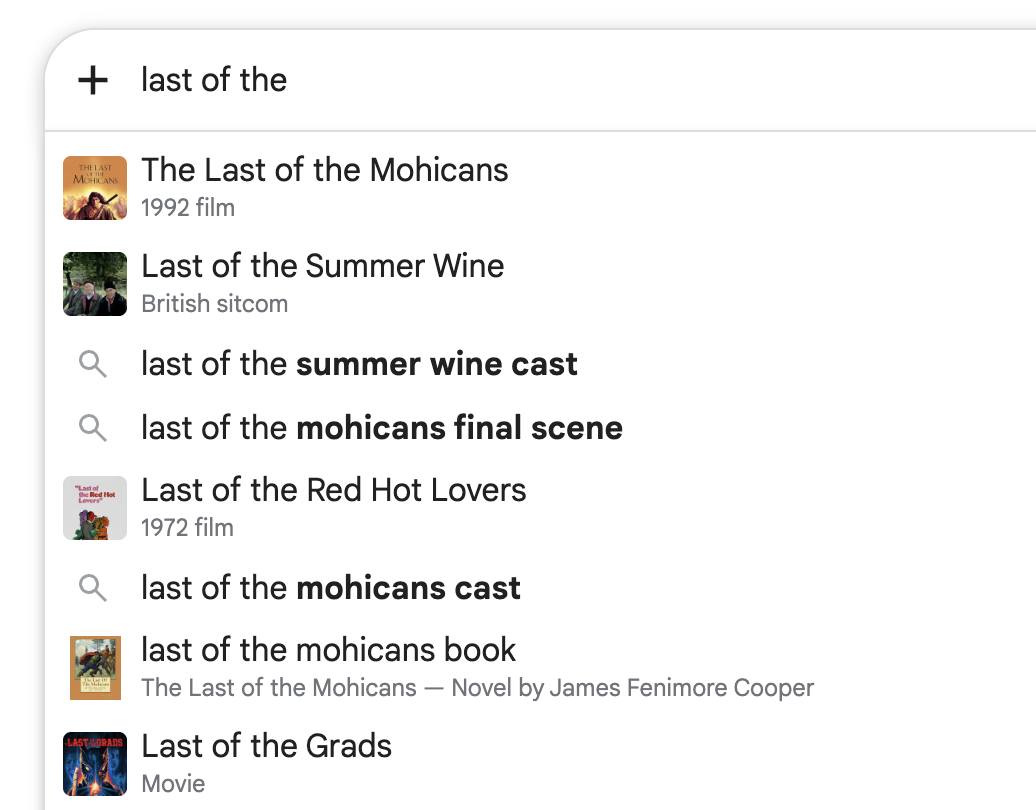
I don’t know why this “last of the Mutable Instruments modules” phrase is stuck in my head, but maybe my brain is here (hey, first movie I remember seeing in a movie theater, it made an impression!)
Also acceptable: