What do you do when software is feeling a little, well, disposable? Hardware, for one. Universal Audio has updated its Volt line of USB audio interfaces with built-in processing for preamp tone and dynamics, and on the higher-end models, “smart” displays and extras like ADAT input. (Hint: that can solve some of your connection problems to outboard mixer/Eurorack modules/whatever.) And these interfaces are really not expensive, starting at $149.
I’ll be honest: it’s gotten pleasantly difficult to buy a bad audio interface these days. Focusrite, MOTU, RME, UA, PreSonus — I’m routinely swapping between all of them pretty happily moving between venues and classrooms. And what was once an investment on par with the cost of your computer may now cost less than your DAW. The reason is that many underlying components have gotten more efficient, and these vendors have a lot of practice building hardware. So I think for many people, apart from brand loyalty, it’ll be about solving specific problems. And that means the interfaces need to solve actual user needs, not just compete as commodities alone.
I’ll be looking at some of those points of differentiation with this generation. First up: UA’s announcement for this month.
So, here we go: lots of us now happily run the growing UA native line in place of their UAD DSP platform, so we don’t need to buy hardware to run their stuff. But UA is making a pretty reasonable argument to consider them in the audio interface game on the interface’s own merits. UA even says the same team that worked on Apollo did the more budget-minded Volts. You also don’t have the obsolescence of drivers or formats (RIP, FireWire); this runs on class-compliant USB.
In fact, bonus: incorporating the dynamics processing and tone on the interface means if you are using this with Android, iOS, Raspberry Pi, or Linux — any device that might have less processing headroom or plug-in compatibility — all that processing happens on the interface.
Universal Audio’s Volt was already nice — I tried the bargain-basement original entry model, and it’s already a great way to just whip out a mic and record something. What they’ve done is updated Volt to Gen2 and added some extra options called Max.
Features:
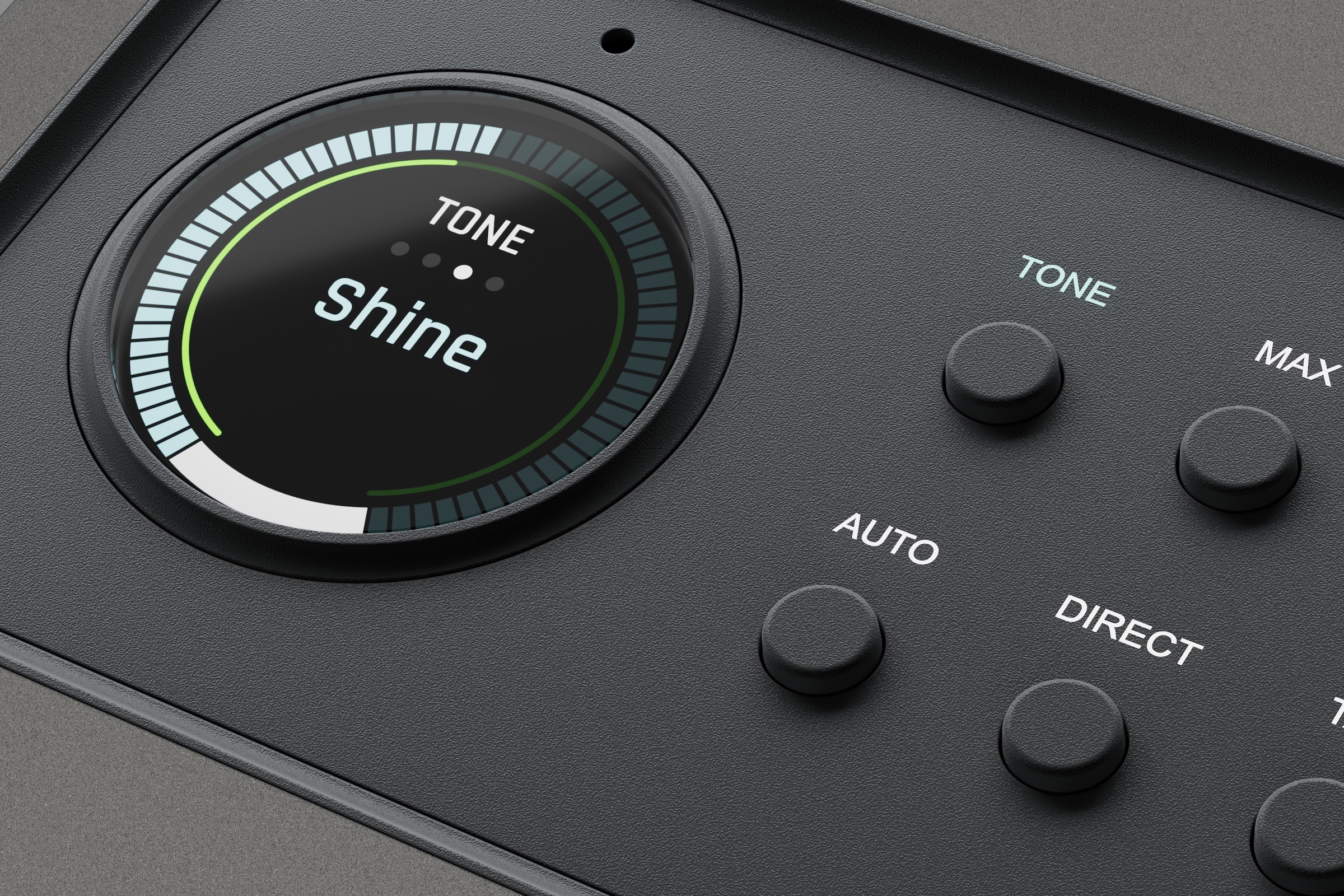
Tone Shaping Preamps. Hey, why not? Instead of building an analog circuit to create a particular preamp personality, you can model it in software that runs on the interface. This comes down to the age-old question of whether you want to record clean and add that character, or go ahead and track with some personality. So do be aware that this is recorded destructively; see UA’s full article on the topic.
Built-in dynamics processing (“Max”). I’m not sure I needed to see anything else “maxed” out, and “Max Processing” reminds me of “Blast Processing” (kids, ask your gaming parents). But this is also a sound idea: put a set of compressor presets into the audio interface so you can track without latency. Software can’t always do that because look-ahead features of some compressors will add latency to the output.
32-bit audio. Again, the chips just support this inexpensively. 32-bit is not “twice as good” as 16-bit, but there’s no reason not to give folks the option.
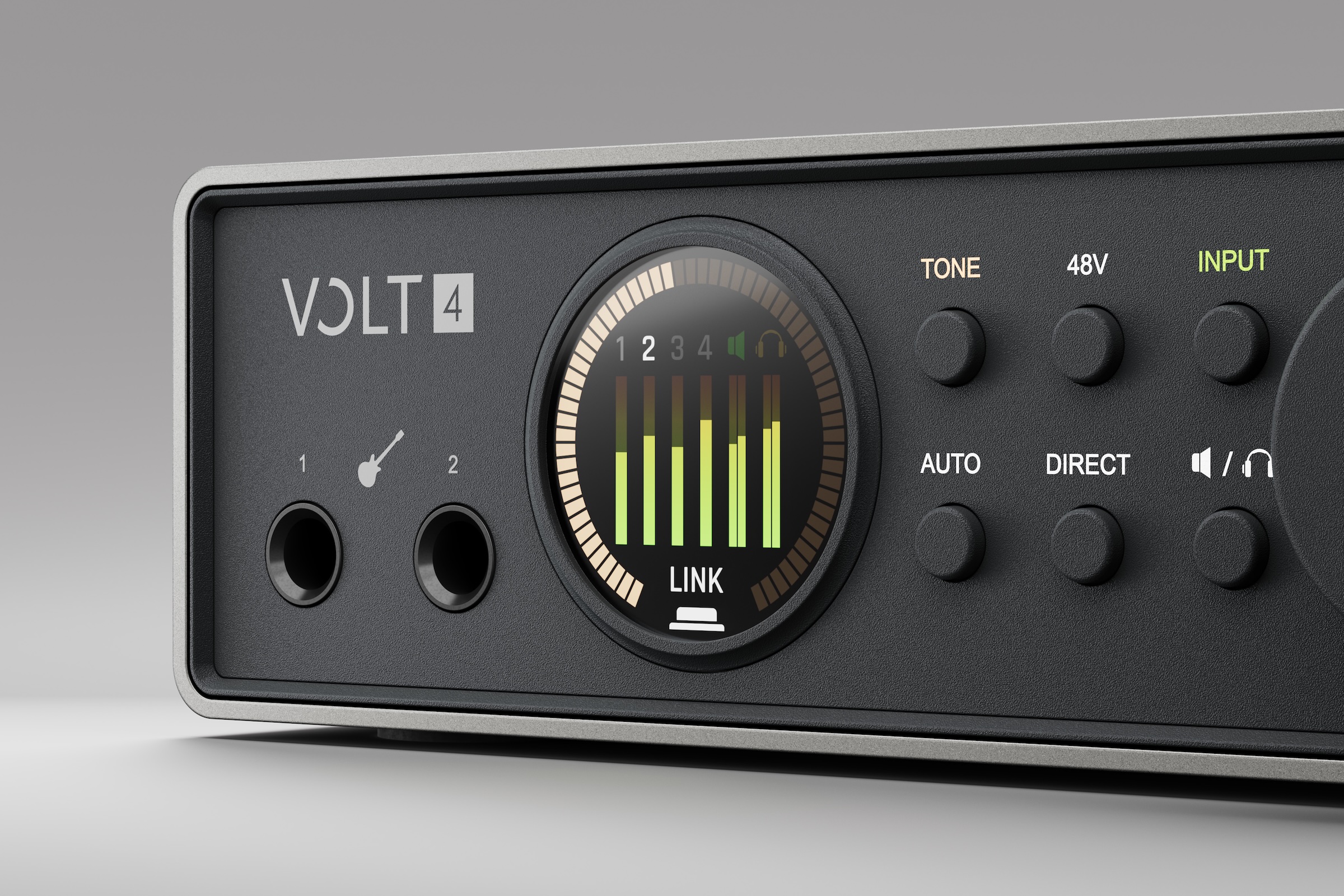
Smart Display. These look nice enough for setting channels and levels and providing feedback, and these are missing on some of the interfaces in the same price class.
Auto-Gain and Clip Protection.
Software bundle. Jury’s still out on whether anyone wants to use the LUNA DAW in the real world, especially with all the other DAWs we have. But there’s a decent software bundle here: Topline Vocal Tune, UA 610 Tube Preamp & EQ Collection, Century Tube Channel Strip, Teletronix LA-2A Tube Compressor, UA 1176 Classic FET Compressor, Pure Plate Reverb, Galaxy Tape Echo, Oxide Tape Recorder, Vibe Analog Machines, PolyMAX Synth, Anthem Analog Synth, UAD Lion ’68 Super Lead Amp, UAD Showtime ’64 Tube Amp.
That’s on top of the various third-party extras, which includes, funny enough, some Plugin Alliance Ampeg SVT-VR stuff in addition to UA’s own models.
Even without those extras, this is a pretty compelling offering here for the price. Apollo and generations of UAD hardware walked so this can run, basically.
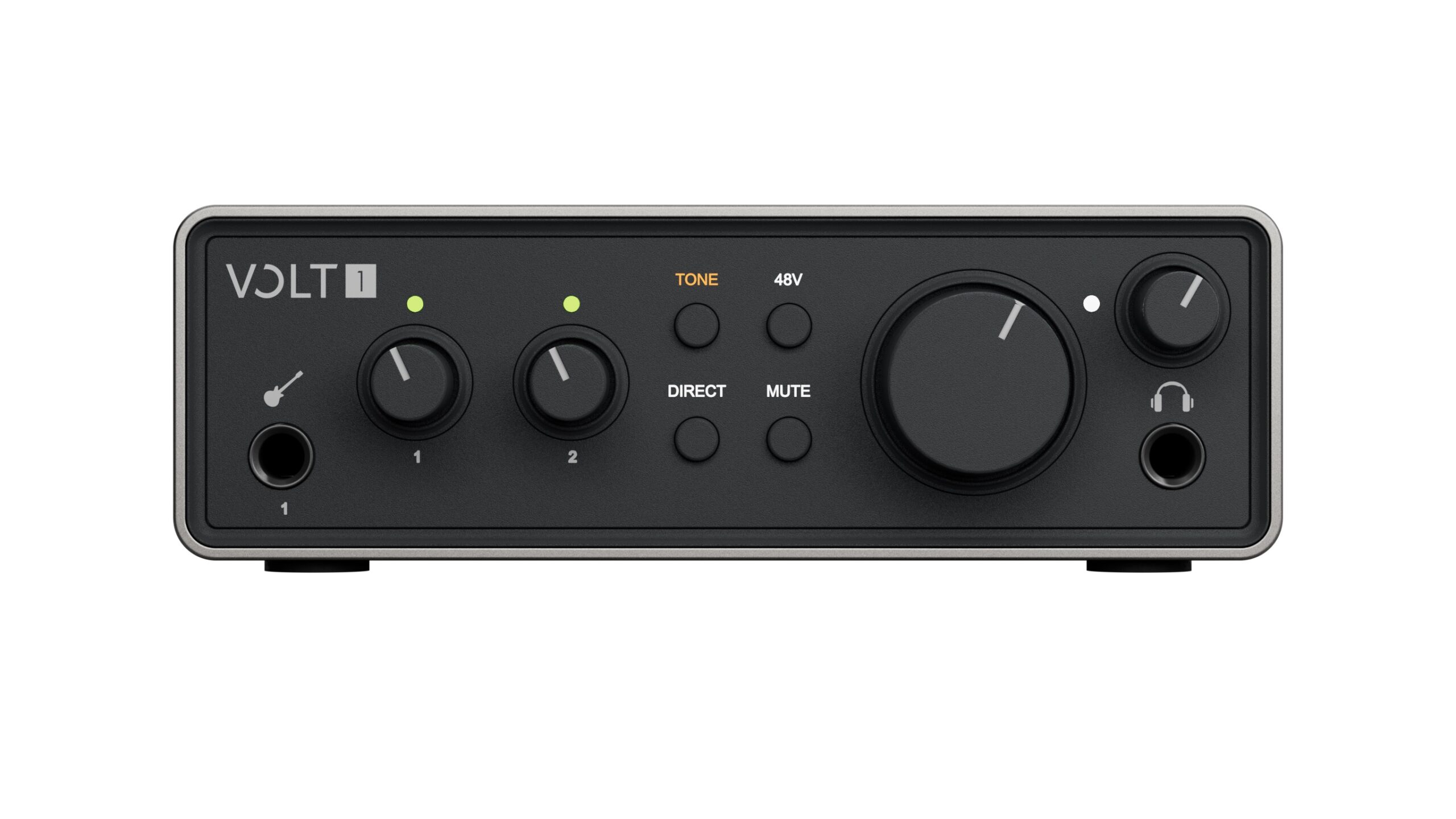
If you just want a simple box with 2 in, 2 out, and a good Hi-Z in, that’s Volt 1 Gen 2 — $149.
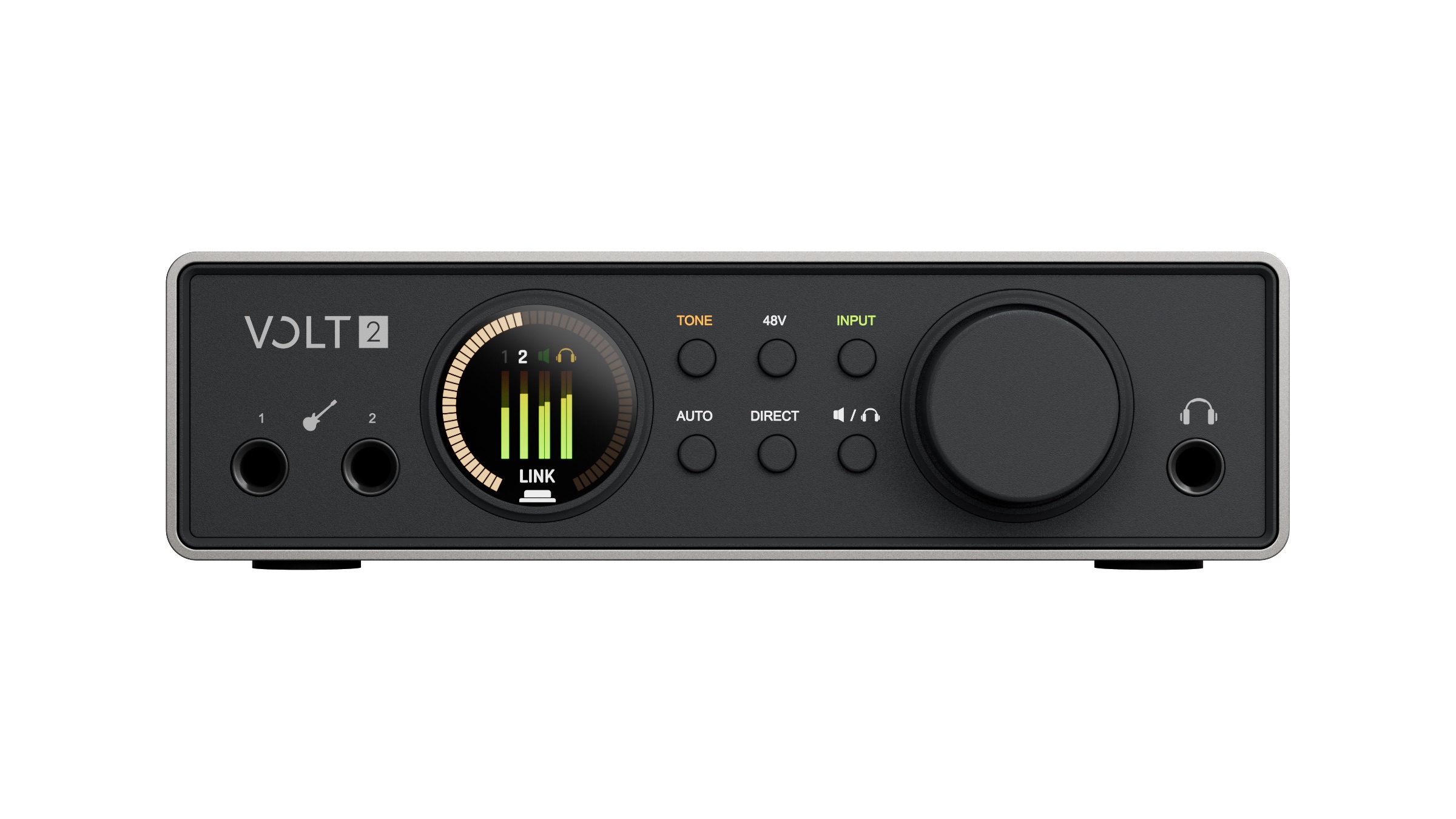
Volt 2 and Volt 4 Gen 2 might be the sweet spots. Volt 2 gives you four outs and a display for $219.
Volt 4 has Auto-Gain, MIDI, and ADAT in — $299. That last bit matters, too: Volt 4 looks nice for hardware setups, with 6 outs (enough for live spatialization, for instance) and an ADAT input you can connect to a digital mixer or a Eurorack module with ADAT out. (ADAT is way easier to deal with for recording your modular or outboard synth jam than a big cable snake is.)
These should also have DC-coupled output, Eurorack fans, as on the previous generation. I’ve asked Universal Audio to double-check that.
No wooden side panels on these, sorry! (I quite liked those! This winds up looking like “Focusrite, but gray.”)
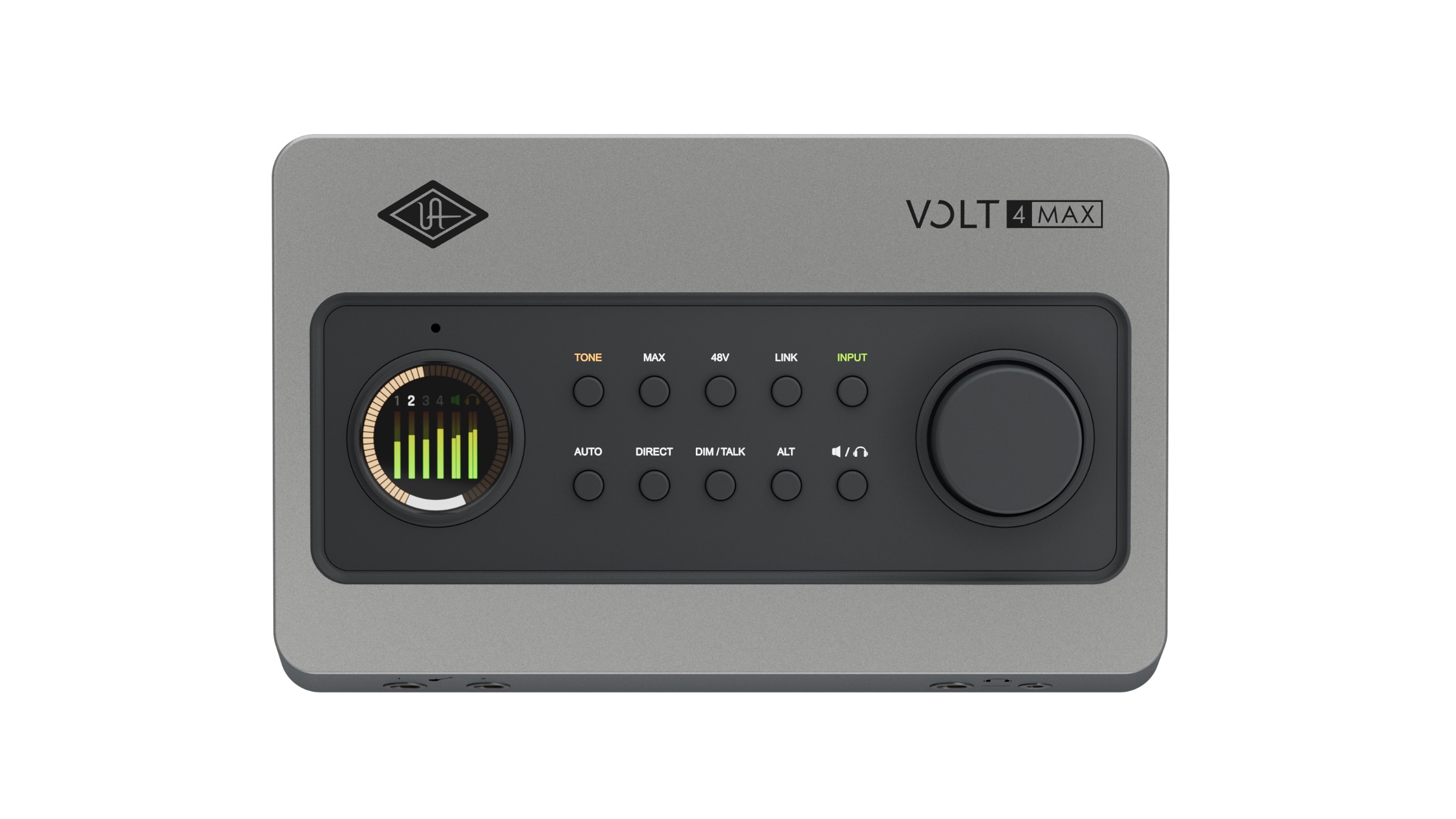
The MAX variants start at $299 and include the additional Max Compression and a talkback mic. So, for instance, if you want speaker switching, Max Compression, and the talkback mic (plus MIDI and ADAT input), you could splurge for the VOLT 4 MAX over the base model, at $399. Or four preamps instead of 2 on the VOLT 4P MAX for $499.
That form factor should look familiar, too; it’s the nice wedge design incorporated on the Arrow line.
UA comparison chart (scroll down, it’s there)
Another great thing about the generation of hardware we’re in is that these are all USB, class-compliant, and bus-powered. You can connect them to your Linux laptop. You can use them with your Raspberry Pi. You can connect them to your iPad. You don’t have to worry about drivers in the future.
Focusrite’s Scarlett line looms large as competition, and they’re close enough that you can easily compare feature-for-feature. I like that the Saffire has dedicated physical knobs for the audio inputs; I’m less excited about the light-up LED ring around that knob for feedback (though you can use companion software for more precise metering). You get the same I/O flexibility, bus-powered options, and USB class compliance. But some models also get an extra headphone jack and S/PDIF in addition to ADAT.
Focusrite Scarlett 4th generation comparison chart
Personally, I like getting both a screen and physical trims for inputs, which I guess is why I like MOTU boxes. MOTU’s M-Series are the least expensive in their range, and I’ve used the hell out of my M4. MOTU and
But basically, you can choose what I/O you need to connect, set a budget, and then choose based on taste.
Wow, I did not intend to write that, but this comes up a lot and I do see all these boxes in different use cases in the wild. More on those alternatives shortly, as there are some relevant software updates from Focusrite and one new MOTU offering that I’m excited to see.
Now, my only request to UA: I’d love to see some new software, not just ports of old stuff. Your recent synth offerings proved you do have new ideas. We trust UA is more than just the 1176. Will keep my eyes peeled for that.
If you’re curious about DC coupling and Eurorack, I wrote up this guide about Ableton Live. Since I wrote that, Bitwig built an interface that fully integrates Eurorack input and output easily; I’ll look at that separately. If Eurorack use is your main application, and you care about CV/gate with the computer, it’s worth a look. See Bitwig Connect.