You may have seen Akai tease an “open-source” MPC keyboard running vibe-coded mods. But there’s more coming—a lot more. inMusic, parent of Moog, Akai, Numark, Alesis, Denon, and others, promises that many of its 22 product launches coming in January will be open to modders and developer. That suggests a sweeping change in approach for the music gear giant. inMusic CEO Jack O’Donnell shared a glimpse of their emerging vision on modding with CDM.
MPC mods
It sounds like inMusic will lean into what’s happening in the modding community. The first indication of that was a teaser of vibe coding on the upcoming MPC Sample Keys.
inMusic told Terrence O’Brien at The Verge last week that they will release versions of both MPC Sample and MPC Sample Keys that are open to custom coding, and intend to seed hardware to that coder community.
Note that this does not necessarily mean open-source hardware or even open-source firmware. On some devices, we will see something more akin to what Ableton did with Extensions, where custom code (including AI-assisted code) runs in a separate environment. I’ll talk about that more when the next MPC SDK becomes available. And I do expect the next word you’ll see a lot industry-wide is “sandboxing.” Protecting the environment where a coder works has multiple benefits, not least being you protect your experiments from interfering with the operation of your gear.
Not just MPC
Now we learn that MPC Sample is just the tip of the iceberg. inMusic will have other hardware open to modding, including the MPC flagships. That means a lot more additional horsepower, which presumably will open up the chance to add custom instruments, effects, and tools alongside the stock options. (“Takeover” firmware on less capable gear makes sense because they just can’t run as much simultaneously.)
I should note that “open to modding” does not mean “the entire firmware is open-source.” Now that “open source” and “vibe coding” seem to be everywhere, expect that the next term you’ll hear is sandboxing. inMusic didn’t broach this topic directly, but the demos I saw
Then, at January’s NAMM show, inMusic will have more:
- 22 “new, fully operational and feature-complete” products
- “many” of those will be open to programmers, modders, and “traditional and AI-assisted” development
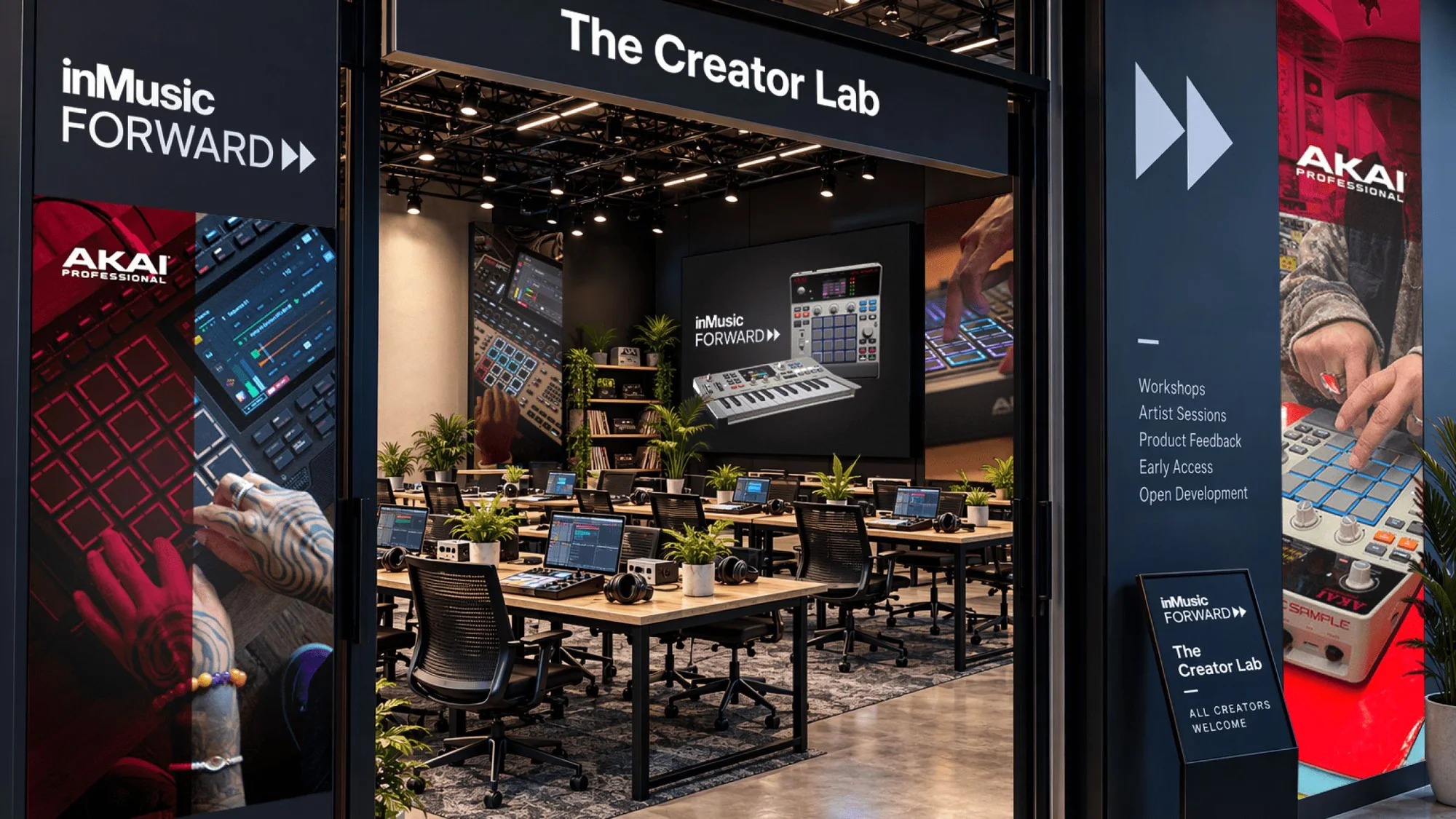
- An open laboratory for trying out those coding features called The Creator Lab (alongside a program from inMusic and artists)
Engineers will even be on-hand at that lab. These will be pre-production prototypes, but still hardware that isn’t yet shipping, different than what we’ve come to expect from inMusic as far as public showing of gear.
And this is not just about Akai. I haven’t heard which products will be involved, but remember that Native Instruments and Moog both recently joined the inMusic stable. Exactly what that looks like, we’ll have to see. (Hmm, as an analog fan, too, maybe this will someday lead to more hardware mod-ability — bend points? One can dream.)
AI or human
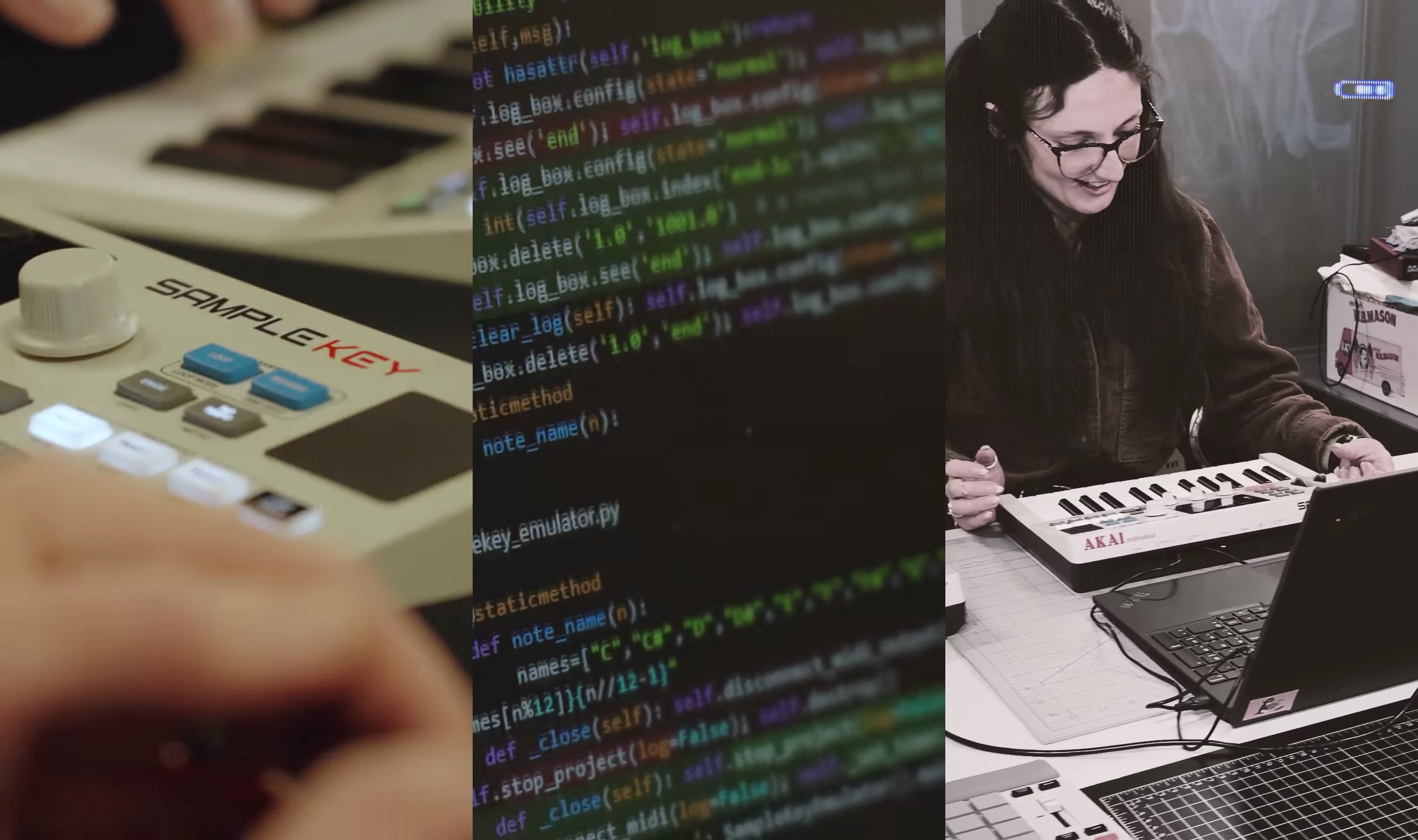
I know plenty using tools like Claude Code and OpenAI’s Codex — which includes a lot of very experienced developers, using them in directed ways or for certain applications. But many people simply won’t touch AI under any circumstances, worried about depedency on these tech providers, the data sets these were trained on, and deskilling their own coding abilities. Some just find “hand”-coding is something they enjoy. And while it’s not the topic of this story, we just saw a sweeping set of election results across the USA that rejected Big Tech, data centers, and large-scale AI. So this is no place for unbridled techno-optimism.
I saw some previews, though, that should appeal as much to “traditional” developers as those using Codex or Claude. That included the ability to unlock a standalone MPC, ssh into it, unlock developer or advanced functionality, and run custom add-ons for everything from visuals to sound.
Since many of us have Star Trek on our minds, it’s the equivalent of telling the Holodeck to disable safety protocols. Want to try pushing the hardware to the limit, ignoring track limits? Want to add some visuals to spice up your video of your live set? Now you can …but then, the important part, you can also go back to normality.
I’ll talk more about the SDK(s) in detail soon, including how their accessibility to non-AI use, too. But I can say that every discussion with inMusic included “traditional” developers alongside the newcomers and vibe coders.
And we are going to need some new term for coding that isn’t AI-assisted. Open to nominees.
B.V., Before Vibes: Vibe coding is sending some shockwaves through the industry. That’s new, but the desire to mod MPCs and other gear certainly isn’t. Long before the AI boom, many of us first heard the phrase “custom firmware” in music in connection with JJOS—an unofficial, unauthorized 2006 firmware for the MPC1000 and 2000/2500 that added features and even fixed some bugs. (Read up on JJOS history, and the mystery of who “JJ” was.) This was all coding, not “vibes”; the developer was rumored to be a veteran MPC engineer. And as far as I can recall, it never had Akai’s blessing.
Finished devices
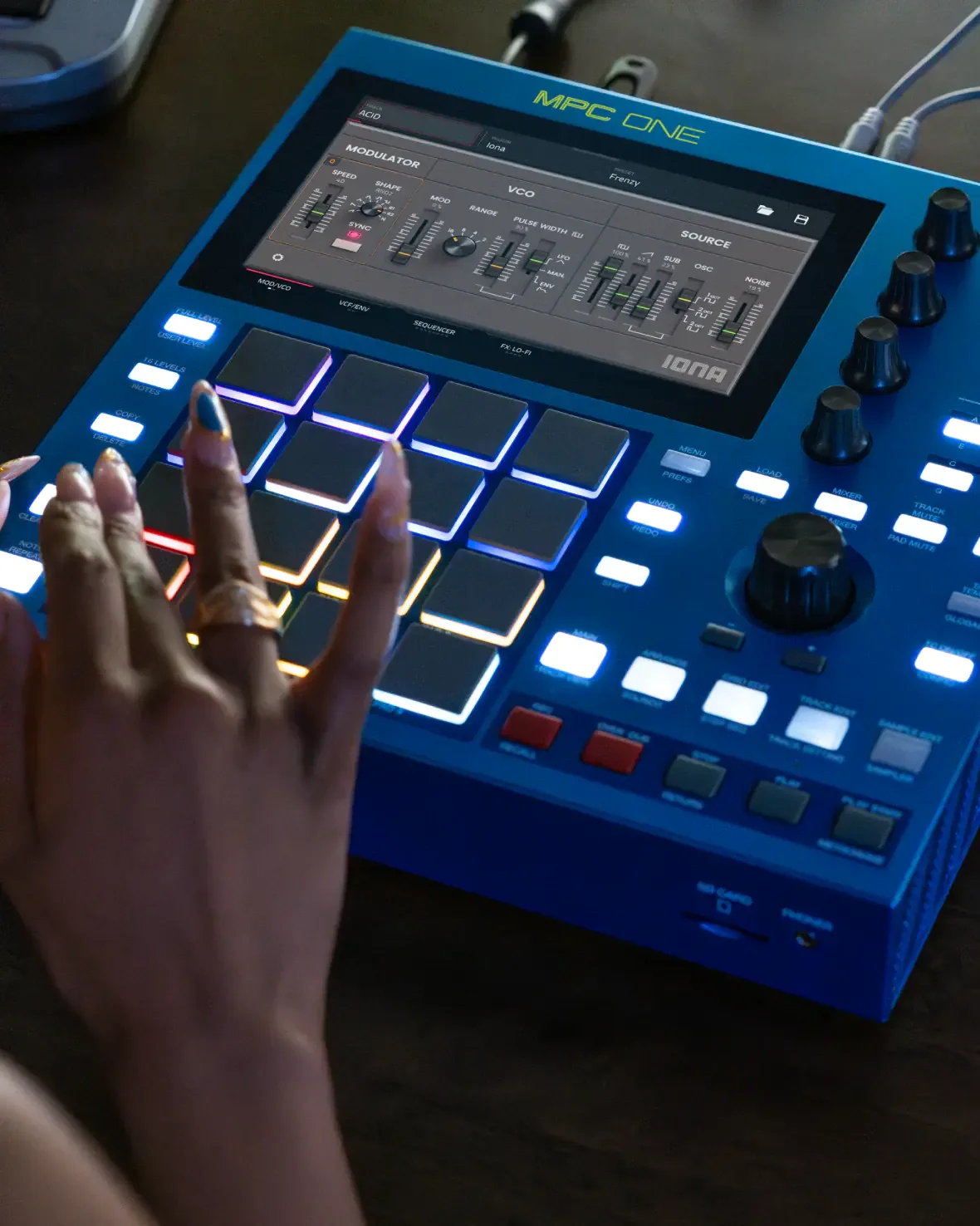
O’Donnell is also quick to emphasize that they are not retreating from reliability, making their gear stage-ready, or providing a finished product. “Openness doesn’t require incompleteness,” O’Donnell says in a press release today. As he told CDM, “I don’t believe in just releasing a blank canvas.” This is not just a shell; the product is still intended to be effecitvely “finished.”
So it seems this won’t interfere with continuing to release free, thoroughly tested firmware updates. You’ll just have the freedom to try your own mods, and without worrying about bricking expensive hardware. (Even M-VAVE, the company whose dirt-cheap FM-1 helped this trend take off, released their own SDK. And you’ll see frequent discussions of custom firmware bricking units in M-VAVE communities, so there’s no question it can be a problem.)
Official support promises the best of both worlds: openness to various customizations, but the ability to go back to factory firmware. That would seem to address some of the concerns suggested by Elektron in their decision to block all but “blessed” firmware on their own firmware.
O’Donnell uses the example of people custom-painting their machines, suggesting artists as well as hackers or modders frequently want customization.
Previously: Elektron is halting sharing of mods and hacks on its forums; official comments
I can personally contrast this with one large competitor who seems focused on shipping gear that looks like other existing devices, rather than original work. inMusic has an opportunity to do this the right way, compensating and crediting contributors, even those who release free and “open source” work, and continuing to support reliable firmware and protect users from accessing memory in a way that puts their devices at risk.
And as we saw with Elektron, there’s a real risk that without some interventions, the AI boom will hinder rather than help openness. If we lose the value of original work and hardware engineering, if “open source” loses the communities and relationships that supported it, if we dissolve the meaning of gear, any of these things is likely to encourage makers to lock down their work rather than open it — or give up entirely. So I’m encouraged that inMusic continued to talk about the value of labor, both from their own engineers and outside contributors. And it seems they may have found a way to navigate these waters for the time being.
Watch this space for more details–and that next MPC update. Times certainly aren’t boring.
See the NAMM press release:
Images: inMusic.