Memory may be vanishing, phones and laptops may be getting downgraded specs. But we’re enjoying an unexpected renaissance of mobile samplers. And of all of these, Casio might pack the most fun into a single package. The SXC-1’s Japanese preorder was announced and sold out this week, and with good reason: this looks like the most fun we’ve had with Casio since the 80s and 90s.
This is about more than just the legacy of the SK-1 sampler and the Sleng Ten-inspiring Casiotone MT-40 — though Casio has given those devices a nod by packing in preset content from both. This promises a return to Casio, the dazzling electronics maker full of weird, wonderful ideas. This is the company that turned a calculator into a lighter, developed consonant-vowel synthesis, and made a watch that did, well, this:
So when we talk about Teenage Engineering or Ableton Move, those have some Casio DNA in them, sometimes intentionally and sometimes through osmosis — even, I’d argue, the new MPC Sample. That’s why I’m especially excited to see the SXC-1.
You know. For kids!
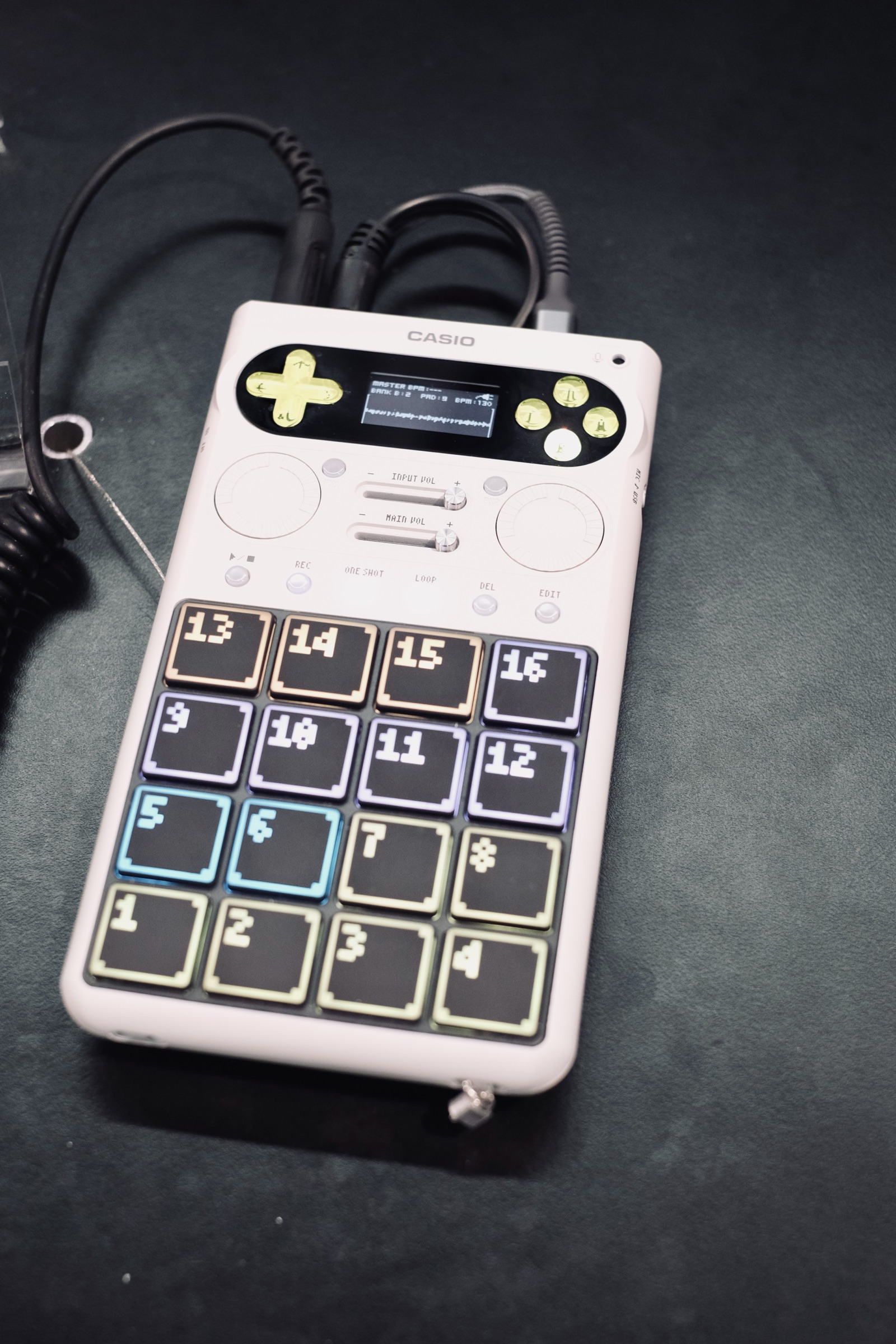
There’s a lot in here. The one feature I see other media seem not to pick up on is the two jog wheels, which Casio says you use to control effects. And while it appears the SXC-1 works perfectly happily standalone, they’ve also designed this to use your smartphone alongside it.
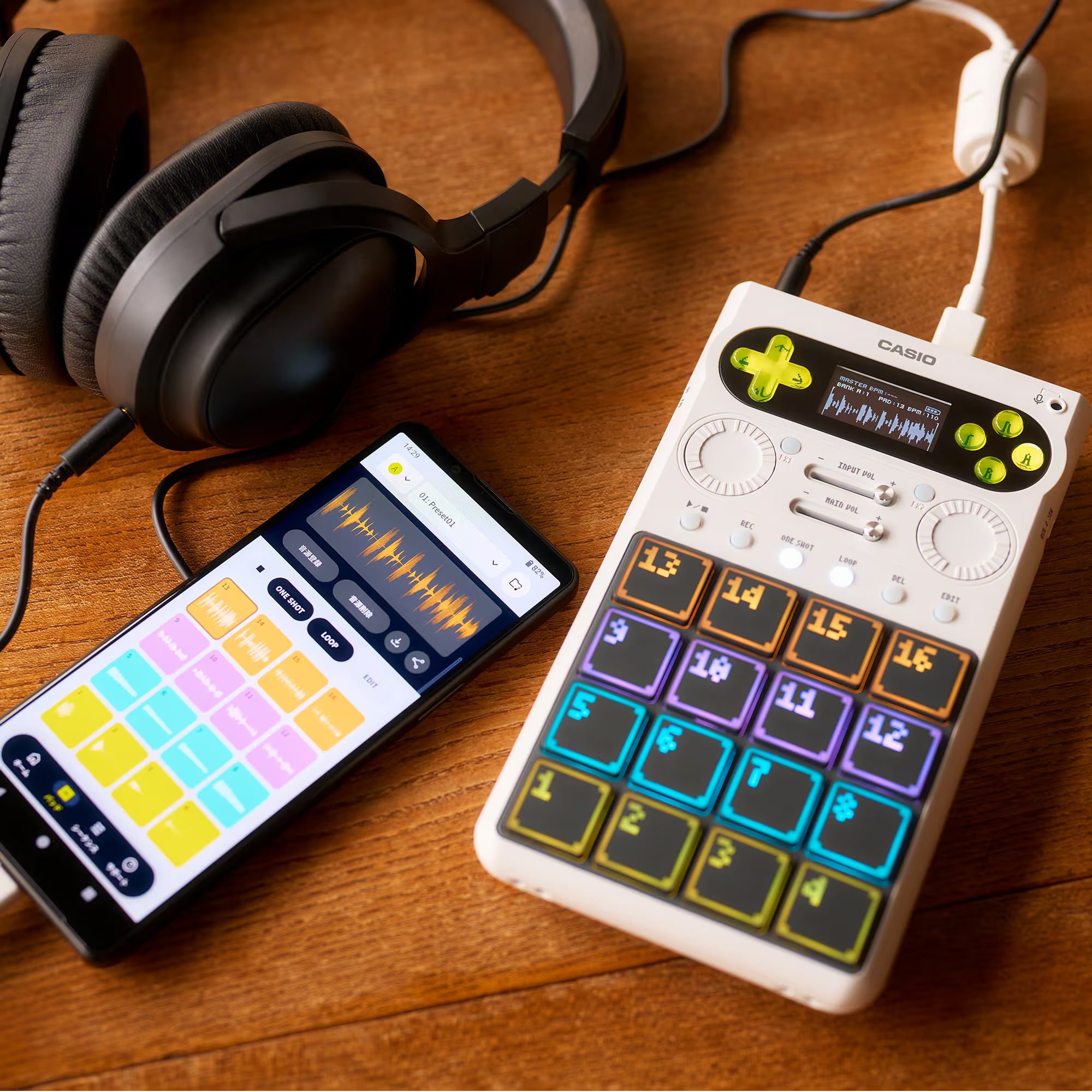
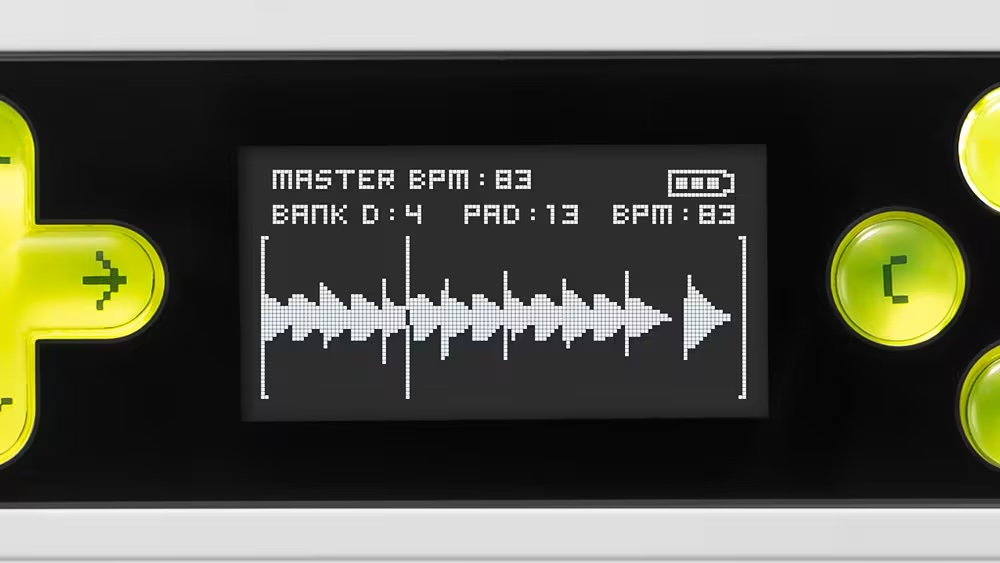
The full feature set, summarized:
- 15-minute sampling time, 16-bit/48K, with 64GB eMMC storage
- WAV, MP3, and FLAC.
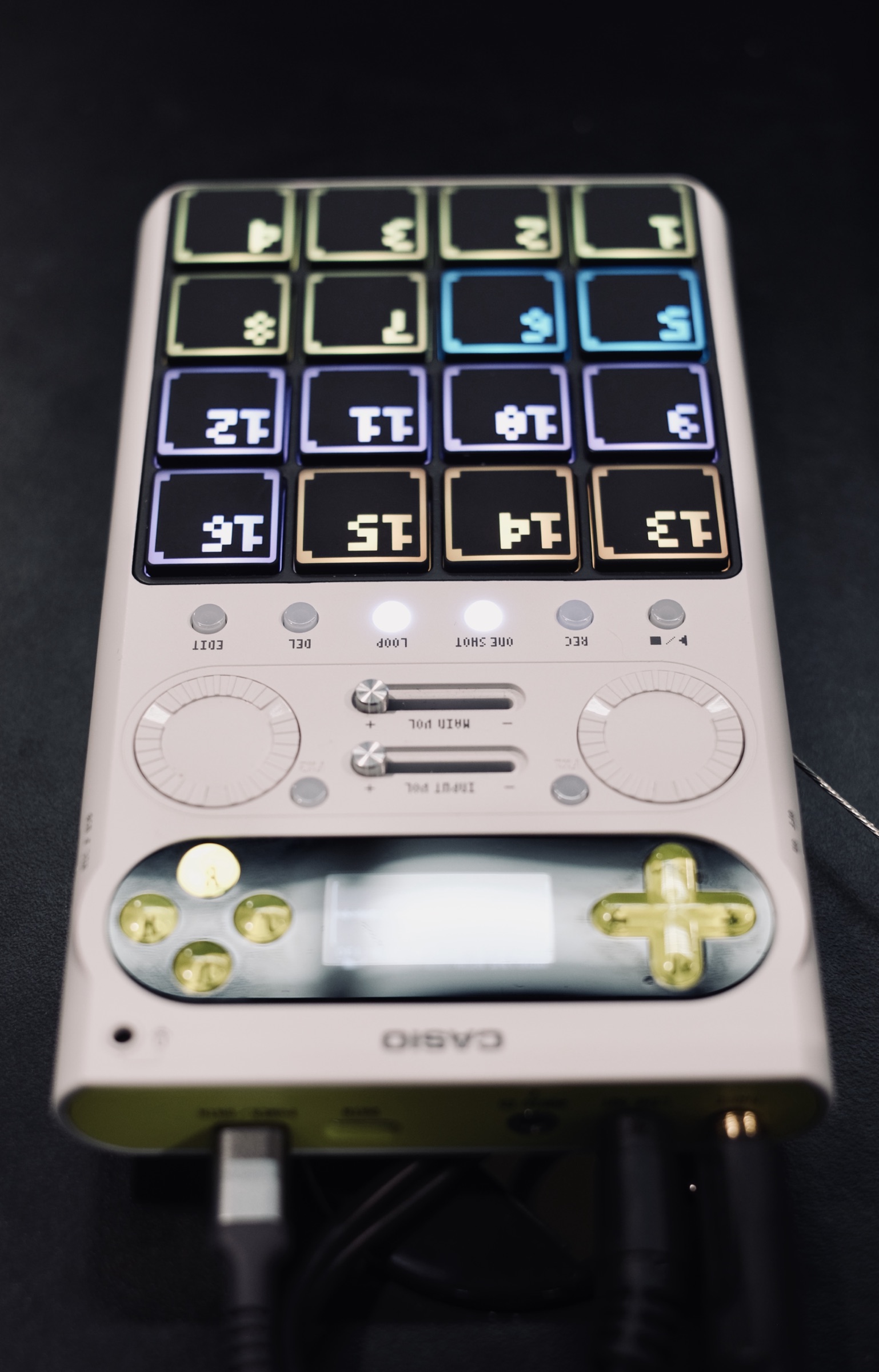
- Four by four pads that Casio claims work well for finger drumming (hands-on feedback I heard from NAMM was great).
- Real-time REC input, step sequencing, and this cute, detailed sequence screen with up to 50 patterns of 8 bars each.
- Automatic beat sync, tempo, and timing adjustment.
- Live effects.
- Sampler app (looks like both Android and iOS) with file transfer, organization, and backup, plus updates.
- Built-in mic.
- Built-in speakers.
- Sample over analog audio input or USB-C.
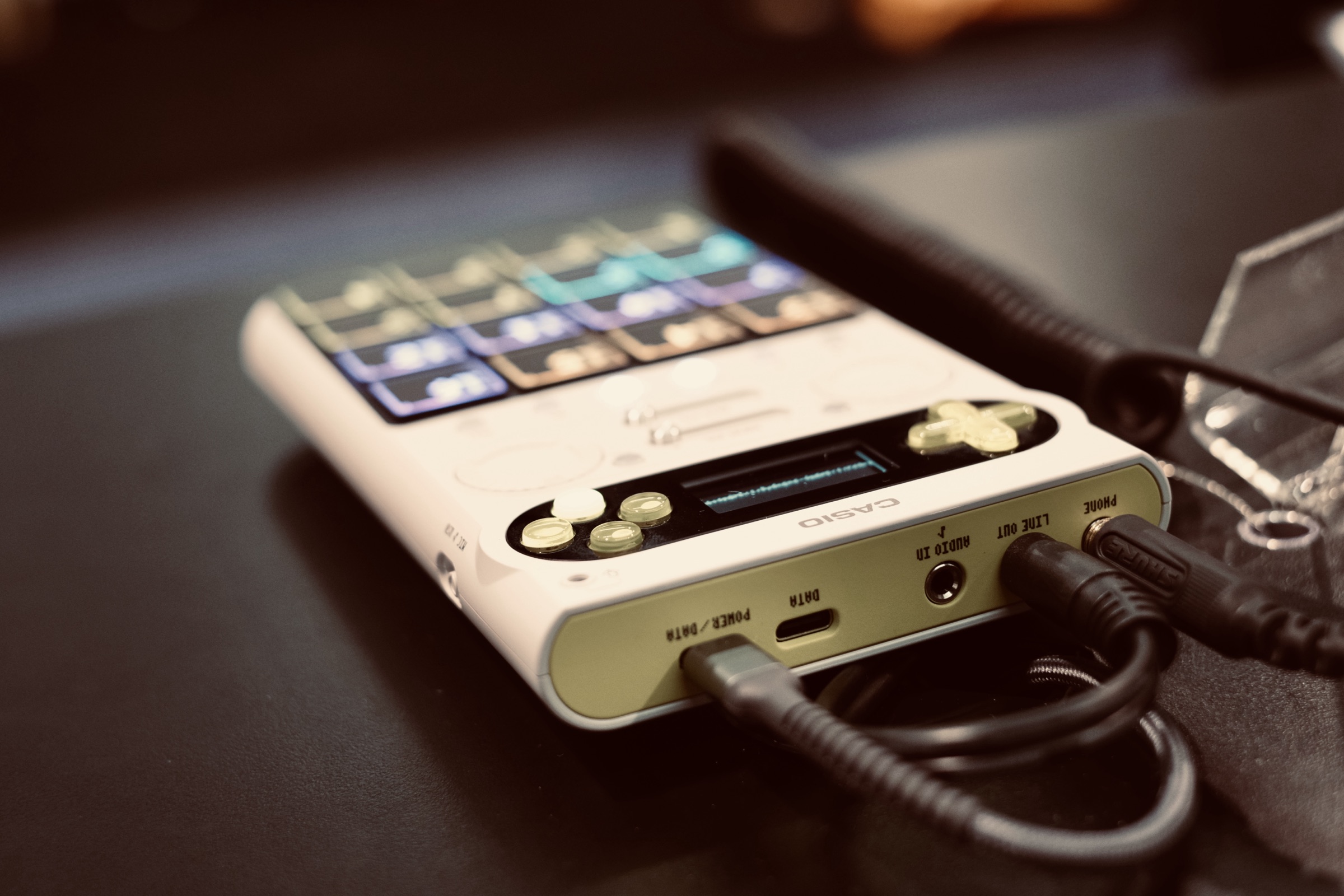
- Two USB-C ports: both allow MIDI and audio transfer over USB-C. The second port allows for power, so you can power the device and use the USB-C data function at once without a hub or passthrough.
- Runs on 4 AA batteries for… okay, actually almost no time at all, so bring a USB power bank or another device with some USB-C charge.
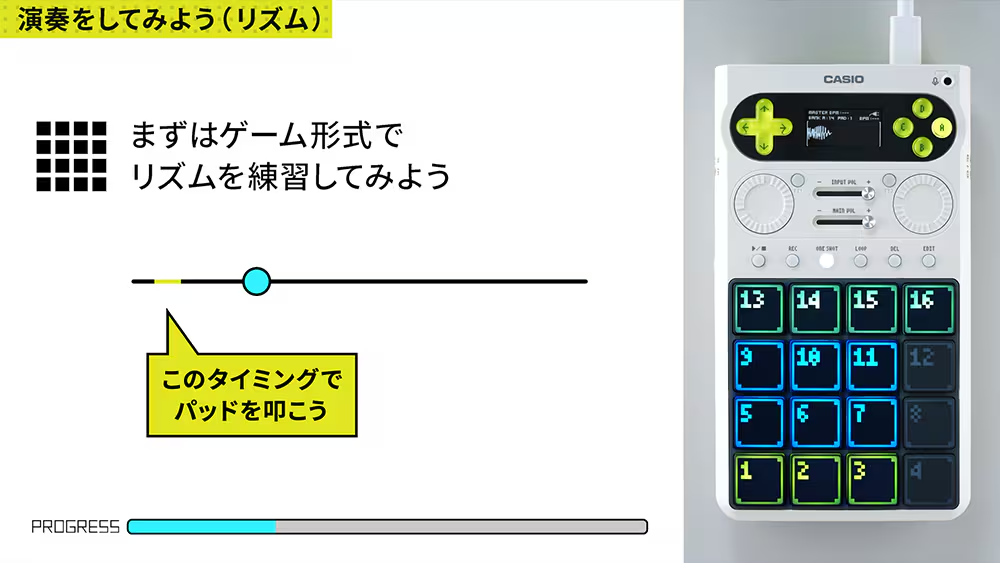
- Tutorial videos, with gamification, to learn beginners how to play and produce. (Or, alternatively, to teach Western producers who fly to Japan to buy this edition to learn Japanese.)
- Hip hop-focused sounds. (I’ve already talked about how much Japan loves the Roland SP-404, and honestly, it looks like Casio beat mighty Roland to doing a 404 nano! Whoops. The P-6 is great, but it totally doesn’t count.)
Onboard FX:
FX1: Filter, flanger, phaser, bitcrusher
FX2: 4 types of roll, 2 types of delay
I think the MIDI feature means this is also a handheld-sized, Game Boy-like drum controller.
Obviously in order to test this, you also need that Casio ring. (Casio is back, baby!)
The content part seems important. I’ll even wager that one reason the Japanese launch may have been announced without an international one — apart from the total mayhem in global supply chains right now — is that it sounds like there’s a lot of content to localize.
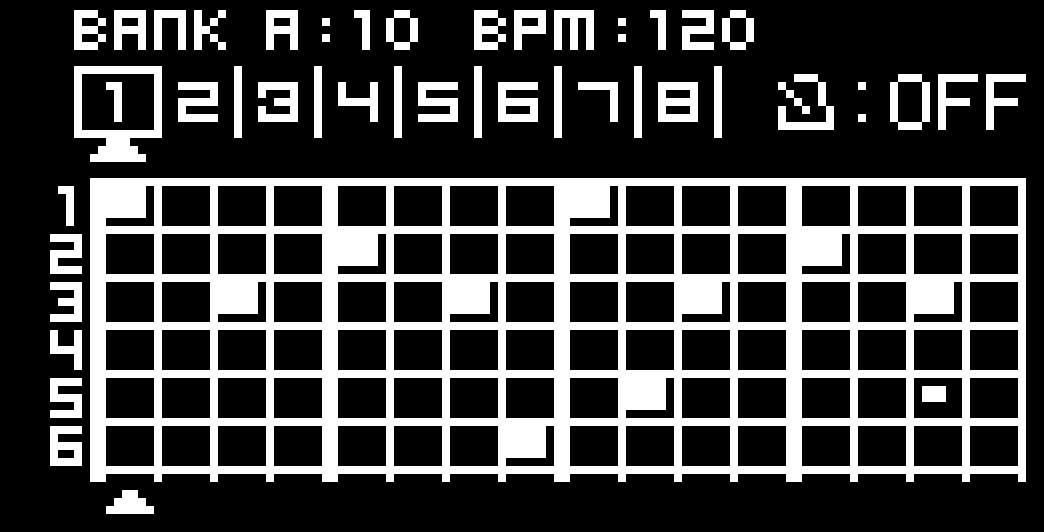
This may not have all the workflow of the MPC Sample. But it’s also priced at just ¥39,930. (about $250, at least on the streets there)
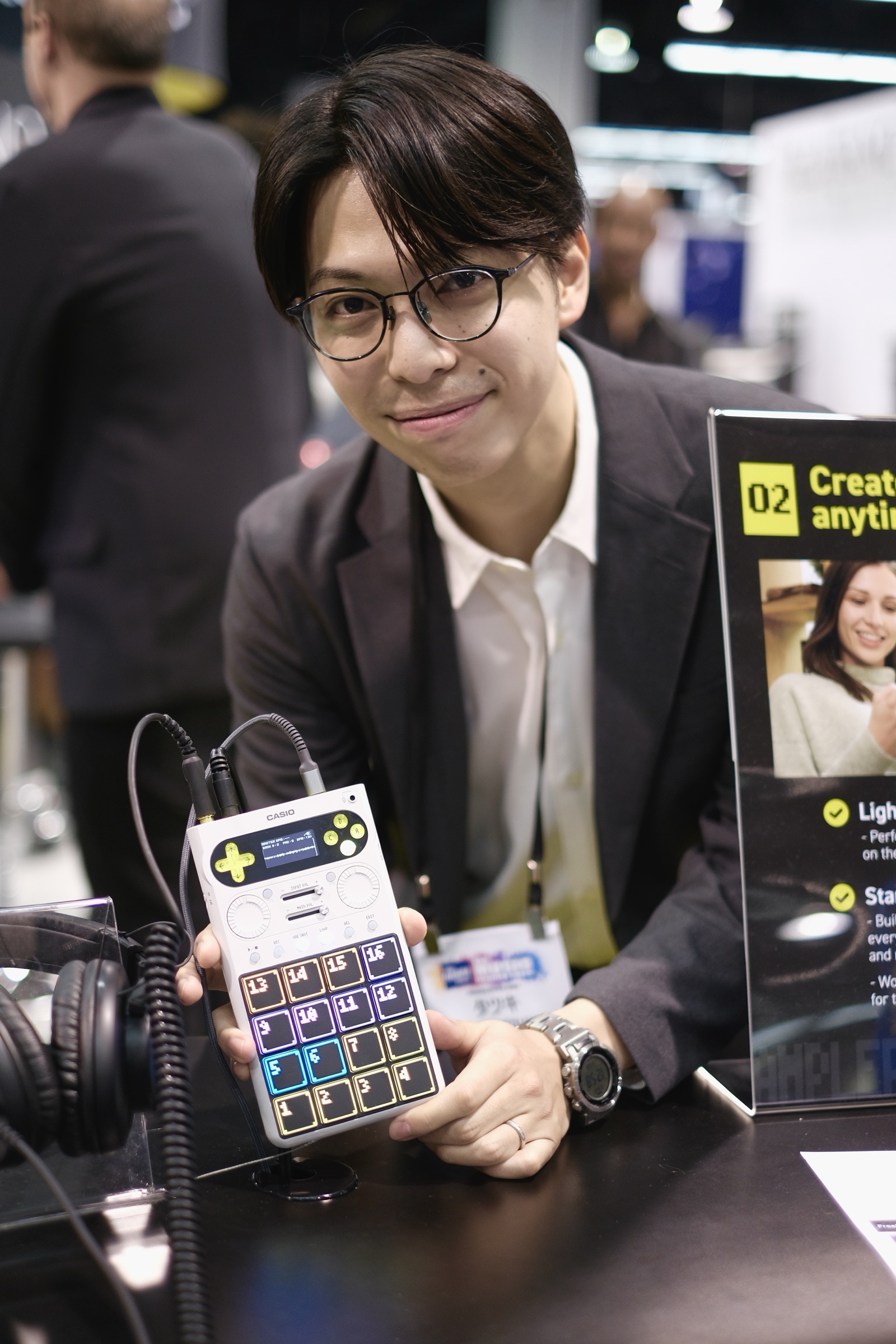
It also just feels like the right handheld size: big enough to have pads you can play and space to work, but small enough to hold in your hand — no other gadget does that.
I want to say something rationally here, but deep in my bones, I just want to eat a big bowl of katsu don (hey, they showed a picture of a lunchroom) and play with this.
Photos by Gösta Wellmer from NAMM: