It’s a Very Workshop System Jamuary. Music Thing’s patchable music lab-in-a-lunchbox has proved that small-batch personal hardware can attract a select, dedicated community sharing great stuff with one another. Let’s catch up with what’s been happening in that magical village of synth wonder in the past year. Don’t forget, the ideas and code here are all open — meaning this could inspire more.
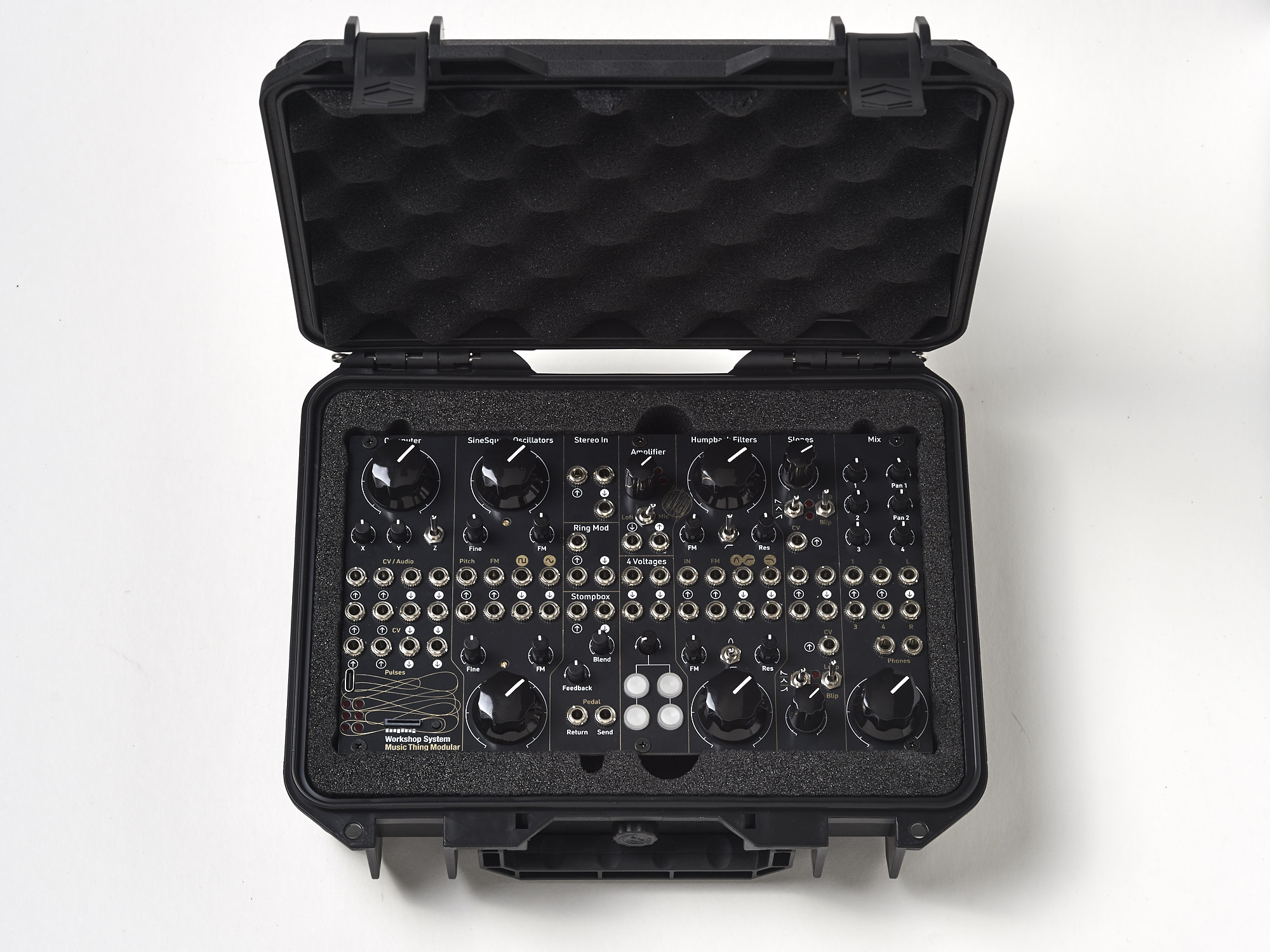
Over 20 years ago(!), Tom Whitwell’s Music Thing (the blog) was an inspiration and rival to this site. Now, Music Thing Modular carries on that name — now a platform for everyone’s imagination in hardware rather than on the screen. I got to catch up with Tom on what’s happened in 2025, to give you a snapshot of The State of Workshop System as we start the new year.
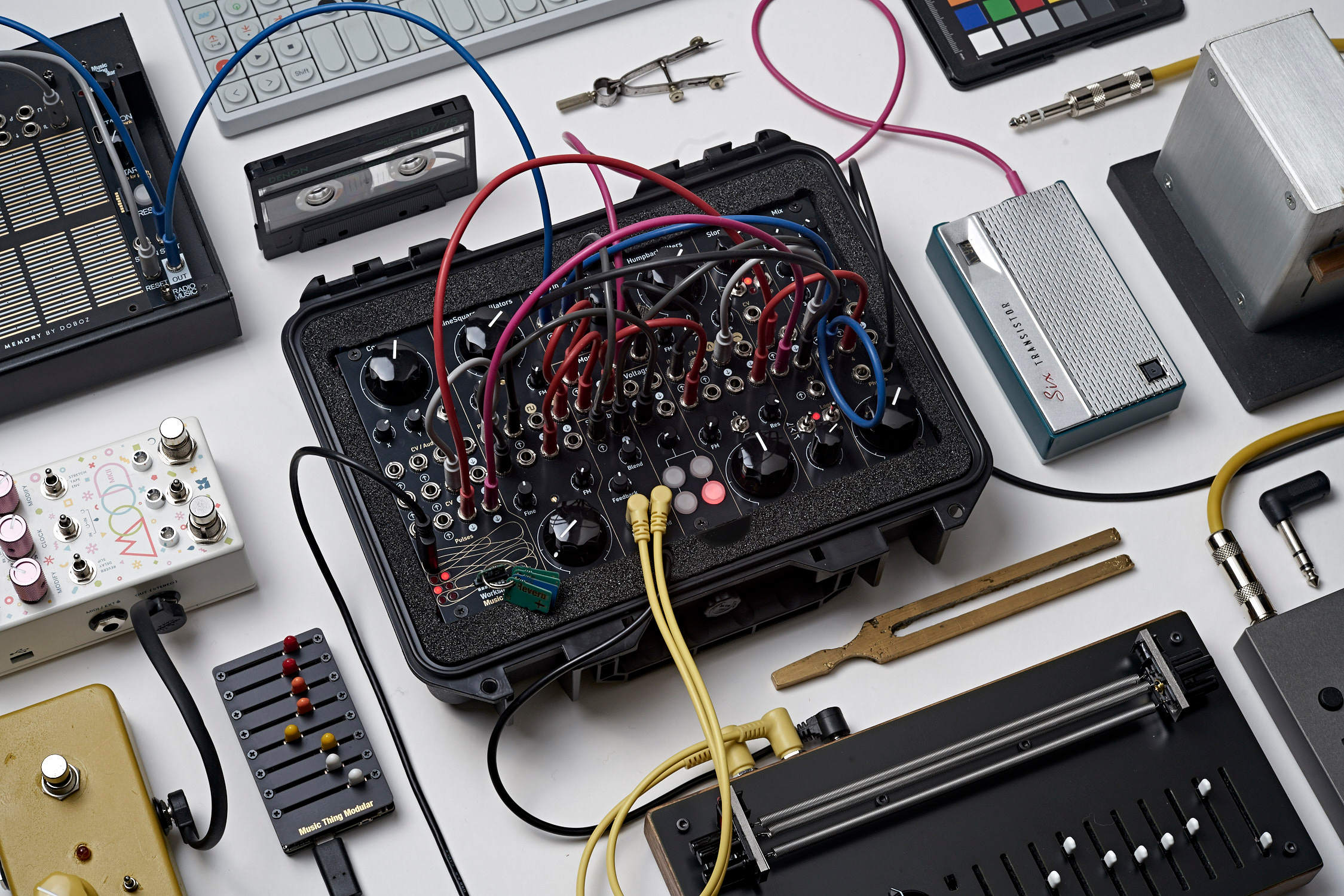
Quick refresher: the Music Thing Modular Workshop System is a complete modular system inside a hard case, sold as a kit or pre-assembled via resellers. It’s analog, but its centerpiece is the Computer module, a tiny brain that’s totally hackable with program cards — and that openness is what makes this round-up so interesting. Those innards run on the RasPi’s RP2040 32-bit 133mhz dual core microprocessor and 264K memory — way beyond the first computer I used as a kid. And anything that runs on that CPU works — Arduino, C++, and Circuit Python, for instance.
For more, you can read my original write-up on the Workshop System.
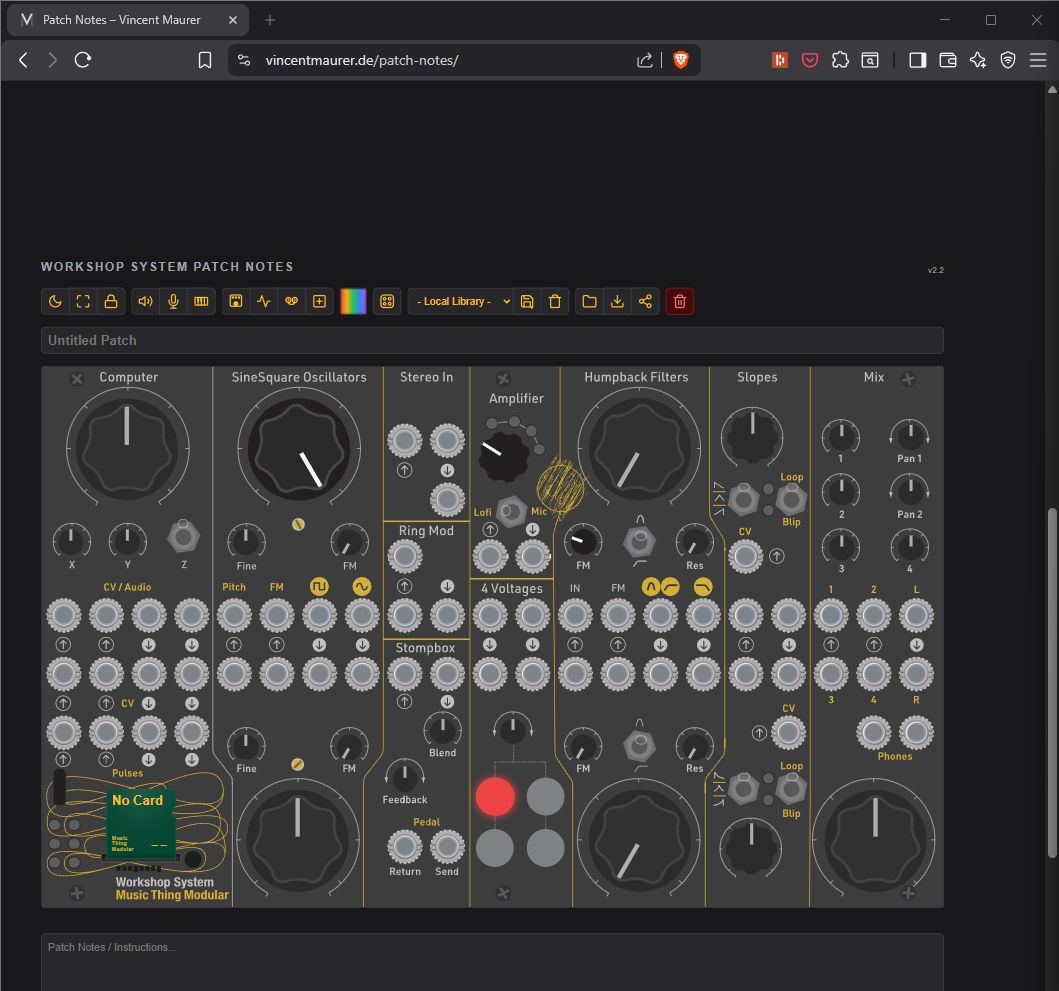
Workshop System in a browser
Patch Notes by Vincent Maurer clearly started as just a way to store patches as you would in a notebook, but grew. It’s a fully patchable simulation with audio, MIDI keyboard input, and external audio input — at least an approximation. You can save your patches locally as JSON, PNG, and PDF, and load JSON and PNG files locally or via sharing link. I’m convinced this sort of thing (plus text) is the future of documentation.
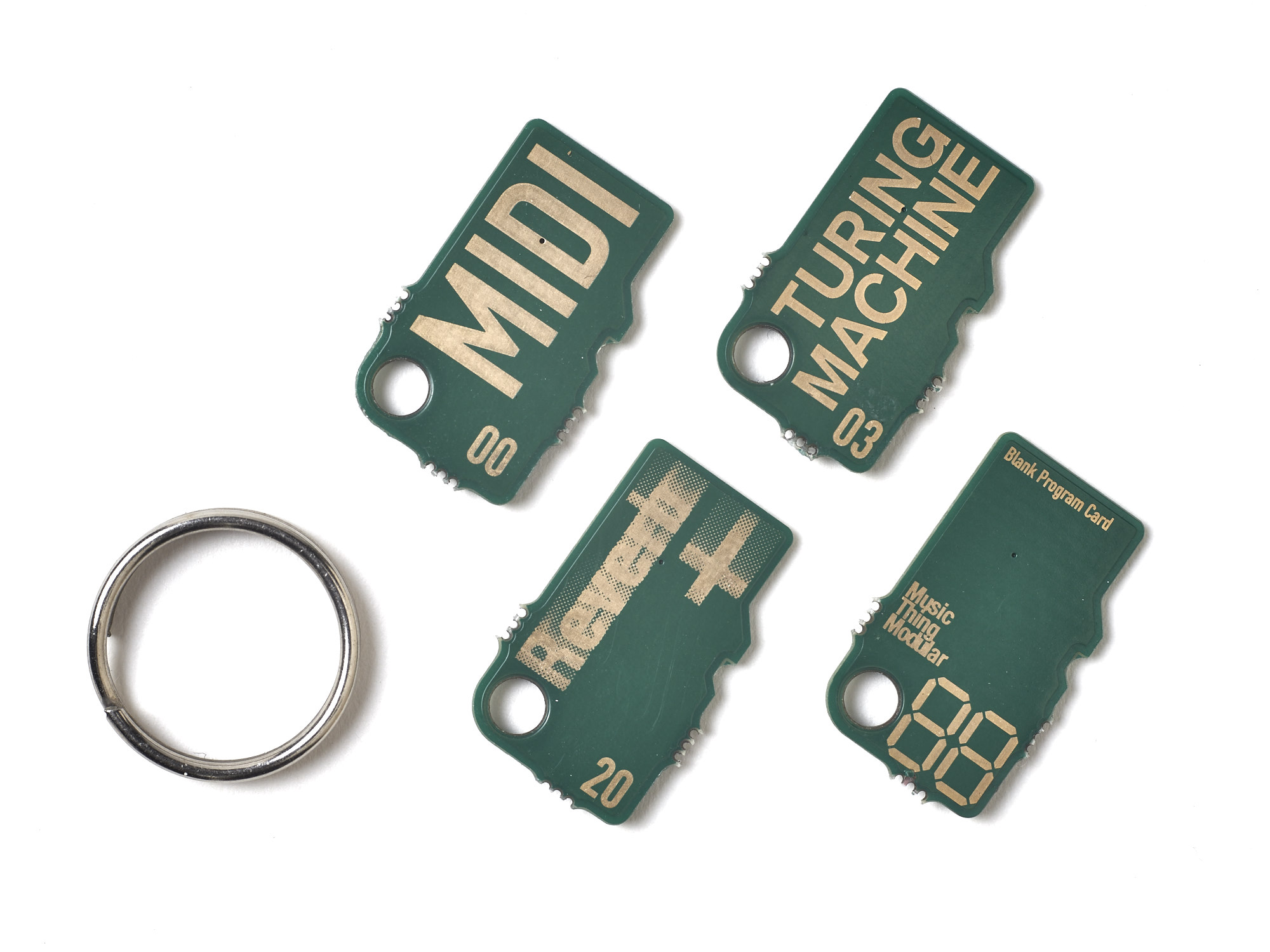
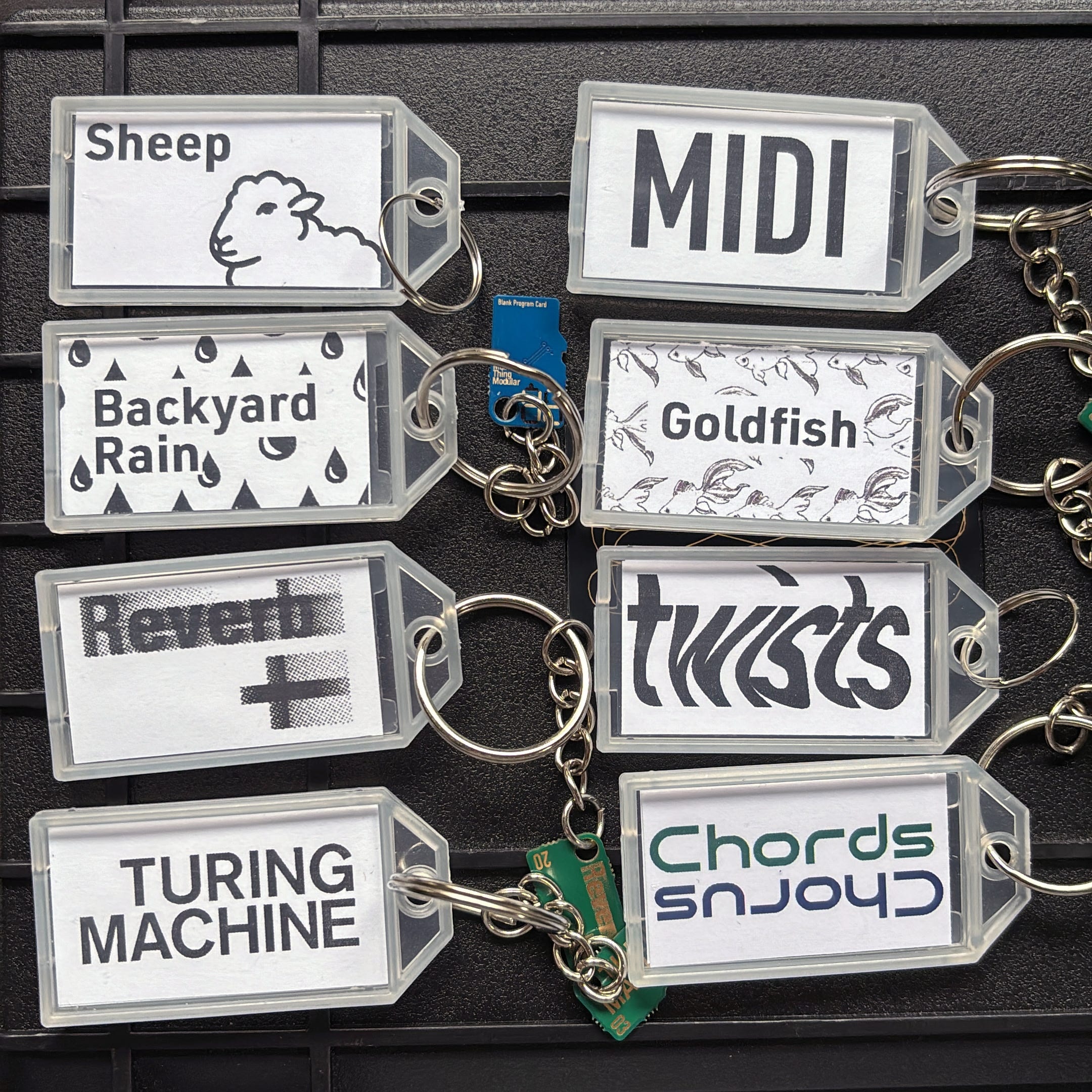
Dune Desormeaux’s amazing blockbuster program cards
Not everybody that picks up a Workshop System is going to create their own program cards. But the handful of folks who have are doing mind-melting stuff. Dune Desormeaux has been especially prolific.
Goldfish is a lo-fi delay/looper effect with modulation — short memory, ya know, like a goldfish.
BYO Benjolin augments the modules already in the Workshop System with everything you need to do something “rungler-y,” inspired by the legendary Benjolin designed by Rob Hordijk. (Some history)
Sheep is a granular effect with pitch shifting and time stretching that uniquely comes in both lo-fi and hi-fi versions. It’s Clouds-esque, yes, but it’s its own animal. And that animal is the sheep. (We’re one big happy granular family here; somehow, there are always little tweaks and twists, especially as details like buffer size, window, and various quality decisions have an enormous interconnected impact.)
Blackbird is the one actual port/remix — it’s monome crow compatibility (an open 2hp module with Lua processing and I/O), running on Workshop System, plus some extras beyond crow.
What does that mean? (Crows, sheep, what’s happening?) It gives you a few superpowers:
- Live code from another computer running druid
- Connect a monome norns via USB for norns interactivity, as inawake, buoys, loom, even alongside monome grids
- Use Max and Max for Live interoperability and existing patches
Here’s the original crow hardware:
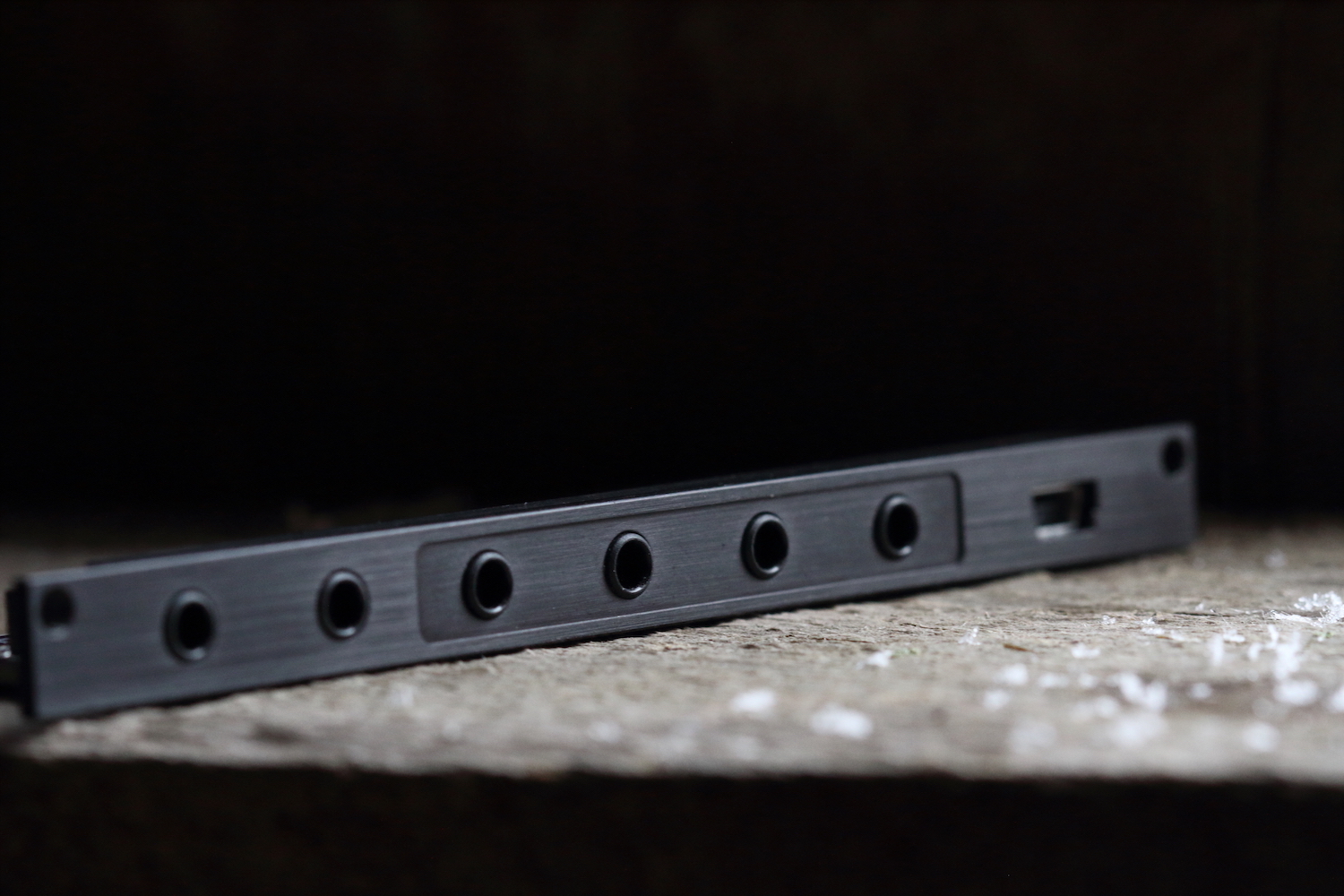
Write and upload your own (simple) program cards in the Lua (5.4.8) language. Upload to the WS computer via the “u” command in druid (on a non-WS computer). Uploaded scripts are saved to flash on the physical card itself– So you can write many different blackbird cards and hot-swap! If you want the name of your patch saved to flash for future reference (printed to host at startup) make the first line of your script start with three hypens ---.
2. Vincent made a completely playable, patchable Workshop System in a browser:
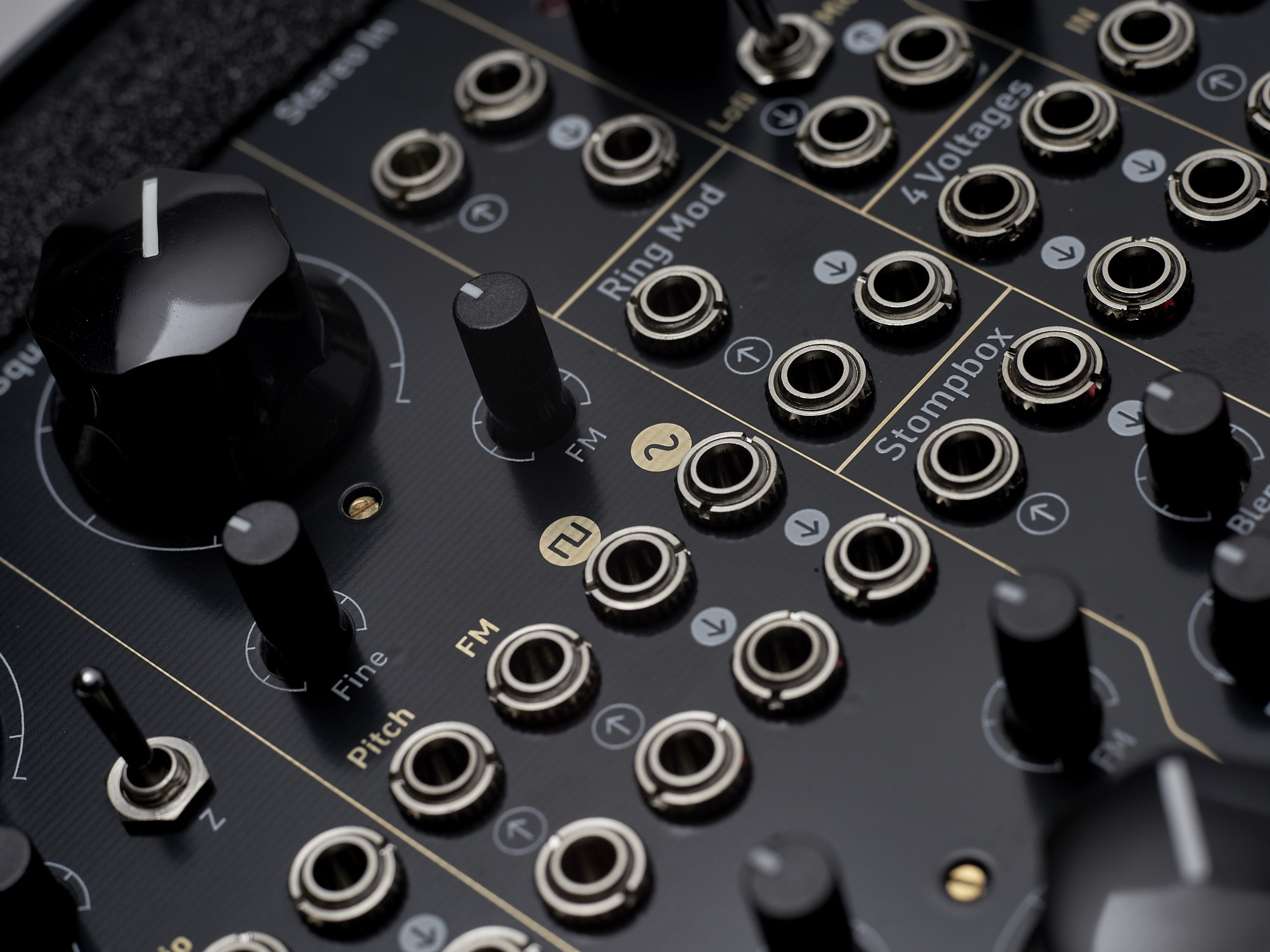
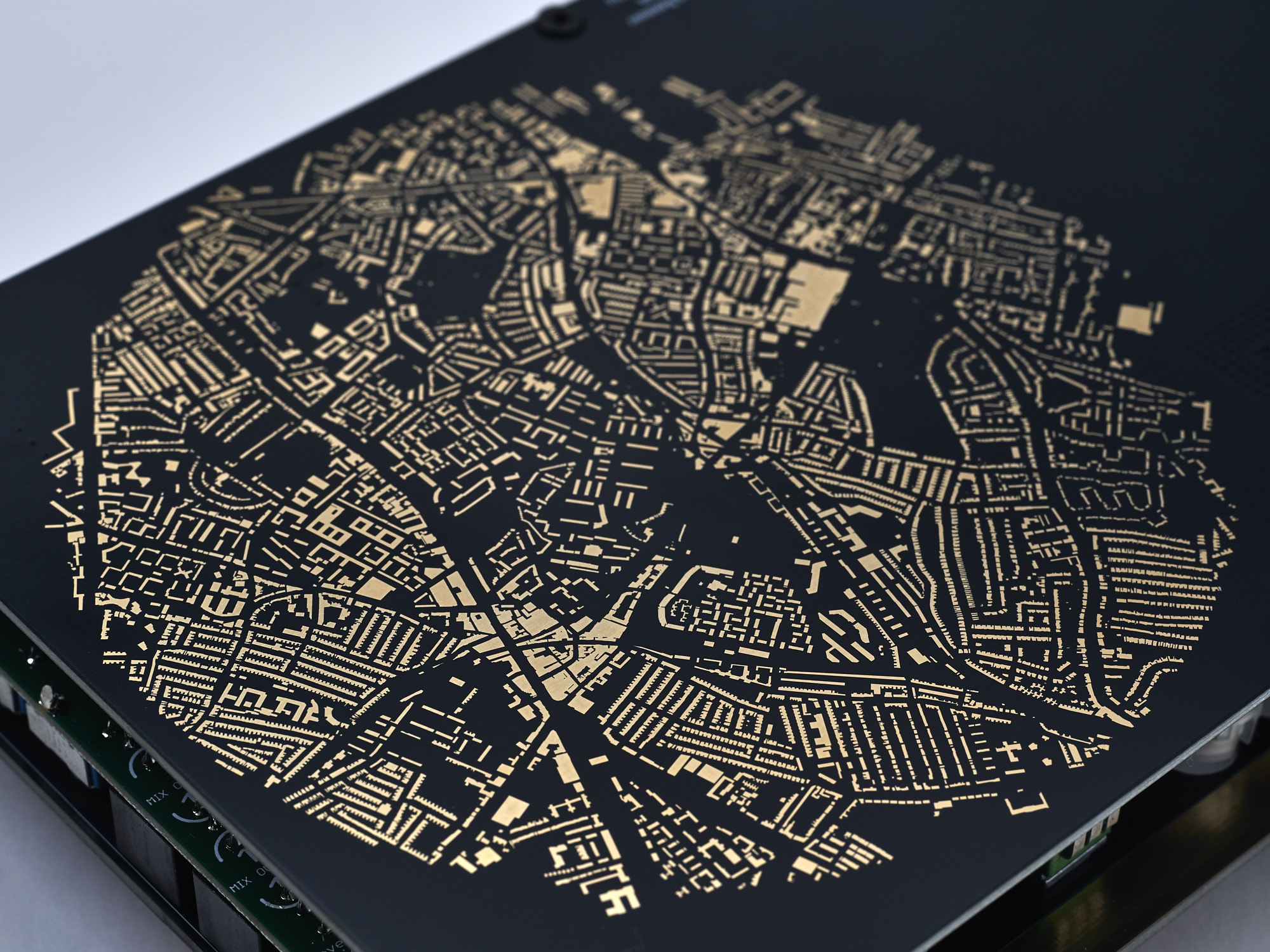
Utility Pair: Deluxe Edition!
Utility Pair was an ingenious Advent Calendar for 2024, which I wrote about at the time. The pitch: each day of advent meant a new pair of effects tricks — two ideas, one program card.
For 2025, there’s a new talking user interface, and most importantly, a dual effects card with some 576 possible settings, all in a single download:
https://www.chris-j.co.uk/utility_pair
And really every day should be Christmas Day 2024, with all the goodness in there.
Toolbox … and a randomly-generated print book
Divmod (Oliver/@olt) has created two brilliant add-ons for Workshop System.
Patch the Random is a printed book that contains 200 randomly-generated patches. That’s right — this puts print-on-demand to work, by custom-producing a selection for you and only you. (Take that, Random House!)
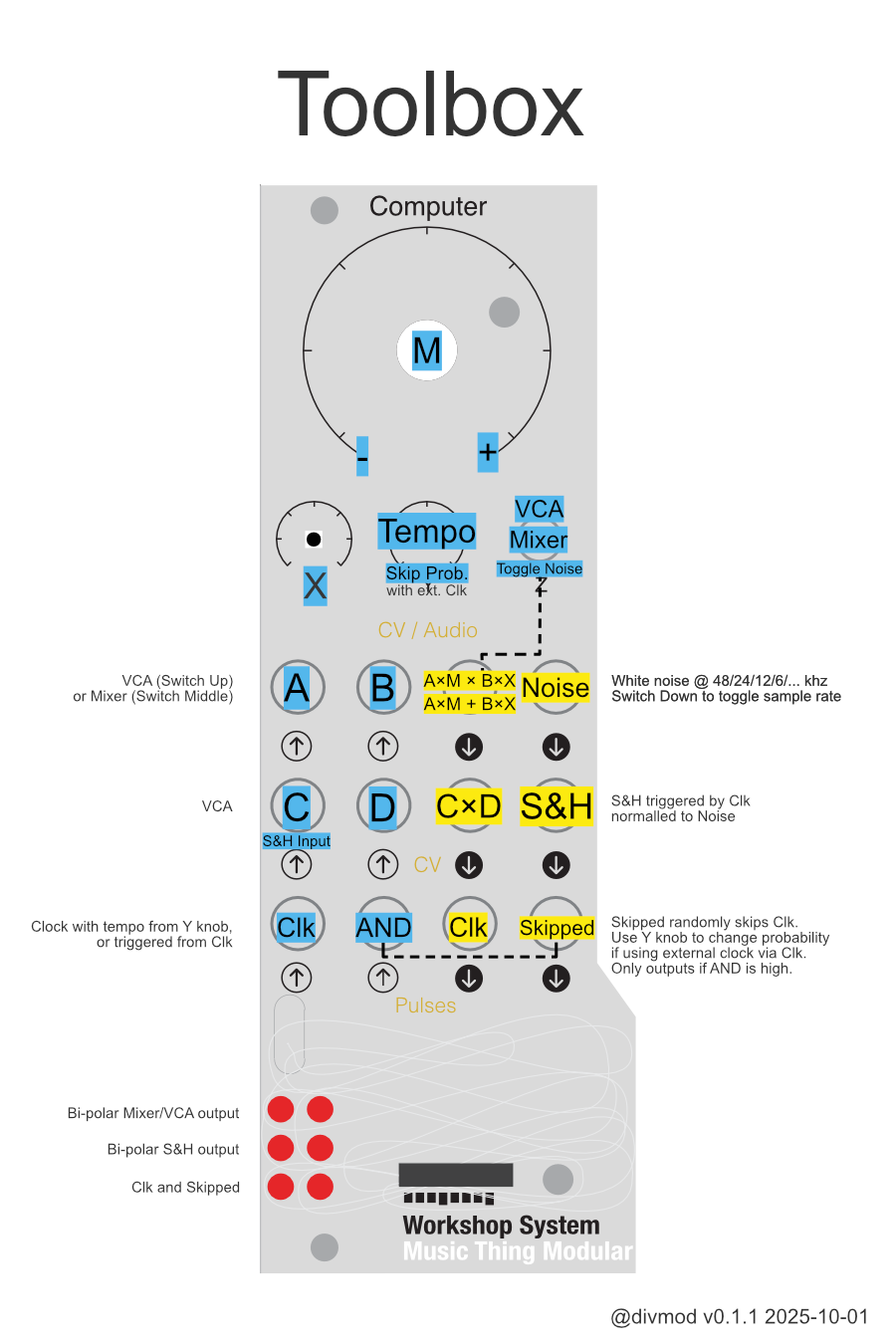
Plus he’s made the lovely Toolbox program card:
It’s inspired by the utility section of the 0-Coast. It has a mixer/VCA with attenuverter, a second simple VCA, S&H, clock generator, clock with probability and a noise source with different types of noise (different sampling rates).
Ben Regnier’s history-inspired patching tools
Ben Regnier built cards that take two ideas from patching history:
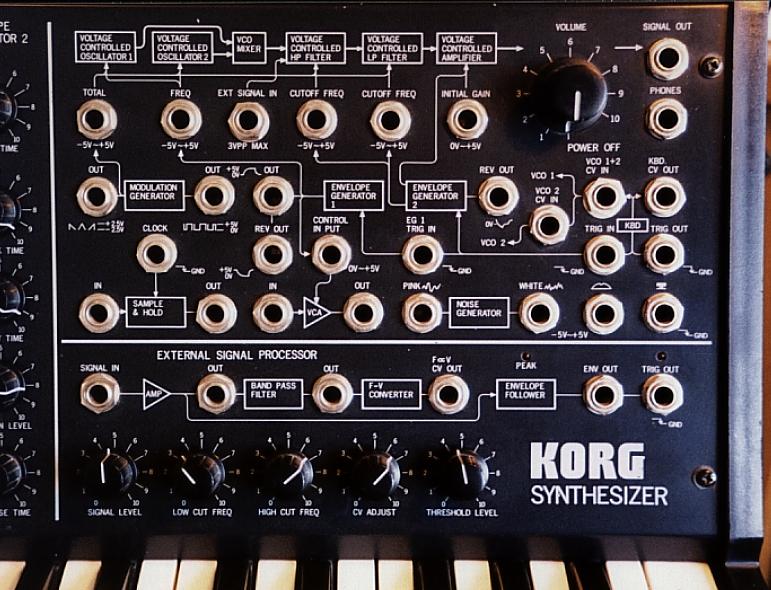
ESP is inspired by the iconic MS-20 External Signal Processor section, giving you a preamp, bandpass filter, envelope follower, gate, and 1v/oct pitch outs.
Vink is a program card sporting dual delay loops with sigmoid saturation, intended for feedback patching in the style of Jaap Vink and Roland Kayn. What’s that now? Let’s see it explained in a video:
Workshop workshops! Loaners, ensembles, AM radio!
In addition to working away in his literal woodshed, Tom has been doing the real-life workshops the system’s name implies. And these Workshop Systems are more than meets the eye: “At the Dyski Radio Music residency in Cornwall we used modified Workshop Systems that work as ultra short range AM radio transmitters,” Tom tells us. We’ve got photo evidence of these.
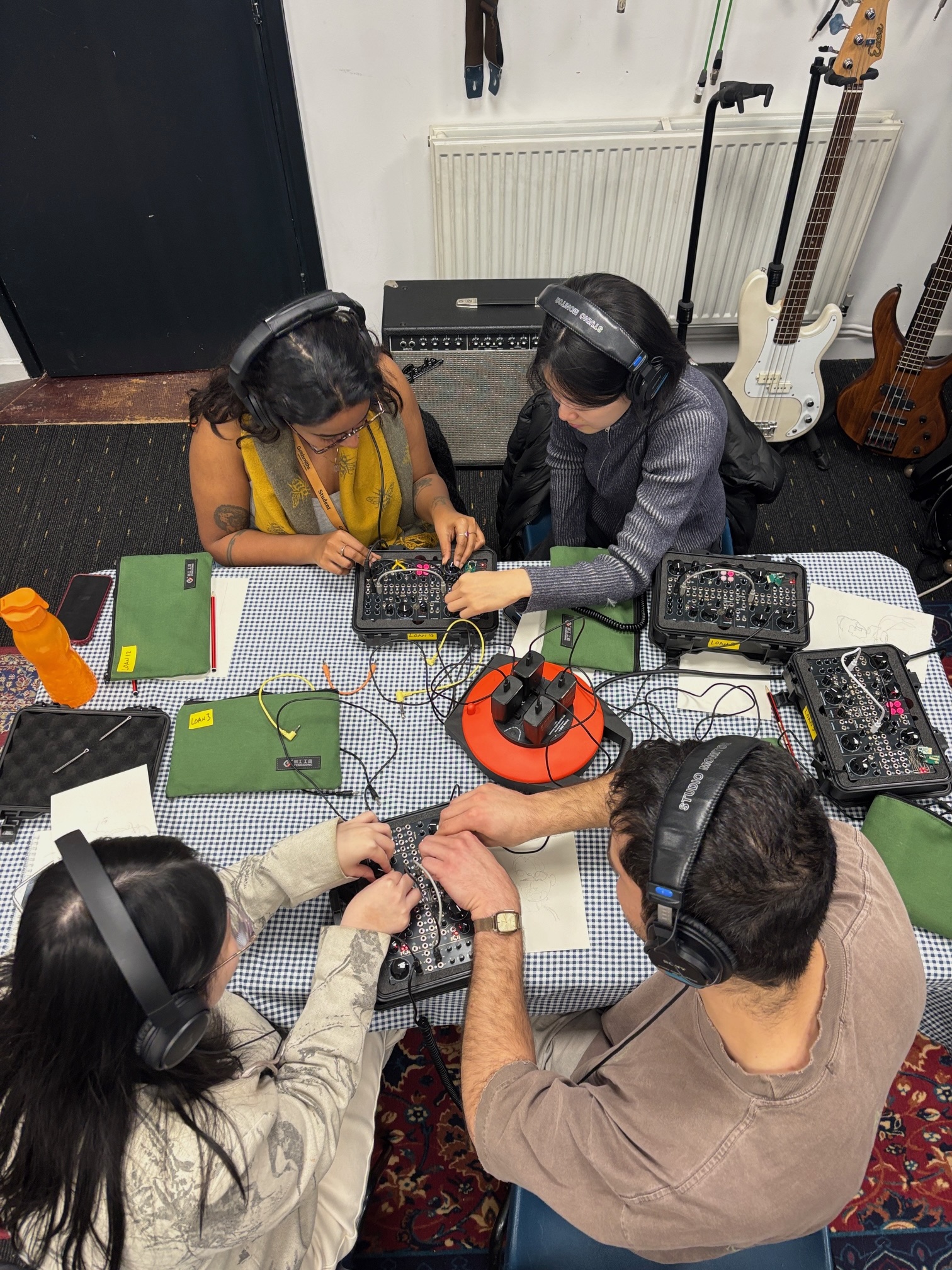
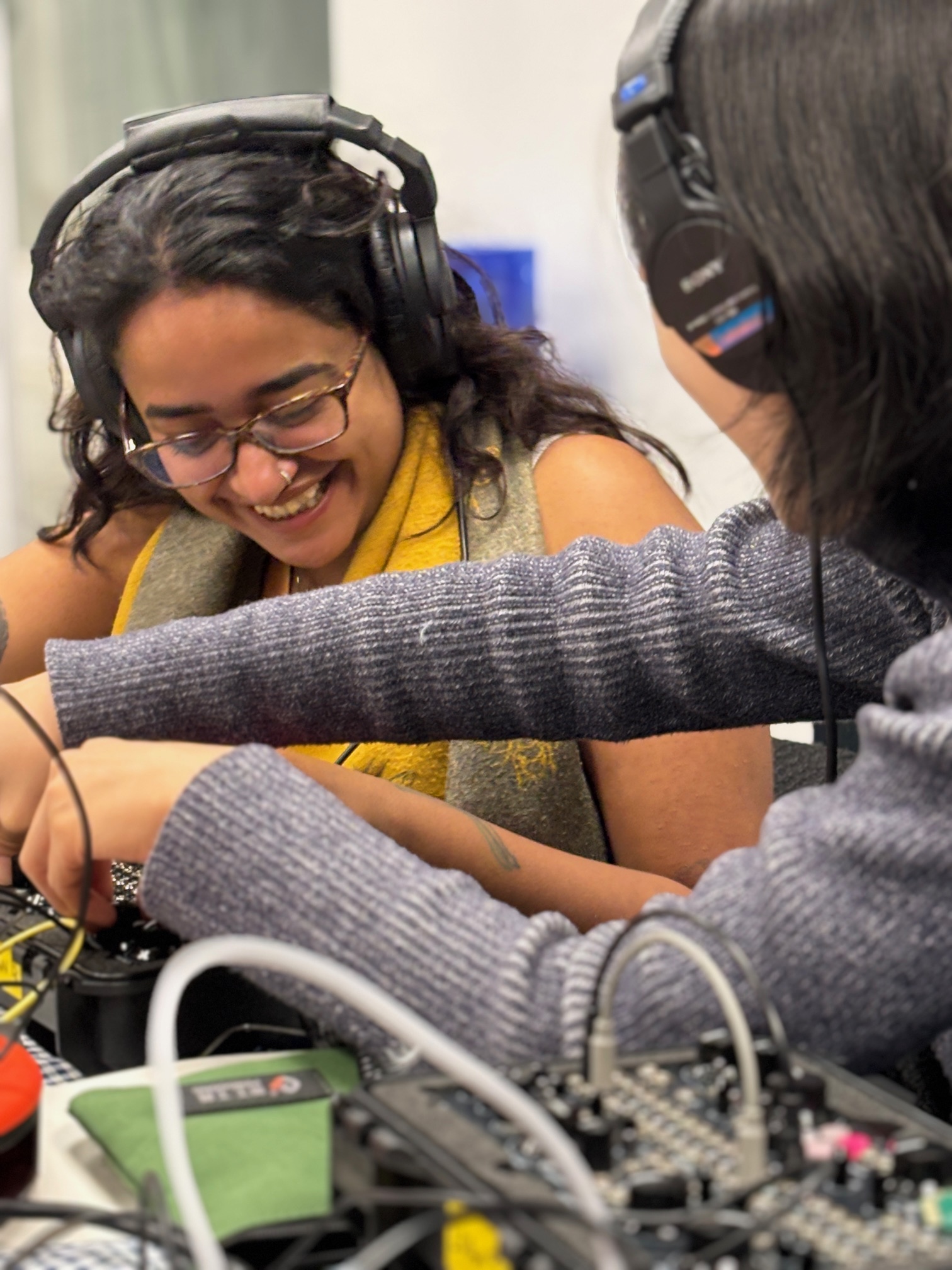
Tom has also been sending Workshop Systems out on the road, he says: “Jake Mehew (a Richie Hawtin PhD scholar at University of Huddersfield) borrowed the Workshop System loan set to run a workshop with students and create a Workshop Ensemble who played live in Leeds.”
And more: “A bunch of South London improvisers borrowed Workshop Systems for a gig, playing in duos and quartets,” Tom says.
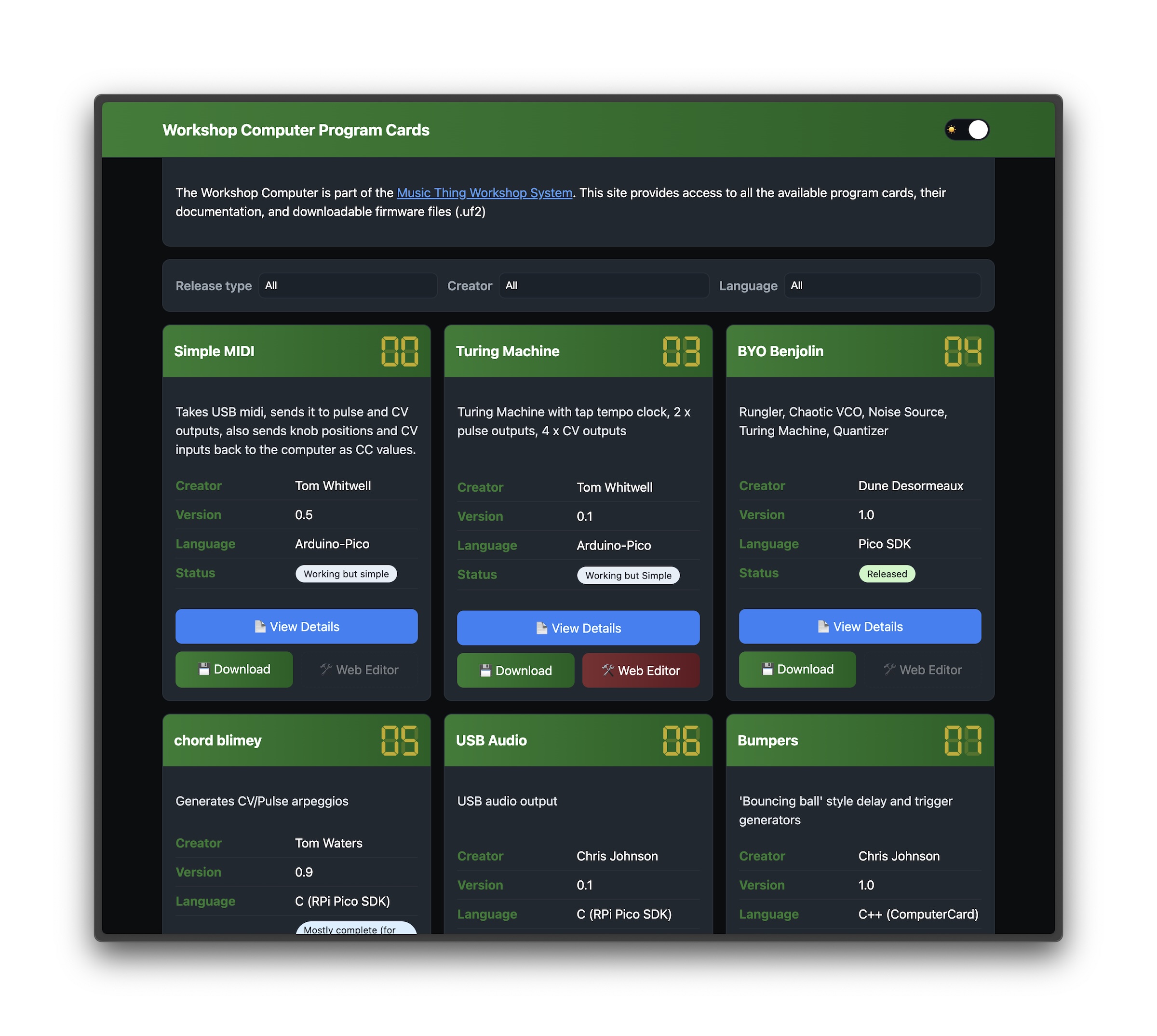
Where to find program cards
Find, document, and download program cards via this new system created by j__r0d:
https://tomwhitwell.github.io/Workshop_Computer
Where to buy
In addition to Thonk, the list of stockists has grown, both for finished systems and kits (depending on reseller), shipping to your part of the world:
Signal Sounds – Glasgow
Perfect Circuit – California (both kits and, coming soon, assembled)
Exploding Shed – Leipzig
SchneidersLaden – Berlin
SchneidersKeller – London (the new UK outpost of SchneidersLaden)
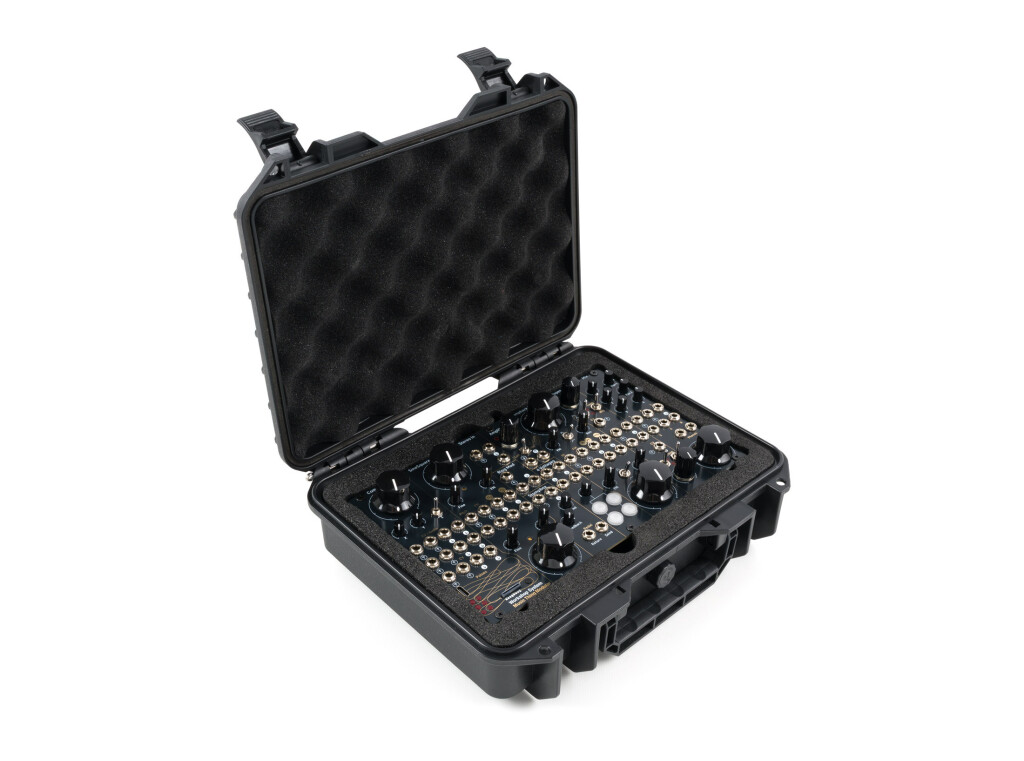
Photos of Workshop System: Marcus Fischer. All images courtesy Music Thing Modular.