Again and again, music communities in Lebanon have embraced mutual aid and spoken out through activism and in their art. That’s been true from experimental music labels to the Beirut Synthesizer Center initiative. They’re getting results. It’s time for the international music scene and press to do more.
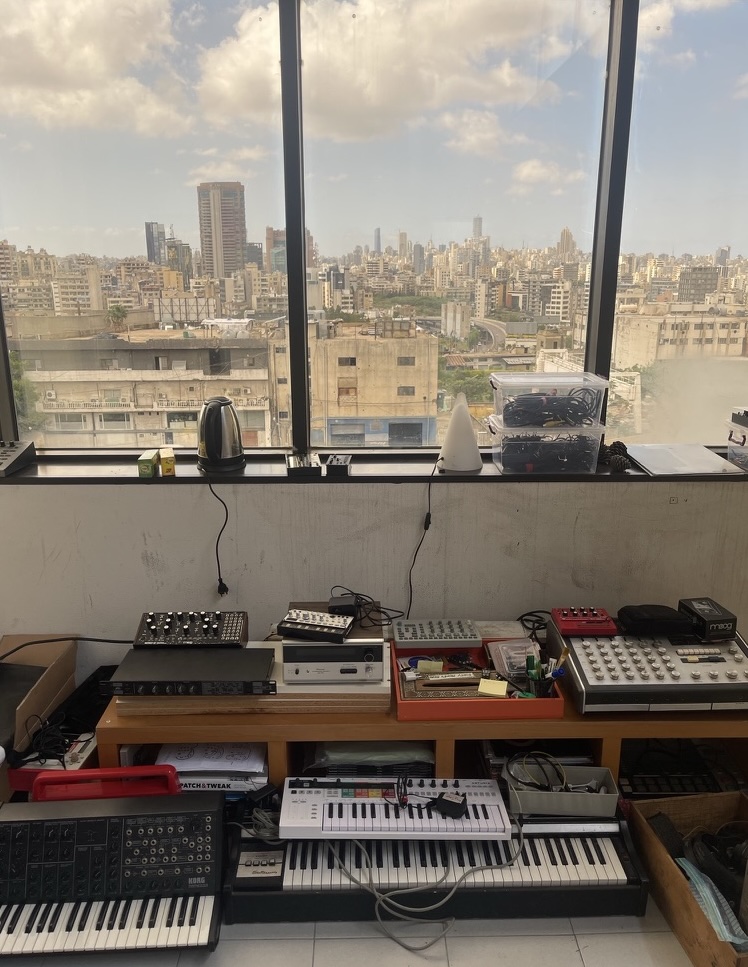
I was preparing some updates on music I care about, always with the feeling that I wanted to just write about that music and not have it tied to a fundraiser or news. That’s not for me, really; I wanted that for the artists, especially as some are friends. But I was also struck by the measurable good these initiatives were doing. And then, all Hell broke loose yesterday — a hundred Israeli strikes across the length of Lebanon targeted civilians and crowded areas, including in central Beirut.
In times of grief and trauma, the last thing artists want to do is celebrate themselves. And Lebanese people, both inside and outside the country, are right now overwhelmed with horrifying scenes and checking on friends and family. Yesterday was focused on blood donations, for some perspective; the WHO told Reuters today that basic medical supplies are running out. Mass forced displacement, well over a million people, and direct Israeli targeting of medical personnel and infrastructure have created horrifying shortfalls. Megaphone in Lebanon does a great job telling the story from a personal, independent perspective; their Instagram feed is currently most up-to-date. (English language subtitles or translations are almost always available.)
This dims the hopes for the safety of people across the entire region. It should speak to our basic humanity, which is now threatened everywhere.
Lebanese artists, despite all the challenges of having one of the least mobile passports in the world, have made themselves part of an international scene. They’ve invited artists to their country. We could use more international media returning the favor — and music can do what a lot of our mainstream Western news outlets are not, and really listen to voices on the ground.
Shawn Reynaldo, whom I’ve known from what feels like another lifetime, has done a terrific job in his independent writing. I endorse all of these artists, in case you didn’t know.
The Experimental Sounds of Lebanon [First Floor newsletter — unlocked/free]
This week, he offers an update:
First Floor #307 – The Shadow of War
I’d link to other international writers, except they’re largely ignoring this.
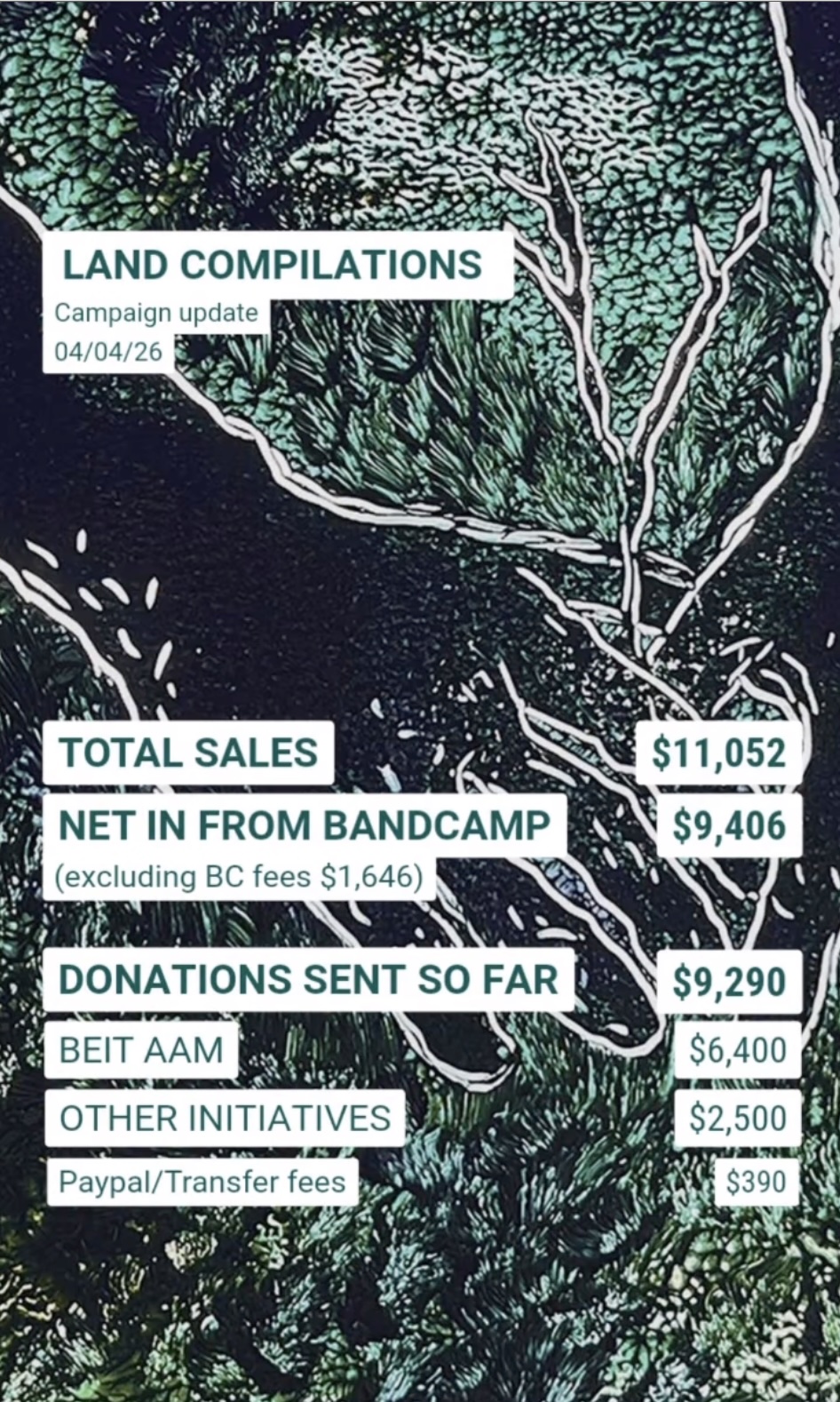
A vital update: I wrote about the Tunefork Studios/Beirut Synthesizer Center fundraising efforts last month. They do what good, transparent operations do and have reported the donations. And these are meaningful; they translate into a lot of actual food and relief on the ground. I think the only disheartening number is the Bandcamp fee; see my link at the bottom if you want to donate directly, and we should keep talking about Bandcamp alternatives for this kind of situation. (That shouldn’t discourage you from using this as a tool, though!)
Land 03 (أرض ٠٣): A compilation for the displaced in Lebanon
Land 02 (أرض ٠٢ ): A compilation for the displaced in Lebanon
Out of Tunefork studios came one of the early stand-out albums of the year, the extraordinary Al Wahem الوهم by PRAED.
And there’s more music to talk about. Mayssa Jallad continues to weave the urban history of Lebanon into ballads; last week on the iconic Ruptured Records, she turned to the Ain el Helwe refugee camp and the Taamir social housing project near Saida.
From a completely different part of the spectrum, Sickrose Audio has been exploring “harmony between decay and allure in uncharted canvases.” They’ve channeled some of the darkness of the present moment into a compilation they’re also using to direct 100% of collected funds to relief. To me, this feels personal and cathartic — thinking in particular of the resoluteness of “Riptide” by Rise 1969, who I got to play alongside on my first trips to the country. The whole record has the feeling of runaway nights, some sort of determination through all of these nightmares.
As they describe it (excerpt, do read the whole notes):
Althea comes from a place of heaviness.
Lebanon is going through one of its darkest moments. War has taken away safety, stability, and peace of mind. People are being forced from their homes. Families are separated. Lives are paused in uncertainty, fear, and grief.
It’s impossible to celebrate without acknowledging this reality.
What you can do
We don’t need a complete analysis of the region’s history; I’d love to just see music publications support these efforts more widely than they presently are.
Meanwhile, we can all spread the word, share the music, and give and act. Giving is a first and necessary step. Let me not overwhelm you with choices for once.
Lebanon Emergency Relief is an easy starting place. It just hit a goal of 100,000 EUR — let’s hit 150k.
Lebanese writer Ayman Makarem (Politically Depressed) has been doing great, daily organizing, and is offering a film screening of his work associated with that fundraiser. Ayman has long been a voice for mutual aid, including queer mutual aid — and I mean actual mutual aid, not just fundraising.
And once you’ve given some money and shared some music, you should do more. It’s out of range for me to figure that out all of that here for CDM’s wide readership, but we can use our music and music tech networks to talk to other people to stop this senselessness.
What I will say to US readers is that Rep. Rashida Tlaib had already introduced resolutions, so there is Congressional action, there are other media, economic, and direct ways of applying pressure.
Please, for the entire region: let’s do that so everybody can have the luxury just to think about music freely again.
Previously: