Roland’s new flagship drum machine leaked everywhere. But we’ve got details on what’s new under the hood, including specifics on analog voices, expanded ACB modeling and other digital features, and new sampling powers, direct from the source. You wanted a new monster from Japan? You got it.
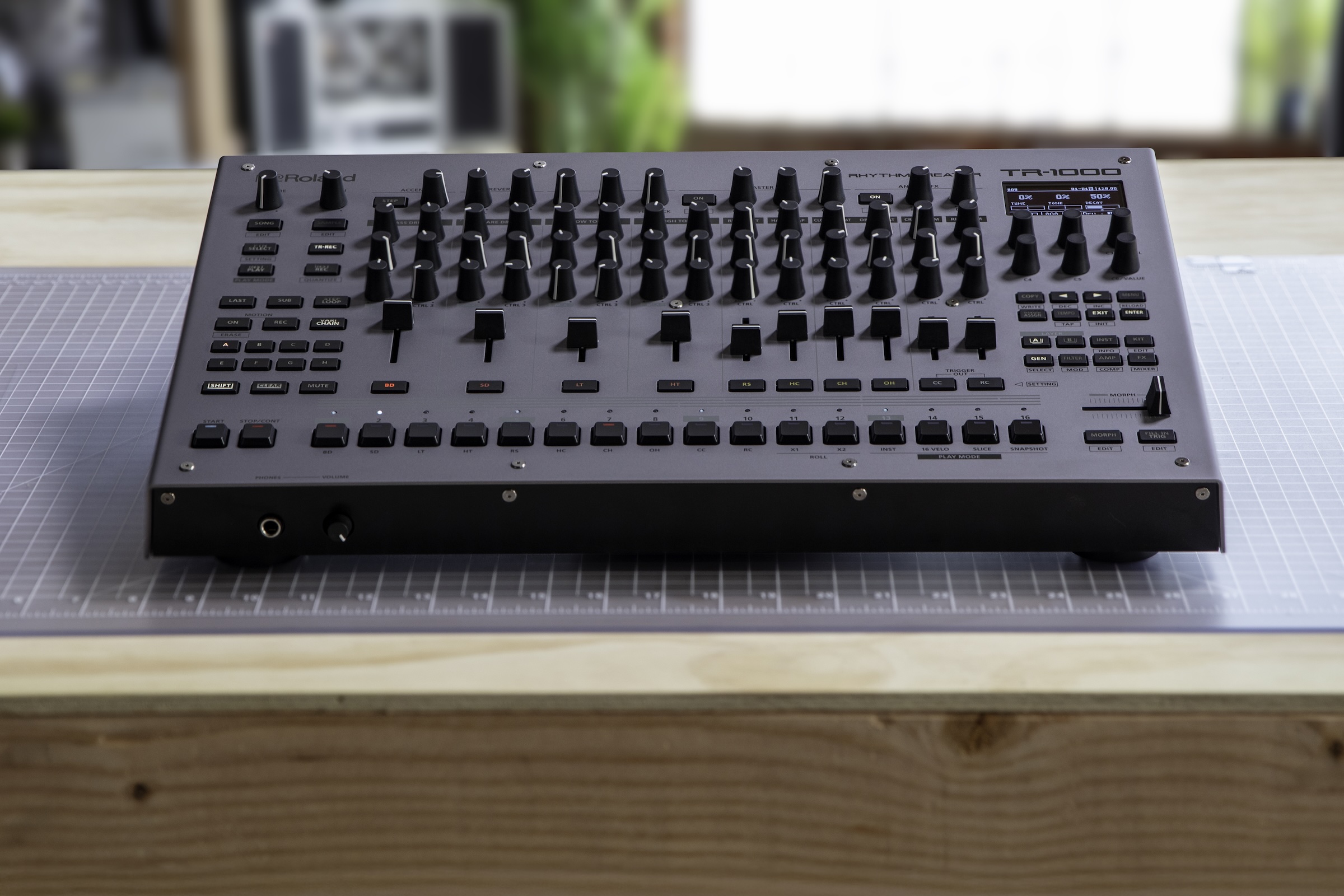
I’m going to wade right around the flood of videos and get into answering some questions I’ve seen come up after the leak.
Some of you did already know the price. And yes, this is a flagship at a flagship price, putting Roland back into that category for the first time since the MV-8000. (The MV-8000, too, was roughly this shade of gray — the kind of detail you might notice but Roland probably remembers.) Just remember, the TR-808 would cost around $4,698.44 in inflation-adjusted dollars — pre-tariffs.
This model:
EURO €2,699 inc VAT RRP
GBP £2,286 inc VAT RRP
MAP is $2699.99 USD
¥329,868 JPY
What’s interesting about the TR-1000 is that it’s not just a repackaged box full of stuff Roland already makes. The analog voices are all-new. That includes the analog filter circuit: while it’s inspired by classic Roland OTA filters, Roland says it’s a new design. The modeled ACB voices are expanded with new “circuit-bent” capabilities; they’re not just the TR-8S ACB voices. The sampling features, while related to the SP-404MKII, include additions like non-destructive sampling.
Even if Roland had just added the best of a TR-8S, an SP-404MKII, and new 808/909-inspired analog in a new box with a bunch of dedicated knobs and shortcuts, that’d already likely please a lot of people. But it does look like they’ve upgraded those components, which means this box is also worth a look as a sign of where Roland is headed.
Let’s break down those specifics, because what you got from the leaks is not the whole story. Here’s a more detailed preview.
Analog
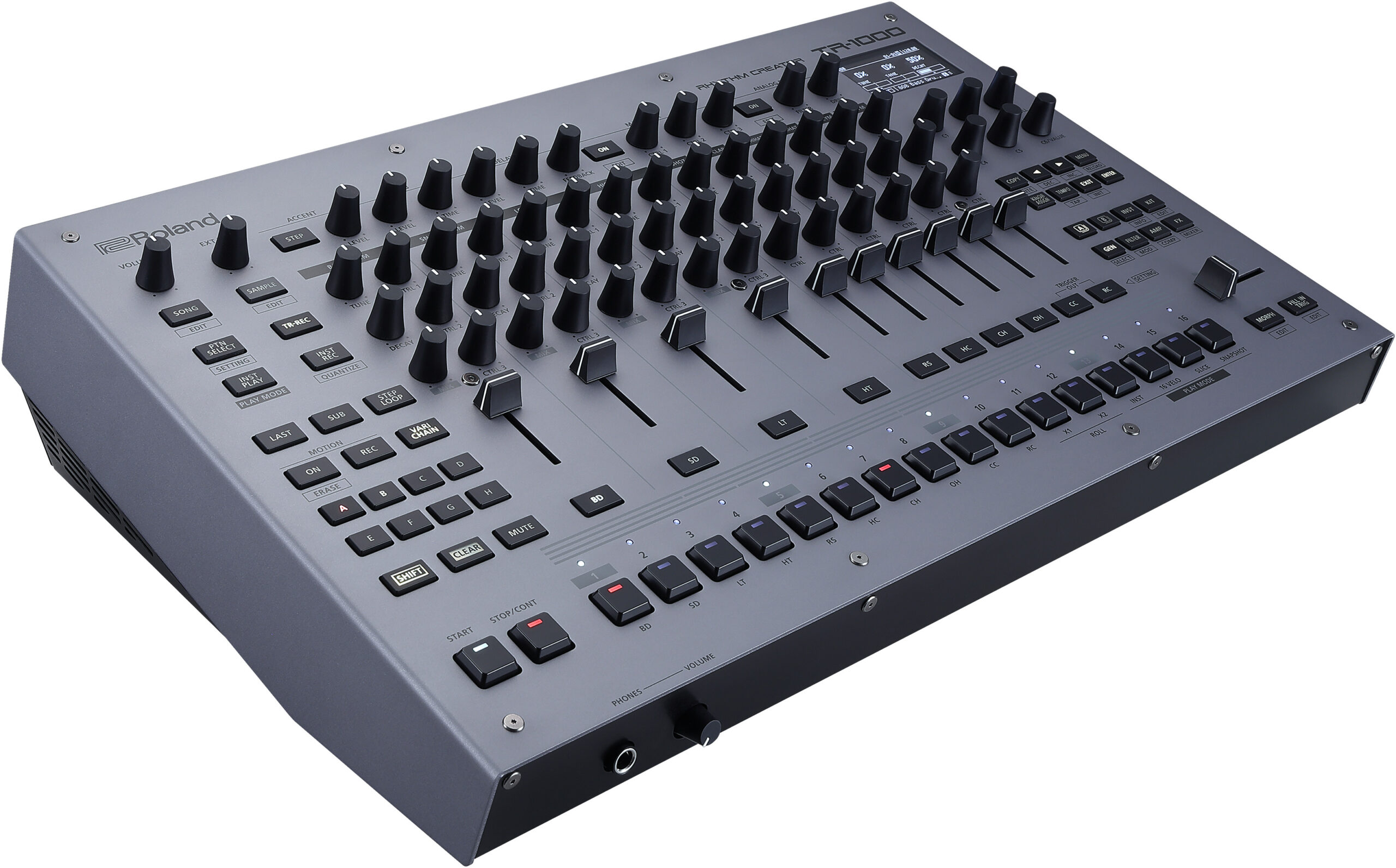
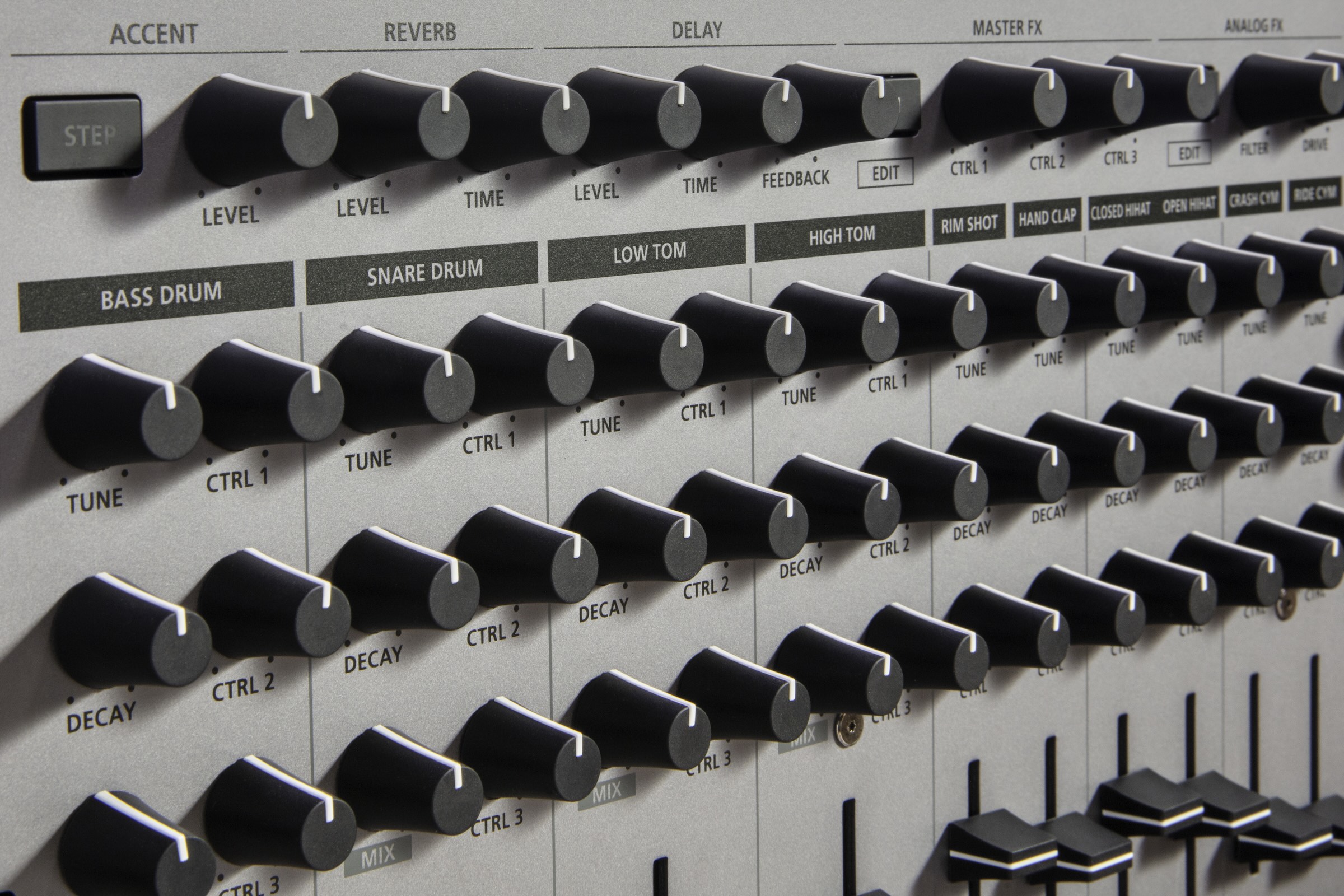
Yes, this is the first true analog drum machine since the TR-606, since even the TR-909 used PCM voices alongside analog ones. (I almost wrote TR-808, but of course, the 606 is one year younger.)
Roland didn’t just clone the 808/909 voices; they added expanded pitch and decay ranges, tunability, and dynamic control. And that’s in line with modern analog drum machines and our expectations; it’s funny how limited an original TR can sound in some ways.
And about that snare: Roland based this on the early 808 snares. The darker, later revision is still available via ACB.
And not to get off topic, but the 808 snare is so iconic that … there are humans who can model it with their mouth. This beatboxing works better than anything I’ve used to describe the 808 snare’s appeal:
(I’m going to quiz Roland friends on this one, but while Roland hasn’t done full drum voices like this since the 80s, I think we have gotten some random filters here and there — FANTOM, for one. Even most of those went digital, though, as on the MC line. Let’s go to Japan and have a trivia night in a bar.)
Analog modeled and digital
ACB (Analog Circuit Behavior) is back, even though you can now safely collect your bets from anyone online who tried to convince you the TR-1000 would be all-digital.
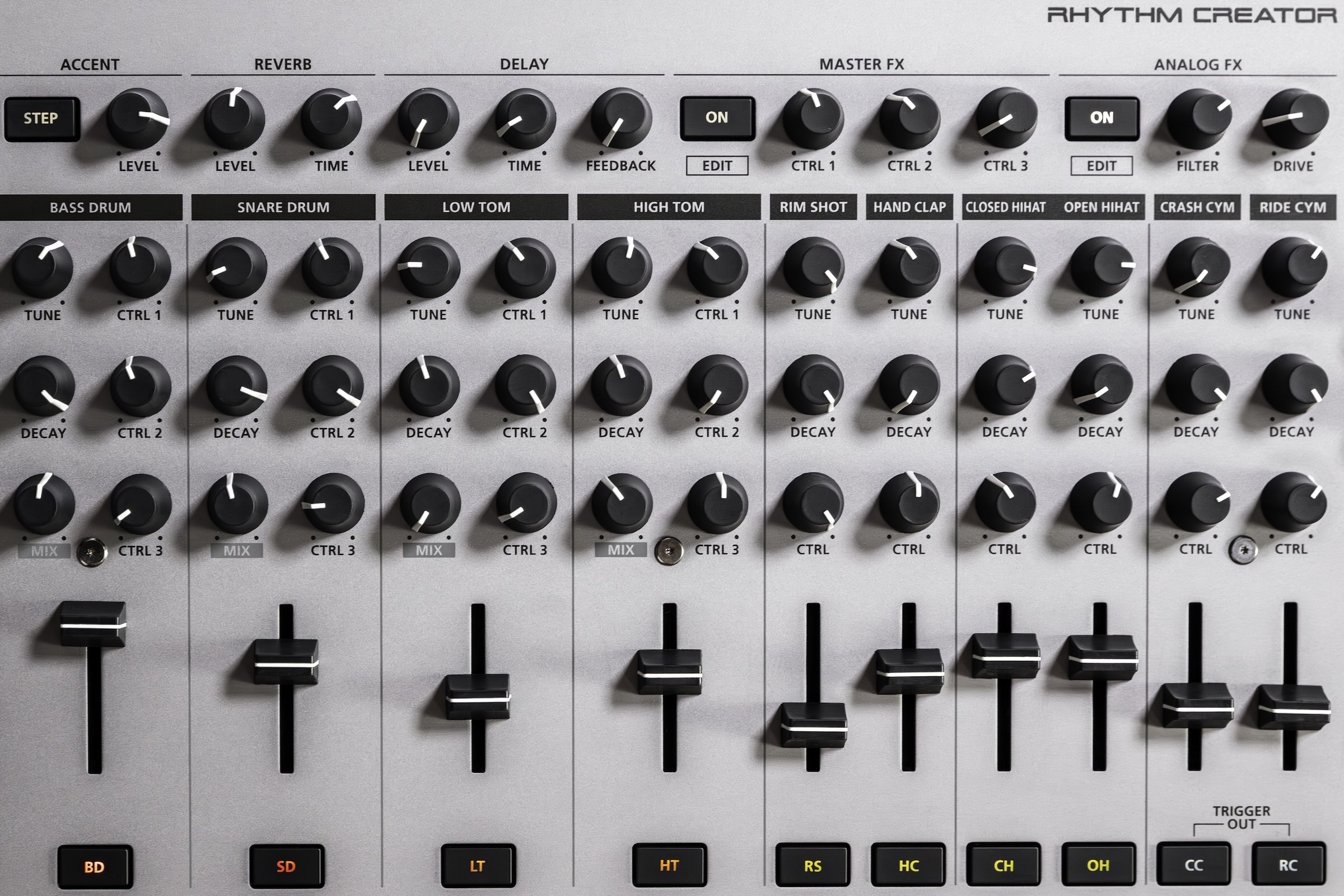
Roland could have just added all the voices from the recent MC line and TR-8S and called it a day. And we do have that basic architecture: you’ve got 808 and 909 voices, FM synthesis (some of my favorites from the TR-8S), virtual analog waveforms, and PCM (think wave samples), plus the ability to load your wave samples. You also have the TR-707, TR-727, TR-606, and CR-78 models, just as on the TR-8S.
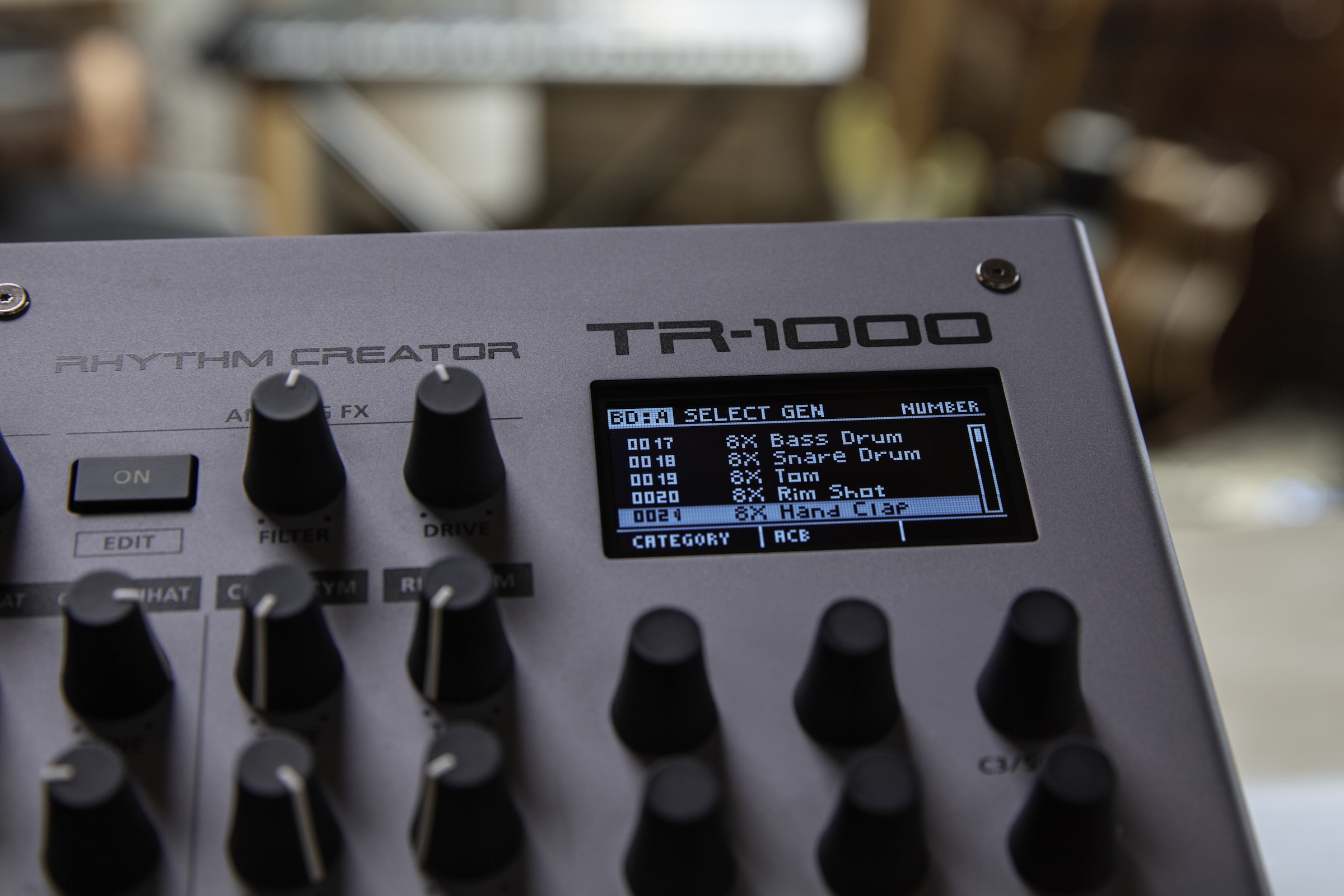
What’s new is nineteen 8X and 9X “circuit-bent” versions of the 808 and 909. You get broader parameter ranges digitally — it’s the same models without all the tameness and voicing. I might be more into this than the analog voices, seriously. (I talked about the appeal of this approach in my Baby Audio Tekno writeup; that plug-in did the same, allowing you to turn off safety protocols and do far-out stuff with their analog models.)
Only the 808 and 909 are circuit bent, so here’s hoping for the 707, 727, 606, and CR-78 in some future firmware update!
Let me break from my colleagues in the influencer sphere and say, in my heart of hearts, what I want most of all is a Roland TR-9S, updating the TR-8S with easier sample loading and the new 8X and 9X voices.
Sampling and slicing
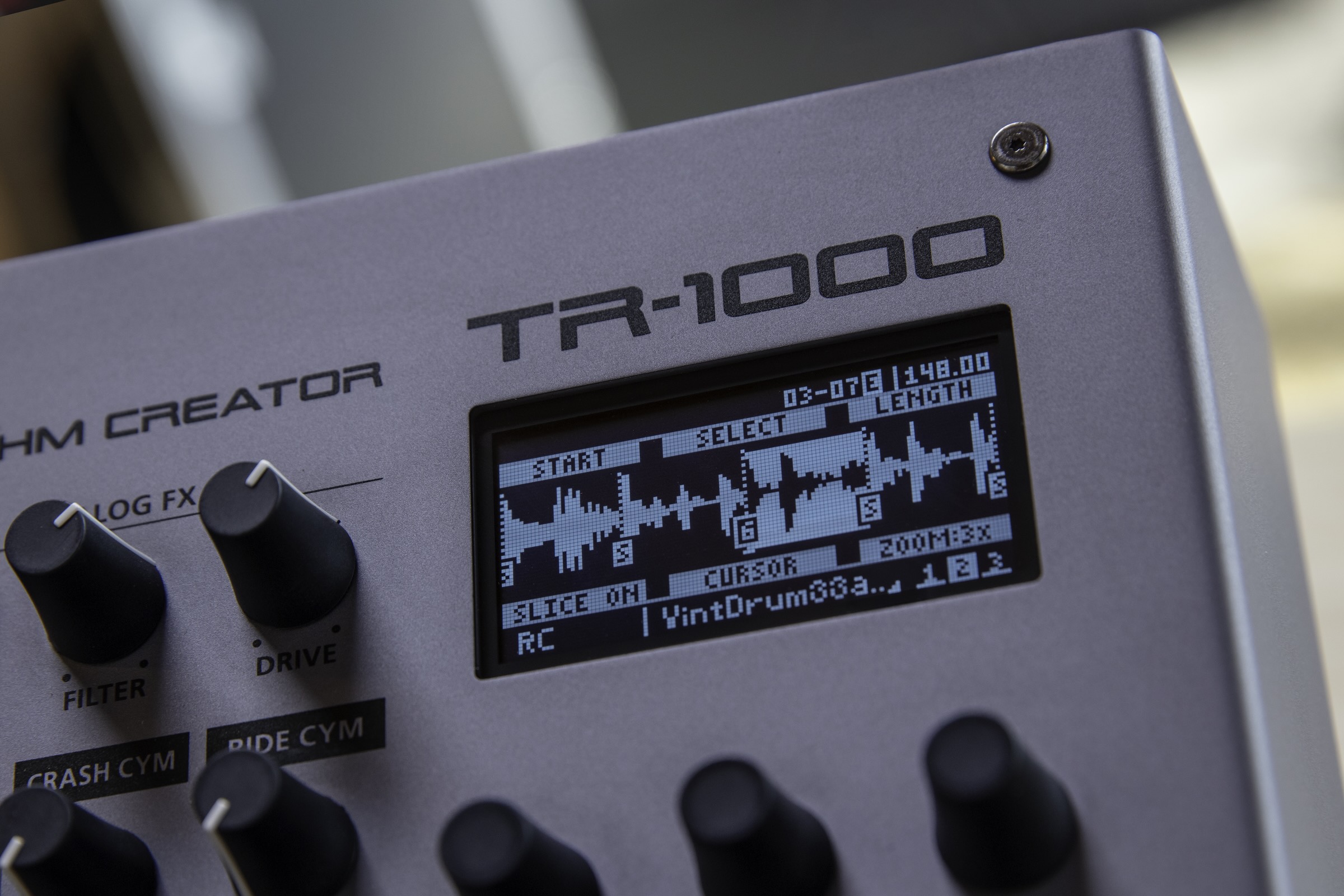
The SP-404MKII algorithms are there — with some twists. You get the time-stretching algorithms from the 404, which is a first on a TR-style drum machine from Roland. But Roland says these are “modified in sound character and behavior to fit a rhythm machine” and behave differently. That’s one to test — and to chat with artists about, as well. (Egyptian Lover, hello!)
You can slice non-destructively. Now this is welcome. Unlike the 404, you get non-destructive sample slicing — and can even take the same loop and use it in different instruments and kits with different slicing configurations.
Projects have a bunch of room for samples. You’ve got your Project, which then contains Patterns and Kits. There are 500 slots in there for samples — used in each sample generator in an instrument, or when the sample generator uses slices. That means you can repurpose your sample content creatively in a project in different ways. In fact — this is important, too:
You don’t use up slots importing samples. Import as many samples as you can fit on that eMMC hard drive onboard. Then use up to 500 sample slots, each with different settings if you like, for all your sample-based content. For most use cases, that’ll make working with samples as fluids as it is on a computer — but with a fully hardware-based, TR/SP-style workflow. Nice!
There’s 46 GB of available user storage space. Amazing. I mean, also what you get on an Ableton Move, so anyone suffering sticker shock here, don’t forget you can get something like the Move + TR-8S combo and actually be more likely to fit your rig on Ryanair!
You can load samples via USB key. Unfortunately, there is a 32GB limit — someone got pedantic on spec’ing out the firmware there. But you get stereo files of up to 16 minutes.
Analog and digital effects
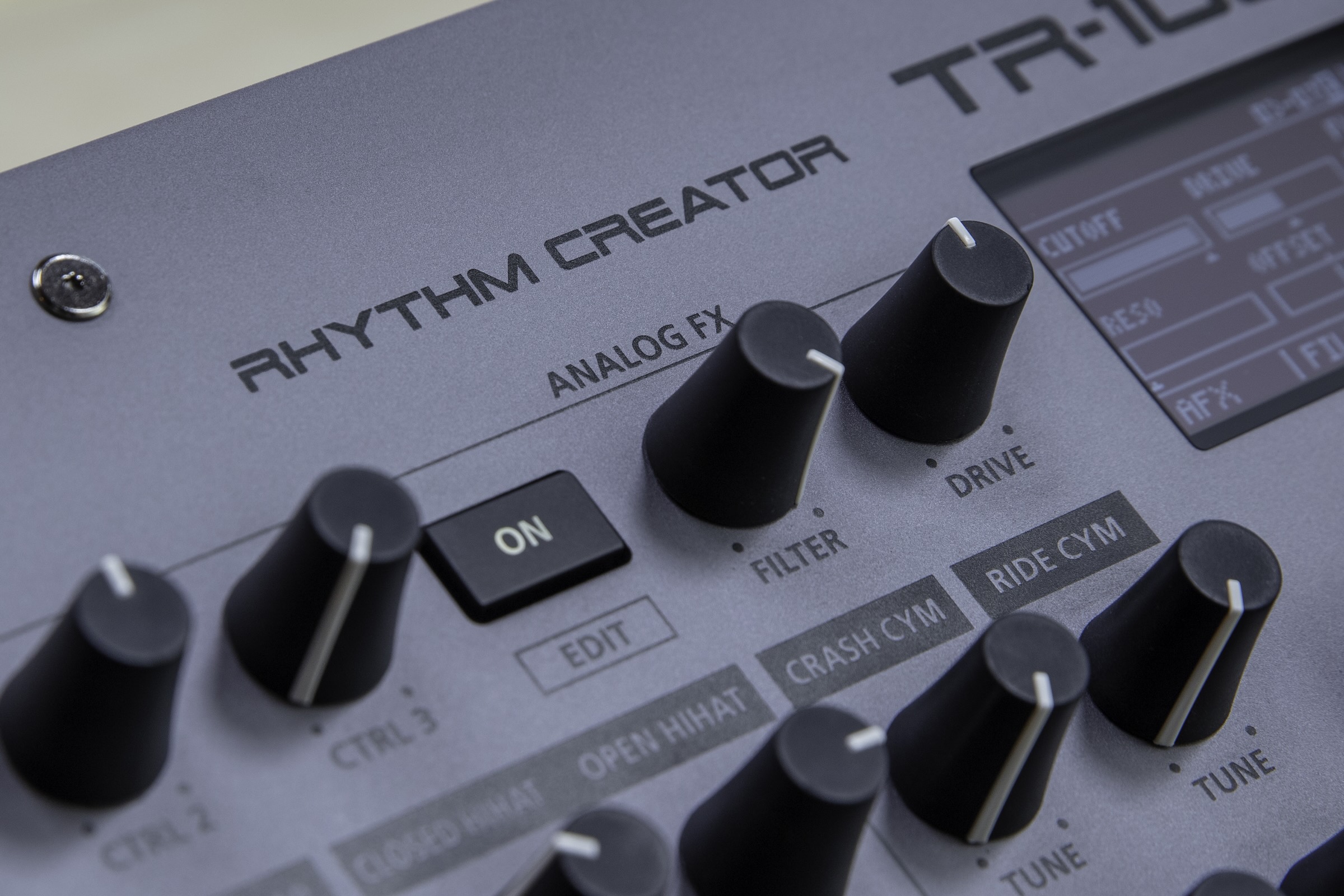
There are actually two effects onboard: both the analog OTA State Variable Filter (a la JUPITER-6 and whatnot), and a new analog Drive.
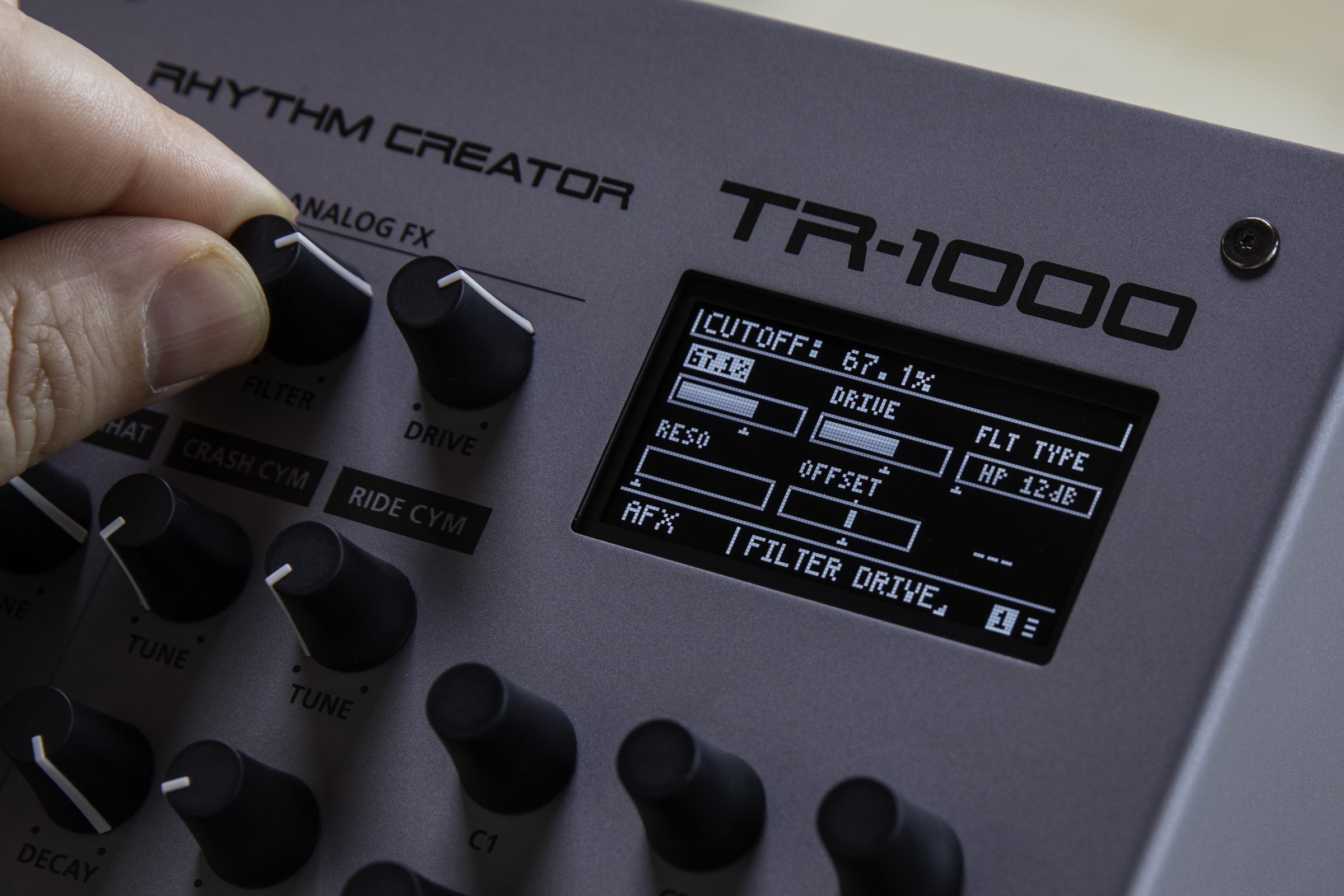
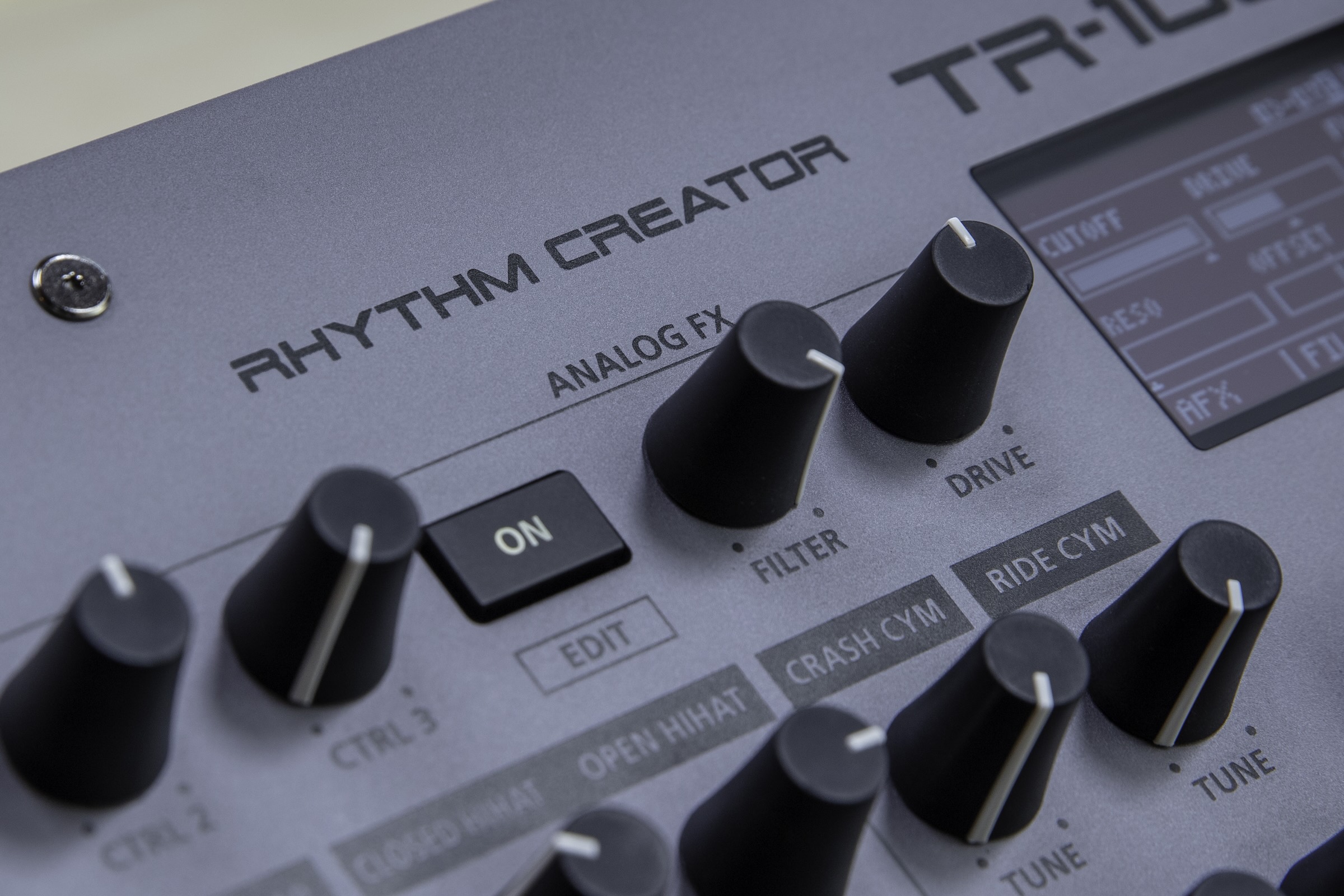
You have then the usual TR/AIRA digital effects, which in turn owe as much to BOSS’ digital pedals as anything — Crusher, FIlter+Drive, DJFX Looper (from the SP-404), Isolator, Flanger, Phaser, and… the rainbow colors and neon green are gone, but Scatter is back, baby!
There’s also an 1176-style FET compressor, channel compressor, multimode (digital) filter, 4-band EQ, transient envelope, sidechain, and — this is new, three-target LFO.
You can also route in CV integration, and there’s separate analog effect output, so you can use this as a multi-effects processor, too — especially if you’re into that filter and drive.
Tons of I/O
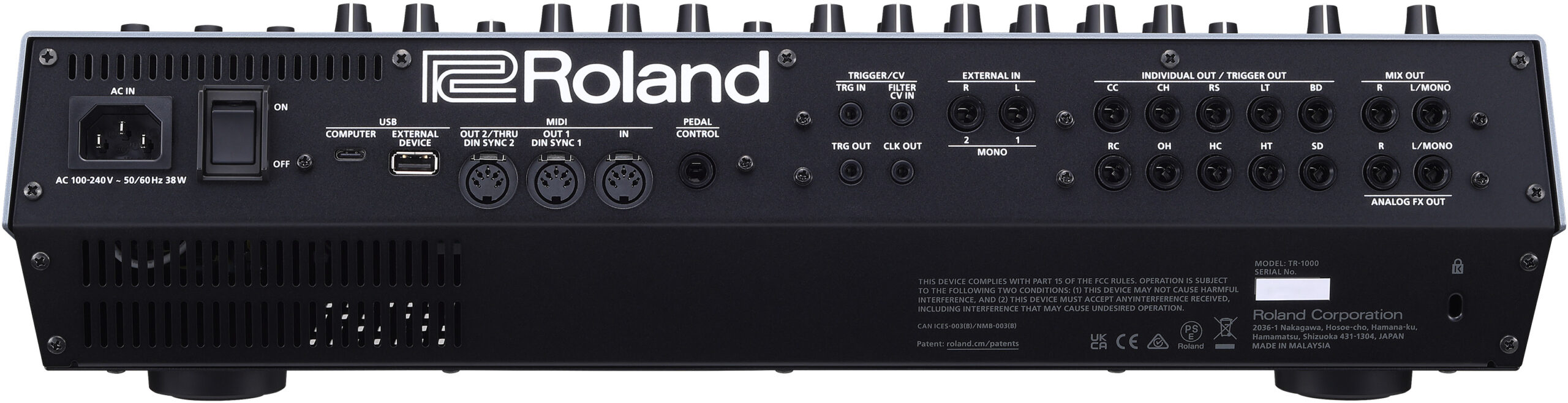
So much I/O:
- MIDI IN, OUT, OUT2/THRU (which doubles as DIN SYNC 1 and DIN SYNC 2 — did not expect that!). The 80s are back!
- USB-A host port for an external device
- 1/4″ pedal control
- Trigger/CV: trigger in, filter CV in, trigger out, clock out
- Stereo external audio in (on 1/4″ jacks)
- Individual outs and trigger outs – as God intended
- Stereo mix out
- Separate stereo FX out routed from the analog effects section
Sequencing, control, and performance effects
Most of the focus is likely to be on all of those drum voices, but maybe what’s more significant about the evolution of the TR here is on the control and sequencing side.
Remember that part of what made the 808/909 series a hit in the first place was not just sound, but the TR-REC sequencing interface and the design of the panel. It’s funny that we talk about TR history exclusively in terms of timbre, because the genre success of Roland gear wouldn’t have happened without the sequencing and interface characteristics.
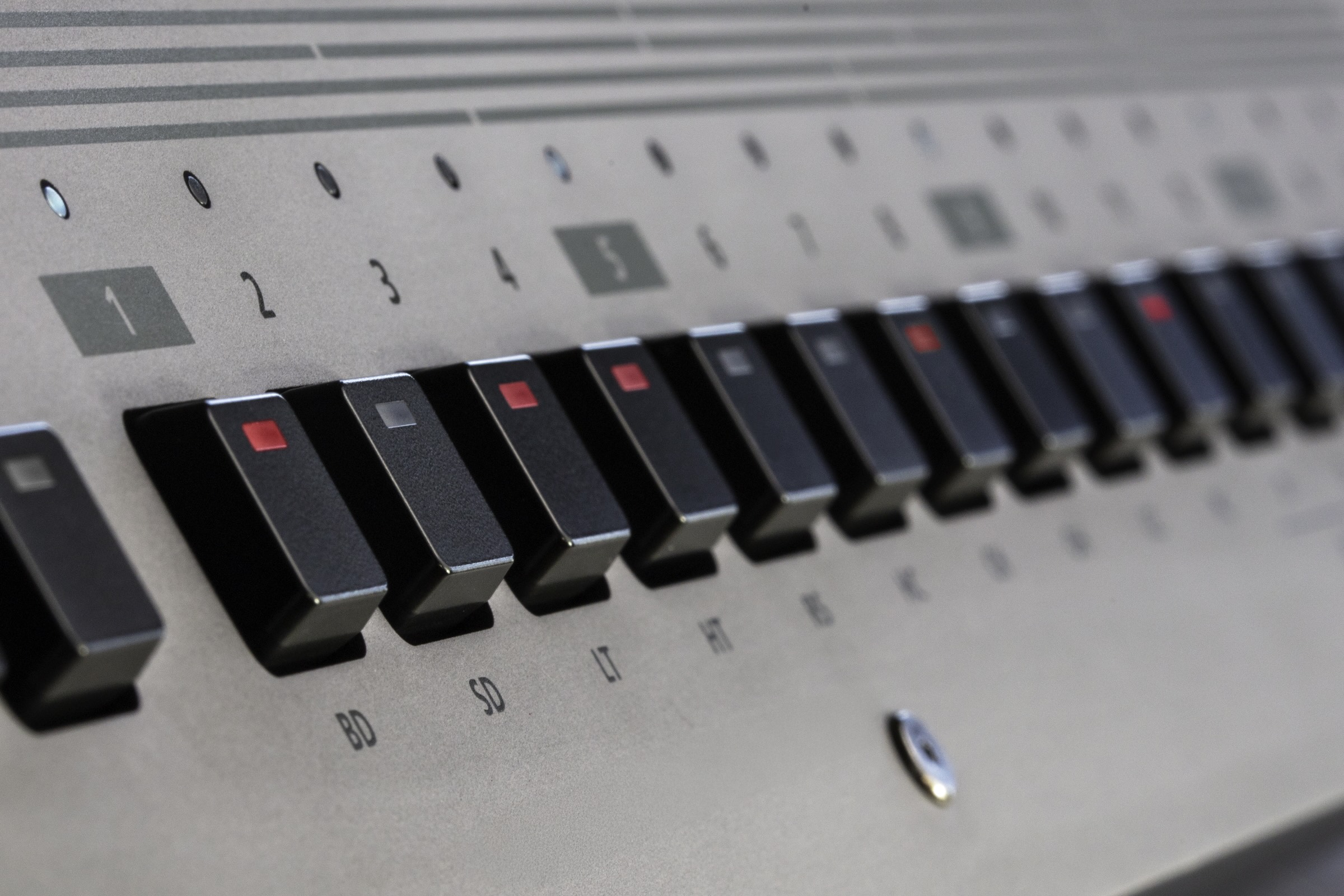
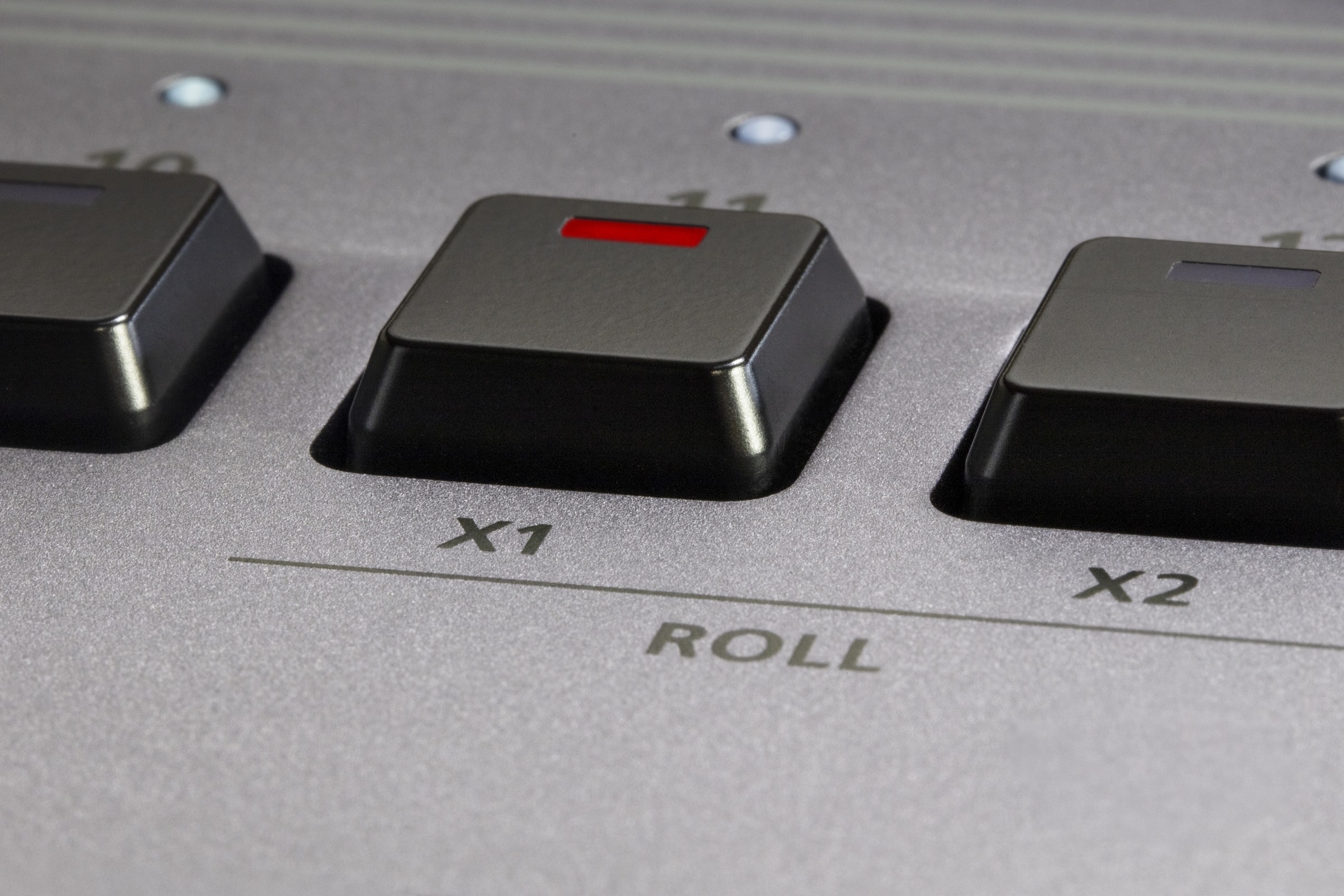
So imagine that the TR-1000 is really built on the lineage of Roland’s TR series, a little bit of the SP-404 and MC history, and competitors like Elektron (especially even recent Elektron). They appear to have added these extra features without overwhelming the TR’s signature simplicity. That means you get a layout with faders and x0x buttons that you can pick up and play right away, without menu diving, but with a little more dimension than something like a TR-8S offers.
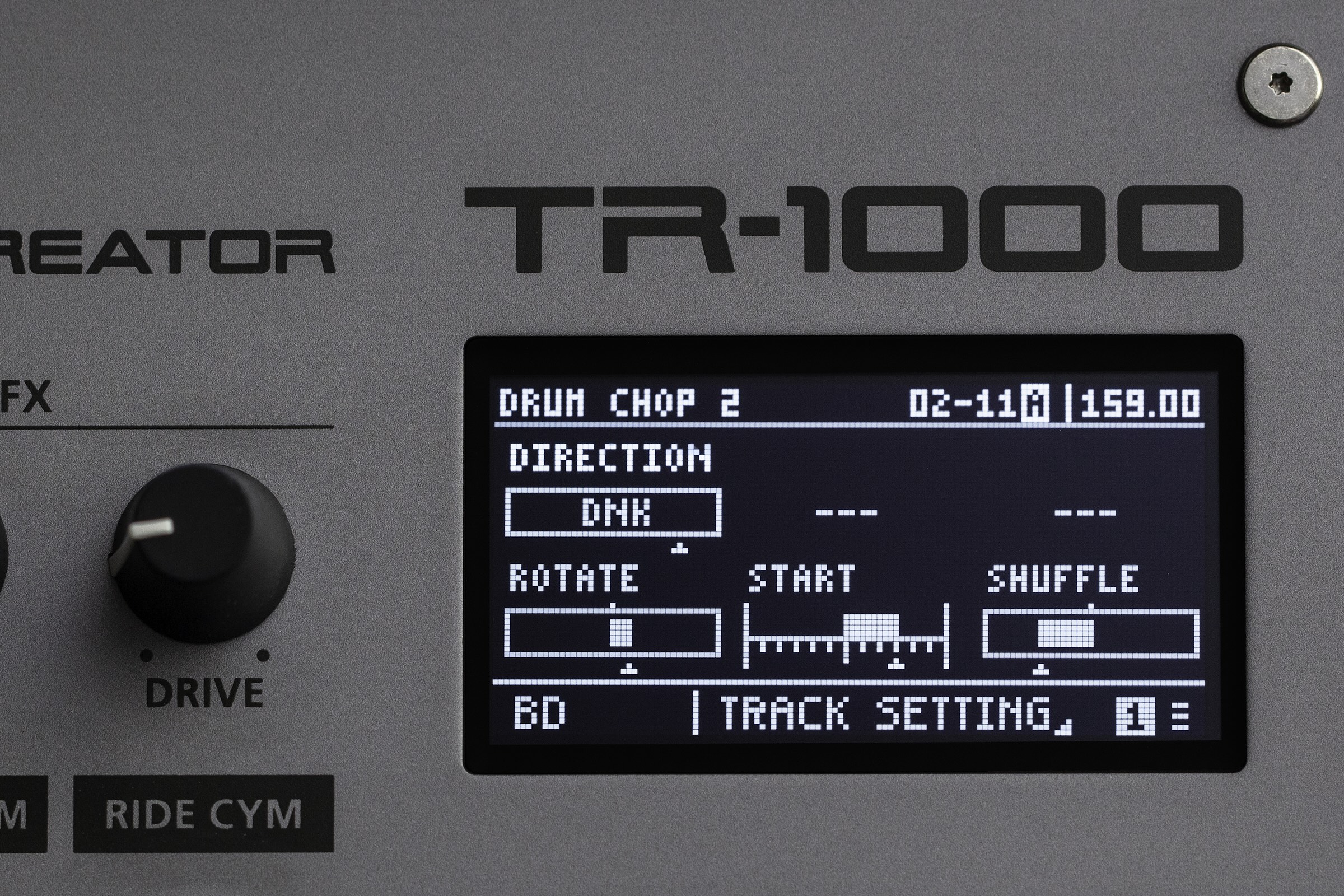
So there’s a new sequencer. In fact, the best way to describe TR-1000 is not just “a TR-8S with an analog drum machine and sampling,” but “a TR-8S with an analong drum machine, sampling, and a new sequencer.). That includes expanded functionality like:
- off-grid timing
- per-track shuffle
- cycle
- step probability
- direction and rotate
- motion recording
Some of this unquestionably takes some good ideas from the Elektron line, especially the location of those modifiers. But it still works like a TR-REC sequencer, which to me is great. And it takes what’s most immediate on the Elektrons, too — plus, to be fair, the Elektron wisely took some features from TR-REC and x0x. (Again, about that TR-9S… people everywhere who can’t afford TR-1000 are going to be asking…)
There’s also now a Song Mode, which allows you to link up to 128 patterns, including some capacity for transitions and whatnot. And just as importantly, you combine all of this with live performance features:
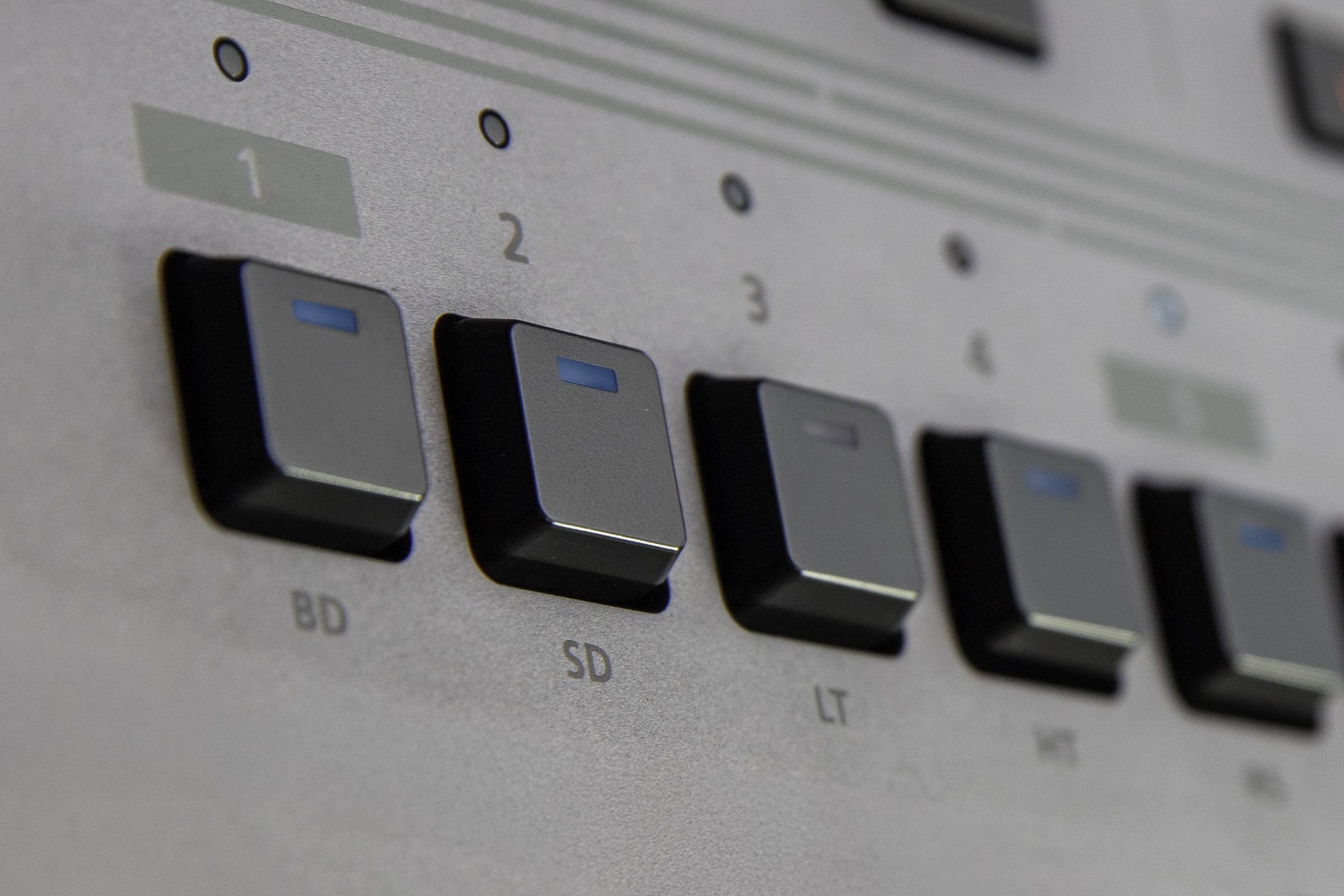
- High-grip knobs (this as opposed to the “perpetually falling off the pots” knob caps on the MC and TR-8S)
- Durable faders (going to assume, again, not whatever is on the TR-8S, though at least mine are all in shape!)
- TR step keys – 909-style step keys replace the button things on the AIRA TR-8, TR-8S, and MC (those are not Elektron-style as some people guessed looking from the wrong angle)
- Morph slider (oh yes — that being the crossfader I noticed Elektron left off their new machine — Roland giveth as Elektron taketh away). It’s an assignable macro control with one-to-many functions.
Some last details: yes, there’s a USB-C audio interface, and a TR-1000 app. That app now allows sample loading, as it should. (Let’s not talk about the succession of TR-8S editors…)
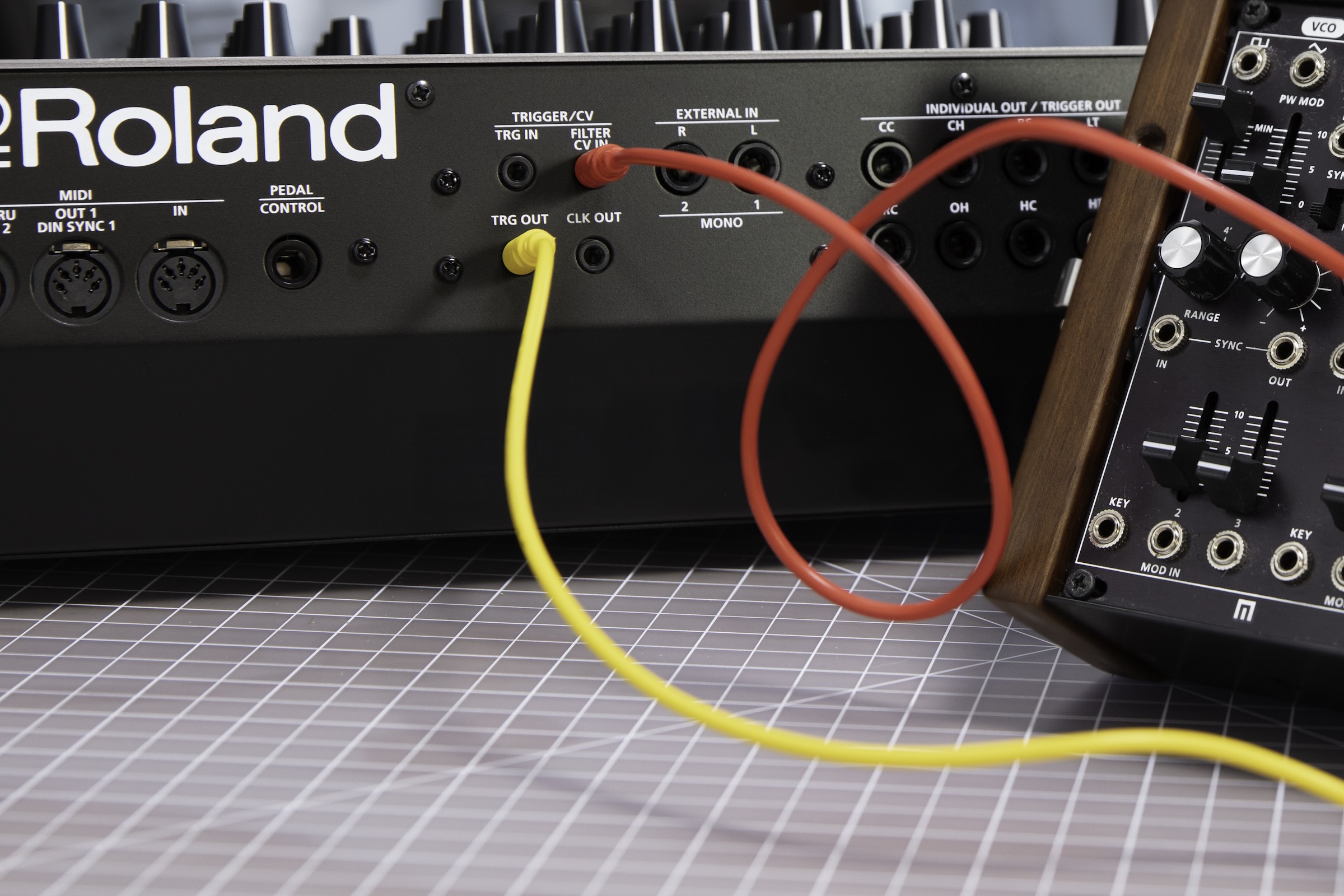
Roland also has some good things to say about timing, including that they designed this to act as a clock source so that internal tracks remain tightly locked with destinations; they even go far as recommending you only use it as a clock source, since internal timing as a clock follower may add some latency. (They have a Nudge option and a Layered Gens function to compensate.)
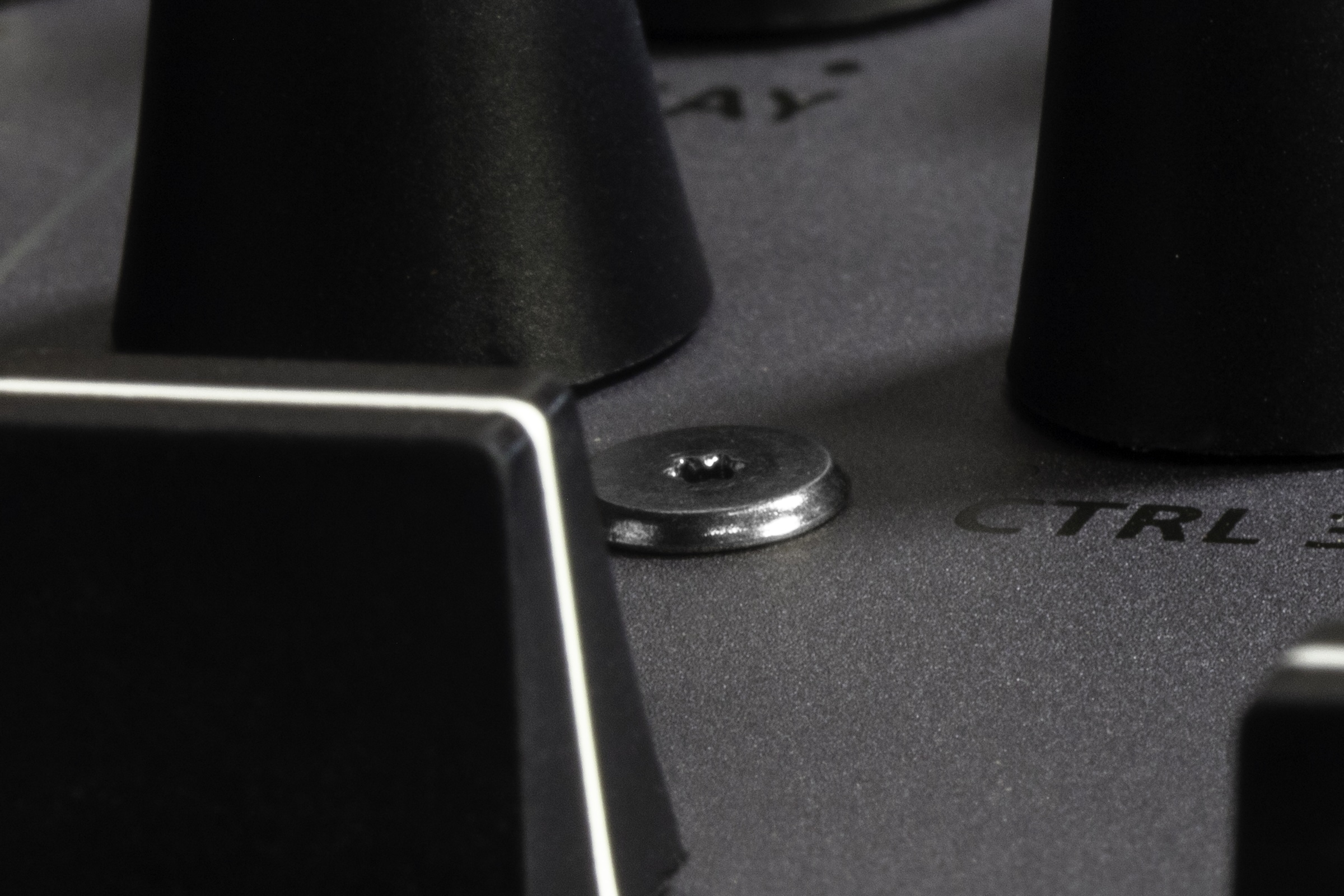
Built to last
That slogan from Roland is giving Ford truck vibes for me, but maybe that’s because I lived next to the Ford truck factory as a kid. (Okay, it’s also the title of the business book. The trucks were “built Ford tough”; the cars were “built to last.”)
This is something we haven’t seen from Roland in a while: a machine that the company says they’ve built not just for the next few years, but for longevity. And however this is received, that’s encouraging to see. It’s an inflection point in the industry where irrespective of price, makers do need to give musicians the sense that they can live with gear over time, that it’s a relationship. So it’ll be interesting to watch the slow burn with the TR-1000, and where Roland may go next.
Addendum: as far as I know I’m cleared to release this, so I want to quote this FAQ, as it’s just great:
WILL ROLAND BE RELEASING MORE ANALOG PRODUCTS BASED ON LEGACY GEAR?
Future product decisions are made by Roland Japan, and there’s no further information available at this time.
Damn straight. Repeat after me: do not question the wisdom of Hamamatsu. Hamamatsu will determine what is and what is not released by Roland. Also, do not ask what is in the future; Roland will invent this future, and we will simply enter into it, as today passes, and Tomorrow Returns. There will not be some random Facebook post where you can comment about what you want, as if. And honestly, Roland, never change.
Oh, except I am still allowed to say this. (Not you — just me. I’m a jerk.) I do hope Roland will do an all-digital TR-9S with circuit-bent ACB voice additions, these updated faders and knobs, and at least some of the expanded sequencing features and easier sample loading. Even at a slightly higher price point than the current 8S, that’d be a godsend for all of us who could use something more affordable and portable. Actually, if this does happen, see above — it won’t be because of me (sparkling as my prose may be); it’ll be because it made sense.
In the meantime, as amazing as the TR-1000 is, the TR-8S remains a workhorse, so no complaining about the price on this, because if you don’t own the TR-8S, you can buy one off your rich friends going out to buy the TR-1000. (You might even be able to add an SP-404MKII in the deal.) Ah, actually, let me add another invocation then — print this out and hand this to that “friend”:
You should buy the TR-1000. A machine like this comes only once every four decades. You need everything onboard. You need it badly. Your worthless TR-8S or SP-404MKII has almost no value as a result, and you should sell it as cheaply as you can to your dear, impoverished friend [insert your name here], and include some ramen packets and beers/Pocari Sweat so they don’t go hungry and thirsty. Also buy their damned record off Bandcamp or at least listen to the promo they sent you six weeks ago and maybe put them on your next party lineup, you schmuck. The elder music tech blogger has spoken thusly.
Roland TR-1000 is available now:
https://www.roland.com/global/products/tr-1000
And via resellers:
If you buy something from a CDM link, we may earn a commission.
Perfect Circuit: TR-1000 Rhythm Creator Hybrid Drum Machine
Sweetwater: Roland TR-1000 Rhythm Creator (aka “The Leakers” 😉 )
Behind the scenes
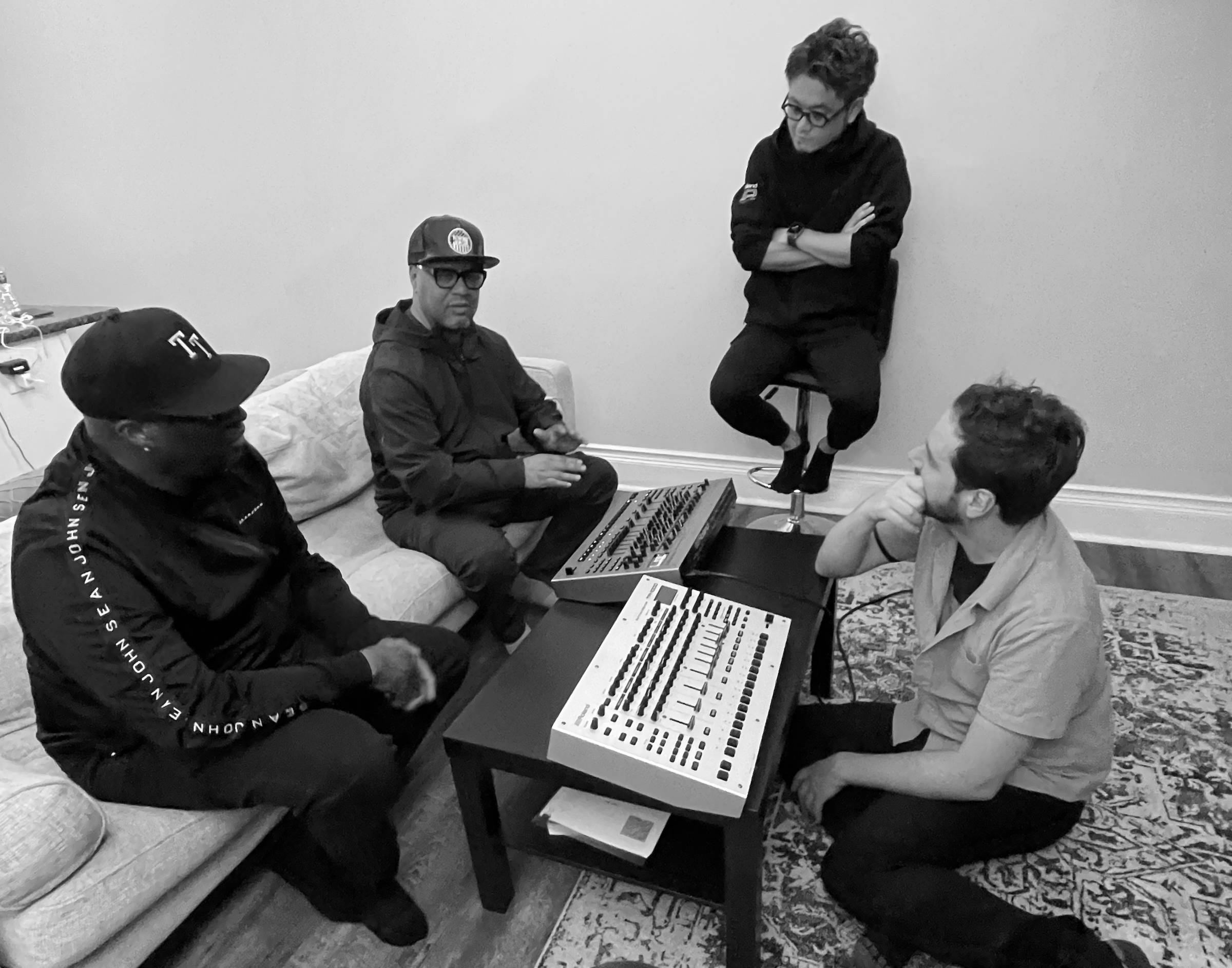
Roland sent some shots of them talking to artists and friends. Here’s Aux 88 w Takeo Shirato and Peter Brown from Roland:
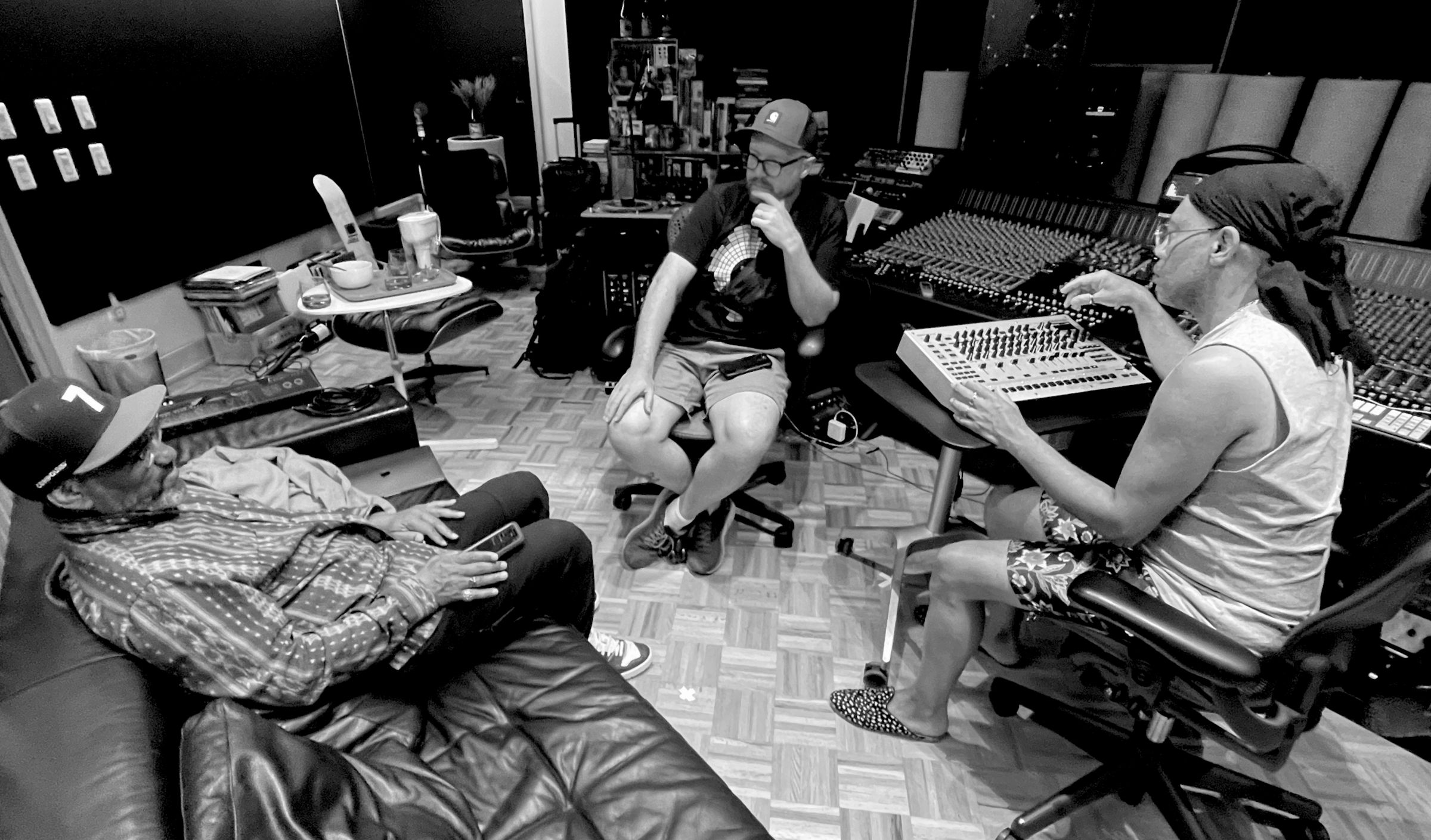
Carl Craig, King Britt, and Dustin Good from Roland:
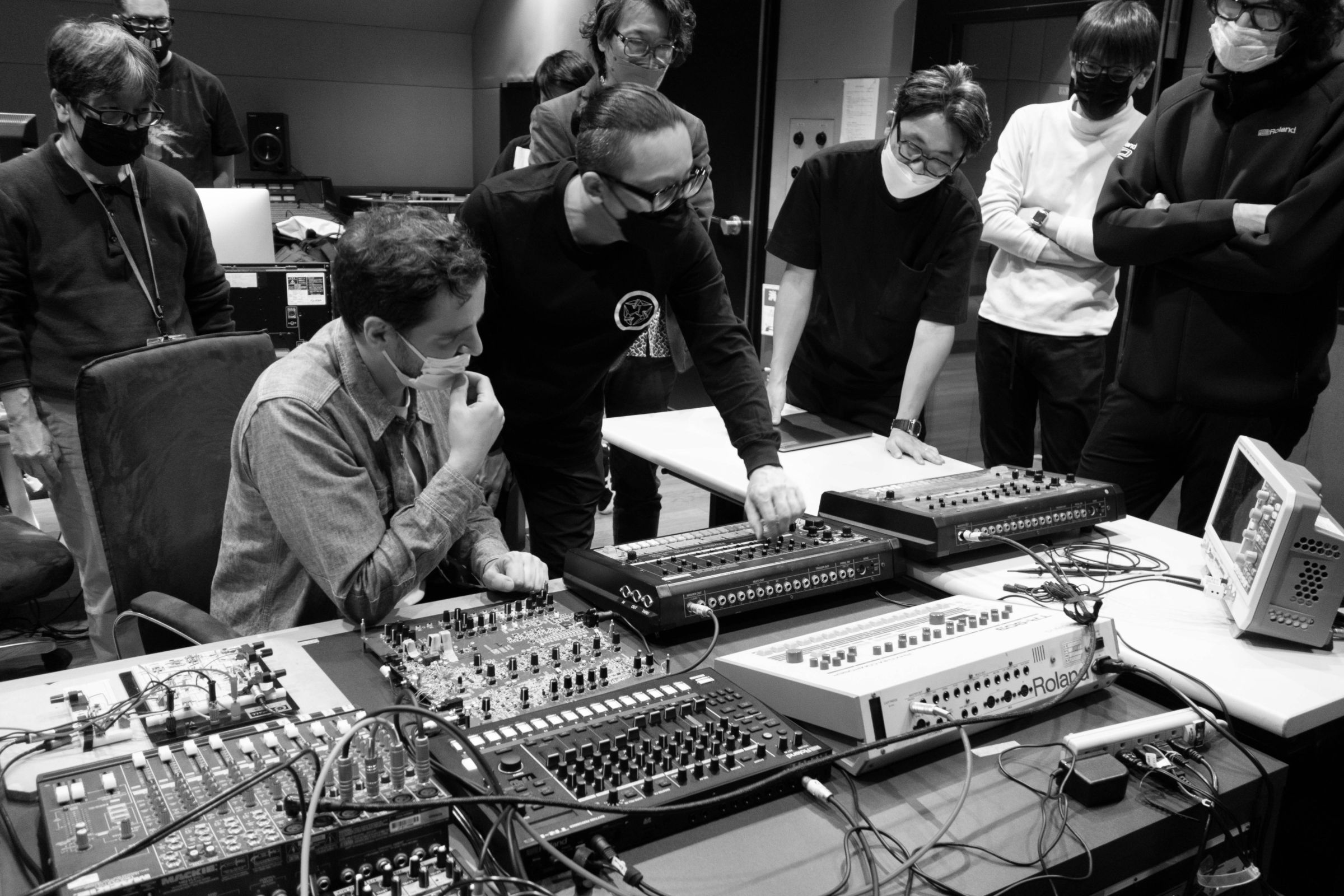
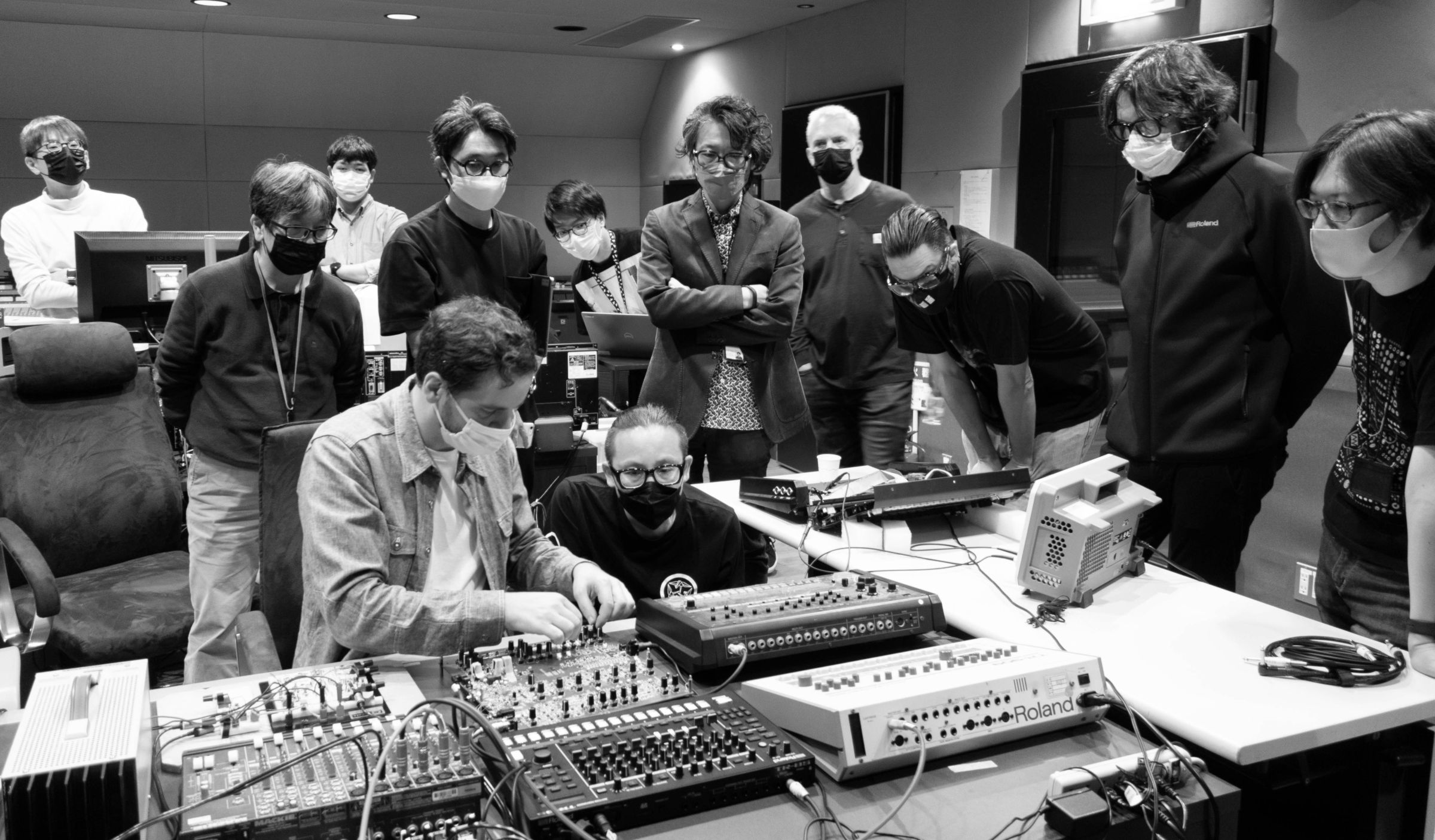
And the dev team — know some really brilliant people who worked on this:
Let’s finish with some Egyptian Lover.