How far MadMapper has come. The tool, built as a collaboration between Swiss GarageCube and French studio 1024 architecture, helped define projection mapping for a generation of visualists. It has matured into a broadly versatile media tool, and v6 brings timelines, montage tracks, clips, audio features, and more to manage your project work, all wrapped into a new UI. Here’s the quick rundown.
Mapping? What’s that? Well, I adore the history they’ve put together. Even if you don’t care about this software, you should go read the MadMapper history, which starts in the Ice Age cave of Lascaux. (No, literally the Ice Age!)

But that was then (15,000 – 19,000 years ago). This is now. From caves to v6 MadMapper.
Let’s do this at a glance:
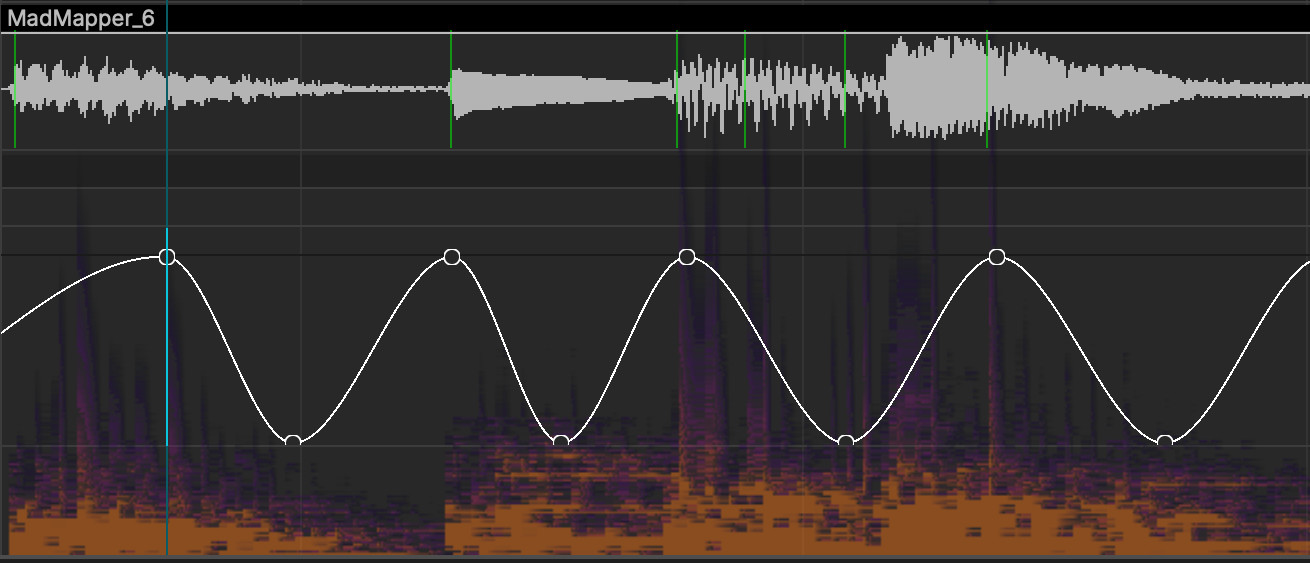
- Timelines replace Cues, and they do what the name implies — full control of animation of all parameters, with interactive markers. And it comes with BPM Sync and you can use Quantized launch.
- There’s also a primary timeline called Conductor, which you can sync to external timecode (MIDI MTC, audio LTC, Artnet).
- Clips for animation — the paradigm we largely associate with Ableton Live continues its planetary takeover, for quantized, techno-friendly playback of everything. And speaking of Ableton —
- Ableton Link support lets you connect that beat sync to other Link-supported hardware and software. (That doesn’t work with Conductor, but that’s because Link isn’t about linear timecode information; it sounds like you can use the two side by side, though.)
- Audio tracks, with unlimited multichannel support.
- OSC and MIDI output tracks.
- New Montage Tracks control all your media (Movies, Materials, Generators) so you can effectively pull together/edit all your media right on the MadMapper timeline.
- MadLight now has DMX Fixtures in output and sampling video surfaces. Say what? Now you can sample DMX fixtures directly into the composition.
- New UI with additional Windows scaling options. (Ah, Windows high-DPI scaling, but great!)
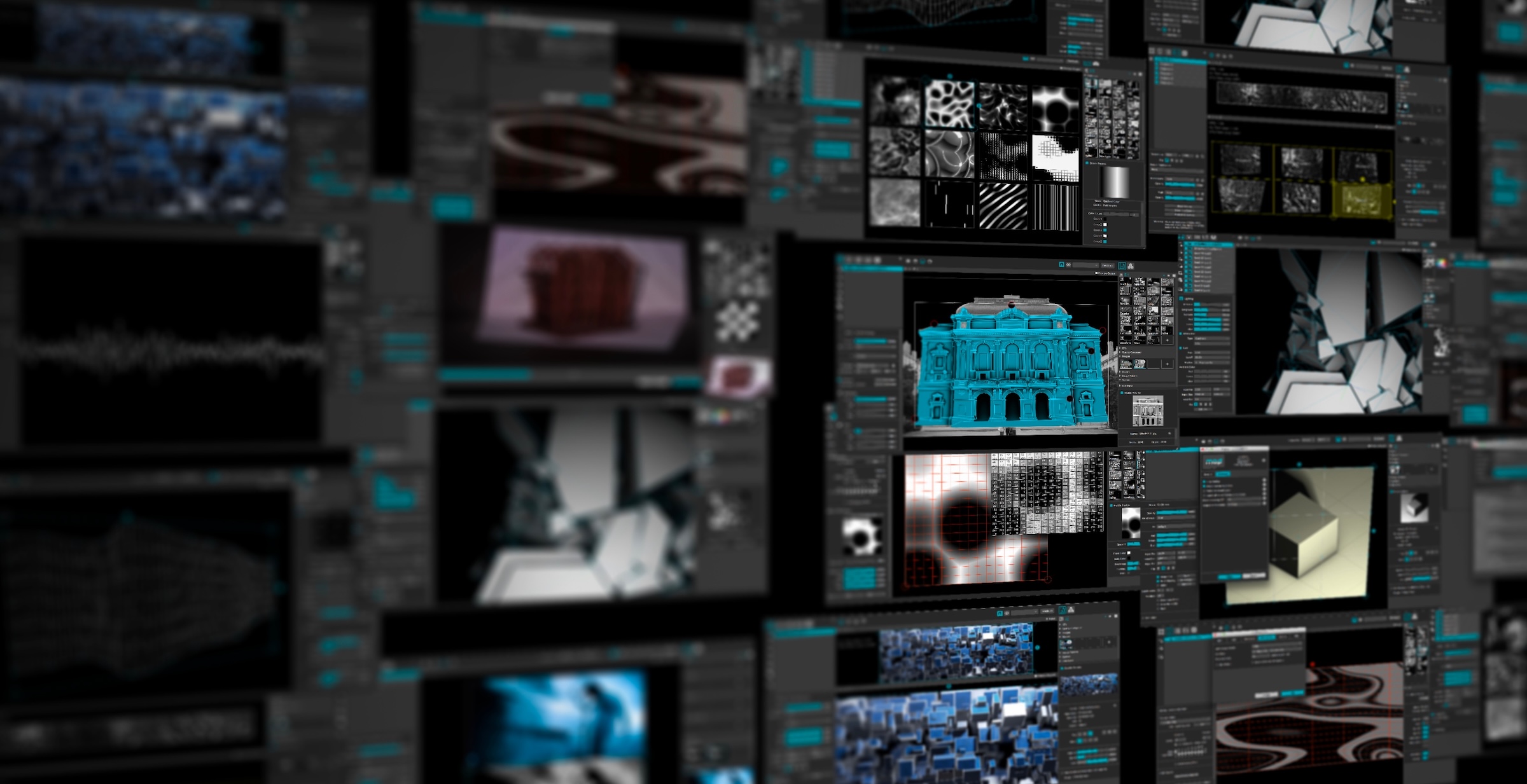
And there’s more — expansions to MadLaser, render passes in ISF, offline access to library materials (important on-site!), SVG image playback, WASAPI audio support on Windows (this is the way), NDI and DMX optimizations, engine enhancements, and more to help you navigate and manage your project files.
There’s also export capability, which lets you dump out everything – laser, DMX, video, audio, a section, a loop, anything.
See the full release notes:
https://docs.madmapper.com/madmapper/6/what’s-new/release-notes-v6
Or the v6 overview:
https://docs.madmapper.com/madmapper/6/what’s-new/madmapper-v6
And recently…
About MadAI
So I looked into this feature but didn’t get the chance to write about it. Yes, MadMapper did hop on the machine learning bandwagon with something they call MadAI. It’s an add-on package, so if you aren’t into this, you probably will ignore it anyway. But there’s reason to discuss this.
https://madmapper.com/extensions/madai
MadMapper are not using their own modeling or dataset, which means it is Big Tech sucking in the internet to produce the results to your prompts. (When I asked in the summer, they were using Claude Sonnet 4, but told me they can switch to other APIs.)
The use of machine learning has raised some feathers in other contexts, for many reasons. LLMs [generative large language models] can generate code that is arguably based on prior work, without knowledge or consent, and without attribution. That’s not a linear problem — they’re not “autocompleting” existing code; they can generate code that didn’t exist before based on complex patterns. (Though adding to the complexity, sometimes they indeed can actually spit out existing code, depending on the query.) This can be problematic not only along the plagiarism argument, but because it could begin to drain traffic from human-produced websites and communities, even to the point of reducing the motivation to share code. That’s a concern for sites like shadertoy. And it certainly has impacted CDM; I’ve looked at the numbers. The loss in search revenue isn’t remotely made up in inbound AI links; it’s not even on the same scale.
There are also, I think, concerns to be raised about dependence on these service providers, and the environmental and political impact they have.
And the very thing these tools promise to do — save you from learning code — might also prevent you from learning code. (That one’s also multi-dimensional, though, especially with coders making use of these tools, too.) The whole problem being solved here — that writing code is slow, demanding work — can also be the reason you’d slow down and learn coding.
Now, all of that said: these tools are available and already perform these functions. I don’t want to ignore or stigmatize these applications. If you share the concerns raised above, then I think it’s important we keep talking about them and examining them objectively. That does not mean you should feel obligated to adopt them; you may well decide you benefit more from switching off the internet and reading a paper book about shader code! (Actually, that sounds great; I might do that.) But we need inclusive spaces that talk critically about these and what tradeoffs they bring. And that should include a rational evaluation of where there are benefits, especially if they help artists make a living at a time when you’re under tremendous stress.
I mean, while we’re asking that question, you might skip projection mapping entirely and go back to optical work or shadow puppetry techniques like Wayang Kulit. (That also sounds great! Hey, we did start with cave painting.)
But if you do use MadMapper, they’ve found integrations for producing very specific solutions inside your existing creative work. You don’t just prompt the whole project, but you might solve specifics of materials.
When I did talk to other developers, they were mostly curious about how this application works. And so far, people are not abandoning this stuff.
Plus, after this long, long excursion, I know that the v6 features at the top may have a bigger impact on use cases of pros paying for MadMapper.
So I’m really curious to see how this works, and it may be really worth looking at how this story connects to the coming, free Tau5 environment for coding shaders. It might be that you drop into MadAI to finish a material for a client on a tight deadline, but when you go “back to the woodshed” to learn or work on developing shaders for artistic purposes, you go no-AI and use something like Tau5 to live code with another human being.
Or maybe you’ll save some shader coding time with MadAI, then devote more time to understanding Rococo-era perspective tricks or cave painting or shadow puppetry. I honestly can’t say that I know how that will play out, even having covered creative tech for now nearly three decades.
This use case is very different from people just prompting an entire photo, video, or piece of music, and it has some different implications — even if some of the concerns are shared. So I do hope we keep talking about it.
Just reading comments, as with other devs I talked to, most people seem to welcome this as something they can use, not a threat to their creative work. And the environmental concern comes up right away. That’s a topic for elsewhere — this research paper, for instance, looked at carbon emissions of code assistance, but weighed them against savings on cars. (Mercedes-Benz was listed, and hey, why would we ever doubt a German auto maker quantifying emiss–uh, let’s change the subject.) It’s a contentious topic because the data center consumption of lots of very different AI applications get lumped together, and the industry is arguing for its improved efficiencies even as it increases consumption overall. MIT Technology Review has a good story at least for a thought-provoking place to start.
The carbon impact of people writing shaders will be, of course, comparatively small. My general read is that labor-intensive 3D tasks are seeing people embrace machine learning, while anything touching more handcrafted and creative applications absolutely aren’t. So the not-hard-to-make prediction is to expect to see people split along something like those lines. Far from being an anti-AI and pro-AI group, in the creative sector, it seems more likely to be people getting passionate about where they feel that line should be drawn. But let’s see and — I should definitely have left this for another story, but well, here we go!
Anyway, I know from the buzz that timelines actually matter more than AI shaders. So — watching to see what you do with MadMapper v6.
Previously:
And I’ve been writing about MadMapper since the beginning.
Why “Queen of Mapping”? Well, since I don’t use AI to write, for some reason I had a choice of two things on my brain, the Boeing 747, which won out, or Budweiser, King of Beers, which did not.