I’ll take a side order with the fixins’. Objeq Delay gives you the signature physical modeling resonator that’s the secret ingredient in AAS’ main-course instruments, but in a handy multi-effect with stereo delays and filters. Version 2 is a major update, inside and out. Here’s a breakdown of what’s new.
Applied Acoustic Systems has long been a name in physical modeling, back to the early days of Tassman and the current stable of Multiphonics CV-3 (a modular), Chromaphone, and other key and string instruments. Despite the name, physical modeling is as much art as it is science — there are just countless idiosyncratic details to how you build and voice a model. So, as regular readers know, I’m pretty addicted to the nuances of particular instruments.
AAS is most widely known to Ableton users because the Montreal-based developer produced Corpus, Collision, Analog, and Tension. You’ll even spot the combination of resonator model, filter, and modulation in the Corpus effect, as with Objeq Delay 2. But while Ableton has given its Devices some visual updates, the underlying engines contain earlier versions of the models. And it means being tied to Ableton Live as a host.
The new:
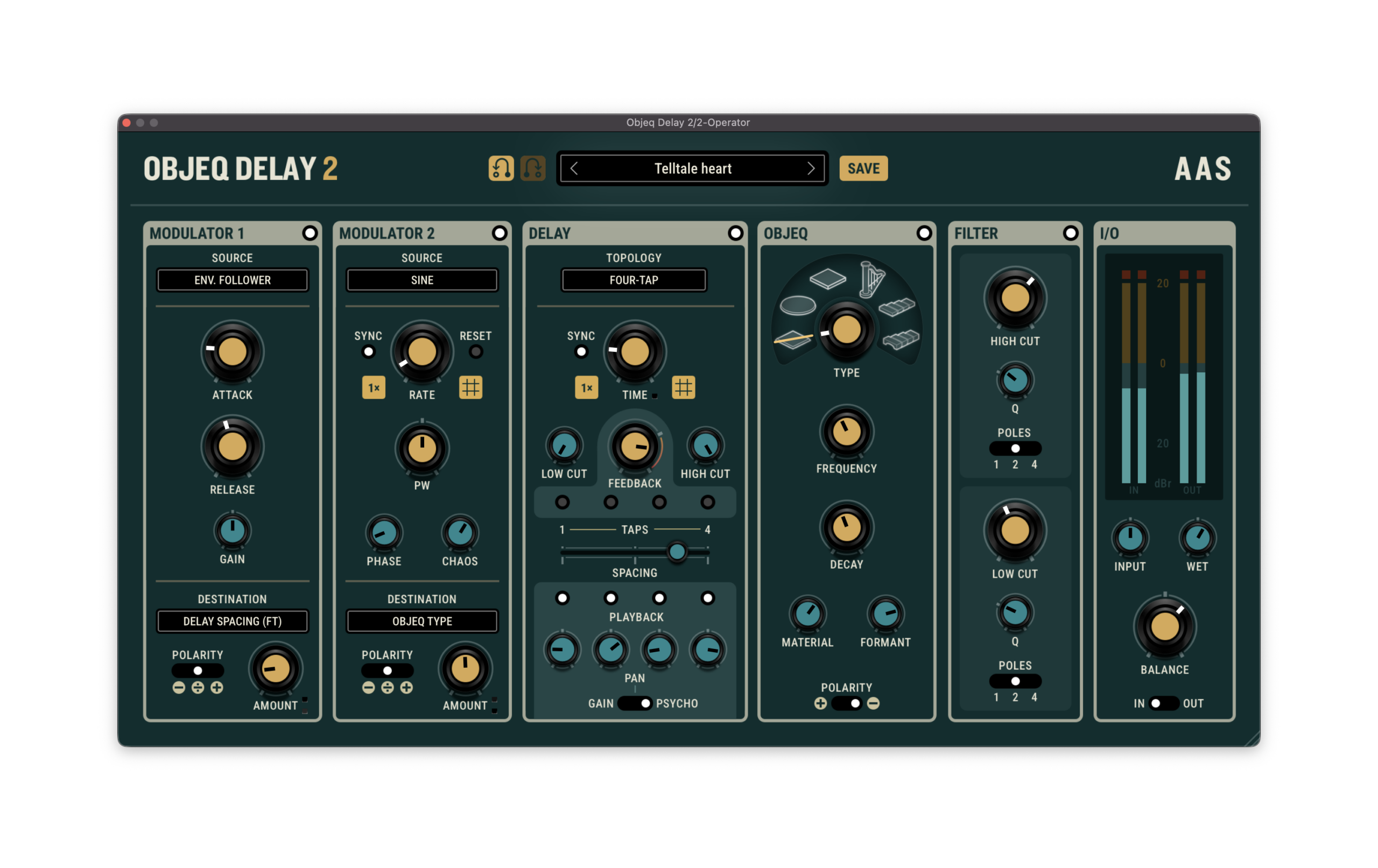
That means Objeq Delay is really the easiest, most portable, plug-and-play way to add AAS physical resonating effects to any host, instrument, or recording. And it’s hard to overstate how valuable just having the models can be — you get exquisite, versatile resonation effects that can sound like strings, the bars of marimba, a beam, a drumhead, a rigid plate, or a rectangular membrane. The software accomplishes this sound by running a single low-pass filter at a fundamental resonant frequency, then 16 band-pass filters for the next 16 modes above.
The old:
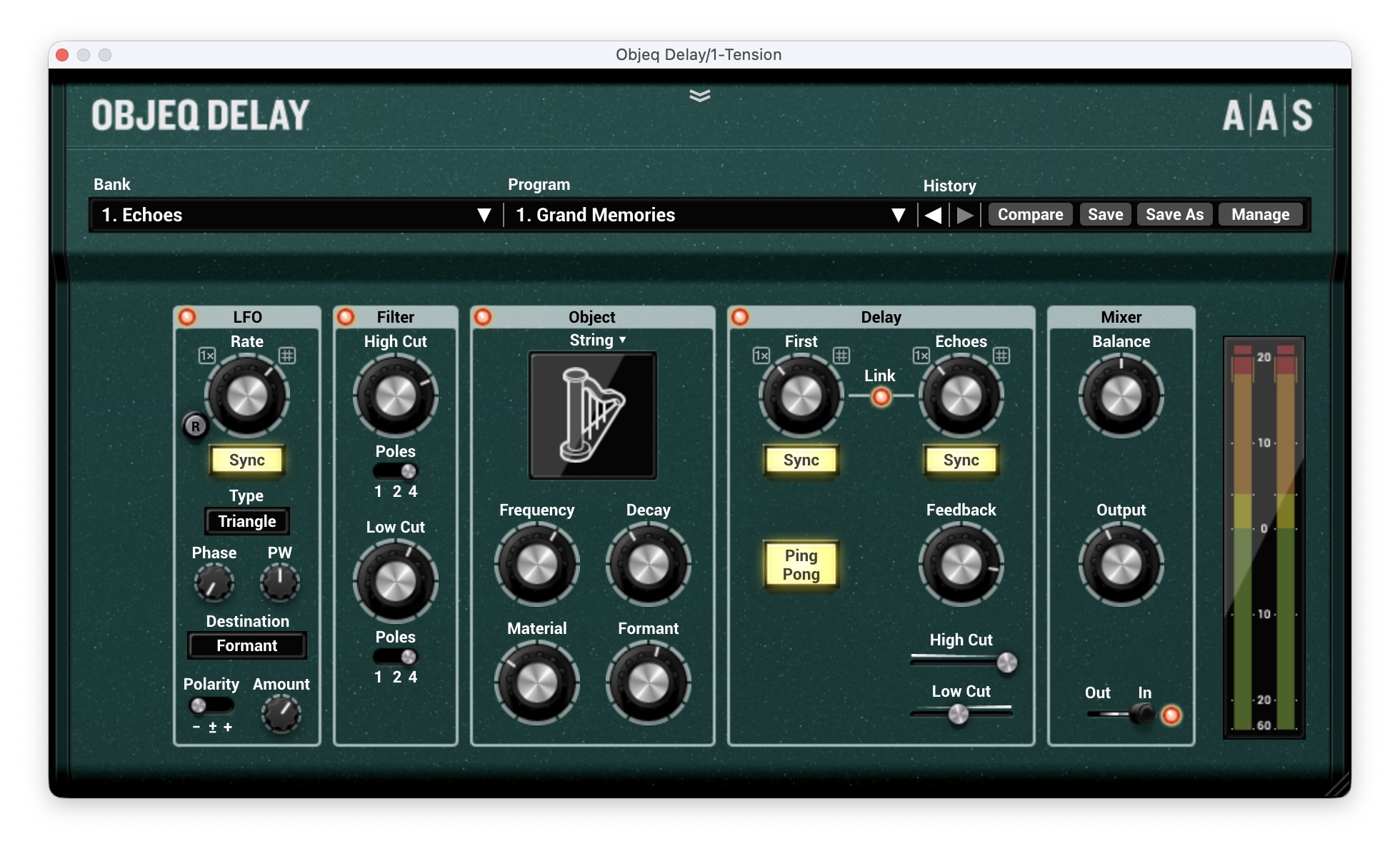
Objeq Delay version 1 rounded out the effects offering with a decent echo module with feedback plus multimode lowpass and highpass filters, alongside modulation and gain/balance controls. But the other modules were a bit vanilla, especially viewed alongside Objeq.
Version 2 remedies that with expanded processing functionality across all modules, plus the ability to morph fluidly between Objeq resonator types. And it wraps all of this into a new interface that both adds new features and makes existing ones easier to discover and navigate.
Have a listen (plenty more examples on their site, of course). All of this is generated using just a sine-wave patch in Operator.
Everything new in version 2:
- Continuously variable Objeq resonance models — and more of them (rectangular membrane and marimba are new to V2)
- Expanded modulation — two LFOs instead of one, chaos controls for adding randomization
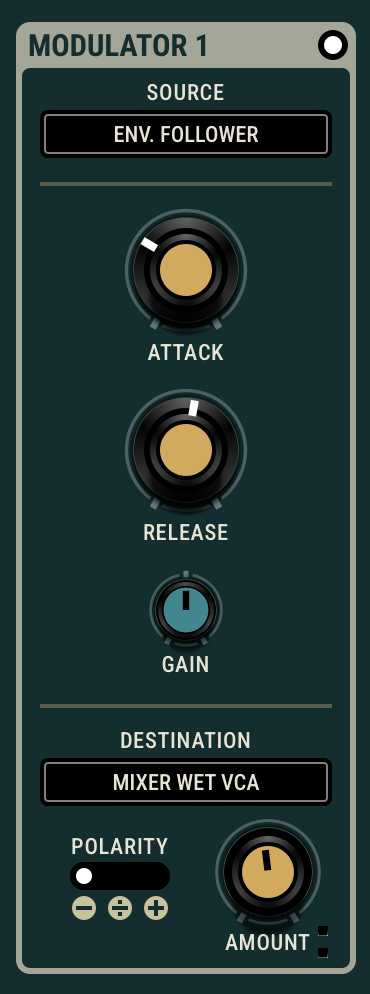
- Source options for modulation: choose sine, triangle, or rectangle waves, or input RMS, envelope follower, or mono pitch tracking. (And there are extra targets, thanks to enhancements elsewhere.)
- Multiple delay topographies: one-, two-, and four-tap delays, plus split.
- Filter Q (finally!)
- Independent wet control on the mixer
- New preset library
Under the hood, Objeq 2 has a complete rewrite of the DSP framework from v1; it’s the same updated resonance modeling I’ve been regularly raving about in Multiphonics CV-3.
And as always, AAS extensively documents their software and includes some terrific preset design.
Each of these modules can be selected or deselected. Combined with the preset options for modulation routing, that makes the effect tremendously flexible — though I do wish you could drag modules to reorder signal flow.
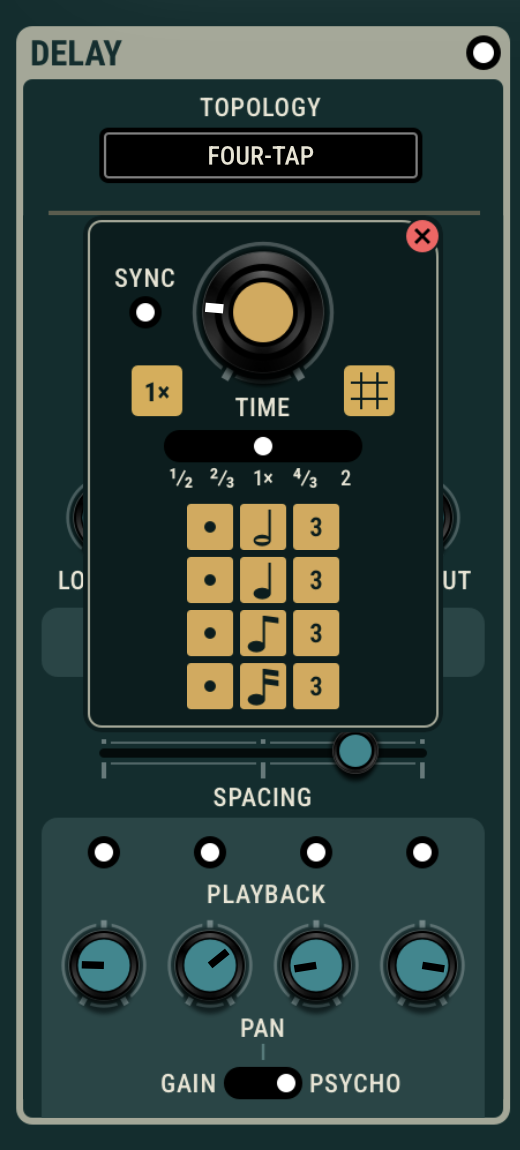
The four-tap delay in particular finally allows the “delay” part of this plug-in to live up to the “objeq” bits. You can adjust the taps as you would a sophisticated tape delay. “PSYCHO” gives you a psychoacoustic mode that creates gorgeous stereo effects. (It is not, as I first read it, an extreme PSYCHO mode!)
And the modulation options are terrific — including the ability to route to the morphing of the models. You get an absurd number of destinations.
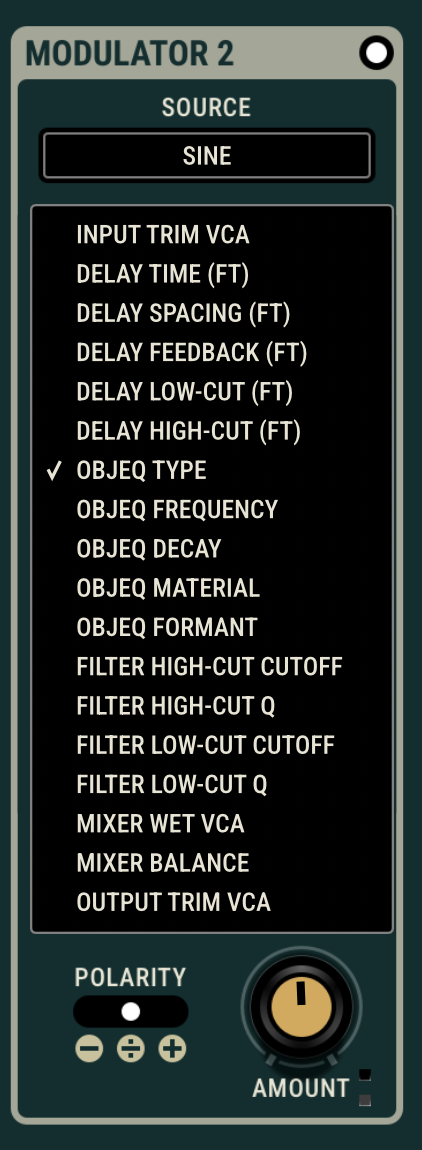
The RMS and envelope follower modulation sources are just fantastic, and another reason to consider this plug-in.
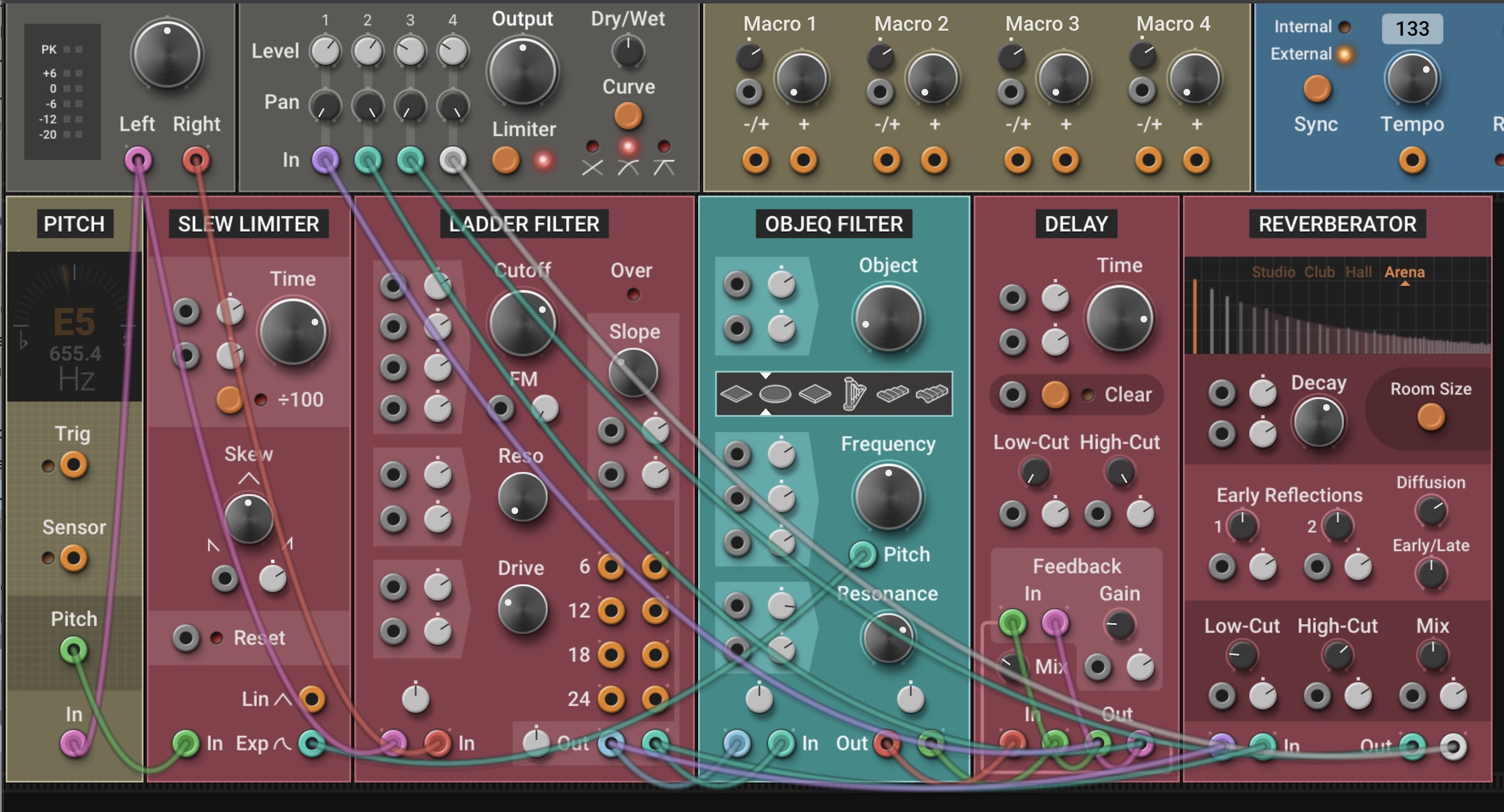
Now, technically, you could do all of this in AAS’ awesome modular Multiphonics CV-3 — but then, you’d miss out on the new delay. (I do hope this means Multiphonics will get a new delay module(s)!) And you would have to patch them manually. I actually tried that while reviewing this, and yeah, my advice to patchers is still to go get Multiphonics CV-3. You don’t get the convenince of everything in a pop-up menu like this, though, so in that case, you’d patch your favorite creations as separate patch files.
Here’s one example, using pitch detection (and adding slew limiting to its output), plus some other ideas. I’d need to do more work to replicate the 4-tap echo, though! So you do get more flexibility this way, but I’m also glad to have the option of the Objeq Delay 2 UI.
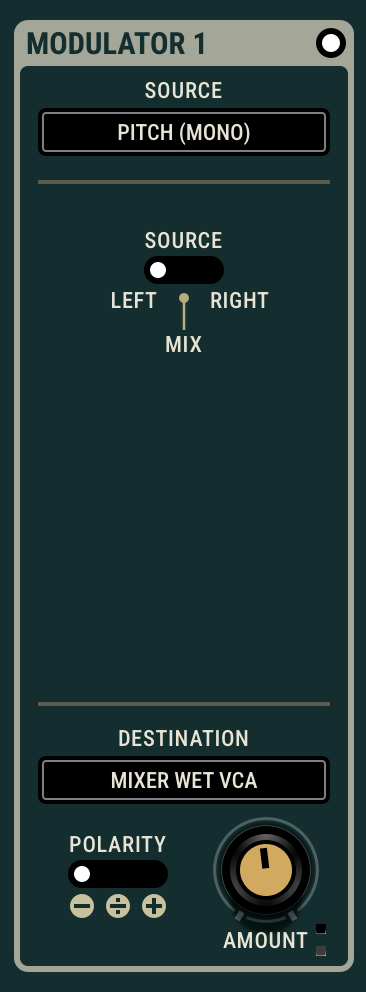
I do wish AAS would add some controls to their pitch follower, in both Objeq Delay 2 and Multiphonics CV-3. The envelope follower is great, but pitch feels like it’s lacking controls — without sensitivity and timing adjustments, it’s going to be pretty wonky as a source.
The one other software worth mentioning here is Rhizomatic Synestia from Absynth creator Brian Clevinger, though the two are almost opposite takes on the same idea. Synestia also uses modeled resonators and delays at its core, but its focus on sympathetic resonance and associated polyphonic tuning controls makes it feel more like burying your head in a piano rather than AAS’ more percussive paradigm. And it adds formants and waveshapers. There’s probably very little overlap between the two user bases, but I expect all of that overlap is as obsessed with modeling resonance as I am and reads CDM, so go enjoy!
All in all, this is an easy one. It’s a must-have upgrade for V1 users. (The installer will leave that version untouched so your previous work is preserved.) And there’s still nothing else quite in this category other than Ableton Corpus, which Objeq Delay 2 can now easily best. Object Delay 1 felt like a great but limited set of resonators with filters and echo tacked on as a kind of afterthought. V2 feels like a fully fleshed-out stereo delay and acoustic resonator effect with more than enough controls, all in a simple, accessible platform.
Well, that was a large review of a small but wonderful plug-in. But hey, why not?
Objeq Delay 2 is on an intro sale now through April 27:
AAS OBJEQ DELAY 2 – product page
AAS Objeq Delay 2 – 20% off at Plugin Boutique
Upgrade from v1 for 60% off the full price – Plugin Boutique
If you buy something from a CDM link, we may earn a commission.