Recent updates for the visual programming environment plugdata (a wrapper for Pure Data) and the powerful object library cyclone are keeping the goodness going. Whether you’re looking to do patching and development in a graphical tool or just enjoy the free stuff people are making with Pd, that’s great news.
We live in one happy larger family of creative tools for making synths, music machines, effects, and other media creations, and in that family, the free and open source Pd and proprietary Cycling ’74 Max are essentially siblings. (I’m tempted to say Data and Lore because I’ve been watching like way too much Star Trek. In this metaphor, Max would be Lore, which I find hilarious, but I’ll stop.)
What’s great about these tools is that you can wade a little, or a lot, into making your own musical inventions. And in the case of plugdata, if you want to skip patching entirely and just download some amazing free, “shareware,” and inexpensive creations by other people, you can.
These are point updates, but there’s some newsworthy stuff in them.
Do you need any of this stuff for making music? Absolutely not. But they add a joyous dimension to your music invention activities.
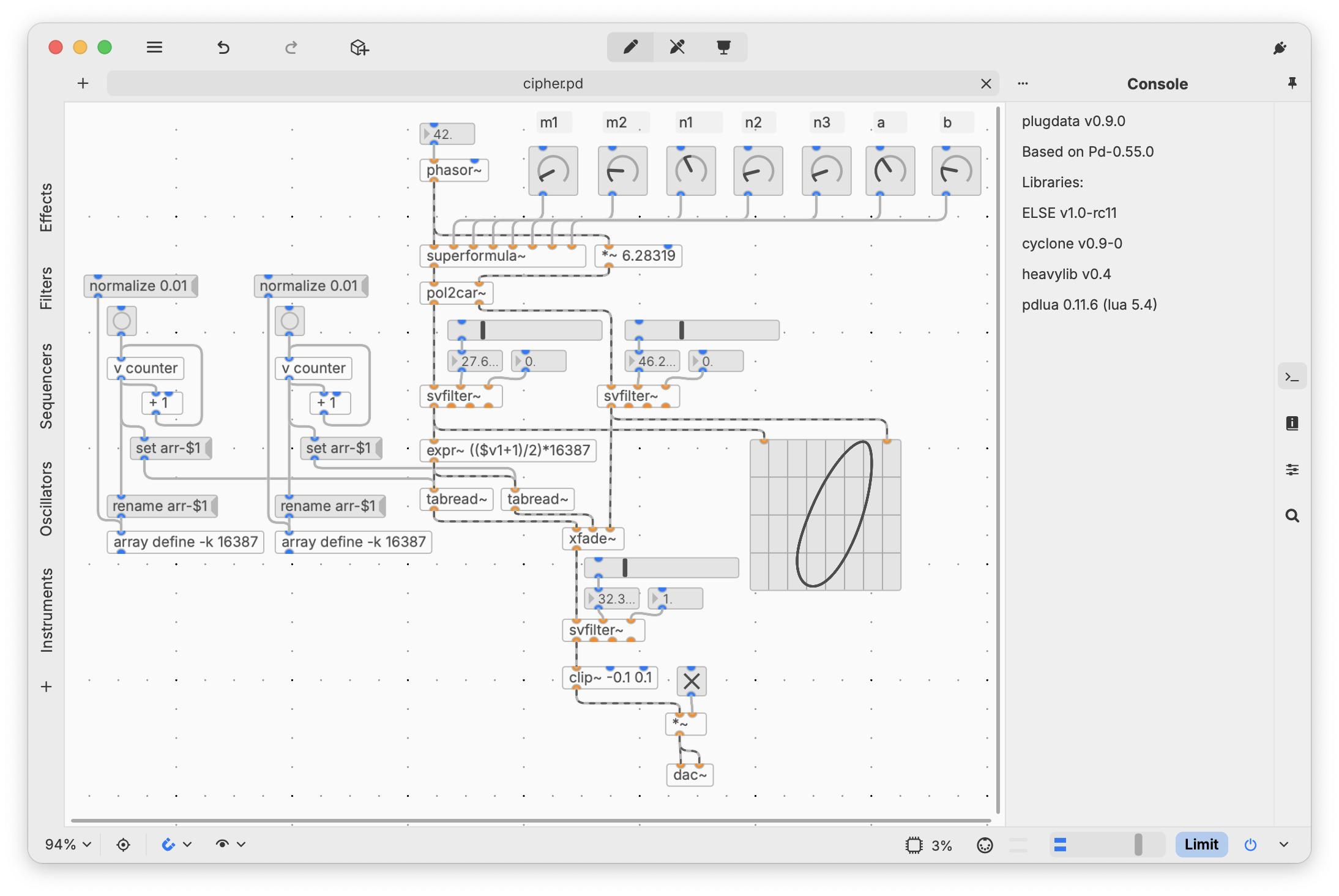
plugdata v0.9.3 — and Heavy
These devs are modest; fixes and “minor” features here actually mean far greater platform support for everyone’s favorite, prettified, more flexible wrapper of Pd, built on the standard Pd “vanilla.” (Vanilla, maintained by Pd’s original creator Miller Puckette — the Doctor Noonien Soong in my strained metaphor — also got a recent bump, to 0.56-2, and should also be on your hard drive.)
New in 0.9.3:
- ASIO on Windows (finally!)
- Arch and openSUSE arm64 on Linux.
- A bunch of Heavy improvements. Heavy is C/C++ compiler based on the Pd API; it means you can run a Pd patch pretty much anywhere that supports C/C++, including a ton of embedded contexts (like bela hardware). That includes, at long last, support for the handy expr~ object by Shahrokh Yadegari, which lets you do C-style evaluations in your Pd patch.
- Better iOS support, including really important stuff like a fix to iOS touch gestures and the ability to run the sf family of objects on iOS — and oh, I did forget to mention, you can go patch on iOS devices with plugdata!
- A bunch, a bunch of plug-in/DAW and OS-specific fixes.
- Versioning.
- Improved scaling.
There’s a lot of other improvements, too, like the ability of plugins to recall your zoom setting, which I see patchers are very happy about. From Nasko (see below):
Internal Scaling – Plugdata patches can now be doubled in Resolution, then internally downscaled/resized, which fixes Windows and Macos Resolution-scaling blurring! 🥳 N-CURVE COMP v1.5 is the first Plugdata patch to make use of this new system and will look sharp on any display
Because it runs as a plug-in and so on, plugdata has to do a lot more than Pd vanilla does, so even though it’s based on vanilla, that’s a big set of taxes.
See the full tag for this release.
You should also check out Wasted Audio, developers of Heavy (hvcc), both on hvcc GitHub repository and their Patreon membership (the free level gets you all the news). Heavy got a big update, too, late in December with v0.15.0 — see their news item.
So what’s the relevance of Heavy (and expr~) in plugdata? Well, it means at last you can make your patch in this luxurious version of Pd, run that patch as a plug-in in your host for testing, and then more easily compile to a version you can run on embedded hardware. Make your own Pd-powered stompbox to go.
Cyclone 0.9.4
Max is wonderful. Pd is wonderful. It’s wonderful that they’re not exactly the same, and have their own objects and uses — like dialects of the same source language. Everything is great.
Well, except that really isn’t always wonderful. You do miss stuff if you go from one environment to the other and something is missing. And because Pd and Max each serve different user communities and use cases and supported platforms, ideally you’d see functionality ported between the two.
There is a lot of collaboration between these communities and porting of objects, but Cyclone is perhaps the most ambitious project, porting a bunch of the Max-specific externals back to Pd. (Pd is technically younger than Max, but parallel evolution has left some gaps.)
Cyclone’s deep set of objects has at least gotten Pd up to Max 7 level — which says something. (I keep forgetting Max 8-9 objects when I use Max!)
Alexandre Torres Porres has been working on this for ten years, and just this week dropped a significant update with binaries in deken, the automatic external management system for Pd, with support across macOS, Windows, Linux, and Raspberry Pi.
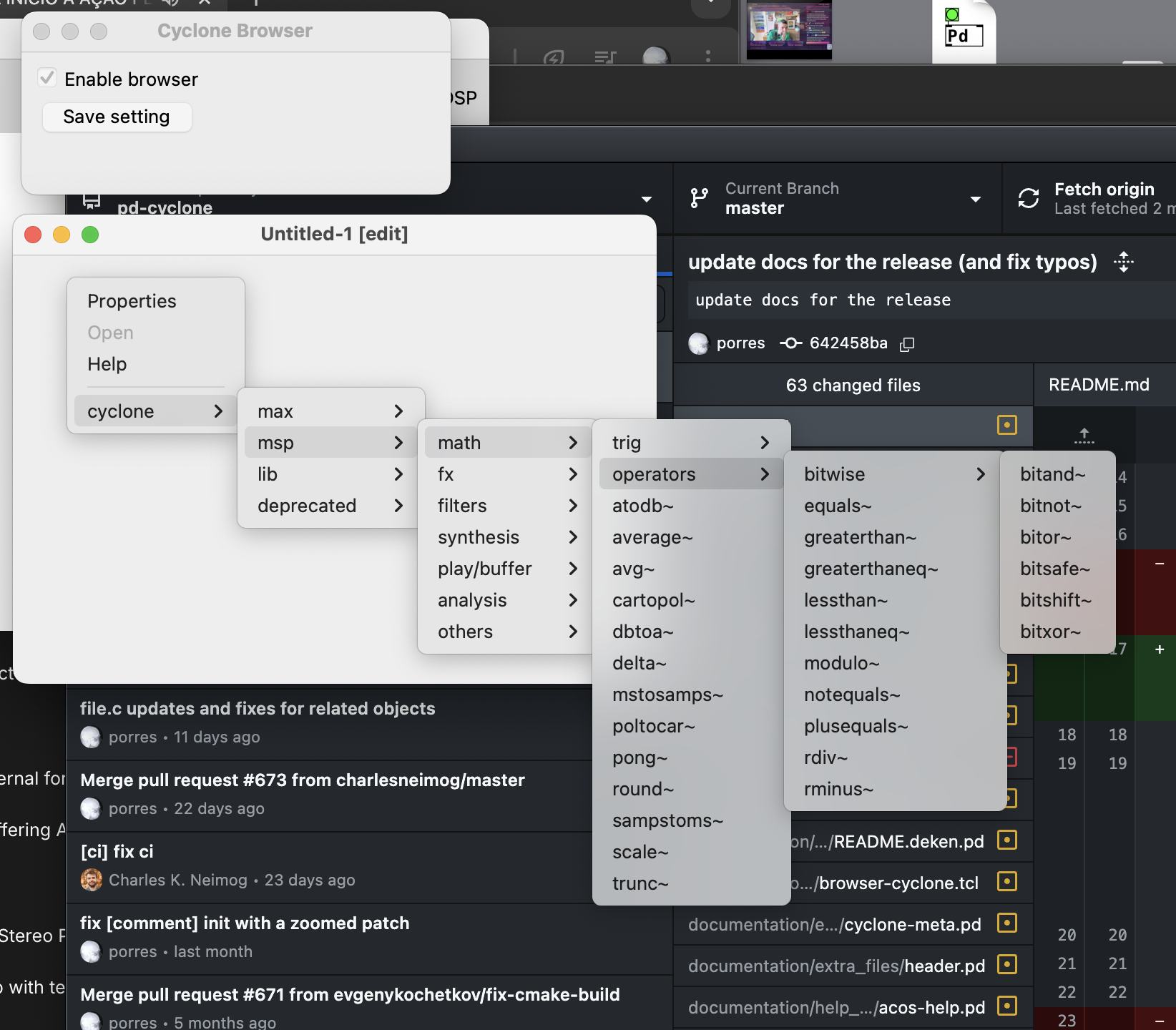
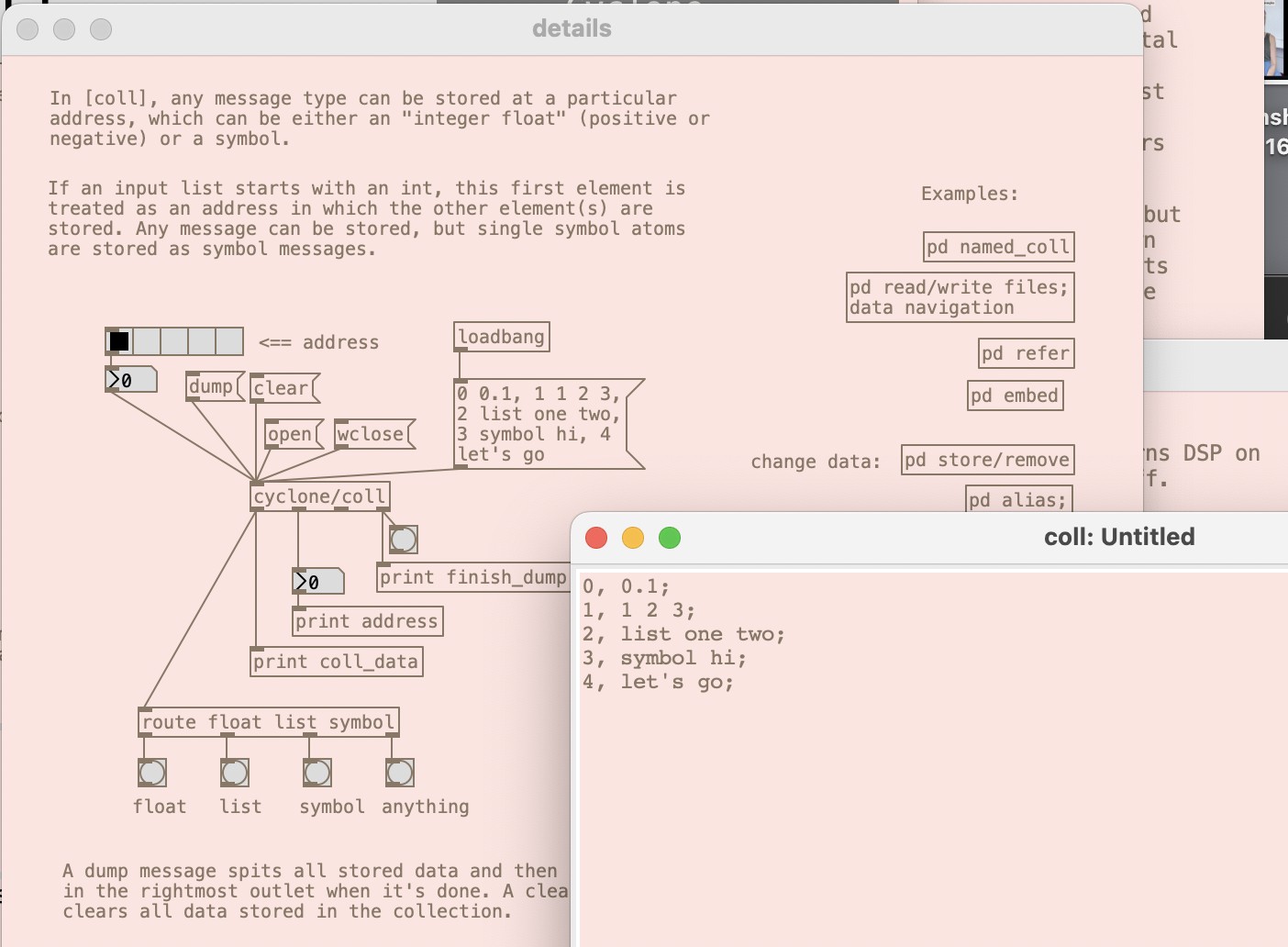
I mean, coll! (Max users will know!) And just having this nice browser menu to be able to navigate all the objects is terrific. (What’s new in this release is actually the ability to disable that, but no mind — I hadn’t checked in on cyclone in a while, and I love this.)
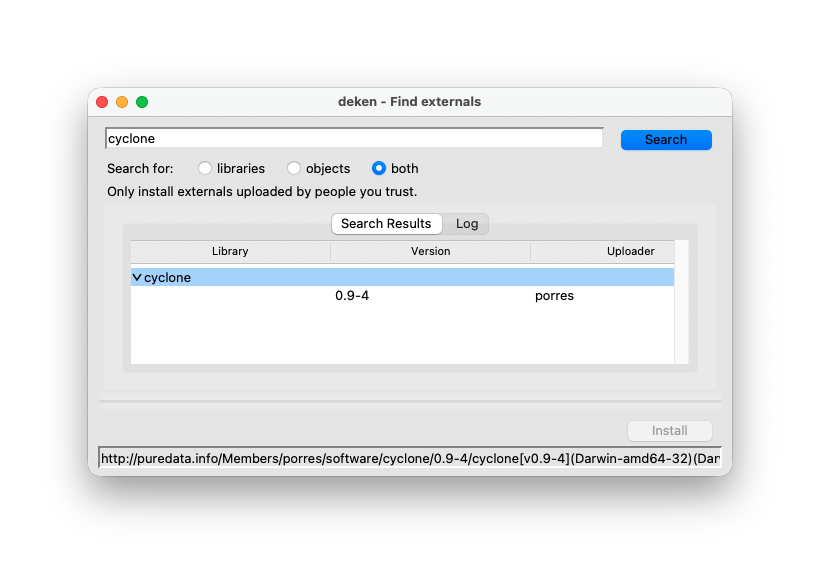
Go to Pd, launch Tools > Find externals (that’s deken, the apt-get or Homebrew of externals), type “cyclone,” and enjoy.
A big shout out to Krzysztof Czaja, Hans-Christoph Steiner, Fred Jan Kraan, Derek Kwan, Matt Barber and all the people who have worked on this for over 20 years.
https://github.com/porres/pd-cyclone
v0.9.4 tag with changes
Use it with plugdata. Use it with Vanilla. Mmmmmm… vanilla cyclone!
Just want an awesome free compressor you can run anywhere?
Bass music producer and advanced visual and sound developer/artist Nasko talks about why everyone is so excited about 0.9.3 stable and the work they did on their Patreon channel.
And Nasko is celebrating with N-CURVE COMP v1.5 with those scaling features.
Download N-CURVE COMP via Patreon
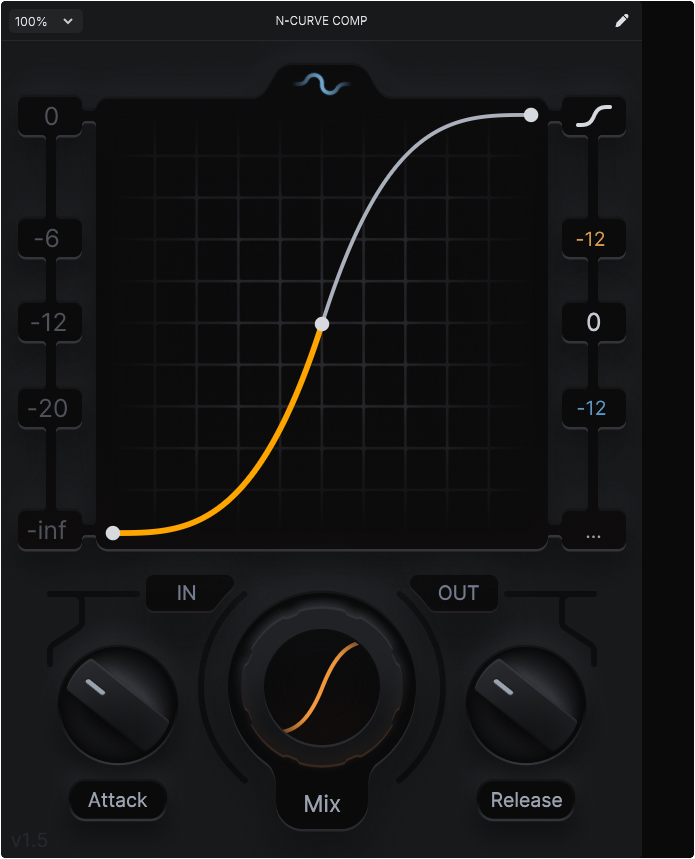
I can’t believe that this is Pd, even now. If you showed me this 20 years ago, my head would have exploded.
I’ve seen a lot of worries about all of us being inundated with vibe-coded plug-ins so music software becomes essentially worthless. I hear that concern, but here’s the thing: you’re too late. There are already artists like Nasko making this incredible stuff in environments like plugdata. Nothing against vibe coding; that’s a discussion for another time. But the amount of time and passion that goes into a patch means that each node in the signal flow was carefully considered, so it doesn’t require the kind of experienced review process that generated code does. It’s honestly part of the joy of patching, taking time to play with every connection and parameter level. (There’s an equivalent in hardware design, where you mess with things on a breadboard not to see if they work, necessarily, but to see how they sound in practice.)
And there are already too many plug-ins. Artists like Nasko have cultivated dedicated fanbases for their music and tools alike. It’s really an echo of the kind of teaching and apprenticeship models that have allowed skilled musicians to endure for generations.
With or without generated code or other AI assistance, I’m guessing that will continue to be what sets people apart.