
A helmet and hand units make up the TRON performance system for a style of music artist Onyx Ashanti calls “beatjazz.” And he’s well on his way to making a reality. All images courtesy the artist. Onyx Ashanti is insane – in the special, essential way that makes certain brilliant musicians. An experienced busker, having […]
Read more →Search results for ""
Ableton Delivers Max for Live Improvements and Guidelines, Responds to Feedback; Full Details
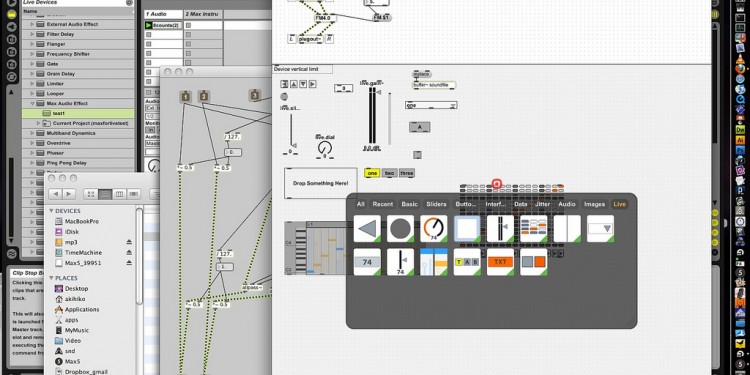
Max for Live, in action: a graphical programming environment inside Ableton Live. Photo (CC-BY-ND) akihiko.japan Max for Live, now into its second year, is a tool with an ambitious goal: take the custom music software creation, visual-patch-programming powers of Max/MSP, and put them inside live performance and production host Ableton Live. It’s not the only […]
Read more →Kinect Music Control Hacks, and Kinect Setup on Mac
On Create Digital Music, amidst lots of hacks for listening and creation at the Music Hack Day here in New York, two teams focused on Kinect. Those creative instruments easily stole the show from more conventional social music tools. At top, Stringer, a simulated instrument that uses Kinect for input; at bottom, Bionic DJ, a […]
Read more →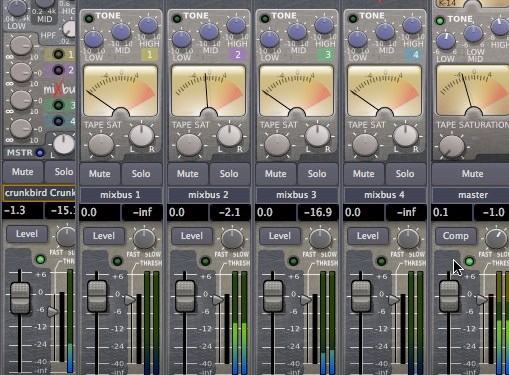
The $79 Virtual Analog Console, Now on Both Mac and Linux: Harrison Mixbus
Harrison is a company with a rich legacy in high-end consoles. Mixbus, their software product, is something of an anomaly. Its analog tape saturation, EQ, filter, compression, and mixing should be sold a la carte for a few hundred bucks each, given the usual business model in this industry. The product should run on some […]
Read more →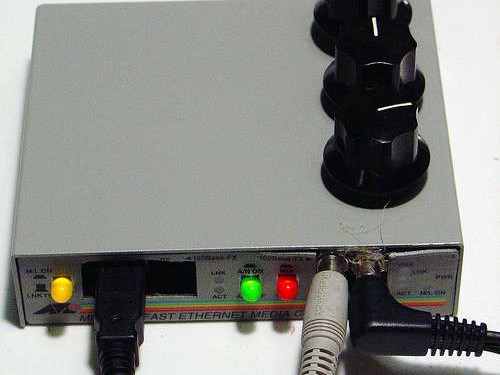
Handmade Effects, Grungy Goodness of the Gallolizer, and DIY Hardware FX
The Gallolizer is a handmade multi-effects sound mangler, an array of dirty, delicious sound-destroying effects in a single handcrafted box. It’s the work of a Spanish engineering and art collective called MP19, an Arduino-loving, free software-using, open source group of artists who turn those platforms into the kind of grungy sounds that make them happy. […]
Read more →Video: Joys of Control Voltage, as Moog Guitar Joins Moog Synths and Effects
Chris Stack, now no longer with Moog Music, is instead spending his time putting out a terrific series of demo videos in which he combines a dream studio of Moog gear. In the last one, we saw him producing stereo ring modulation — and see comments, as someone did take up my challenge to do […]
Read more →
Make an Album in February Or Bust: The RPM Challenge, and Deadlines are Good
Photo (CC-BY-ND) tianhua. Record an album in the month of February, and have it in the mail by March 1: that’s the RPM Challenge, and so far, some 6,000 acts have already delivered. Nathan Groth writes us with details (and apologies for late posting here, since that means you have… less time). Long time reader […]
Read more →Processing, Live: Popular Visual Code Tool, Meet Live-Coding and Clojure, Lisp
For some of us, coding is a slow, methodical process, and there’s even some appeal to the rhythm of it – do a series of things, try it, stop, go back to code… But if you’ve ever dreamt of coding and seeing immediate results — whether just to speed your coding solo, or even to […]
Read more →
Music Made with NYC Subway Schedules; HTML5+Flash, Q+A with Artist-Developer
Alexander Chen transforms the steady pulse of the (actual) New York City subway system into gentle, generative string plucks in his new interactive piece “Conductor.” The visual effect as well as the musical one is mesmerizing, as the subway is viewed in the abstract, sparse geometries of designed Massimo Vignelli’s 1972 diagram. New York subway […]
Read more →
Grids, Chips, and Blips: Handmade Music NYC, Saturday 2/5 Lab + Party, Video Samples + Listening
Galapagoose plays a Brooklyn rooftop at the monome community tour in the fall. Now he’s back to celebrate the release of new software, and meets up with artists from across the digital music-making spectrum. Handmade Music is back on the Lower East Side of Manhattan with an epic lineup spanning digital synths to monomes to […]
Read more →