Sonic Pi creator Sam Aaron is building something new. It’s early days, but Tau5 promises to be a “next-gen” creative coding environment. You can use it with your favorite tools, including Ableton Live, TidalCycles, Hydra, and others — even MIDI hardware. And you never have to feel alone: you can jam with others, code with friends, or code alongside AI (if you want). Let’s explain.
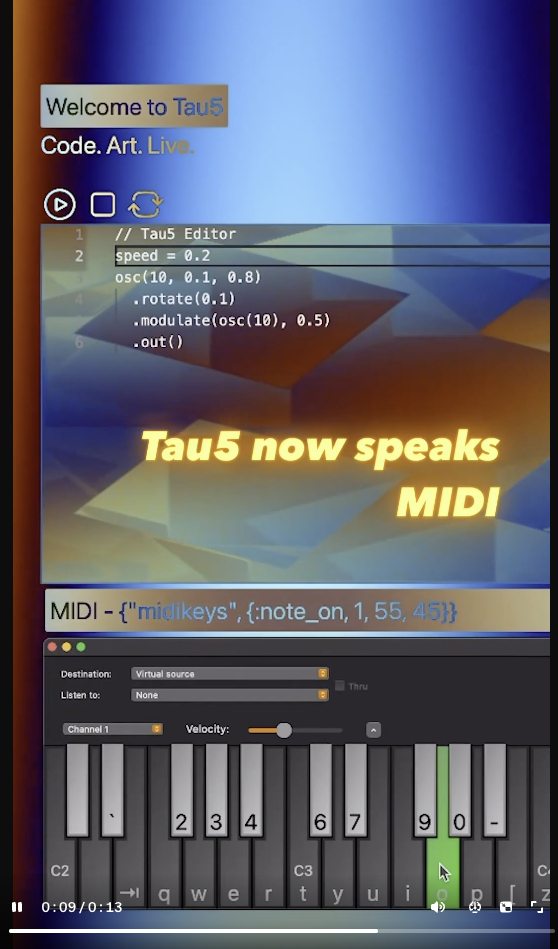
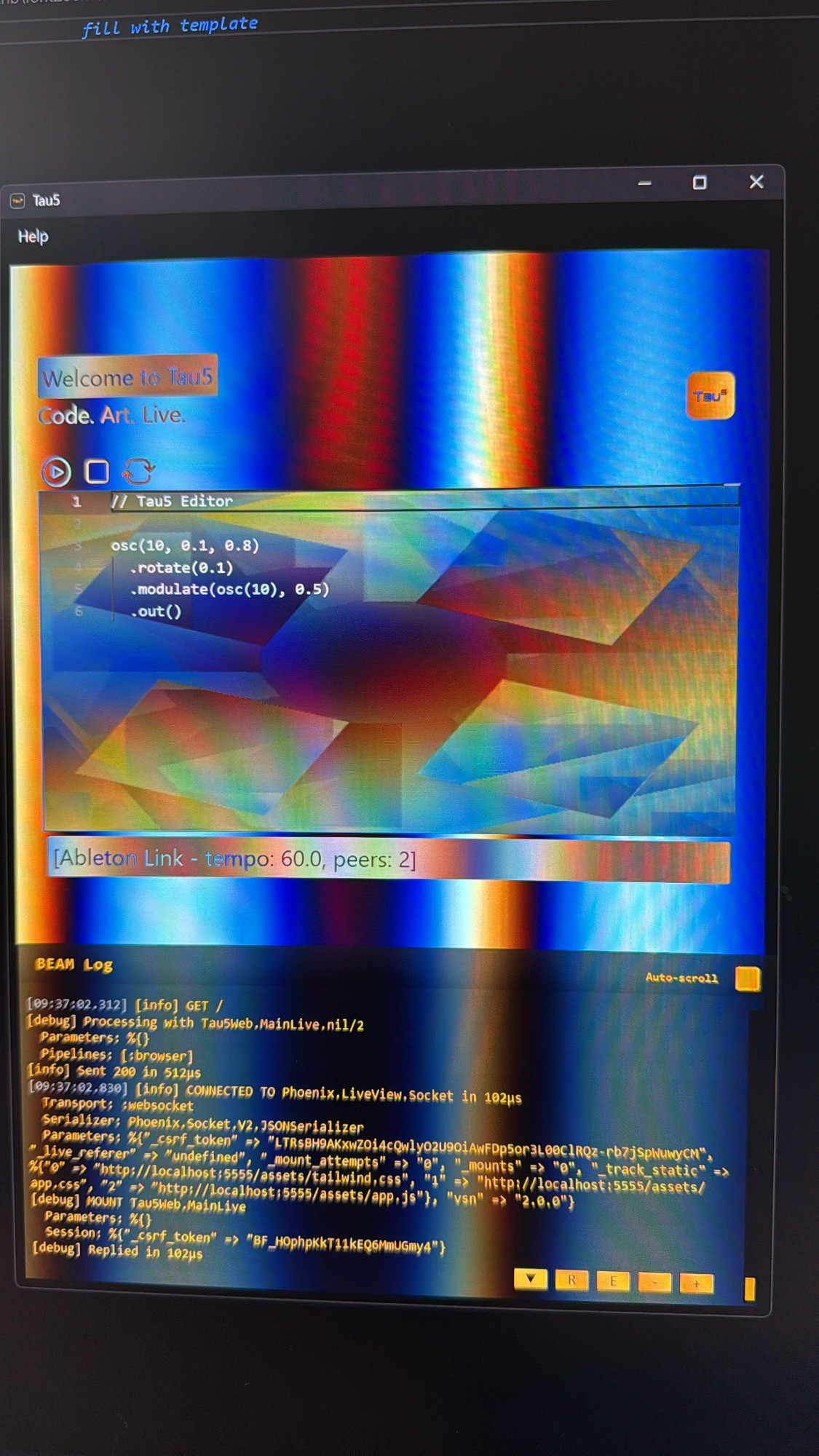
Pictured above and through the article: experimental-only images of the software, in development. “testing out different combinations of tech to see how they meshed.” Sam says he has “no idea” what it will look like when it’s done, but I’m enjoying these abstract shots! The colorful backgrounds are layered from Hydra.
Joy of live coding
Many people who never imagined they’d write code themselves have discovered live coding for art and sound. Sam Aaron has been one of the people around the world championing that, with the help of his open-source Sonic Pi tool, built atop the object-oriented sound environment SuperCollider. It’s even helped kids get into live coding on Raspberry Pi and other platforms. (Sonic Pi also saw a big new release in June; it’s got great documentation and accessibility features for blind and partially sighted folks. If you’re interested in Tau5, brushing up on Sonic Pi first is a great idea!)
What is Tau5?
Tau5 is not about replacing existing live coding tools; you can keep your favorites like TidalCycles (music and patterns) or Hydra (live visuals — see my interview with creator Olivia). Think of it as a hub that brings things together. You can write all the code you want, code with friends, and even invite AI agents (more on that below). Everything stays in sync, and you can connect to networks, MIDI, OSC, and Ableton Link for timing.
That comes in three pieces:
- Desktop. There’s a desktop, standalone app for macOS, Windows, and Linux. (This can work even if you don’t have a network connection.)
- Server. Background server, Web UI — multiple nodes can discover each other for a synced mesh over a local network (with or without Internet access).
- Live/Web. Hop on tau5.live and anyone can play and code collaboratively — even without the desktop app, so long as they’ve got a browser.
Then you get secure connections with precise, event-driven timing.
If you don’t want AI, you don’t have to add AI. Before you scream bloody murder: Tau5 itself uses no machine learning, and has no built-in bot of its own. It’s also an optional feature (part of the installation, but disabled by default). This will please me and Commander Adama.
If you want to add AI, you can. If desired, you can add an MCP server for AI agents like Claude Code.
The obvious application of this is, yes, you can use one of those agents for assistance with generating code in any programming language — for instance, if you’re a beginning coder and want that help. But you can also use this as a bot to live-code along with you if you don’t have friends handy. I’ll be curious how people respond to this and whether they want it.
It shares connectivity with Sonic Pi. Ableton Link, MIDI, OSC are built in. You can even rig up MIDI. And that means connectivity not just with Ableton LIve, but also tools like TouchDesigner, Resolume, VDMX, Reason, Pd, Max, iPad apps, and on and on and on.
It looks fascinating — it’s got the accessibility of Sonic Pi but all the under-the-hood power of a serious dev tool. Basically, it’s the network hub and developer tool many of your favorite live coding tools are missing.
What Sam says
Sam told me a little more about this project at my urging. Oh, and I’m not supposed to “oversell” it — the story is long just to be clear about what it is. Sam writes:
It’s really nothing but dev tools and architectural designs at this stage. Tau5 is effectively bleep (live site) combined with Sonic Pi. (Bleep can be seen as a working proof of concept for Tau5’s architecture. It was a collaboration between me and Prof Guy Brown, who was head of CS at Sheffield Uni whilst we worked on this. Guy turned out to be an amazing whiz at synth design and built the whole web audio synth engine.)
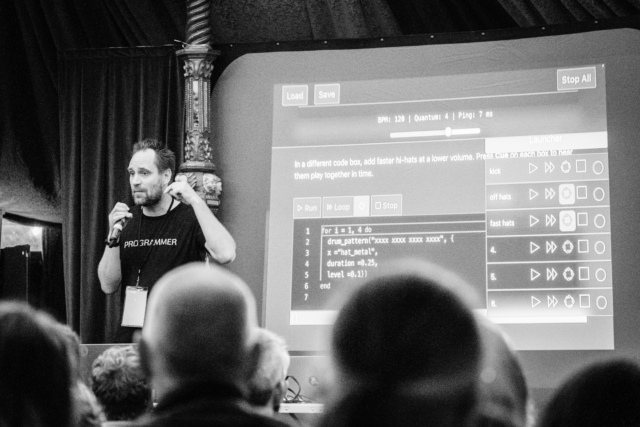
The Black Dog used this environment for their performance at Sheffield University’s “Festival of the Mind” — you can check that out with code (and other notes) on TBD’s site:
Live Coding Software For Music
There’s a free recording of the performance, too:
Live at Festival Of The Mind 2024
More details and credits at Bleep
You do need to have a server that can handle the computation, but these days I think that’s pretty trivial cost-wise — and worth it for easier collaboration. “I’m confident it will all work beautifully,” Sam says. Me, too.
How to join in
This will be fully open-source, but supporters can get early access to builds and early previews. (You have your choice of two platforms, with Patreon and GitHub Sponsors.) That’s really there to support Sam financially in the development process. If it works, this could be a great model — open-source, but with some sustainability for the human being doing the work. And it remains transparent; you can still watch builds on GitHub (including if you’ve got some sustainability issues of your own!)…
https://github.com/samaaron/tau5
And check those additional developer tools:
- Built-in REPL for the server
- Chromium web inspector for the GUI
- Live dashboard enabling deep observation of server activity
- Live GUI log
- Live server log
- Multiple (optional) MCP servers that provide tools for AI agents such as Claude Code deep introspection and live control of the server, the Chromium-based GUI and the platform runtime
I’m eager to play with this as it evolves. Meanwhile, it’s a good chance to brush up on Tidal, Hydra, and Sonic Pi (plus the originator SuperCollider)!
I don’t want to sell this too much before it’s done — but this is the pitch for those of you interested to join up and support its development. And watch this space.
What is Tau5?
samaaron/What is Tau5?.md
https://www.patreon.com/samaaron
Learning Sonic Pi? Just noticed Sam has a summer sale on for his intro course!
An Introduction to Coding Music with Sonic Pi