There are tricks for getting low-end, and then there’s the Voice of God. UA’s (official) version is good as ever, and now at last, you can run it as a plug-in without any UAD hardware. We’re getting all the classics this week.
There’s not a lot to say about VOG. It’s probably one of the few low-end bass “secret weapons” that actually works, and works safely. It’s a must for kick drums (acoustic and 808 alike), it’s magic sauce on 808 bass, and it works well on other bass and vocals, too.
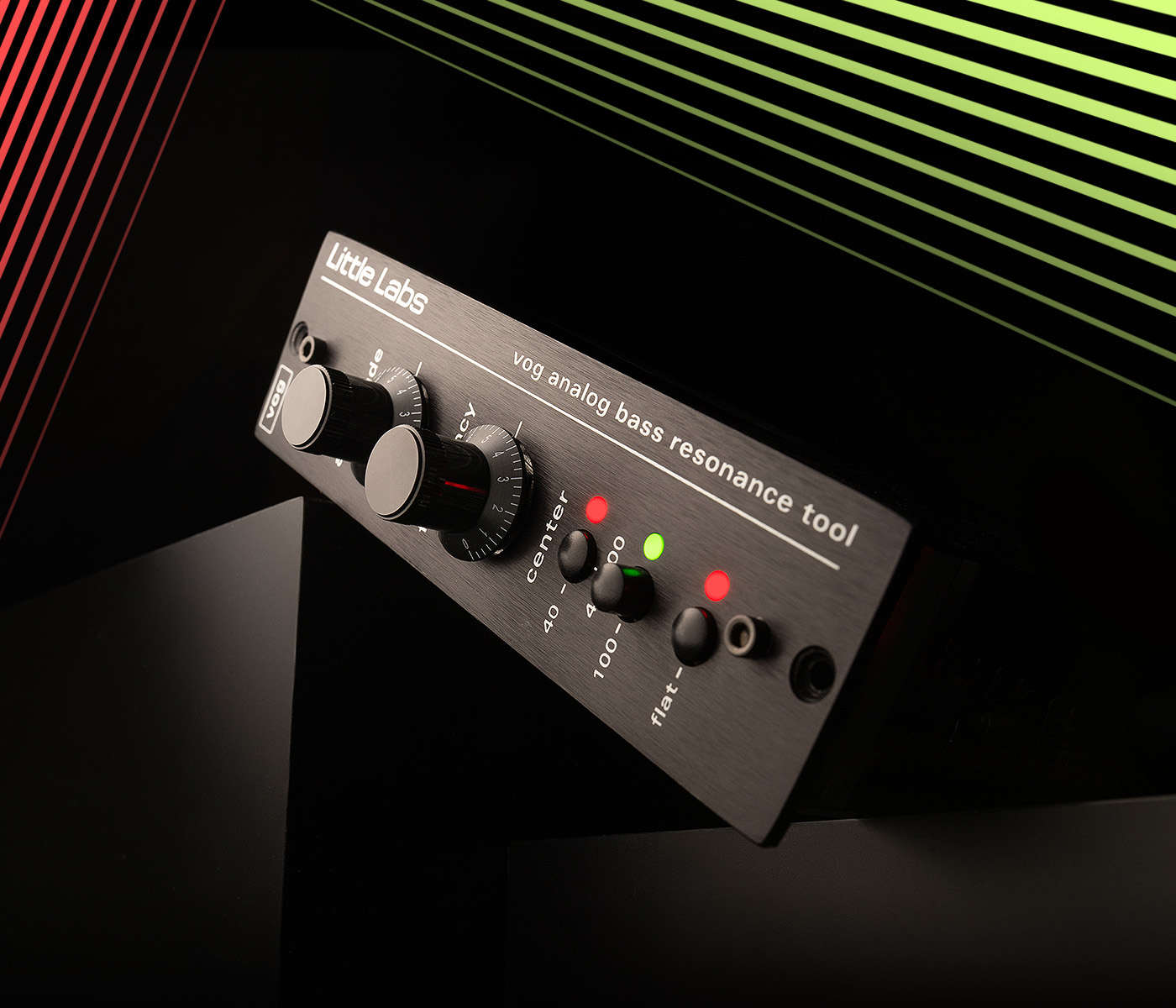
Universal Audio always had a great version of this, but it required their UAD hardware. Now, if you do own an Apollo, this license will still work on that. But if you don’t own UAD hardware — or you didn’t lug it to a particular location — this will work natively, too.
And that’s it. There’s nothing more to say. Unlike a lot of resonance tricks, VOG won’t create additional problems in your mix. It is effectively an EQ. The full-freight $99 price seems a little rough, but the $49 intro might be worth doing.
I had used the UAD version at some point, but just refreshed my ears with the native version, and this is just as nice to have in 2026 as ever.
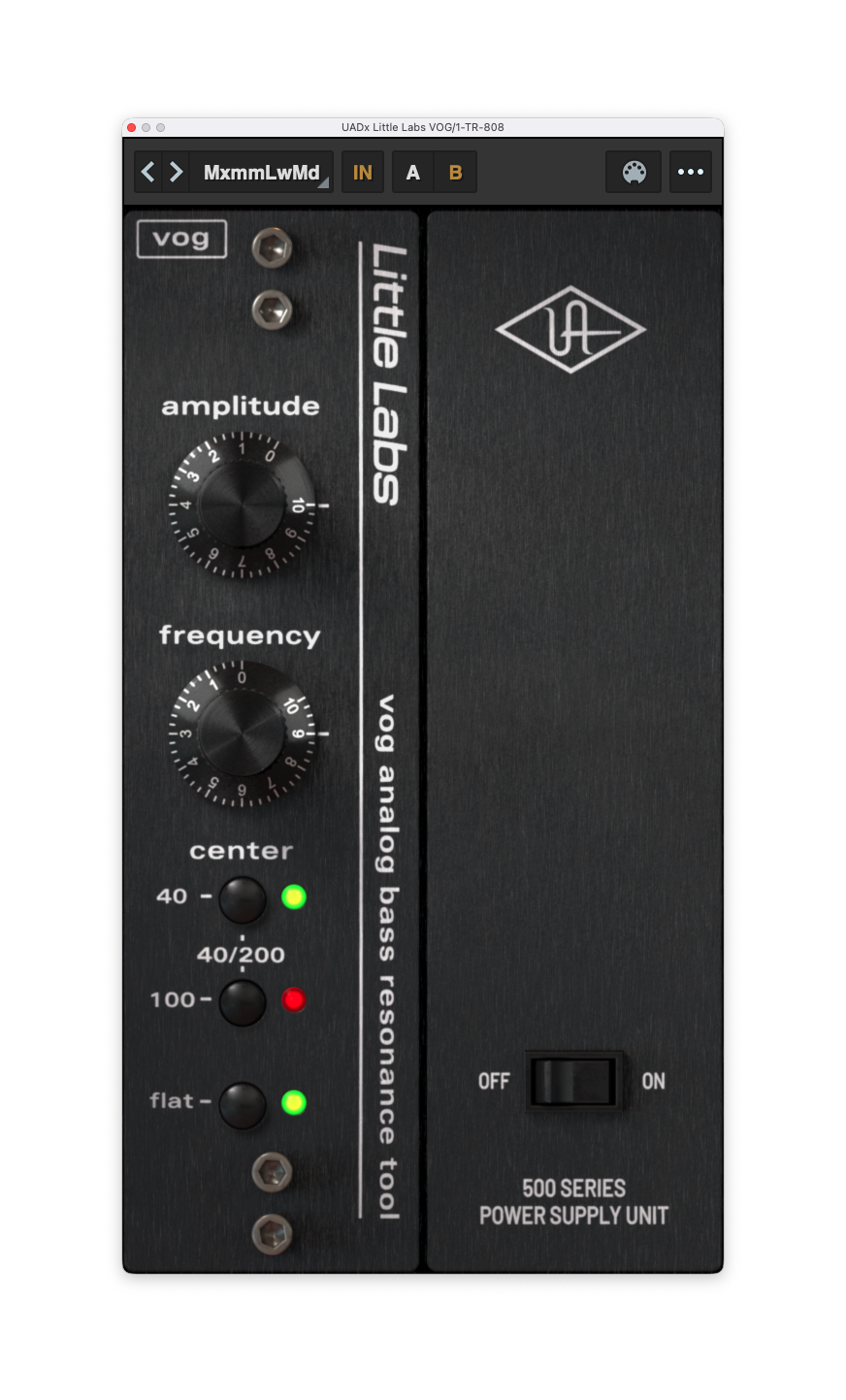
Here’s an example. I took the Roland Cloud TR-808 model as it’s pretty neutral when set the defaults. (The only real problem with VOG is that it may be too much if you’ve already tweaked your 808 to add low-end via some other method.) Just turn down the master volume on the 808 a little, and the UA presets here already sound great — plus it’s not like you really need presets on this interface, anyway. (They work for demonstration purposes, though.) It even sounds pretty good through YouTube.
Listen, who am I to argue with God? (uh, alternatively, ‘What does God need with a UAD interface?‘)
Let there be bass.
https://www.uaudio.com/products/little-labs-voice-of-god
If you’re curious, both Tape Op and Sound on Sound have reviewed the hardware:
Little Labs VOG – Matt Houghton for SOS
Little Labs: VOG Analog Bass Resonance Tool – Steve Silverstein for Tape Op
As both of these reviews explain, this is basically a specialized combination of filters. That means that with some effort you could take an EQ and perform the same — even some of UA’s own EQs. And so Paul Third has a reasonable take that you don’t need the plug-in:
Then again, if you just happen to find this on one of UA’s endless discounts/bundles/whatever, there’s really no harm in using this interface to get the result. I reached out to UA to ask if there’s more that they’ve modeled from the hardware. (I might argue the opposite of what Paul says here, which is if you can accomplish this trick in software, maybe you don’t need the analog hardware. But that’s me.)
This is not public yet, but here’s their walkthrough video, which does a good job of explaining the function of the design and its applications. And so their rebuttal to the above is essentially, yes, filters are … filters. The purpose of this sort of design, as in the original analog hardware, is speed.