We have updated hardware classics, so why not software? Absynth’s original creator, Brian Clevinger, weighs in on what motivates his instrument creations and what strikes emotional resonance. From Native Instruments, Hannah Lockwood joins to talk about the user interface and the collaboration.
Art history
Update Absynth 6, even just to keep it up to date? That would be “a significant effort … too much of a challenge.” So said Native Instruments’ 2022 announcement that it would stop selling or updating Absynth. Well, they weren’t wrong about the significant effort — read on. And Absynth’s disappearance goes along with a lot of great people at NI over the years who left the company or were made redundant through various corporate cycles. So to say that the arrival of V6 is a pleasant surprise is an understatement.
Even the games industry now struggles with preservation, and they don’t have the same low-latency audio requirements as audio; many of those titles can even depend on ROMs and emulators. That’s why some artists and communities have turned to saving images. (See collectors like Suren Seneviratne, aka My Panda Shall Fly, or Roger Helfers.)
I was already a huge fan of Brian Clevinger’s other work, his Plasmonic synth and Synestia multi-effect, released under his Rhizomatic software label. And I knew some of the people who contributed both to the “vintage” V5 effort and now the new team on V6. For lovers of instrument making, you follow some of the people, not just the tools. It’s a chance to talk about ideas about music making.
Behind the scenes with Brian and Hannah
CDM: How did a project to reboot Absynth come into being? I have to admit, I didn’t expect to see this.
Brian: It’s a huge project. And what we’ve been doing in the past year — it’s kind of insane. It turned out to be way bigger than I expected. It took us all by surprise — but yeah, it’s coming together.
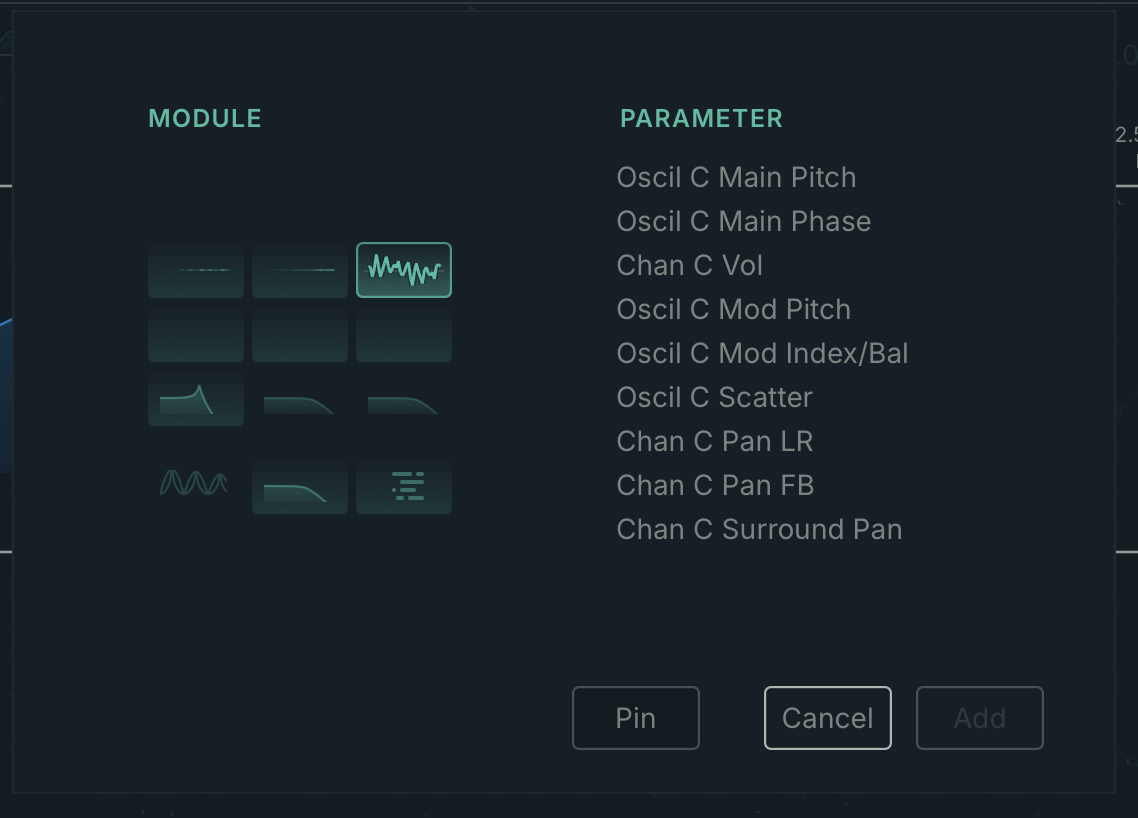
Was it bigger than expected in terms of how you wanted to expand it, or in going back to this old code base, or a combination?
The amount of work adapting it to a new plug-in framework. Backwards compatibility was super important — we want people to be able to play their old presets and it sounds the same. It was full of surprises at that level; it was pretty complex. Getting into the UI design — I was working much more closely with the UI people, and that was really fun and exciting. They were really into it. They were really dedicated to Absynth. All the people at NI were super enthusiastic about this.
There were so many cases where — we would look at the way it was in Absynth 5, and we end up coming back to similar solutions.
There are so many consequences to every decision. It really took a long time to come up with the design we’ve got. And I’m really happy with it. It’s just way easier to use than it used to be.
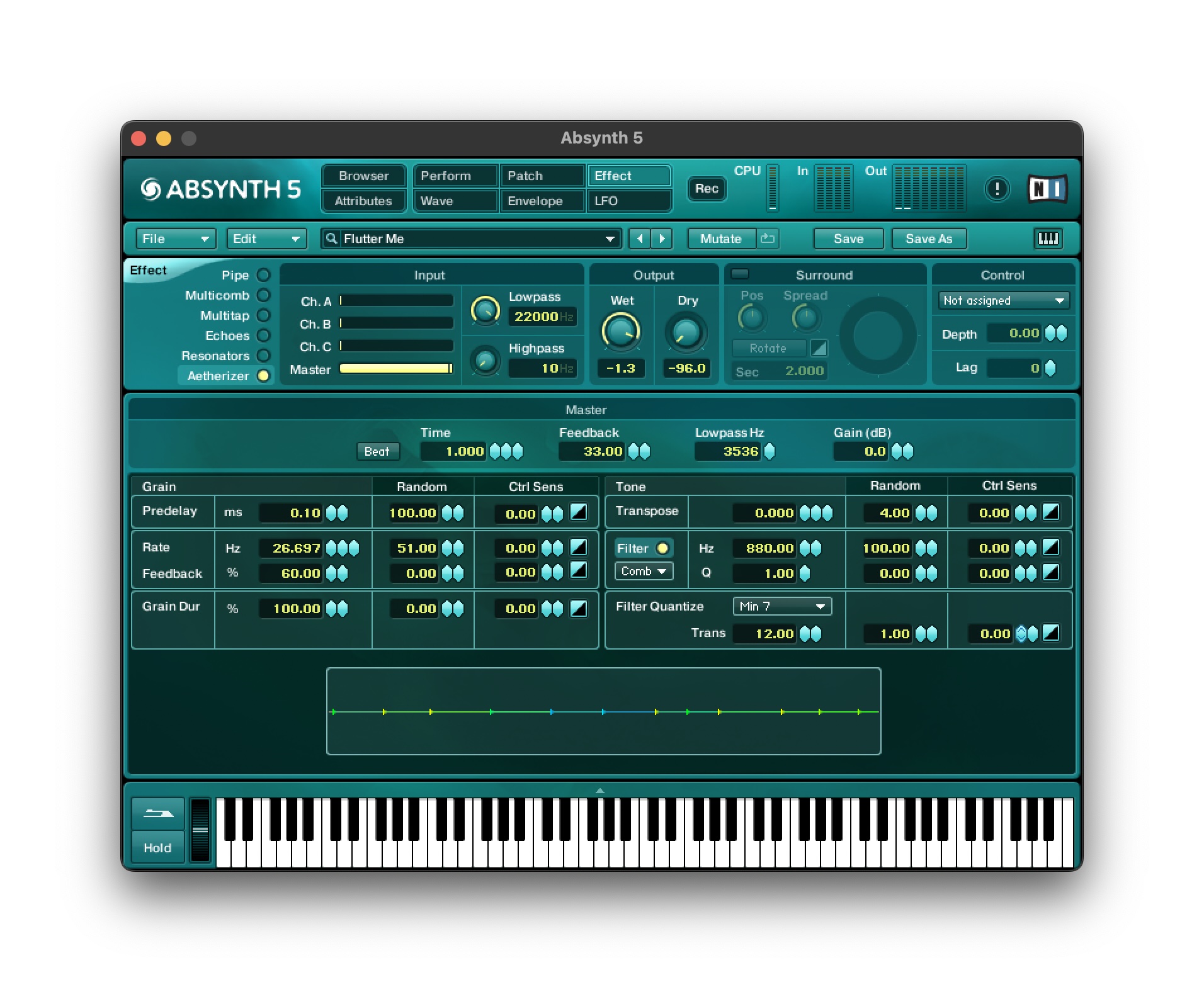
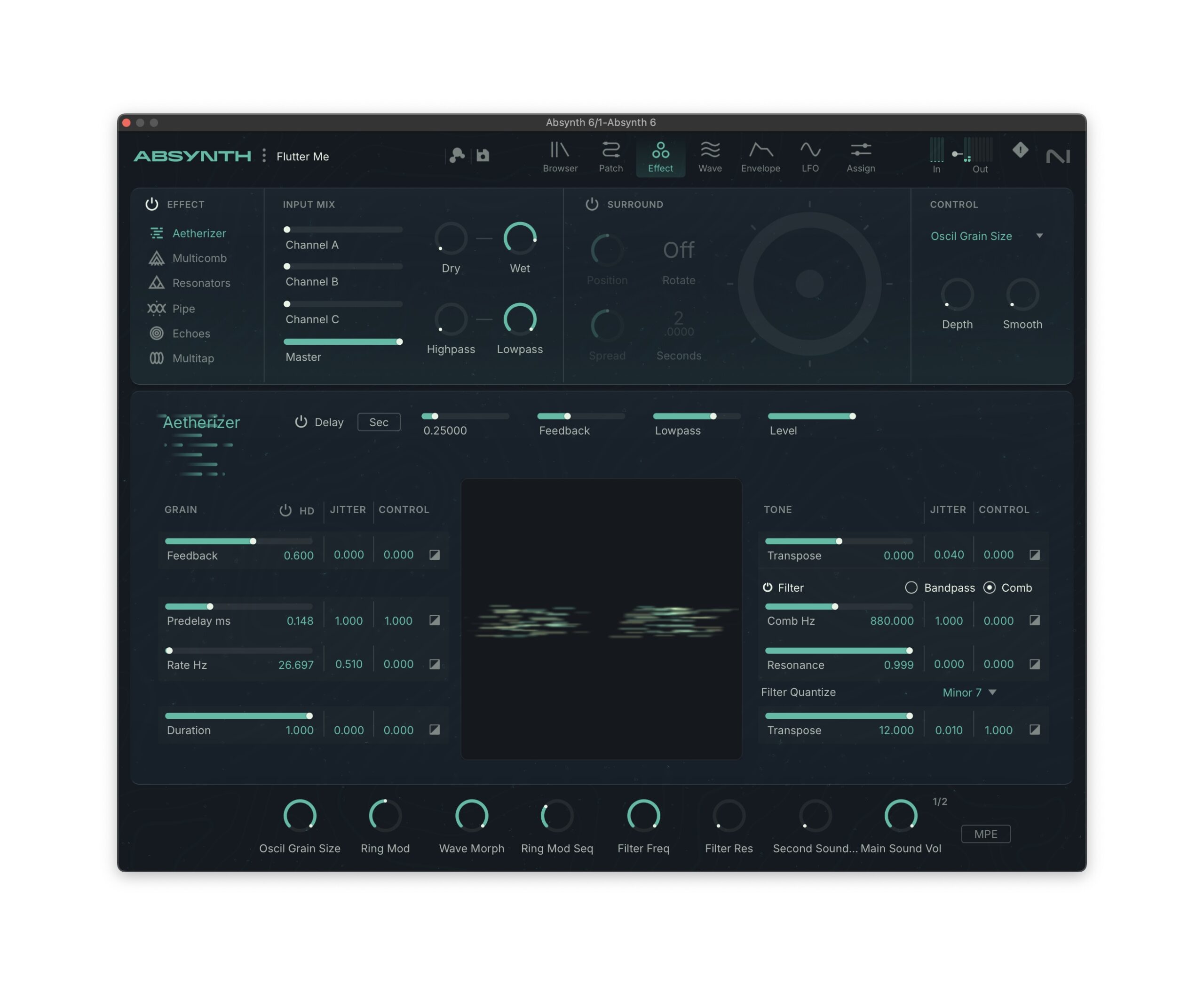
Obviously, you stuck with green, if made more subdued (and perhaps mature)!
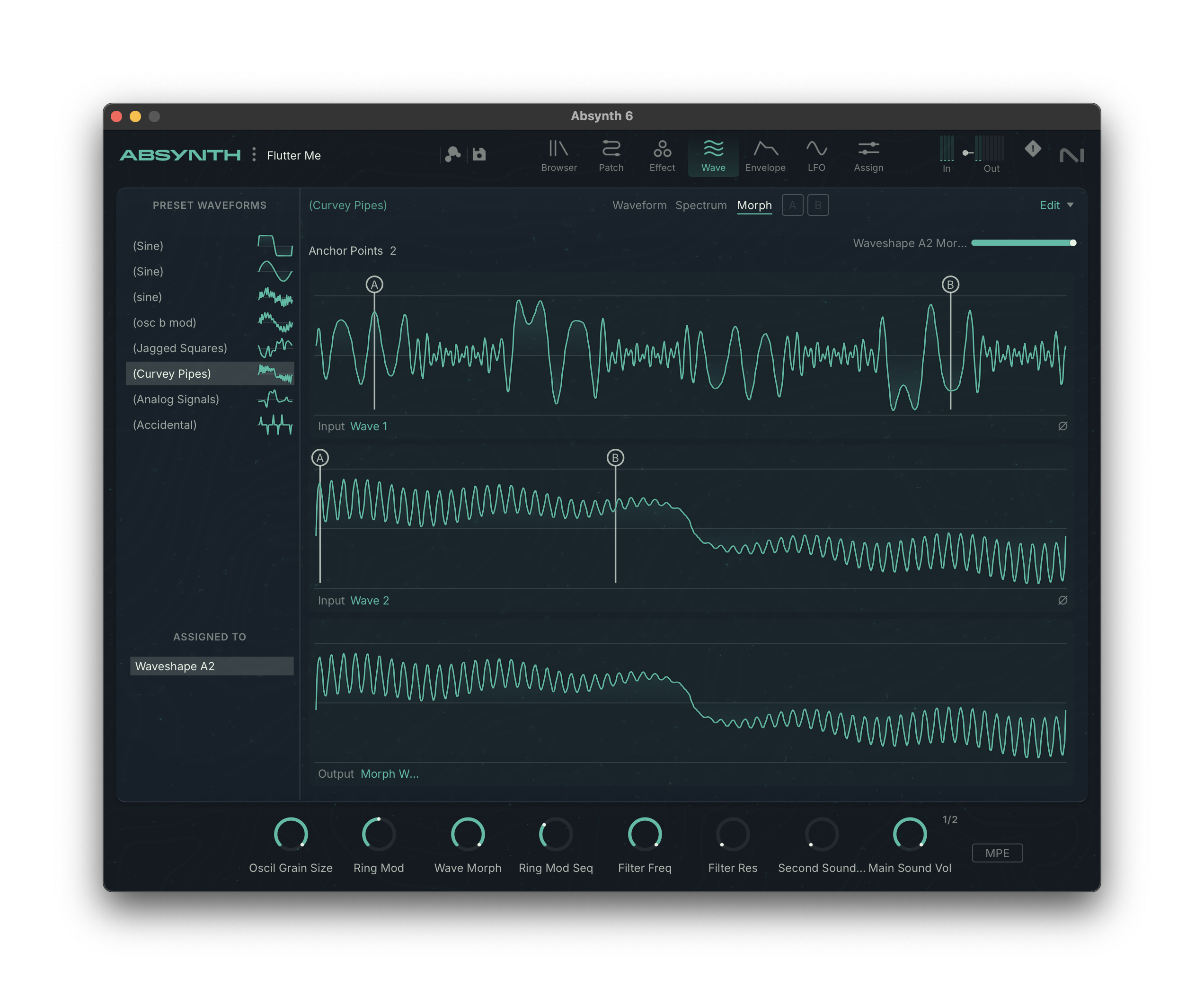
Hannah: We really didn’t want to lose Absynth’s identity in the redesign. The green is such a recognisable part of its character, but the older palette could feel somewhat harsh, especially when working over long sessions. Simon [Fichtner] did such great work modernising the UI… softening the tones, improving the contrast, and finding a balance that still reads Absynth but is kinder on the eyes. The goal wasn’t to reinvent the look, just to bring it forward in a way that feels more refined, and most importantly, more accessible.
CDM: I get the feeling a lot of times in Absynth 6 that I understand Absynth 5 better. How much of it is that the new work clarified what the earlier design was about?
Hannah: Discoverability was a big focus, especially with an instrument like Absynth. The first step was understanding and respecting where Absynth and Brian come from, and keeping that front of mind with each decision. How do we honour this history for the users who have been with him for so many years? I always felt that so much of Absynth’s magic was buried in the interface… powerful ideas hidden behind UI/UX patterns that weren’t easy to navigate. Our goal was to surface more of that power without stripping away the character of the instrument. We leaned into the idiosyncrasies that make Absynth what it is, and focused on bringing clarity to the experience so people could discover its full range, and maybe better understand why it sounds so damn good
Brian: That was a point that came up a lot during design. There were features that people didn’t even know existed, because it was hidden away somewhere. We were trying to make things clearer, easier to find.
Hannah Lockwood was very important. And Eric Müller. He actually did the code for the Preset Explorer — the star map — a designer doing production code!
What was decided early on about the new UI / what came together later?
Hannah: Some of the big decisions were defined quite quickly: the overall structure of the instrument, the core pages, and how much of Absynth 5’s architecture we wanted to preserve. The visual identity took longer and was an iterative process between Brian and the design team. We explored different themes, styles, and surface treatments throughout the year, and the colors, contrast, and overall tone of the UI went through a lot of gradual refinement.
The Preset Explorer was not part of the original plan, but it emerged once our research engineer Ninon [Devis] joined the Synths team. She’s so inspiring, and her work opened up a new direction for how users could explore sounds, bringing a fresh sense of musicality to the browsing experience.
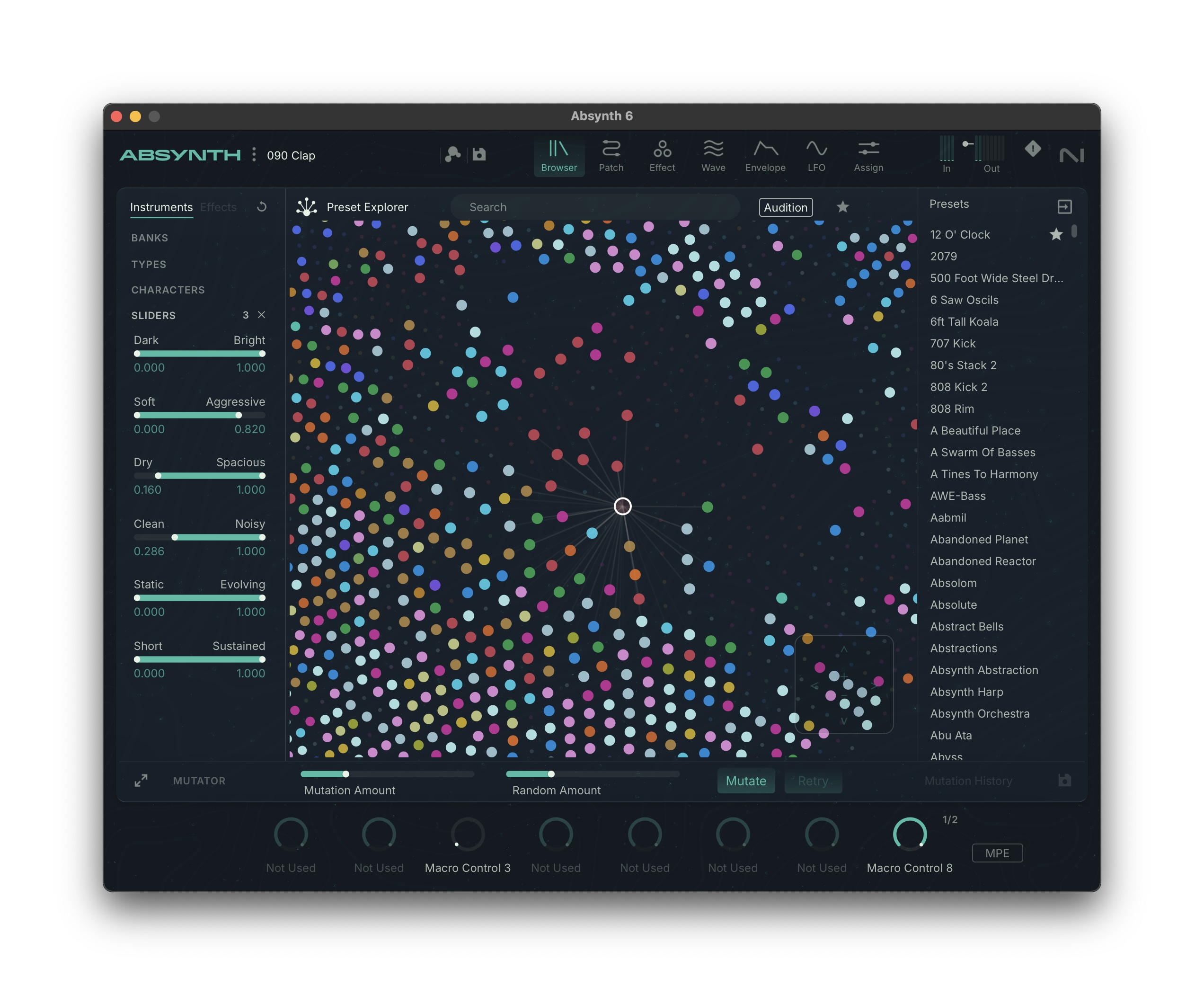
Yeah, in Absynth 5, you have what’s essentially a spreadsheet. Having this playful galaxy of colored circles feels so much truer to this synthesizer.
Brian: It’s a concept they’ve been developing for a while. I never liked preset browsers. Sometimes it’s necessary, but I’m always making my own presets anyway. But it’s super fun, just clicking around and seeing it move around and hearing the previews — and discovering all these sounds I’d made 20 years ago, and they’re all grouped in some little archipelago. Somehow, the AI made them relate in an interesting way. I really like these sliders — bright, dark static, moving. Have you tried those? I love just dragging on the sliders and watching the map change.
Ninon Devis [AI Model Integration, Native Instruments] is the one I’m in contact with on AI.
And then it’s your Mutator, right, Brian? From Absynth 5.
Brian: Yeah, that’s another way to explore presets — however fast you want to get away from that point. We’re trying to make that clearer, too.
Mutate feels even more natural here alongside the new Patch Explorer.
Hannah: It is such a distinctive part of Absynth — one of the earliest attempts to bring some intention and control into what was back then mostly chaotic randomisation. Even after all these years, we still don’t have anything else in our portfolio quite like it. Brian really was ahead of his time.
Adding visualisation to the Module Lock has improved the experience significantly. When browsing, you now have an immediate overview of the preset architecture, and the mutation process itself gains greater clarity and intention when you can see which modules are being swapped out with each mutation.
What’s the best way to understand what’s new?
Brian: There are a few new filters — the four ladder filters are new. And that’s something Absynth never really had, just like plain old decent synth filters. All the granular stuff has a higher density, which is really a lot closer to what I wanted it to sound like in the past. That was quite a bit of effort to get that to work, and still make sure the legacy sounds are the same, too.
MPE is a biggie.
Yeah, and MPE and poly aftertouch are such naturals, too — that makes a lot of sense.
And that was hard to do, too, I have to say. With Plasmonic and Synestia, they’re designed for that from the ground up. Absynth, I had to dig around in some really old code to get that working.
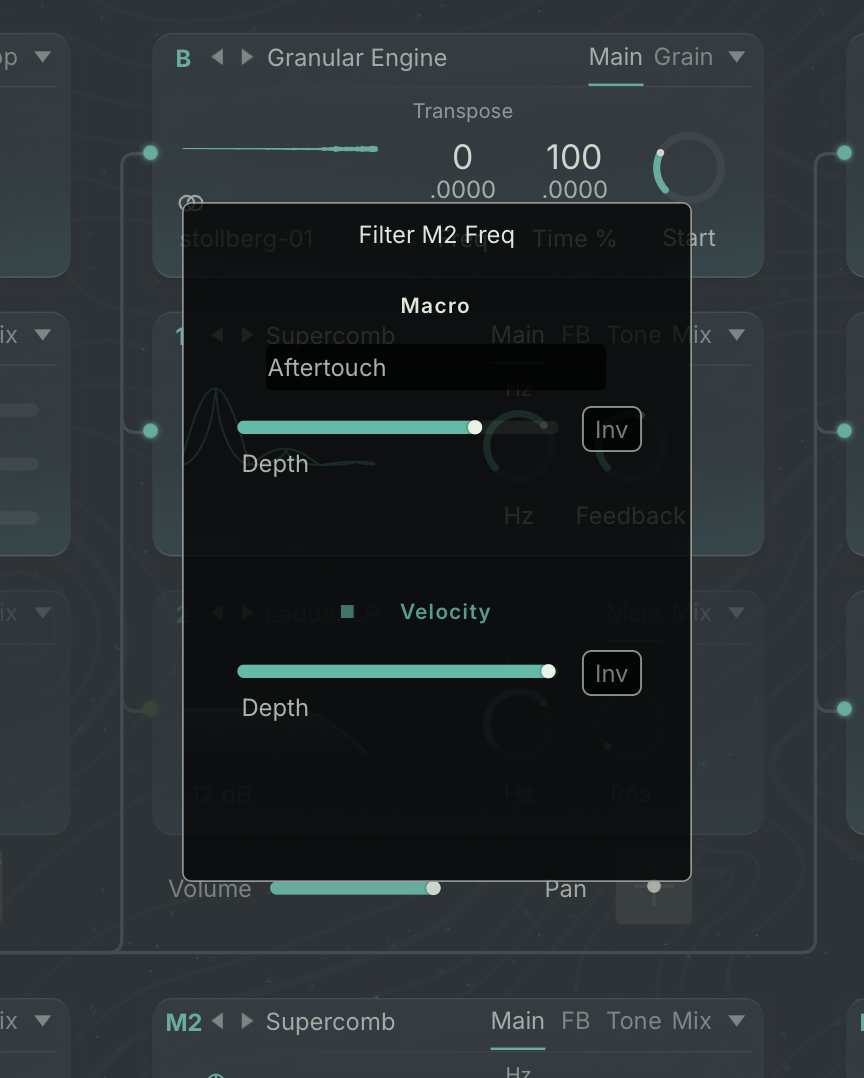
What’s your MPE controller of choice, Brian?
I have an Expressive E Osmose. When I’m working, I’ve got a little [ROLI] Seaboard for testing. And it’s cool, too. What I really like is that you can have two fingers on one key.
How would you relate this to the [other] stuff you make?
I mean, Plasmonic and Synesthria are really focused on physical modeling. Absynth is much broader.
I was just thinking the first sound most people heard with Absynth 1 — it was a sound called “banshee.” I don’t even know if it’s in the factory presets anymore [Ed.: it’s not in 5 or 6], but it was like the sound of brushing your finger on the piano strings. I put it out as preset number one as kind of a joke because all the big workstations have a piano sound as number one. So I was like, okay, I have a piano sound, too.
I’ve recreated that in Plasmonic and it sounded pretty good. I’ve always had this thing about these kinds of resonators — sympathetic resonating. Things like the Ondes Martenot resonator, the Palme [Diffuseur] and the [Ondes Martenot] Metallique — that kind of thing always really turned me on. So I was doing stuff like that in Absynth from the very beginning.
We’re really kind of focusing on being able to bring the legacy stuff into the future and have a platform that’s going to keep going — something we can maintain.
Eventually, I’d like to make another big synth.
I think acoustic sound sources are more of an inspiration to me in general than at least the classic kind of analog synths. I mean, I came from there, and I love the stuff. The first synth I spent a lot of time on was an ARP 2500 at university. And you know, it’s a wonderful instrument. But the stuff that really turns me on is natural sounds — the whole phenomenon of resonance. There’s something really emotional about it. At least with my sounds, I love experimental kinds of things, but I want it to have this emotional impact, too, even just through the sound — that it’s evocative of some kind of feeling.
I wanted it to be something real experimental people could use. If you’ve got some weird-ass idea that — you don’t really know what it’s going to sound like — I wanted to build a tool where you could actually do that. If you want to have your FM ratios moving very precisely over some durations determined by the Fibonacci series, you should be able to do that.
I always wanted real precise control over parameters, like with the envelopes. From the beginning, I wanted Absynth to give you the precision in the way parameters evolve over time.
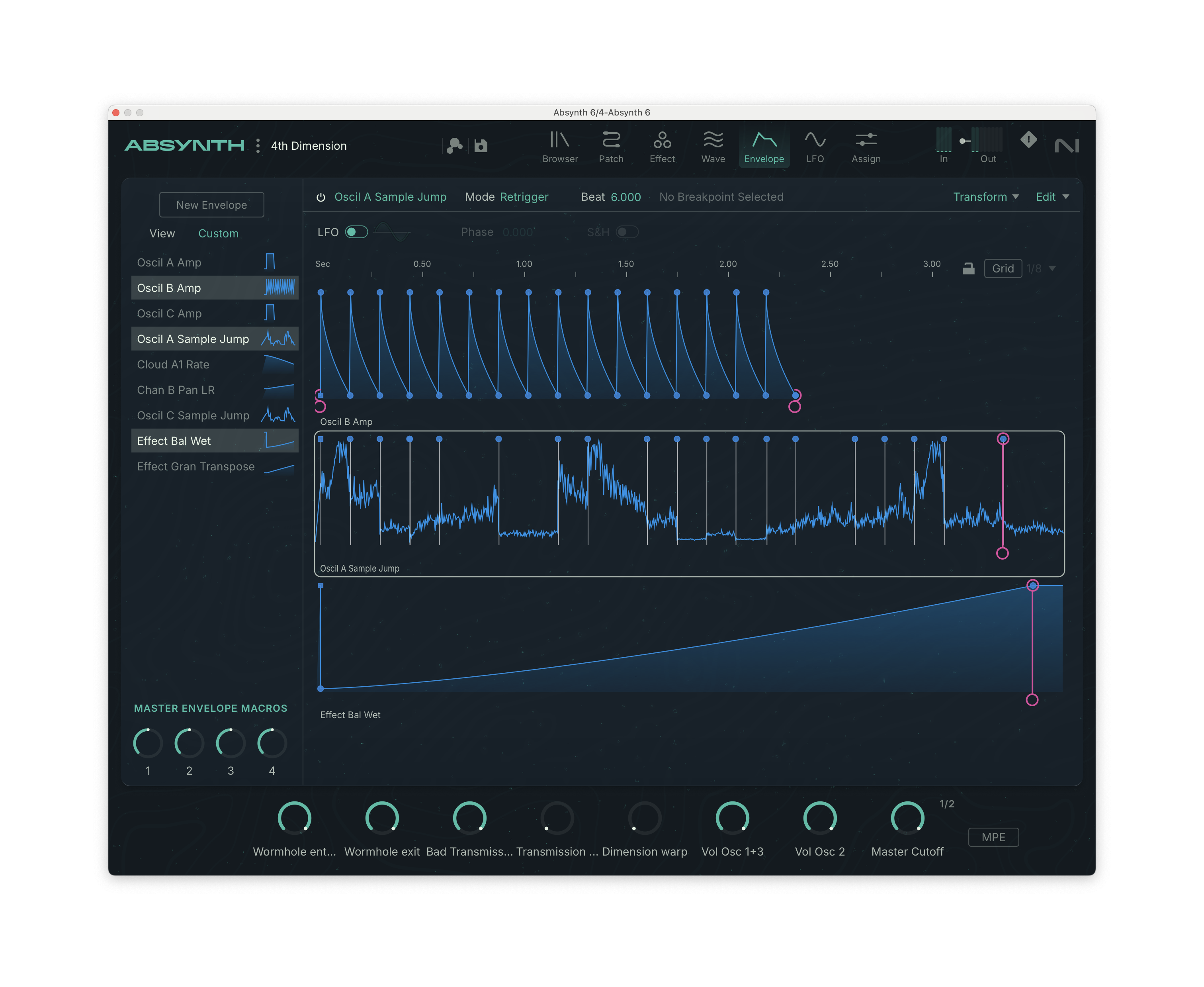
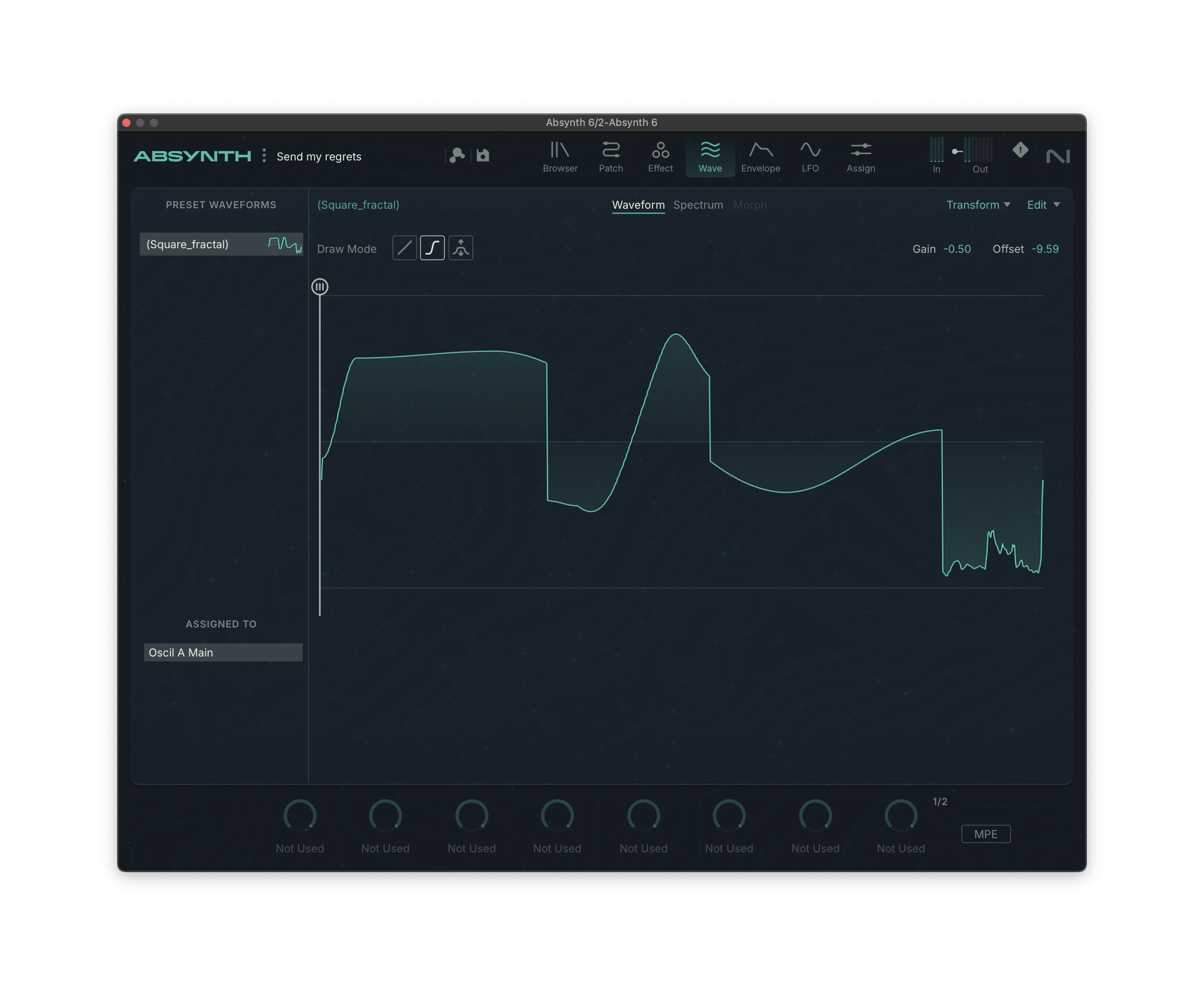
Yeah, and you really feel that. It’s great that this comes right on the heels of GRM Tools Atelier, too, in giving a new interface to these classic ideas. It seems like it’ll reach a lot more people — not just that it looks slicker, but in how it works, so you discover features but you can stay in the flow, musically.
That’s always been one of my big goals. I was familiar with Max and SuperCollider from the very early days. And I was really aware how you’re building up a patch and it reaches the point of complexity where you don’t want to mess with it anymore — like too many wires on the screen.
You shouldn’t feel the weight of the complexity of the patch you’re making. It should always be easy to keep adding stuff or taking stuff away or just turning things off.
Yeah working with these supermodular systems, it wasn’t really musical — not like when I’m playing an instrument. And with Absynth, I always got the feeling that I could just be playing with my left hand and with my right hand, doing stuff in the patch. I always wanted this kind of balance. So now with the new interface, it’s getting closer.
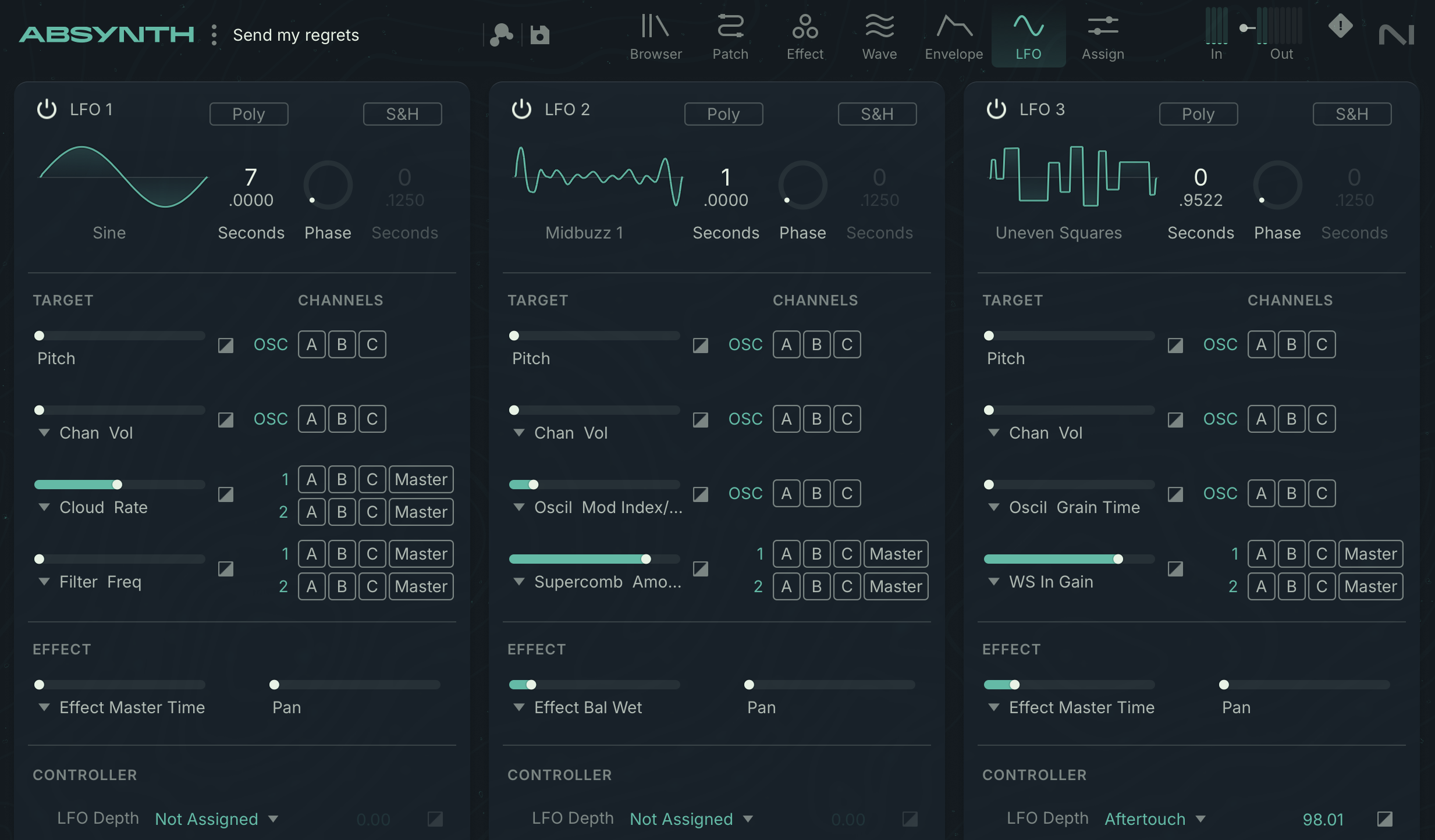
It seems like that’s really about being able to explore — that you have an idea, but you also want to test it. You have ideas where you don’t know exactly what the outcome was.
I would always have ideas like that, abstract ideas — what if I plug these two things together, what am I going to get? And I don’t really know exactly what it’s going to do. Musically, I don’t even know if it’s going to do anything I want.
And then you have Eno and Kaitlyn and Richard. I didn’t expect to see Brian Eno’s name on there.
Me, either. It’s a dream come true. And there’s others, too. Eno was always a huge influence on me — in the early days, when I was working on Absynth, every day I would read a Brian Eno interview, just because of the way he thinks. I wasn’t implementing his ideas in my synth, but it was a huge inspiration.
Well, and then maybe there will be the undiscovered Enos who pick this up. I wonder who we’ve never heard of who will do something with this.
I’m even more interested in that, honestly. I was always so happy anybody was using my software — if it was turning people on musically. I’m just so happy I can make something that gives people ideas.
I don’t have an explanation for it. But it’s just been a really amazing experience. I’ve been crunching for the past seven months. I haven’t had a weekend. It’s almost over. But it’s worth it.
The old days were like that. Absynth 2, when I think of the schedule we had — I was just piling as much stuff in it as I possibly could. I don’t know how any of us did that.
I’m pretty happy with it now. Pretty confident.
Thanks, Brian and Hannah.
Read the review/preview (based on pre-release builds, and prior to the release of the manual) to see how happy I was with it, too:
Brian’s personal tour
Right after publishing, NI shared this walkthrough with Brian for even more Absynth touring:
Absynth through the years
Roger Helfers aided me in tracking down some vintage Absynth screenshots, including the original shareware version, before the collaboration with Native Instruments:
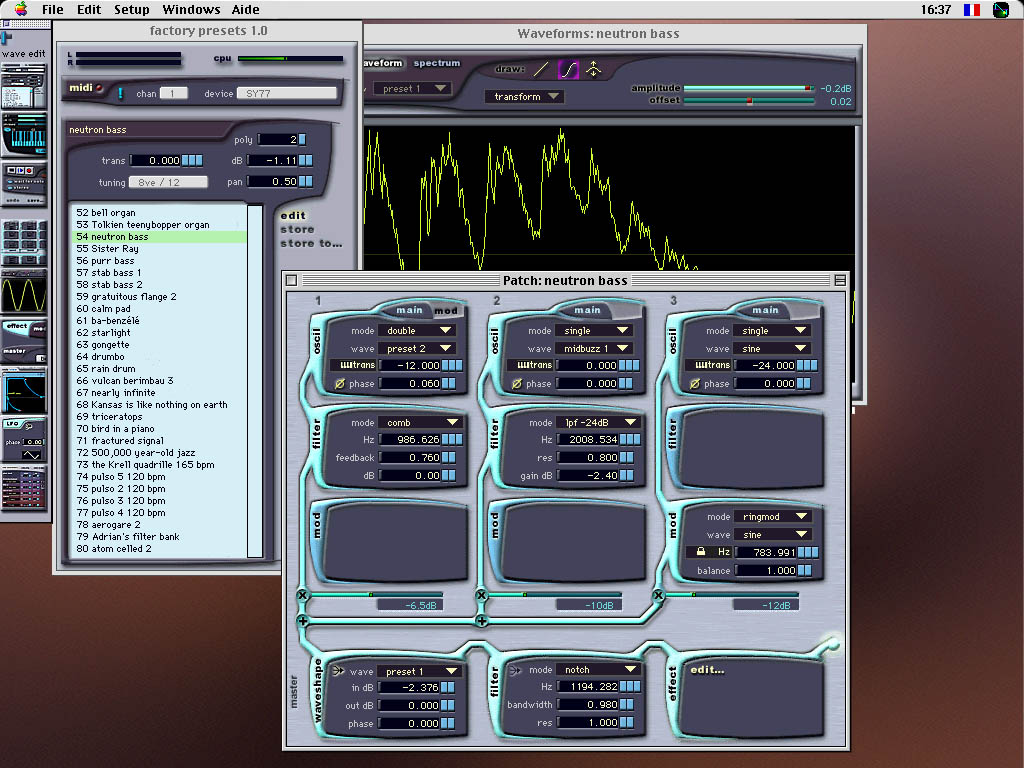
V1 has this note from the archived Rhizomatic website, August 2000. (“Power Macintosh” was the long-running line of Macs based on the PowerPC architecture from IBM with Motorola and Apple.)
Absynth is an open door to a new world of sound. Sweeping filter banks, infinite delay loops, pulsing cyclic envelopes, microtonal harmonies and telluric collisions of noise are all just a part of Absynth’s sonic landscape.
Turn your Power Macintosh into the ultimate synthesis engine. Absynth’s high performance processing gives you more DSP power per MHz than other software synthesizers. That means more oscillators, more filters, more delay lines and more voices.
V2 sports an NI logo, but does still look very unlike the Absynth we know now aesthetically. This is a demo version running the V1 audio engine underneath. V2 added the granular engine and effects, plus the enhanced envelope section.
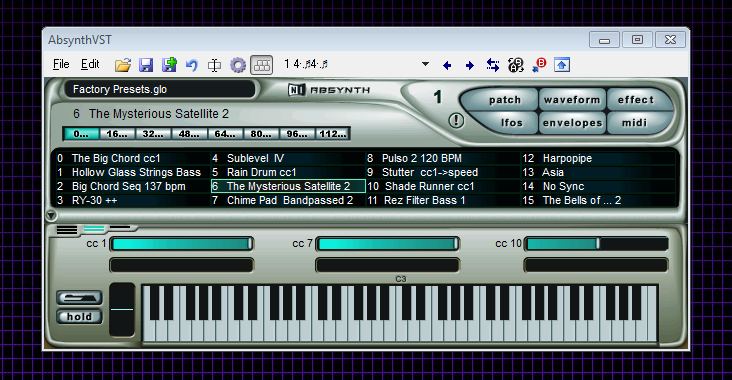
V3 is the version that went green and introduced the logo used from that version through V5. It also radically simplified and cleaned up the UI.
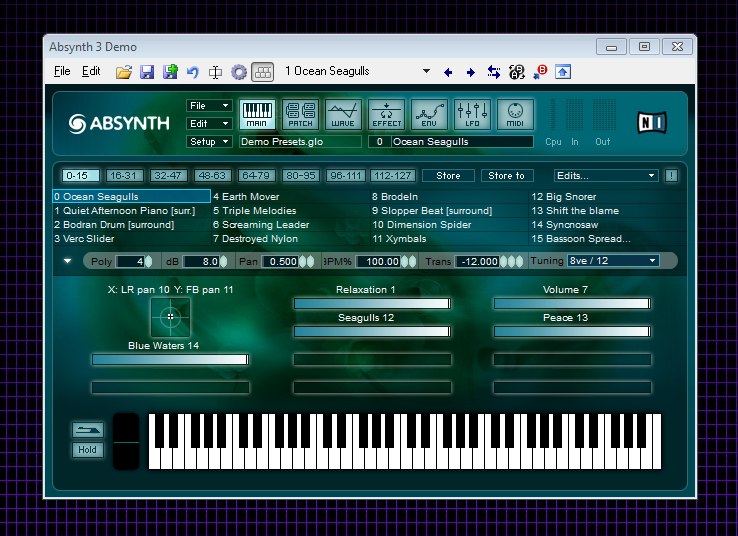
V4 added surround capabilities and multi-channel audio input and effects capability, plus significant UI refinement. (V4 and V5 are closer than any other two versions, arguably.) And 4 introduced morphing (see below for that feature in 5/6).
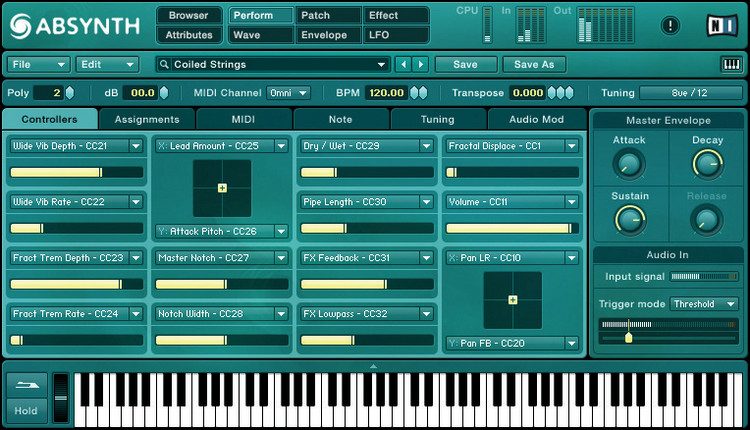
For more detail, sequencer.de’s review of Absynth 4 starts in the link below but is immediately followed in the archive by reviews back to v1. In German, but with lots of pictures.
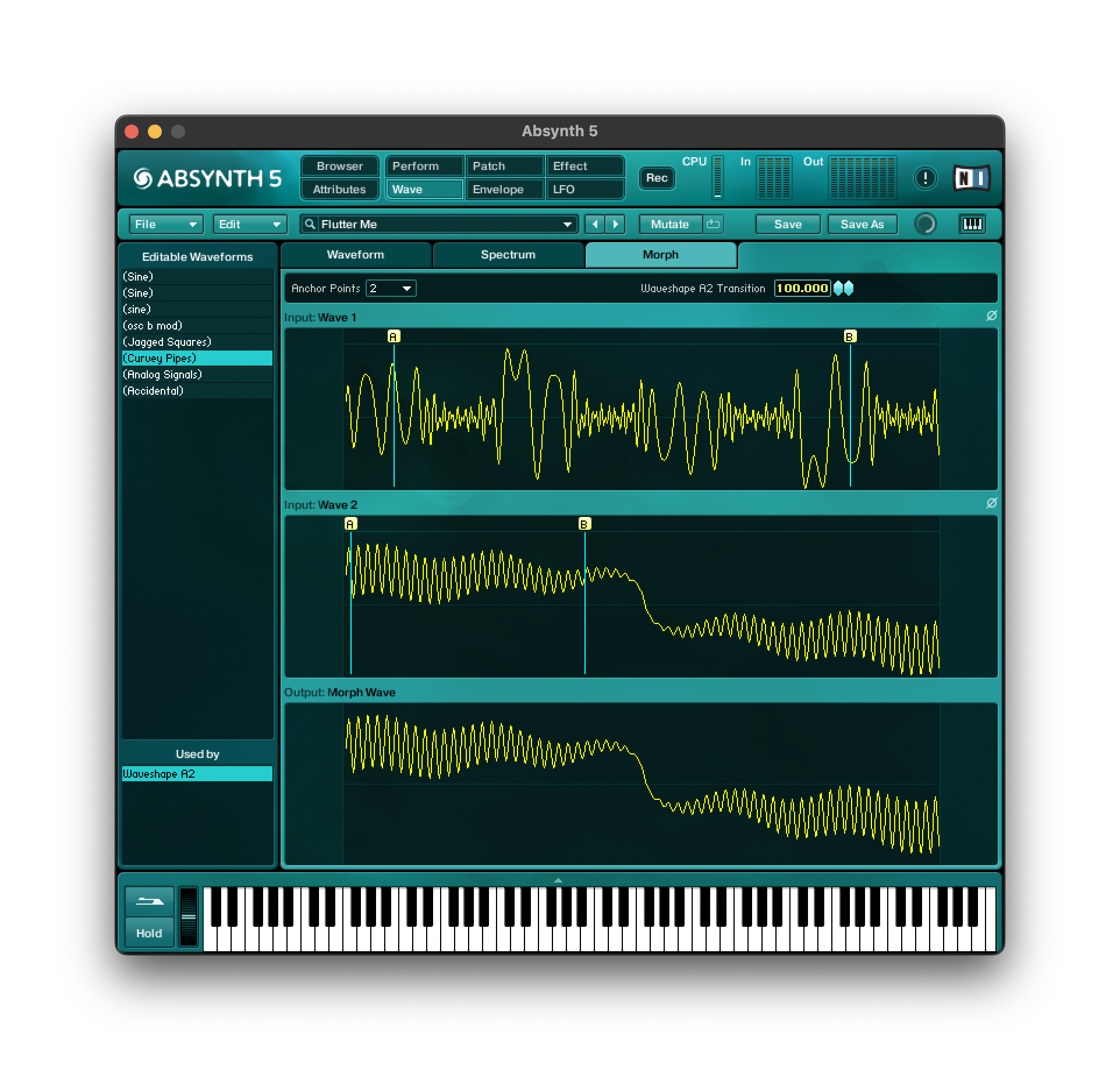
Lastly, Absynth 5, compared here to the Absynth 6 interface just for aesthetic comparison.