If you’re in high school, take note — and if you’re not, this may make you wish you were. Electronic music production gurus Dennis DeSantis and Erin Barra are hosting a week-long intensive at the storied Eastman School of Music. I wanted to know how Erin and Dennis would approach the program, so they’ve shared their ideas about music tools, creativity, and pedagogy with us.
The program runs from July 19-24 in Rochester, with a deadline extended to the end of May. It comes at an auspicious time, too — Eastman and the University of Rochester have just announced that it will offer a Bachelor of Music degree in Music Creation and Technology, led by Associate Professor Dennis DeSantis. A lot of you may know Dennis from his work at Ableton on Learning Music and Learning Synths.
The BM program starts in fall 2027 — stay tuned for an interview with Dennis on what it means to run this kind of program in the latter half of this decade. But high school students get to experience everything this summer, without having to wait.
That program includes private lessons, master classes, and discussions on production, composition, mixing, and performance, all based in Ableton Live. It culminates in a performance of music prepared during the week.
Here’s what Dennis and Erin had to say.
Photos courtesy Eastman; Erin Barra.
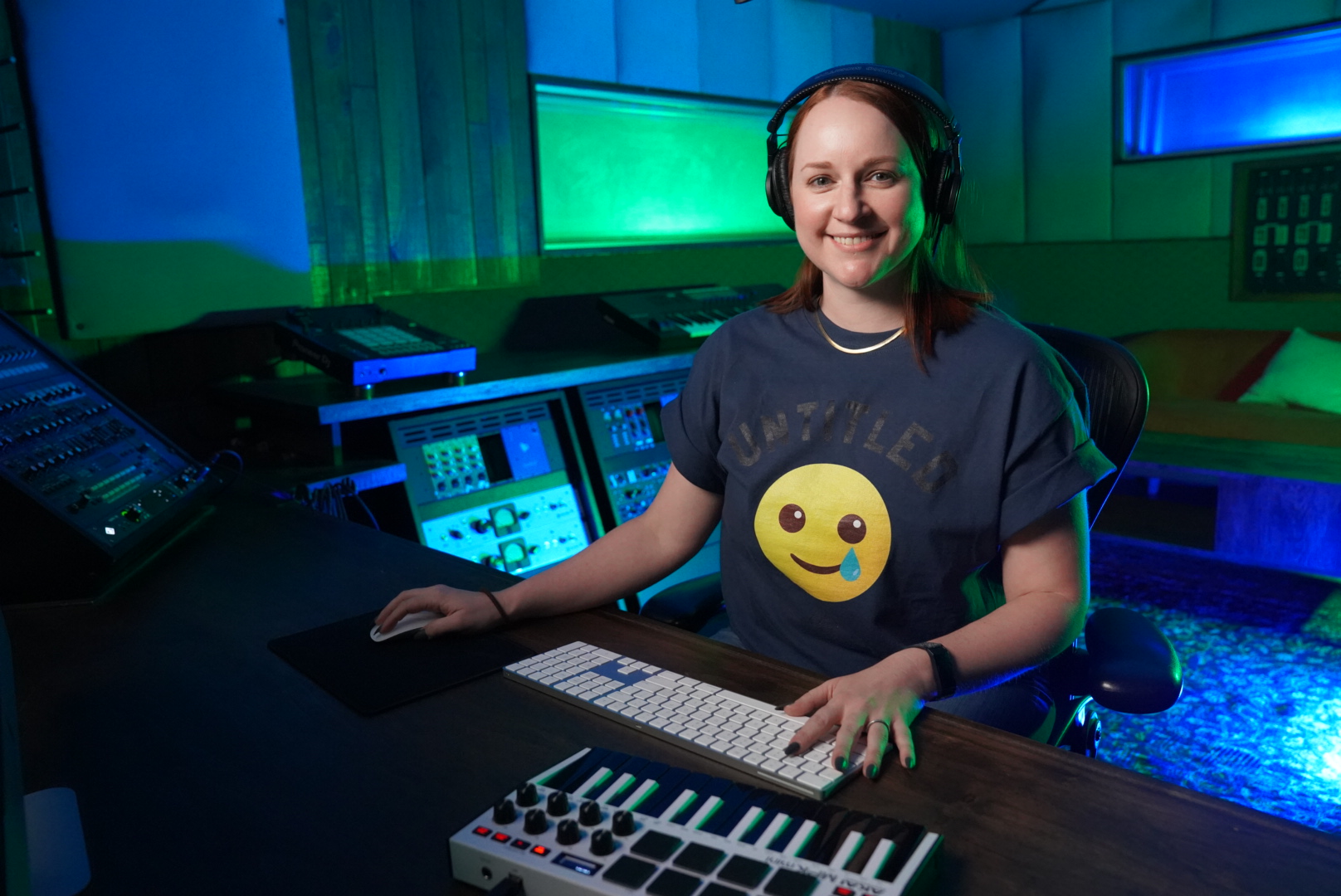
Pictured: Erin Barra, Sound Factory.
Peter: Can you give me some idea of how you’ll approach this? Ableton Live is big in terms of production; where will you start?
Erin: One of the most exciting things about writing music in a non-linear tool like Live is that there is no single right way in – but that freedom can completely paralyze a beginner.
When I work with high school students, I always try to start somewhere that already means something to them. A beat from a genre they love, a song title that’s been living in their notes app, a chord progression they hummed into a voice memo two years ago and never did anything with. The entry point almost doesn’t matter. What matters is that it sparks something – because once there’s a spark, the tool stops being intimidating and starts being a place where their ideas live.
It’s great to see the compositional element of Live come into it. How do you look at that aspect, in your work or how you teach?
Erin: I think of Live as a sonic collage – and I mean that literally. You’re not writing the first note, then the second, then the third until you reach the end. You create one pattern, stumble into another, layer a texture over here, flip the whole thing upside down and see what it becomes.
Music is alive. It moves and breathes and surprises you, and Live is one of the few tools that actually honors that, instead of fighting it. It keeps me in the flow state and out of my own head – out of the timeline, out of the logic of “what comes next,” and into the much more interesting question of “what if.” That’s the same energy I try to bring into the classroom. Stay creative. Stay non-linear. Try a million things and don’t be precious about any of them.
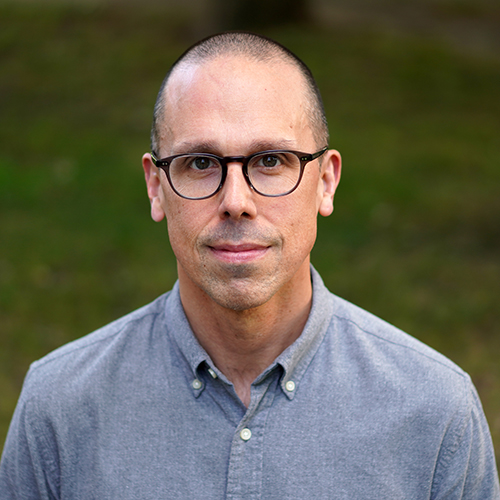
Dennis, you’ve obviously thought a lot about how to explore creativity with Live and other tools, as we’ve seen in this book and site. What will you do in that space of one week?
Dennis: I think we’ll look somewhere between what the tech can do and what it can be forced to do—creative possibilities, thinking outside the box of typical workflows. What are all the things you can do in a DAW like Ableton Live? You can do sound design, you can do composition, you can do things with Max that extend the functionality. And I would like the students to leave with at least a broad overview of where the prescribed boundaries of the tools are and where the extensible ones are, which are essentially limitless, right?
I want to at least plant the seed that the easy path shown to you by the design affordances isn’t the only one. It might not even be the optimal one. Just by messing with things and making them do the unexpected, you’ll hear things you wouldn’t hear if you were sticking with your own patterns.
I think there is value in learning tools as they are. I also just want to encourage people to think beyond that.
“I think there is value in learning tools as they are. I also just want to encourage people to think beyond that.”
Dennis DeSantis
So, funny enough, I got into my whole life path because of a high school summer program like this! What was your first music technological educational experience like? What were you doing in high school, actually?
Erin: I didn’t encounter music technology until college, and even then, it was pretty minimal – I was a songwriter, and back in the early 2000s, the assumption was that songwriters didn’t really need it. So I taught myself almost everything I know, the hard way, during a time when the internet was genuinely not a reliable place to find accurate information about any of this. Now there are a million tutorials for everything – I made about half of them – but that wasn’t the world I came up in.
For me, the spark was having a very specific vision of what I wanted to create on stage and not having the tools to make it happen yet. That gap between the idea and the reality is what pulled me in. When I finally found my way into Live, it gave me a vocabulary I didn’t know I was missing. Suddenly, I could articulate things I had been hearing in my head for years. That feeling — of being able to finally say what you mean creatively – was genuinely transformative. It made me feel powerful in a way I hadn’t before, and I’ve been chasing that feeling for everyone I teach ever since.
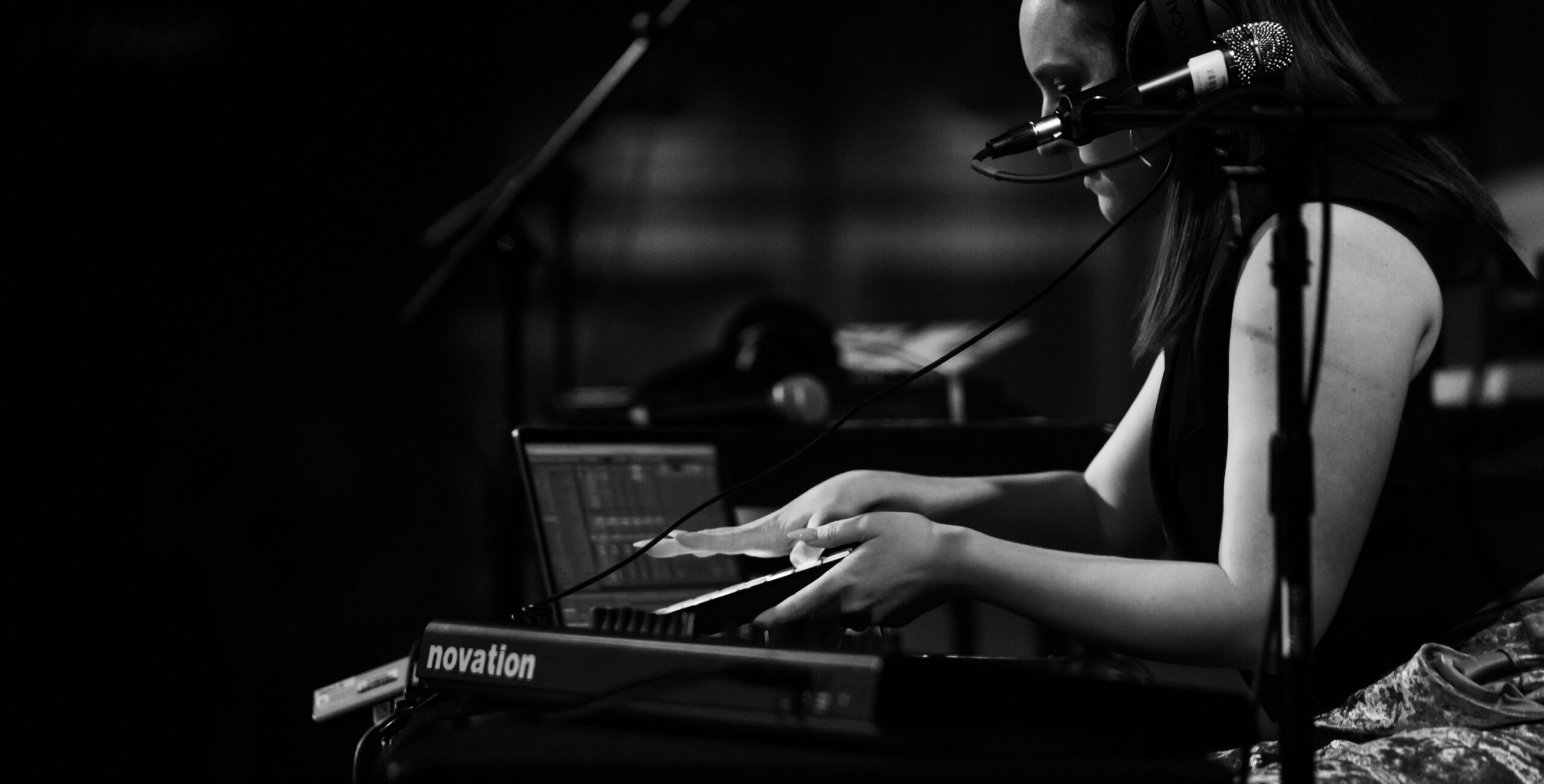
Erin Barra, live performance.
With some recent changes in Live — or other tools out there — anything you’re excited about at the moment?
Erin: The area I keep coming back to is expressive technology – specifically MPE and MIDI 2.0. These are tools with almost limitless depth, and that depth can make them genuinely hard to wrap your head around at first. But what excites me right now is that there are some really smart people building interfaces and software that make that world of endless modulation actually approachable – and that changes everything in terms of who gets to use these tools and how quickly they can get somewhere interesting with them.
On the integration side, I think bringing Splice directly into Live was a genuinely brilliant move. Removing that friction between finding a sound and building with it keeps you in the creative flow, which is ultimately what all of this is in service of.
“Music is alive. It moves and breathes and surprises you, and Live is one of the few tools that actually honors that, instead of fighting it.
Erin Barra
And what do you hope students will leave with; what are you looking for?
Dennis: I’m looking for people who are hopefully going to get their mind blown by something.
Good luck, everybody.
Eastman Summer Music Production Institute