Oh, Cache is good as a Mac/Windows/Linux effect — flip, repeat, stretch, robotize, and generally go buffer-mad. But you expected that from a Sinevibes plug-in. The joy here is that now you can really play. Connect a MIDI keyboard, and Cache is a breaks-friendly, sound transmorgrifying effect instrument.
This is probably KORG’s fault. Cache made its way to the (stocking stuffer-priced!) NTS-3 kaoss pad, which has a signature kaoss X/Y pad, and that led to the finger-flicking live control gestures. But with 12 MIDI key zones and virtual keys, all the multiple operations are at your fingertips.
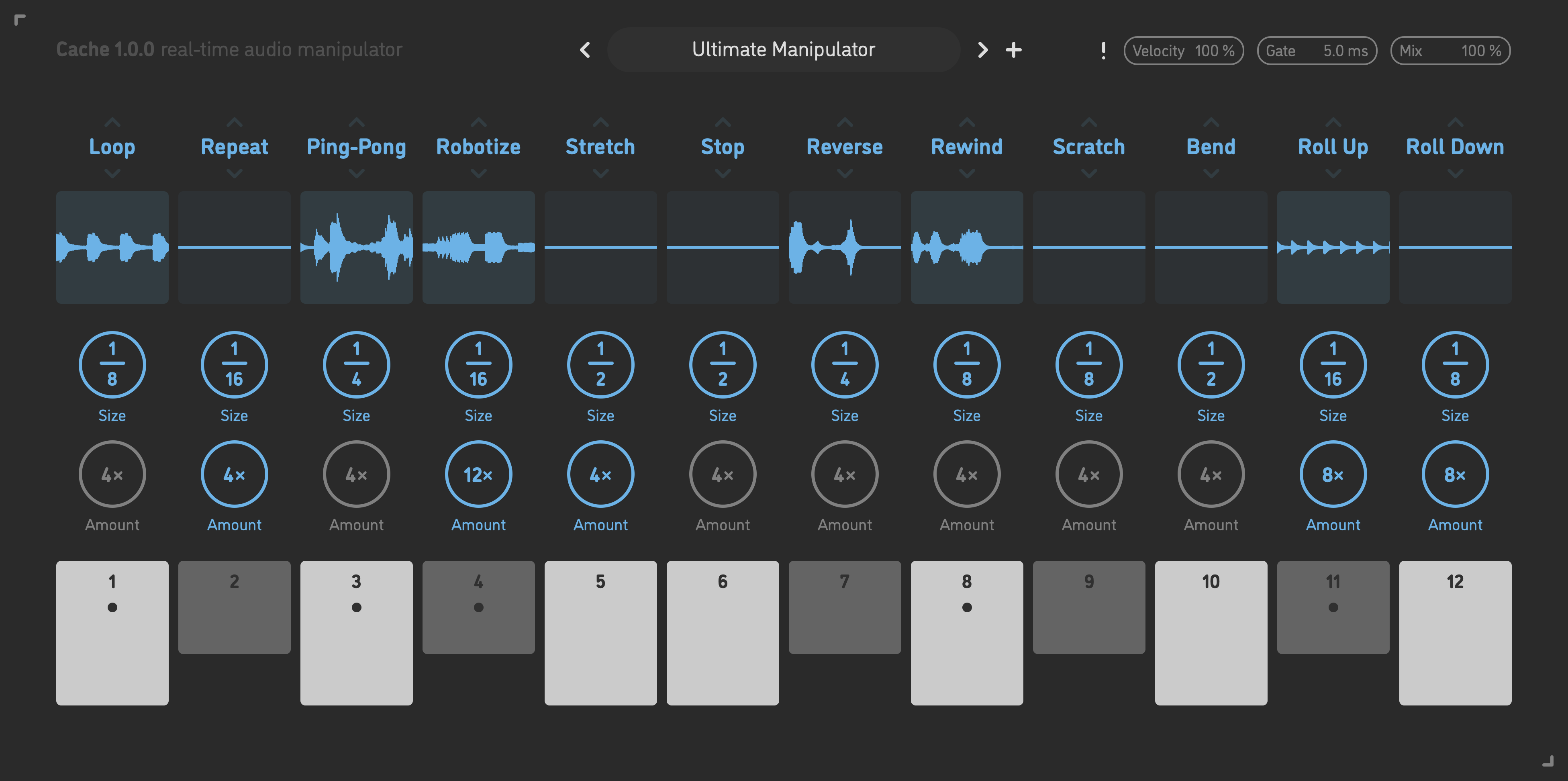
Here’s how it works. First, divide the buffer into 12. Each zone has a size control (time duration) and its own algorithm for performing different sound-manipulation tricks. (Some also have an amount control, determining how much of that sound slice duration gets used.)
What’s awesome now is that each of these 12 algorithms can be mapped to MIDI. That means your MIDI keyboard (or pads, or whatever) can trigger the zone with adjustable velocity sensitivity. (There’s also a Gate control with lag, which is connected to two low-pass filters and dry/wet — just play with it, really!)
It’s pure magic being able to improvise with MIDI instead of having to pre-program the effects. You get SP-404 and KAOSS style effects, but with a level of precision and immediacy that software provides. And it’s still an effect — with those gate and wet/dry controls, meaning you can also layer these effects on top of existing audio in more nuanced ways.
The rhythmic division options open up a ton of different possibilities — not just the obvious breaks and drum ‘n bass stuff here, though that’s great. Plus you have a full menu of algorithms:
- Loop
- Repeat
- Ping-Pong
- Robotize
- Stretch
- Stop
- Reverse
- Rewind
- Scratch
- Bend
- Roll Up, Roll Down
There’s really more to this than immediately meets the eye, as I’ve been raving about with Sinevibes’ other recent buffer manipulation bits, and it’s this: “High-quality spline interpolation, fade envelopes and two-pole gate switches for completely smooth operation.” I know what all of that means, but not only do you not need to know what it means, it’s really experiencing that in use that makes it hit home. This is how we know an engineering effort was successful: it connects sonically and emotionally beyond just the intellectual process that brought it to life.
I’ve been playing with late pre-release builds, and this thing is simply perfect. I’ll try to whip up some more unusual possibilities or presets in the coming days, but meanwhile, Artemiy has some firey examples to start us out.
Of course, great as the MIDI zones are, this does also make you want the kaoss version so you wind up with both.
We only wish to raise quality of life for all sounds. All will become one with Cache. Resistance is futile.
$49, demo version available, mono and stereo configurations, VST3 on Linux, VST3/AAX on macOS and Windows, AU on Mac.
https://www.sinevibes.com/cache
Korg hardware owners — more good news
Oh, yes:
Ableton Live users
A little note:
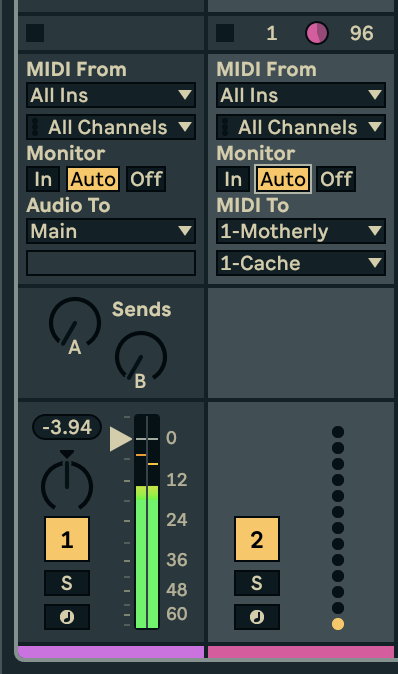
To route MIDI, make sure you set both the Track and the Device with channel. So Set the audio track up for Cache, then set up the MIDI track to route to the audio track and Cache (with the channel you want), as pictured.
Switch Monitor to In for when you’re jamming, but switch Monitor to Auto and you can trigger clips for easy triggering of Cache effects (without bouncing)!