There’s no grid, no harsh colors. Tinge swells and sways like a windchime, coming to life in spinning color wheels. It’s probably nothing like any arpeggiator you’ve seen before — or maybe it’s a “note agitator.” Co-creators Daedelus (Alfred Darlington) and Takuma Matsui (Rainbow Circuit) take us inside the process of how they created and thought about this new generative, responsive, playable melodic delight.
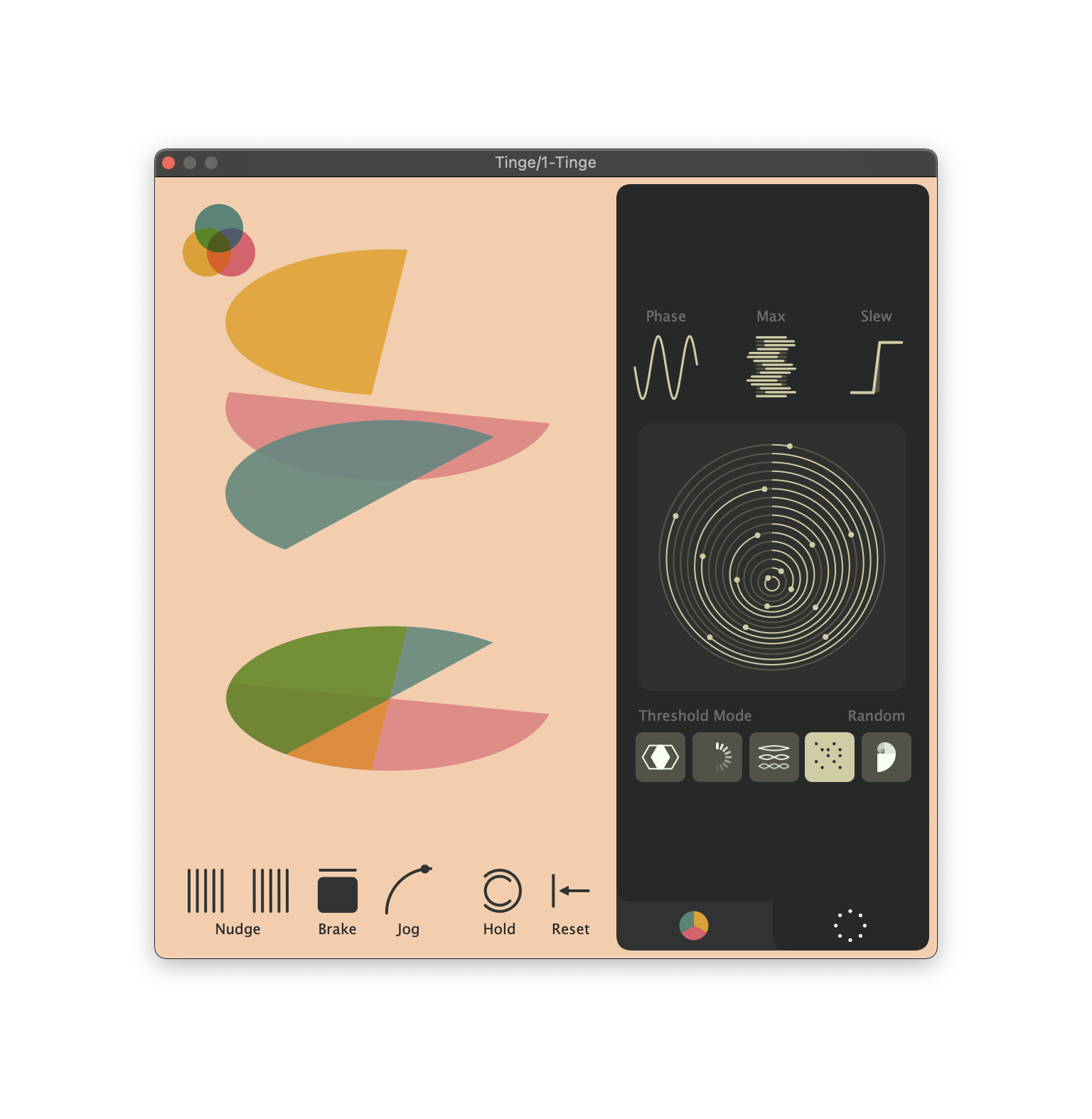
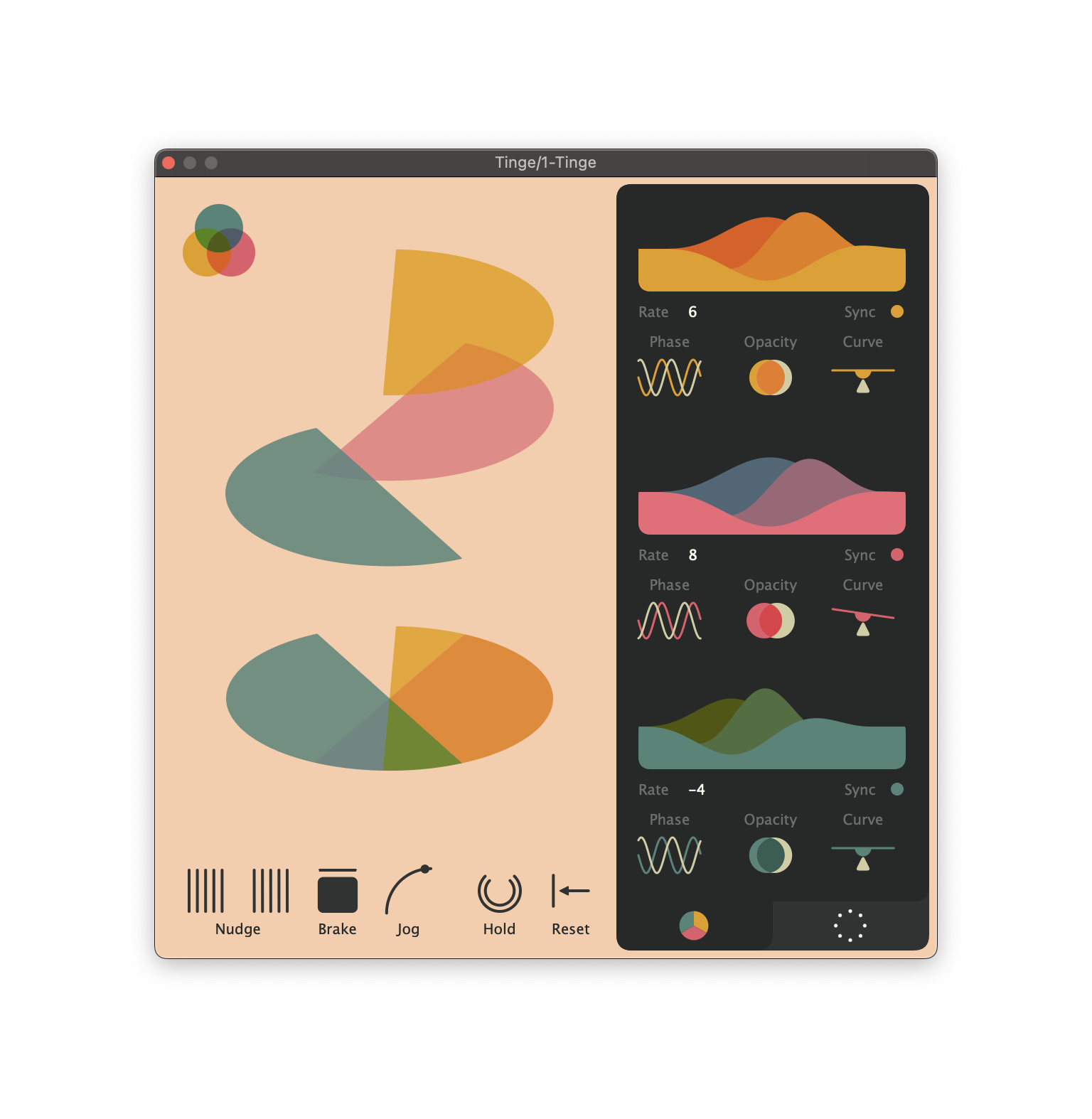
Tinge is described as a “colorful performance arpeggiator.” At its heart, it’s a generative, physics-driven sequencer with note input and MPE pressure support. It’s reminiscent of tangible interfaces, but exists purely as a VST3/AU plug-in on Windows or macOS. There are even turntable-style controls, with speed up, wheel up, reset, and brake.
Routing is easy. For DAWs like Ableton Live, you’ll need Tinge on its own MIDI track; route MIDI from Tinge to the track with the instrument. (Do check that screenshot in the manual.) But Tinge also works as a MIDI effect plug-in, so for a host like Logic Pro, you can insert it conveniently before the instrument you wish to use. (Waiting on more hosts to support that..)
This is not a demo, really, but here is literally my first time playing with it (with AAS Lounge Lizard EP-5 as the instrument and Petal from Rainbow Circuit providing the delay – see review). I’m just beginning to get into its transformative possibilities:
This is the second collaboration between Takuma and Alfred, following the earlier Failure. As soon as it came out, I was eager to hear about how this beautiful generative instrument came to be. And, I mean, you can’t look at this thing and not get excited. I have a feeling I’ll be returning to it for some color and calm in the darkness of the coming winter.
Peter: The interface is stunningly beautiful. How did you work together on that?
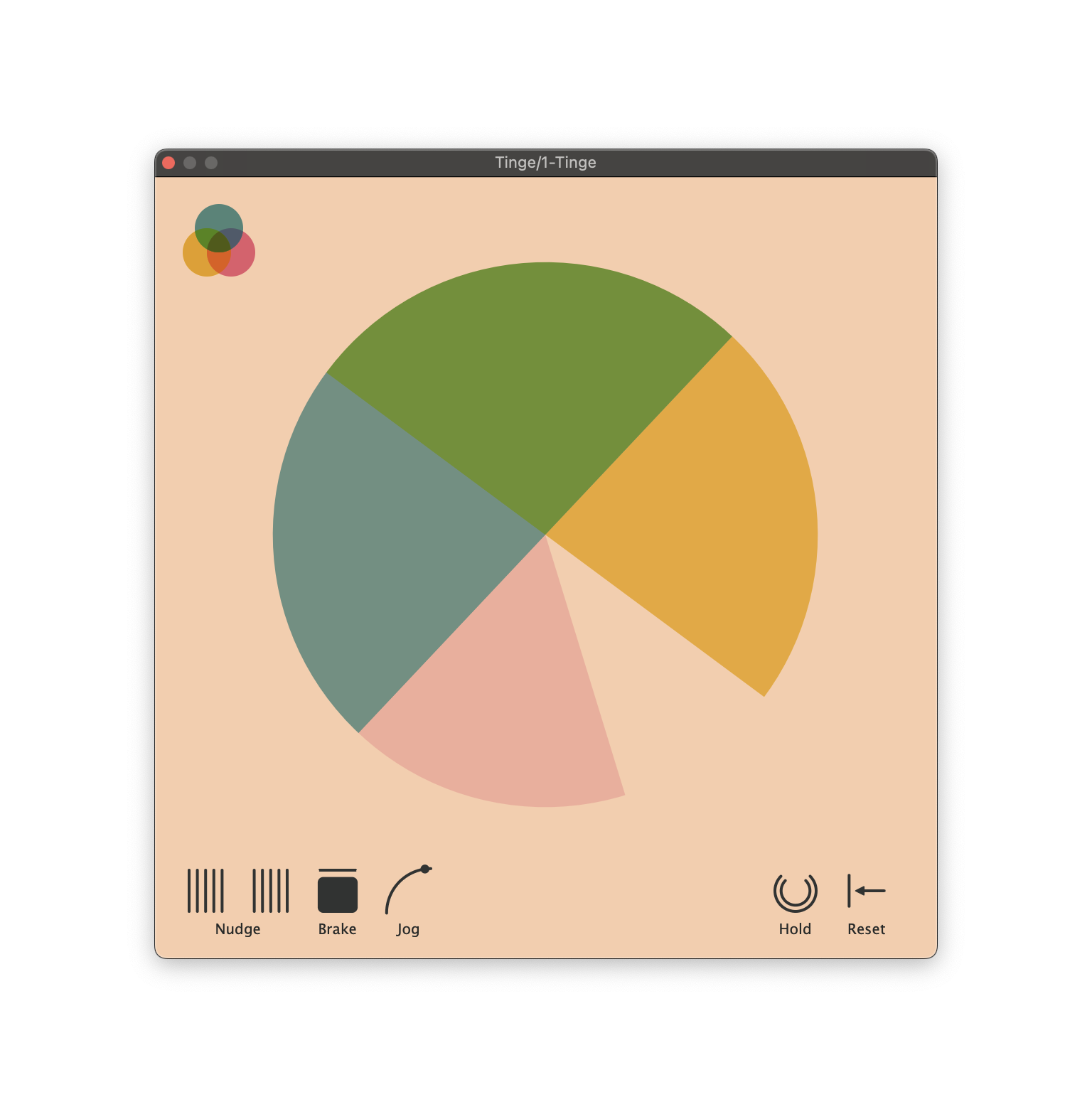
Takuma: Thank you! The earliest conversations we had were talks of fidget spinners, materializing into the plug-in in the final two weeks or so. The original idea was to model a primary color light source mixing (and eventually mix to white), but over time, it pulled together in a way that suggested mixing of pigments (and mix to a darker grey color).
Alfred: Takuma and I were just riding a train back from Back Bay Berklee, reminiscing about the earliest iteration. Surprisingly, recently, it was just the vision of kaleidoscopic control over MIDI instances. Opacity was always the resolution we wanted it to deal in, but Takuma really brought the vision board full of “color theory” to life! From solving rotational issues in black and white, to stark RGB, into this very aesthetic finale! All the Rainbow Circuit plug-ins are gorgeous, I’m just so grateful this could be amongst.
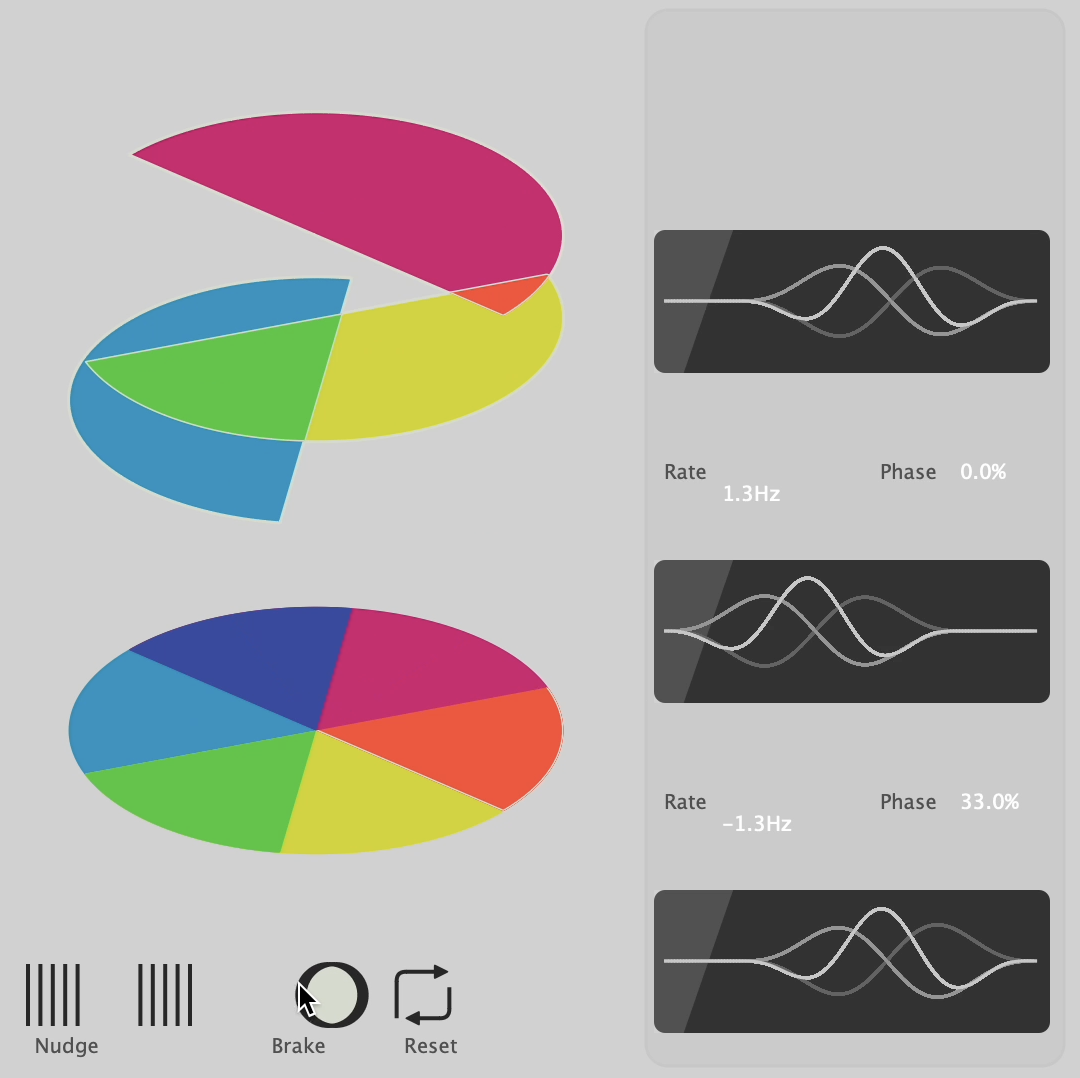
Early versions of the UI:
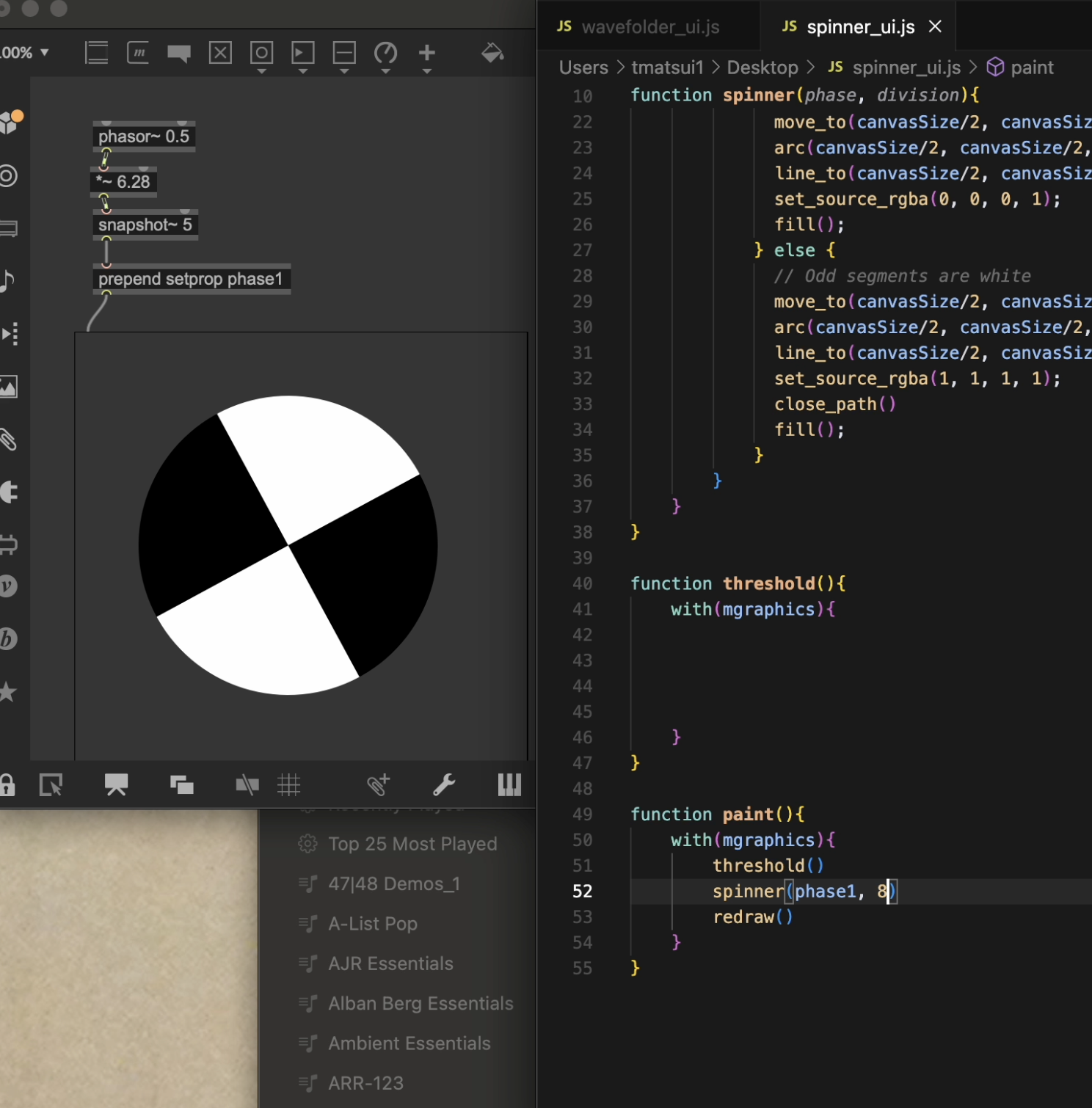
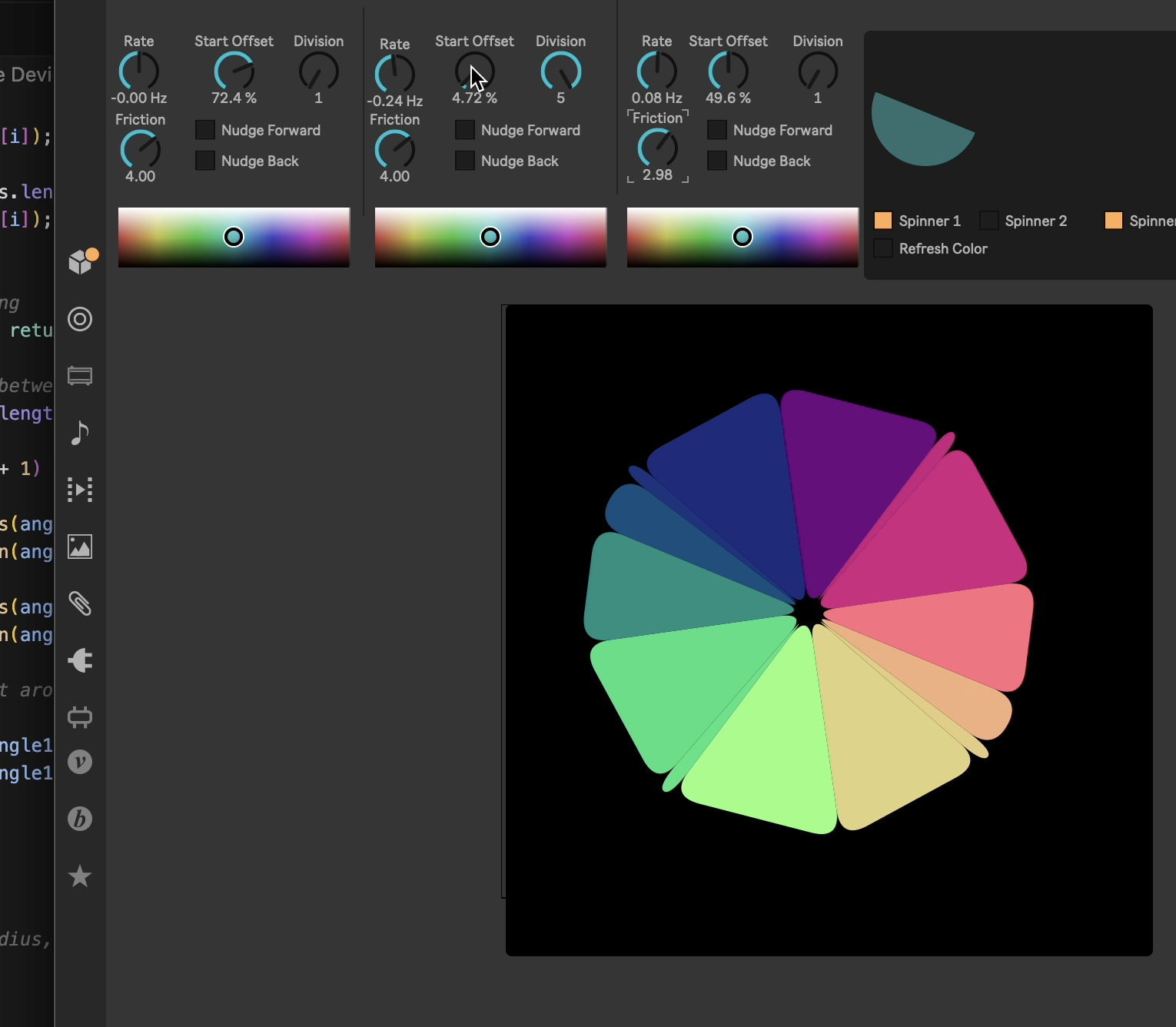
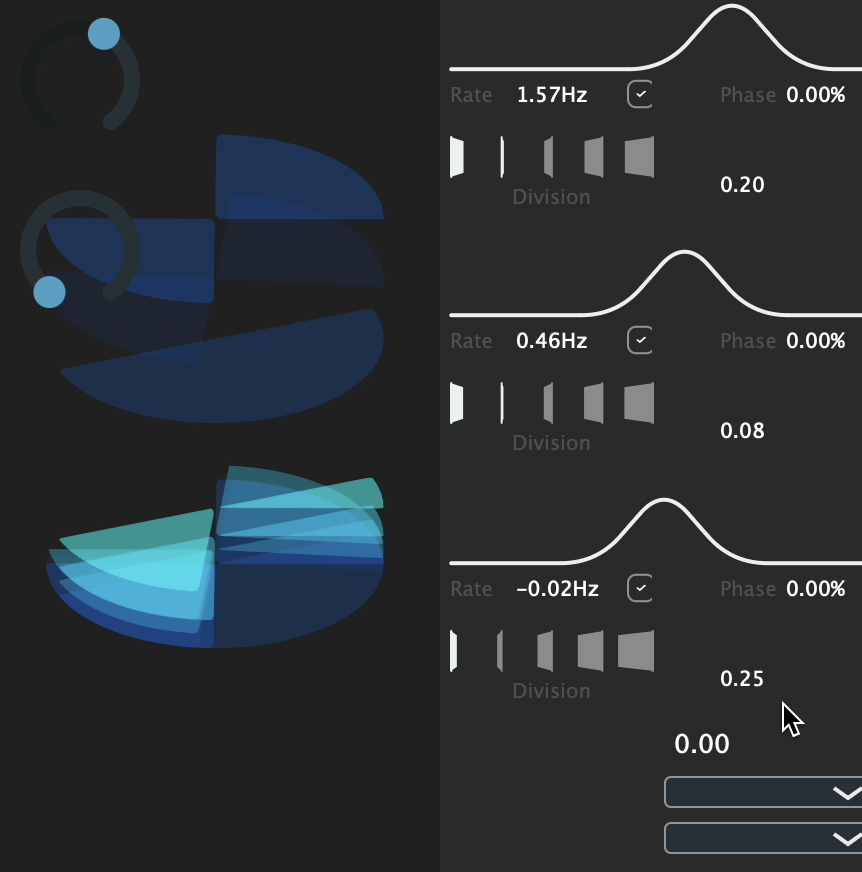
How did your collaboration evolve? It seems a natural fit. But how did you come together on Failure, your first collab? And how did Failure lead to, uh… success? A breakthrough?
Takuma: Collaboration with Daedelus is always one of surrealness, as I am first and foremost a fan for many years before our paths crossed. I’ve seen Daedelus up on the rooftop of Elsewhere, or under the concrete of Public Records in NYC, and now we live just a few blocks down from each other. We talked often during the in-between times, train rides together, the rainy morning coffee shop, and in the office we share.
Alfred: I’m a firm believer in album covers informing the listeners’ experience. Much the same way, UI choices in a plug-in direct the play. Failure began as a concept physically modeling defeated speakers and blown-out microphones. The first element we agreed on was a forward-facing visual representation of this breaking point. I may well have been too adamant about its need, and the moire born of that I do think adds. Thankfully, Takuma was more than up to try something so outer-space (and now even again here). With both, it was probably born of shared time in Berklee’s technical division bemoaning this or hyping that, but I also hope we are responding to real needs in the sound design system.
Let’s talk about MPE — Tinge is transmitting pressure, so really like an expressive arpeggiator, right? How did you think about that aspect?
Alfred: MPE is the future! (or at least until Midi 2.0 enters the conversation) I know MPE often functions as just a party trick pitch bend, but polyphonic expression could be so much more. I’m truly excited for Push3’s XYZ mode in the upcoming 12.3 and further MPE enabled hardware synths. Tinge has the opportunity to help usher in a more expressive future. “Why aren’t there more MPE arpeggiators?” was pronounced reason for us to try this!
Takuma: MPE was very much ideated out of Daedelus, but we did spend time talking about some of the issues with the monotony that traditional arpeggiator oftentimes imposes on their notes. I think I had to be sold on it, being a bit skeptical of the idea, until we built out a few prototypes. Wow, a world of difference.
Out of curiosity, with pitch, is it passing through MPE pitch bends — as from a controller or something like Live’s Tuning Systems?
Alfred: Any input note should come out similarly. Slew was only directed towards Pressure. We do have a long list of features that didn’t quite make the cut and others that we still may try to incite. We are in pretty untrodden territory.
[Ed.: I fired off these questions before I tried it, but yes, this will absolutely work with Tuning Systems in Live, basically because this doesn’t interfere.]
Alfred, is this something you’ve used in your music already; is there somewhere we could hear that?
Alfred: It will! Especially live shows. We spoke of putting in a preset system that would guide the play a bit, kind of do some of the system building, but in the end, we can’t presume to know better than what players and producers need in real time. I’m super excited to have a feedback loop of attempts and outcomes, all with Tinge in focus.
There’s always this question of tool-making versus personal instrument construction. Of course, the first time I met you, Afred, was with that first prototype of the monome — the sort of proto-monome, back at Robotspeak some years ago — that video lives on, a moment in history, as does my appearance. Now you’ve also grown as a teacher, as well. (Alfred is on the faculty of the Berklee Electronic Production and Design Department.)
Where does this fit in that relationship of what you’re working on personally and how you share with other people, the introspective versus the outward expression?
Alfred: What felt like my personal obsession with rows of buttons, and in turn live sample manipulation, didn’t quite catch on. Don’t get me wrong – very notable other players of MLR, but the Monome grid, in fact, with its open-ended, expansive framework, really did find more than a niche. I truly hope we can be compassionate creators, but it comes first from a place of need that, be it song or software, resonates in others. (Robotspeak was such an incredible hole-in-the-wall! I miss that High Fidelity-esque take on the local synth store).
[Ed.: The location is gone, but the store endures online!]
Synesthesia is maybe another example of that inner world and outer world again. I’d been to Scriabin’s apartment and looked at his sketchbooks; he was very convinced of the color/pitch relationships he had, and he felt them as physical sensations, like the actual condition. How did you make those decisions about color? Did any of the colors change?
Takuma: I’ve always found it fascinating that color and harmony can often share a similar language. While it’s not a one-to-one metaphor, we felt that the interface itself could suggest some correlation between the two.
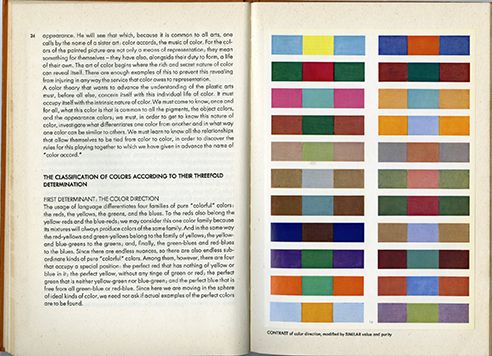
Alfred: Funny you mention Scriabin! I have sought the thoughts of such composers. Did you know that Satie was a self-described phonometrician and composed under the belief that certain notes were beautiful and others ugly? Not chords, mind you. Individual notes! A good reminder that there is more than music theory to sound. We did not get too bogged down, but did take time to reference things like Renner’s Theory of Color Harmony.
It’s really hard to think of other things like this, but are there other references we should know about? And how do you hope people get started with this?
Alfred: Encouraging everyone to get out of your up-and-down arpeggiators.
Takuma: Daedelus and I have had conversations as we built Failure, and now Tinge, that often times the plug-in space is often heavy on “solving problems”: transparent compressors, modeled distortion units, phase aligned EQs of course have place, but we really wanted to build something that adds chaos to a musicians practice, something that makes you go “what on earth am I supposed to do with this???” It’s an important place to be artistically, I feel.
Alfred: Let’s make note agitators. Note obliviators! Super excited to be with Rainbow Circuit, trying something weird, in hopes that anyone feels equally emboldened.
Rainbow Circuit Tinge / Buy Tinge
If you buy something from a CDM link, we may earn a commission.
A longer play: