School’s out for summer. But Ableton’s getting ready for back-to-school, soft-launching Ableton Learn with lessons for starting from the beginning with music and production. And there’s a twist: its interactive features are powered by the same engine that Ableton Move and Note use.
The few examples online already use just a small subset of features of Ableton’s mobile hardware and iOS app. But they’re a sign of things to come: the cool interactive functionality in your mobile or desktop browser employs the sequencing and sound features from the same base library as Move and Note. Instead of embedding a video, lessons can provide simplified versions of Live’s clip view or audio. The minimalist front-end design here, meanwhile, removes the distractions that might confuse total beginners or kids.
Learn is mostly a preview now, and we can see that the early installments will be aimed at first-time users and musical beginners. That’s important, though, as it could help bridge the very first barrier to entry. And instead of prompting AI or something, those total beginners can begin a much more rewarding path to understanding how to make and play their own music, should they choose.
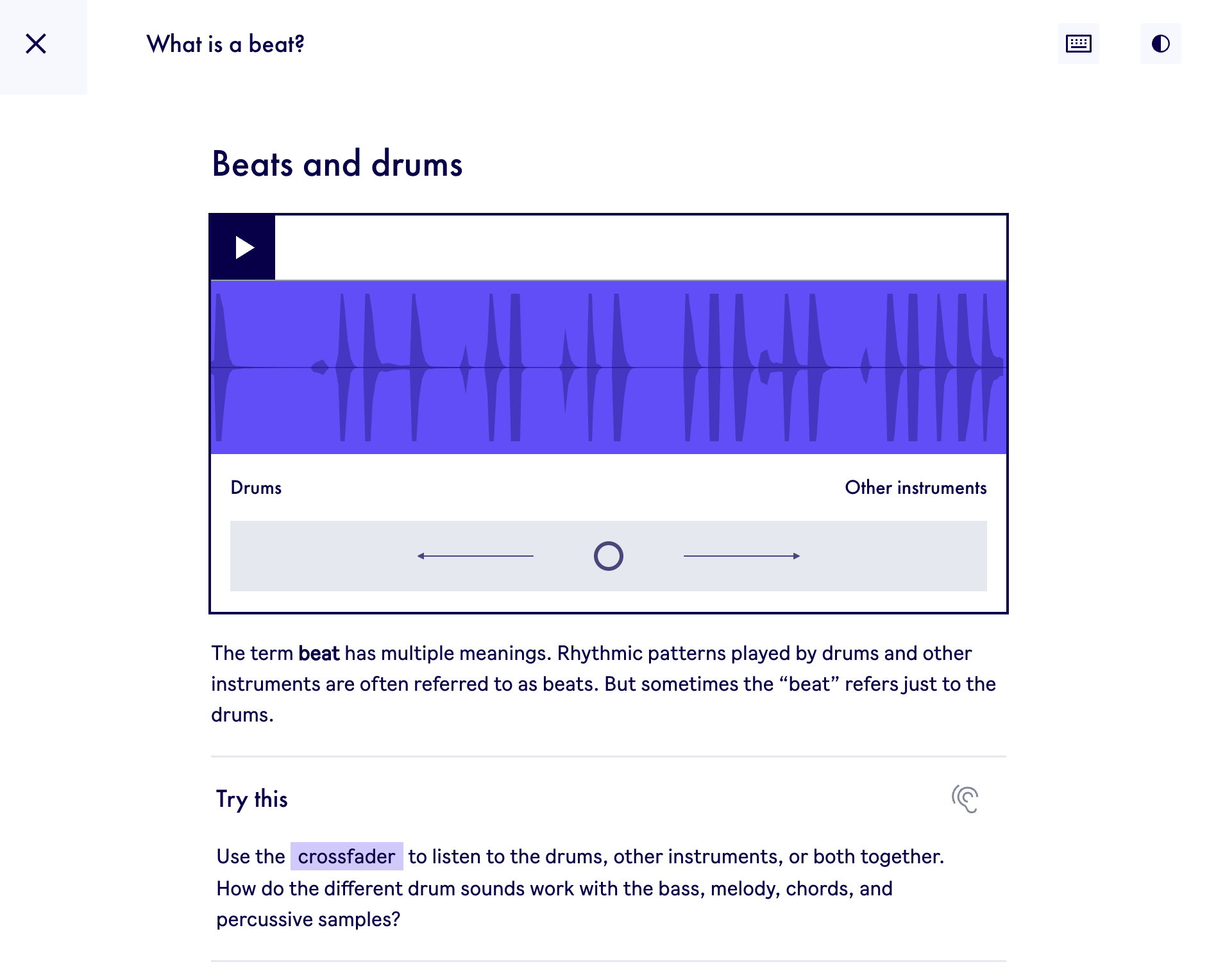
For now, you get a “Building Blocks” lesson and a starter lesson on beats. There is something that we haven’t gotten with previous online offerings from Ableton, though: there’s a Playground (below) with an ultra-simplified sketchpad version of Live for the browser, and even some music made with it. That expands on some of the unique interactive features we first saw in the Ableton Tuning site.
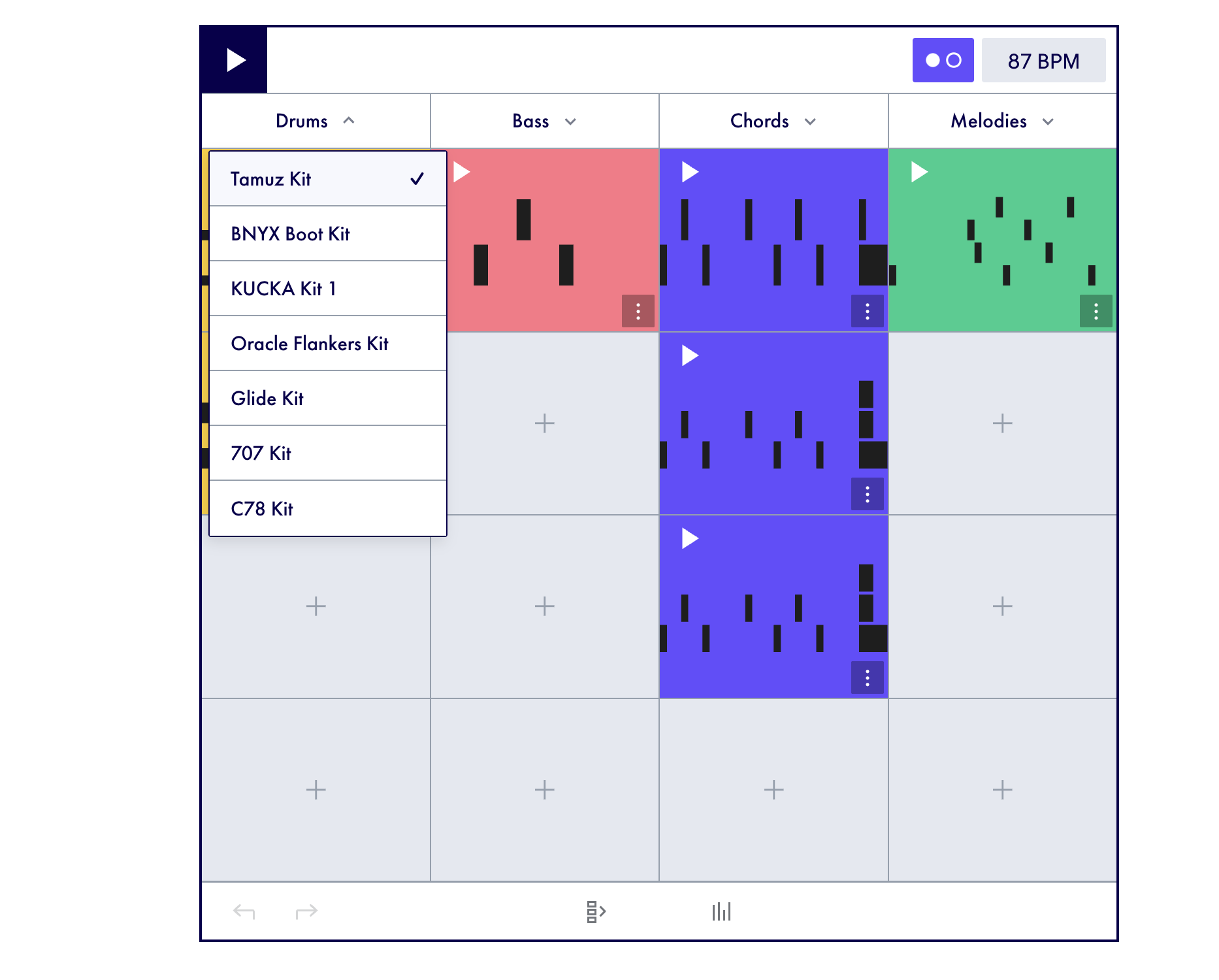
Learn works seamlessly on both mobile and desktop; Ableton tells CDM it was built mobile-first.
Here’s a timeline of online/print Ableton educational offerings, and their coverage here on CDM:
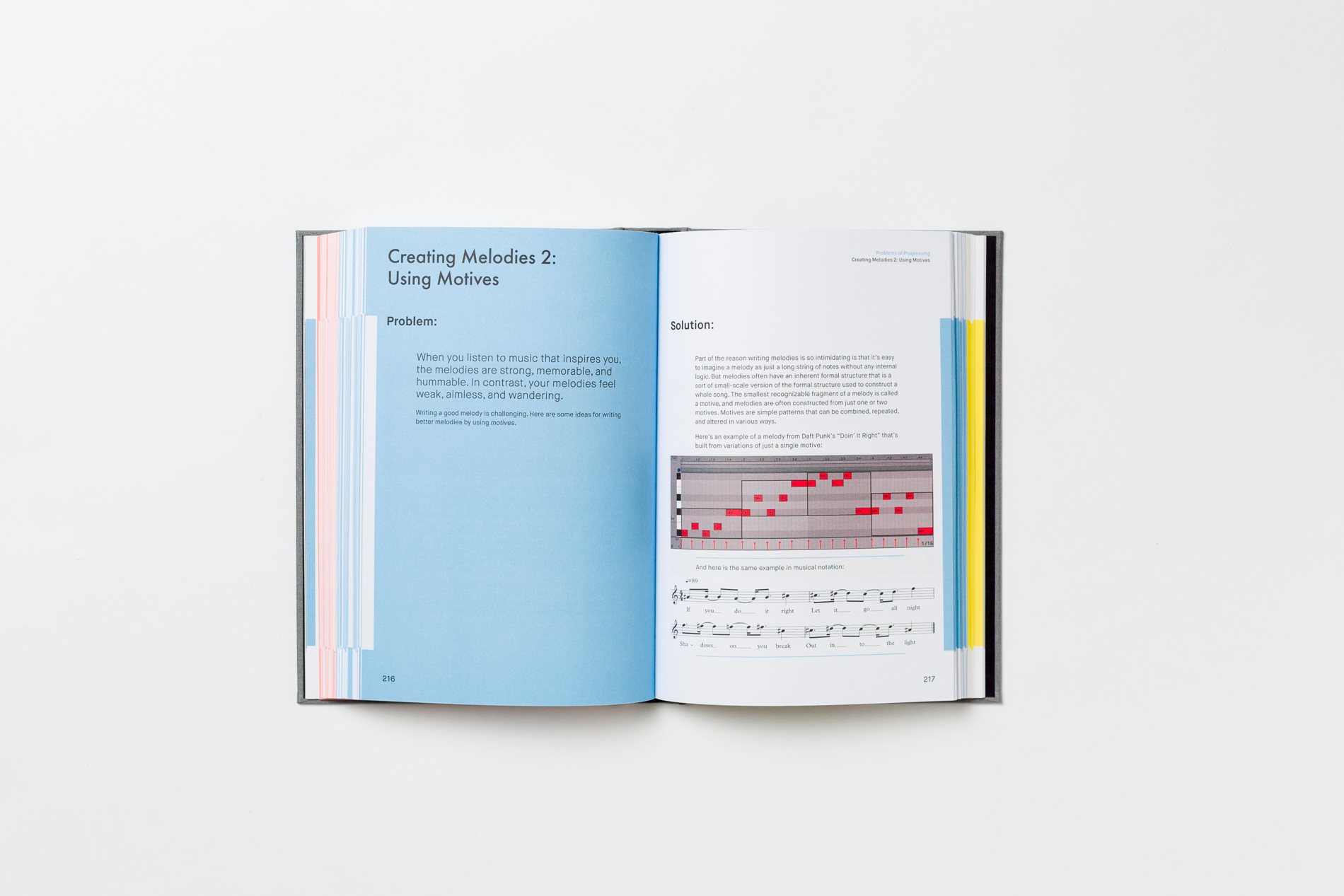
Making Music book (2015). Dennis Desantis’ book for Ableton — still available for purchase in physical form and as an ebook or online — tackled questions of how to develop musical ideas and find inspiration. (I dubbed it “non-oblique strategies.” I interviewed Dennis at the time and shared some exclusive excerpts on CDM.
Learning Music (2017). This was a more detailed guide to demystifying concepts that underlie music, with an interactive playground. It served as a kind of interactive companion to Making Music. It’s now been translated into 19 languages.
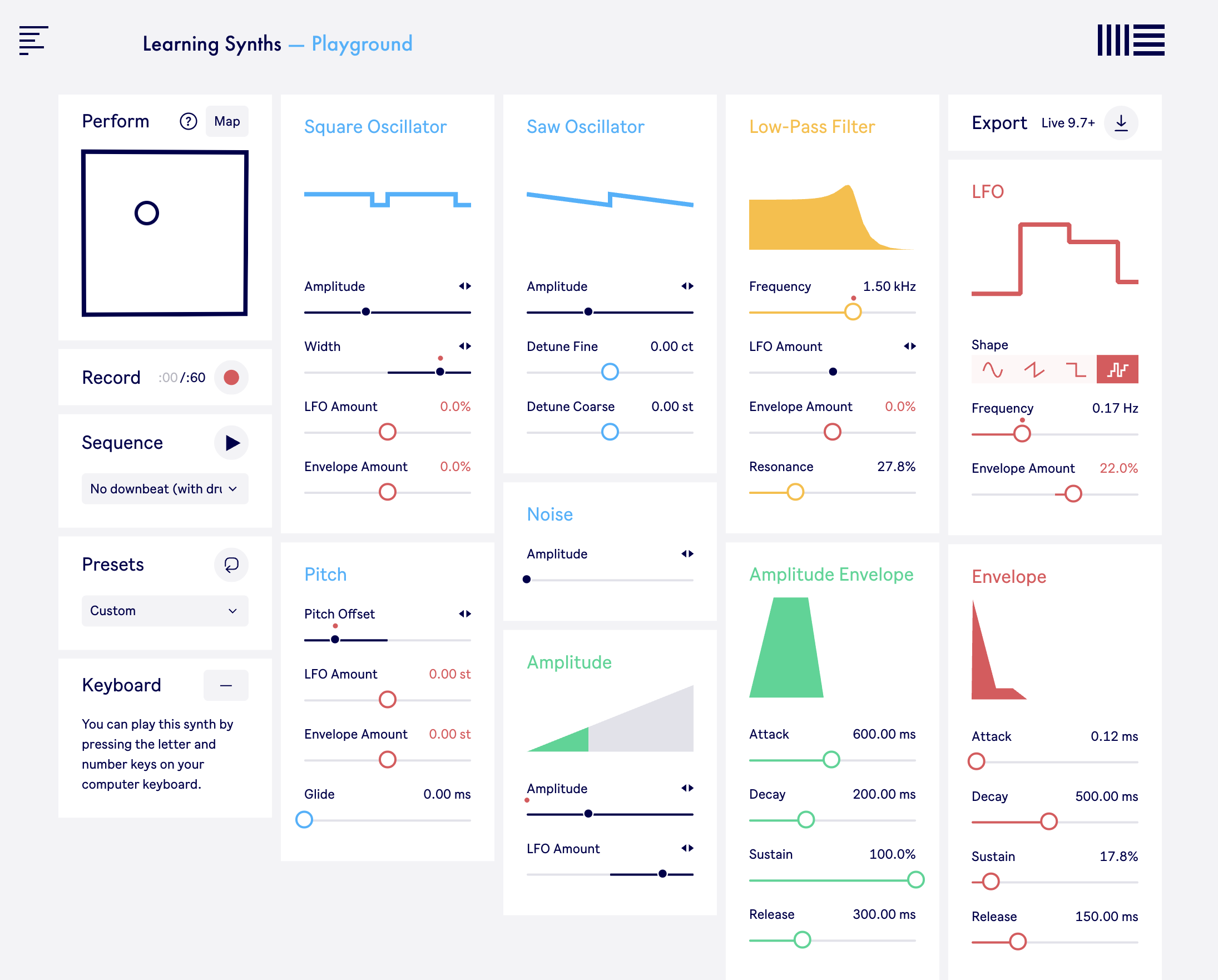
Learning Synths (2019). This clever site covers all the basics of synthesis, from waveforms to modulation, and includes a lovely Playground that visualizes how the parameters interact as you play. (below)
Making music at home (2020). Ableton offered a set of freebies, including a limited-time free offer on the book, at the start of the COVID lockdowns.
tuning.ableton.com (2024). The companion site for Tuning Systems that debuted in Ableton Live 12, this site is also a DAW-agnostic online library on tuning written by experts in particular practices, including Arabic maqams, just intonation, 13th-19th century “common practice” European historical tunings, Sudanese gamelan, Persian radif, and experimental/mathematical equal divisions of the octave. In addition, there’s a built-in tuning editor that you can sing and play along with, plus export capabilities. (I talked to Ableton in late 2023, while it was still in development.)
When these projects started, of course, Web Audio was still evolving, and Web Assembly hadn’t happened yet — basically, a lot more is possible with browsers now. Given the success of these earlier projects (and book!), all of which remain online, I expect we’ll see a lot of interest.
And there you have it. Okay, we need a timeline of Ableton events and user groups, and/or a trivia night. I volunteer to shave off my beard and keep the mustache so I can properly play Alex Trebek.
But it’ll be interesting to watch Learn grow, especially with the new interactive features, and to see how artist contributions evolve and how Ableton’s education partners work with it. I’m sure anyone teaching will be keeping an eye on this one, from teaching kids to … very old kids.