If you don’t like unauthorized hacking, this isn’t for you. If you don’t like things built with AI-assisted coding agents, this isn’t for you. But if you’re up for a very unofficial hack that gives you full takeover access to Push 3’s display, drives, MIDI, and more, Federico Pepe has just unveiled Push Hack.
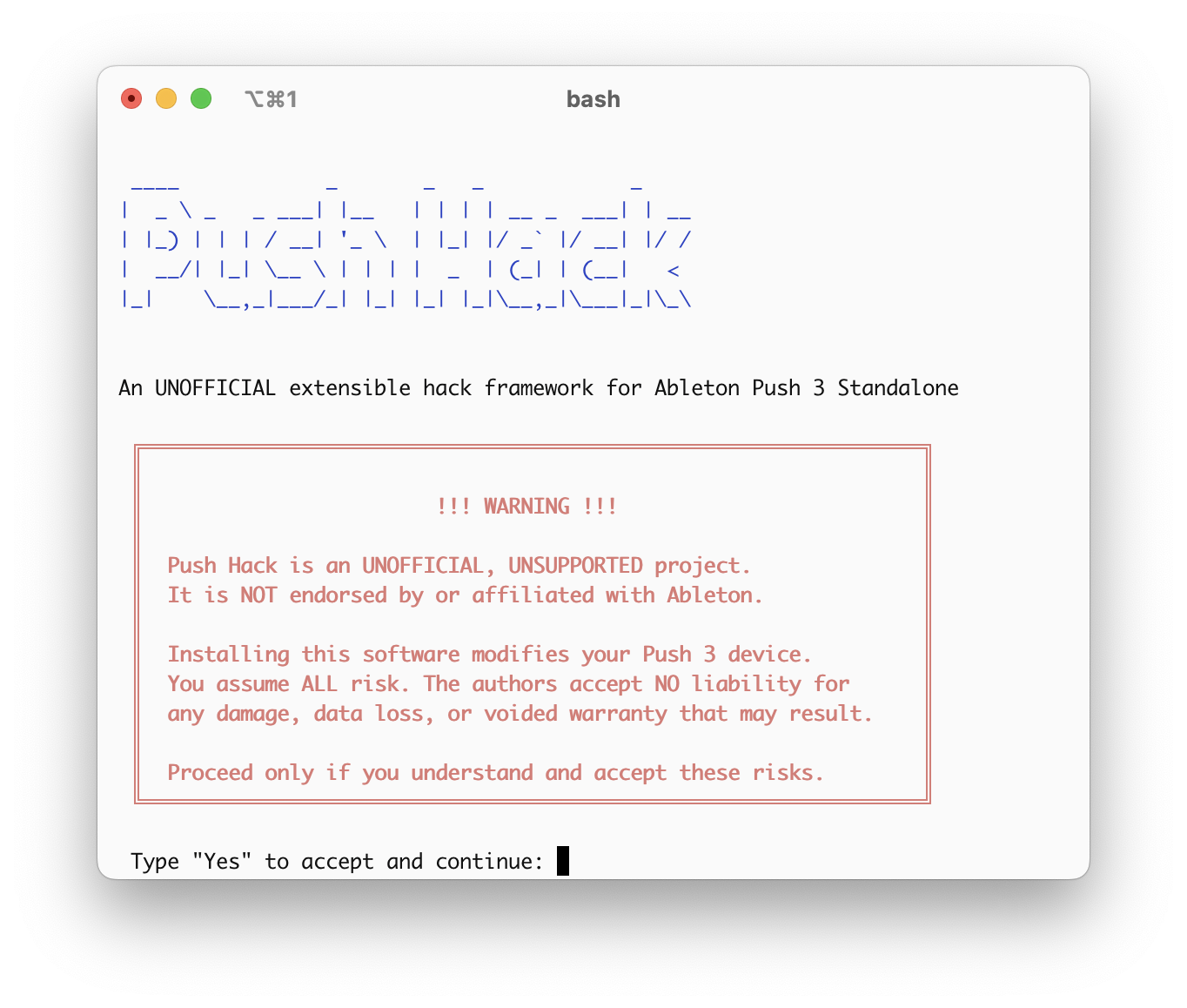
Here’s the idea: you use an SSH (secure shell) connection to Push 3 standalone — which is, after all, a Linux computer under the hood — and install modular hacks. It’s a proof of concept, but it does demonstrate what Ableton could do officially. And I hope that we see some official support along similar lines.
And Federico Pepe is deeply involved with Ableton Live as a certified trainer and brand manager. You may know him as “the guy who hacked Flappy Bird and Doom so they run inside Ableton Live’s Extensions.” See below.
Modules at launch:
- Push Manager for uploading, managing, and downloading files and projects à la Move Manager.
- USB drive support over the USB-A connection.
- Full display takeover, including draw and uploading images and videos. (So you can’t play Doom yet, but you could at least run a video of someone playing Doom… or Marathon, or whatever.)
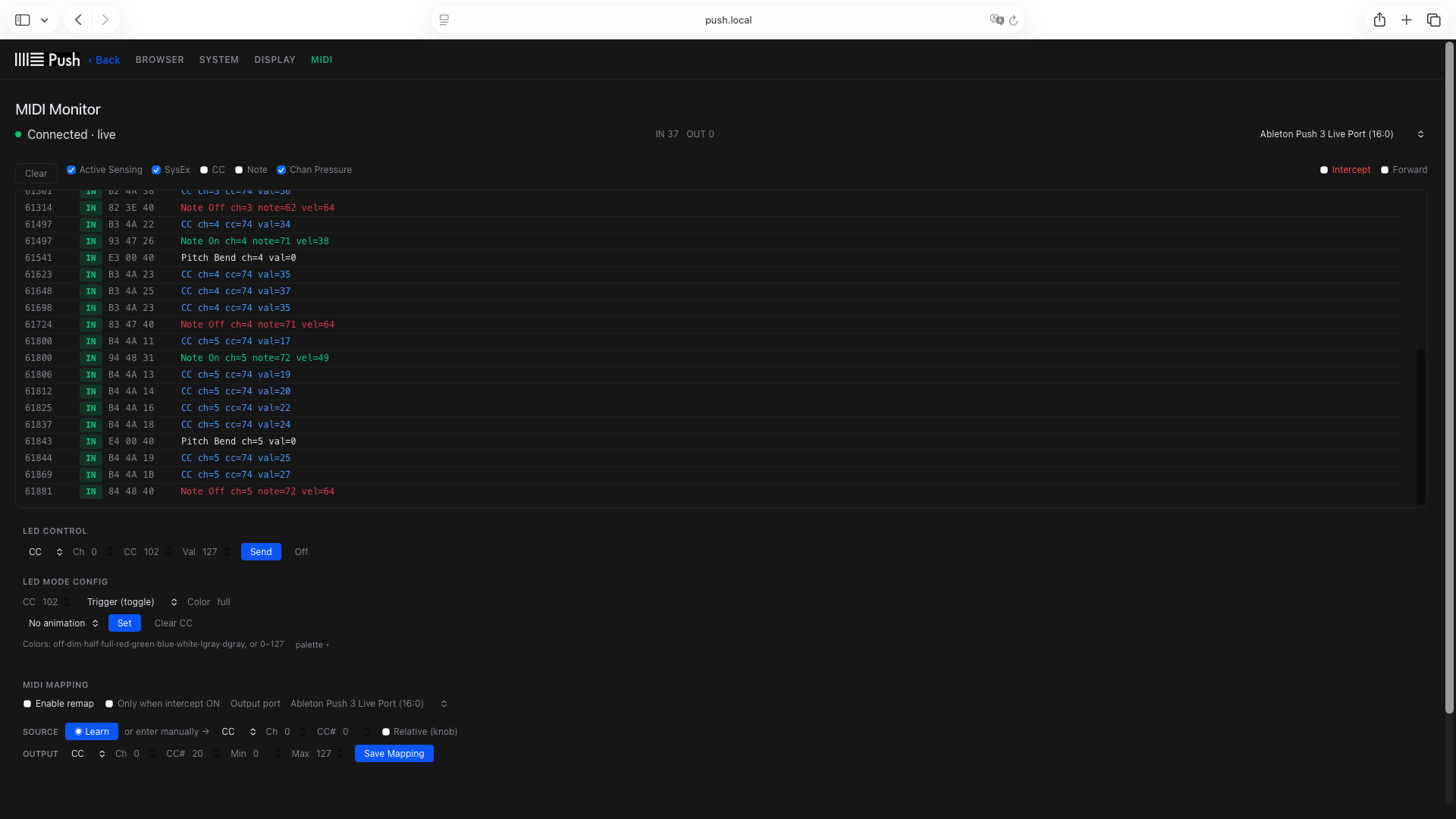
- Full MIDI takeover. I really wanted this as a launch feature: full control of every push, pad, and control with bidirectional feedback (see details below).
- LED control, reverse-engineered with every color and animation.
- System stats: CPU, memory, disk, IP addresses, hotspot password. (That sounds like a security hole, but it’s not — you’re giving yourself SSH access. Anyone with SSH access before already had full access to the device.)
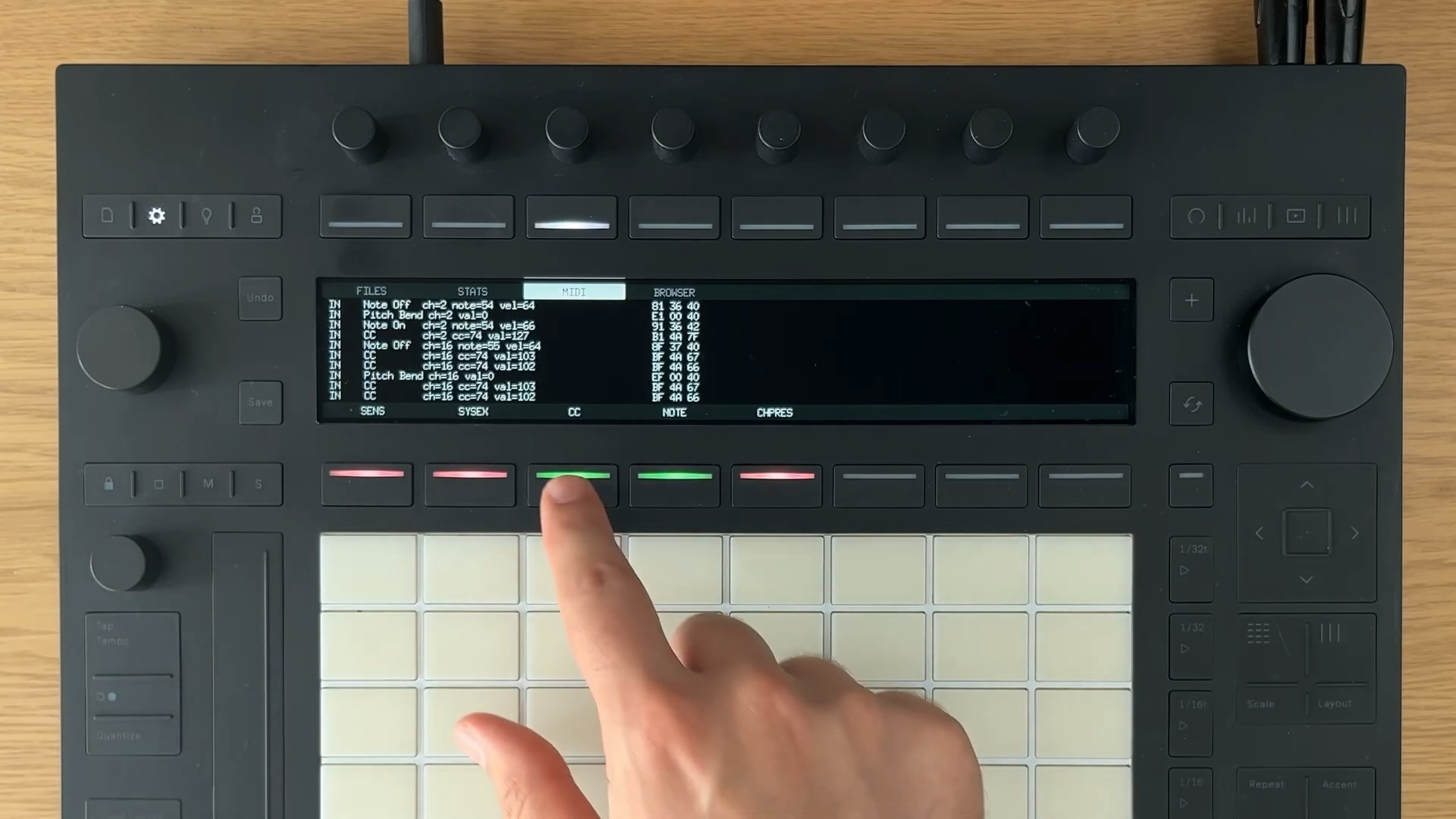
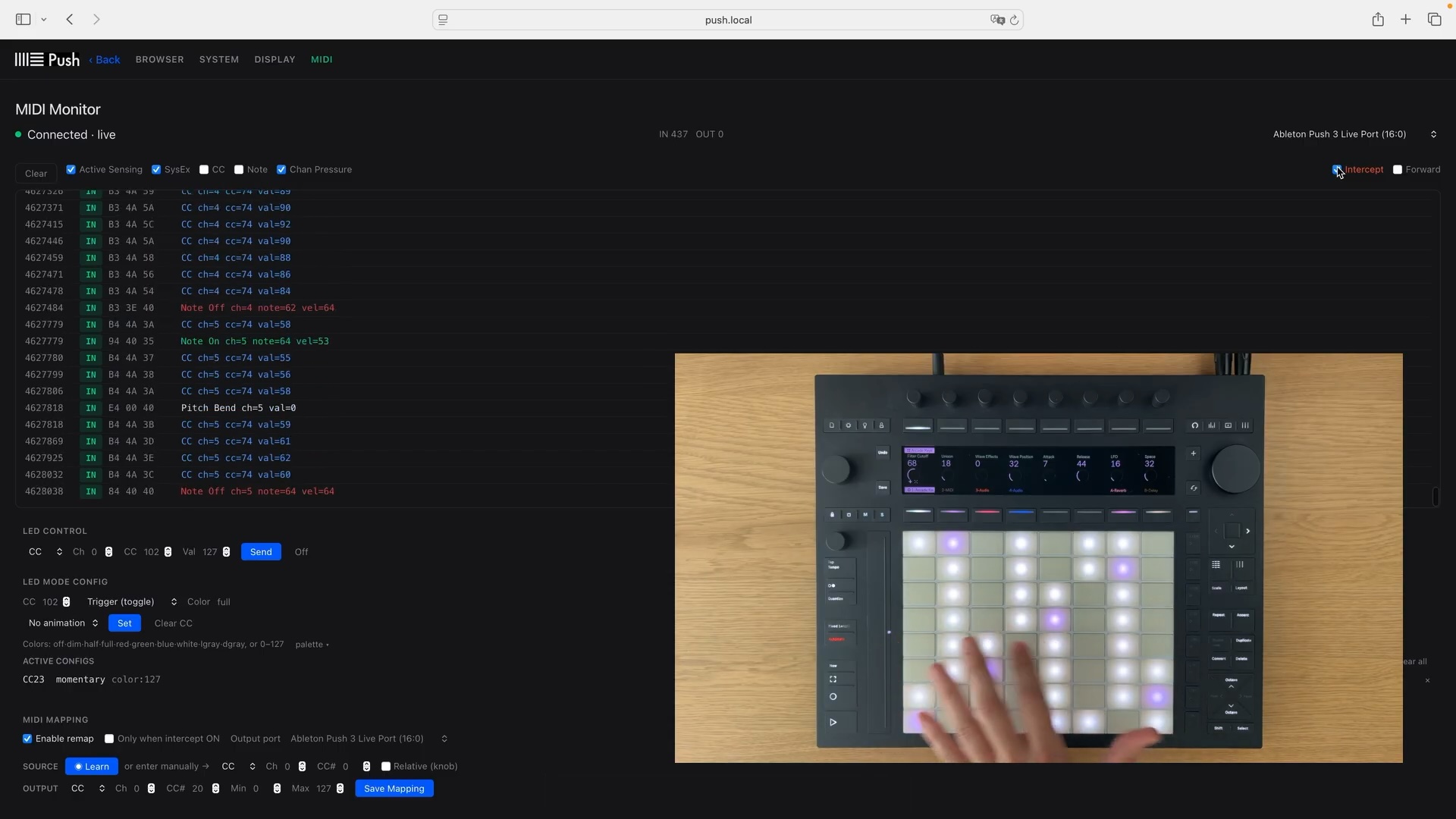
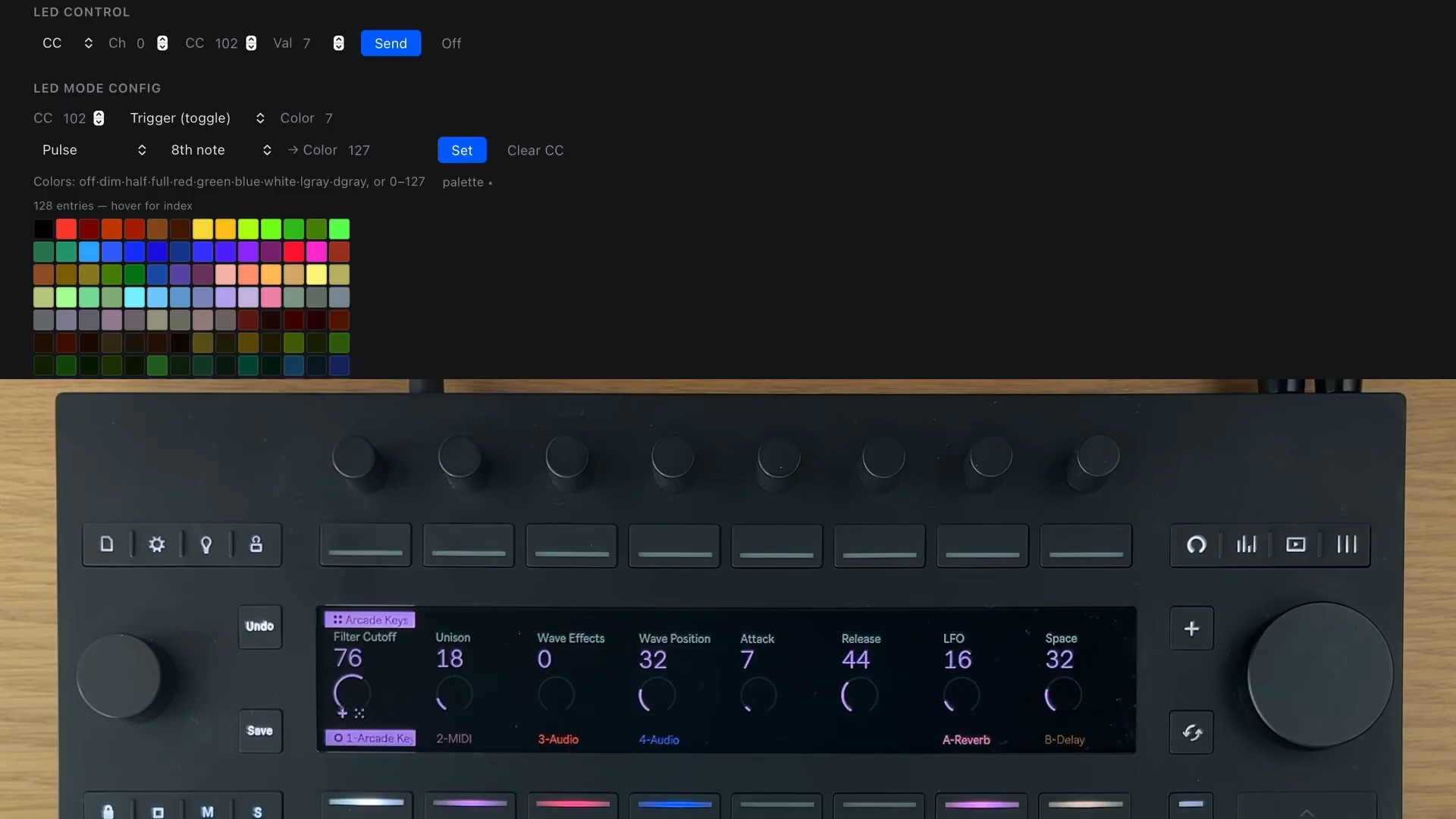
The MIDI takeover mode is what is perhaps most compelling. Federico tells CDM:
With the “Intercept” mode enabled, messages from Push are read but not forwarded to Push’s software, so you can use buttons, knobs, etc to control things without triggering anything on the main software. I also added a “Forward” mode, so all the MIDI messages are automatically forwarded to the MIDI out port (without any routing inside the Push UI).
And there’s the chance to do more, he says: “Because I have full control of MIDI, Screen and LED, I built a “Shadow UI” that is layered on top of Push’s UI. The idea is to go beyond Push Manager and do everything on Push itself.”
I expect this won’t make the same splash that the Ableton Move hacks did, just because there aren’t as many standalone units out there (at least to my knowledge), and, while far more powerful, this is also more complex.
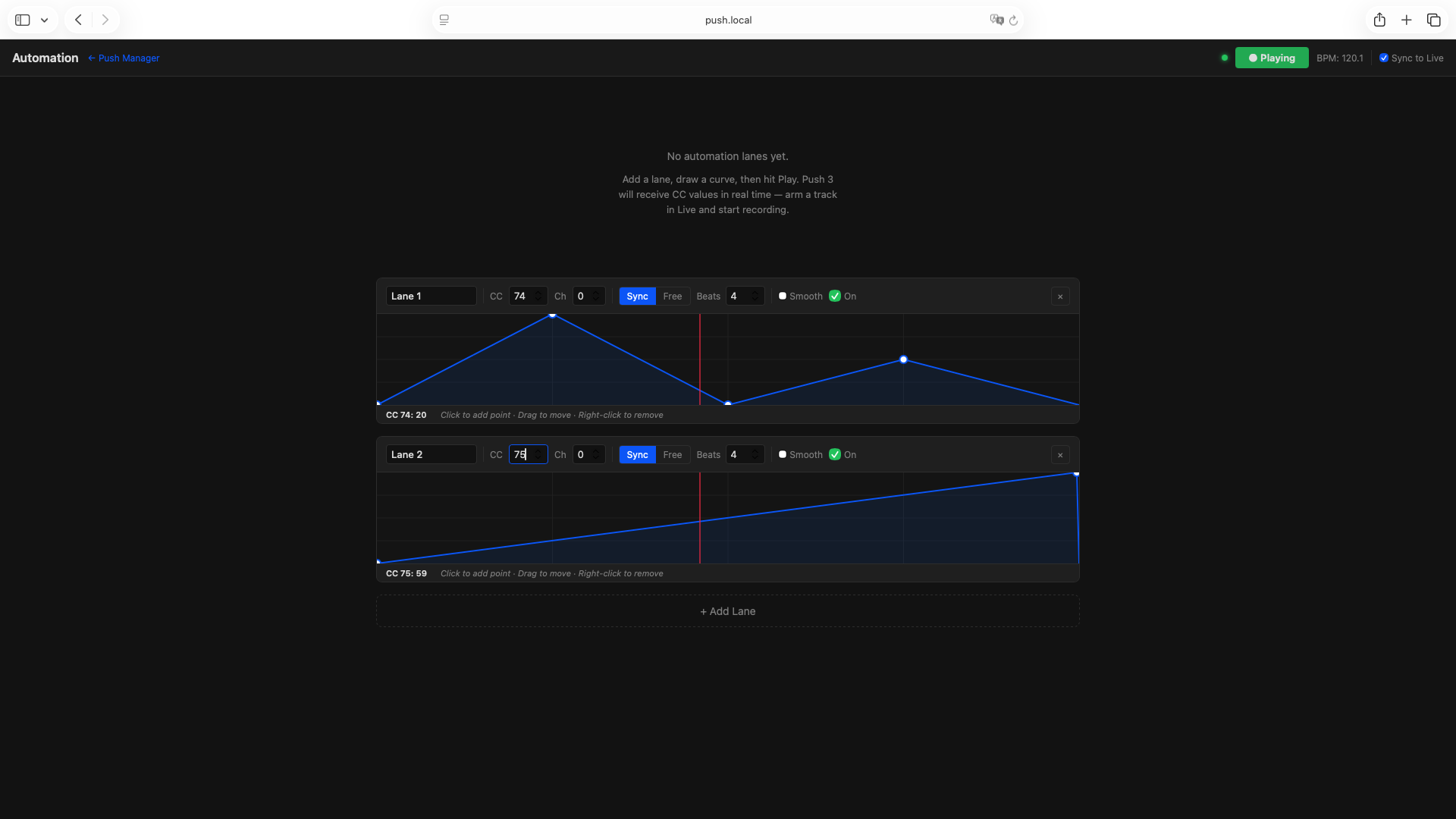
I suppose the impact of AI could make vendors lock down systems — or, at the other extreme, just assume users will go hack them themselves. But I do hope these kind of experiments suggest something else: it’d be great to have a supported API for the devices we own, so they are open to greater customization. That isn’t always an easy engineering task, so I get that there’s investment involved. But in the end, it could mean architectures that are more flexible for the vendor and third parties alike. And where we’ve seen these kinds of tools — officially and unofficially on Move, in custom SDKs from Novation, in hacks like this, and in more open boutique platforms like those from monome — user communities have done amazing things. The investment is real, but so is the return.
Anyway, that mini-diatribe aside, I’ll be curious what happens with this. And this kind of reverse-engineering task is something machine learning is really good at — including when those applications are far from benign, so be ready. (This is why July became my “”let’s look at server threat mediation month,” if anyone wants to nerd out about something not directly music tech-related, but very necessary to survival on the internet!)
Thanks, Federico.
Meanwhile, in Move land — Move Everything is now Schwung.
https://github.com/charlesvestal/schwung
I’ll take nominees now for what to re-dub this Push project. Shove? Too close. Schlock?
No Push 3 standalone or Move? If you’ve got the latest Live beta, you can have fun with Federico’s other project — a whole bunch of Extensions for Ableton Live.
Previously (uh oh yeah I need to edit this to Schwung, don’t I?)