Cycling ’74 has a surprisingly packed Max 9.2 update out now, with improvements and additions for Jitter, the Web, V8 (JavaScript), buffers, video on Windows, Gen, and the Ableton abl collection. It’s a slew of nice stuff for patchers.
Patching is more than ever the knitting of the development world: the pleasure of visually connecting your stuff with wires, step by step. And we get some nice goodies here, which I’ll summarize:
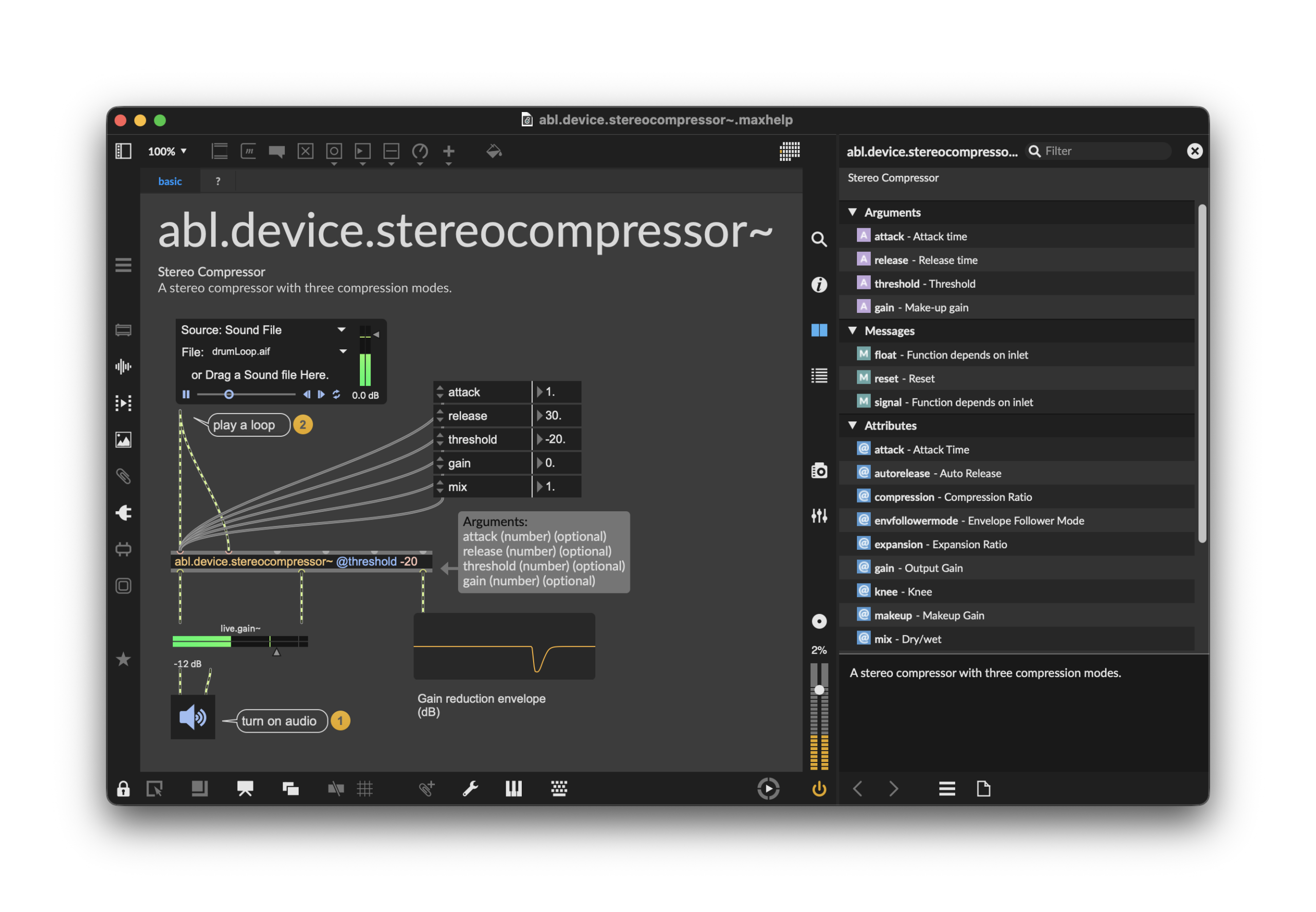
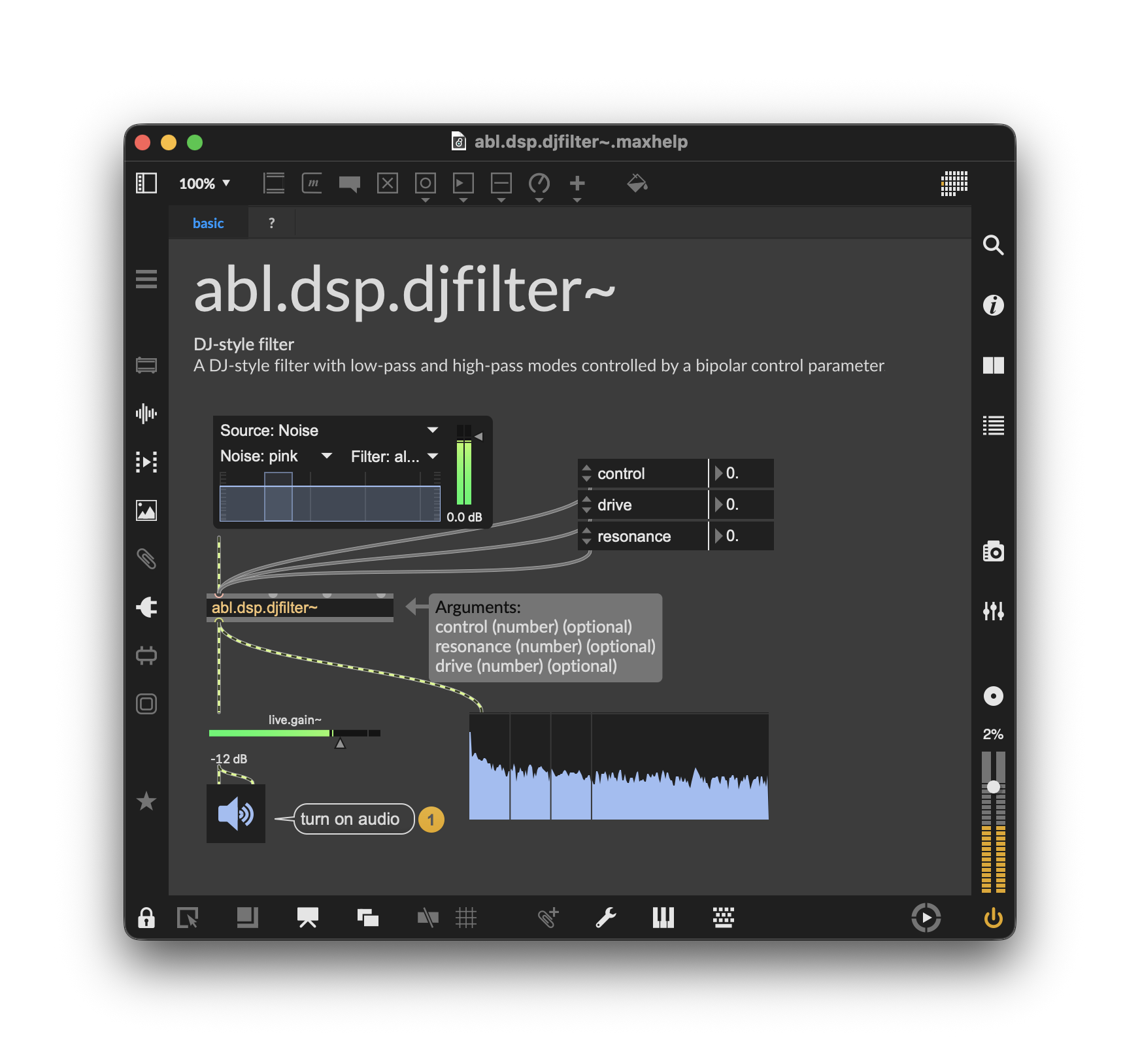
ABL new hotness. From the Ableton-Cycling ’74 crossover, we now get the scrambler FX time for modulators and abl.dsp.transform~, the sharktooth LFO waveform for abl.device.autofilterZ, @quantize in abl.device.resonator~, and three new objects to go try:
- abl.device.reverb2~ (Feedback Delay Network-based reverb)
- abl.device.stereocompressor~ (with three modes)
- abl.dsp.djfilter~ (you know it, bipolar DJ-style filtering)
But I don’t know how to use this stuff! If only CDM had done a multi-part tutorial on the topic for absolute beginners!
Hey, great news for you. And you’ll shortly be able to play with the new additions in Ableton Live, too, even without a separate Max license, so watch for that — I’ll be sure to update readers.
There’s more in this version, too. On the Jitter side, the biggest news for Windows users who are VJing and running live visuals with Max is a new Windows Media Foundation engine option, so you can use the native Windows libraries for movie playback, complete with support for the awesome, live-visual-friendly HAP codec developed by Vidvox. Check the HAP site:
Jitter in general gives you some stuff everyone will want:
- jit.path.ui for graphical path editing(!)
- jit.gl.meshwarp now supports feathering, vertex snapping, and more
- …plus other nice matrix stuff, Web support, and more.
JavaScript fans, you get a ton of v8 improvements with an engine update, new native networking layer (WebSocket, HTTP,TCP,UDP), and more. And you can do FFTs in v8 — that’s the new MaxFFT and MaxFFT2D libraries. V8 also adds support for toJSON() for Dict, MaxArray, and MaxString.
V8 networking tools are a big deal, in that you now can use the open-source, bleeding-edge JavaScript and WebAssembly engine from Google Chrome for all kinds of new tricks. Add files from the Internet. (Hey, it is still running. Mostly.) Build simple servers and Web sockets. And do all of that without the use of NodeJS.
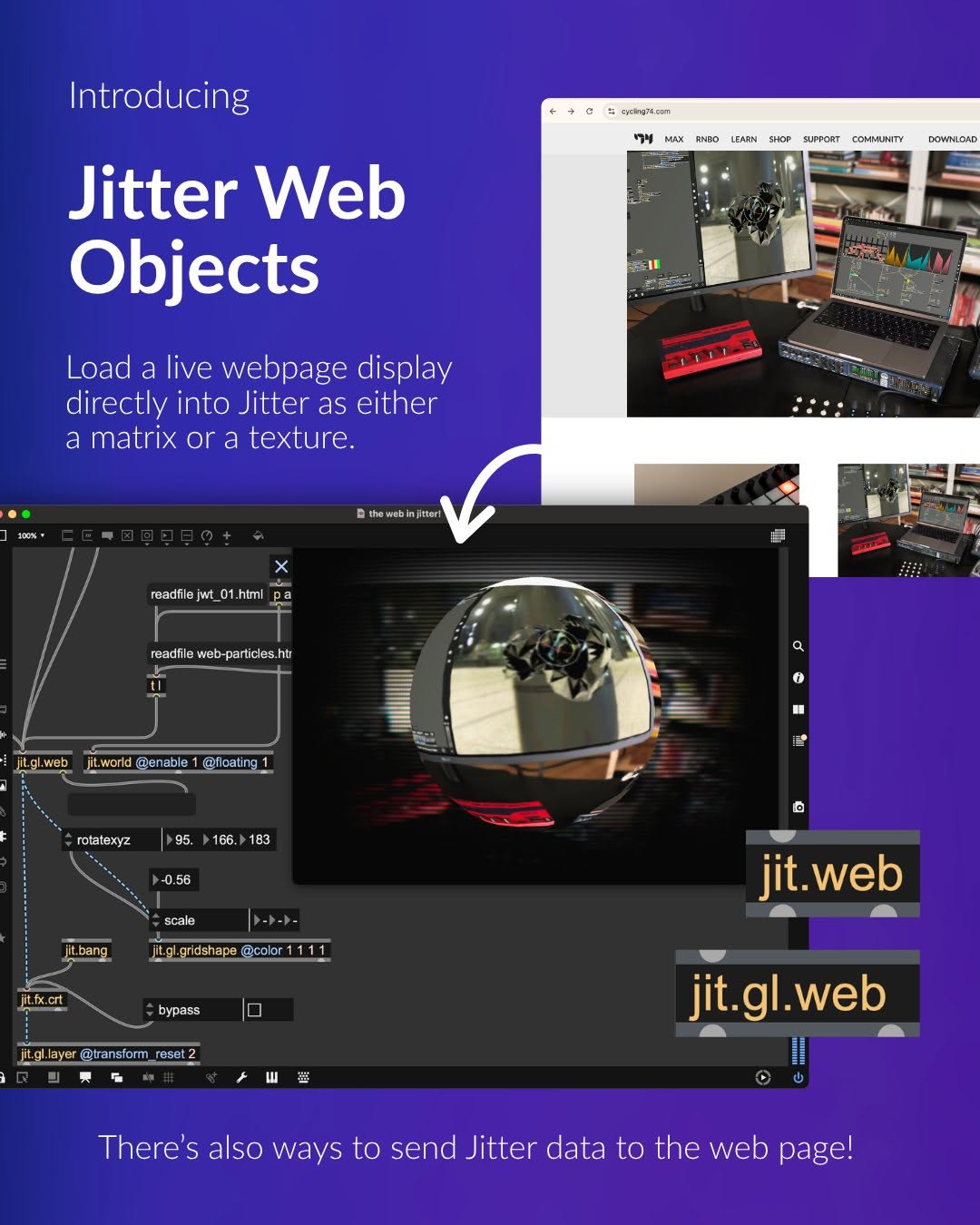
You can also now load a texture from the Web into Jitter and use it like any other texture (which is what’s happening in the feature image). Finally, I can VJ in 3D with CDM.
Gen users, that environment now compiles more reliably and includes a bunch of bug fixes.
Buffer is improved a lot, too, with the ability to replace channels (all at once or by samples) and copy data, set size and trim, and more.
But don’t take it from me. Take it from the —
And the Cycling folks have some office hours coming up — Jitter focus today with the wondrous Rob Ramirez and Federico Foderaro, and a 9.2 tour with the legends-of-our-time David Zicarelli, Isabel Kaspriskie, and Joshua Kit Clayton. I’ll include these here and they’ll go live on the 16th and 21st, late morning California time.
Previously:
Recently, Max’s cousin also getting some update love, too: