KORG’s phase8, engineered by the skunkworks office in Berlin, has found some visibility. But what does it mean as an actual electroacoustic instrument? What’s it like to play? My Lemonade Stand video from Superbooth is out, along with others, so I thought I’d do some reflection.
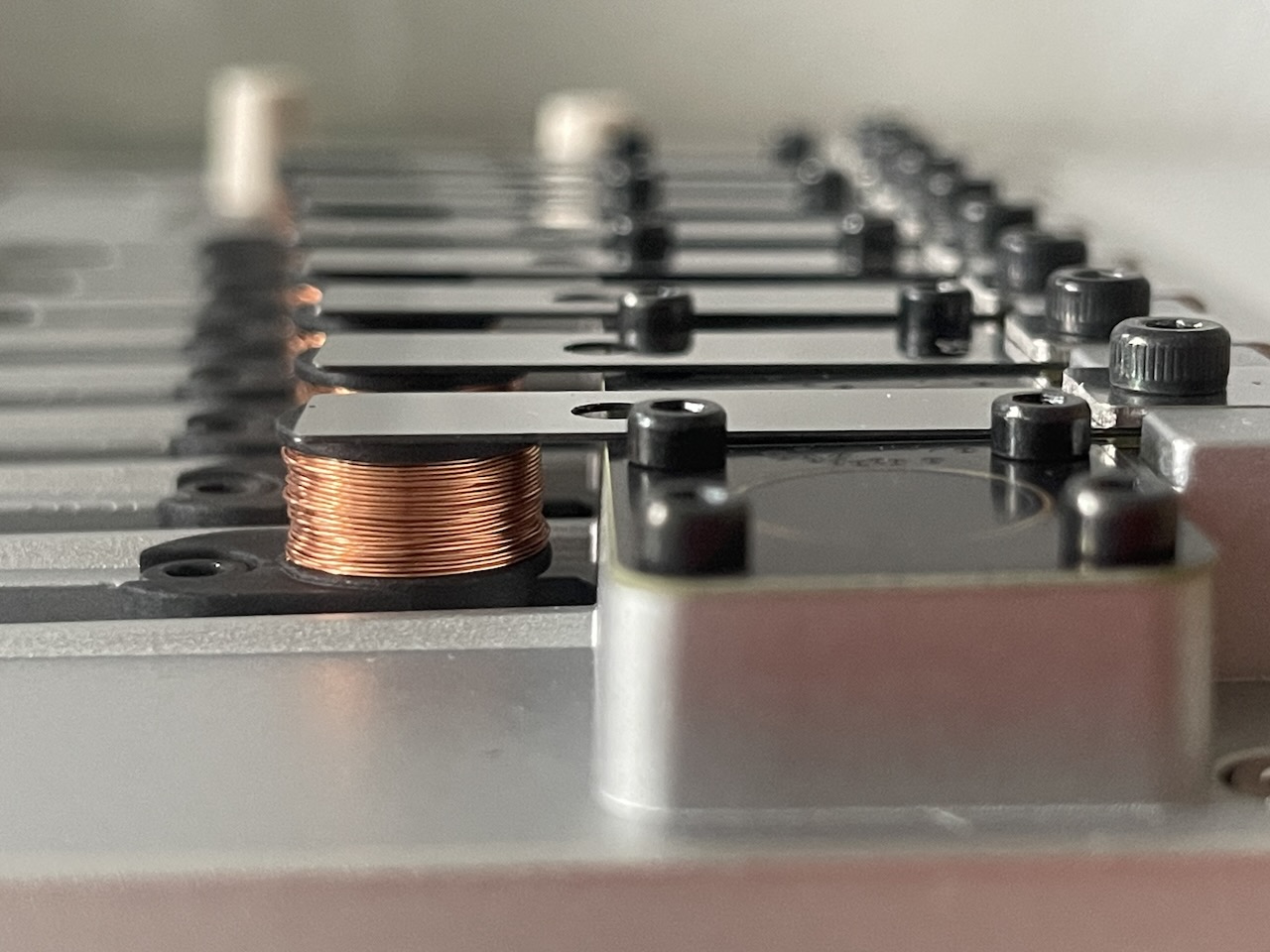
The phase8 is delicate. It’s as much a ghostly music box of sorts as anything — those tines were crafted by a music box maker, so that should come as no surprise. It’s become far more musical in its iterations; the resonance of the instrument now shines out. But it’s shy much of the time, full of miniature sounds, knocks and bumps of the casing, gently muted strikes. With resonance turned up, it will burst with sound — but even then, a bit like a playful kitten.
So, with it sitting in the studio over time, for all the videos you’ve seen of novel mutes and whatnot, you often return to it for nuanced, fragile percussion patterns, either generated internally or over MIDI.
And it benefits from effects. In this live set, I paired it with Sinevibes effects hastily configured on a KORG NTS-1 mkII (Sinevibes developer Artemiy was in attendance), plus some sampling and granular mangling on the Torso Electronics S4.
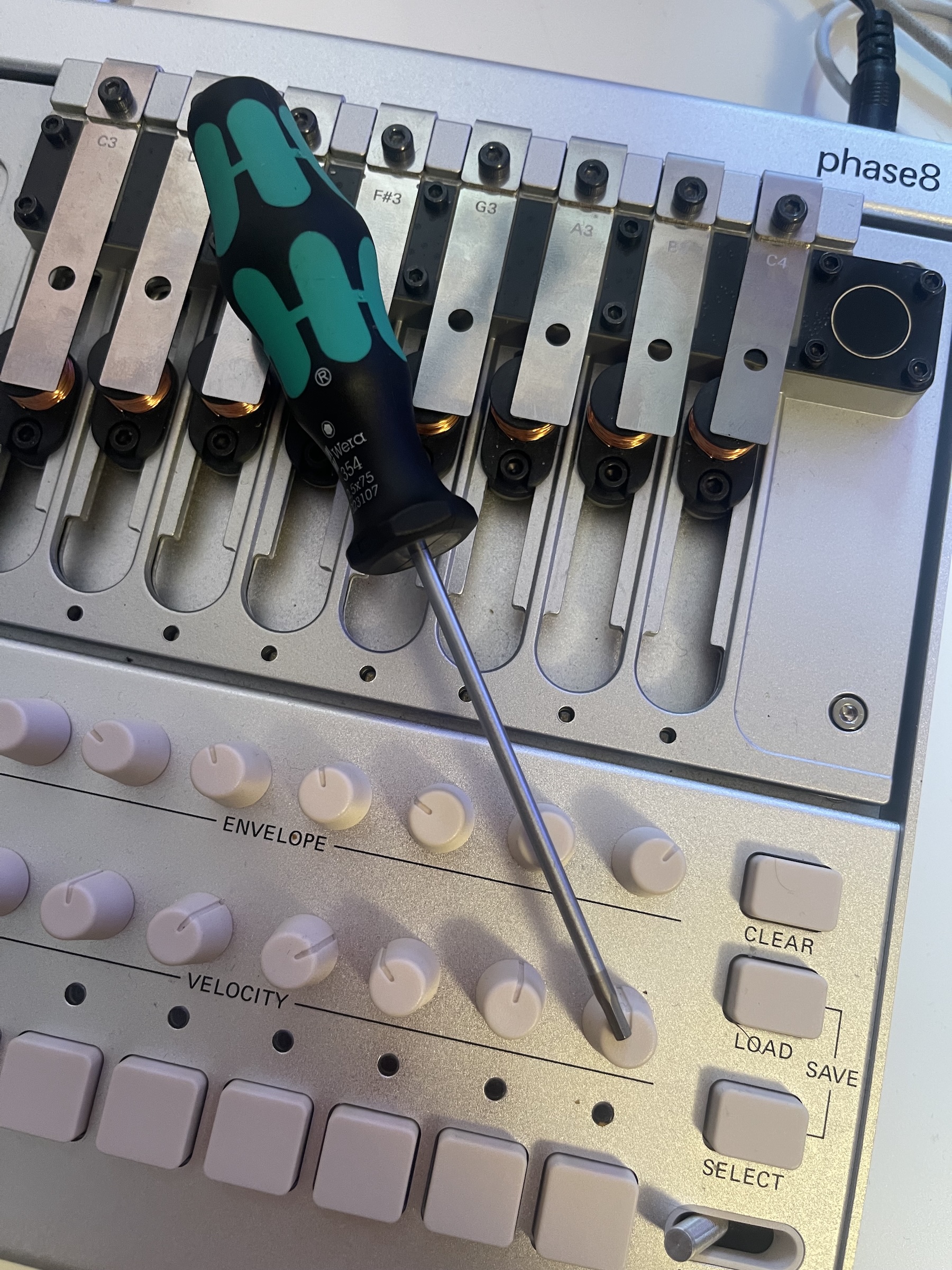
For the Lemonade Stand performance, I tuned the phase8 to maqam Rast. That involved using a screwdriver and very gently sliding the tines up and down, tuning to taste by ear and singing or playing along with some recordings to see if it felt right.
You’ll find lots of videos of demos of the phase8, or it being used in larger musical contexts where the instrument is largely disguised. Let’s focus on more videos where that uniquely fragile sound is fully exposed.
For their part, Korg hosted artist Bex Burch in their studio to produce a full phase8 album, and in a separate post-Superbooth brunch in their loft on Görlitzer Park. She placed it in the context of other percussion. This is really one of my favorite recent Superbooth shows:
The full album is interwoven with everything from kalimbas (a logical pairing with phase8) to field recordings of frogs. And the artist collaboration helped inform tweaks and voicing of the instrument:
I thoroughly enjoyed all the Superbooth shows in their variety! Cuckoo’s was a jam, for instance; Fabian & Zufu proved that you can fully integrate that percussion as groove. But here are ones that really put the phase8 at the center as something no other instrument could quite pull off in the same way.
Kim Li ingeniously couples the percussive, often overdriven sound of the phase8 with strings, as the short sequence length of the hardware produces a wonderfully hypnotic effect:
Lukas goes full-on mechanical minimalist with not one but two phase8’s. Phase8s. Phases 8.
Beautiful work here — they start to sound like marimbas.
Kyle Dixon makes a great argument for Polyend Mess as the FX friend of phase8, with more warped loops, oozing alien counterparts to the regularity of the Korg.
Equally lovely, Tom melts all that percussion into drones, proof that this is possible, as well!
In the end, the machine disappears. We’re left with some ethereal, chimey music to take us into the weekend. Enjoy!
KORG lists this in the DJ category, so I am now obligated to take this alongside a CDJ at some point. (I mean, “DJing” does have its roots in using hardware outside its intended use.) Watch this space.
Bonus round: Noisegate has this nice walkthrough using Arturia effects:
And Cuckoo and Václav made these nice add-on bits, available to download and 3D-print from Cuckoo’s Patreon.