Talking granular effects is like talking ice cream — it’s all about the different flavors. So look at what Minimal Audio has given us: Lucid is a pulsing purple granular multi-effect. And it’s capable of everything from bleeding-edge and ambient drones to animated, tempo-synced rhythmic sliced mayhem. It’s in control when you want it — rhythmically, and in key — and totally extreme when you want that, too.
We’ve seen this pitch before. It’s a funny thing, because you’ll see an effect described as “musical” or “easy to control.” But what does that mean, exactly?
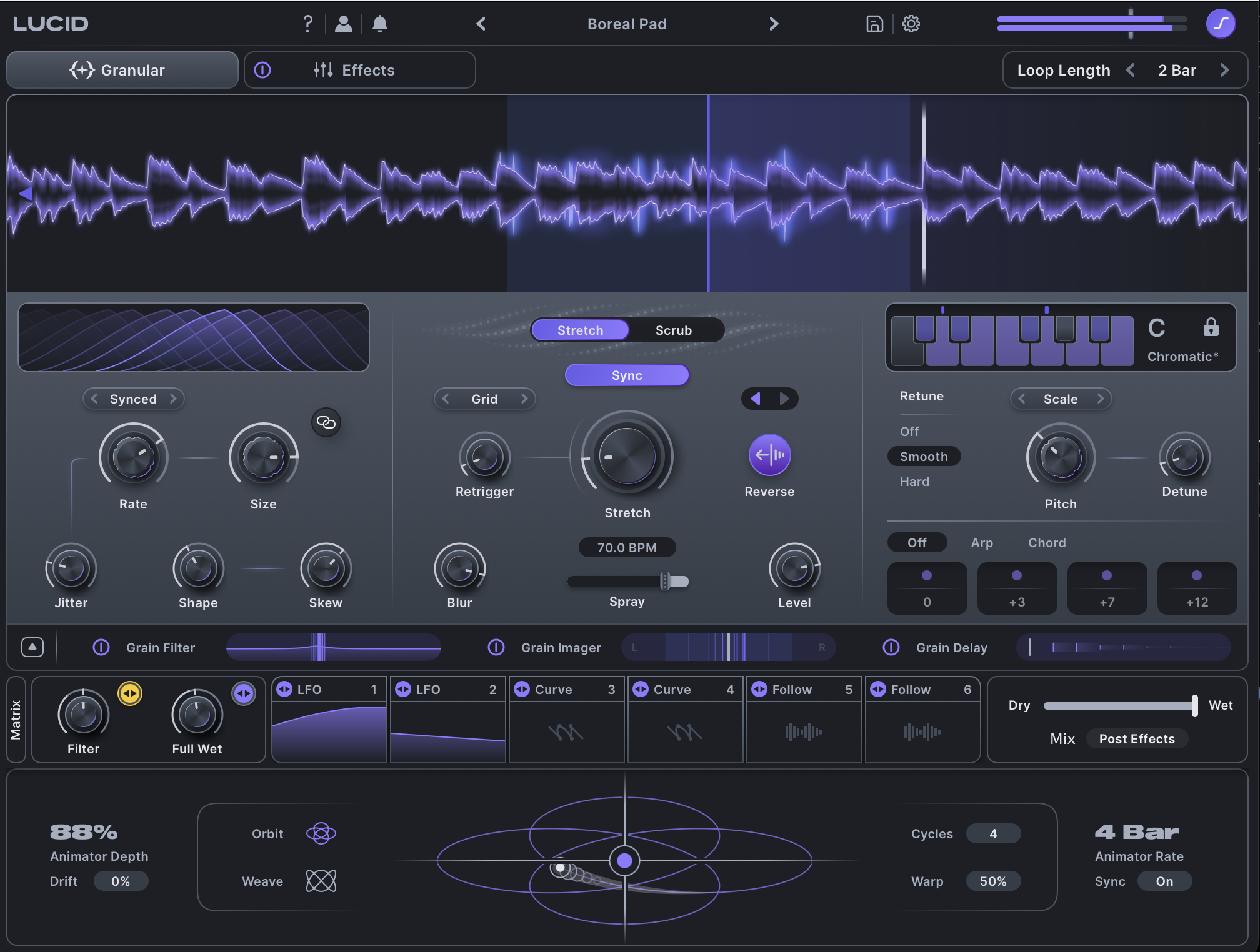
It’s not that you really want to “tame” granular processors. The whole joy of granular sythesis — chopping up sounds into tiny particles and forming them back into textures — is the mysterious alchemy of producing unheard sounds.
So yes, Lucid has a big ‘ol piano keyboard on it. And yes, there are tempo-synced controls. I’ve even used a couple of granular layouts like this. But Lucid is special: it’s really good at tempo-synced stretch and scrubbing, even before you apply the pitch controls. And it has a separate grain filter, imager, and delay on top of that. It’s a granular multi-effect, and then you add another set of Minimal Audio multi-effects, plus a full bank of modulation controls and animation.
There’s as much modulation potential in this as a flagship synth like Arturia Pigments or Xfer Records Serum. Calling Lucid granular doesn’t do it justice: this a full-feature multi-effect, and suitable sibling to Minimal Audio’s own Current synth.
I’ve been working with pre-release and release candidate versions for a couple of weeks. Here’s a tour of me just having fun with the sounds it makes:
At the heart of all of this, you have two main engines — Stretch and Scrub. The stroke of genius in Lucid is that it’s really a looper first. So stretch lets you manipulate retriggered slices according to the playback controls. Scrub lets you move the playhead around inside the loop. Other granulators do something like scrub — Robert Henke’s Granulator, for instance — but Lucid makes it uncommonly easy to navigate the captured audio in time and tune, as quantized or unquantized as you like.
You always have controls over loop length. And you can freeze and reverse sound, too, adding granular spray to taste. That’s welcome, because I already have more than enough effects that produce clouds and mists and other more nondescript granular constellations. Lucid lets you free-run grains, and also sync grains to rhythmic divisions and pitch, including playing via MIDI input. (I’d like to see microtonal or tuning support, but that’s another discussion.)
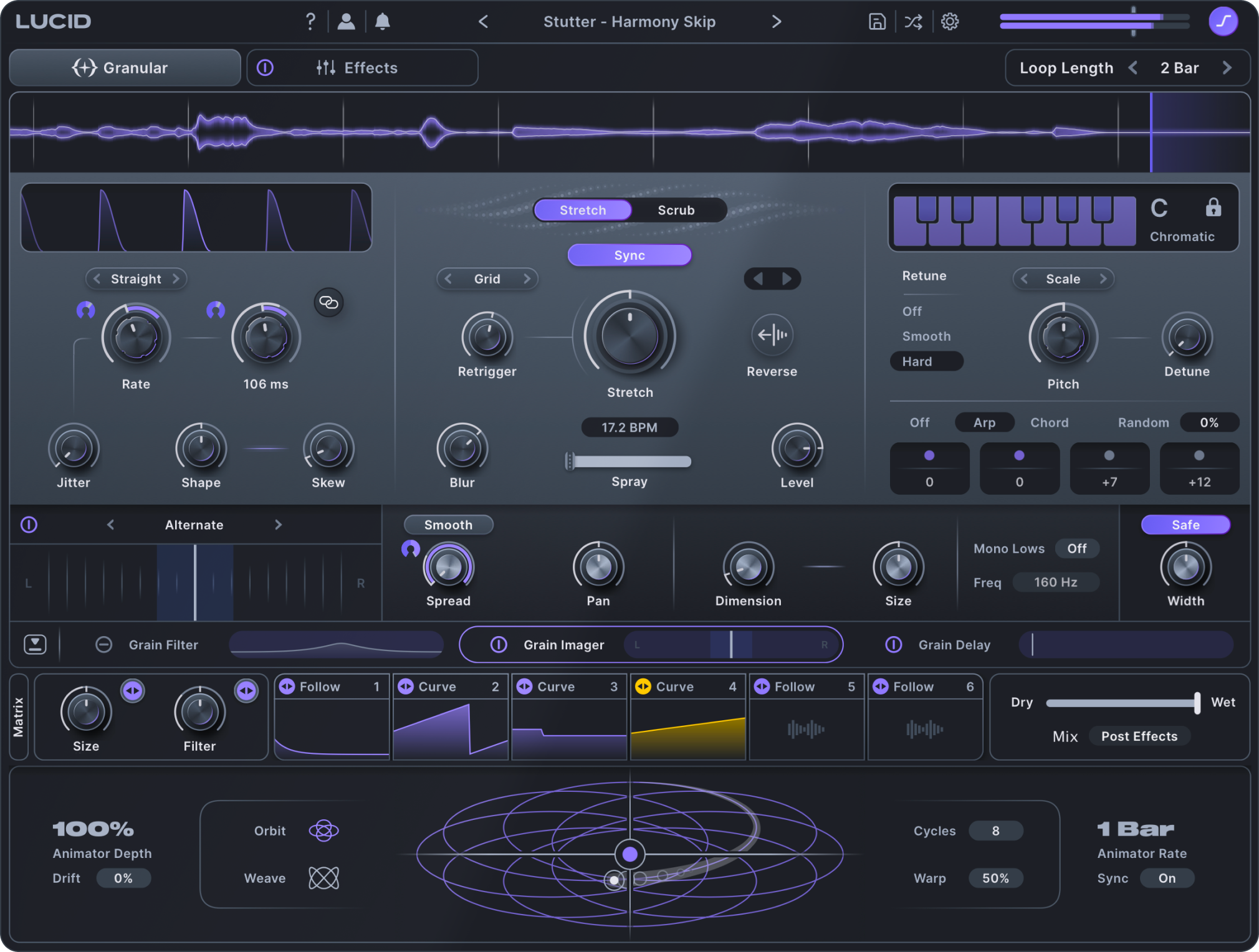
On top of that, you add a ton of extra modes:
- Arpeggiator with randomization
- Chords, intervals, and scales
- Chorus with stereo spread
- A multimodal Grain Filter — which is a per-grain filter, including exotic types like a lo-fi Reducer and short modulated comb and multi-stage phaser options, plus drive.
- Grain Imager (with some really beautiful options for stereo imaging)
- Grain Delay — an actual grain delay, as in every tap is its own delay (you can apply conventional delay separately), with its own shift pattern options, feedback, and a diffused reverb
- Animator with unique orbiting controls (reminiscent of the modulation section in Apple’s Sculpture from years back)
The Grain Filter gives you an enormous gamut of sonic colors. Grain Delay is almost its own effect.
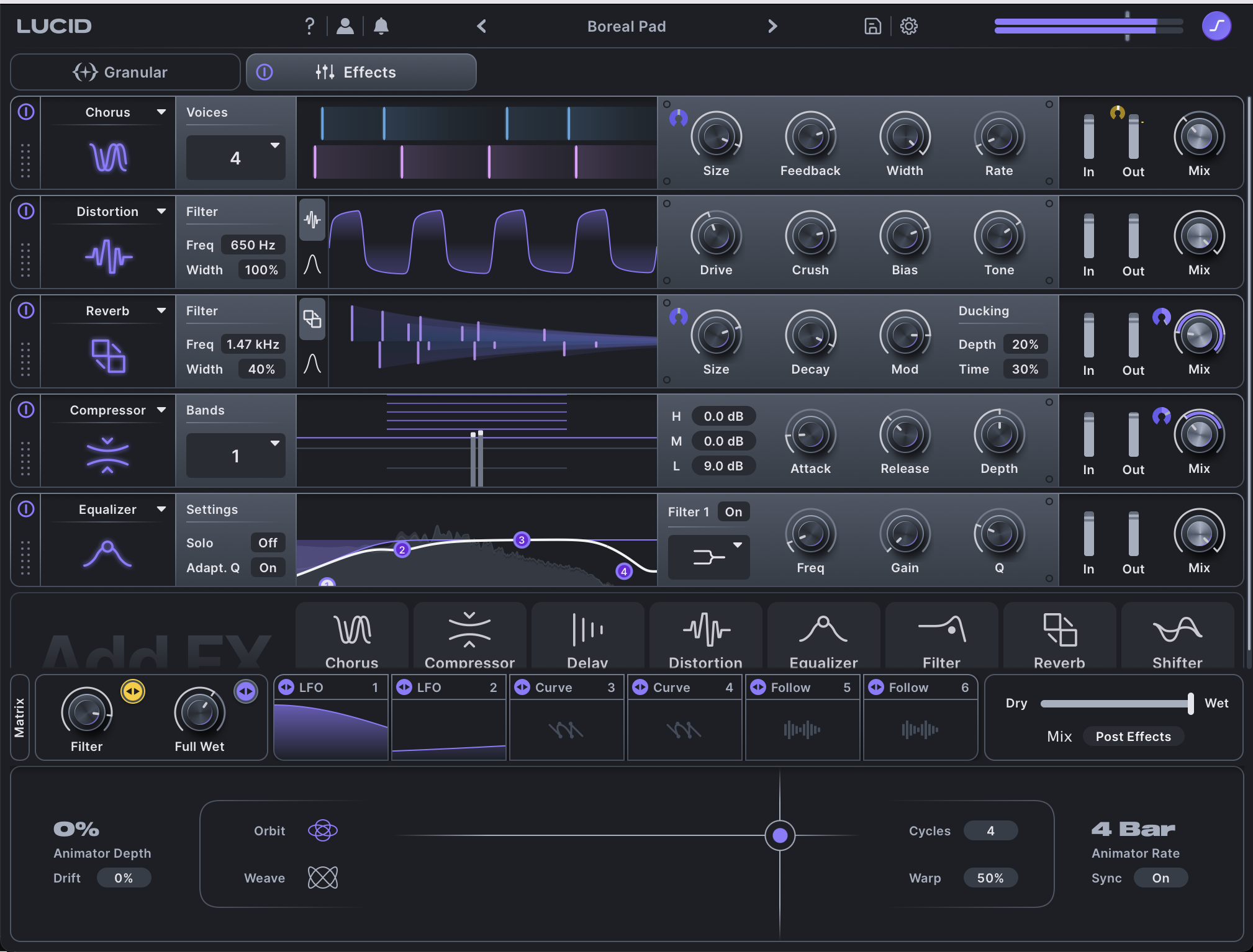
All of this would be more than enough to justify the purchase price, but then Minimal Audio added a multi-effect rack. There will be some repetition if you own some of their other plug-ins, but it’s still delicious combining this with all the granular goodies. You’ve got multiple effects slots, with reordering, bypass, and duplication, into which you can add eight signature Minimal effects:
- Chorus
- Compressor
- Delay
- Distortion (multi-mode)
- Parametric equalizer
- Filter (stereo morphing)
- Reverb
- Shifter (with frequency shifting, ring modulation, frequency modulation, and feedback)
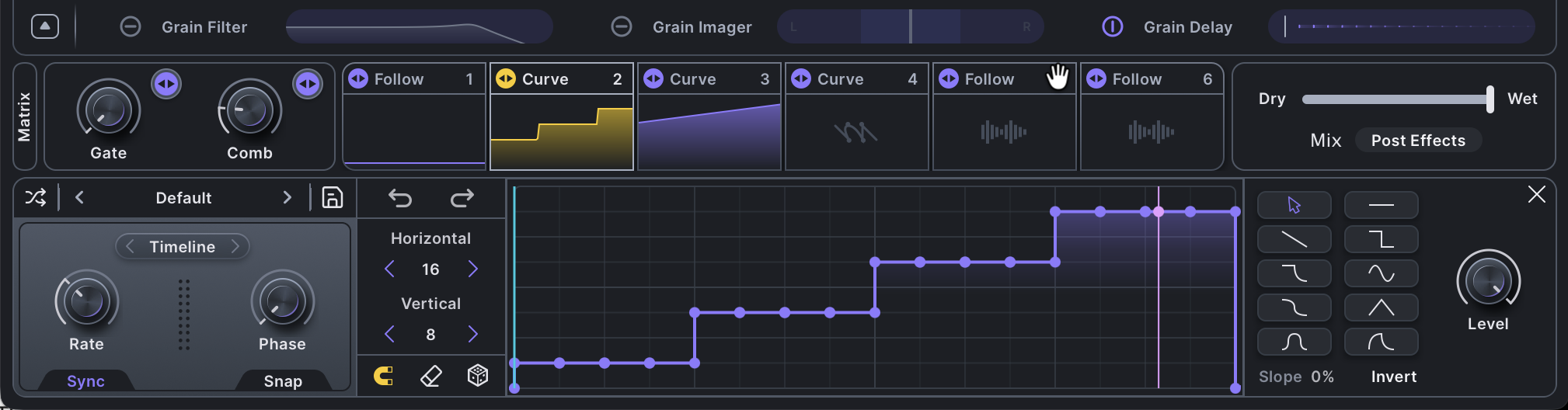
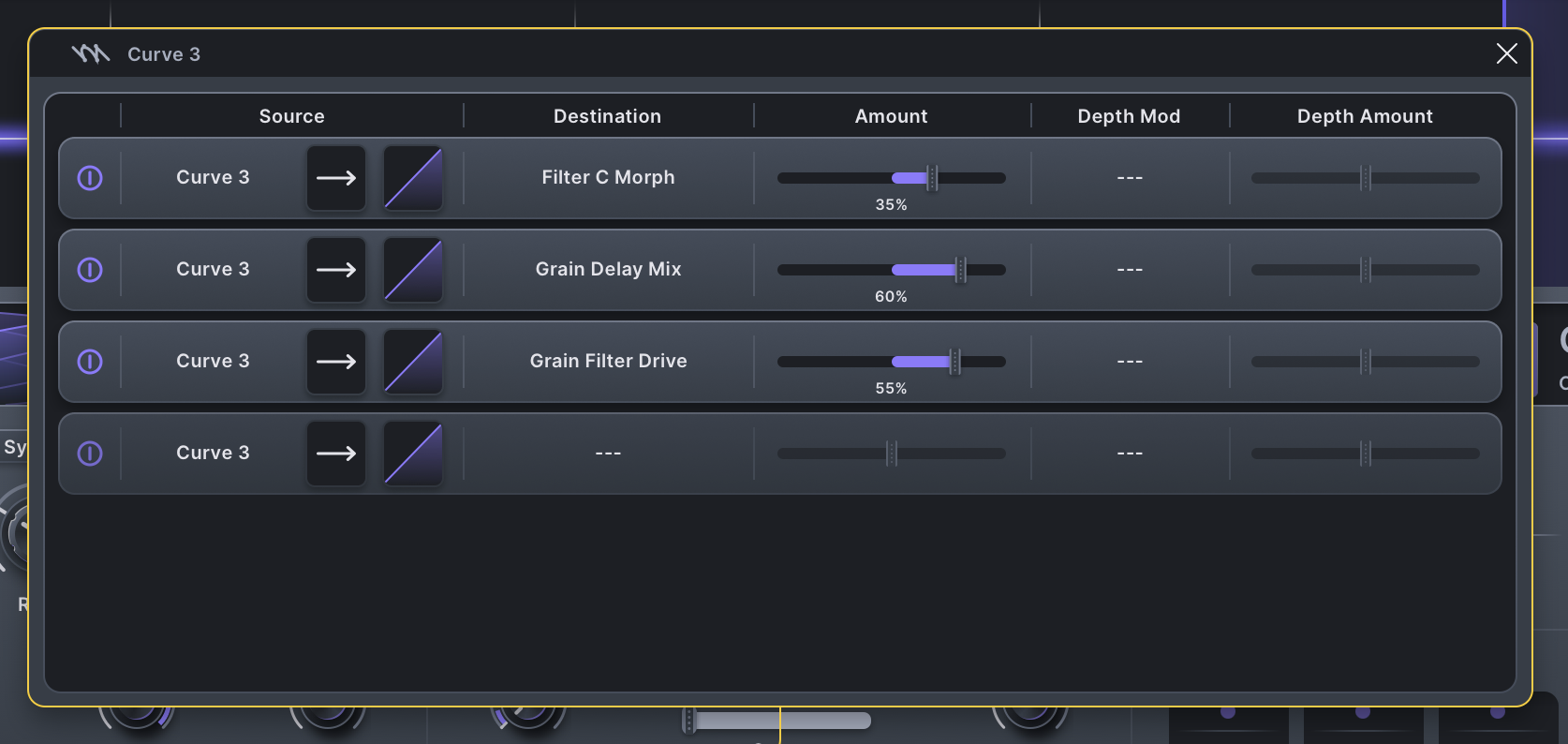
And then there’s a bank of modulators, plus a Mod Matrix. That looks quite like some other tools (hey, we’re learning from one another), but Minimal Audio also includes a handy pop-up with destinations for each. With multiple Modulators, per-parameter amount, the matrix overview, and easily visible and discoverable controls, this is basically a greatest-hits collection of effects routing. On offer in the Modulators bank:
- Morphing LFO
- Curve Sequencer
- Envelope Follower
All in all, Lucid is incredibly deep. It’s an unparalleled effect — there just isn’t any granular effect quite like this. Imaginando’s GRFX went this direction, but sounds different and is a bit simpler; Audio Damage Quanta 2 is worth a look, and operates as a synth. Probably the closest direct rival is Sugar Bytes Graindad, which is wonderful, and a multi-effect — but I love Minimal Audio’s character here, and I find the interface and approach far more accessible. You can still go leftfield with Lucid, but you have an easier route to finding your way there. Lucid ranks for me up with some of the great multi-effects tools now, like Rhizomatic Synestia.
And all of these options are eminently performable. With some macro mapping, you can easily make this into a granular looper and jam with it live. As you’ll hear in my demo, some mode switching will cause brief dropouts — but those aren’t the bits you’d map anyway.
This is one I imagine I’ll be spending a lot of time with, especially because it so adeptly drifts from ambient and lo-fi to experimental to full-on club applications. Grain me, Lucid.
Quickstart/where to begin:
Full walkthrough:
And their preset demos:
Lucid is on sale now for $79, through September 30.
If you buy something from a CDM link, we may earn a commission.
https://www.minimal.audio/products/lucid