It’s not just some extra keys or minor feature tweaks. Arturia’s MiniFreak 49 has evolved the range into a synthesizer you can freely explore just by playing, not programming. It’s a fusion of tactile experience and sound, right when we need that. Here’s a full hands-on test.
Photography and videography by Gösta Wellmer
Words and sounds by Peter Kirn
Freaky heritage
Arturia’s Freak line was always odd by design. Long before vibecoders started jamming extras into firmware, Arturia was already doing it with a string of updates to the OG MicroFreak. With digital oscillators, including work based on Mutable Instruments’ modules and a collaboration with Noise Engineering, an analog filter, CV/gate connectivity, and lots of modulation, you could easily imagine the MicroFreak as a ready-made companion to a Eurorack modular. Its pint-sized form factor even lets it fit alongside a modular easily. Or just use it as a compact source of freakiness.
The MiniFreak took that formula and built something more like a full-fledged keyboard, including features like effects, normal keys, and stereo effects. But I always felt it was missing something. It didn’t have the bite-sized appeal of the Micro, but it didn’t quite feel like the flagship Freak, either.
Well, now we get to see a synth really let the Freak flag fly.
MegaFreak
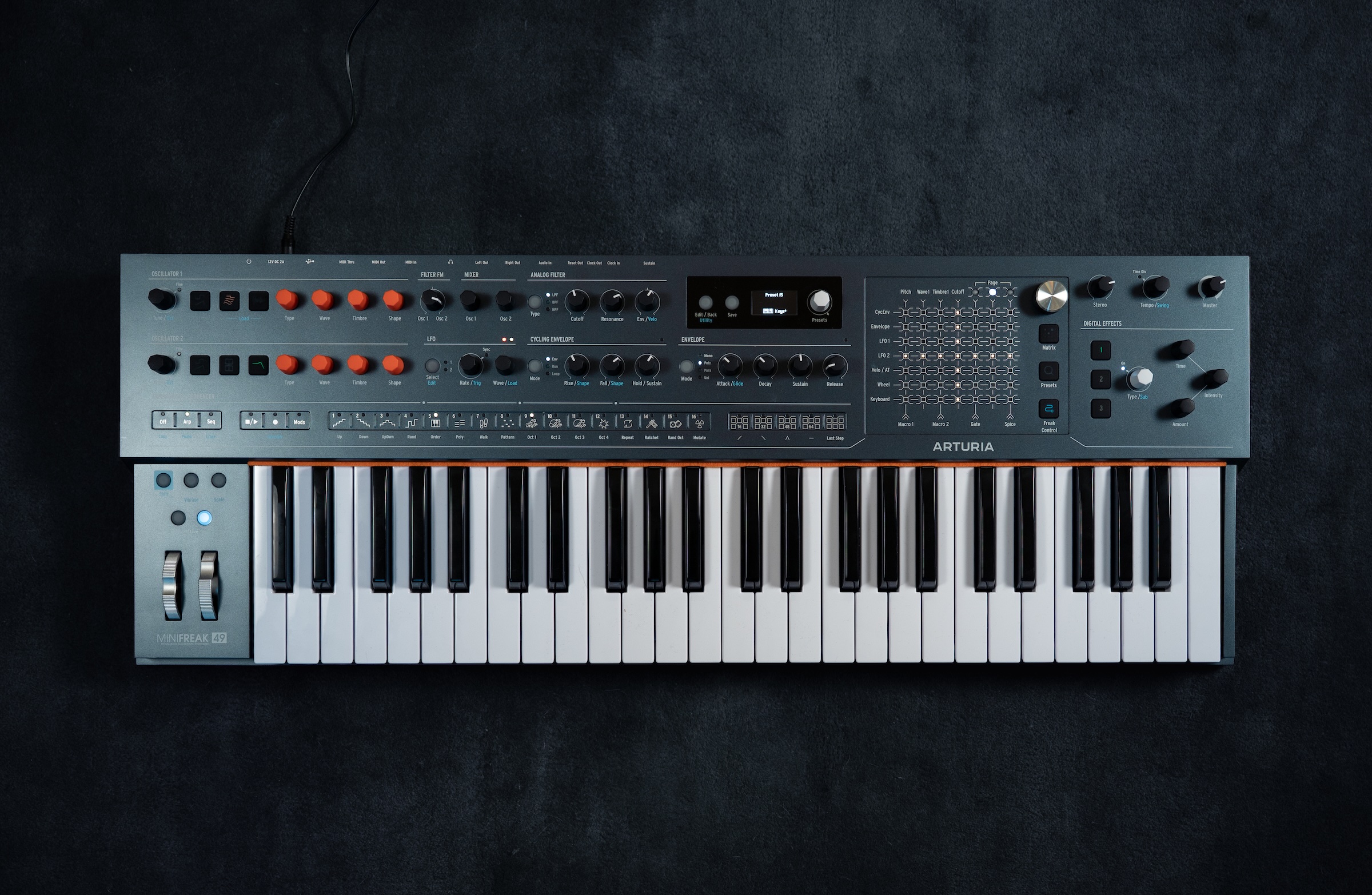
This is both a major physical and sonic upgrade. Like the MiniFreak before it, you get 2 engines with 31 different modes (powering the two ocillators), per-voice analog multimode filter, and three dedicated effects slots, each assignable to one of 13 different effects. And you have the same one-touch access to a bunch of inspiring arpeggiator, chord, and sequence modes. You even get the possibility of backwards compatibility with “retro” MiniFreak presets.
But then the extras start:
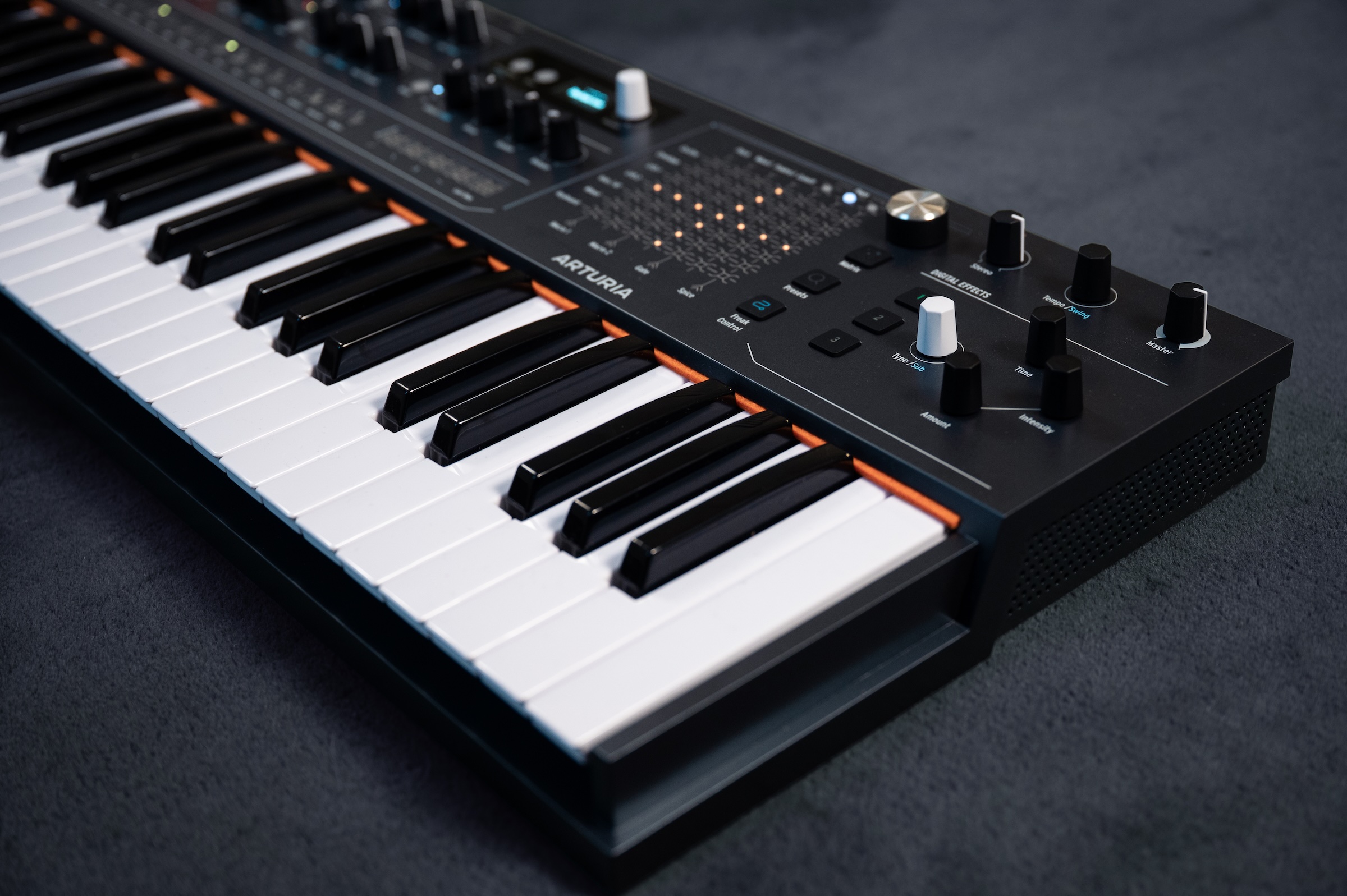
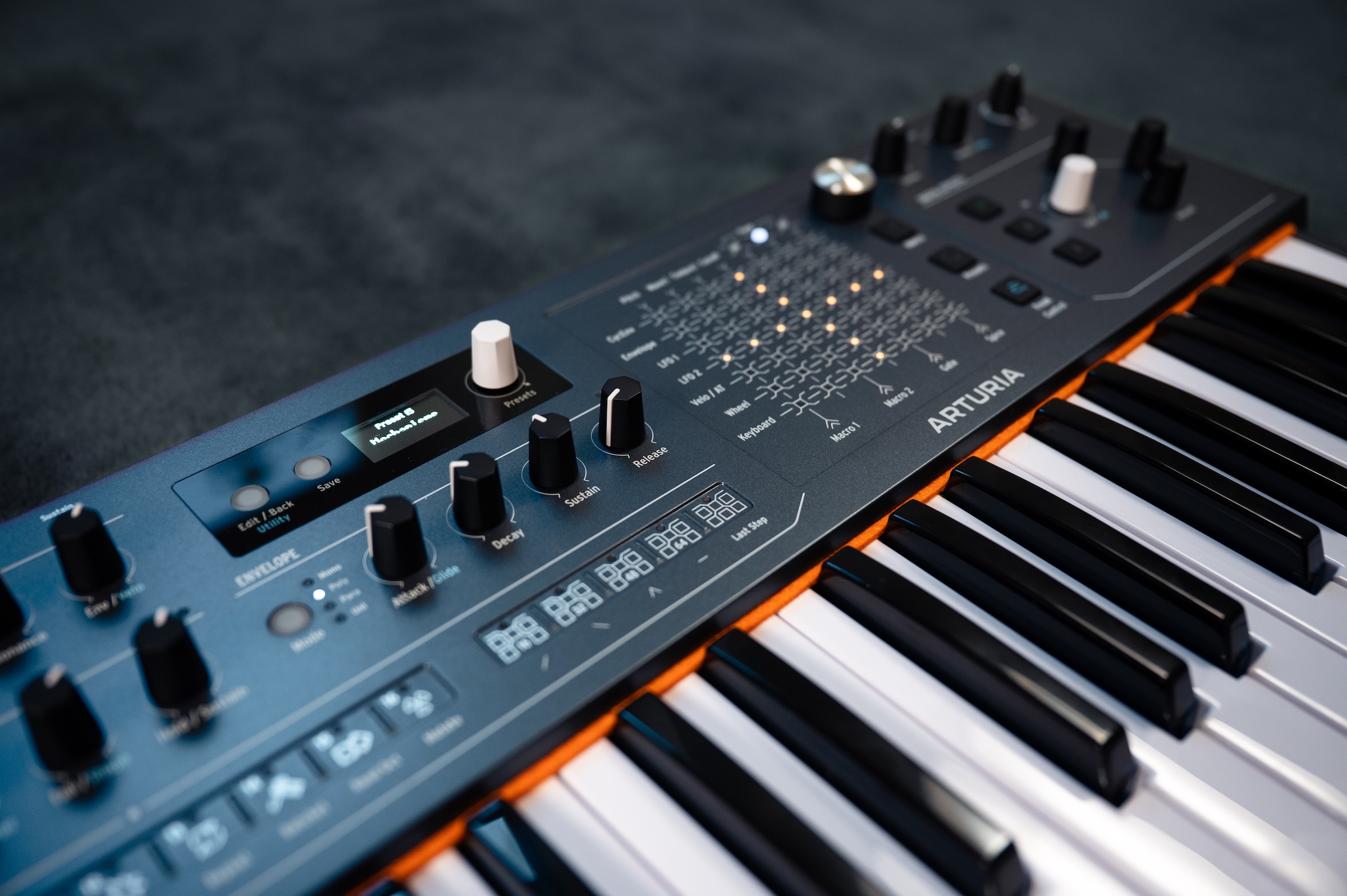
49 full-sized, semi-weighted keys. The MiniFreak 49 feels just fantastic. This is a solid, expressive, bespoke Arturia keybed with a nice “thonky” action (and even felt pads above the keys). There’s only mono aftertouch, but I found this fit the engines and natural playing style on this instrument well. And you can feel that in the added weight of the instrument. It’s a big change from the strange (if adorable) flat keys on the original Micro, or the slim-line keys on the original Mini.
If you’ve used the KeyLab 49 mk3, this is the same keybed.
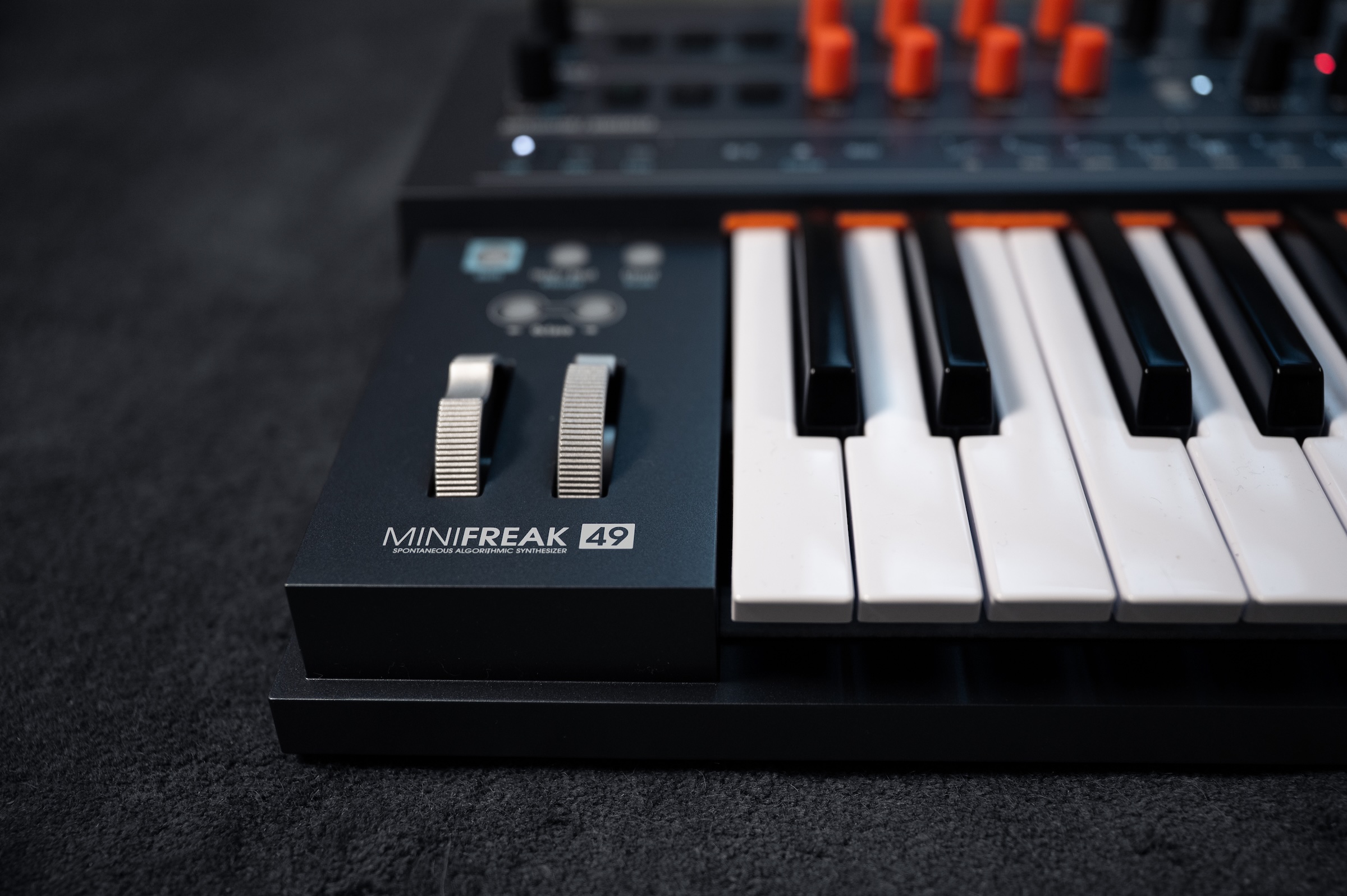
Proper aluminum pitch and mod wheels. These are far more satisfying than the touch strips, easily.
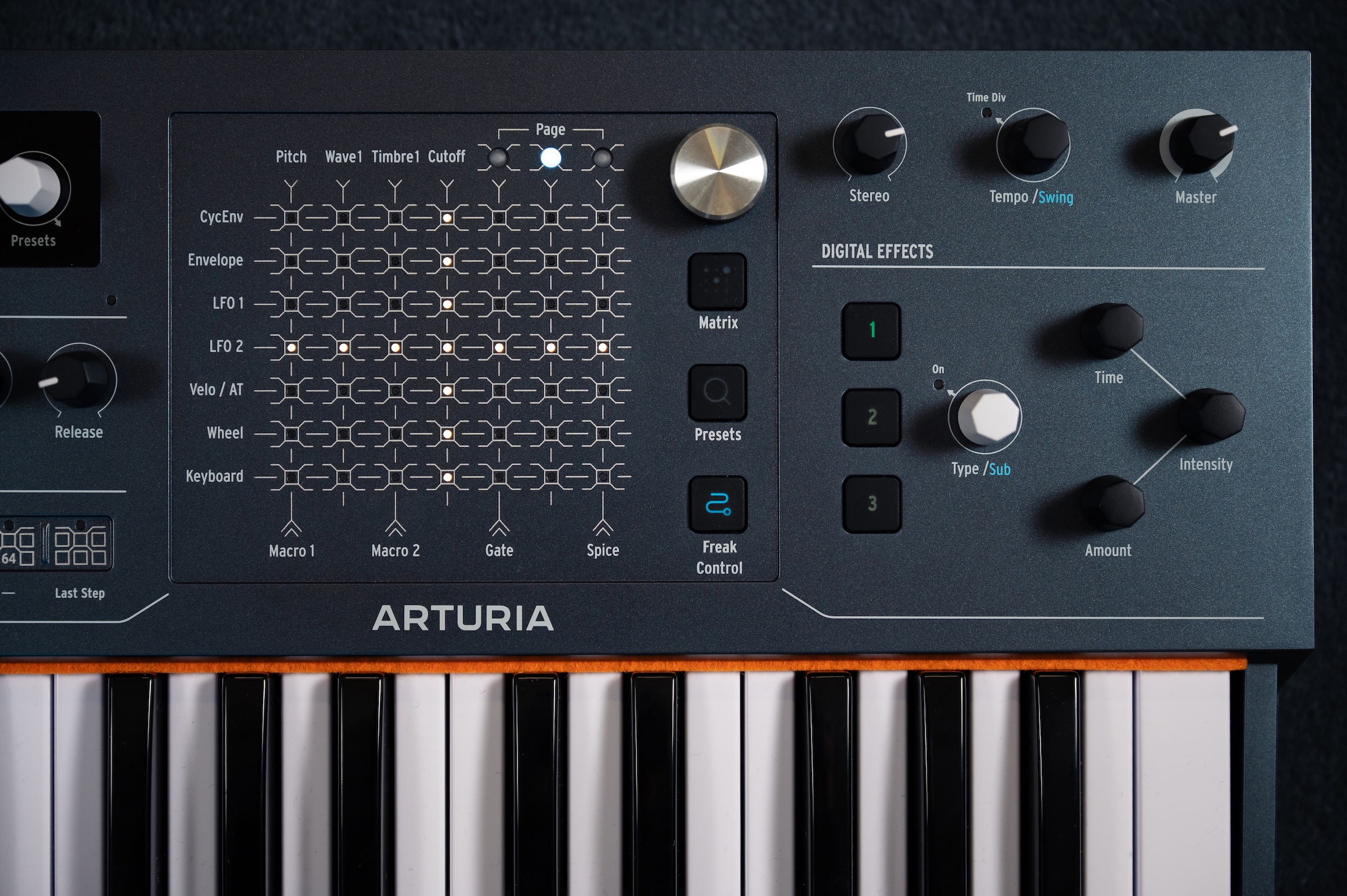
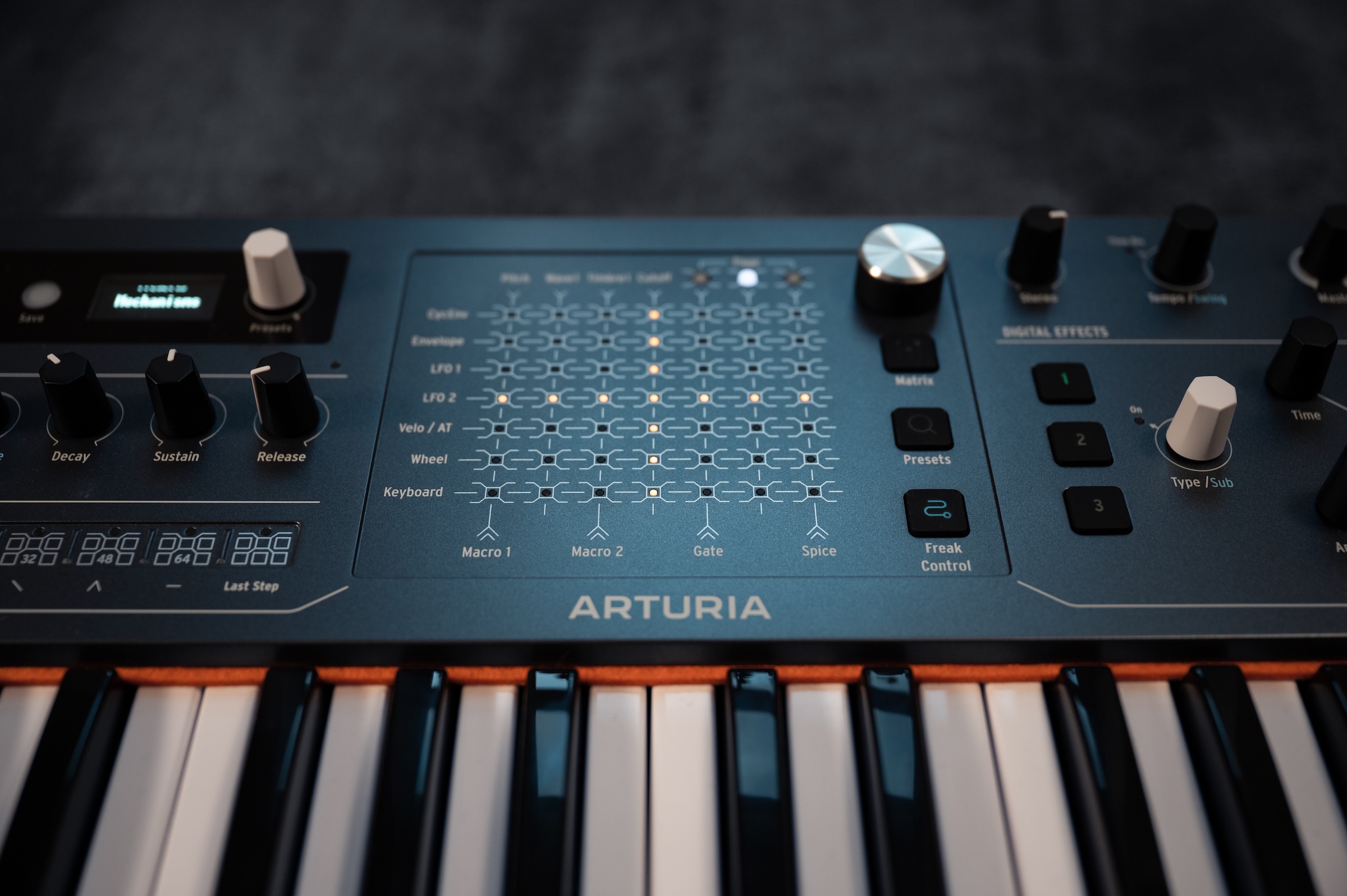
XYZ Touch Matrix. Now, the star of our show. The touch-sensitive surface with light-up grid beneath serves multiple purposes — visualizer, modulation, and preset navigation (for some reason). And most of all, it gives you Freak Control, which has vertical touch macro faders, and dedicated controls for Gate, Spice (a general-purpose macro for spicing things up), and Hold. And then you can gesture your way through transformations of the synth sounds. It’s surprisingly precise. It feels less like a KAOSS Pad or something and more like a long-lost Buchla or ARP interface.
There’s a hidden hold function, too: with your finger held on the pad, depress the Freak Control setting to hold it in place.
The XYZ Pad is a sophisticated multitouch capacitive surface. It’s terrifically precise and expressive.
The presets access from the XYZ Matrix is a bit confusing to me, as there’s also a new dedicated presets encoder — feels a bit like there was an argument and both sides won. But every option here is invaluable.
And uniquely, this is not just a gimmick for effects modulation, fun as that is. (KAOSS, D-BEAM, I’m looking at you.) The XYZ is perfect for transforming sequences and oscillator parameters, too.
About the touch surface. Arturia developed this in-house, as they’ve confirmed to CDM. It’s a multitouch capacitive surface; the LEDs are purely for visual feedback. In addition to X and Y, you get Z axis from your finger — the equivalent of pressure on the MicroFreak. And it’s terrifically precise and expressive.
Tracking: capable of eight touches — four maximum in Freak Control Mode (that makes sense), and it can sense gestures (swipe, multi-tap).
Display: 7×7 RGB LEDs.
I expect this is something that will only grow with the hardware.
Voice panning. I may have to do a separate audio demo for this, but it’s lovely: you get selectable spread algorithms for panning voices across the stereo field. This is an Arturia PolyBrute feature, arriving now on a Freak for the first time. I loved performing these stereo tricks in the analog domain on the Moog Matriarch, and it’s great to have in this hybrid context for the same reason, especially with all the arp modes and whatnot. Trip like I do.
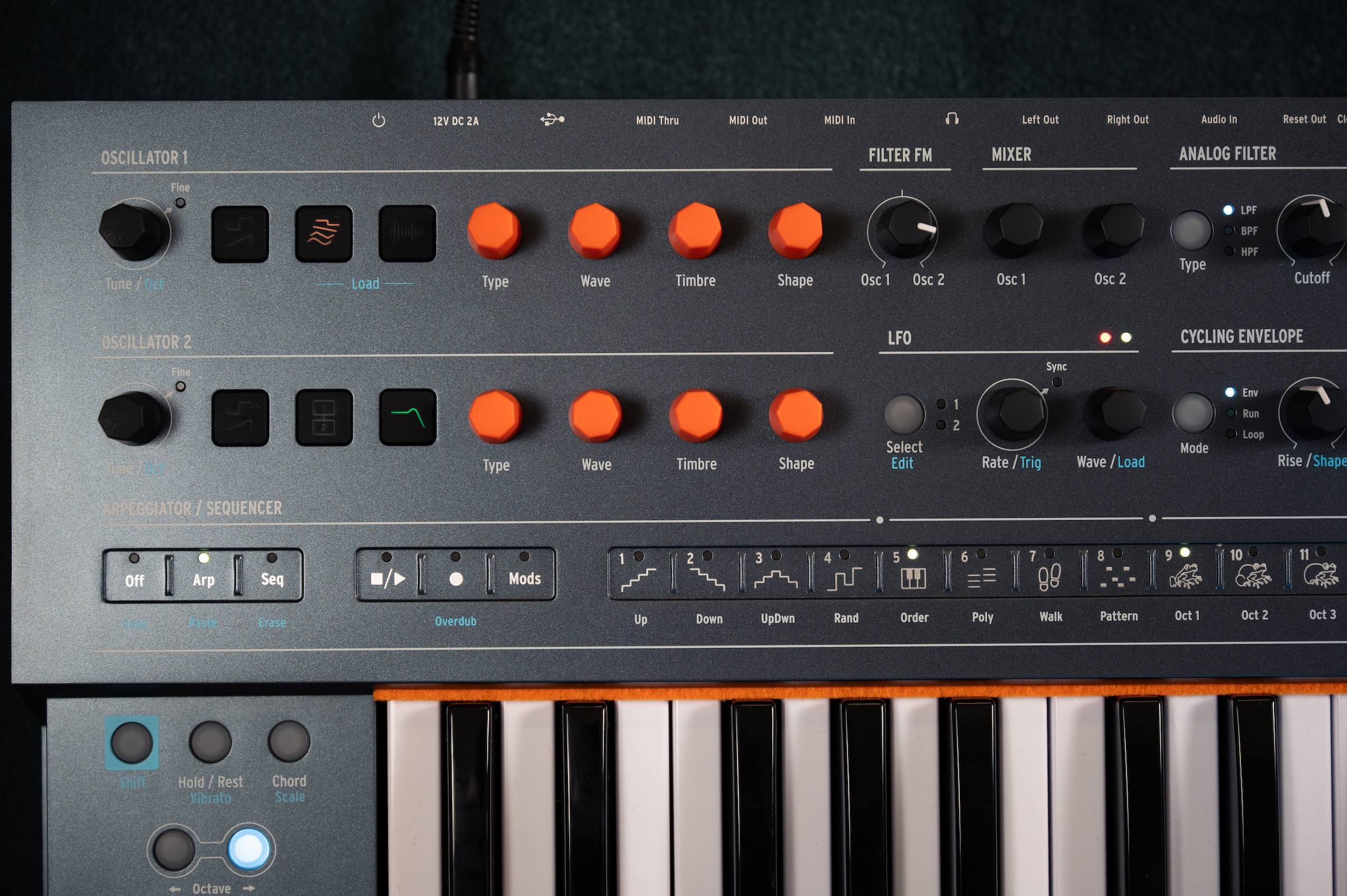
Filter FM. This is just brilliant. Route oscillator 1 or 2, or both, to the filter per-voice — with continuous control. Here’s some filter FM and AM in action, with the expressive XYZ Touch Matrix again:
Dedicated controls for each engine! It’s a small thing, but it’s a huge thing. You always have dedicated controls for Engine 1 and Engine 2 (the oscillators). The original had a push-button to switch between them.
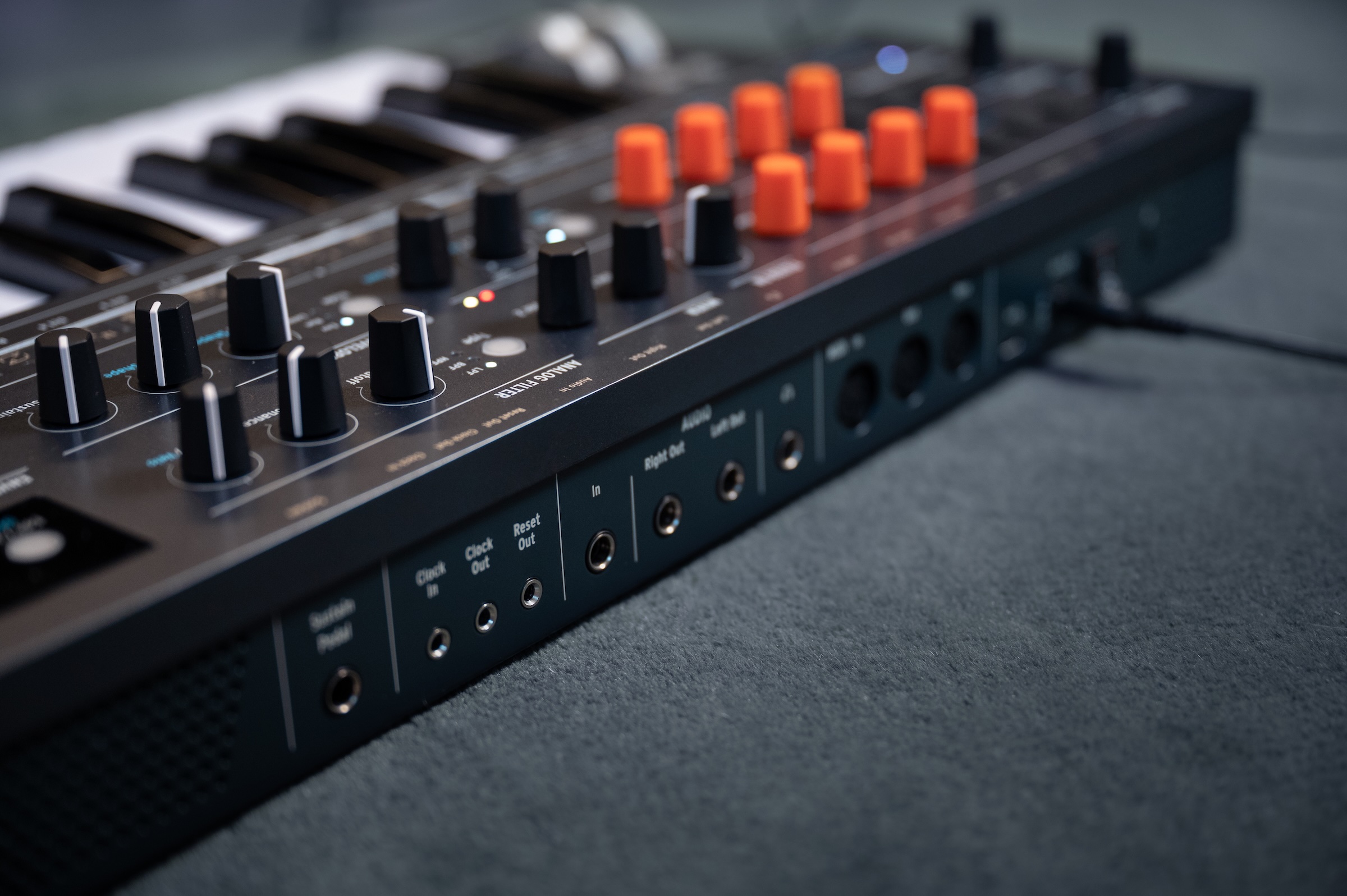
256 MB sample memory. I didn’t even get to play with loading samples while testing, but what I heard from presets — and quickly routing in external audio — this will be a lot of fun. (versus 32MB on the base model)
Larger OLED. It’s not huge, but I wasn’t squinting, either.
In action, sound design tips
The MiniFreak 49 hits a really special balance, even in a competitive field. The digital engines can sound pretty grungy and lo-fi if you like, or pristine and edgy if you prefer. Add those to the analog filter, with filter modulation and amplitude modulation, and you get something pretty magical. There’s a great argument for having this as hardware, both in the tactile connection to the sound and the behavior of that filter. It’s like having a particularly terrific Eurorack patch ready to go, but with the playability of a fully tuned and voiced keyboard. Pair this with a Eurorack modular, and you have a wide-open canvas — especially for jamming.
I have a (beloved) MicroFreak, but skipped over the MiniFreak, satisfied to mess with it a bit in software. Now I’m glad I did, as the MiniFreak 49’s additional controls hit a real sweet spot.
Software was not fully stable for my test, so I stayed on the hardware. I like the software/hardware integration, but the 49 also makes a real case for using this in hardware. With all those engines, effects, and extras, combined with the extensive touch access, to me this is the hardware equivalent of Pigments, in hardware form. Yes, yes, PolyBrute may do more — but at a time when hardware can be hacked to do everything, here’s a reminder of intelligent limitations. It’s never overwhelming, even with the modulation matrix and all these extras, because everything is within reach. It’s just impossible not to tweak sounds on this.
Highlights include:
- Easy FM and layering, especially with both engines now with dedicated controls
- Gnarly amplitude modulation and filter modulation
- 6-voice stereo spread (as on the PolyBrute 12, but in a far more economical package)
- Spice, dice, and mutate on the sequencer is endless fun, especially combined with XYZ
Plus, this is a nice evolution of even the KeyStep Pro — because you have all the analog and MIDI connectivity, plus all of this expression, making this a powerful input device alongside its own internal capabilities.
And this seems like a first chapter. I’d like more flexibility on the XYZ pad and some new engine options, but it’s clear there’s more coming in the future, just as on the rest of the Freak line.
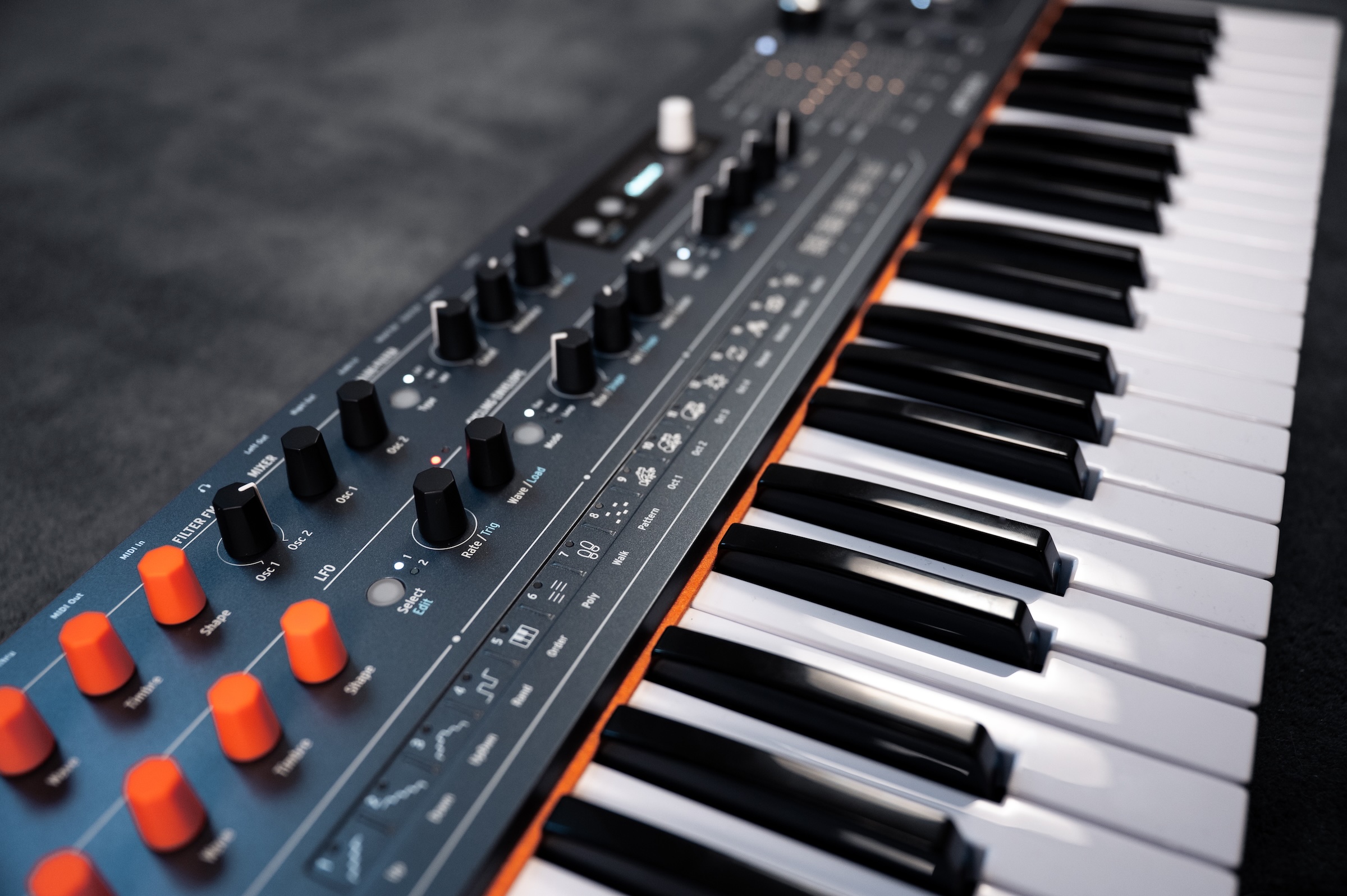
Here’s a first play, just exploring the presets — but also demonstrating how quickly you can transform a preset into something else entirely, all through touch. And these are also all completely dry.
It can be trippy and melody, especially using the stereo field and arpeggiator features:
It can be brutal, with filter FM, amplitude modulation, and distortion applied to drones — again, with touch modulation:
And it can groove; I really enjoyed this patch:
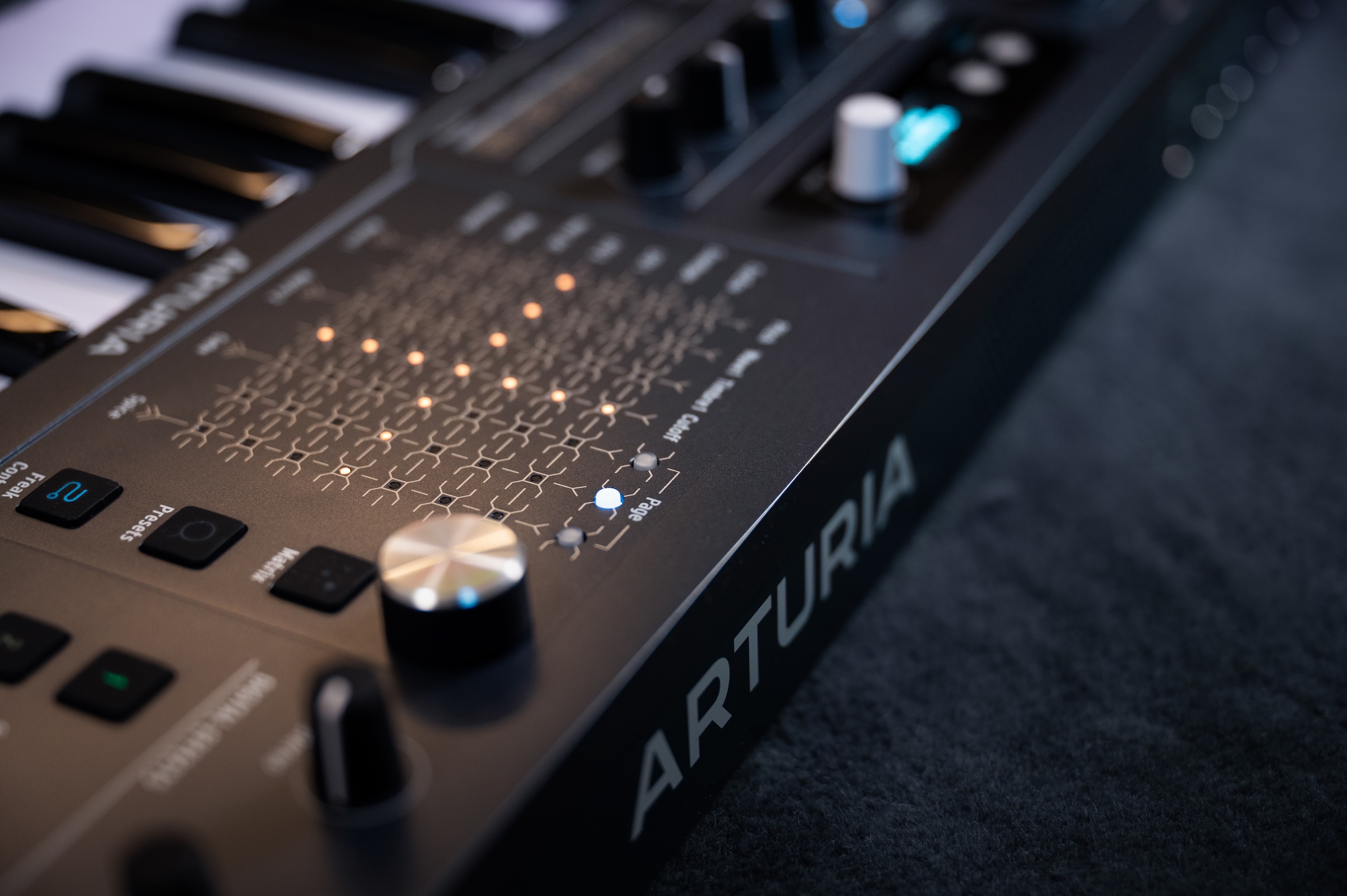
MiniFreak 49 feels like all of the pieces have come together.
Conclusions
It’s rare to have a synth that feels so open to play — that makes programming sounds about gestures. Between filter FM, the sound palette, the touch matrix, and the keyboard and arp, you’re constantly finding new sound worlds.
If it sounds like I’m effusive, it’s because parts of the MiniFreak 49 always appealed elsewhere, but weren’t available in such a balanced, complementary package, with the unique touch control. Make that touch control fully flexible/mappable, including with external gear, and this becomes a must-have instrument.
Arturia has always had interesting ideas in hardware. MiniFreak 49 feels like all of the pieces have come together. Watch this space.
799€.