Ardour 9.8 continues the rapid, detailed development of this free and open-source DAW, with improved session recovery and clip recording, expanded support for controllers and hardware, and an arpeggiator MIDI tool. The 9.8 update also adds scales and keys, but with a twist: unlike competing software, scales/modes will soon be tuning-aware.
Fine-tuned
This could be a landmark in how DAWs handle pitch and tuning. We’ve seen plug-ins for tuning support and tuning in synths, DAWs with built-in tuners (Bitwig’s microtuning), and at least one DAW with project-wide tuning support (Tuning Systems in Ableton Live).
But “scale” support — maybe “modes” is a better term — has existed wholly in the domain of Western common practice tuning and (generally) 12-tone equal temperament or something like it. That leaves out an extraordinary cross-section of music worldwide, including traditions and music practice inside Europe and North America. Concert music is not the only tradition anywhere, and even common practice concert music has tuning diversity, especially before the 1800s. (1)
The bottom line is this: 12-TET at A=440 is an edge case, not a universal. The idea that it is universal is one of the most centrally colonial and late-industrial concepts in music, and it excludes the diversity of musical practices.
Now, knowing that and actually implementing it are two different things. Because musical practice is diverse, building this support is complicated. By definition, standardization makes design simpler, even as it limits the design’s affordances. Ableton’s solution, for instance, was just to separate Tuning Systems from its default Scales support; select a Tuning System, and scales are disabled. But that makes little sense to users, and even the scales in Live and Push (now emulated in a lot of other hardware and software) include pitch sets that aren’t likely to be 12-TET. (2)
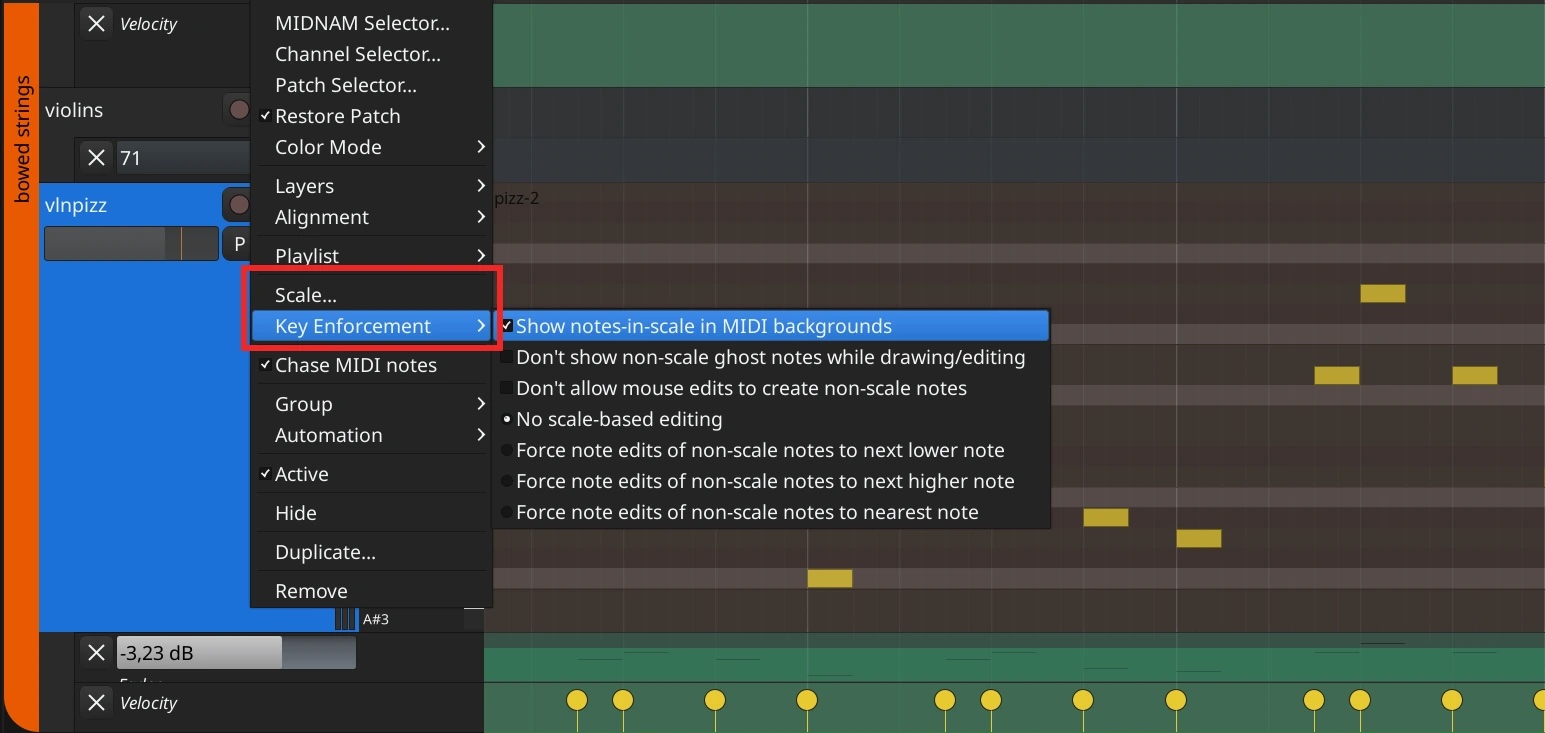
Ardour’s approach holds some promise. Scales can be edited directly in the interface. That includes both root note and mode, even in this early implementation, with a tuning system applied to scales. It’s honestly a little puzzling to me why Ableton didn’t do something like this with their implementation; scale editing was an immediate user request from almost the day they introduced the feature.
It seems like it makes sense to build a foundation and then gradually add greater accommodations for different tunings (like non-repeating octaves). There are some nice touches here even in this early implementation. From the 9.8 release notes:
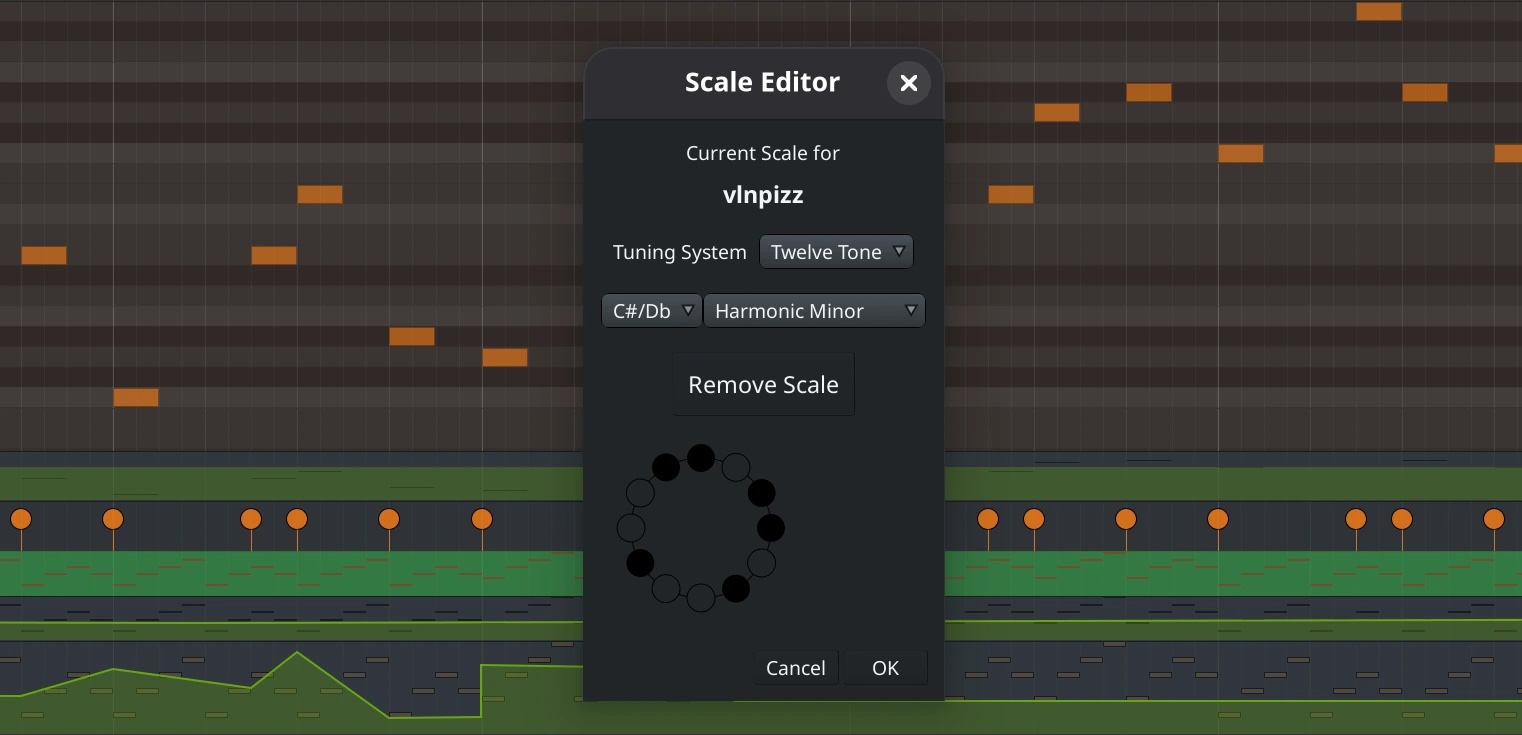
You get a lot of freedom in what you can and cannot do: you can forbid drawing new out-of-scale notes if you like and instruct Ardour to automatically adjust out-of-scale notes as you play on a MIDI keyboard in three different ways.
Please note that this early implementation has various limitations. Here are some of the features we will focus on in future releases:
- Extending tuning systems support beyond 12-TET
- Supporting key and scale change on the timeline, with corresponding visualization of out-of-scale notes
- Loading SCALA files (the foundation is already done)
There is no question that complex tuning systems support in a DAW is challenging. We are releasing this code with minimal useful features to get your feedback early on. Future development of this feature set will likely span across multiple releases.
There’s definitely some work to decolonize verbiage here a bit, for lack of a better way to say that. Key/scale still implies a 20th-century Western common-practice frame. I bring this up, and immediately realize how complicated that is! But the features they’re describing here — moving between different tunings and different pitch collections — could eventually be applied to a range of use cases. For instance, you might be switch jins in Arabic music.
And the fact that plug-ins are moving towards something similar is useful, I think. The editing and representation in a DAW is closer to a score; the changes you make with the plug-ins is more akin to retuning an instrument. Those are related concepts, but not the same. See below.
More new stuff
Scale support is early days, so it’s likely the other features you’ll be using.
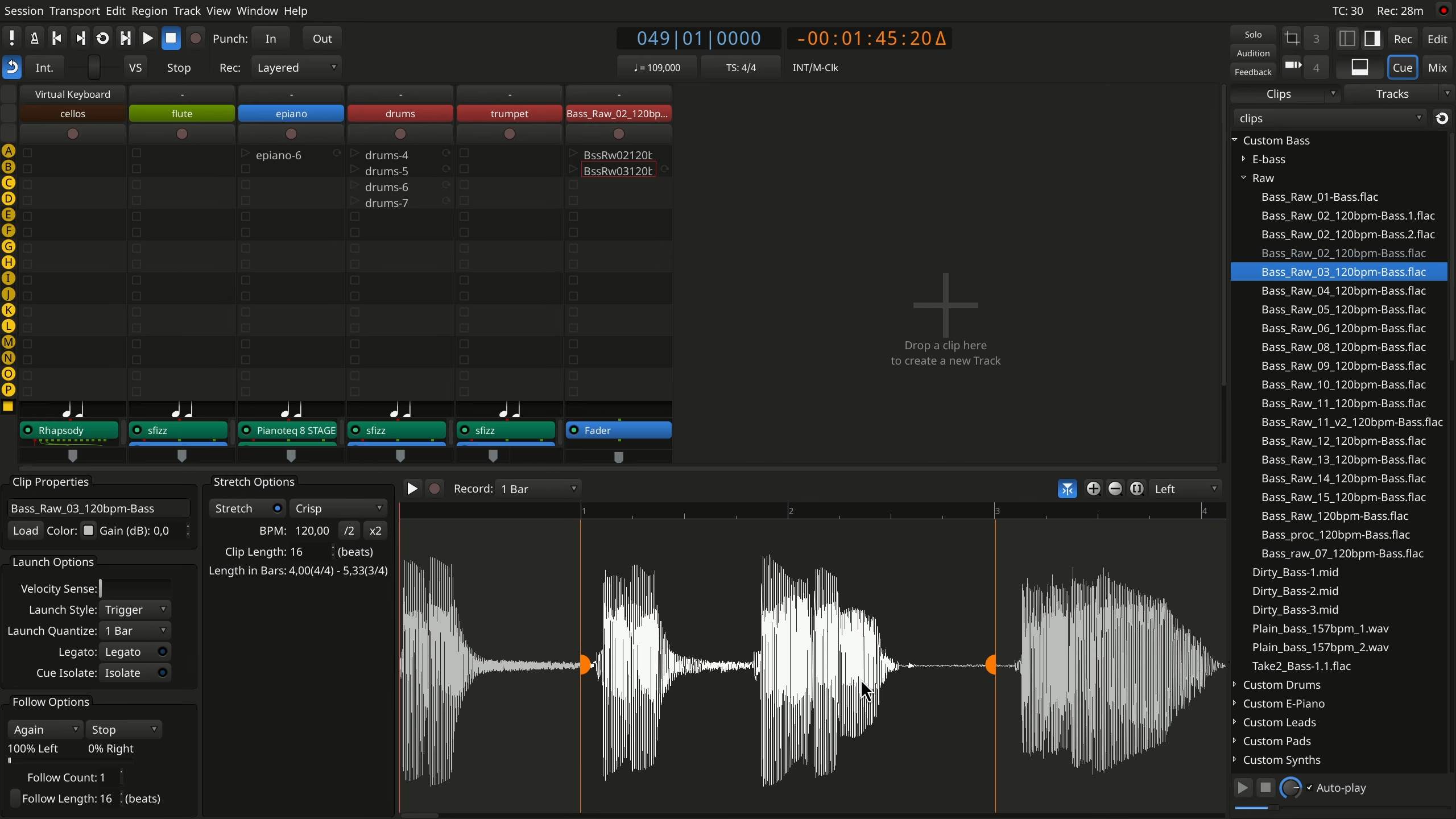
Clip recording is improved, with a 2-bar countdown and feedback and improvements to recording and the audio clip editor. That means if you’re curious to try Ardour and you’ve got some background in something like Ableton Live, you’ll find yourself increasingly at home.
Chord editing in the MIDI Tools now supports arpeggios.
Plugin and hardware support are each expanded and improved. That includes the popular Novation Launchkey line, and I see the Mk4 88 is “untested” so — Novation users, go test it! There’s even support for Ableton’s Push 2.
Go get it
See what’s new and check other recent updates.
Notes
I hope it doesn’t sound like I’m hyping this tuning stuff way before it’s ready: on the contrary, I wanted to dive into why this important while it’s in early stages of development. I expect I’ll trigger some people with more knowledge of different musical practices than I have.
But in my mind, this very much complements the open-source effort led by Khyam Allami with his Tanghīm plug-in — again, thinking of scores (DAW) versus instruments (plug-in):
And it’s worth re-reading this interview (among others):
More notes:
(1) Basically, we’re not all Beethoven. Well, not even Beethoven used the pitch reference A=440. And the instrument was far from what we think of now in build and tuning. I’ll leave Ludwig’s politics out of this; that’s another story. But I digress.
(2) Equal temperament and scales: notes. Some of the Japanese scales, oddly, would be familiar in 12-TET — because of the popularity of 12-TET, so blame colonialism again, even if equal temperament appeared in East Asia long before the West. But precise koto tunings I think are not. Indonesian “scales” absolutely are not 12-TET; in a central Javanese gamelan, for instance, they’re hammered into metal according to tunings handed down from ensemble to ensemble. Remember, though, even in the “church mode” context, “common practice” music from the 1700s and earlier was not equal-tempered.