Expressive E is making its expressive, multi-dimensional keyboards more accessible, with 49- and 61-key controller Osmose options starting at $/€999. And across the full range, the company’s sound ecosystem is expanding with updated software, including the new Ctrl-e platform for sound. That means it’s easier to afford and get started with these unique MPE keyboards, and you’ll more quickly find ready-to-play sounds.
Background
There’s a question that’s ringing in my ears, because I hear it a lot. “Do we really need expressive keyboards? I haven’t heard any good music on them.” Okay, first, that’s a little like sitting in Guitar Center for six hours, hearing nothing but Stairway, and giving up on the concept of frets. (Fair point.) But second, the keyboard itself doesn’t do anything at all. What you’re really looking for is not just the keybed and the MIDI protocol, but a combination of an expressive sound design or engine, voicings that make it playable (across a range of players), and a musician to say something with that patch. There’s even nuance to a mod wheel or velocity, and this has a greater range of possibilities.
Expressive keyboards are about more than just a single technology like MPE. Even voicing simple patches across the keyboard range and adjusting the velocity and mod wheel requires thought, if you want to do it well.
Expressive E, I think, nailed their keybed early on. The Osmose feels fantastic, and its range of motion, in each axis, gives you a ton of precision and (crucially) mechanical feedback. There is no one-size-fits-all controller, but this doesn’t claim to be. The Linnstrument focuses on fret-style grids; the Haken Continuum emphasizes continuous gestures, a la “don’t call me a Theremin” Tannerin. The Osmose is an MPE controller for people with some keyboard background, with a pedigree you could connect to instruments like the Ondes Martenot).* It remains flexible enough to get beyond piano repertoire and tuning, but it can build on muscle memory if that’s something you’ve spent time on, and that makes it an important option.
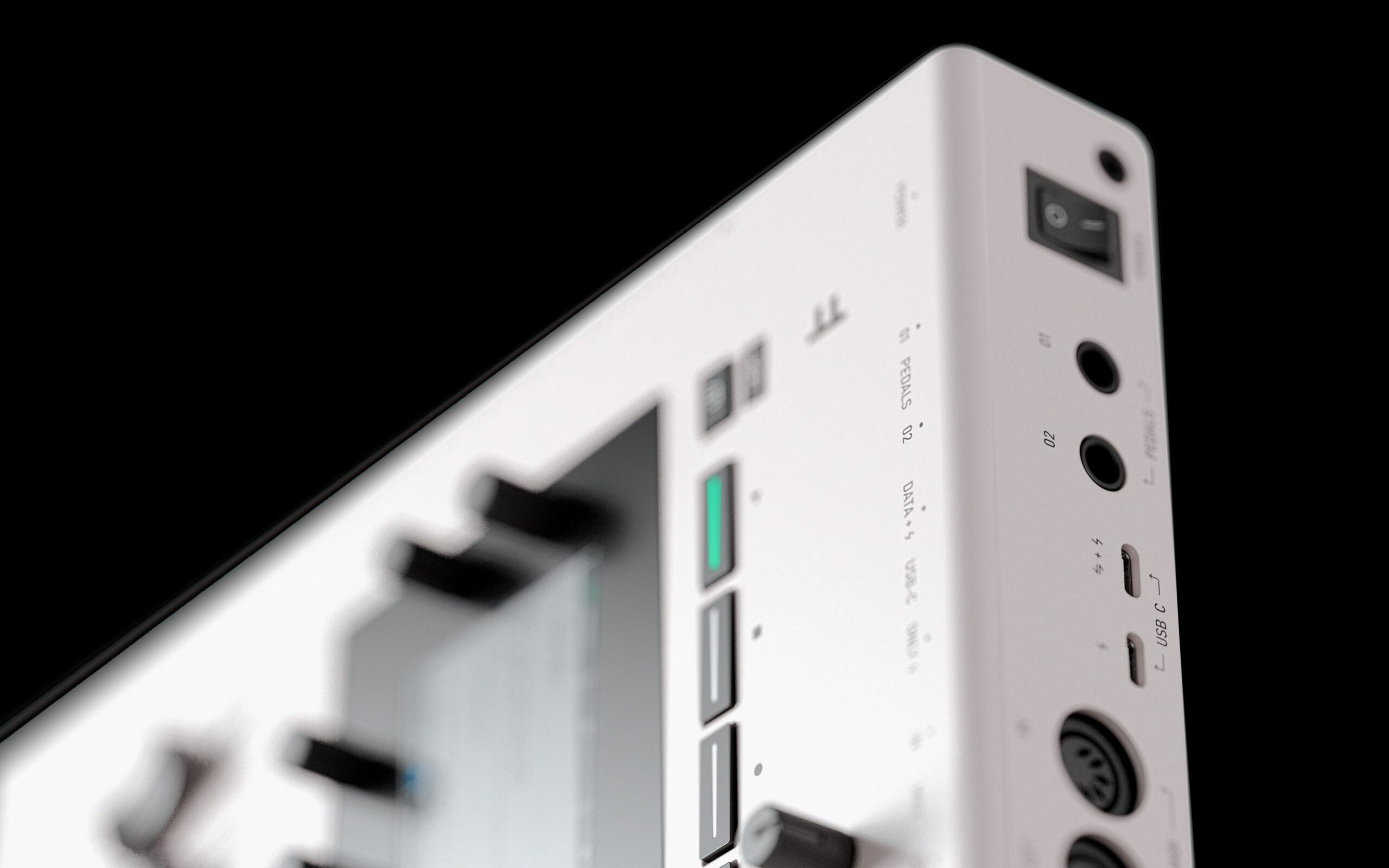
The Expressive E story has been about taking that keybed and building more sounds and software around it. There’s a wide range of use cases to cover, everything from advanced synthesisists and people hacking their own sounds to keyboards and composers wanting to add a little extra expression. One strength of the Osmose is its integration of the incredible EaganMatrix sound engine from Haken Audio. And that gives the standalone Osmose the ability to be a great instrument without a computer attached.
But that makes the Osmose a bigger investment versus a conventional keyboard. And the EaganMatrix and its editor aren’t the easiest environments to use. So Expressive E has had a set of challenges: make the software smarter, make it easier, make sounds more immediate, and make a more affordable option.
That’s why today’s announcements are about both software and hardware. The software enhancements will benefit everyone, including current Osmose owners. But the new Osmose CE will make it easier to get into this world if you haven’t already.
Osmose CE
This was a surprise. Expressive E doing a MIDI keyboard version and making it a bit cheaper is a no-brainer. The surprise is, you get exactly the same keybed and a high-quality build. That’s important, because all the same gestures are there — tap, press, bend pitch, vibrato, shake, strum, and even expressive note releases, MPE arpeggiator, and press glide. But you get it in an MPE controller and DAW controller at just $999/$1199.
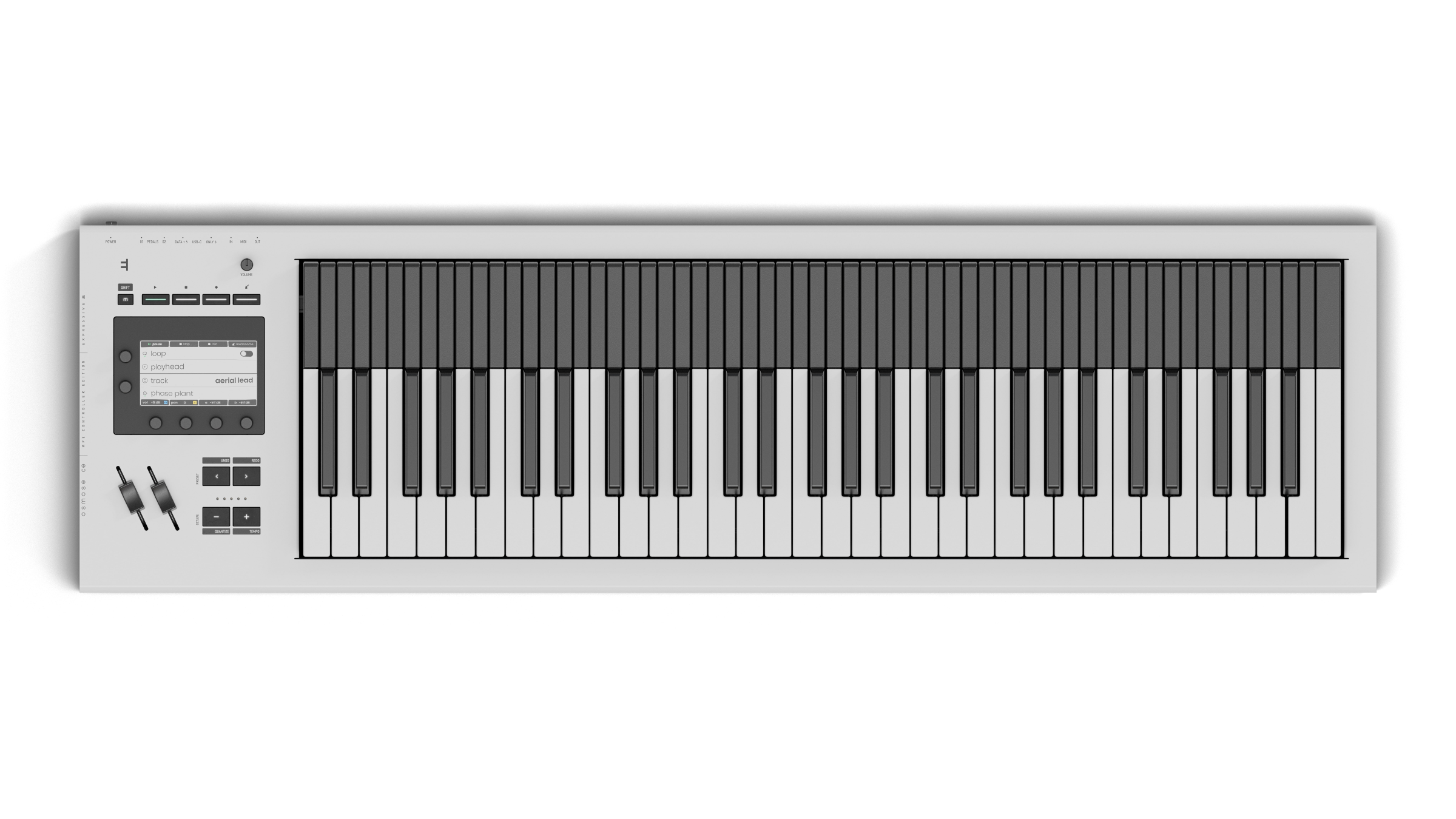
- 7 knobs/encoders
- 9 buttons
- 4.3: color LCD
- pitch and modulation sliders
- White aluminum top, black base
- USB-C power delivery (ooh, good, now I can play if I forget or lose the wall wart!)
- DIN MIDI in and out/thru, plus MIDI over USB-C and two assignable pedal inputs
- Made in Poland
All of this in 10-11 kg, which is easy enough to carry — I’ve used their backpack.
And at €/$999 for the 49-key version, or €/$1199 for the 61-key model, Expressive E is very competitive with the rest of the market. That’s the price for keyboards with just basic poly aftertouch. And there’s an elephant in the room here: you have a keyboard that works on its own and isn’t locked into any proprietary platform.
Fine. Komplete Kontrol. I’m talking about how this isn’t Native Instruments Komplete Kontrol. (They shouldn’t say that, but I sure can..) Even without questions hovering about the future of that company, I was always a bit skeptical of that keyboard’s fairly vanilla keyboard and proprietary software, plus the fact that it’s so host-dependent. Osmose, by contrast, runs happily as a standalone MIDI keyboard if you so choose, and MPE is just part of the MIDI standard.
Ctrl-e software
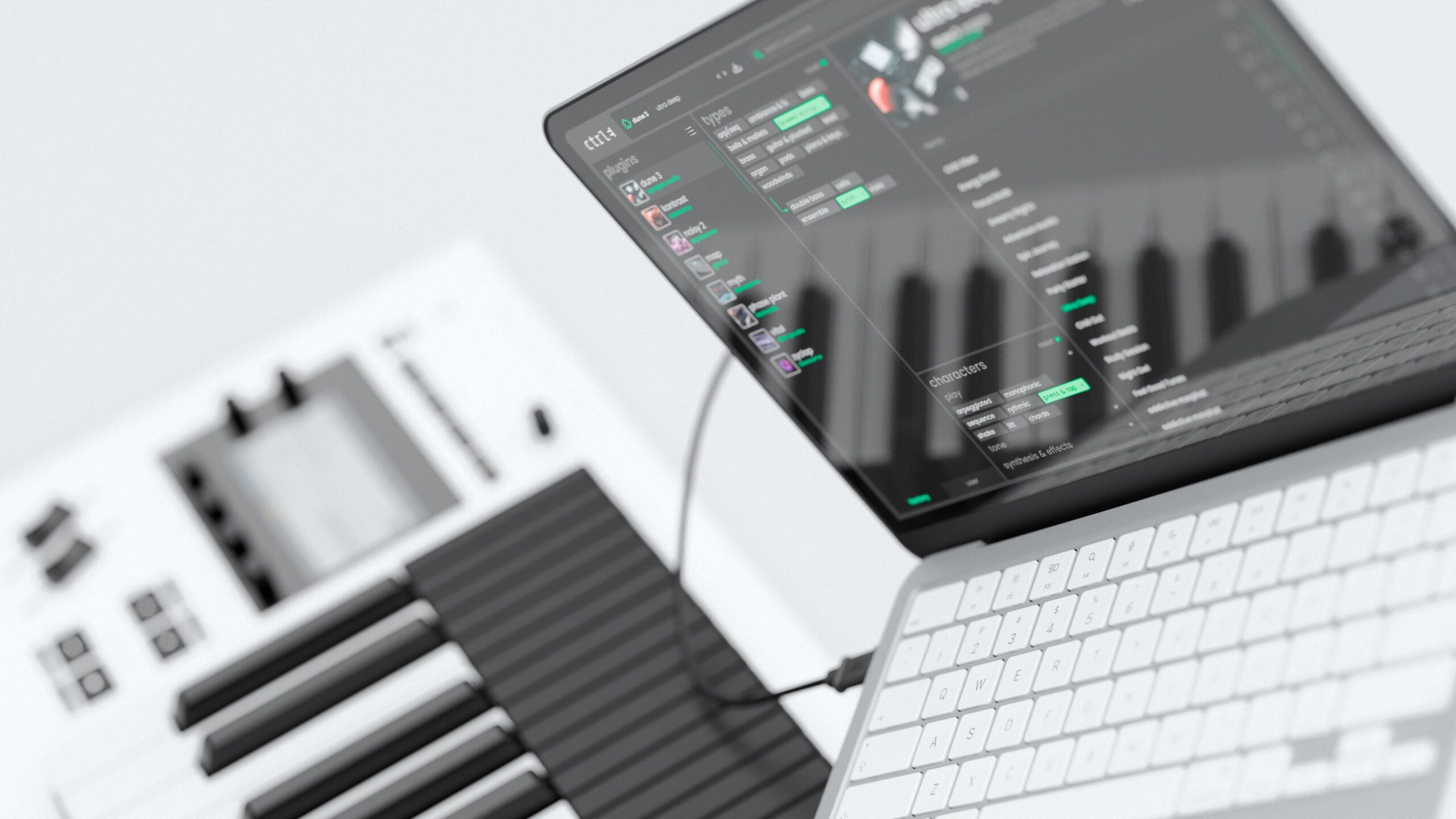
Software enhancements make the Osmose CE work — by making it immediately functional with a computer — but also improve the Osmose sound ecosystem generally. That includes 900 expressive presets already available to the CE keyboard, as well as out-of-box DAW integration.
DAW integration (transport, track and device navigation, mixer control, macro access, and automatic detection):
- Live 12+
- Cubase 15+
- Bitwig Studio 5+
- Logic Pro 12+
(PS, people have hacked MPE into Reason!)
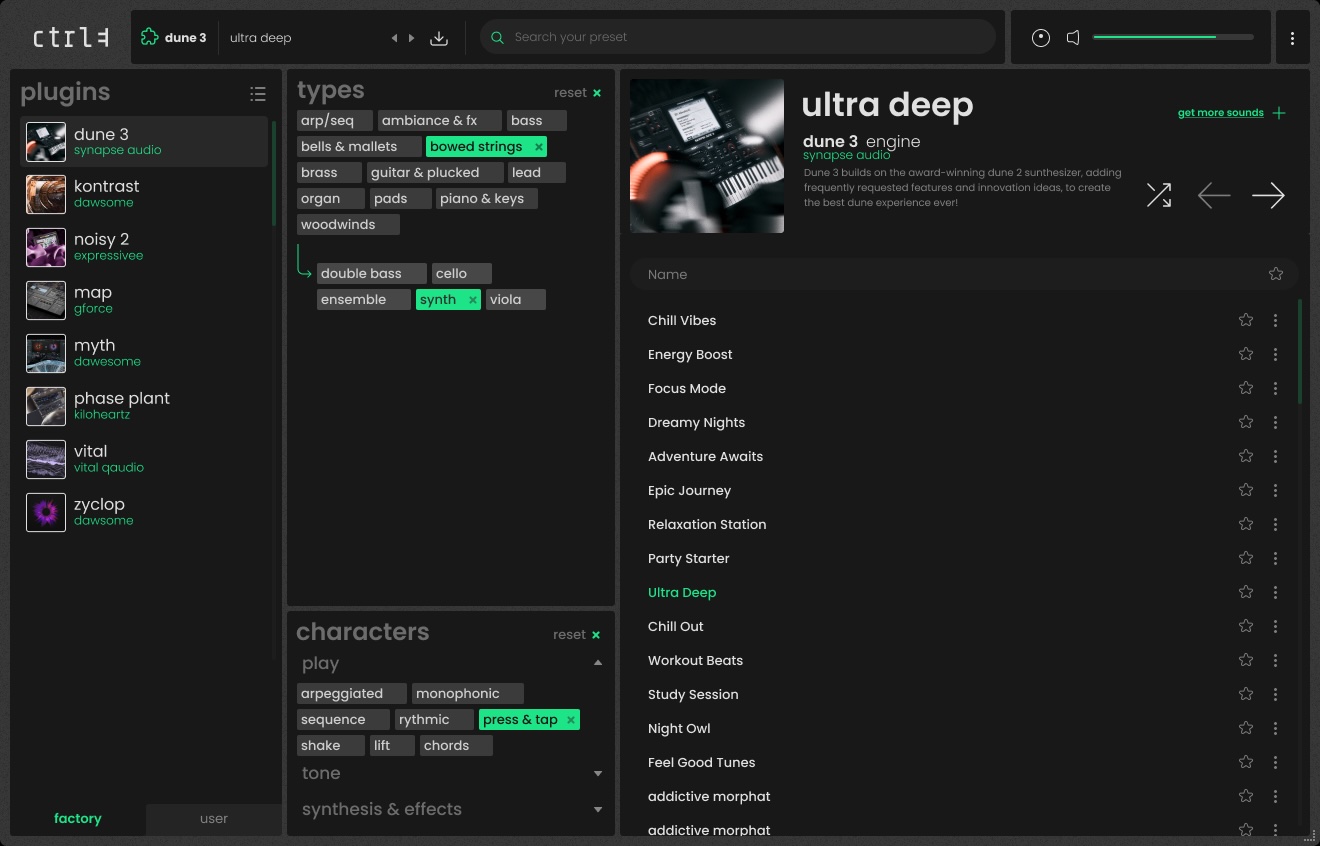
…Plus, there’s the Ctrl-e sound platform. This is growing, but already you get engines and sounds from:
- Synapse Audio
- Applied Acoustics Systems (I’ve written in praise of MPE support in their Multiphonics CV-3 modular, etc.)
- Kilohearts
- GForce
- Dawesome
- Vital
That means macros are mapped, patches are voiced to the instrument, etc. etc. But you can also, of course, still get use of the Osmose and Osmose CE on other MPE instruments, too (like Ableton’s own internal devices, or offerings from Arturia, etc.) — this just gives you some pre-tuned expressive possibilities.
Oh yeah, and nice color graphics on that big display, too, with the macros:
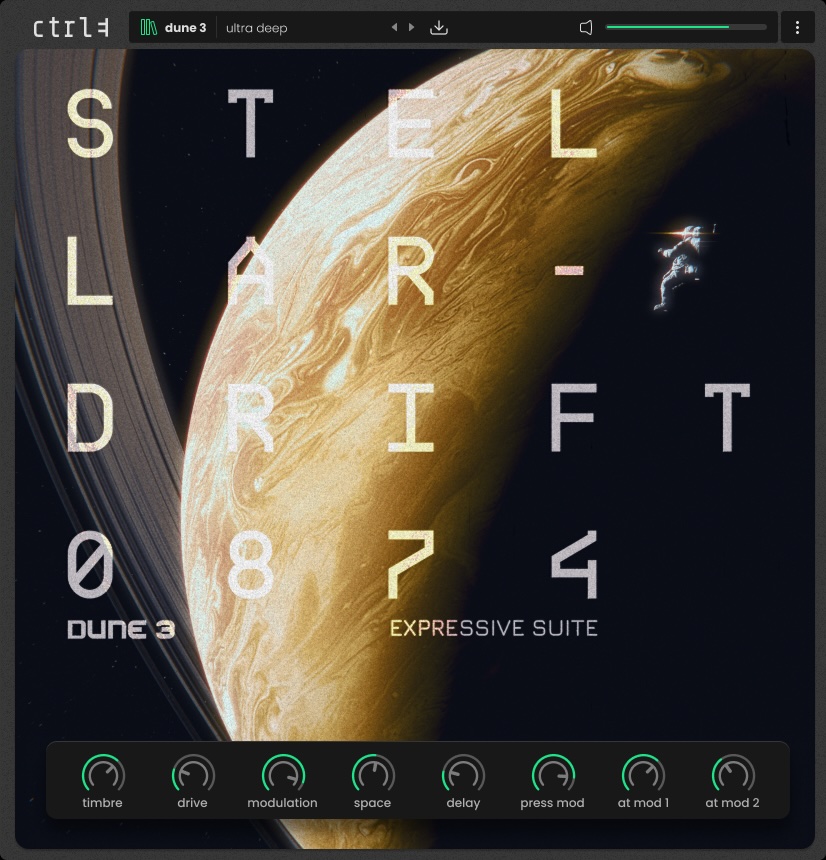
I’m excited for some updates on the advanced editing side, too, but really a lot of the expressive component here is seeing what you can do with a preset. It’s not the same as what you get out of a ROMpler-style preset — it’s not just “press play” and get the same sound every time. You want to find patches that open up different sounds in different playing styles. And even as a sound designer, I find it inspiring seeing what other designers are doing, so this is all a must.
All of this gives you the ability to quickly get your fingertips on top of sound, so if, for instance, someone says “I need some cutting-edge sounds for this animated trailer, like, tomorrow” — you can. (Not saying that’s what happened here, but yeah, it definitely does happen, and better to be getting those results with your hands than trying to slowly draw them in with your mouse!)
Previously: