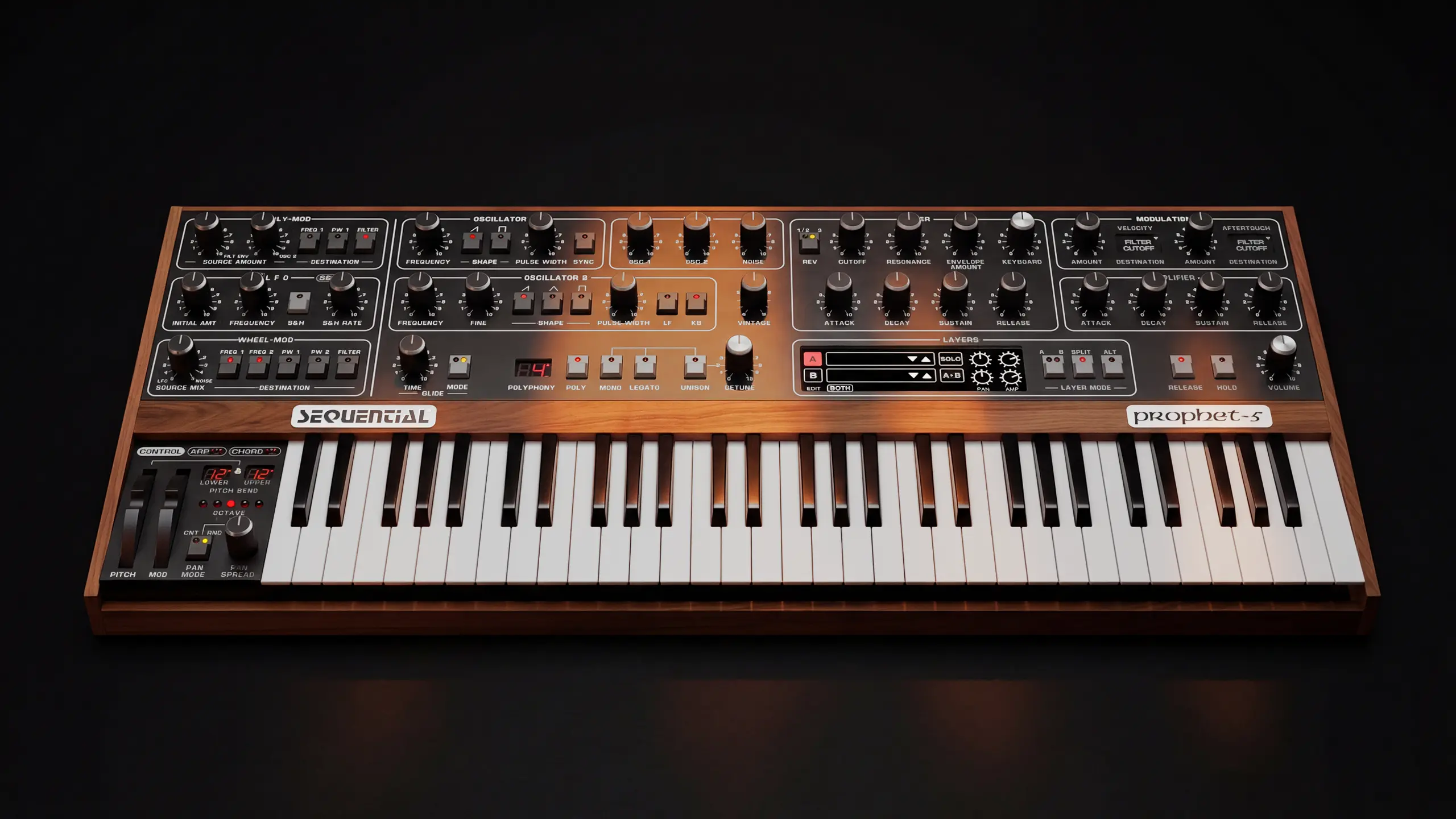
Following GForce’s official renditions of Oberheim instruments, now we’re treated to an official Sequential synth in plug-in form. This Prophet-5 combines painstaking recreations of the various revisions with new features like MPE, a dual-layer architecture, and lush effects. I’ve been testing it and got some behind-the-scenes details from the devs. It’s such a total pleasure to bring that Sequential sound into the box.
This is far from the first software version of Dave Smith’s classic 1978 Prophet-5. On the contrary, the entire history of plug-in emulations of hardware is bound up with the Prophet — look back to early attempts like the Native Instruments Pro-Five, which helped launch NI’s success as a brand and popularized the idea of running well-known synths in modeled form.
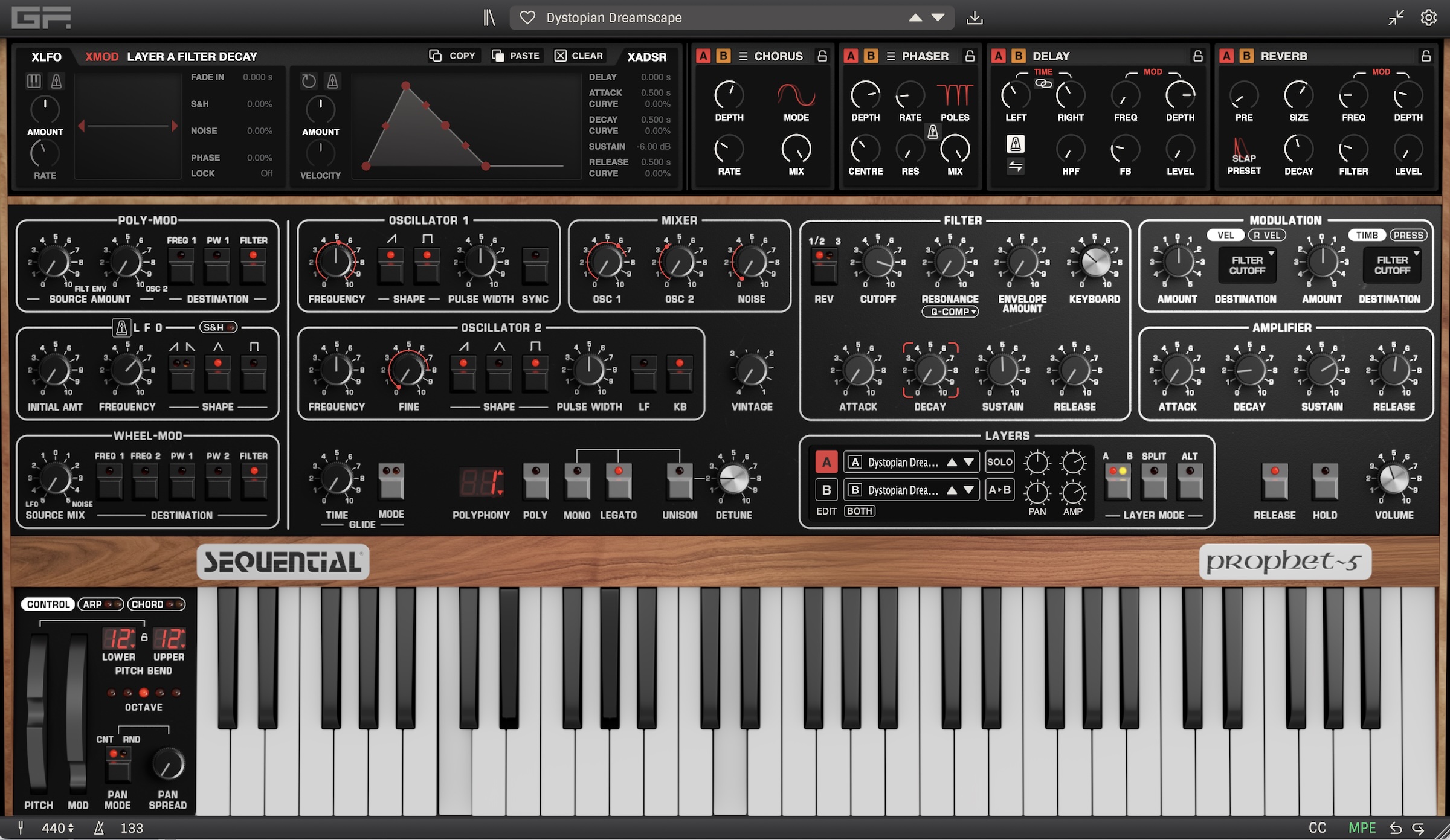
But this is the first time Sequential has gotten involved in the modeling process and given a plug-in its official blessing. Just switch on the GForce Prophet-5, and you immediately get the feeling that it’s alive in the way the hardware is. All the authenticity is there, but with a compelling set of modernizations and additions:
- Oscillators, filter, and mixer recreated
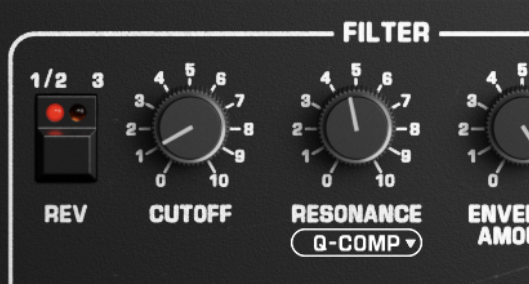
- Rev1, Rev2, and Rev3 hardware revisions (via the SSM and Curtis filter designs — see selector above — subtle but important!)
- Original LFO expanded with clock sync and sample & hold mode
- All the original 1978 factory presets (I really enjoy having access to those!), alongside 460 custom effects
- Redesigned X-Modifiers — GForce’s modulation routing system
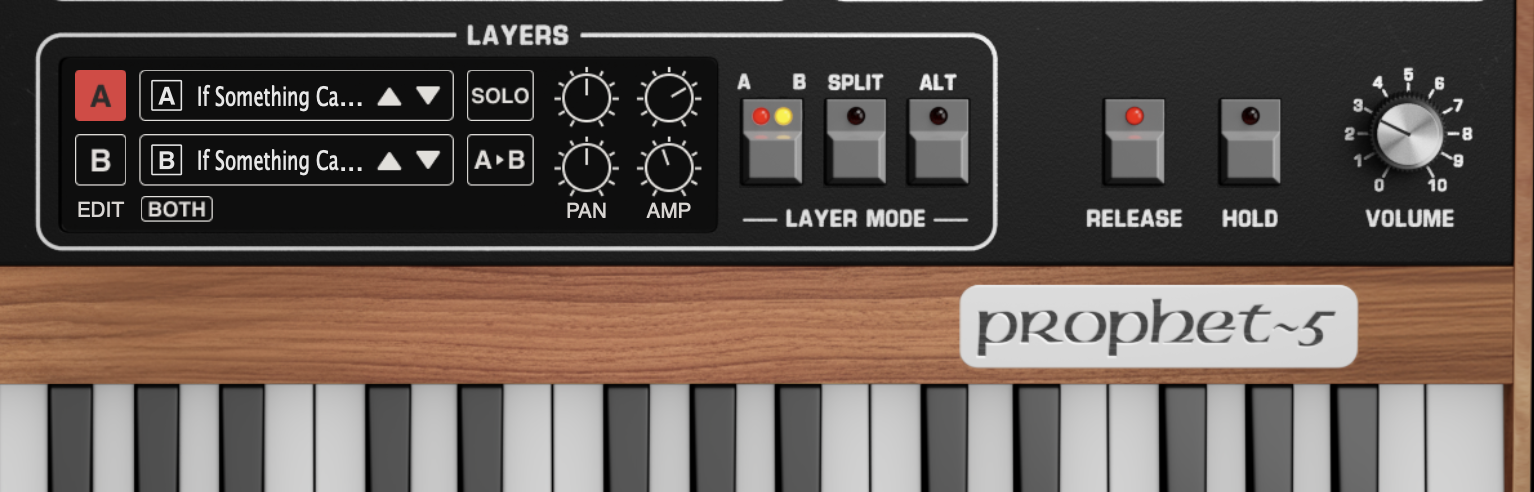
- Dual-layer architecture — hey, people do often pair two Prophets, so in software we can do that without an extra keyboard rack and a loan!
- MIDI CC mappings (pulled out my trusty new Novation Launch Control XL 2, which seems a nice control panel for this)
- Full MPE support (this thing shines alongside an Osmose, or even a Push 3)
- Rich effects suite (which sounds just gorgeous, perfectly tailored to this instrument) — Chorus, Phaser, Filter, Distortion, Tremolo, Compressor (assignable to two slots), plus dedicated Delay, Reverb, Pan Spread
The updated X-Modifiers mean you can slap an envelope or LFO on pretty much anything you want; I’m still digging into those capabilities. And the full preset library is really, really nice. For the record, I did pull up some other emulations and the GForce easily sounded better and provided a more complete, detailed package. It was just no contest.
GForce’s delay and reverb were already gorgeous signature effects across the GForce line. Now GForce has added two user-selectable effects slots for even more. Effects slots in soft synths can often feel like a bit of a throwaway, but not here; they really feel integral to the package.
It sounds just wonderful. Here’s a quick first patch dialed up from the init in a few moments:
And another example:
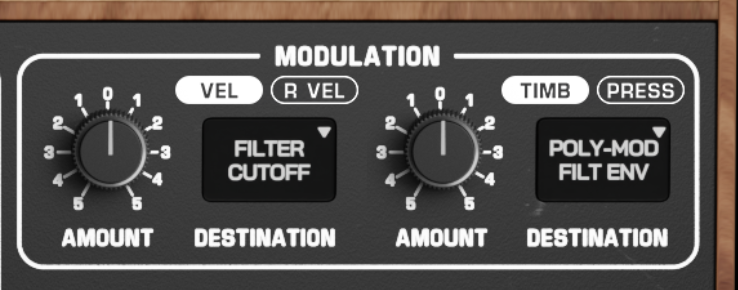
MPE means the ability to freely assign poly-modulation, via timbre and pressure. There’s also polyphonic pitch support via MPE, which means out of the box the Prophet-5 supports Ableton Live Tuning Systems. (That’s nice, as it gives this 1978 hardware som of the tuning support now found only on modern Oberheim and Sequential gear!)
The layers work well, especially for using this as a performance instrument, with a flexible setup. Working with two layers winds up being really intuitive.
GForce have built a lovely premium package here. Pricing is £99.99 / $119.99 / 119.99€ with an intro price of £69.99 / $83.99 / 83.99€ until end of July.
Standalone (thank you!), AAX, VST2, VST3, AU; macOS and Windows. I’m going to keep bugging GForce to support Linux one day, too. I’d be happy to skip other soft synth makers just to get their entries.
For Sequential fans, this is a must-own in software. Just having the original 38 patches from 1978, exactly recreated on the hardware, is a boon. And while there are other good emulations out there, this one represents a new high-water mark, as that Sequential badge and all the legacy of Dave Smith and team really demand.
Behind the scenes
I asked Remi Engelen at GForce some more questions about what went into this. That helps me on the sound design side, too, as it means listening in on exactly how modulating the filter applies to the different revisions. And these are the kinds of details that have really become accessible in software only fairly recently.
The biggest factor in capturing the subtleties of hardware modeling is spending serious time with the hardware itself. In the case of the Rev1/2 vs Rev3, where the sonic differences are especially subtle, this is especially important.
Our process starts with standard models of the components used in the hardware, in this case, SEM chips and Curtis chips, which provide a solid foundation. To then capture the essence of the Prophet sound, we use an iterative process of comparing to the hardware and adjusting the model.
A large component of the modeling for us is mimicking the parameter ranges and non-linear curves that exist throughout the instrument. For example, the Rev1/2 filter has a slightly different minimum cutoff and curve across its cutoff range than the Rev3 filter, meaning that the same knob position for the two filters makes one sound slightly ‘brighter’ than the other. This is then accentuated when applying modulation to the filter, as the movement of the cutoff during the modulation will be slightly different and more obvious to the user’s ears.
Another aspect is considering how various characteristics of the instrument interplay with each other. A key to the filter modeling is measuring how resonance, distortion, biasing, etc., change as parameters such as cutoff frequency and oscillator input level change. This can become a challenging balancing act between all these characteristics but when achieved, really allows the model to sound Prophet-like. Users can hear this as they sweep the filter cutoff with some resonance and pay attention to the volume and frequency of extra harmonics that appear.
Working with Sequential.
Having known David Gibbons and covered both Sequential and the Dave Smith Instruments era, I was really curious how the GForce/Sequential collaboration went. Tom Oberheim has already shared with CDM how his work with GForce went and what it means to recreate his synths as plug-ins. Here’s Remi again:
It is a privilege to have been selected by Sequential to develop the first ever official Prophet-5 software instrument. The brand is iconic and the instrument has shaped countless records over the years. It has been an incredible project to work on.
Working with Sequential pushed us to deliver the very best Prophet-5 software instrument possible, and we feel we’ve achieved that. We always take a leading role in the development process with our partners, investing the time needed to learn and explore every aspect of an instrument. Early in the project, our partners provided valuable guidance on the more unusual aspects of the instrument and its architecture.
The key to a great emulation is spending time with the instrument itself, combined with extensive critical listening. Once we feel we have accurately recreated and captured its sound, we ask our partners to carry out a final review. They know every facet of their instrument better than anyone, and their involvement helps us reach an exceptional level of authenticity and accuracy.
My only complaint here is that we still haven’t gotten the remake from Sequential Circuits history we all want the most: recreate the red jacket John Bowen was wearing during the first MIDI connection. It’s unisex, it dresses up and dresses down. Oh, and if you want to do a Prophet 600 remake next, that’d be cool, too! But the jacket…
Prophet~5 is available from Plugin Boutique — 30% off through July 30
If you buy something from a CDM link, we may earn a commission.
Sequential Prophet~5 product page at GForce Software
Here’s the full walkthrough so you can go deep into how this instrument works:
And here’s their patch playthrough — some really great patch design work on this one. I feel the gaunlet is thrown; maybe I have to go do a pack now!