Epic layoffs in March cut deep into the audio and music teams. But there’s hope that their work will live on in Unreal Engine and MetaSounds, via what is arguably the most innovative sound work built into any game engine. Unreal Engine 5.8, now in preview, features a bunch of powerful tools for working with sound, one of the biggest sound releases yet. Here’s a look at what’s in that roadmap.
Epic’s 2026 layoffs
First, I would take the layoffs at Epic seriously; otherwise, I’d be doing a disservice to these talented people, some of whose work I’ve followed through Harmonix (FreQuency, Amplitude, Guitar Hero, Rock Band, Dance Hero). As detailed on March 24, Epic fired 1000 employees, faulting a “downturn in Fortnite engagement.” To me, it was clear for a long time that the focus on sound and music in Unreal Engine was a house that Fortnite had built. So I always worried that sound resources and people would be early victims if those fortunes changed. And sure enough, those cuts went deep into those teams, claiming Aaron McLeran (Unreal Engine Audio Director), Dan Reynolds (Technical Sound Designer), and a lot of the other sound and Harmonix vets. (Aaron and Dan were two of the names most known to the general public, but obviously this includes a lot of other important people whose names are less known.)
I hope that we see great things from the people Epic let go in their life-after-Epic — after nearly a quarter century covering music tech, I started following the individuals more than their employers. (My email auto-complete feels a little like LinkedIn sometimes.)
I also think it’s important we have Unreal Engine as a platform where these features are included internally in the engine, in addition to powerful middleware like industry sound engine leaders FMOD and WWise. Epic’s support for that same tooling across Fortnite also has wide-ranging implications for music and audio creators. And it’s also important for experimentation and learning that UE’s tools are completely free.
So that all means I sincerely hope the work the ex-Epic folks invested in Unreal Engine continues to pay off, both in terms of how it’s supported by those still at Epic and by third-party developers. (Ryan Challinor of Harmonix, creator of Bespoke in his free time, is definitely still at Epic, as he just showed off the mixing features in Fortnite on a rooftop in Cambridge last week!)
Audio in UE 5.8
The preview of Unreal Engine 5.8 shows some promise that Epic will continue to get features out the door. (I can’t count the number of times I’ve had friends watch companies ship features they worked on after they’d laid them off, but there you are — and I’m encouraged knowing people like Ryan are still around.)
5.8 is big for everybody (not just sound). 5.8 is another major release across Unreal Engine’s insane number of different specializations — rendering, characters and animation (physics rigging!), MetaHuman Animator (now at last on Linux and macOS), world building (mesh terrain!), procedural content generation, mobile (Android support, Gesture Events, new iOS shaders), and a lot more. It continues serving industries that often have little in common. (Do you want to run augmented reality at a live trade show, create a digital twin of some factory automation, VJ, or make a 2D/3D role-playing game?)
On the audio side, we get some terrific goodies:
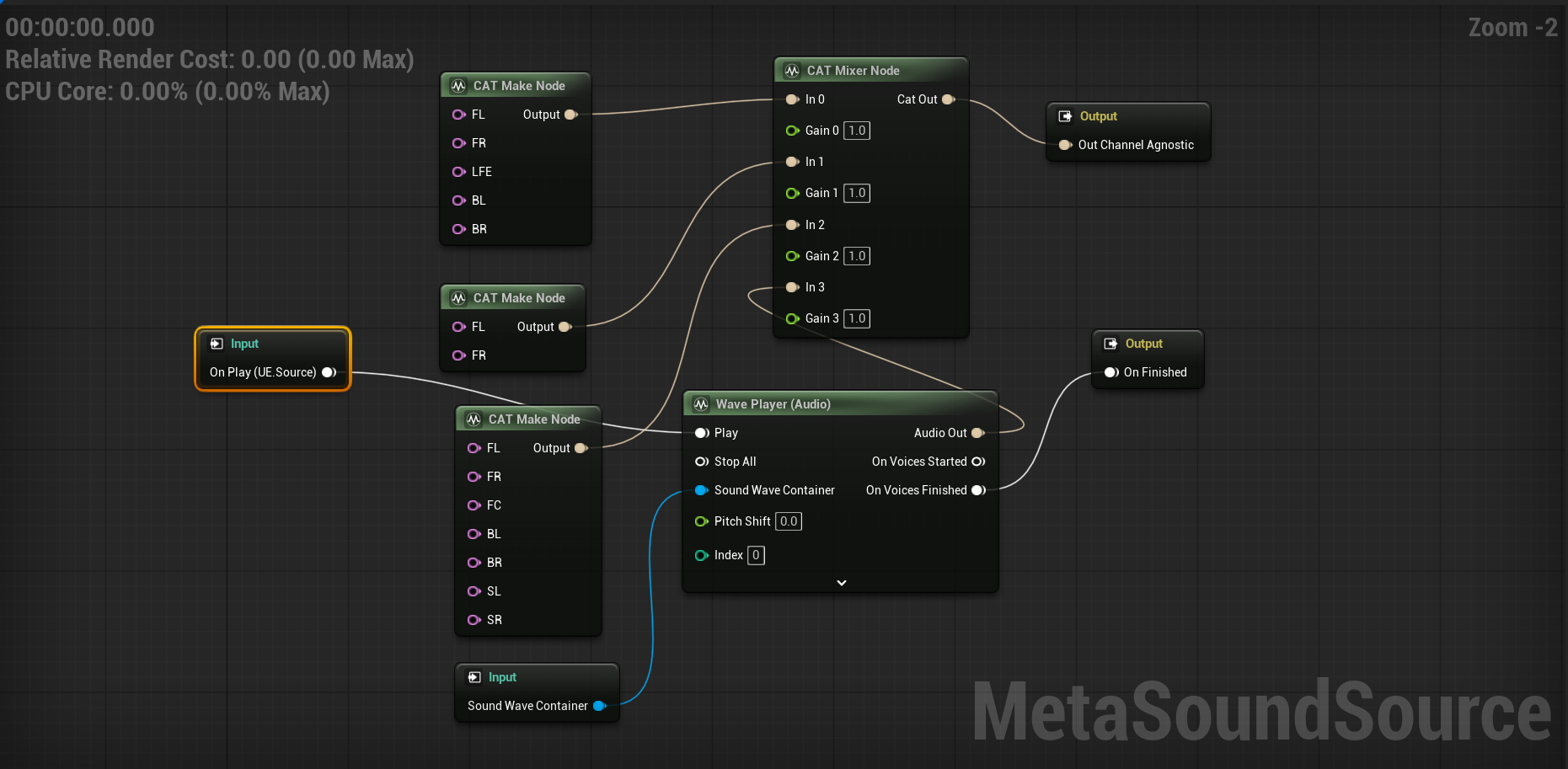
Format/channel agnostic types (CAT) are probably the most exciting of the features here. It means that your MetaSound graph can now be delivered to any channel configuration — ambisonics, discrete channels, stereo, quad, surround, Dolby Atmos, whatever. (Yeah. Holy s***.) This is experimental now, so you can take your time getting to learn it — but then, UE’s “experimental” support is often just what musicians and composers might need to try out ideas, long before something is production-ready for a game house, etc.
They also include a bunch of new channel-agnostic Nodes to work with, which might interest people as much on their own. There’s a new Wave Player 2.0, CAT Mixer (a mixer with agnostic channels, finally!), Grain Player for grain synthesis (ooh), Multiply, and multichannel-updated Ladder Filter.
Check the full CAT details.
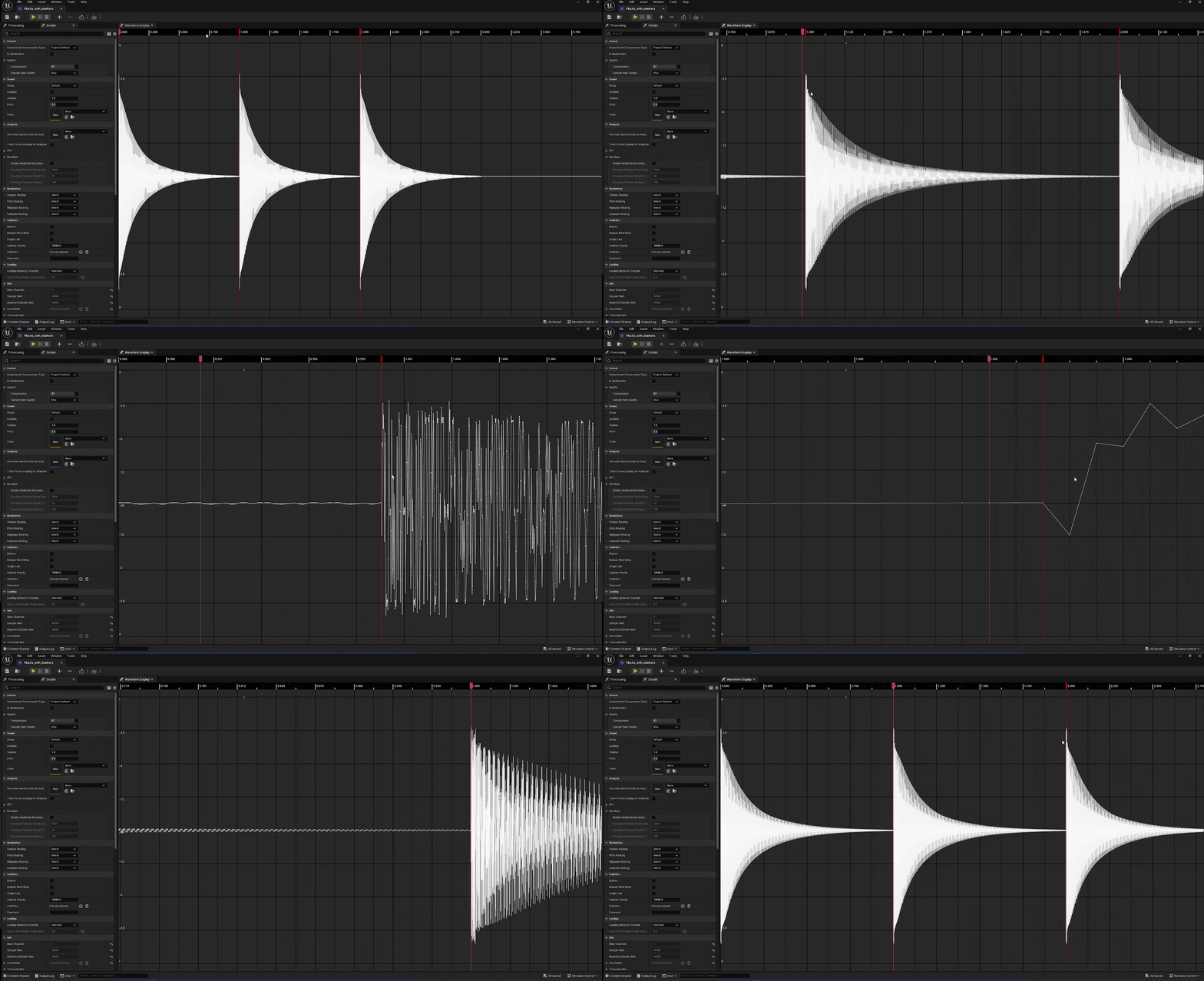
There’s an improved internal Waveform Editor (beta)! Praise be! It’s decent, too, with keyboard shortcuts, reimport options, Launch Transformations (giving you simple automation), and improved Fades. Details.
Plus how about little details like this: “When transformation changes are applied, the SoundWave’s LUFS and Sample Peak metadata now update automatically to reflect the transformed waveform, keeping asset metadata accurate without requiring a manual refresh.”
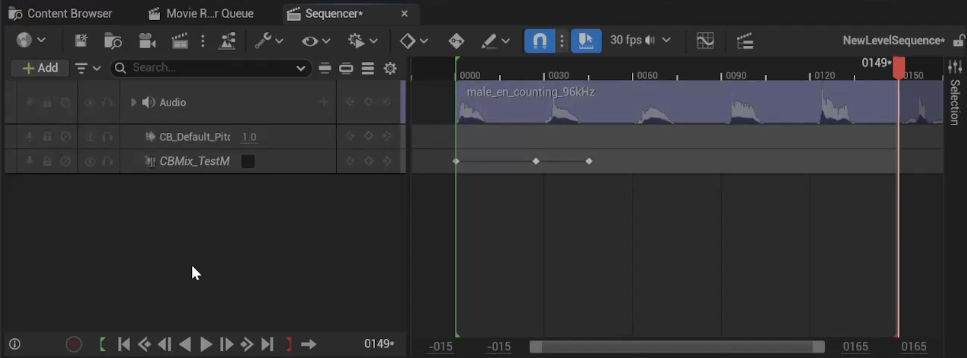
You also get Audio in Sequencer that actually works the way you’d want, with Control Bus and Control Bus Mix Tracks, reworked looping, MetaSound integration, and more.
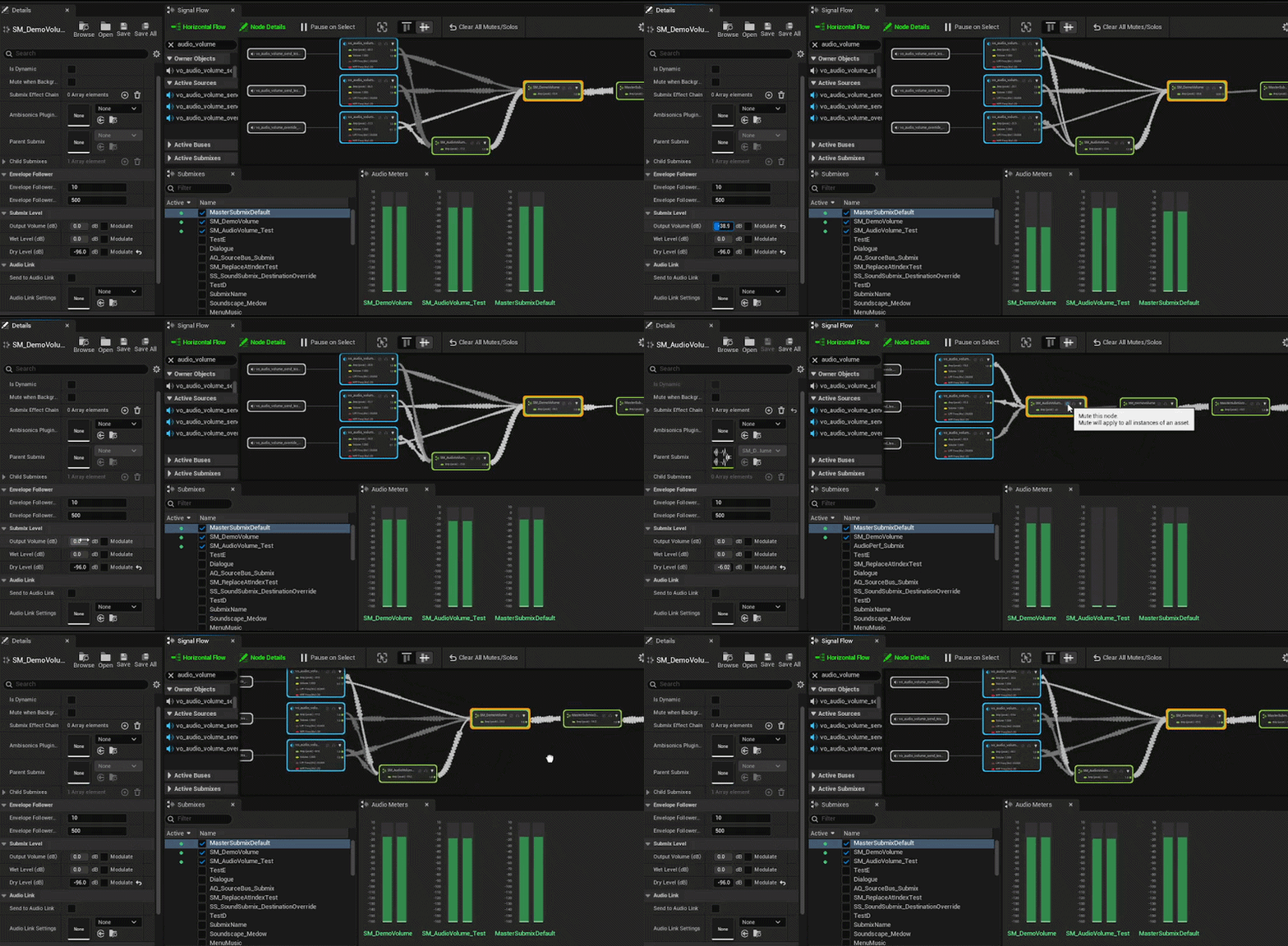
Audio Insights gives you a bunch of visualizations and metrics to understand loudness metering, signal flow, and even monitor live events — since, as I said, UE can also be a live event production tool.
This also means the metering is improved.
Audio Subtitles (beta) are massively expanded and far more powerful, key for localization, accessibility, dialogue, and chat.
MetaSound Templates let you create reusable, C++-defined tools, which can also ship fully custom UMG widgets built in MVVM. Whether it’s ex-Epic people or someone else, this to me also finally gives developers the chance to fully augment what MetaSounds and UE can do. Having sung the praises of MetaSounds being built into Epic, it’s also clear that Epic alone was never going to be able to satisfy all the needs of people using their sound engine. So, while it’s experimental for now, this looks to me like a vital opening for just that.
MetaSound Node Configuration is also expanded (experimental) — reducing boilerplate and making it easier to just design sound for UE.
WASAPI on Windows. Uh, yeah, this is hugely important for backend support; XAudio2 is a now-ancient legacy API. (That’s a reminder that Unreal Engine’s sound backend had a lot of legacy audio functionality, despite the new hotness that is MetaSounds.) And this is a true migration of the backend — a module, not a plug-in.
And there’s more, as detailed in this extensive walkthrough by The Sound FX Guy (an excellent resource for this stuff, working on his own game on Steam).
- Better-organized right-click menu for creating new elements
- World Time interface improvements
- Fade node now has curve functions for cross-fades (it was previously only linear)
- New Tape Stop/Start and Distortion Nodes (enabled with the Harmonix plugin)
See the full details:
Unreal Engine Public Roadmap – 5.8
Just remember, if you want stable, you should differentiate that from preview.
Still at top from The Sound FX Guy’s video — oh I am excited to play your game!
Previously: